After the amazing Gros Morne and a stop at Port aux Choix we continued north towards the L’Anse aux Meadows national historic site.
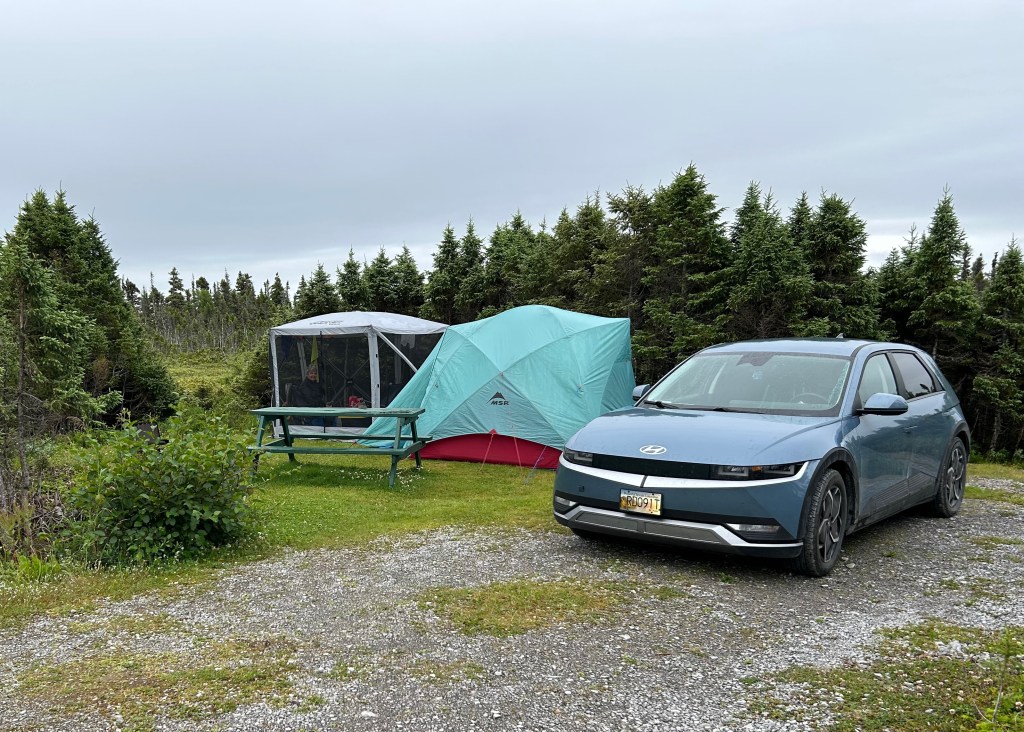
First stop was Pistolet Bay Provincial Park. We didn’t spend tons of time there, but it was nice. Notice the height of the trees. This was the furthest north that we camped.
We didn’t feel like cooking that first night, so we called The Daily Catch in Saint Lunaire-Griquet for a dinner reservation and managed to get the last table – they had a bus tour that evening so the place was packed.
Tagging along with the bus tour had its benefits. There was really good live music, and we were asked if we wanted to join in on the Screech In. Yes, we are now honorary Newfoundlanders.
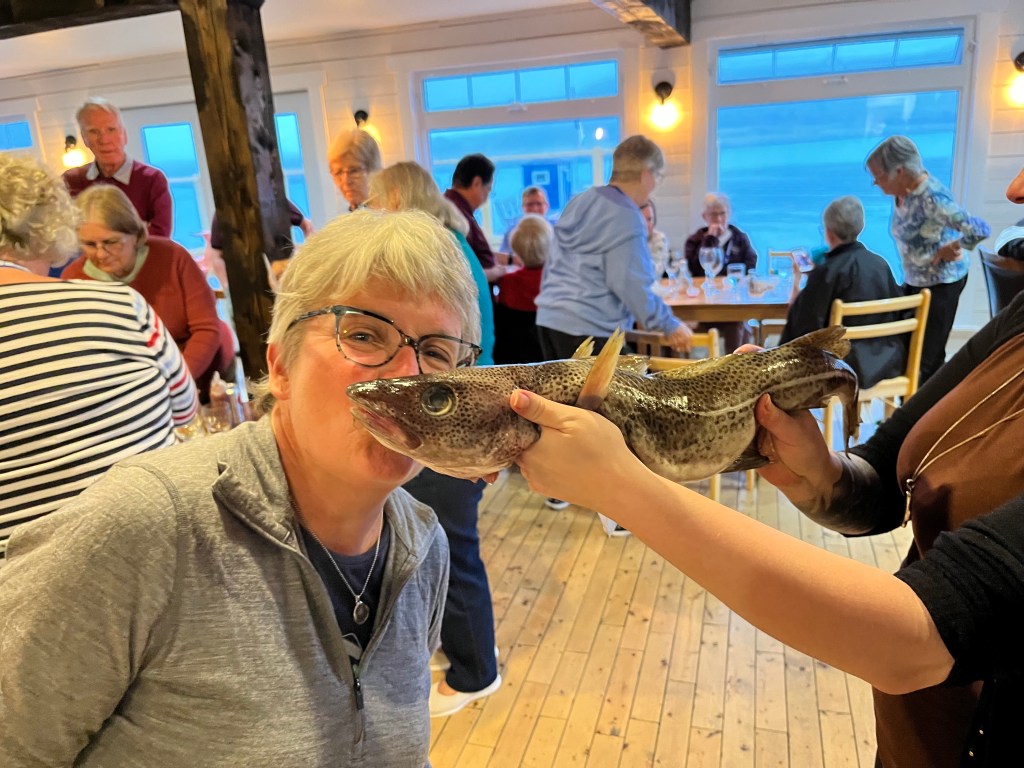
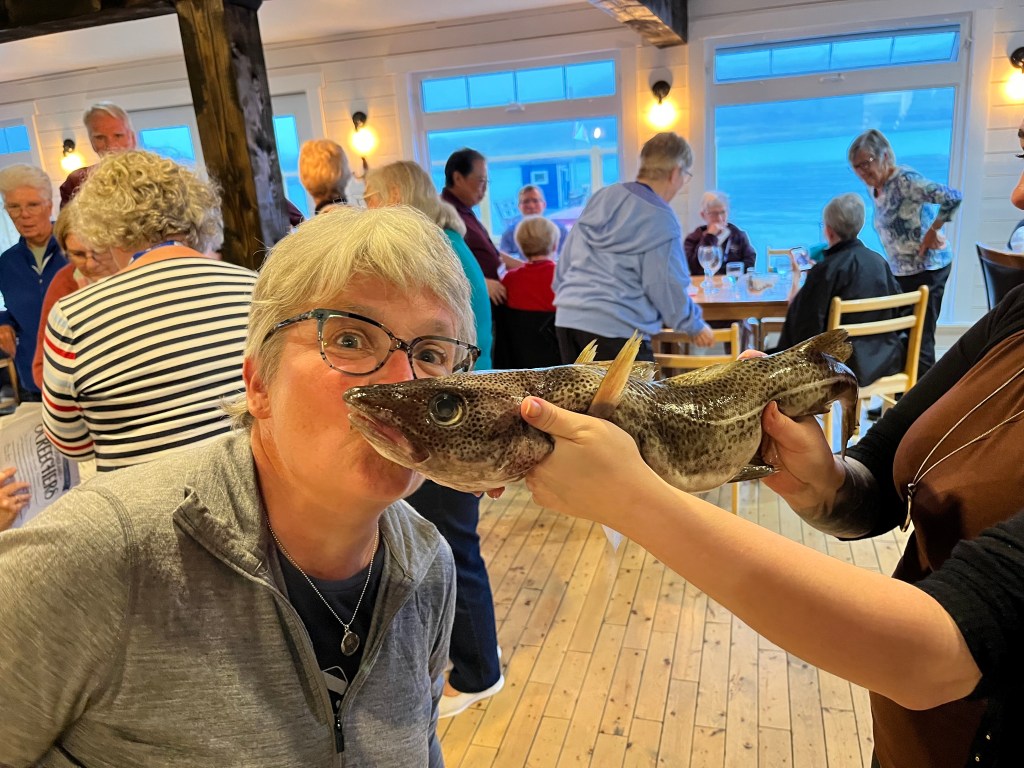
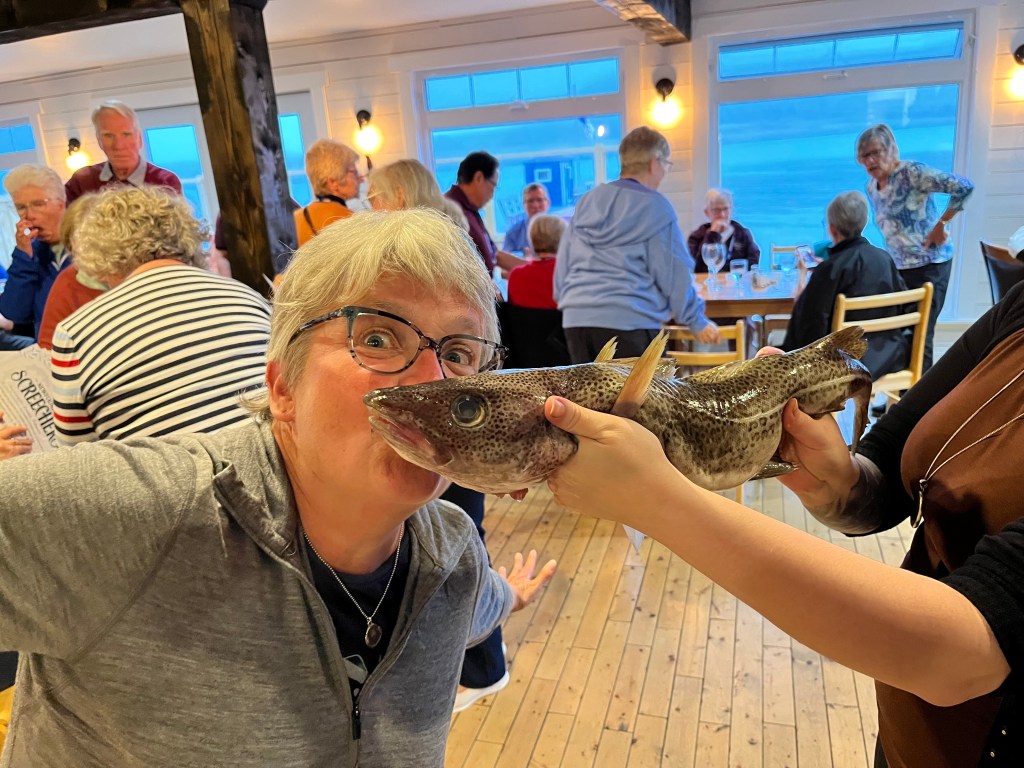
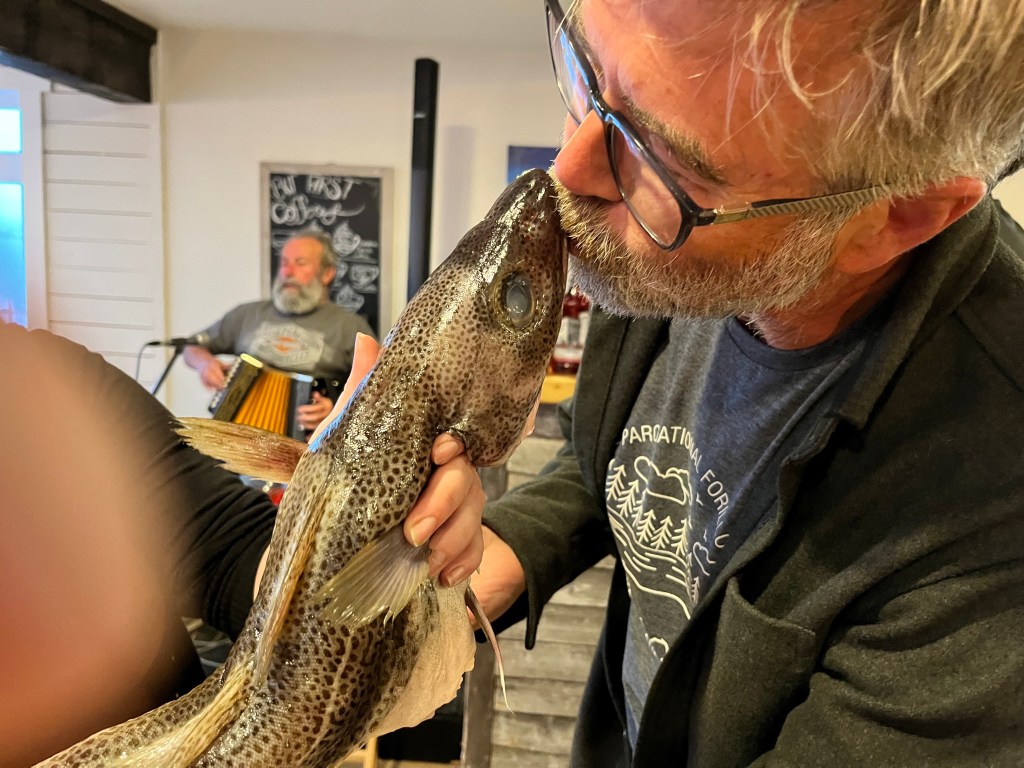
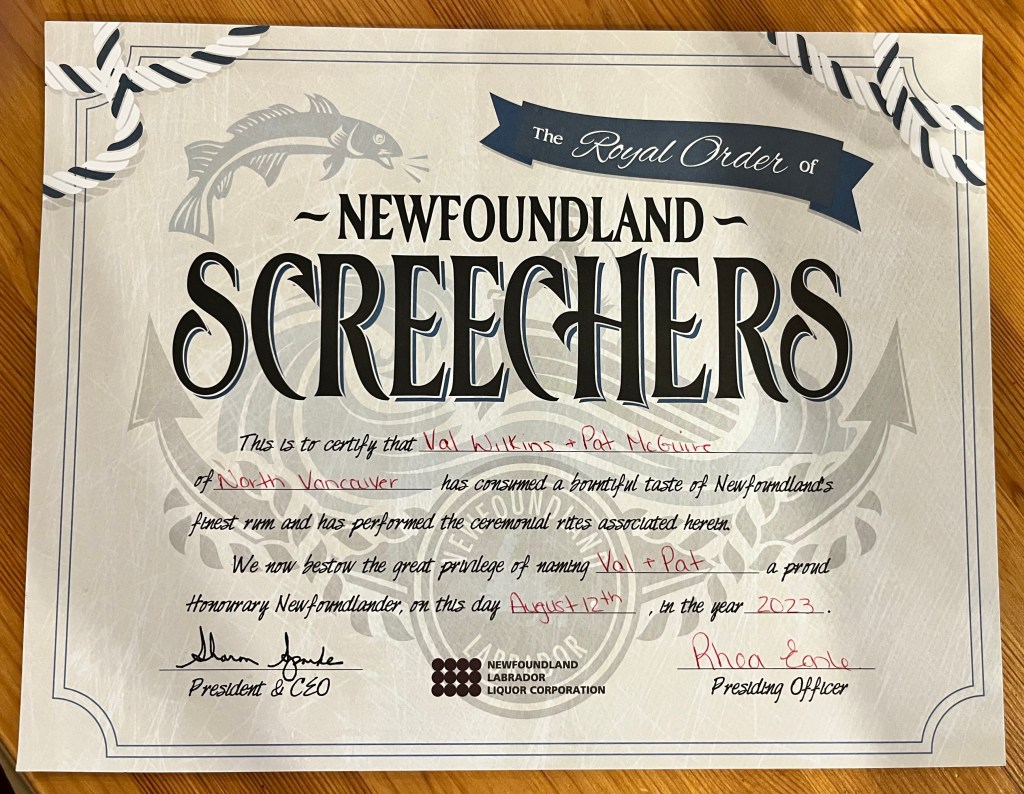
And the food was excellent too. We asked what was fresh, and the server said if we wanted something that was swimming that morning we should have the cod or the halibut. So we did, Val choosing the former, me the latter. Probably the nicest fish of the trip.
The next day we were off to L’Anse aux Meadows, where this gentleman, Noah, was our guide. Here we were spending some time learning about a bronze sculpture that was done by two artists, one Canadian and one Scandinavian, to commemorate the area which is now a unesco world heritage site.
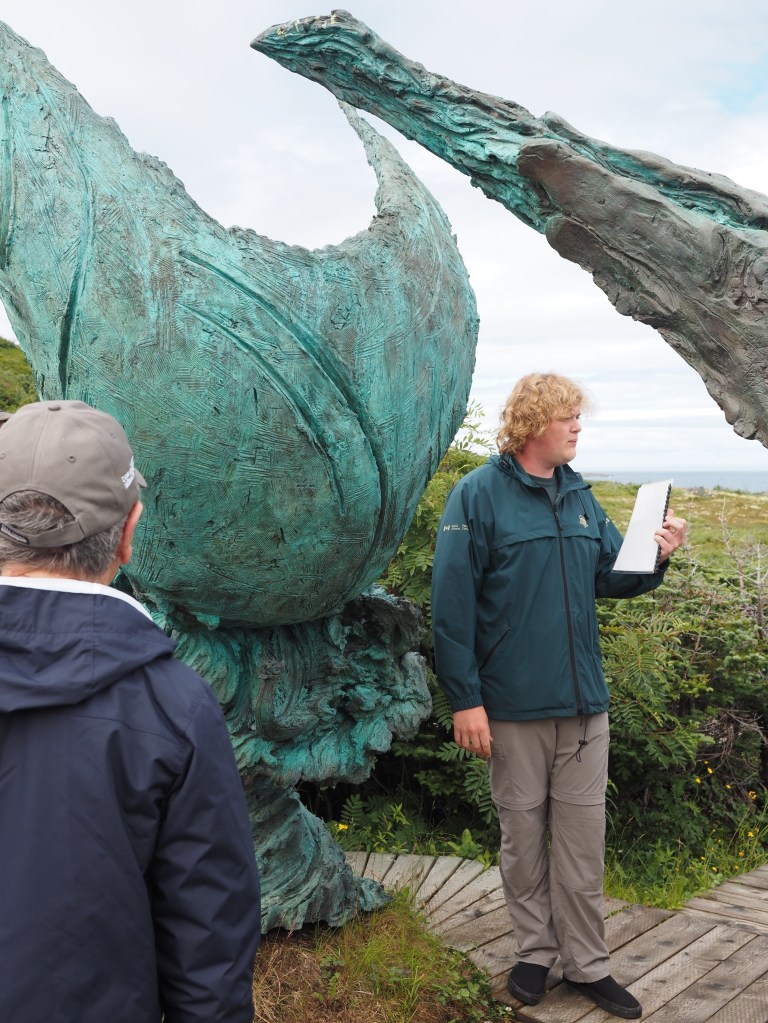
In the photo below he was describing the layout of the Norse village, remains of which were discovered in the ‘60’s. The village dates back over 1,000 years, long before the Europeans arrived.
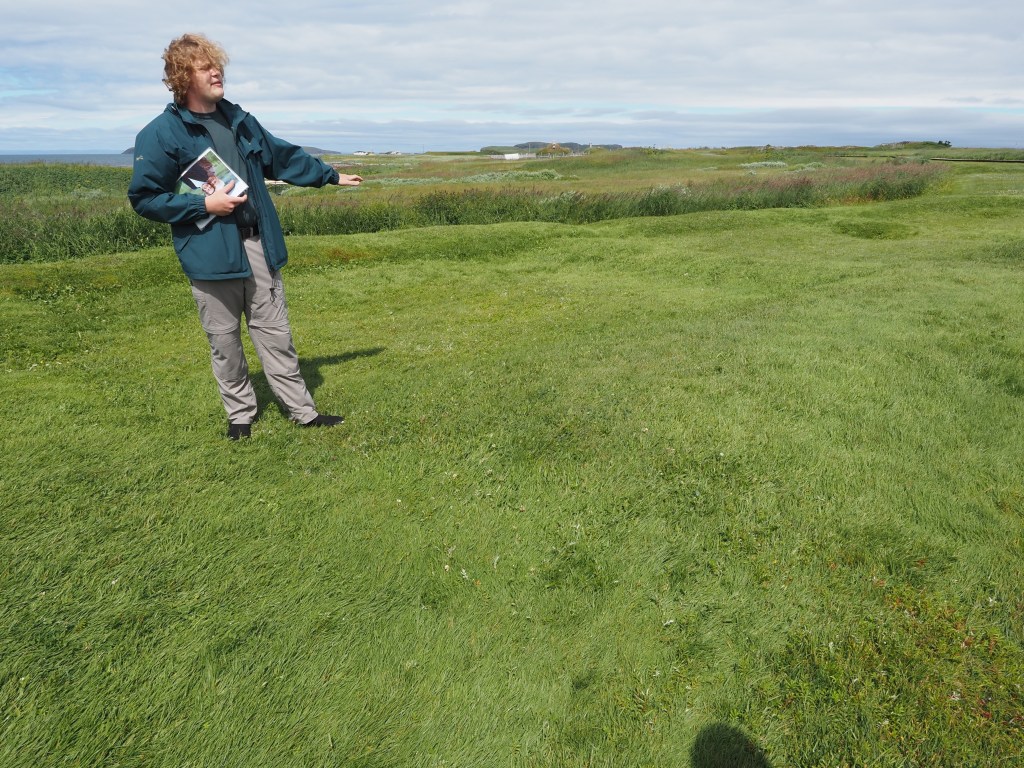
Noah was an interesting character and a terrific guide. His great Grandfather once owned the land that the site is located on, and he was really knowledgeable.
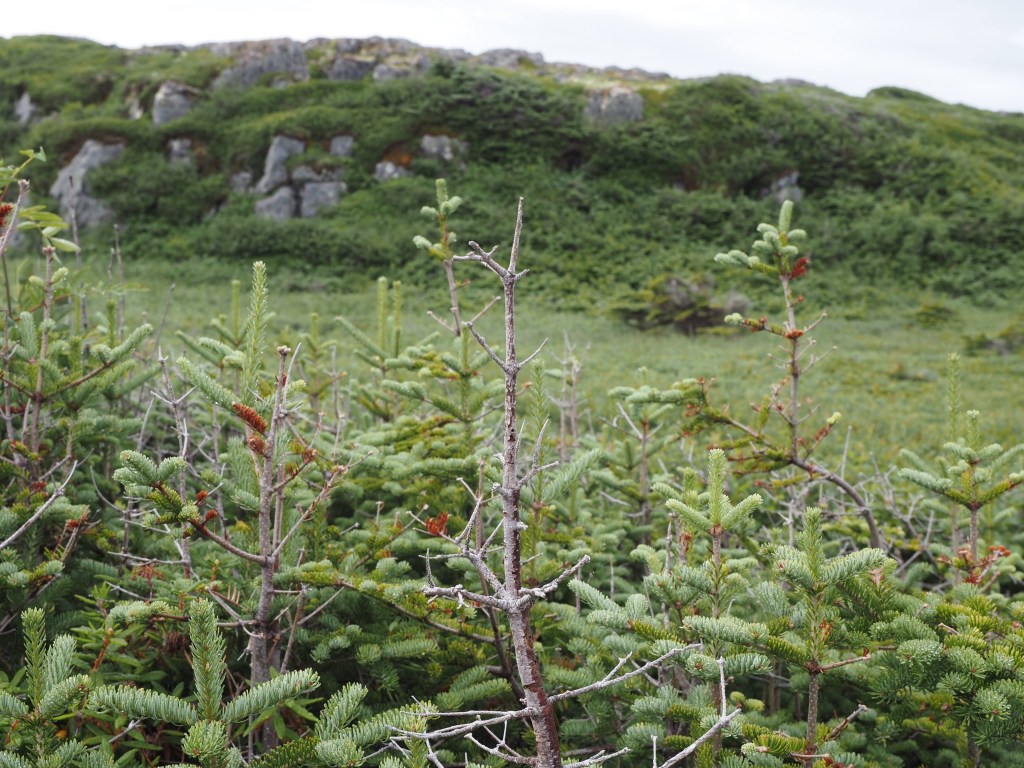
He asked the group if we knew why the tops of the small spruce trees were damaged. Apparently it’s the moose that eat the spruce tips that stick out of the deep snow in winter. They “float” across the snow with their wide spreading hooves.
As we walked towards the Norse village site he pointed out some bakeapple berries that were nearly ready to pick. They are tough picking – one berry per plant. Locals make bakeapple jam and a small jar can easily cost as much as $20.
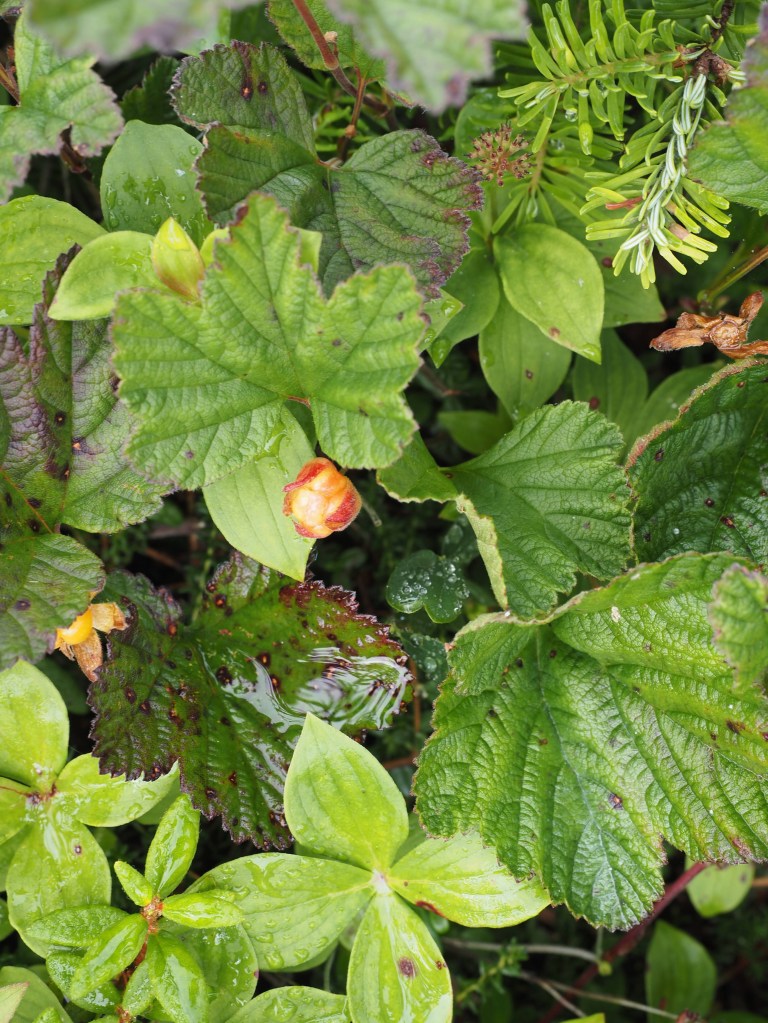
He also explained the origin of the name bakeapple – it started as the mangled pronunciation of the French words baie (berry) and qu’appelle (what is it called). A guy we met at a Corner Brook brew pub described it this way: Newfoundlanders mispronounce most French words “with enthusiasm”
Noah reminded us about the German U-boats that destroyed several Europe-bound grain ships in the gulf of St. Lawrence during WW2. Locals recall seeing the light from the explosions. And he mentioned something we had never heard of – the Germans actually had a secret U-boat port in Labrador.
He explained quite a bit about the Norse society and culture. We were surprised to learn about the importance of slavery, and more than a bit startled to learn that many of their slaves were men and women from Ireland.
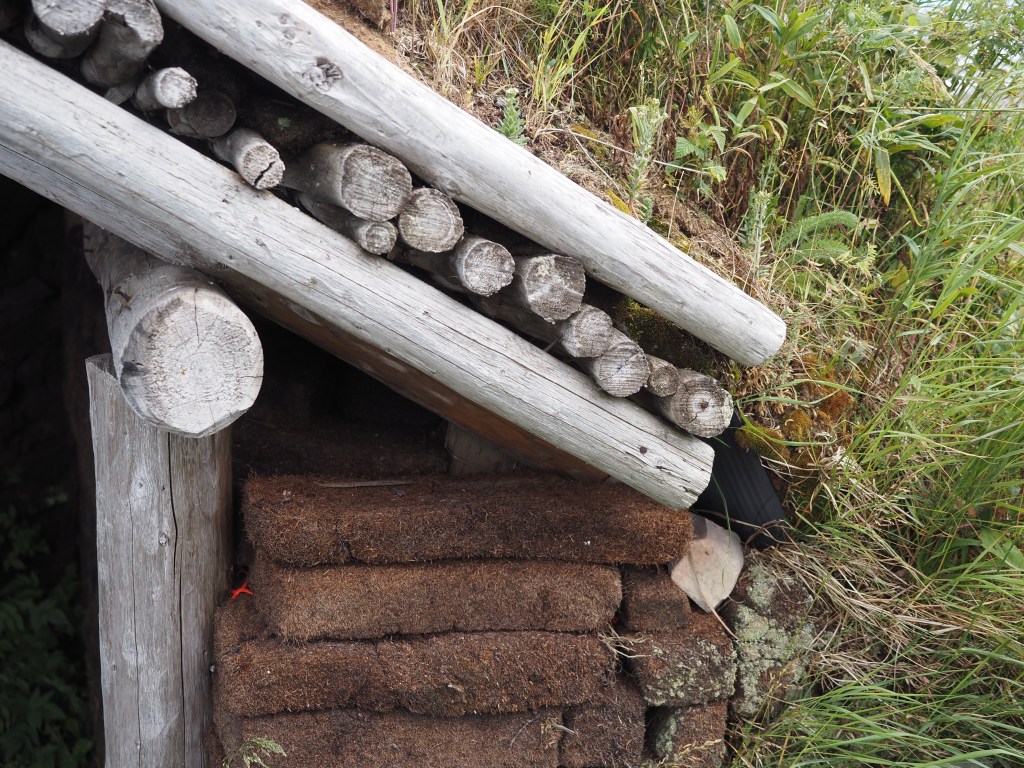
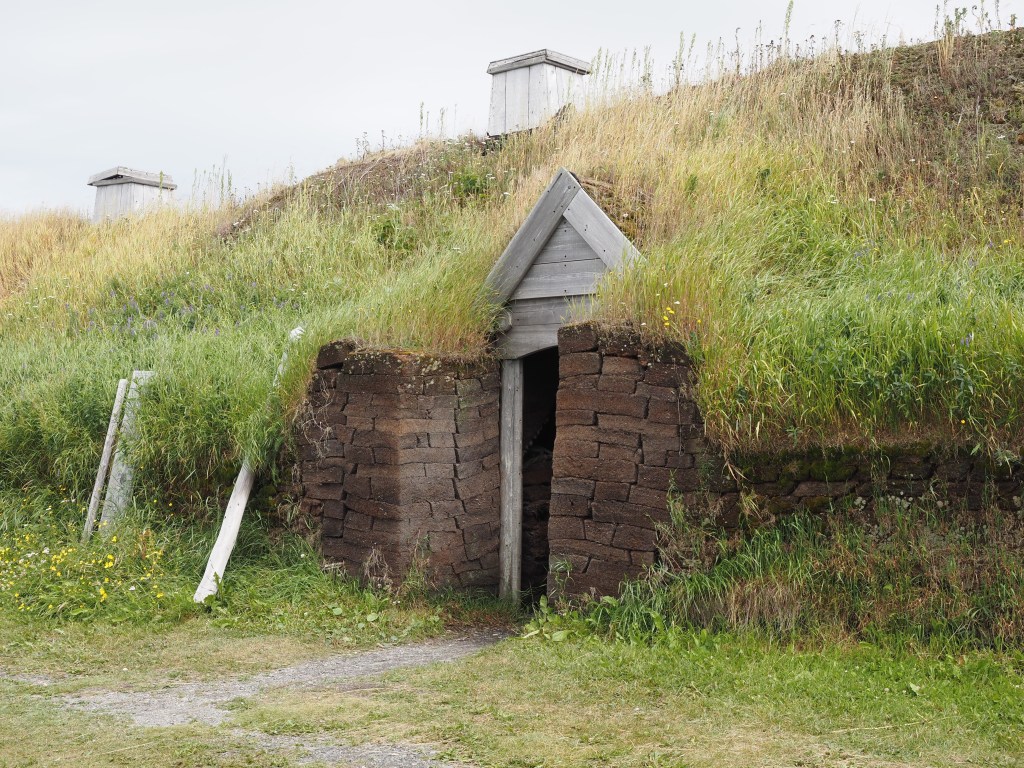
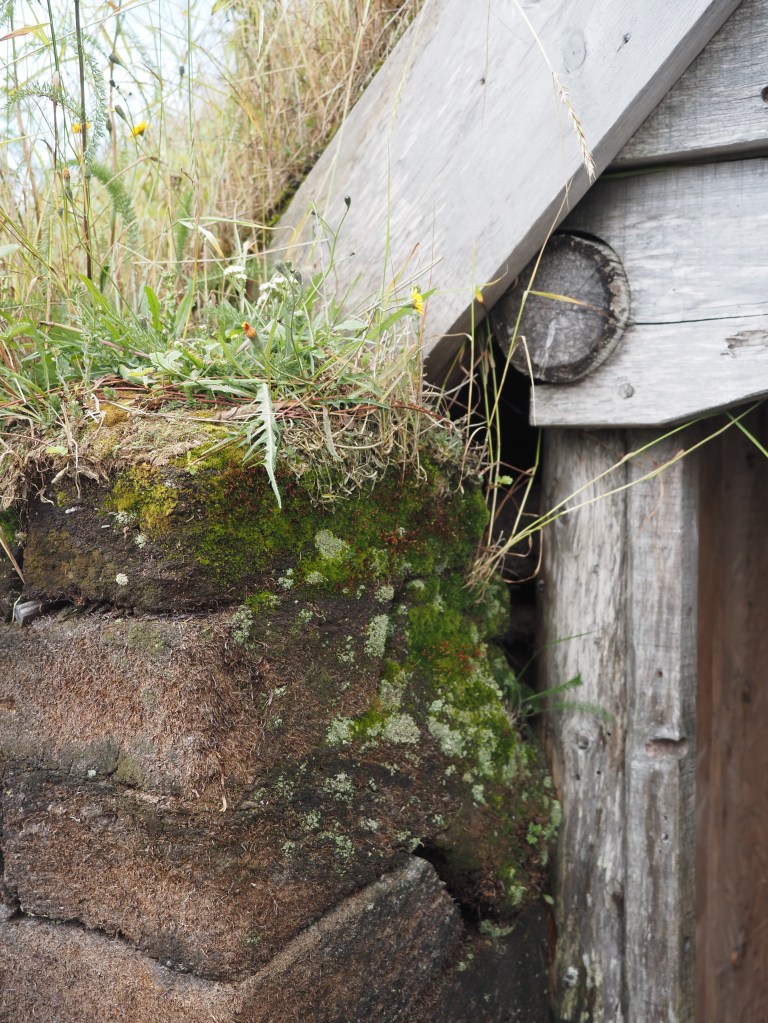
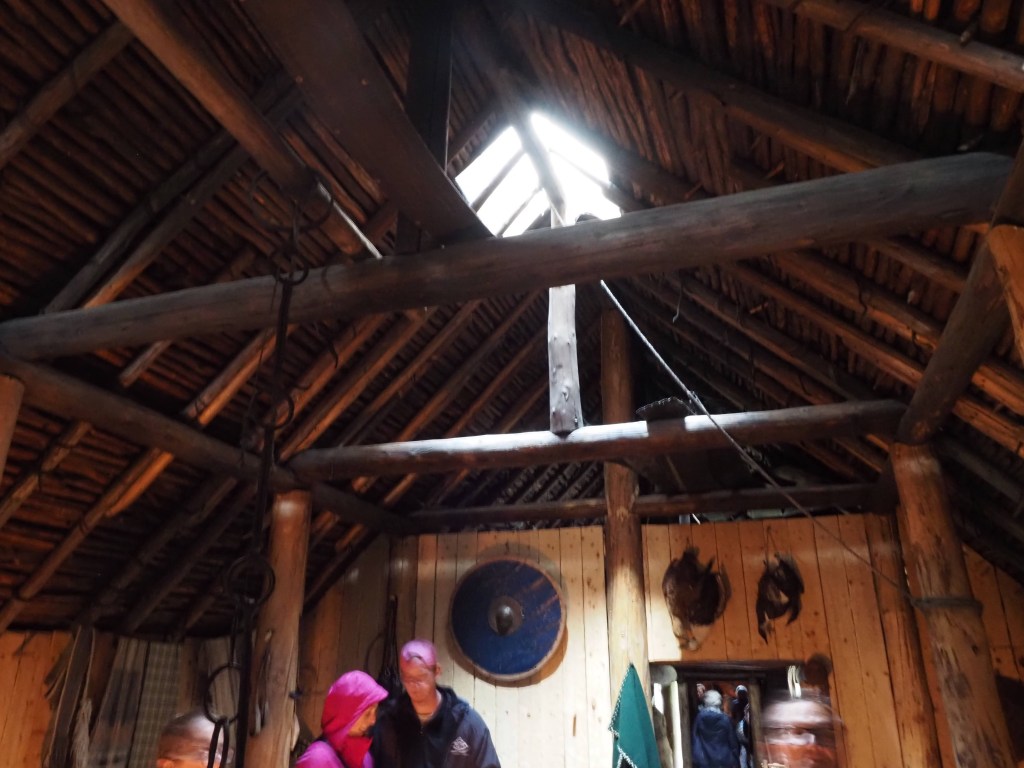
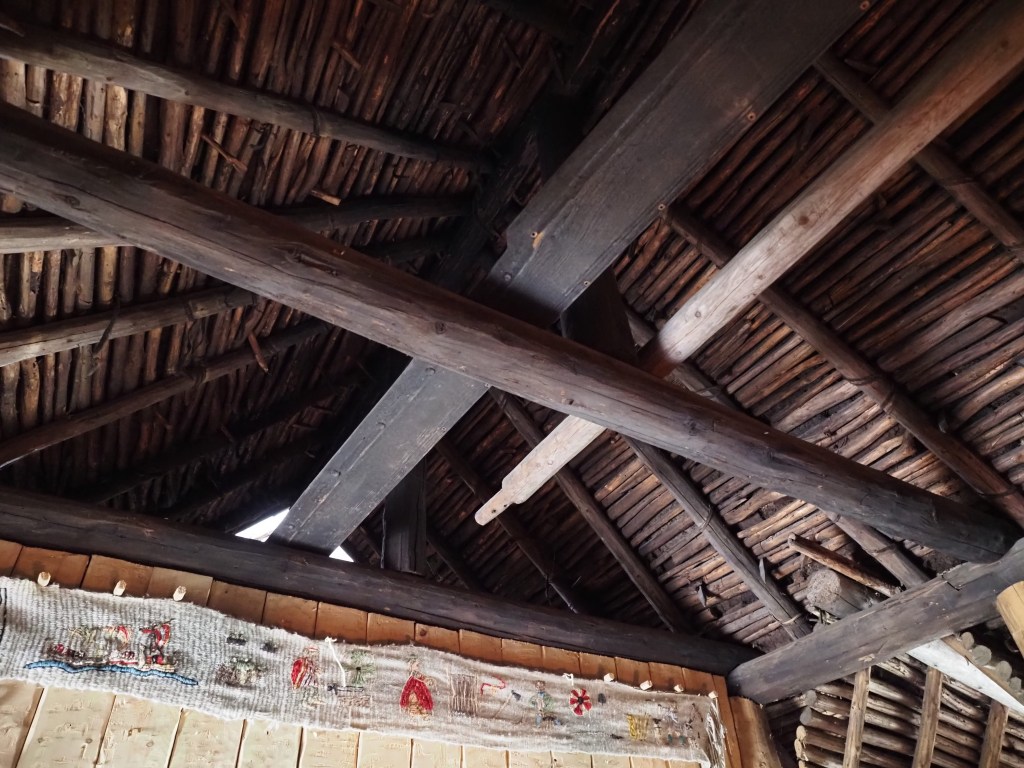
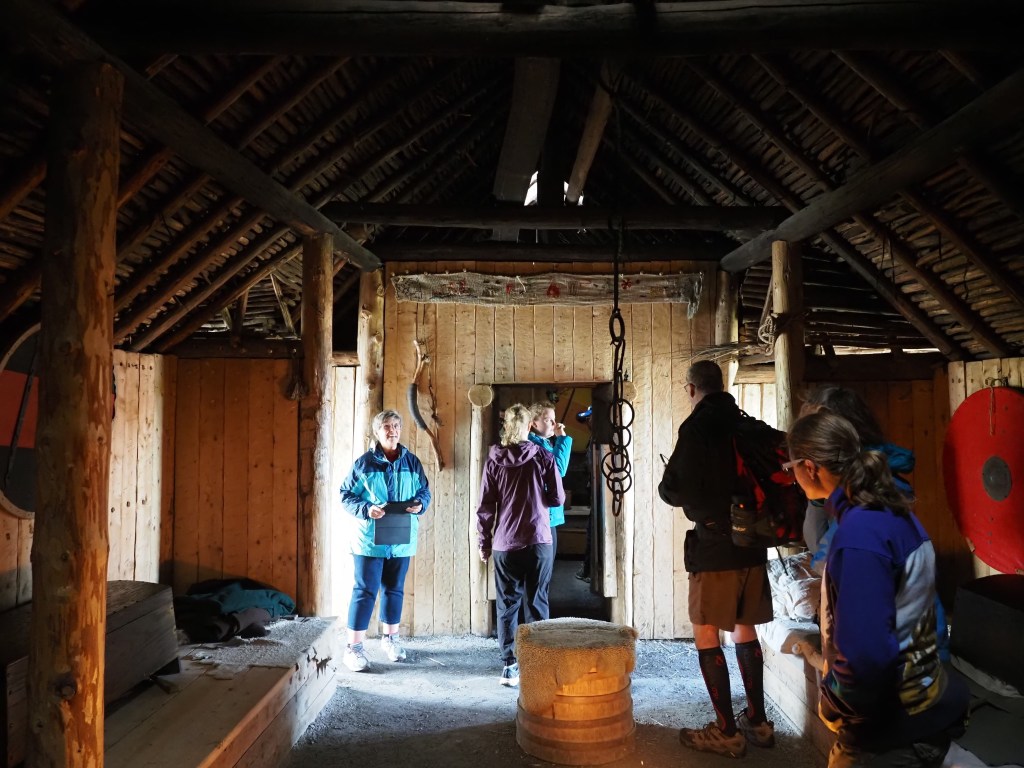
The structures they built were fascinating. Replicas on the site displayed many of the features including walls that were six feet thick – two feet of peat on the inside, two feet of gravel in the centre, and two feet of peat on the outside. The roofs were wood frame with a layer of peat on top, then a layer of birch bark which worked like a waterproof membrane, then sod on top. And the birch bark section drained into the gravel portion of the wall to keep everything warm and dry.
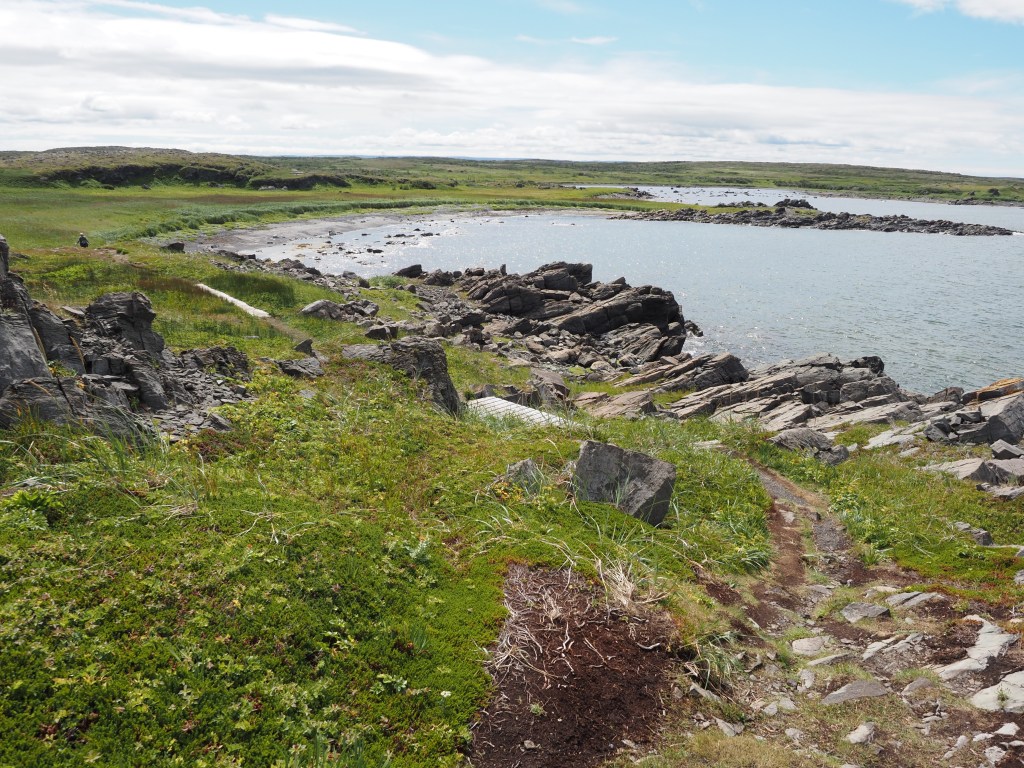
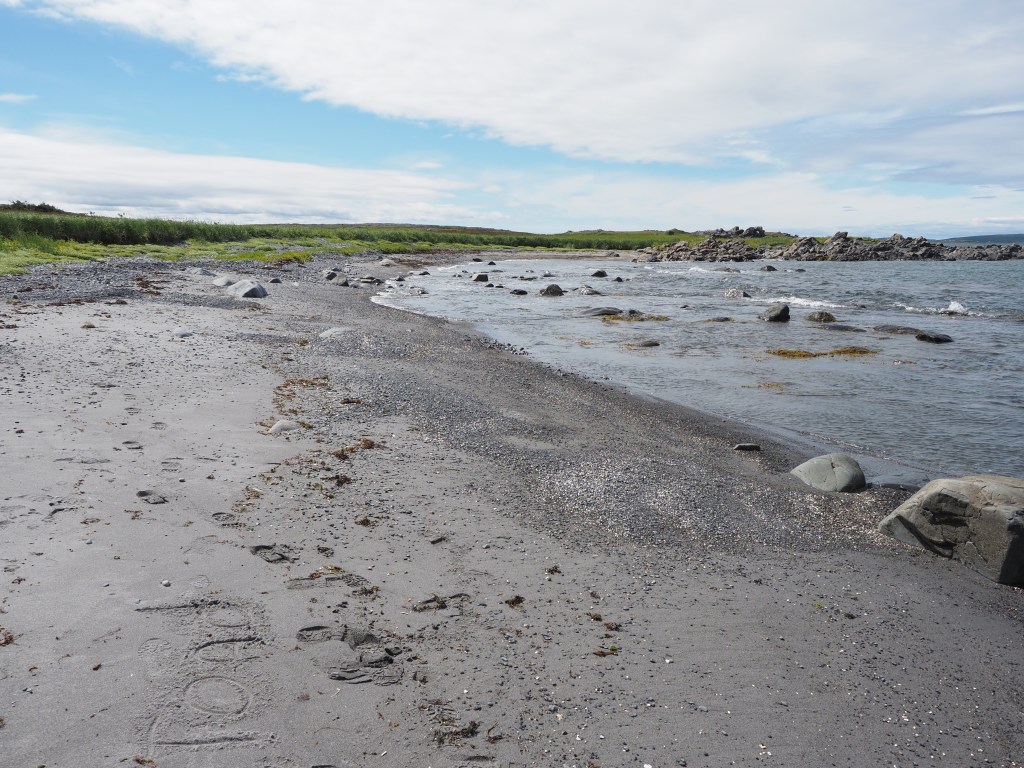
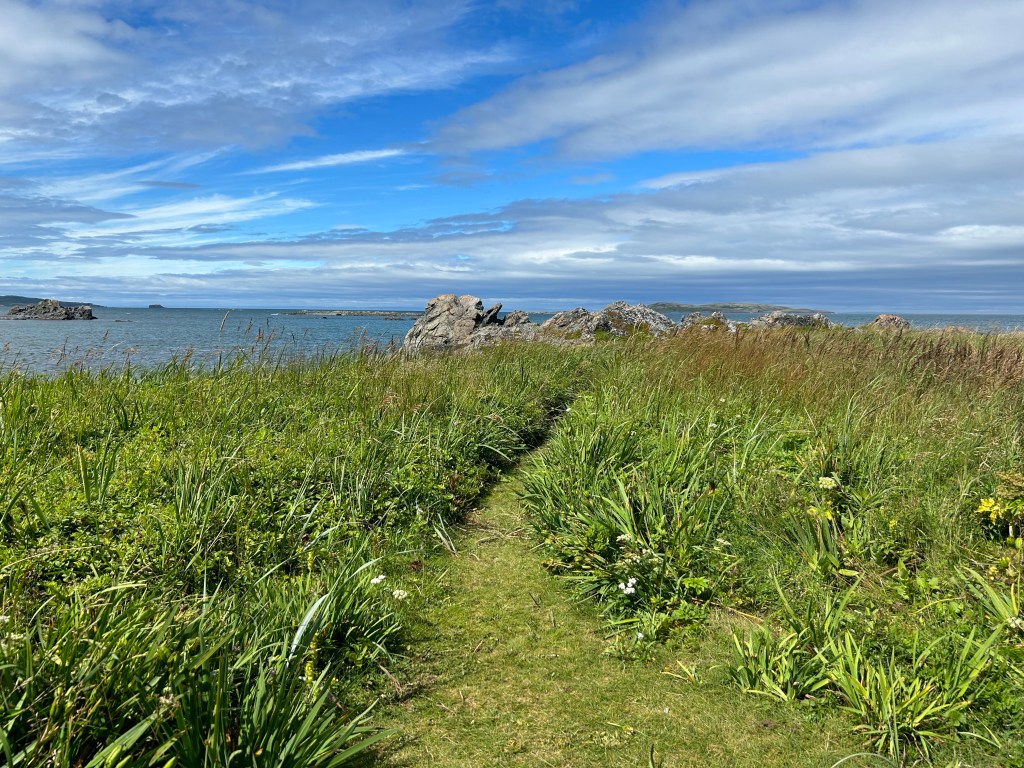
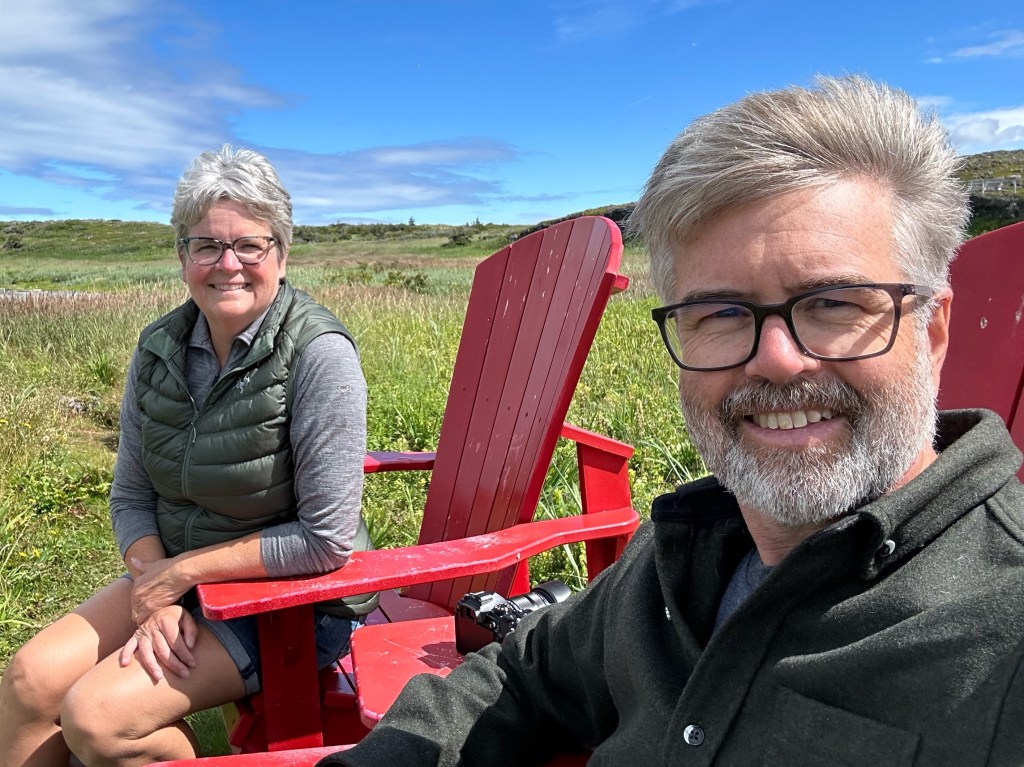
After the tour we did a short hike around the site.
And in the middle of the hike we found this:
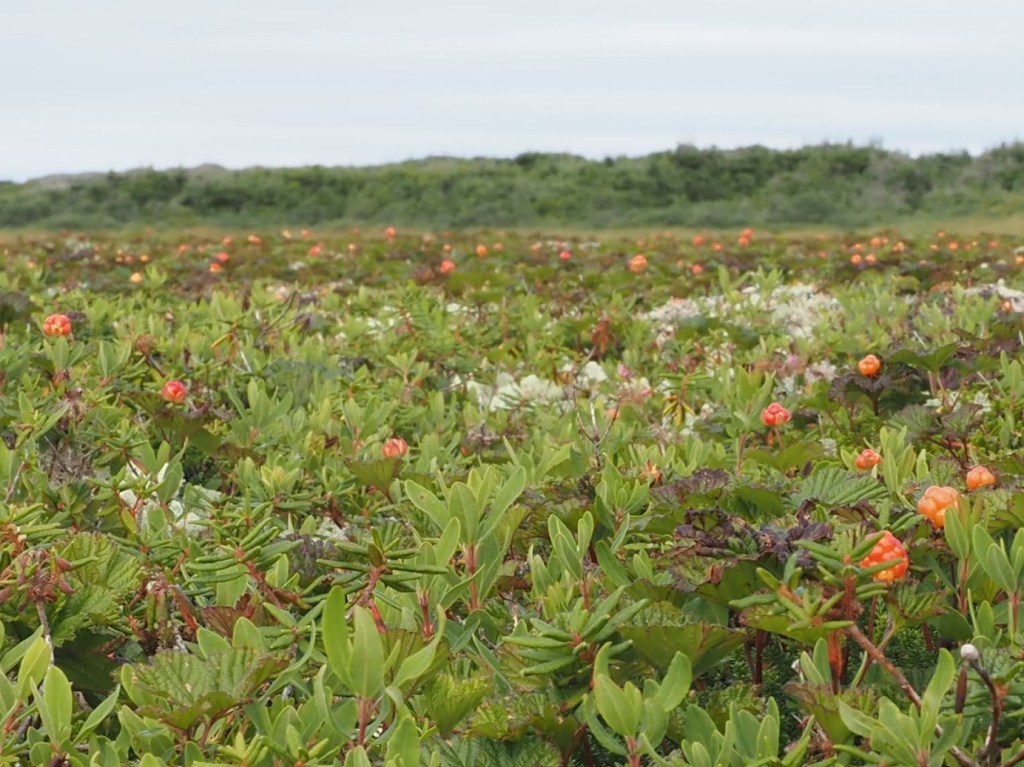
It was a field full of ripe bakeapple. Not gonna lie, we ate a bunch of them, and they were great. Sorry Parks Canada.
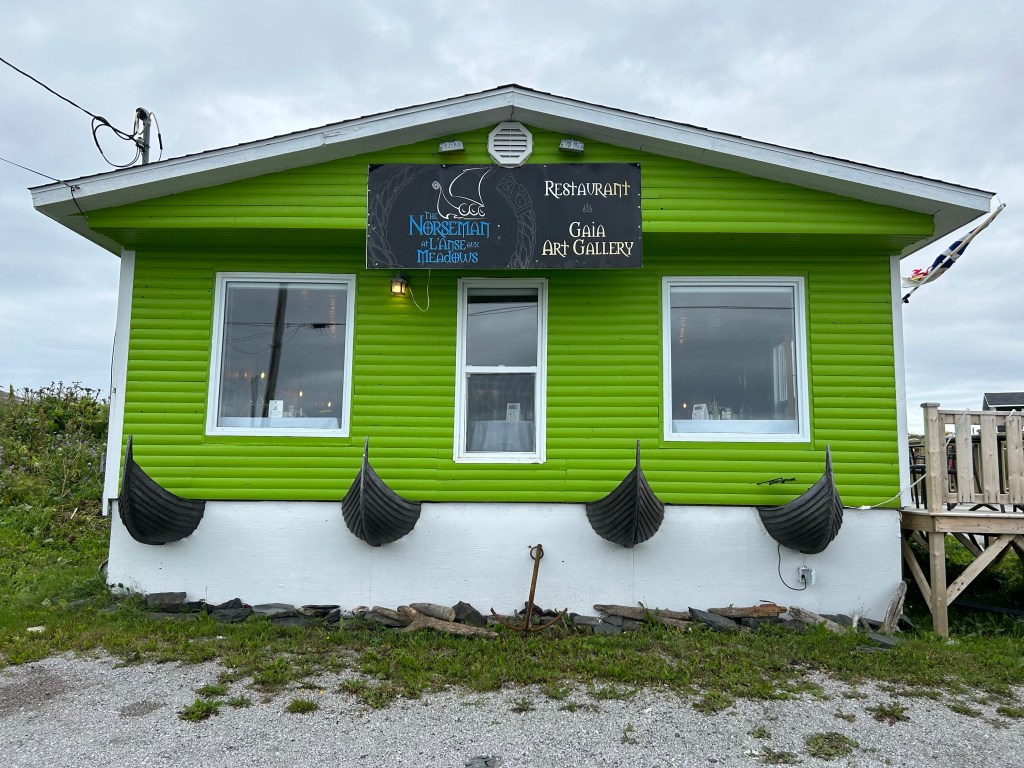
After the hike it was on to an early dinner at The Norseman – excellent- and a visit to the Leif Erickson statue.
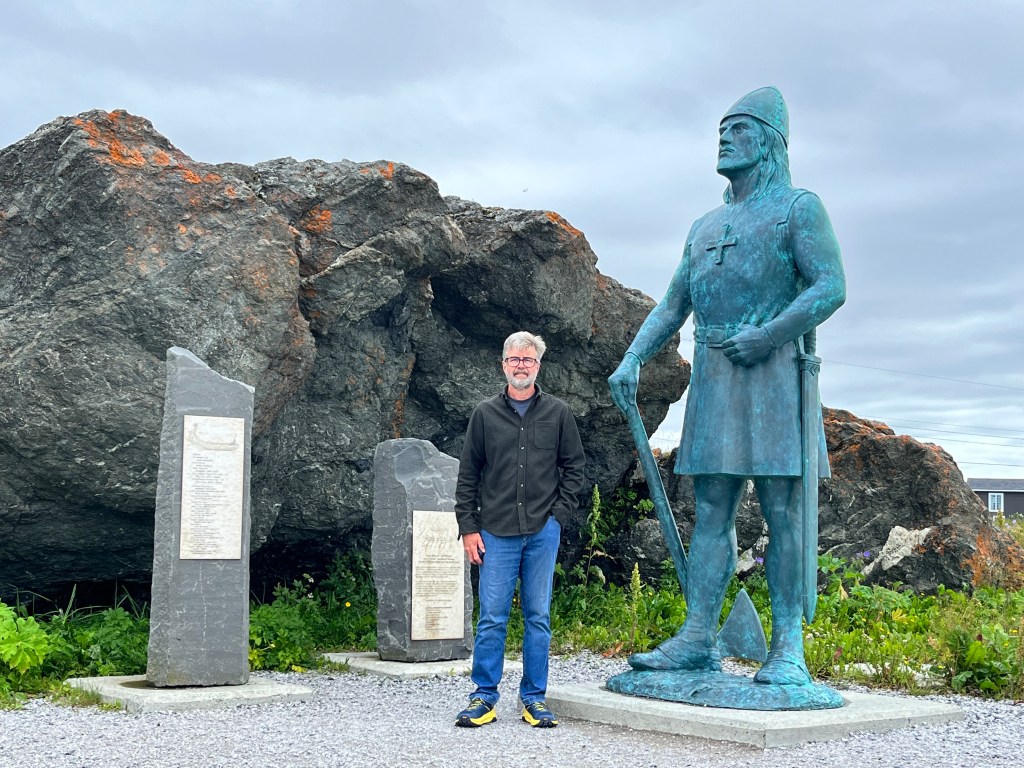
Erickson was a Norse explorer and it is speculated that he established the L’Anse aux Meadows site.
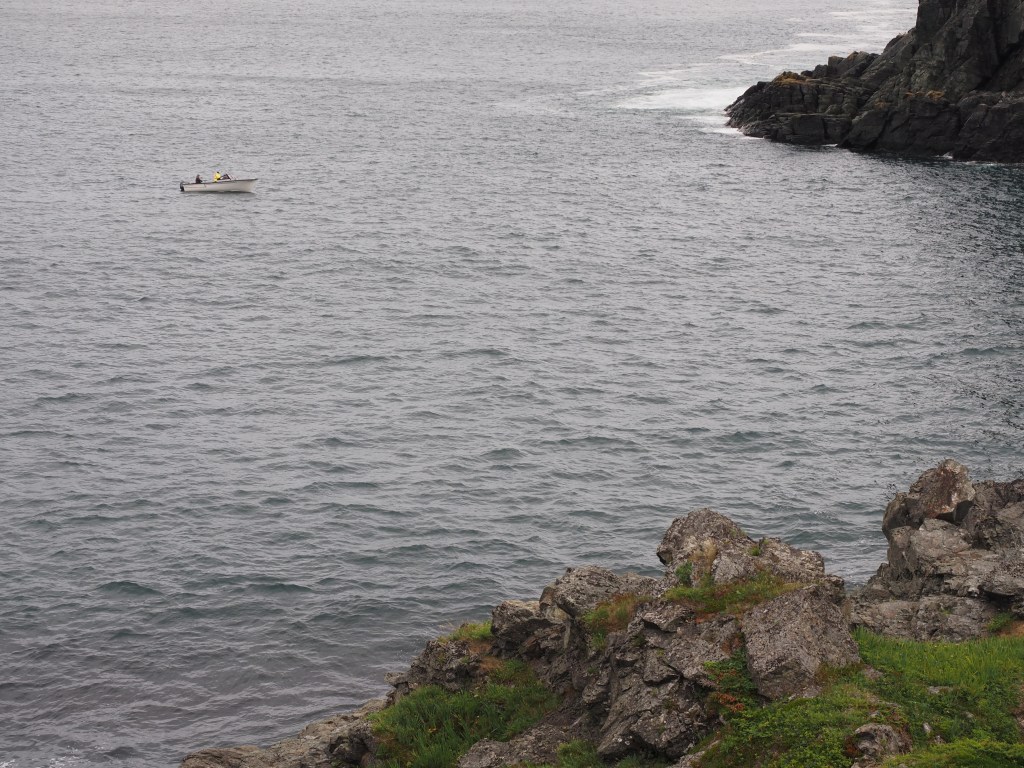
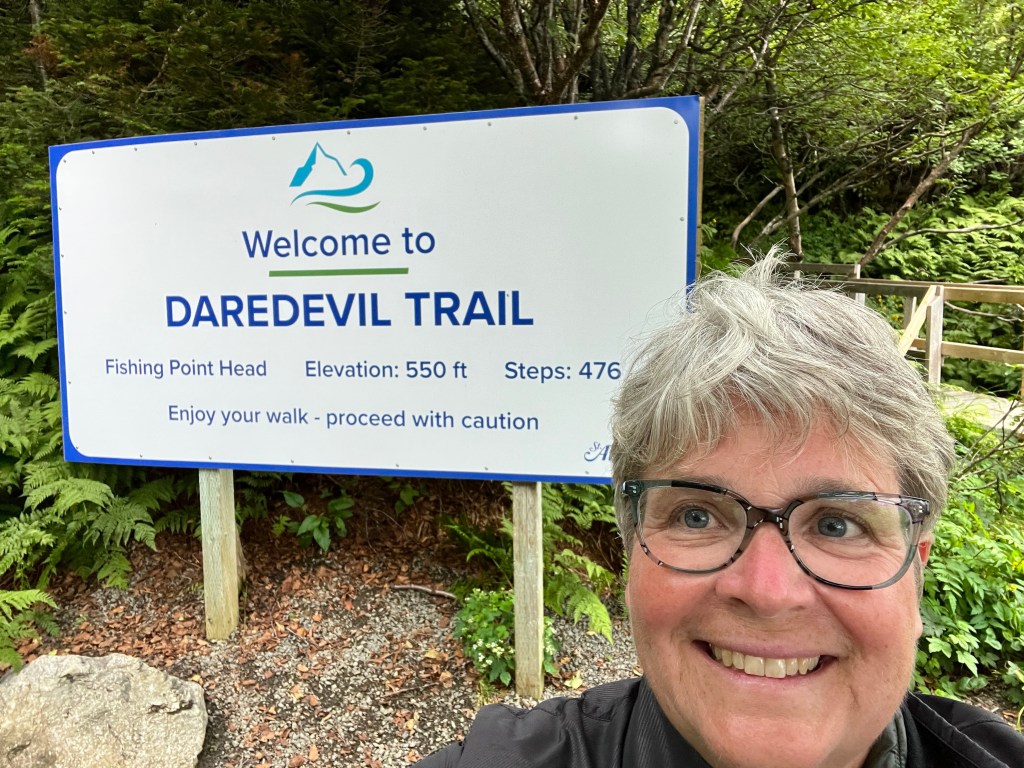
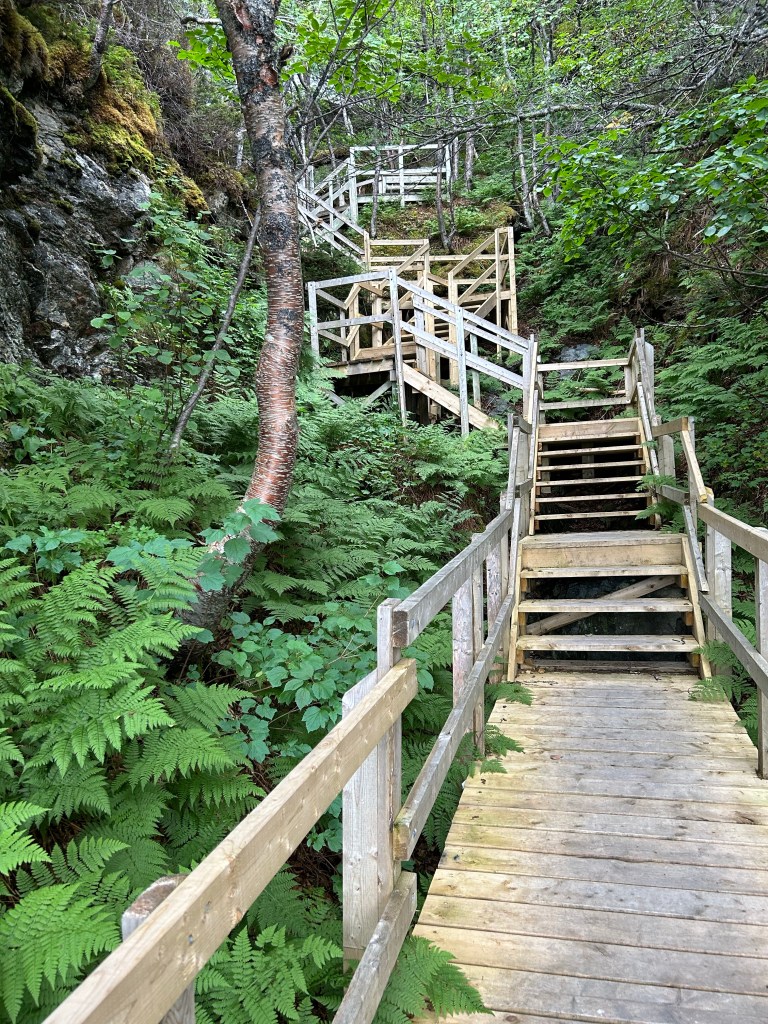
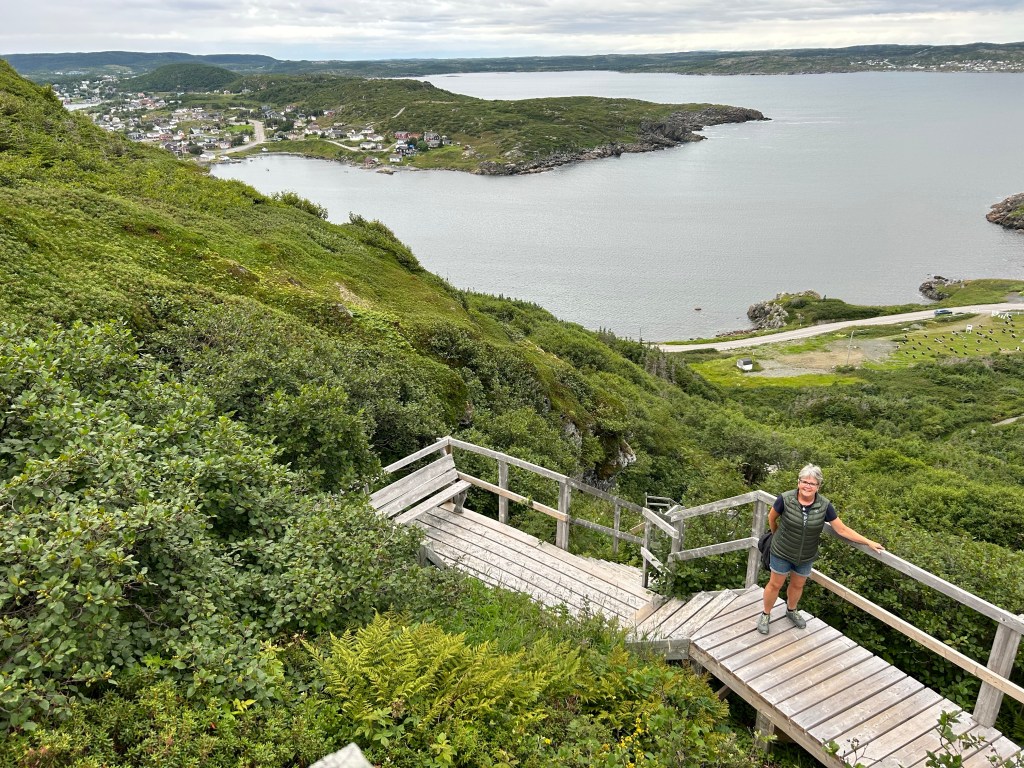
The following day we drove out to St. Anthony and checked out the lighthouse walking trails and the Daredevil Trail – St. Anthony’s mini Grouse Grind.
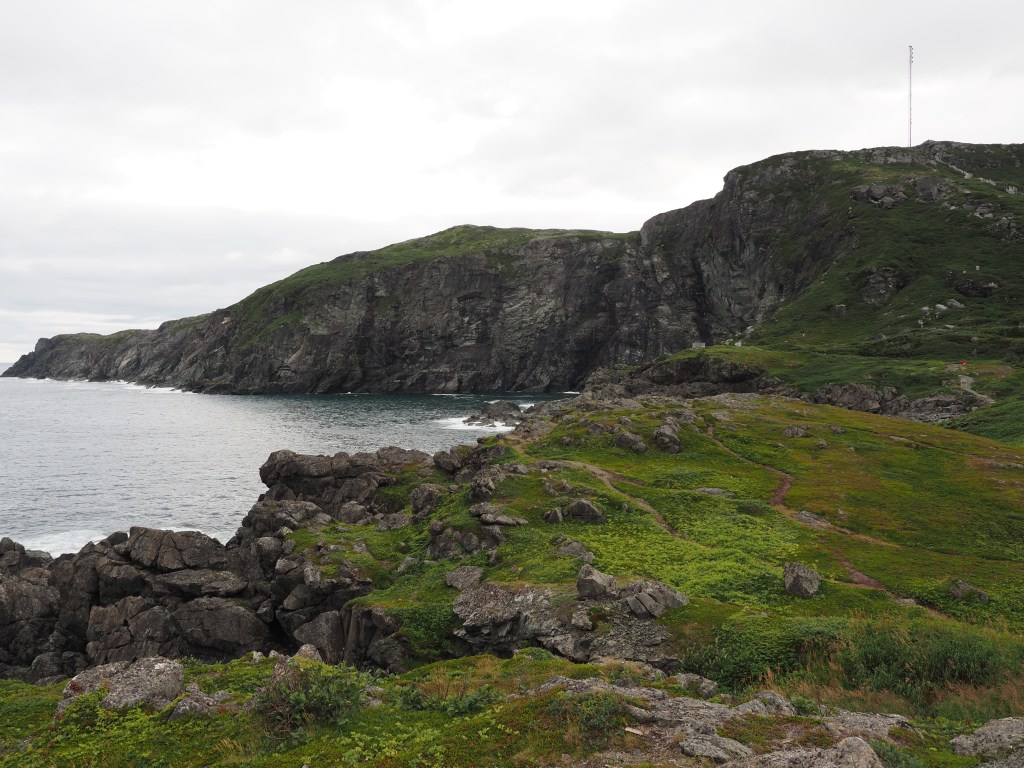
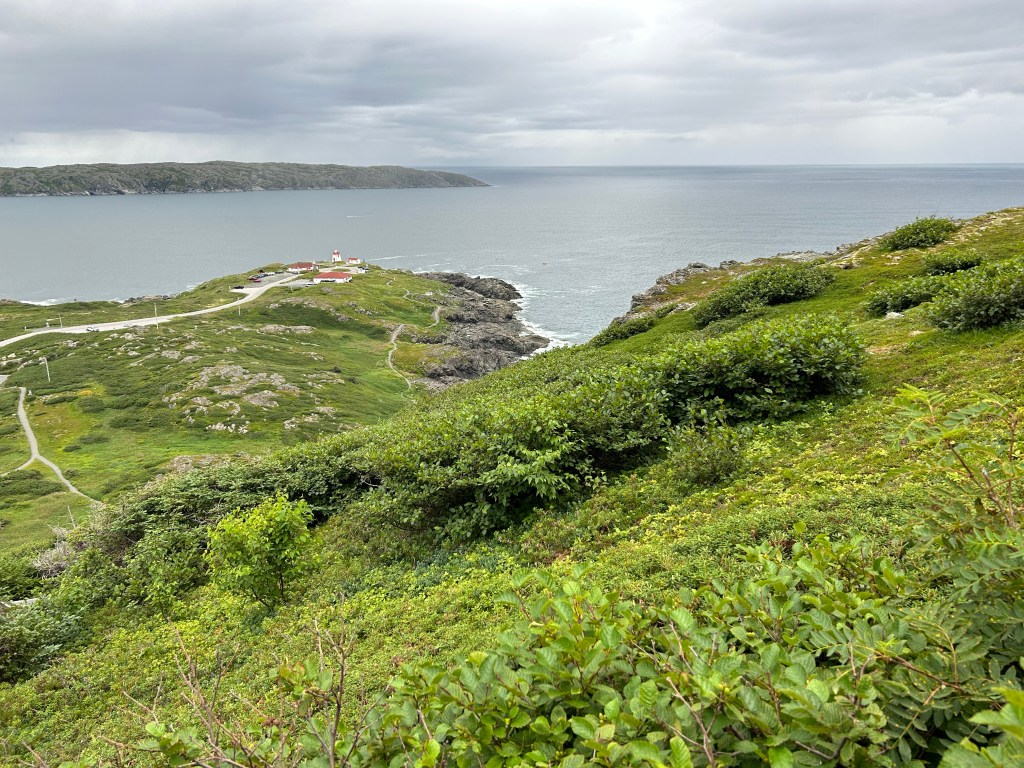
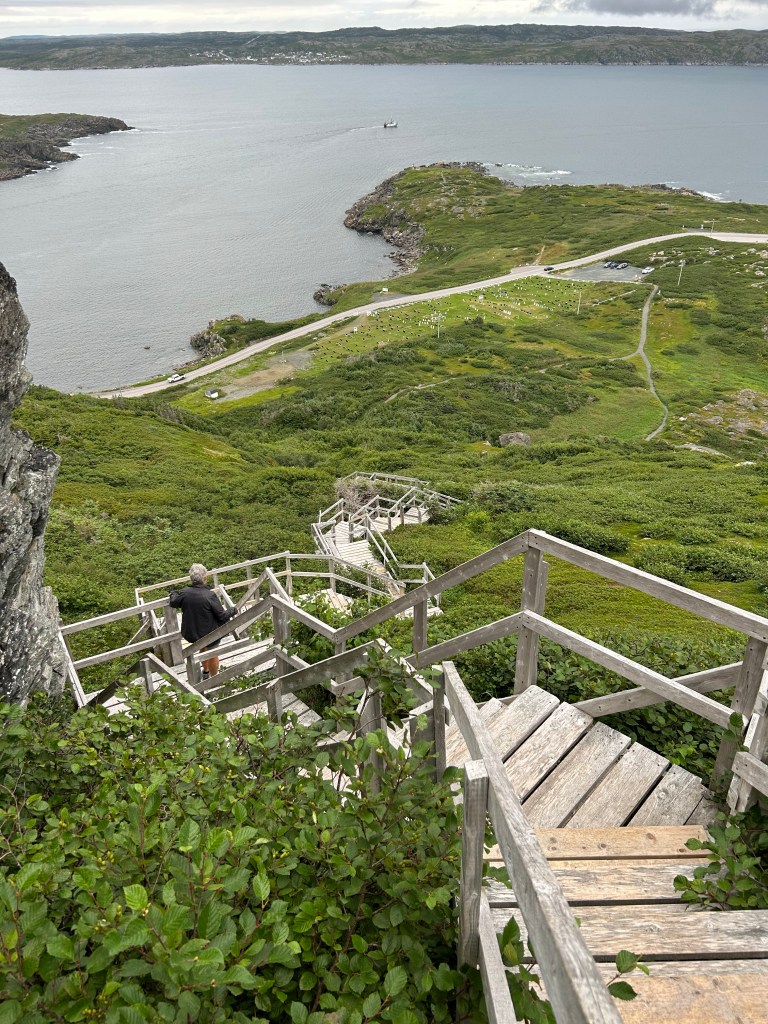
And we ended the day with a road trip to Ship Cove and our one and only moose sighting in Newfoundland.
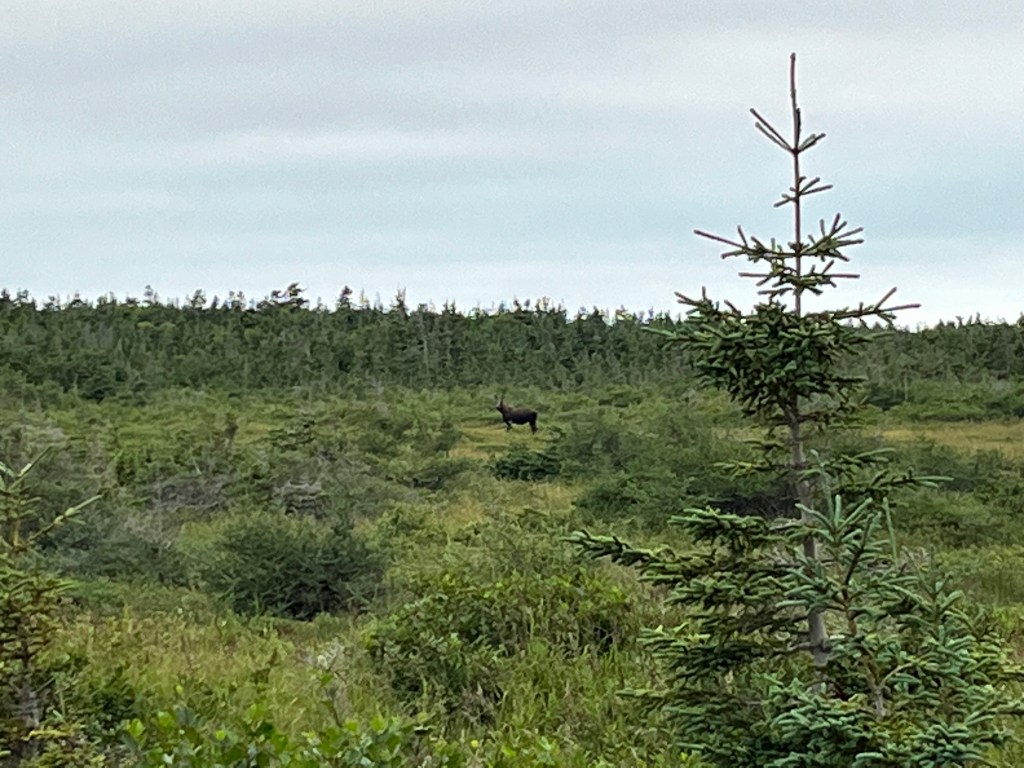
That’s about as close as you want to come to a moose.
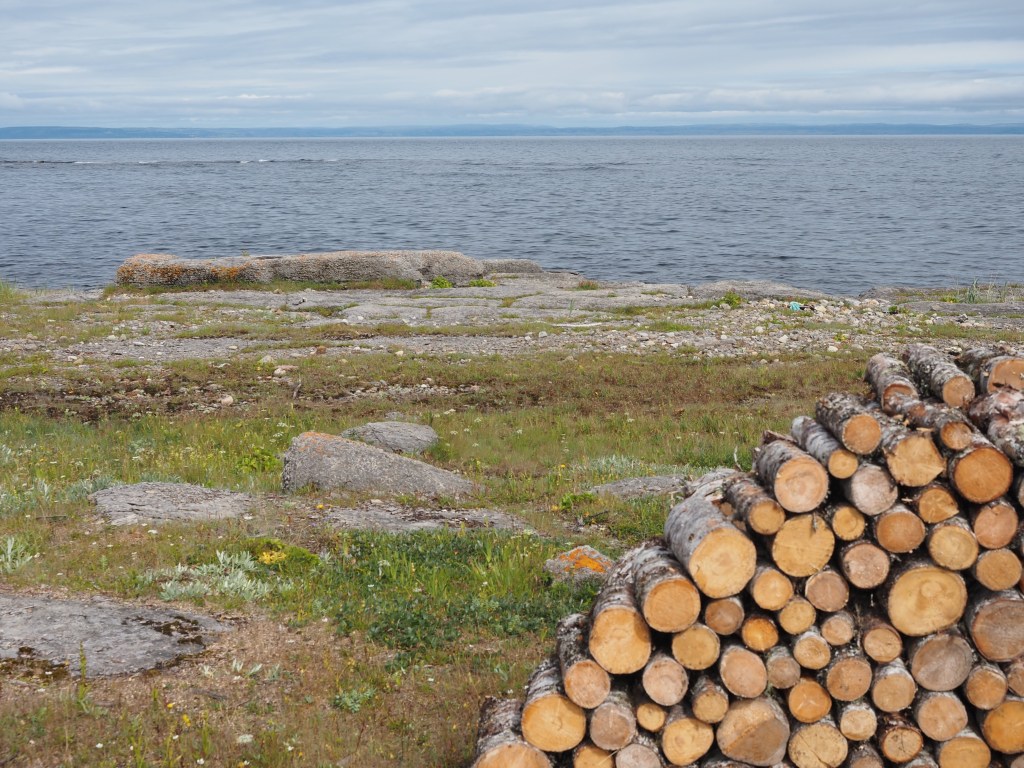
As we headed south from the St. Anthony area, we thought we should take a photo of a typical Newfoundland wood pile. You see them everywhere along the highways. People get a permit number and harvest logs in the winter when snow cover let’s them skid the logs to the highway. There they get bucked up so they can dry over the summer. Once fishing season is over, guys move the piles to their home where they get split and stacked. time was when men were judged by the size of their wood pile. It was a measure of their ability to provide for their family.
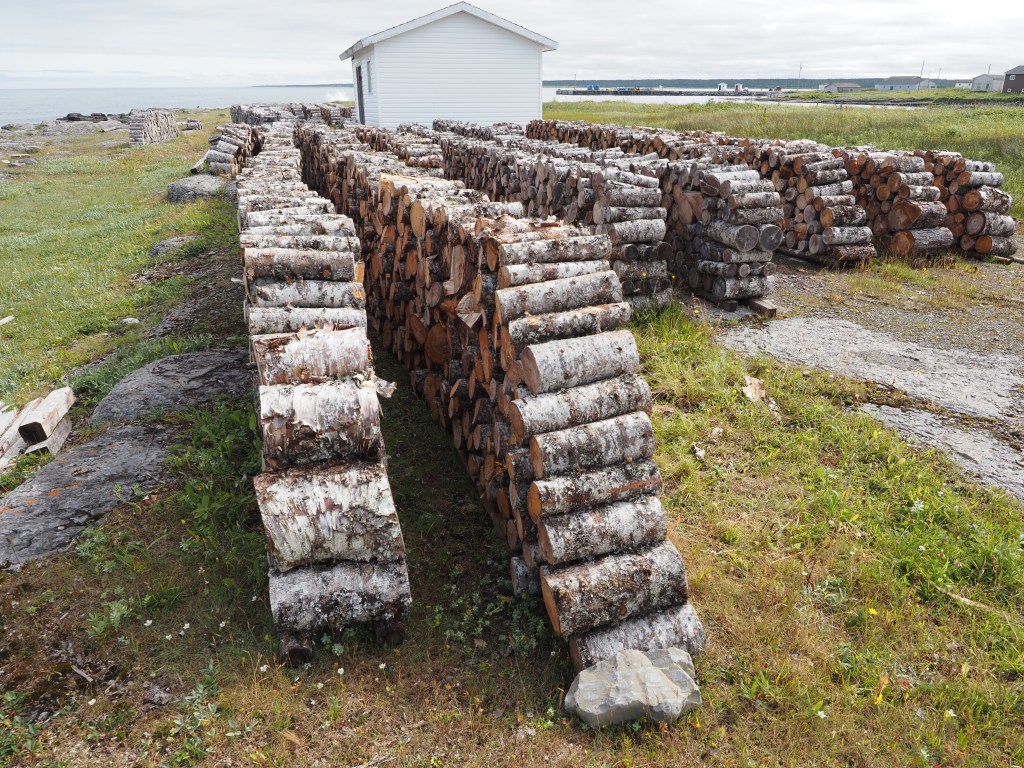
Across the water, that’s Labrador. It would be cool to get there some day.


 Two Sore Backs
Leave a comment