
This summer Paris hosts the Olympics and ParaOlympic Games. Today’s excursion is to join the many tourists who visit Olympia, Greece – the original site of the Olympic Games – this event that inspired the modern games.
While this site is historically significant, it is left to the imagination to recreate the infrastructure and events that took place between 8th century BC and 5th century AD. Much of the site is reduced to floor outlines, pillars and rock.
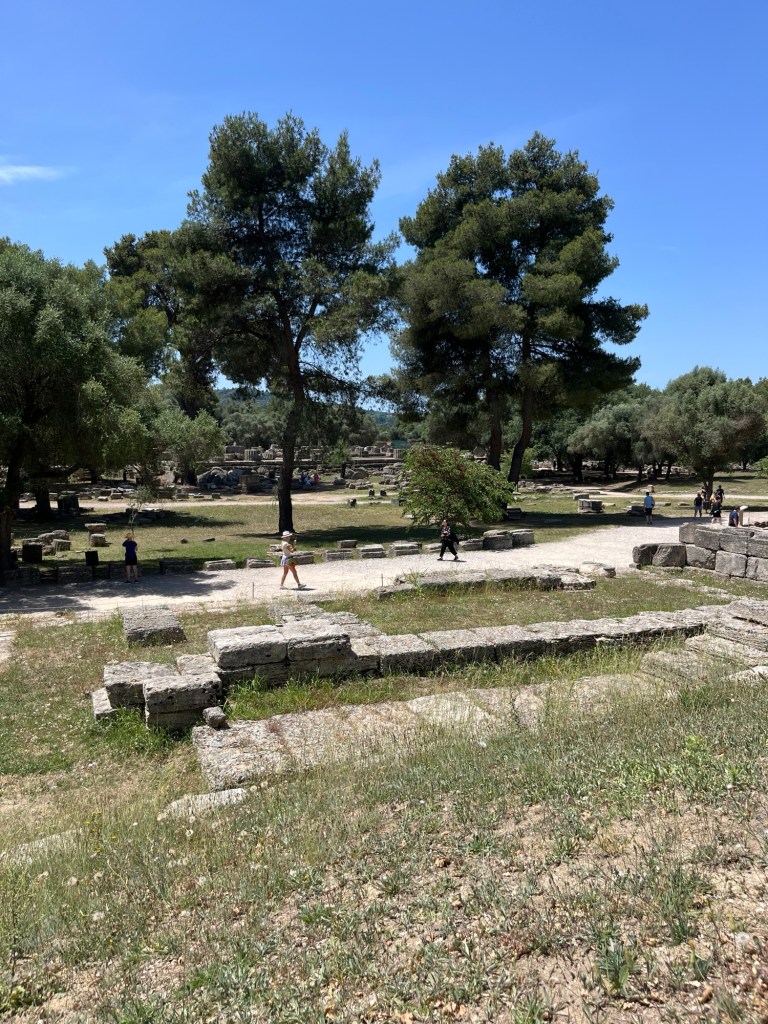
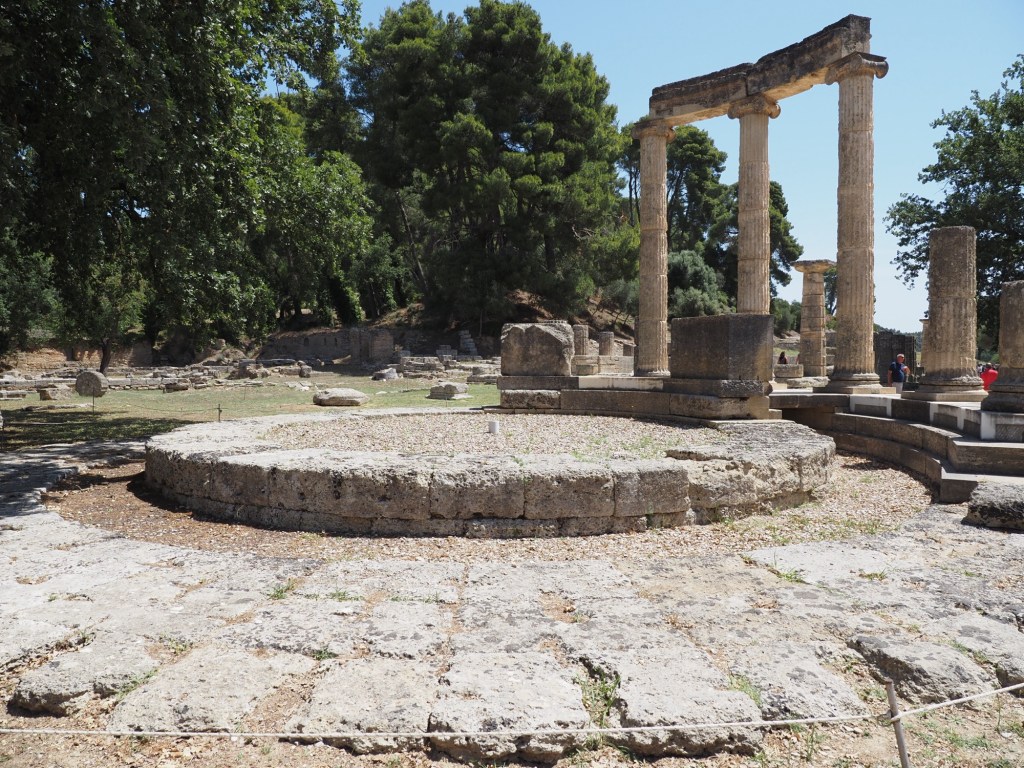
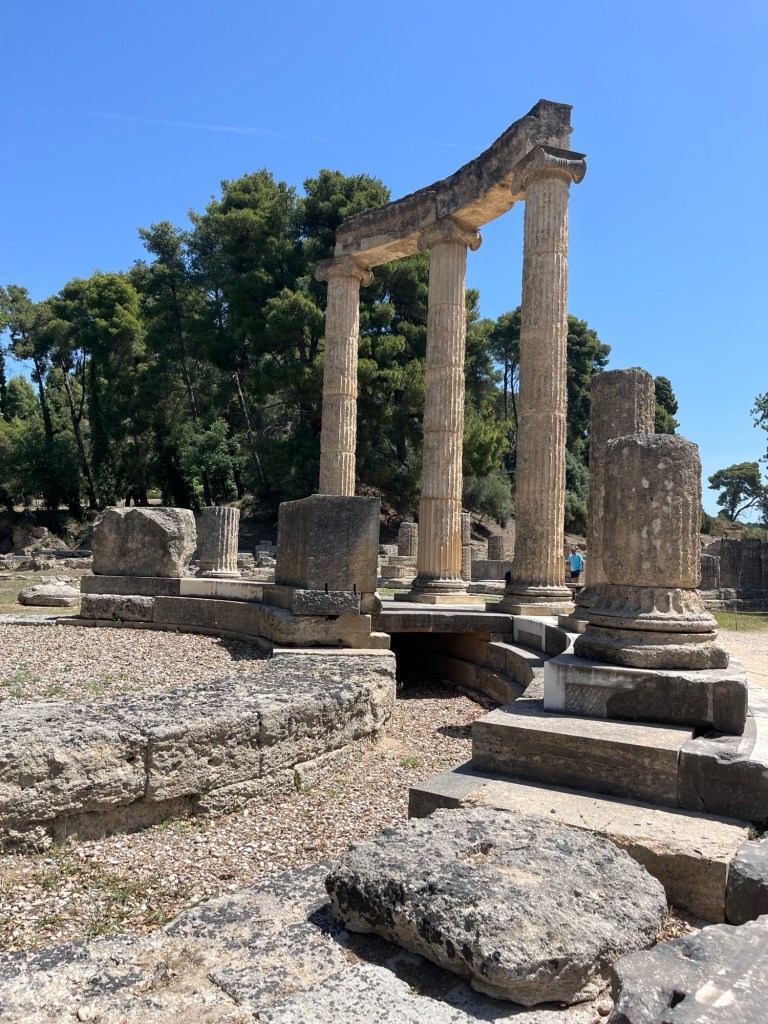
The first structure we come to is The Philippeion. (Built in 4th C BC and partially restored in 2005) this is a memorial to Philip, the father of Alexander the Great. Philip built a strong army that restored peace to Macedonia. This unique circular structure celebrates that victory.
The oldest temple at Olympia is the Temple of Hera – Queen of the Greek gods. The lighting of the Olympic flame occurs at the Altar.
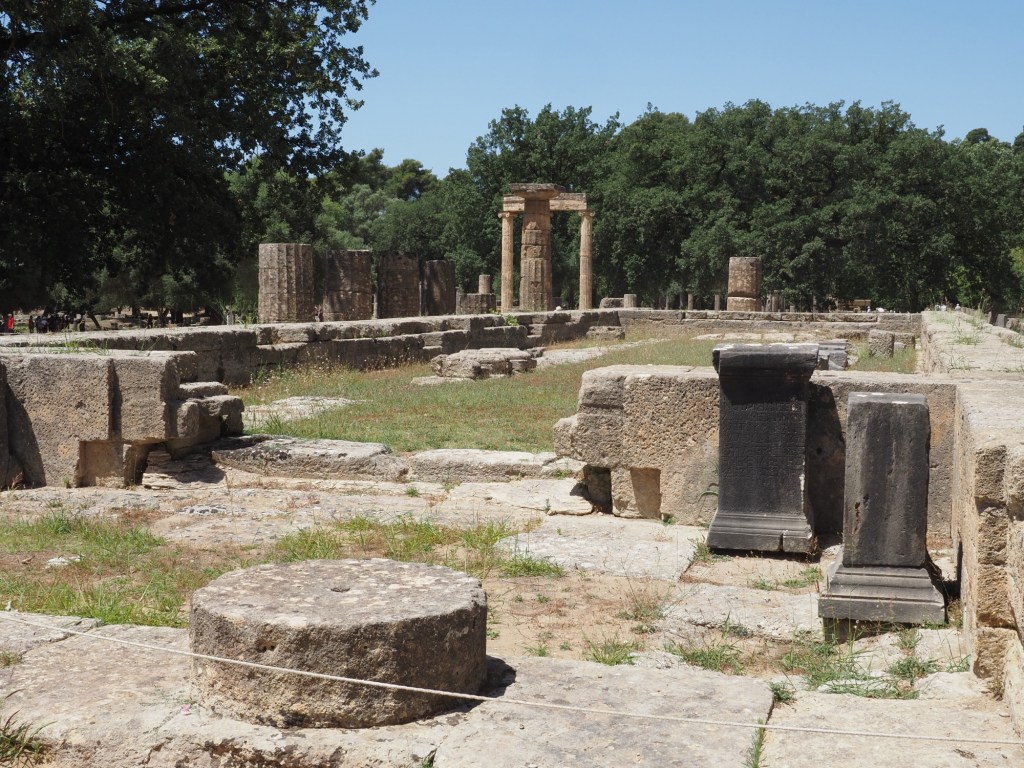
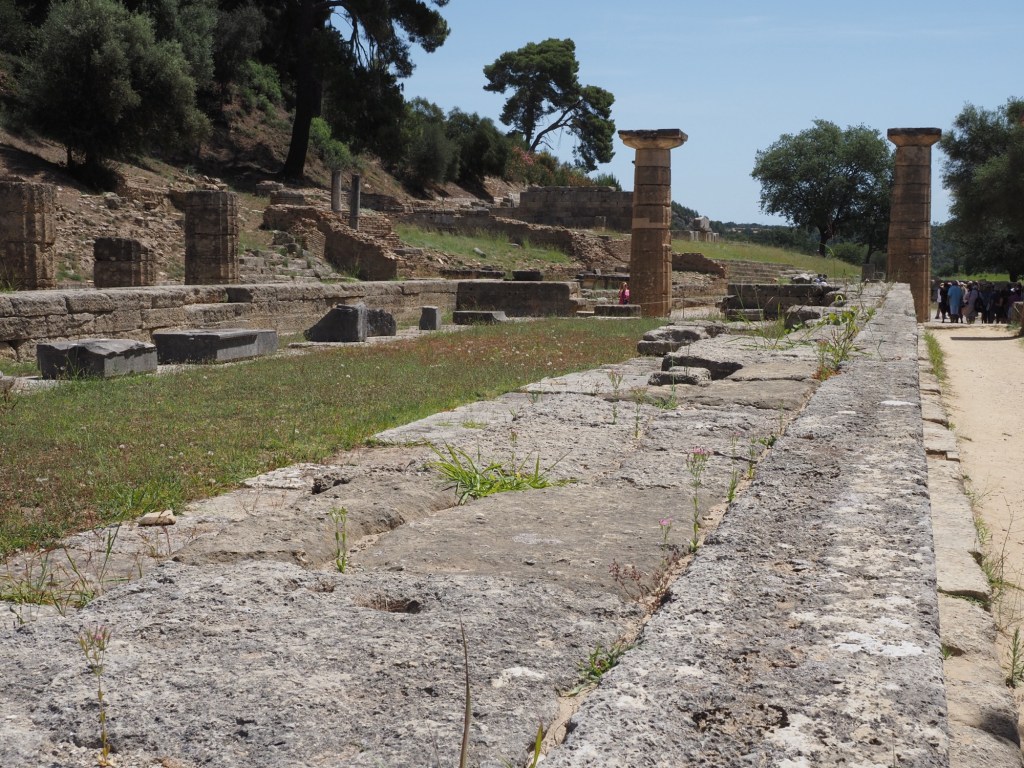
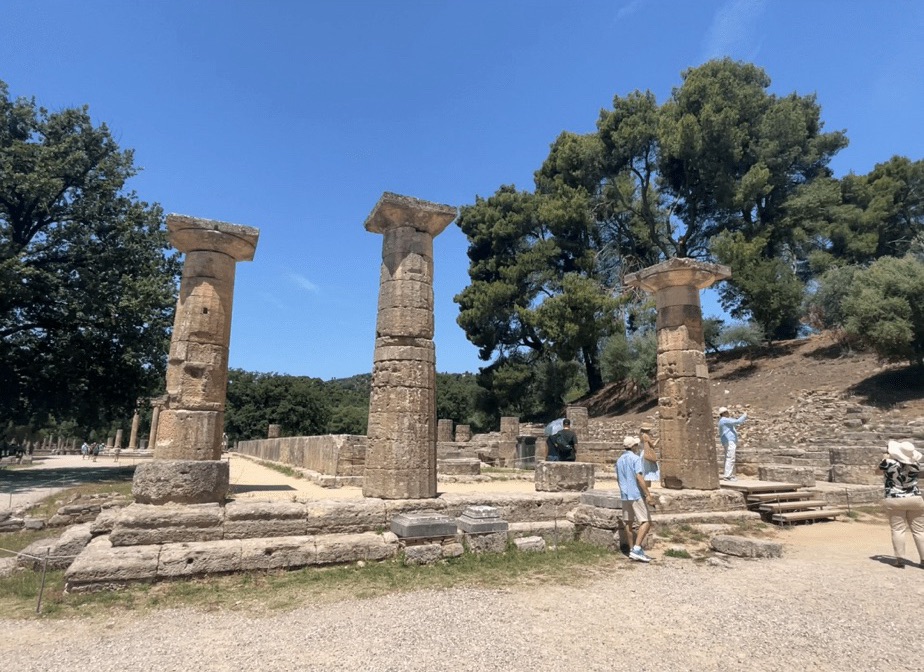
Altar of the Temple of Hera. Many selfies are taken at the altar. Here the Olympic flame is lit by the sun’s rays. The ceremony for Paris 2024 took place here on April 16th.
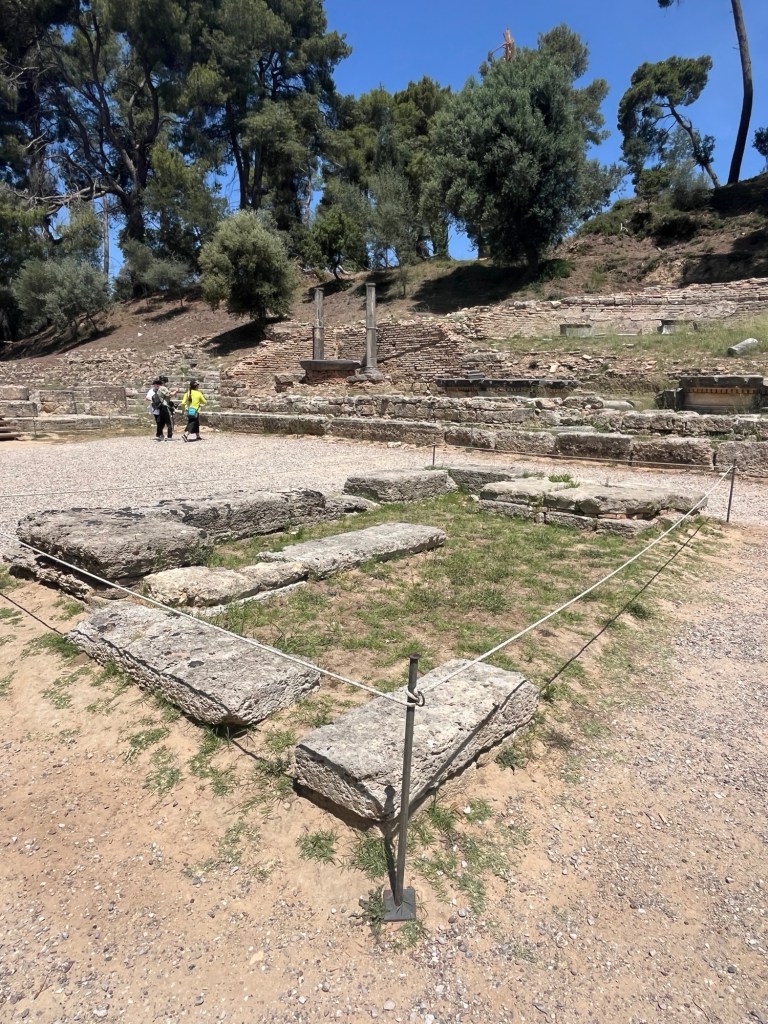
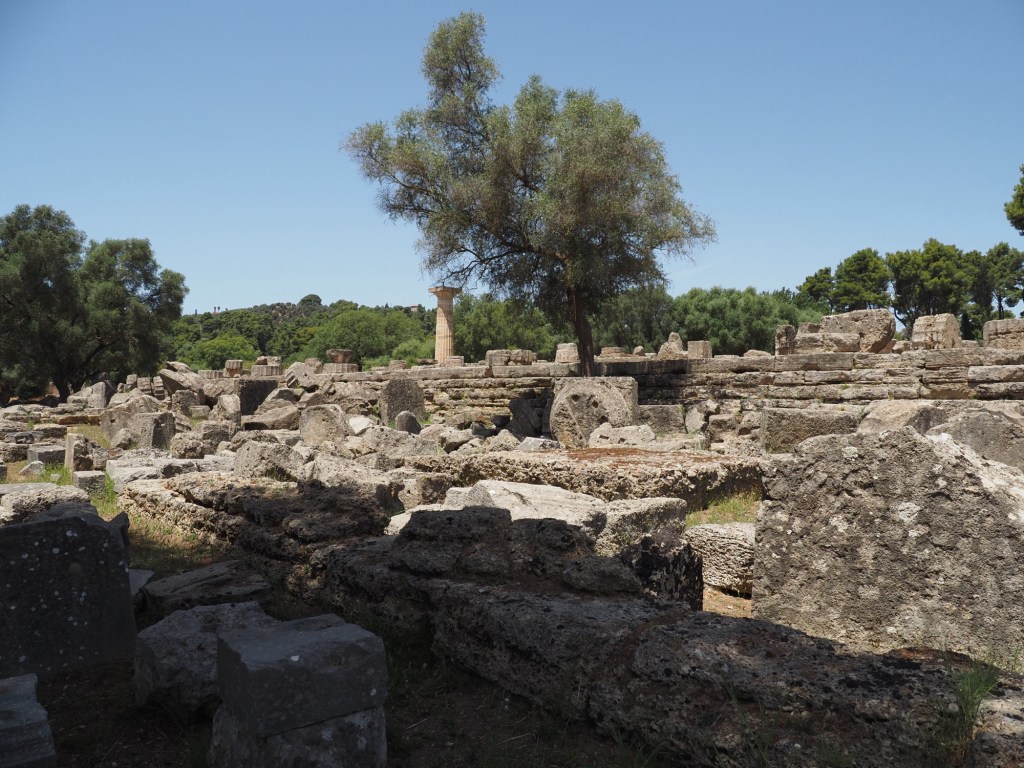
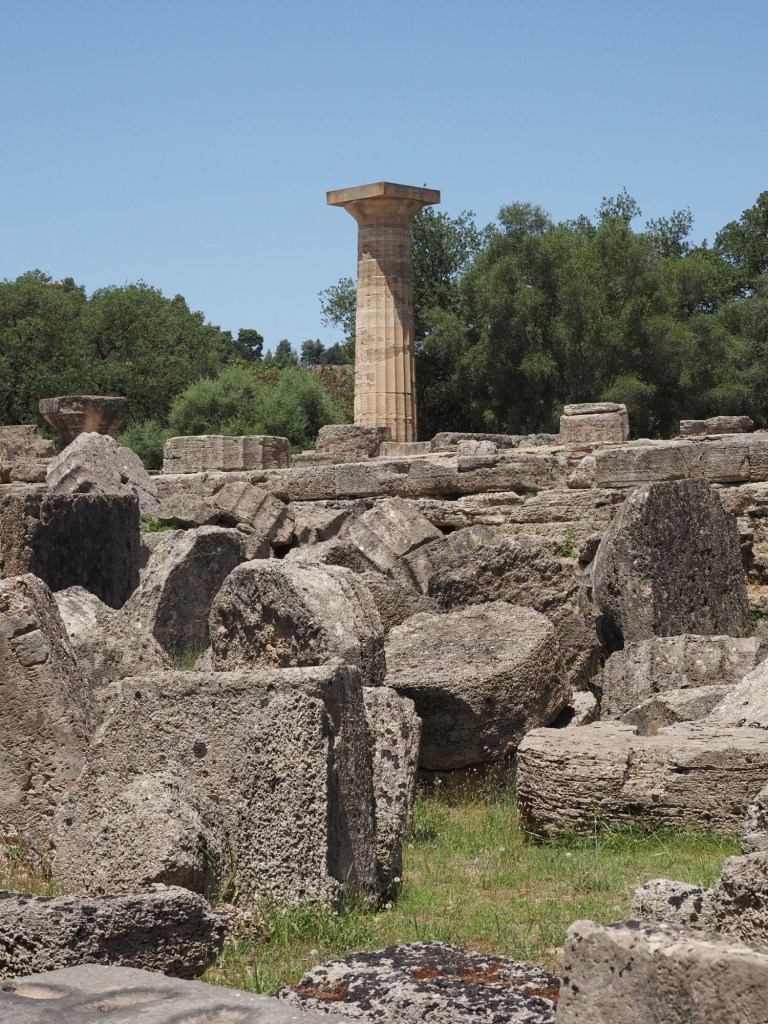
Around the 5th century BC, a separate temple is built to honour Zeus. Zeus is the supreme god and protector of human kind. Unfortunately, this temple has not survived the centuries so well.
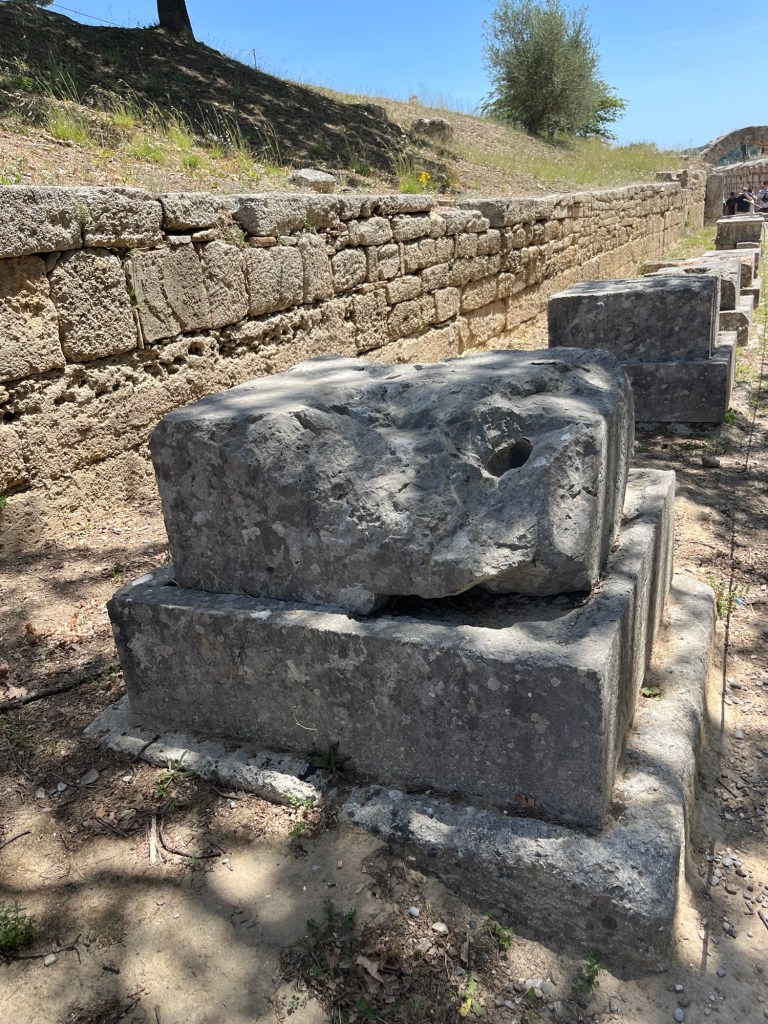
Before entering the stadium we walk along The Zanes. These are 16 bases. Back in the day, each base had a bronze statue of Zeus. Here is an interesting bit. There were fines levied against athletes who broke the code of conduct. The offender’s name and the infraction would be inscribed at the base of the statue. Infractions include bribery, lying, late arriving to the games and withdrawing from events.
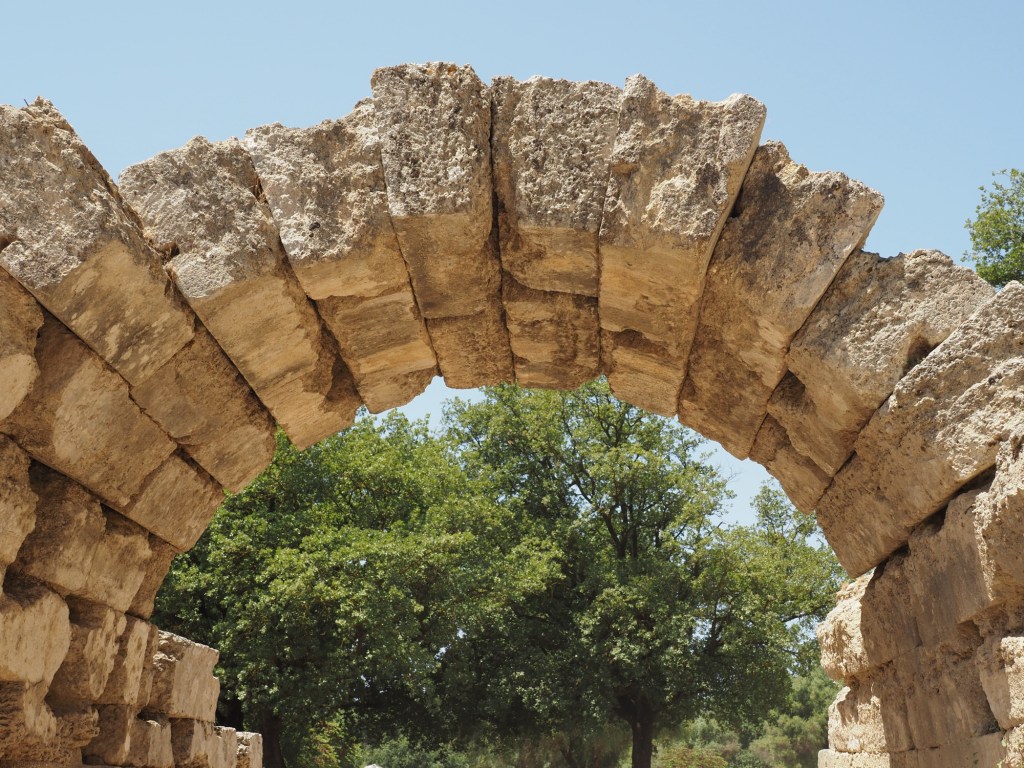
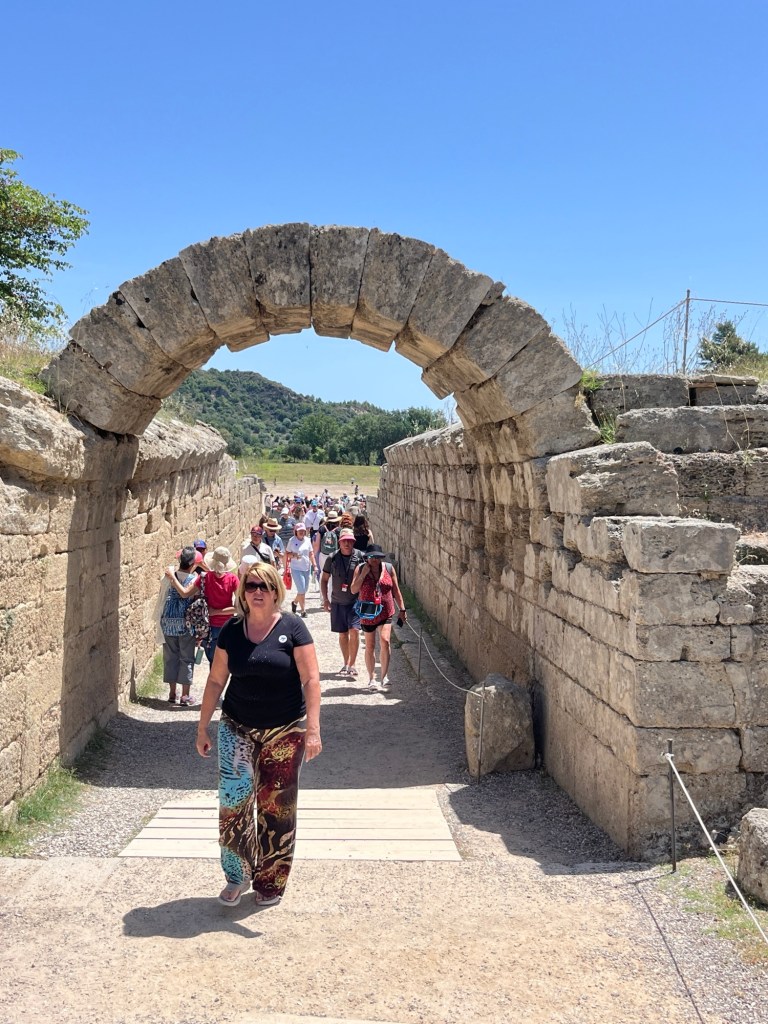
Access to the Stadium (running track and field events) is through a roofed entrance. Very little of the roof remains.
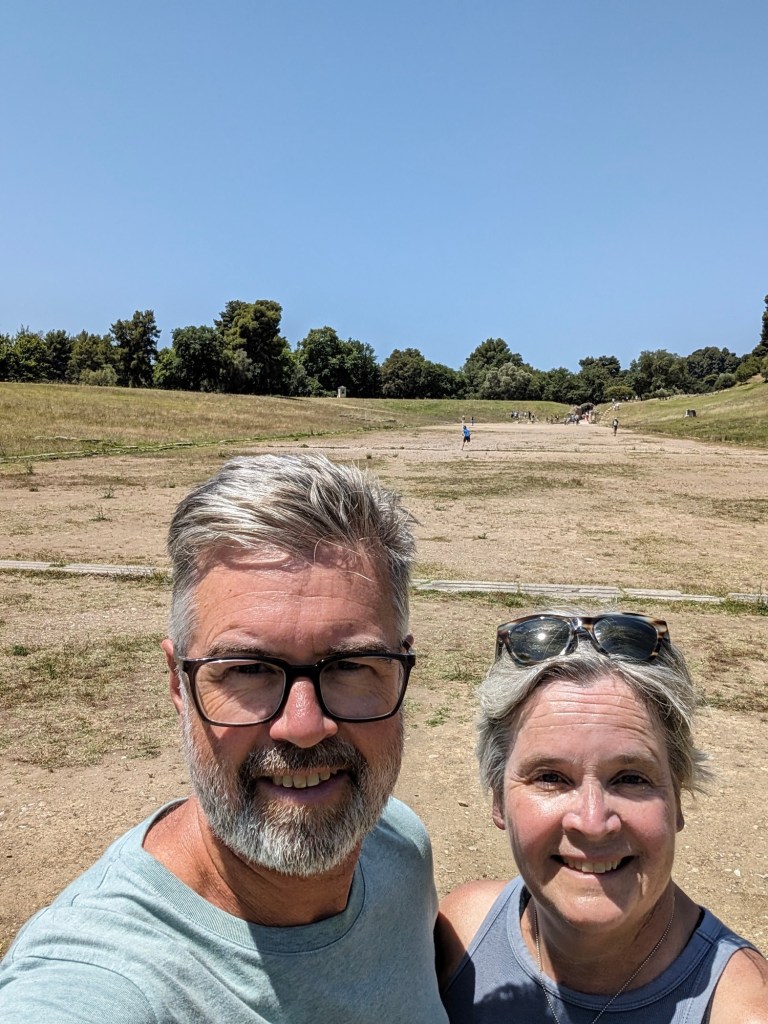
This next photo is taken from the far end of the field looking back. Seats are not installed; people stood on the sloped sides to watch the events. More spectators could be accommodated that way.
Few tourists walk the length of the stadium. And it is a warm day!
We saw other ruins that were used for sporting activities.
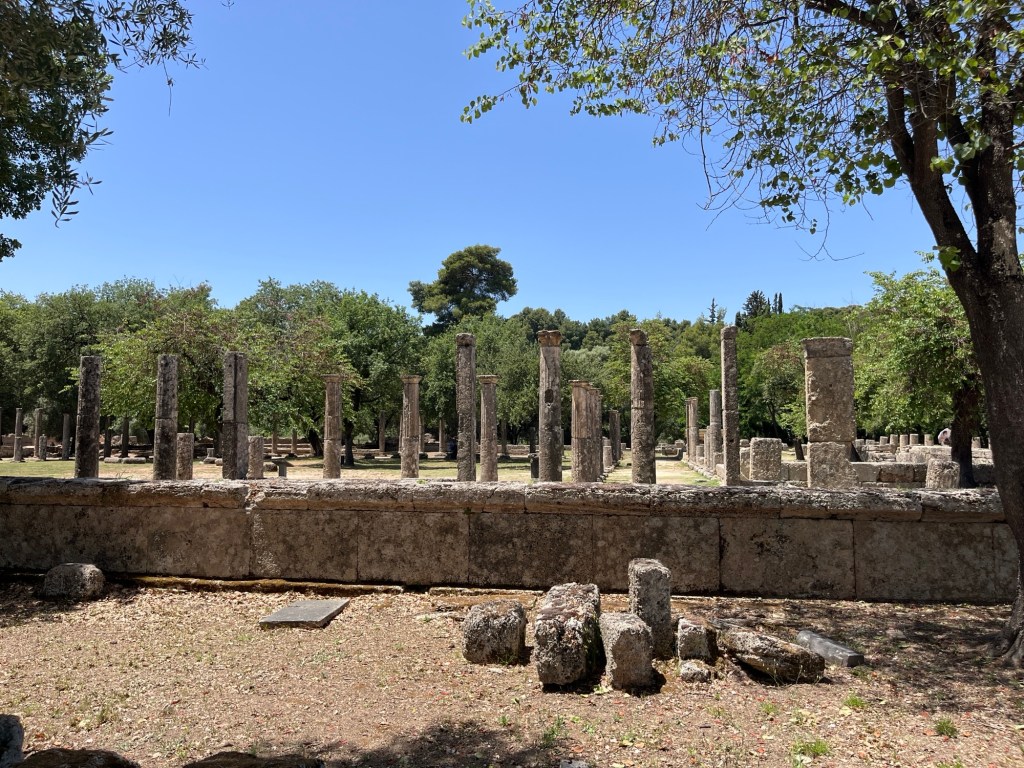
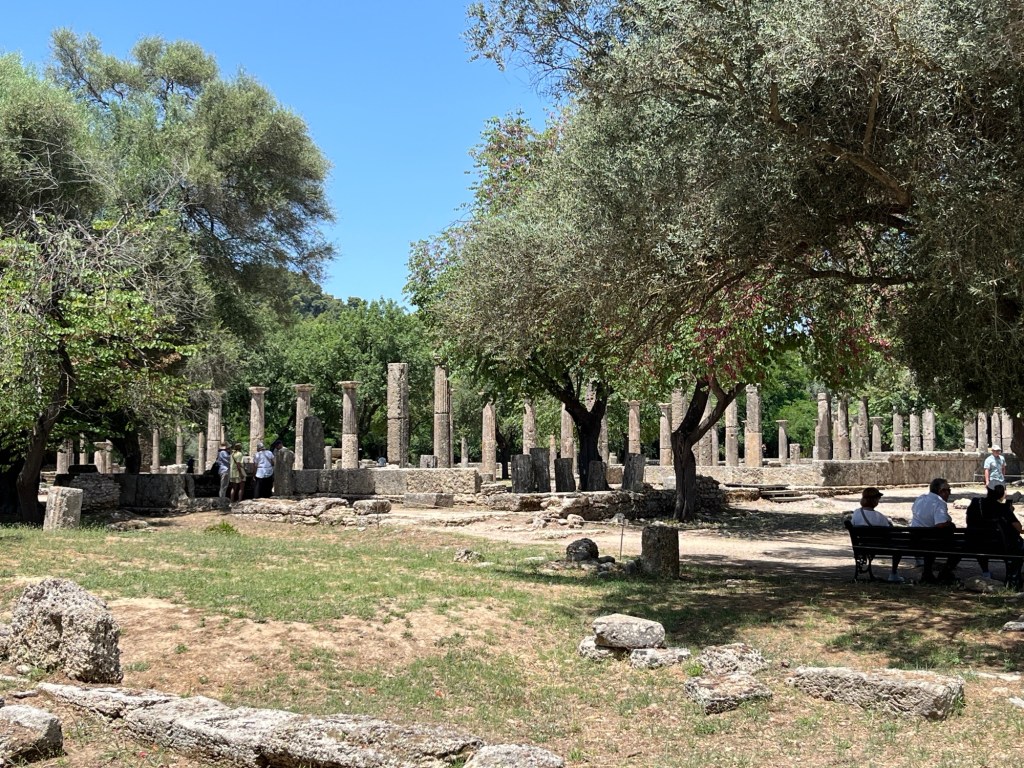
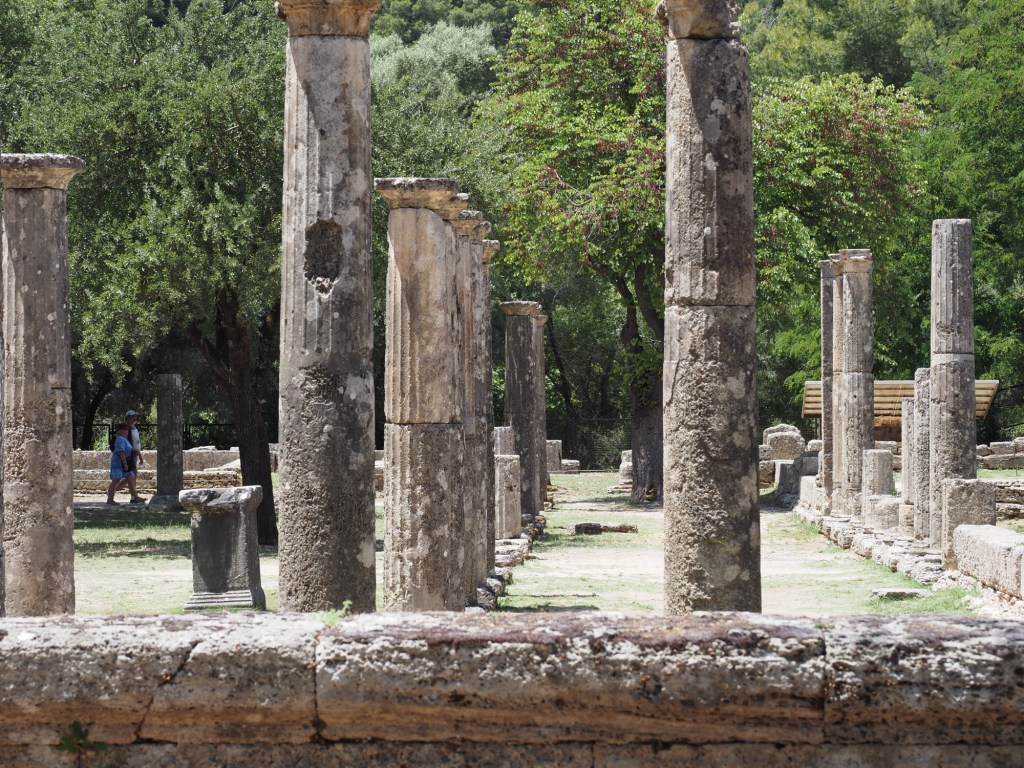
Palaistra (wrestling grounds also used for boxing and jumping). Only the columns are left. Judging from the number of columns, there were many interior rooms.
The participants would dress, be anointed in oil, and even compete indoors if the weather was poor.
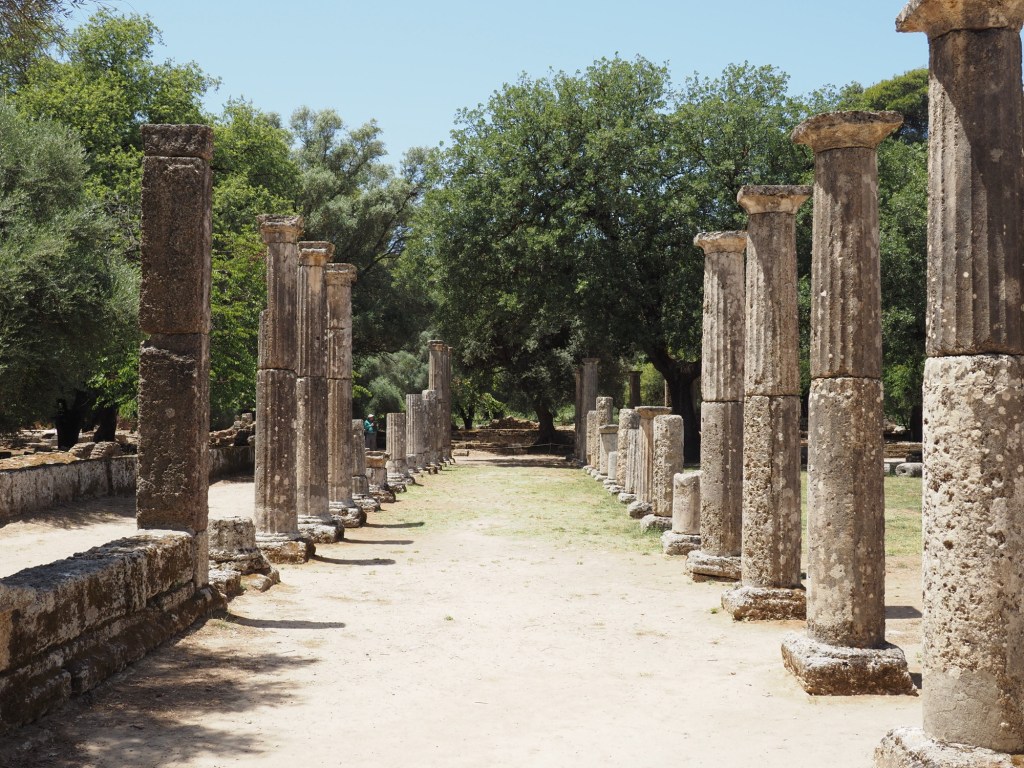
Gymnasium
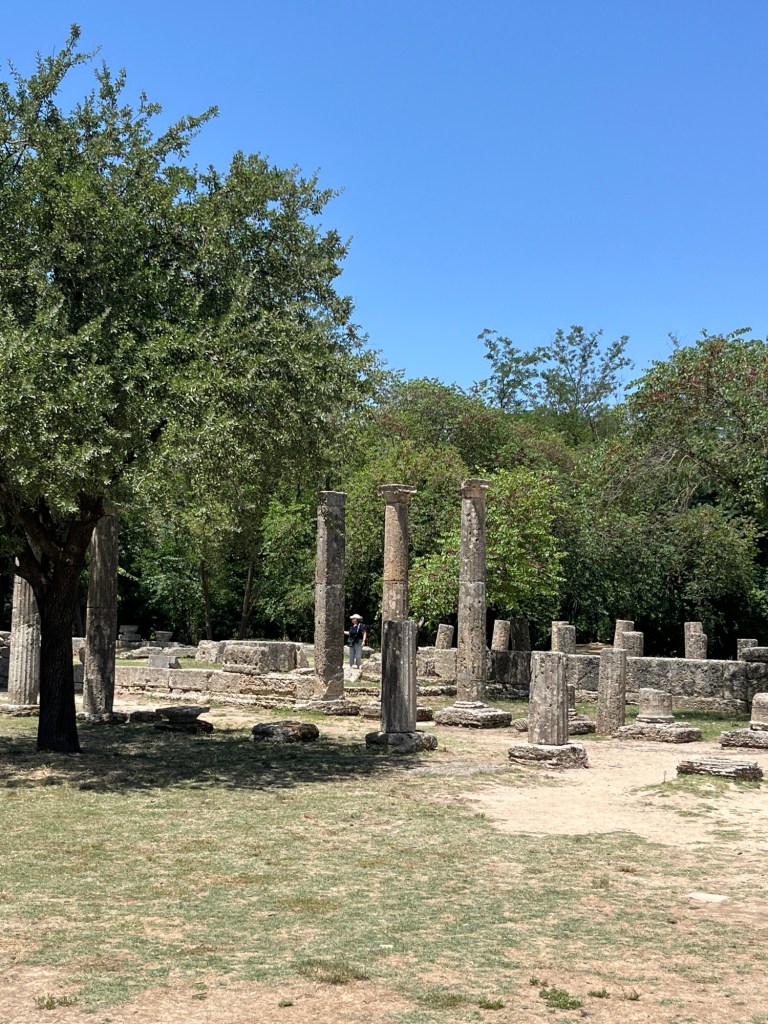
The gymnasium was used as a training facility prior to and during the games.

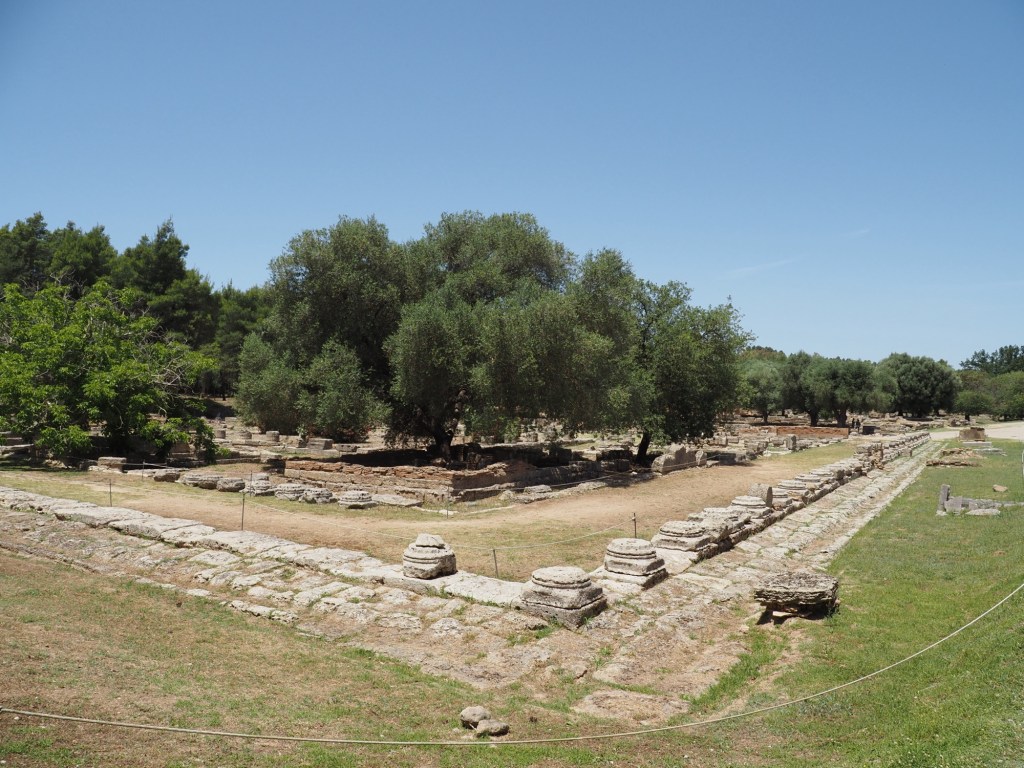
Leonidaion otherwise known as the hotel.
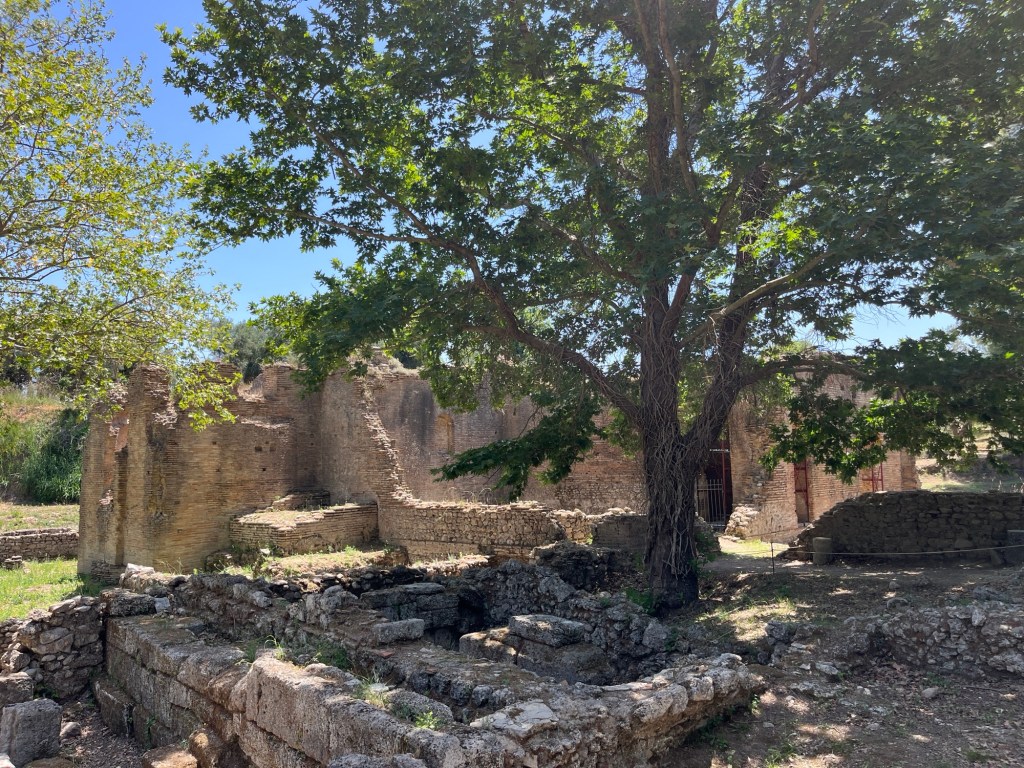
Nero’s House (Roman emperor in 1st C AD) had his own place. A bath house was next door – complete with hot water.
These remains are more intact.
That’s a wrap on Olympia!
There are many tour buses hovering around Olympia so we escape into the hills and drive to a very small village for lunch.
Irakliea
It is a Sunday afternoon and the village is empty. There is one restaurant open.
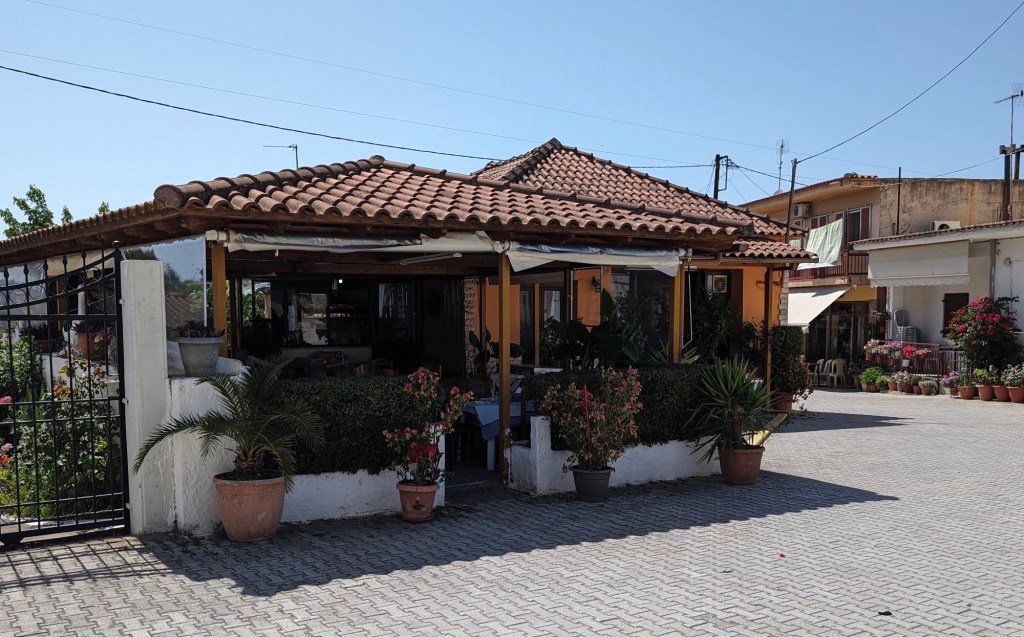
The hostess does not speak any English so there is pointing at the menu. We are in for a treat.
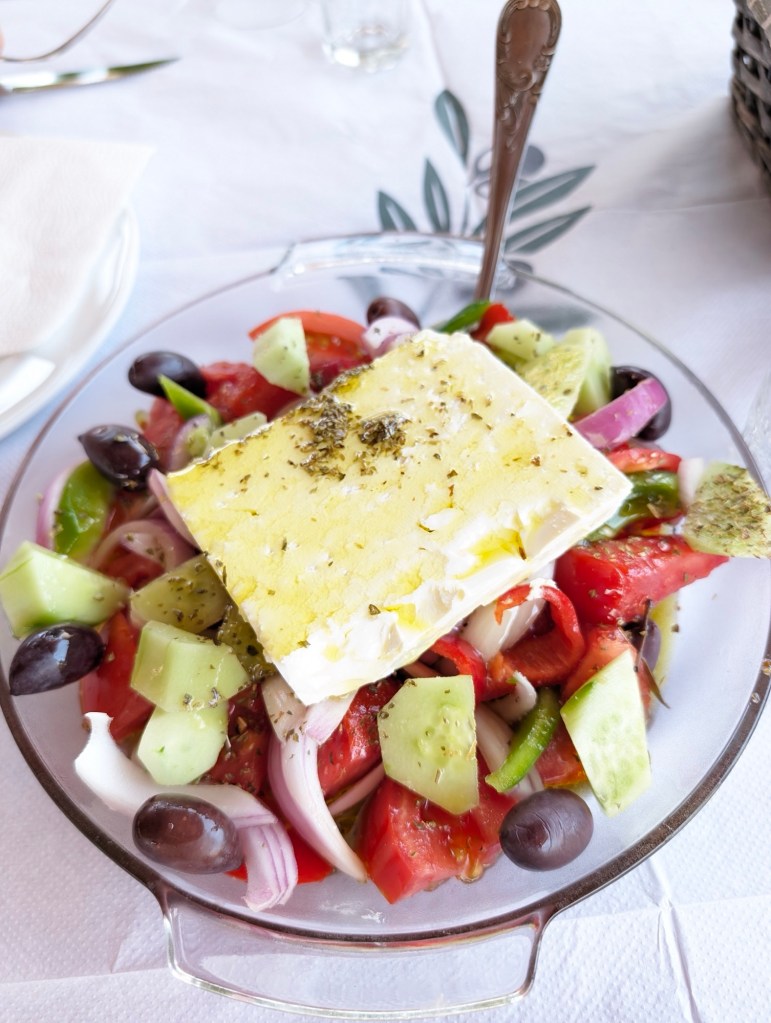
Greek salad with the biggest piece of feta cheese I have seen.
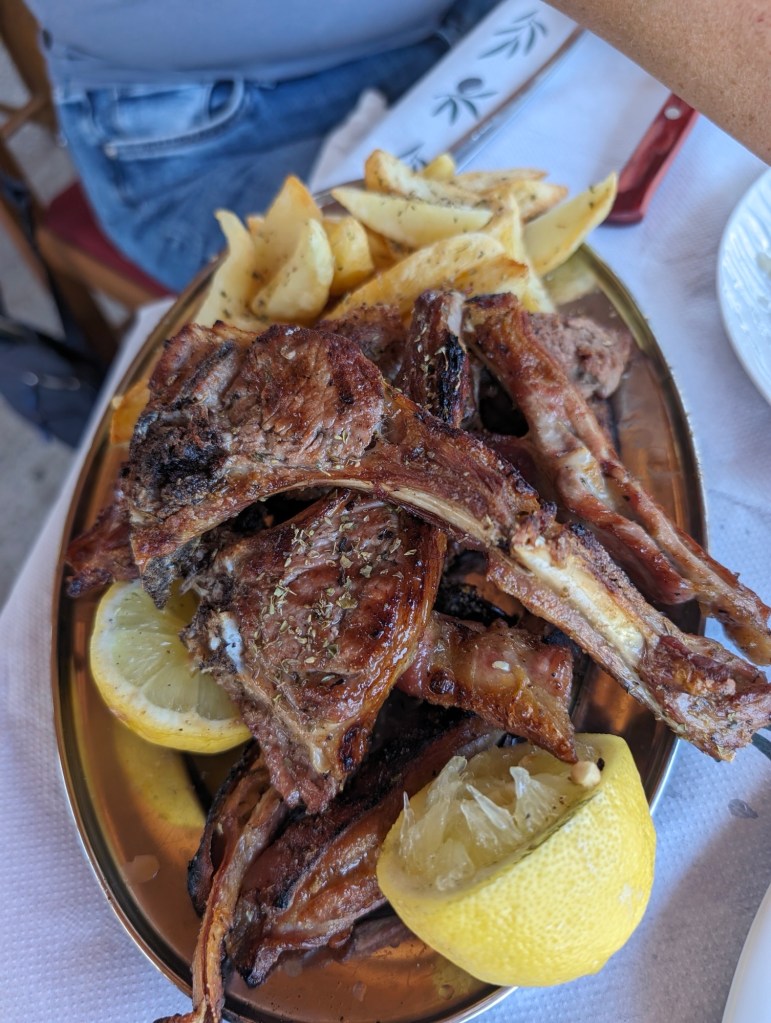
The family has a nearby farm. The salad and chops are incredible. We are served a complimentary plate of their farm potatoes roasted in olive oil. We have a wonderful meal!
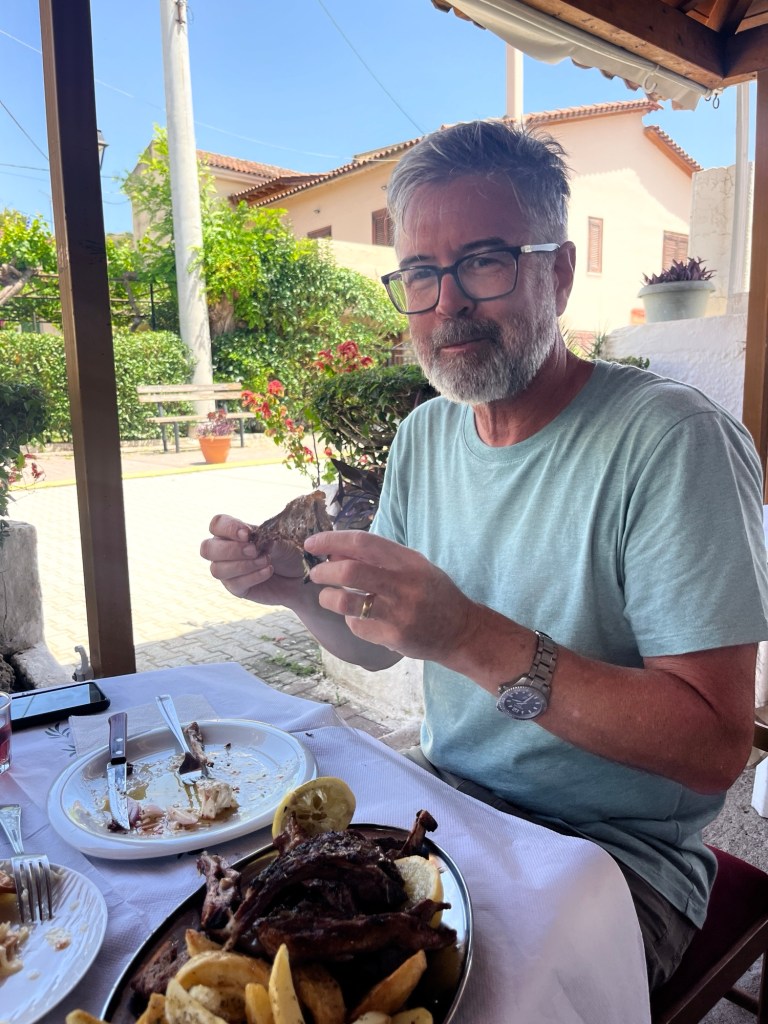
We share the restaurant with another couple. They live and work in Athens and come to nearby Patras on the weekends to enjoy the countryside at their second house (passed down from a relative). We have a great conversation with them – she grew up in Montreal and moved back to Greece in her early 20s.
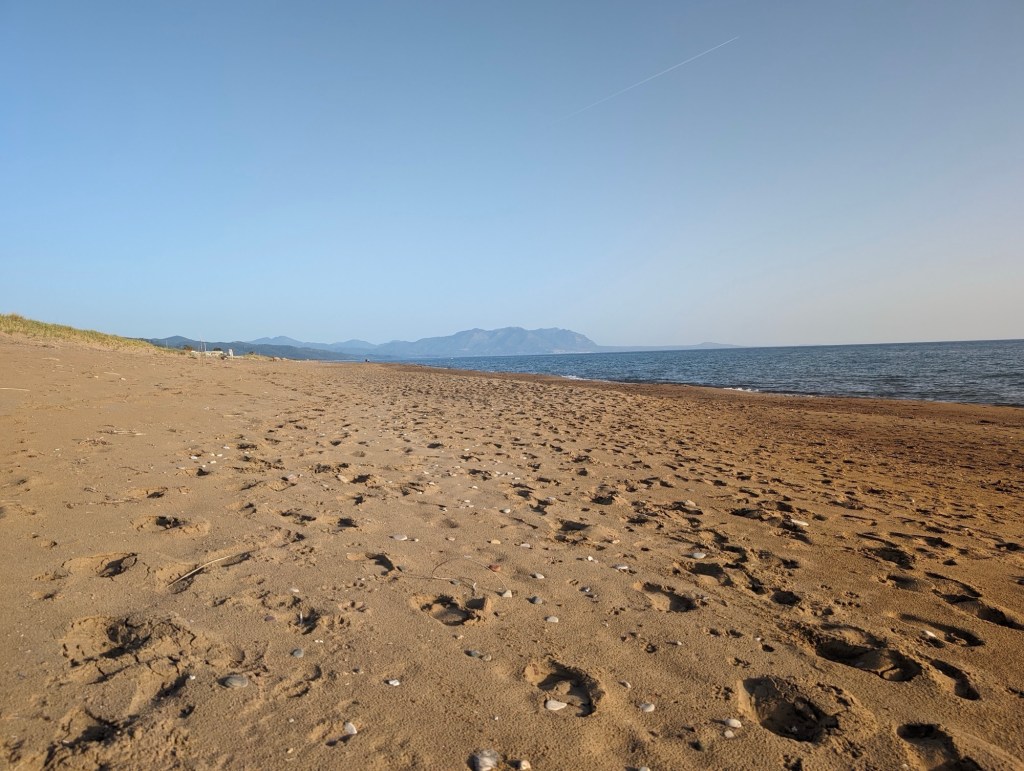
Our last stop is Kokomo Beach, just down the road from our hotel in Kakovatos. The beach is deserted.
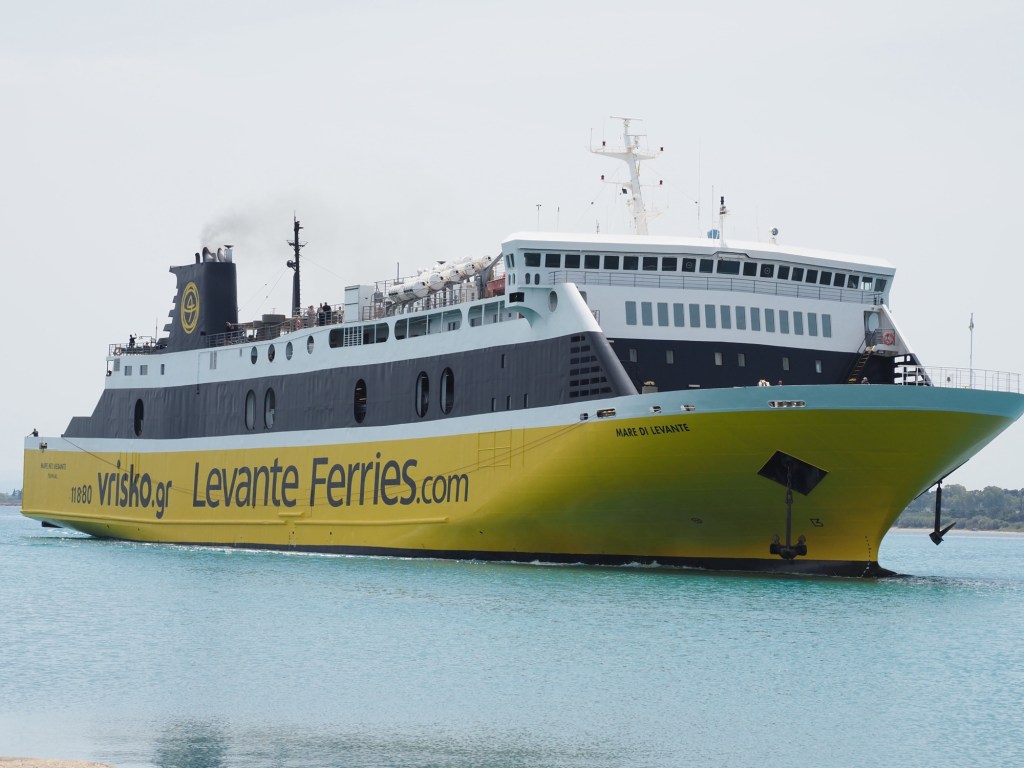
Tomorrow we leave the Peloponnese. We are heading to Kephalonia.


 Two Sore Backs
Leave a comment