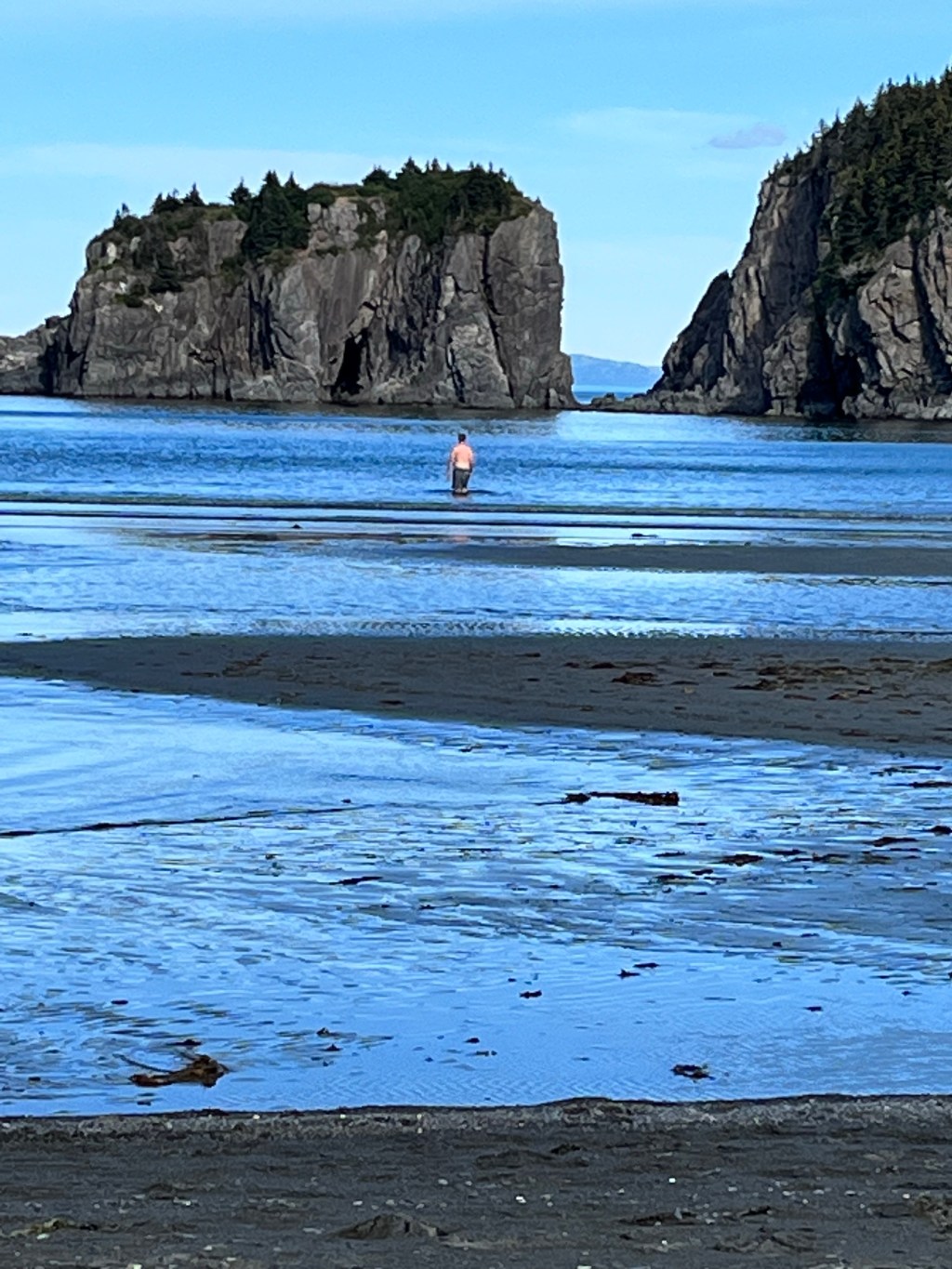
Life is grand. We awake up this morning to a beautiful blue sky.
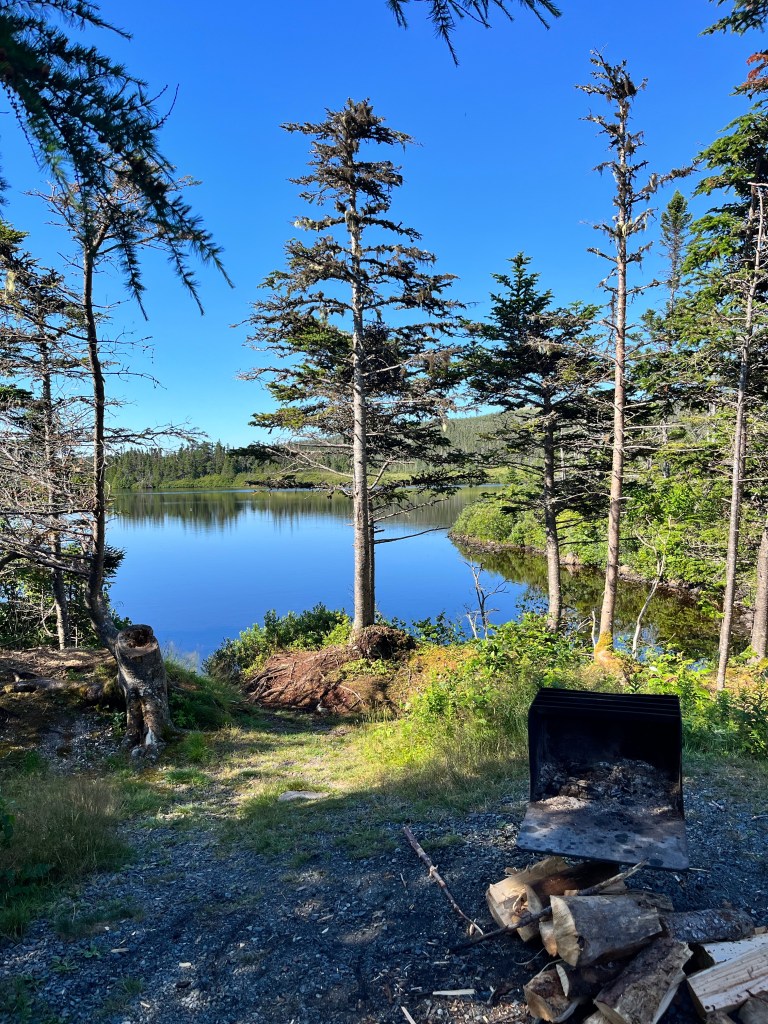
Today’s itinerary is stops at three to four places along the Baccalieu Trail on the Bay de Verde Peninsula – just west of St John’s. (There are about 10 noteworthy destinations but we are only human so we’ll pick and choose.)
Brigus
Nearby our campsite and with Hawthorne Cottage National Historic Site as an obvious stop, we start our day in Brigus.
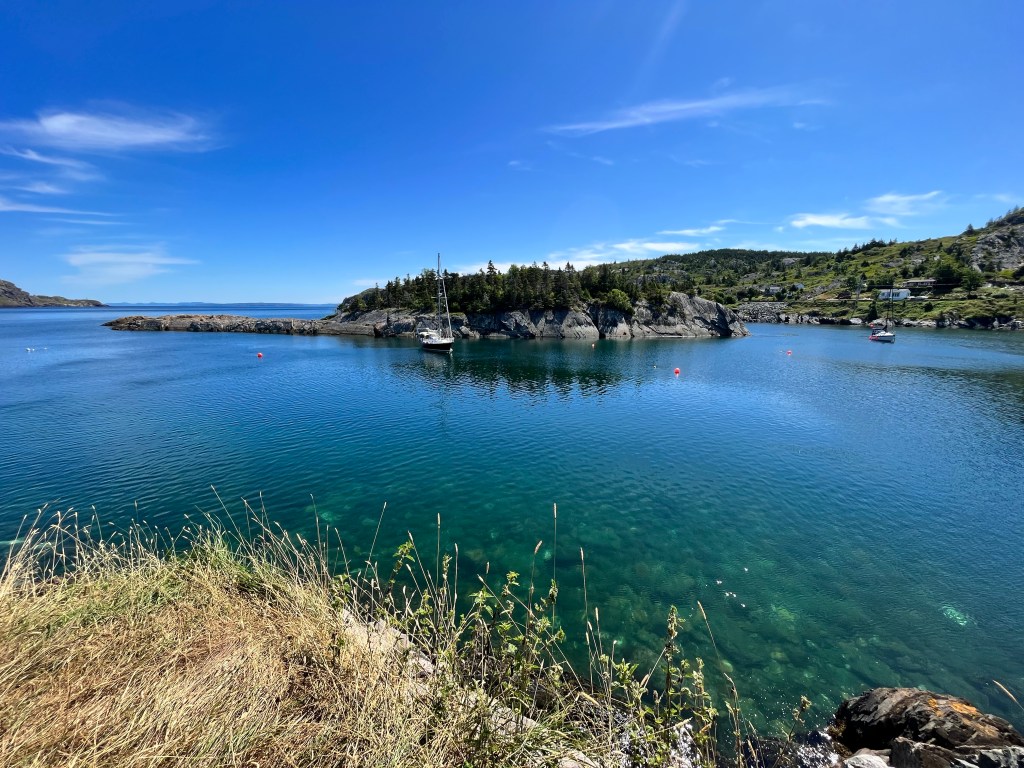
We drive down to the small harbour and immediately feel like we could be on any Gulf Island.
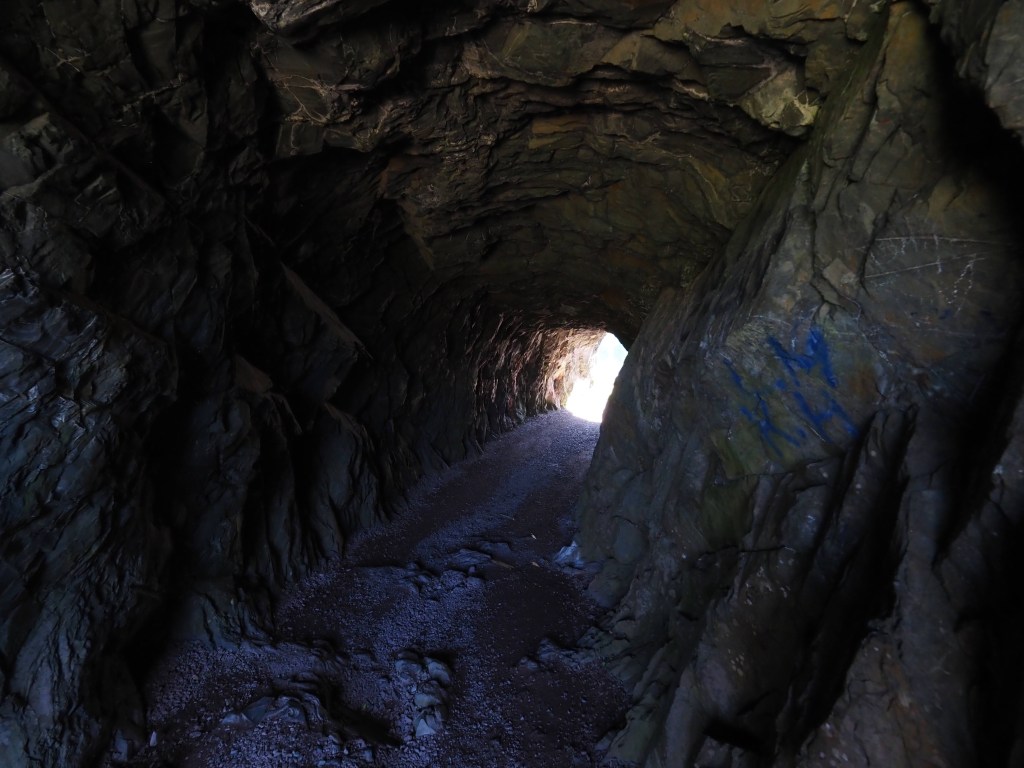
We see signs to the Brigus Tunnel. The story goes that the harbour was deep but surrounding cliffs were limiting access so Captain Abram Bartlett commissioned a Cornish coal miner John Hoskins to blast a tunnel through the rock. Four months work yielded a 24 meter long tunnel that was tall enough for a horse and carriage.
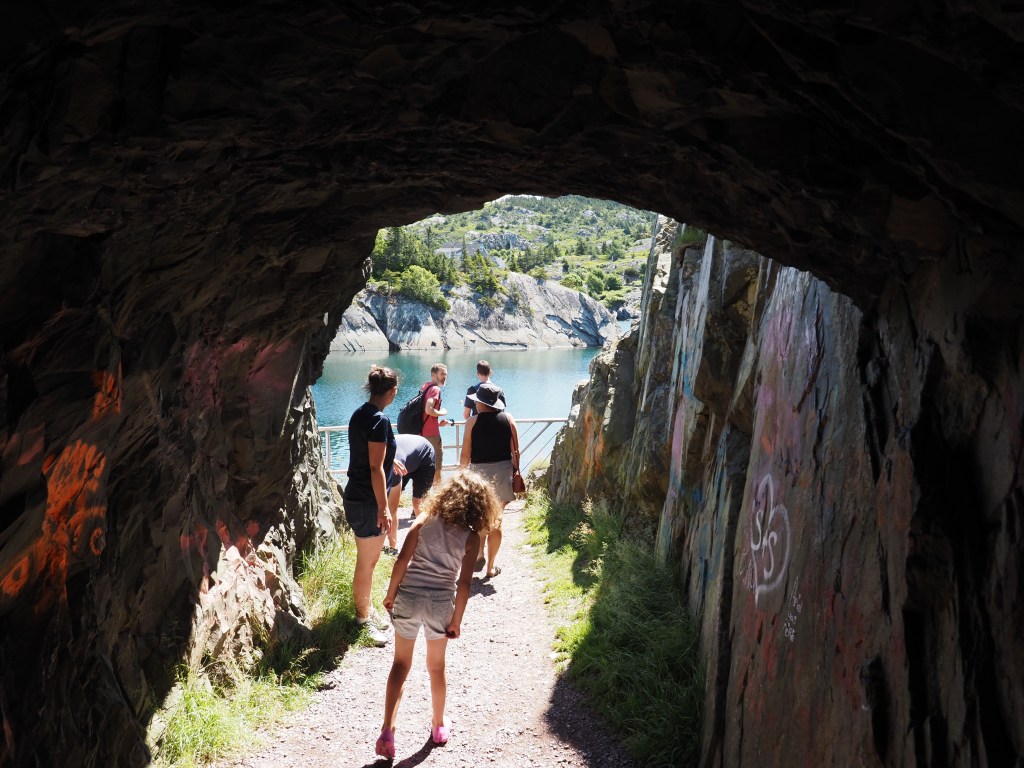
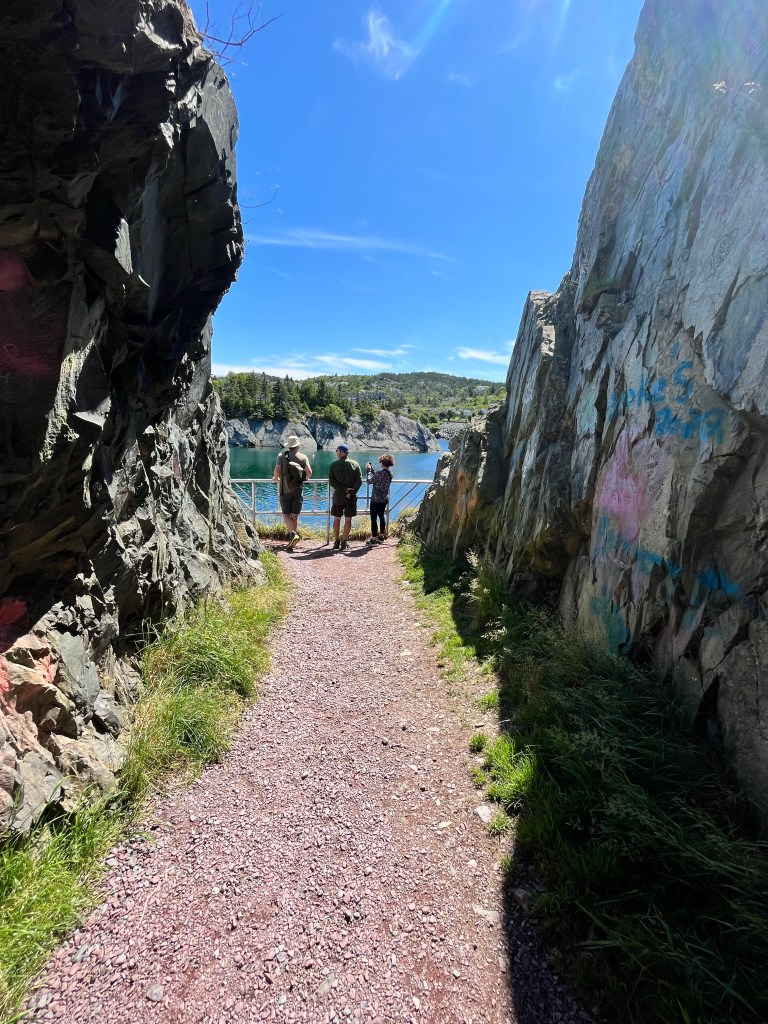
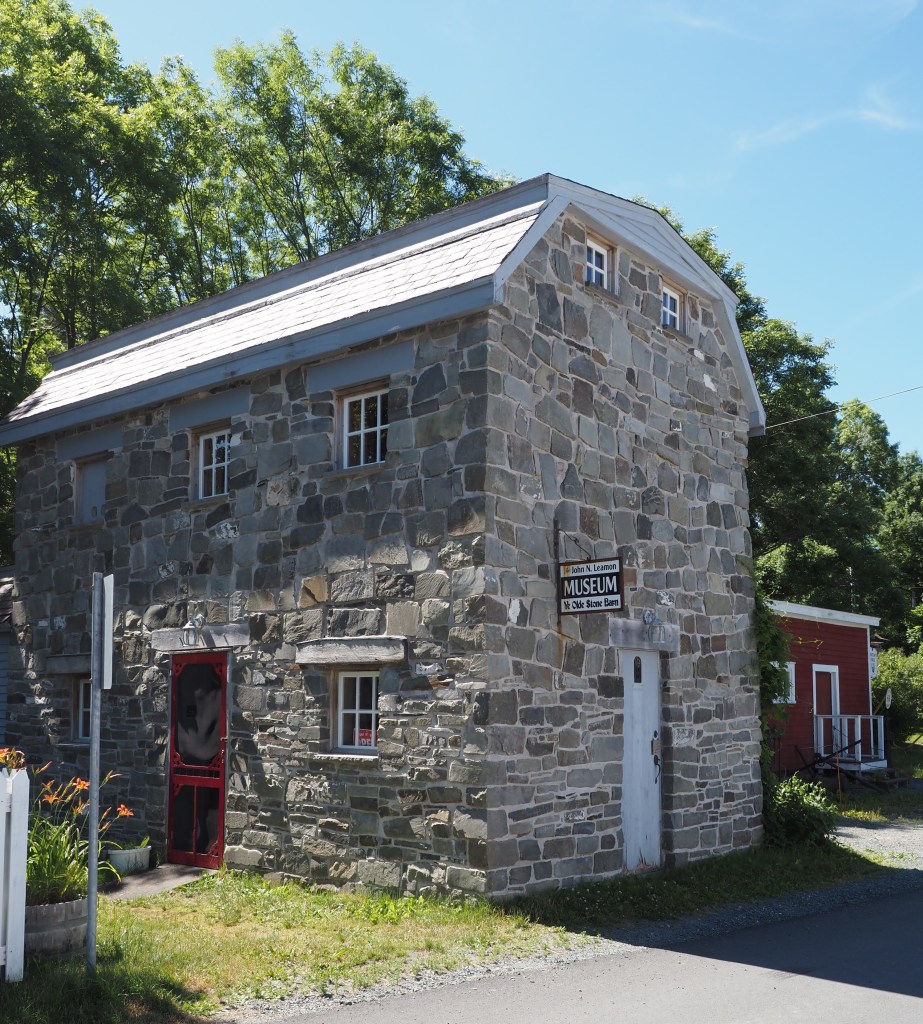
We wander into the quaint town looking for Hawthorne Cottage.
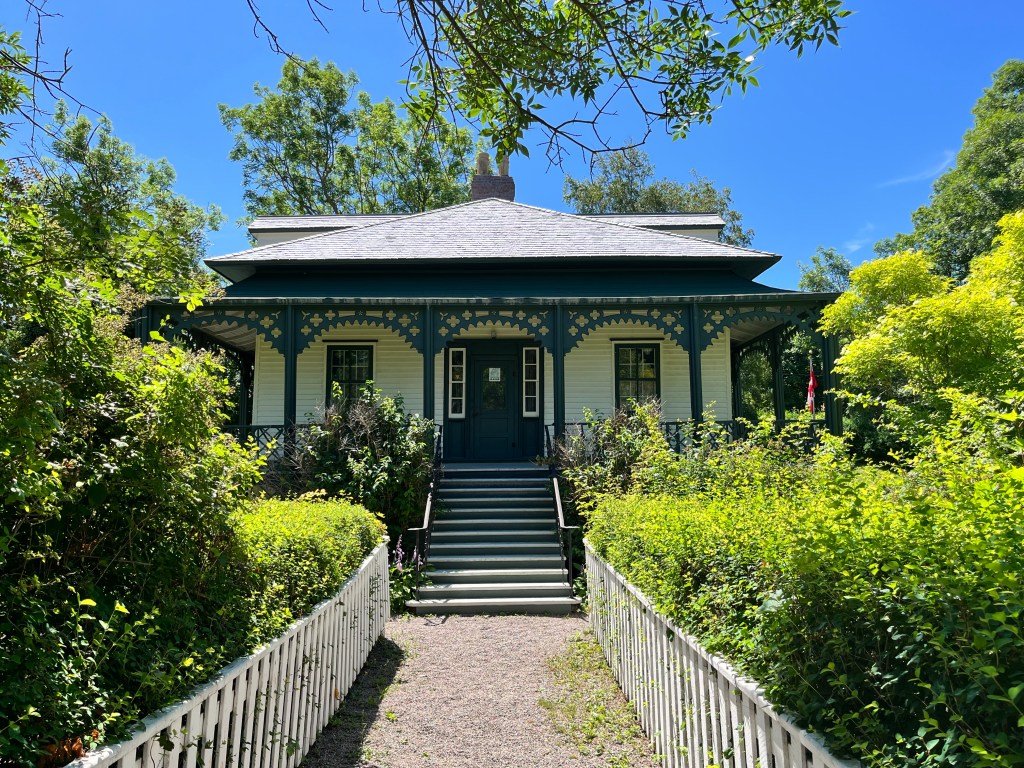
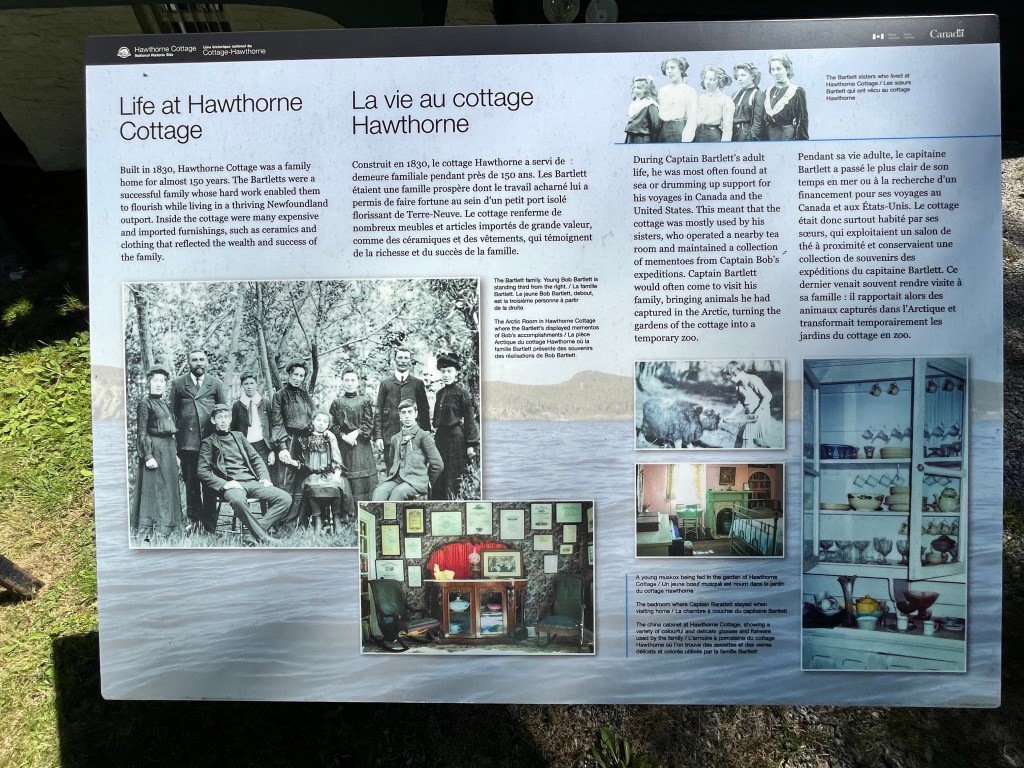
The cottage is a fine example of a wealthy mariner’s mansion. Love the covered porch!
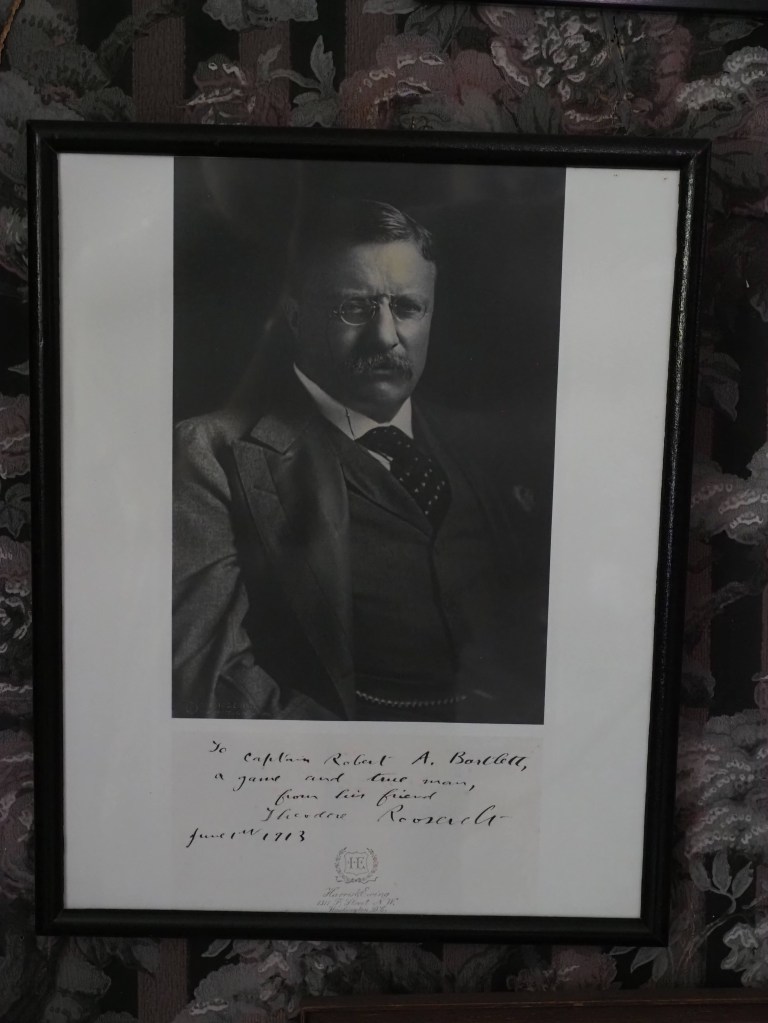
The most famous occupant was Captain Robert Bartlett. He is considered one of the great Arctic explorers. Captain Bartlett made more than 20 expeditions to the North Pole and through the Northwest Passage. The most famous expedition was commanding the US Roosevelt to within 150 km of the North Pole in 1908-09. This allows US Commander Robert Perry to set out on the ice and be the first to reach the North Pole. (In 1989 it was determined that Perry did not reach the pole; he was about 100 km shy of the pole.)
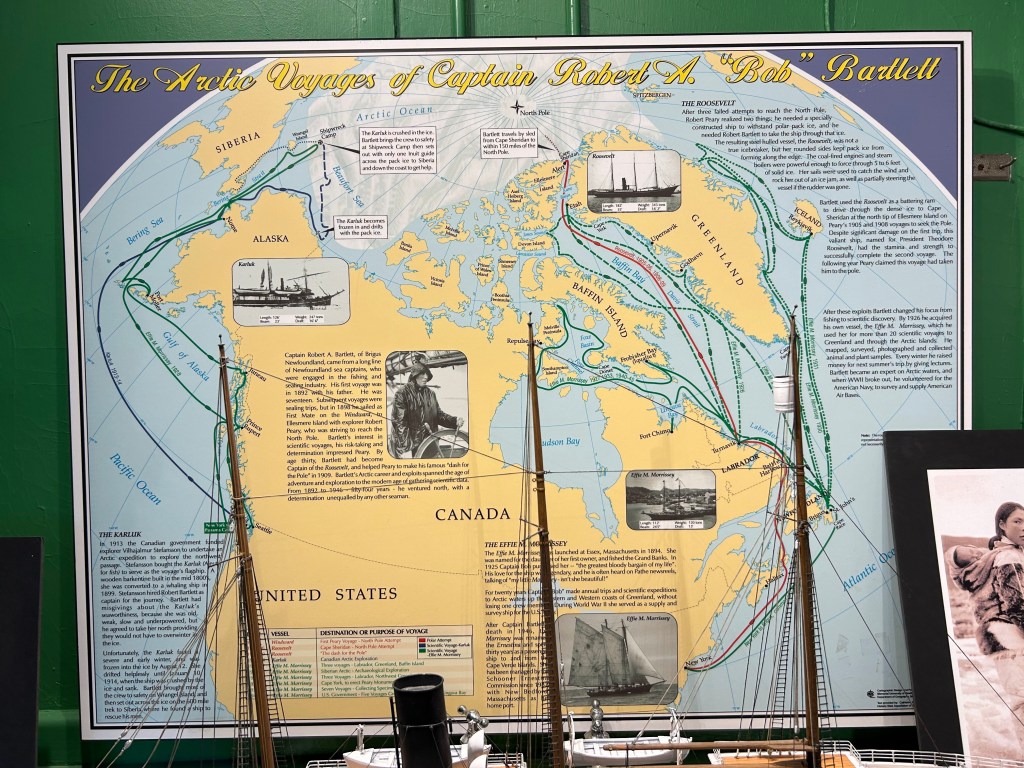
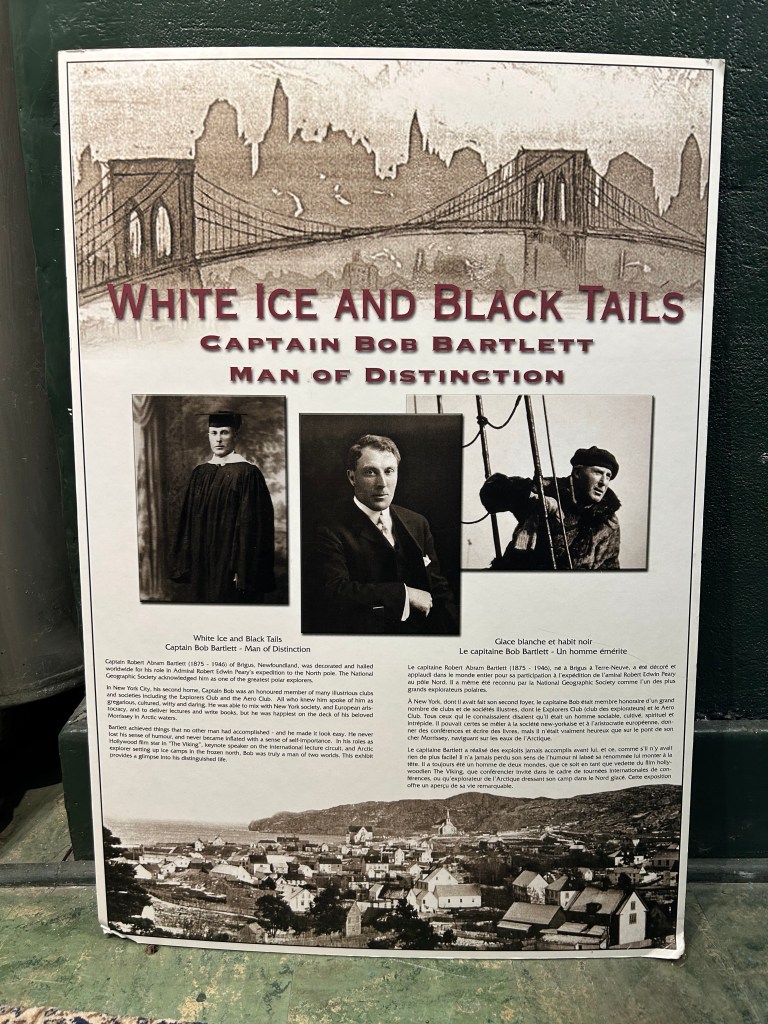
And we learn that on Bartlett’s many expeditions he is often commissioned to bring back Arctic animals and plants to various US zoos, museums and universities.
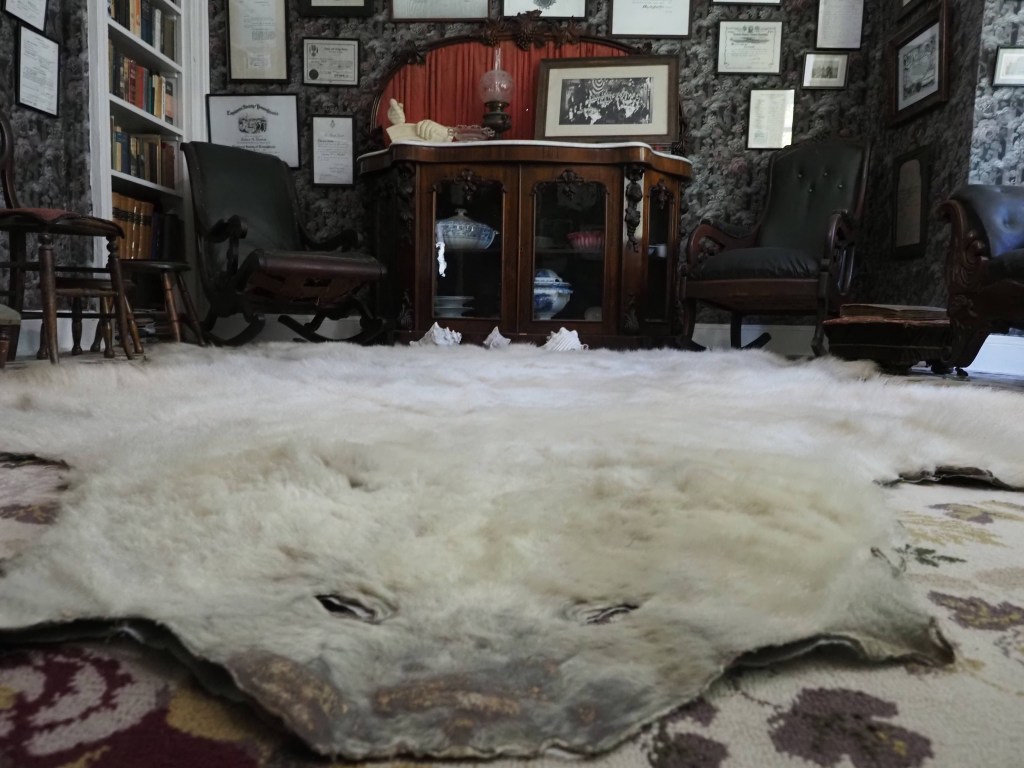
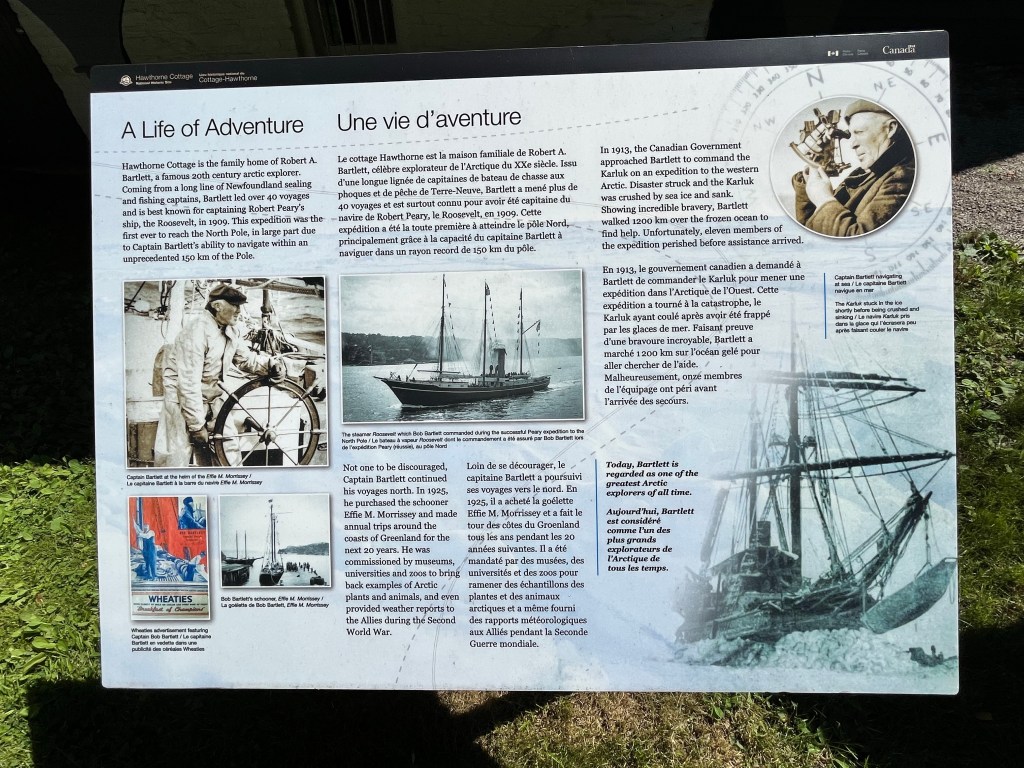
Apparently he would visit Hawthorne Cottage and bring the animals along before delivering them to the zoo. As we walked the grounds we tried to picture a lovely garden party with a muskox mingling with the guests.
Bay Roberts
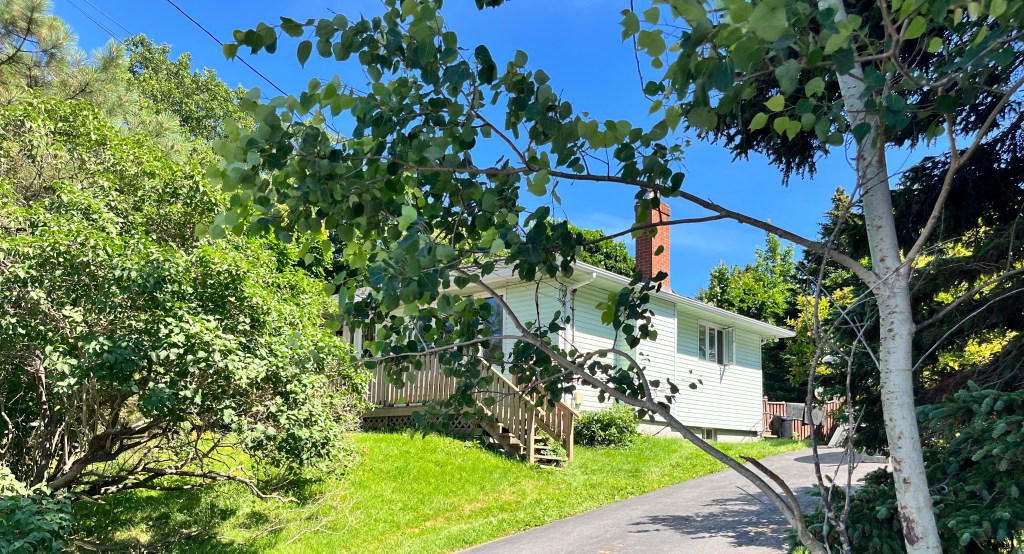
We head to Bay Roberts next. Aunt Linda lived in Bay Roberts for quite a few years and we drive by her old house.
We drop in to The Cable Building.
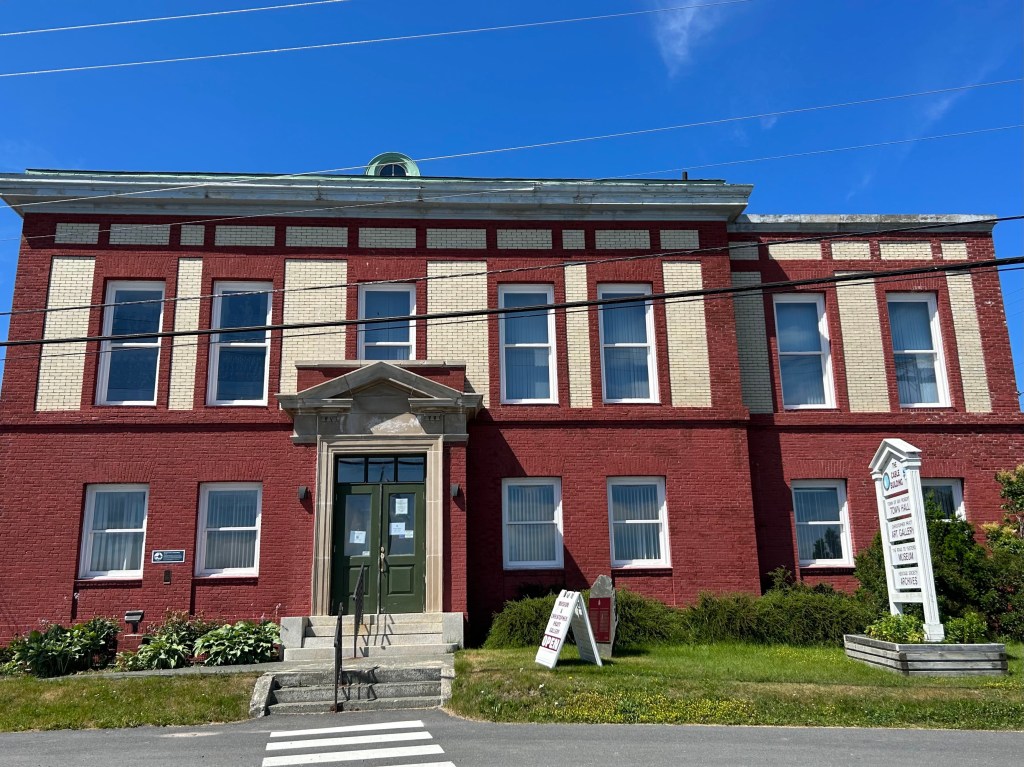
The building hosts the Christopher Pratt Gallery. Christopher Pratt designed the striking Newfoundland and Labrador Flag.
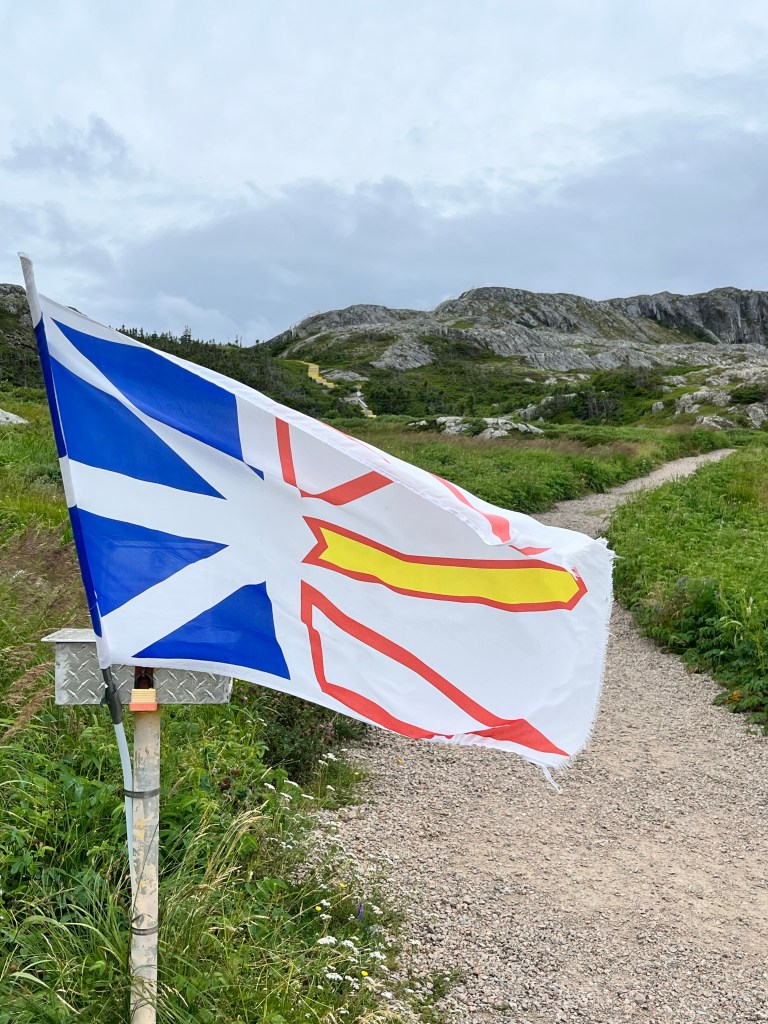
According to the renowned designer, the flag represents: its white is for snow and ice, blue for the sea, red for human effort, and yellow for self-confidence. The blue areas suggest the importance of British heritage, while red and yellow in the shape of a “golden arrow” stand for the future.
The gallery presented works by Christopher Platt and other Newfoundland artists.
In the same building is the Road to Yesterday Museum. Within the museum is section about the cable station. A smaller station was replaced by The Cable Building in 1913. It was built by Western Union as a relay station to house transmitting equipment for new and original cable lines running between the United Kingdom and the United States of America.
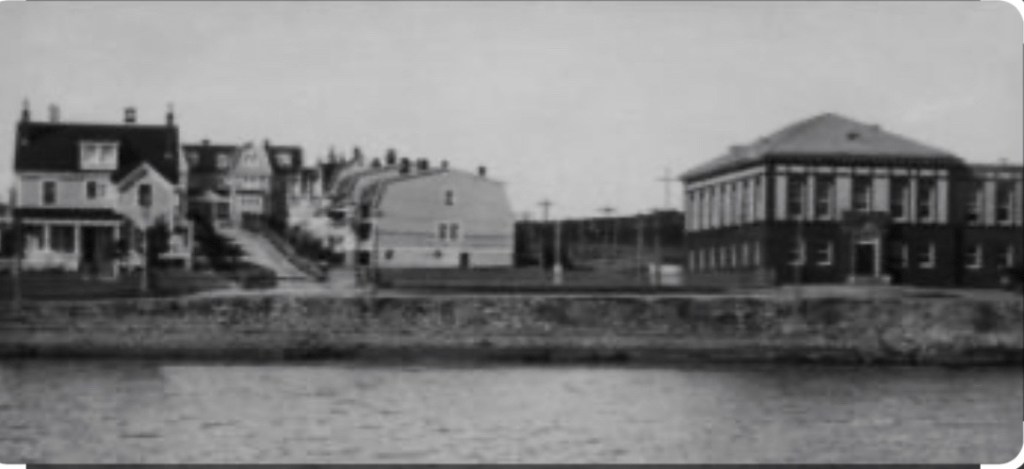
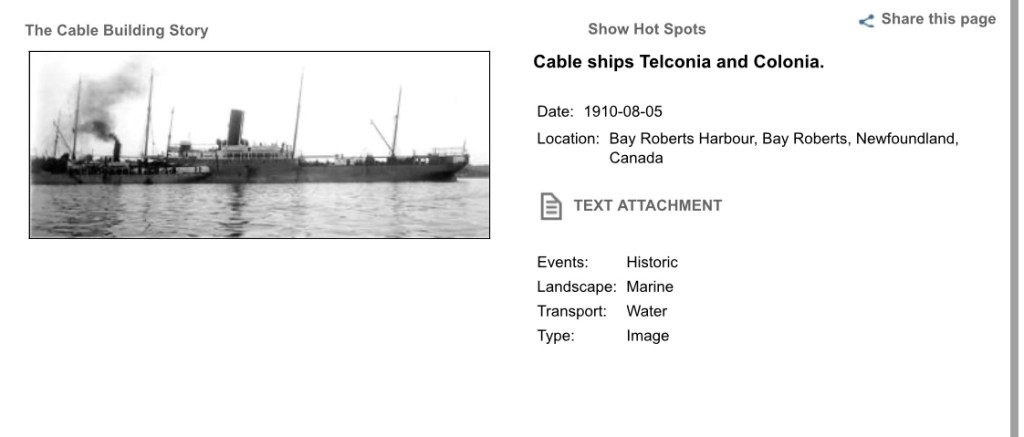
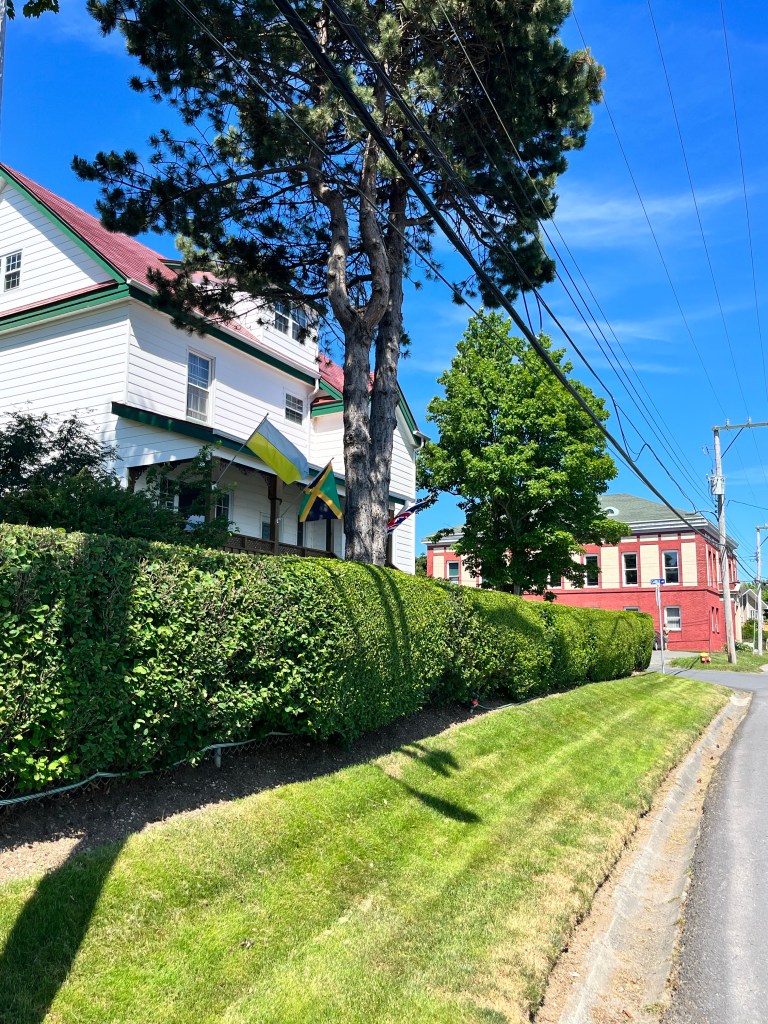
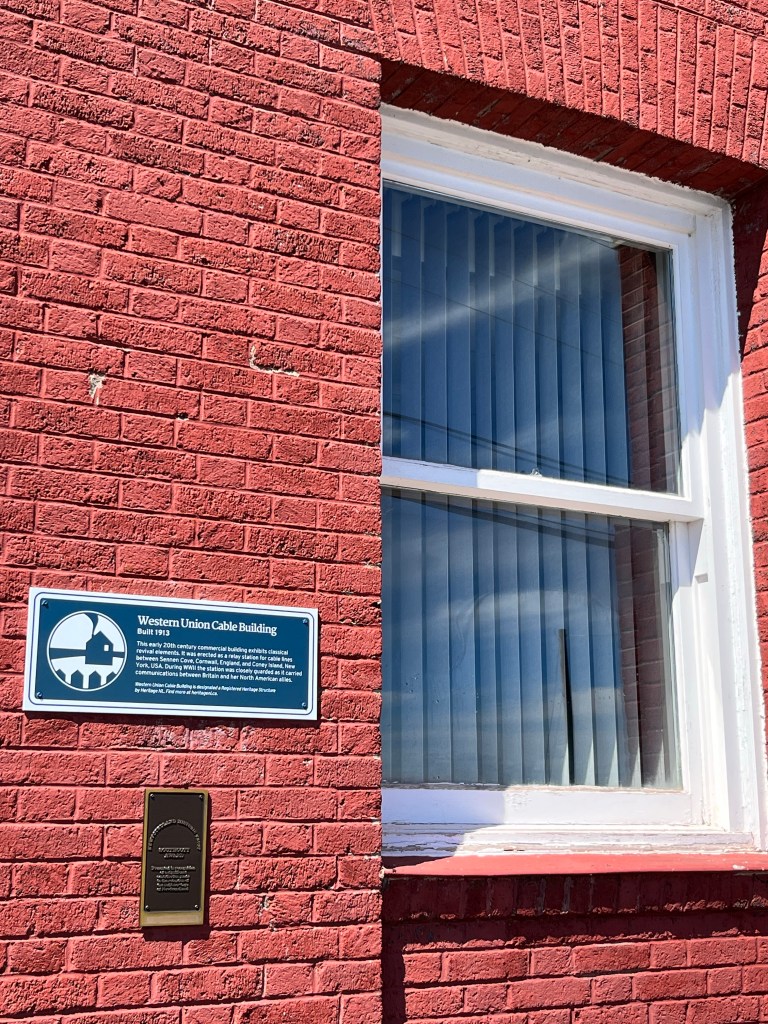
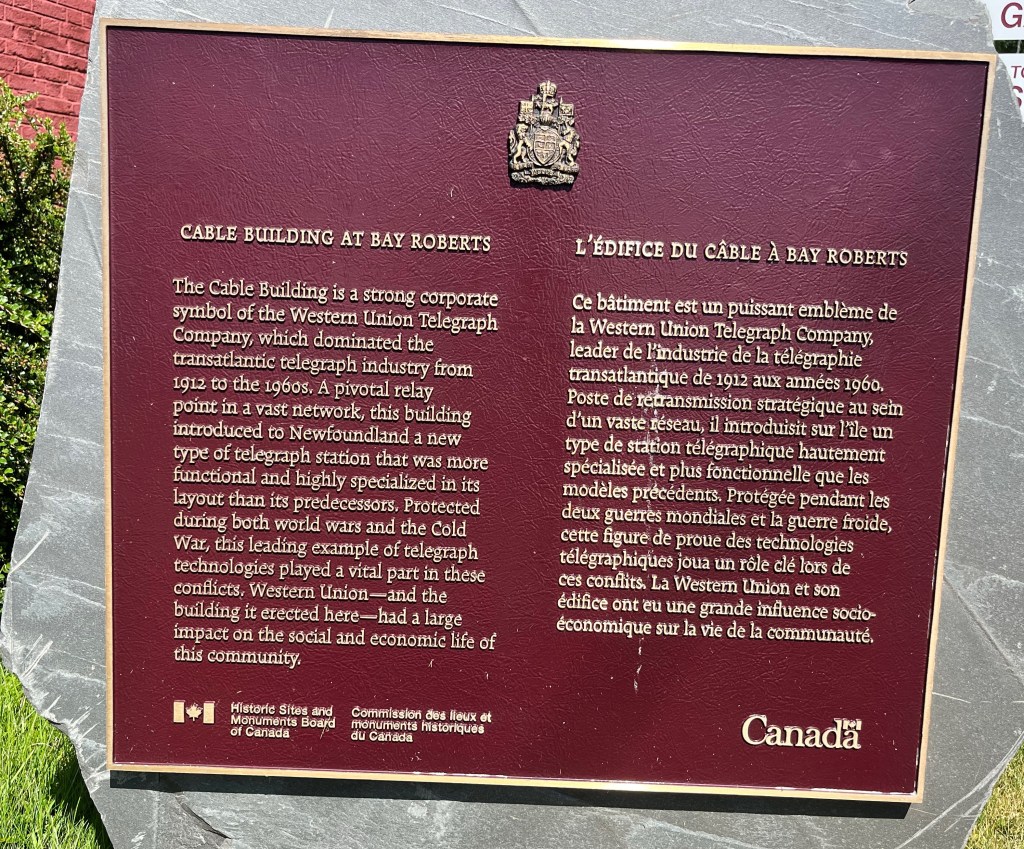
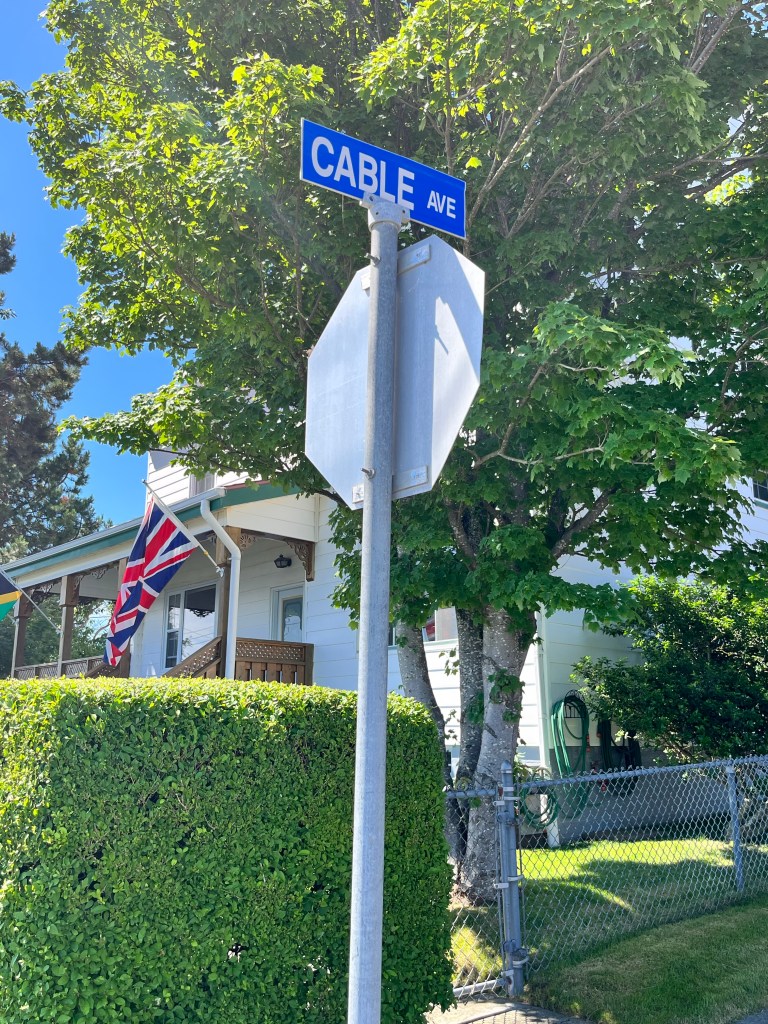
A small ‘town’ was built to support the cable station – housing for single men as well as family housing, a superintendent’s house, their own fire house, tennis courts. It is an interesting story.
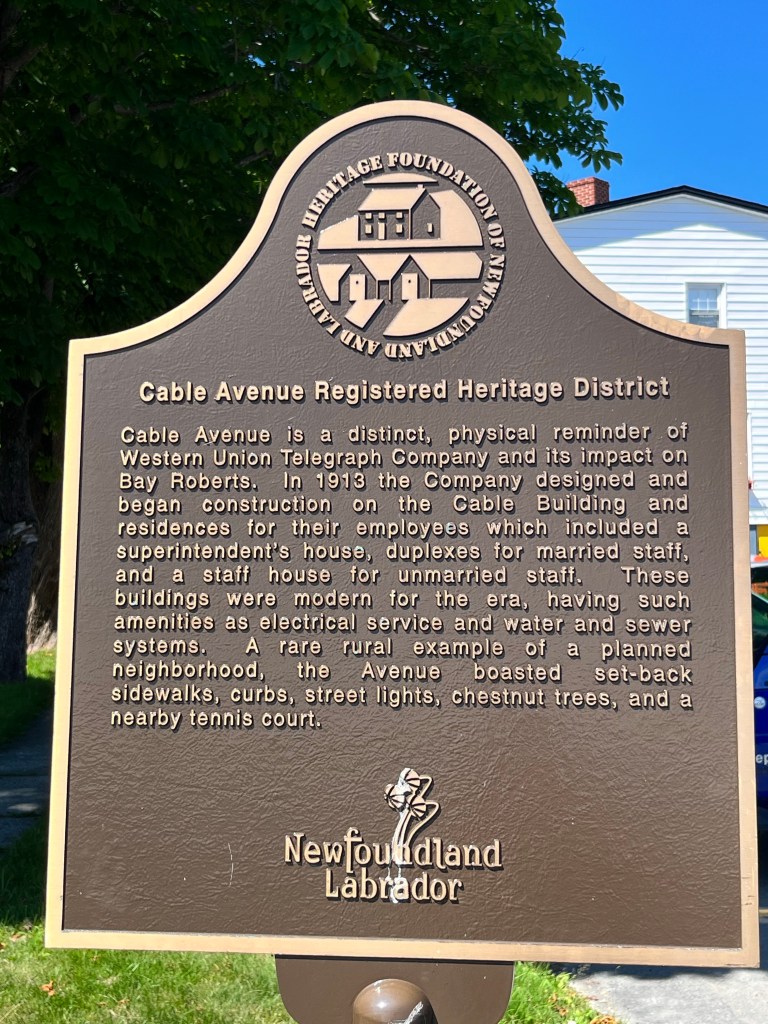
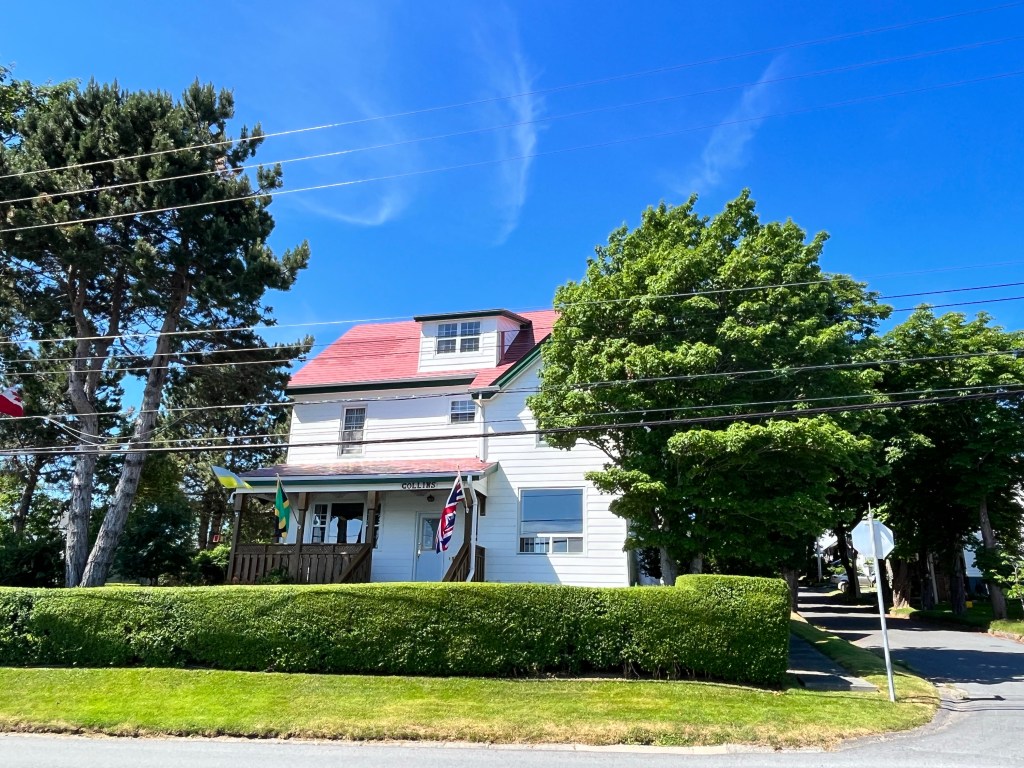
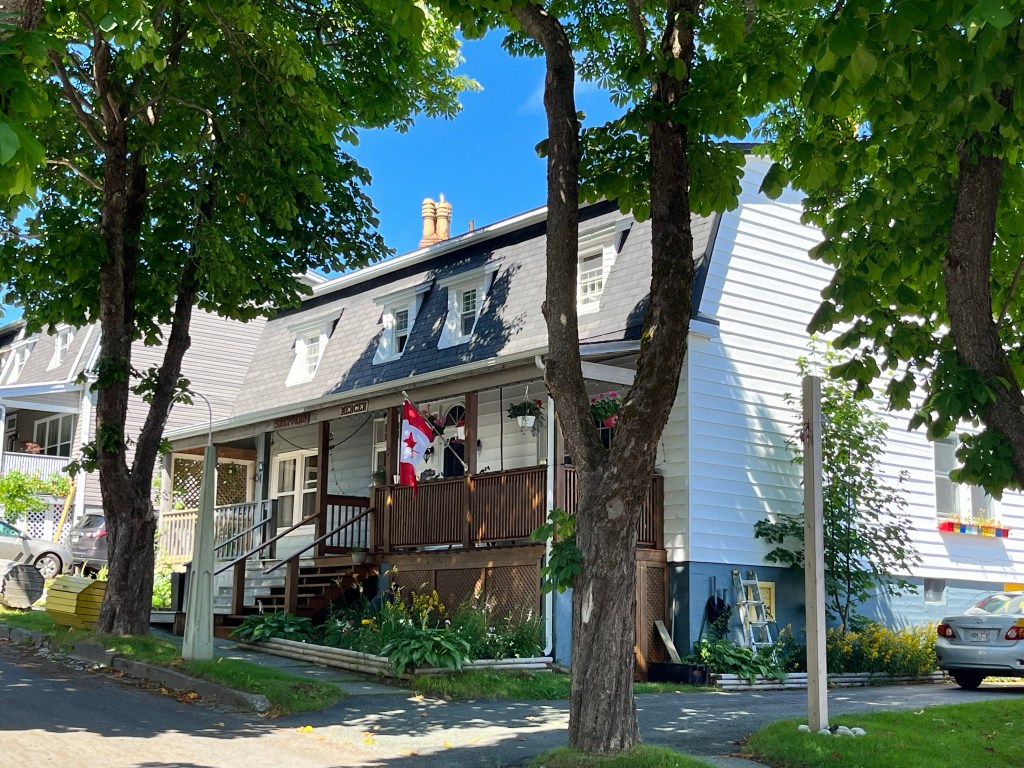
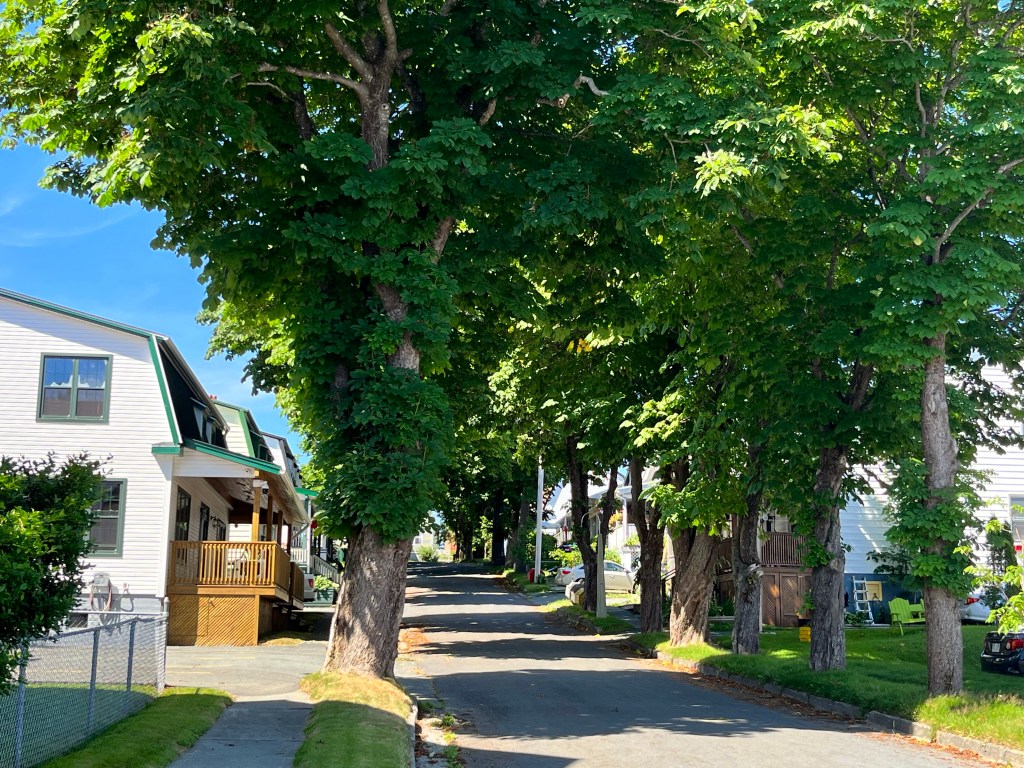
I have already documented some family history from Canso NS. My great grand parents lived in Bay Roberts Newfoundland for a few years. My great-great grandfather Donald McLaine emigrated from Liverpool and worked for Western Union Telegraph throughout the Maritimes (NS / St Pierre / Nfld). He married Anna Young and they first settled in Canso. Their two daughters Cora and Blanche were born in Canso. Around 1910 Donald and Anna are in Newfoundland and Donald is the superintendent of the Bay Roberts Cable Station. In 1913 a new Cable Station is built. That building is now a National Heritage Site. Donald retires in 1917 and he and Anna leave Bay Roberts for Boston.
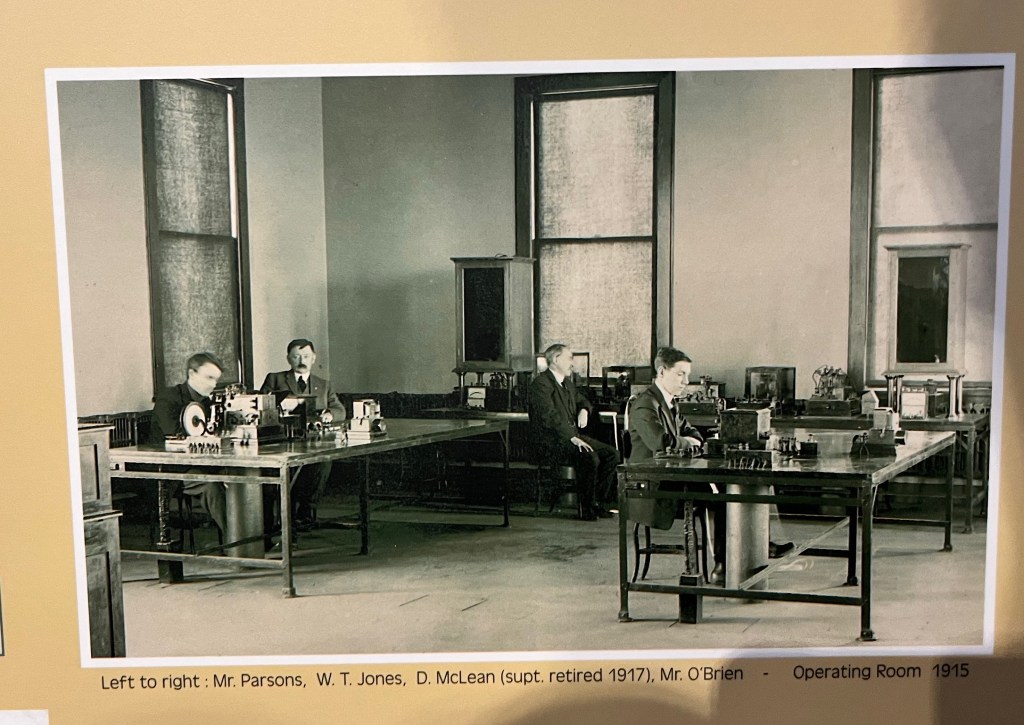
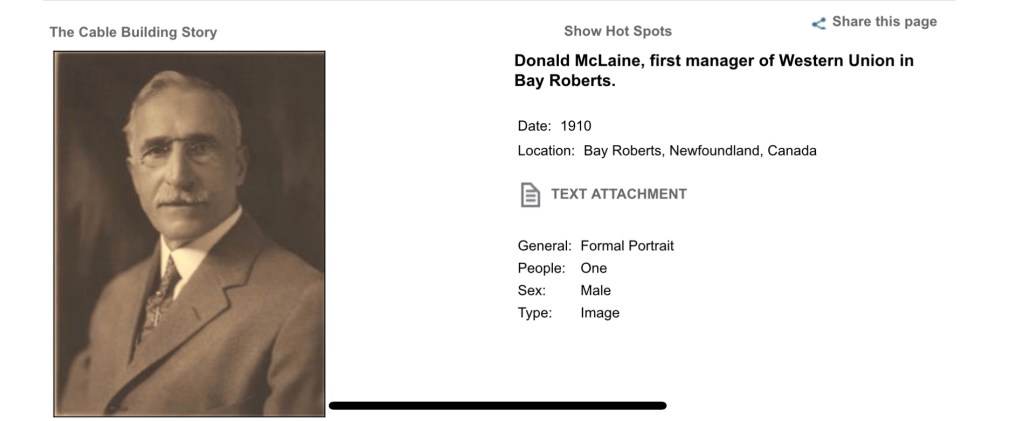
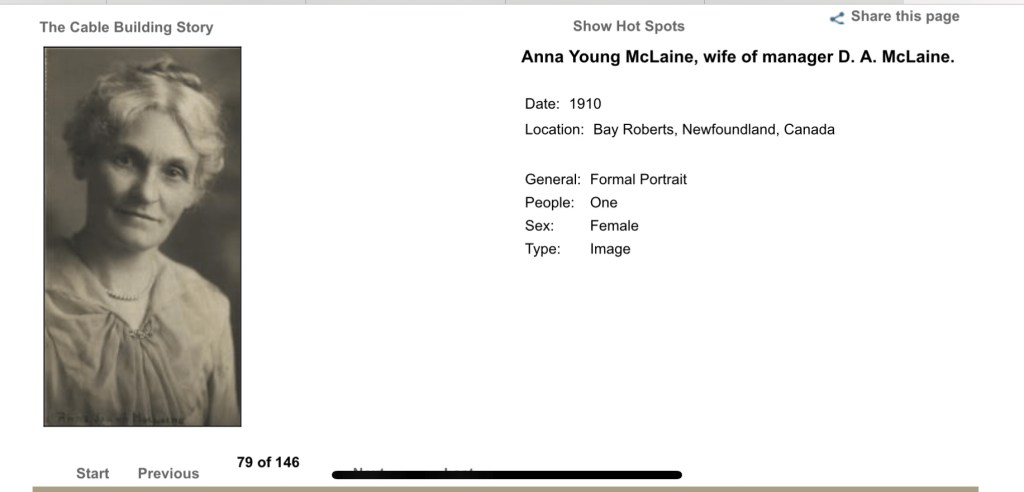
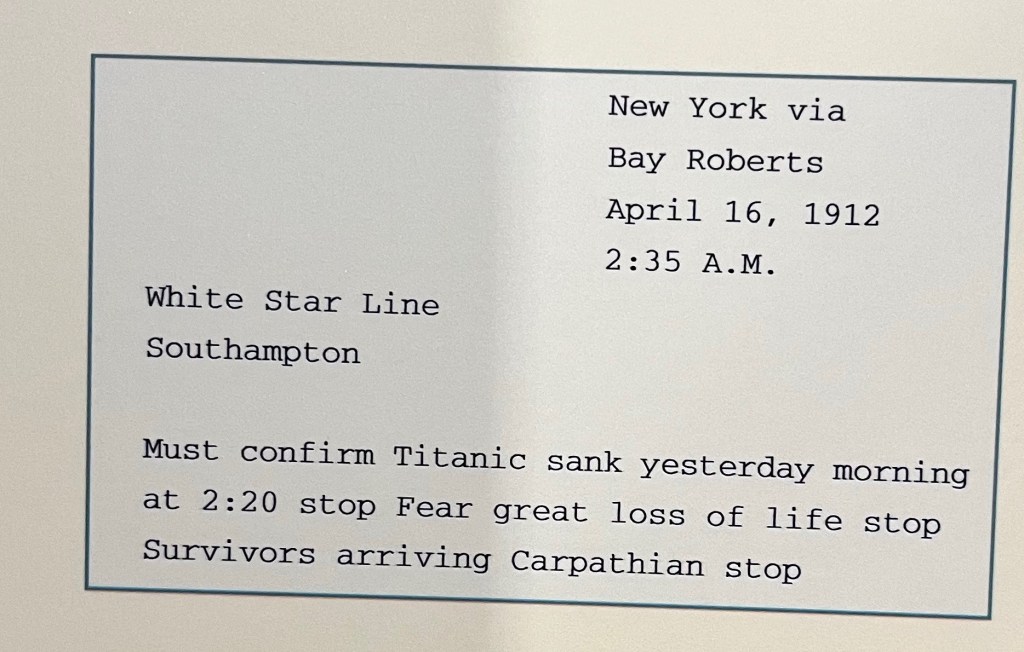
Important messages came through this cable station.
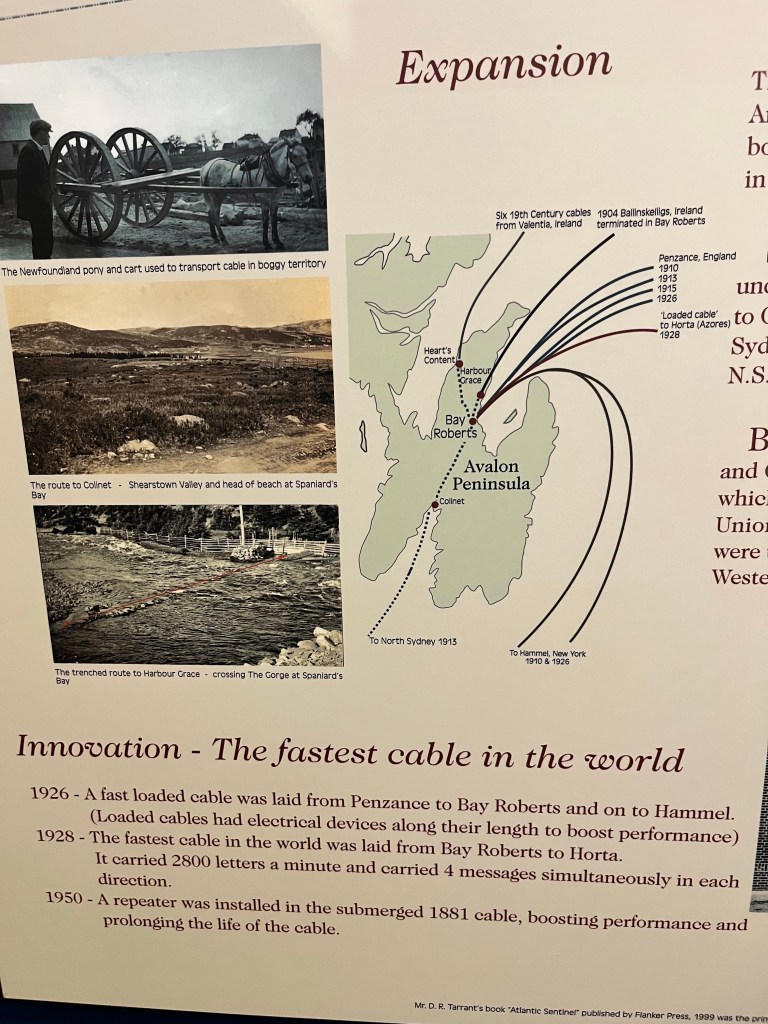
cable was viable until the 1960s
Salmon Cove
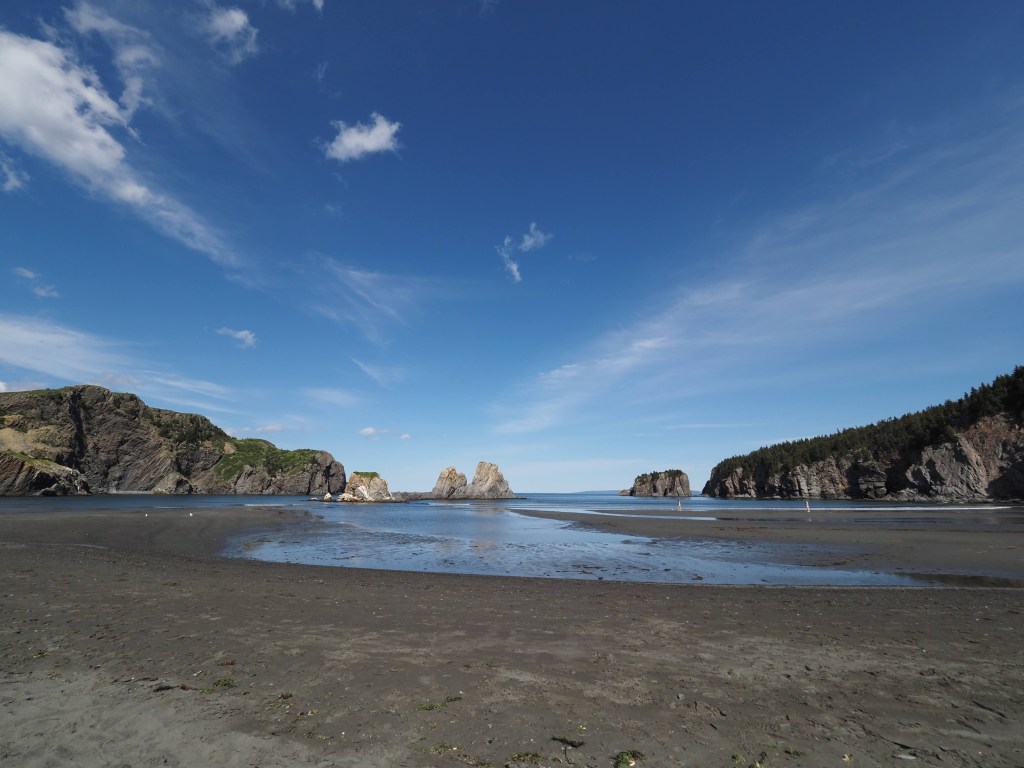
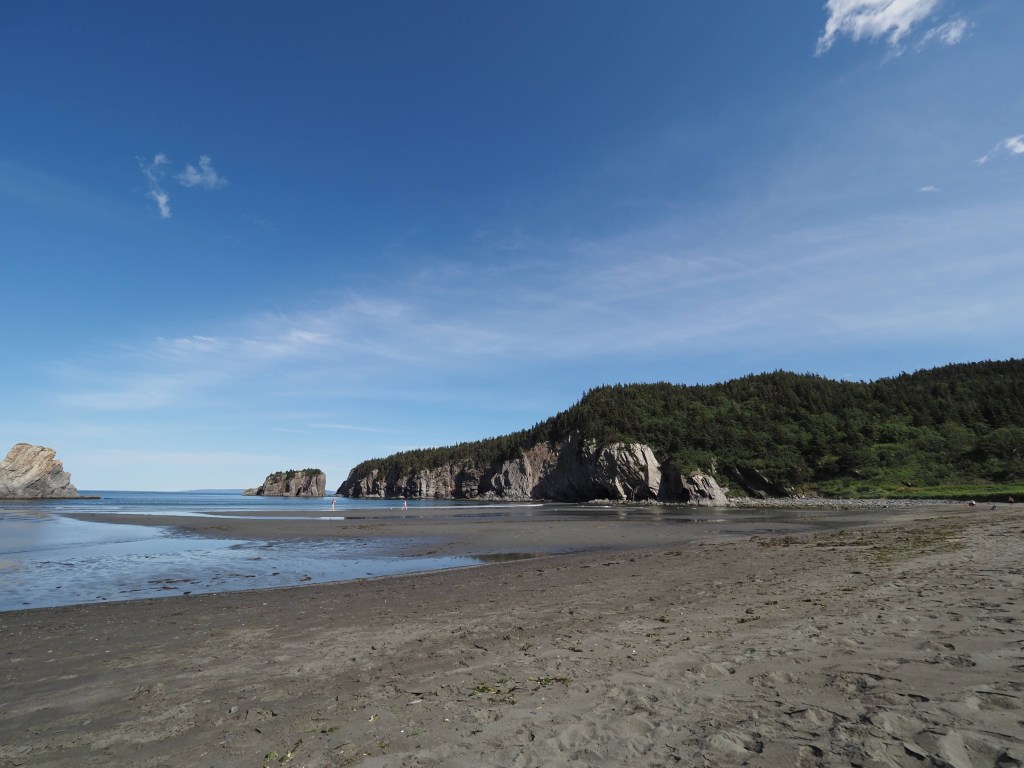
We drive a little further north, through Carbonear to Salmon Cove. We are ready for a little beach time.
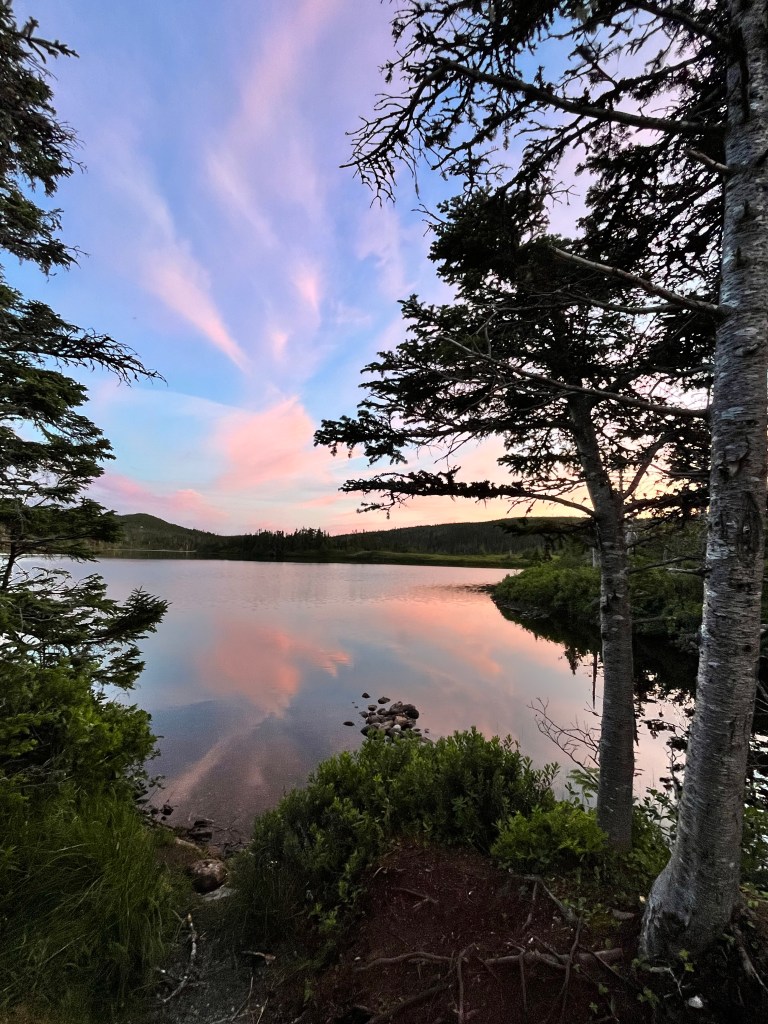
When we are back at camp we are rewarded with a wonderful sunset.


Leave a Reply