Today we are tourists. We lengthen our stay in Hoi An; so shorten our time in the Imperial City of Hue (UNESCO designated) to a day trip from Hoi An; a three hour drive.
Our driver Tham acts as a tour guide of sorts. We ask lots of questions and look out the car window. Tham sets our itinerary, drops us at the entrance and we get a tour guide to take us through the imperial city. Tham waits with the car.
Hue’s Imperial City is the centrepiece of the Nguyen Dynasty 1802-1945; the last imperial dynasty in Vietnam. Also referred to as the Purple Forbidden City, it was modelled on Beijing’s Forbidden City. Confusion teaching was favoured. Thirteen emperors ruled during this period. As France controlled IndoChina from 1887 the latter emperors were figureheads. Many spent time in France for schooling; bringing western graces back to Hue and becoming removed from their people. This strengthened France’s hold. France became more involved in the selection of the successive emperors as their tenure grew. Some emperors were as young as seven when crowned (and were studying in France – convenient).
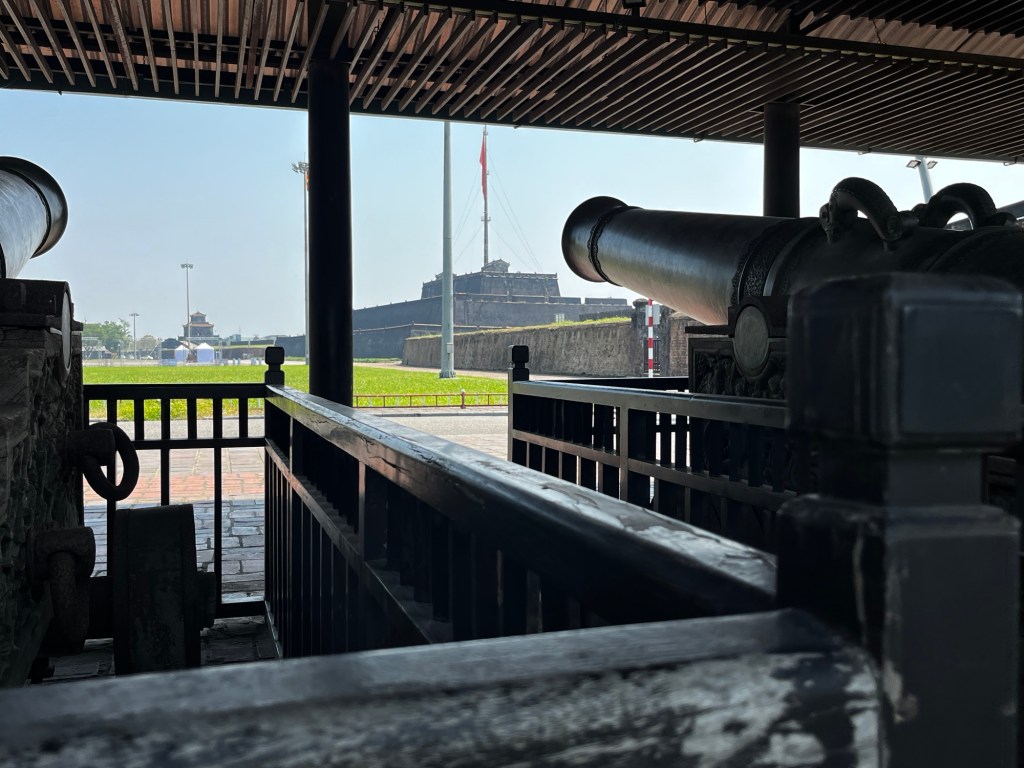
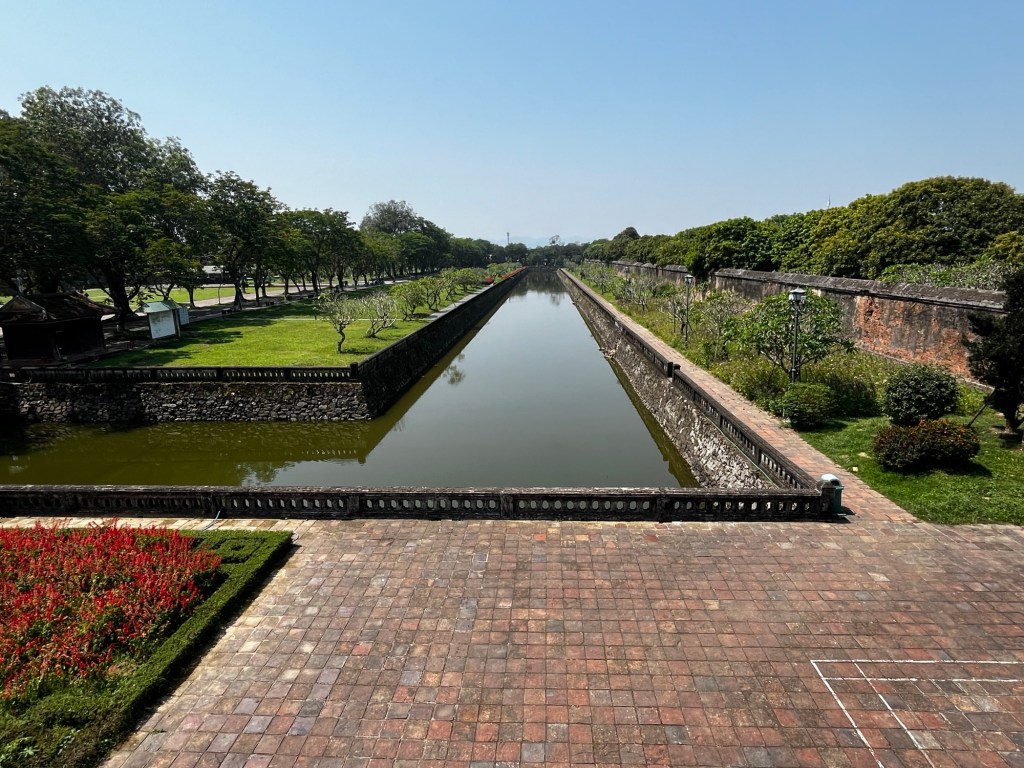
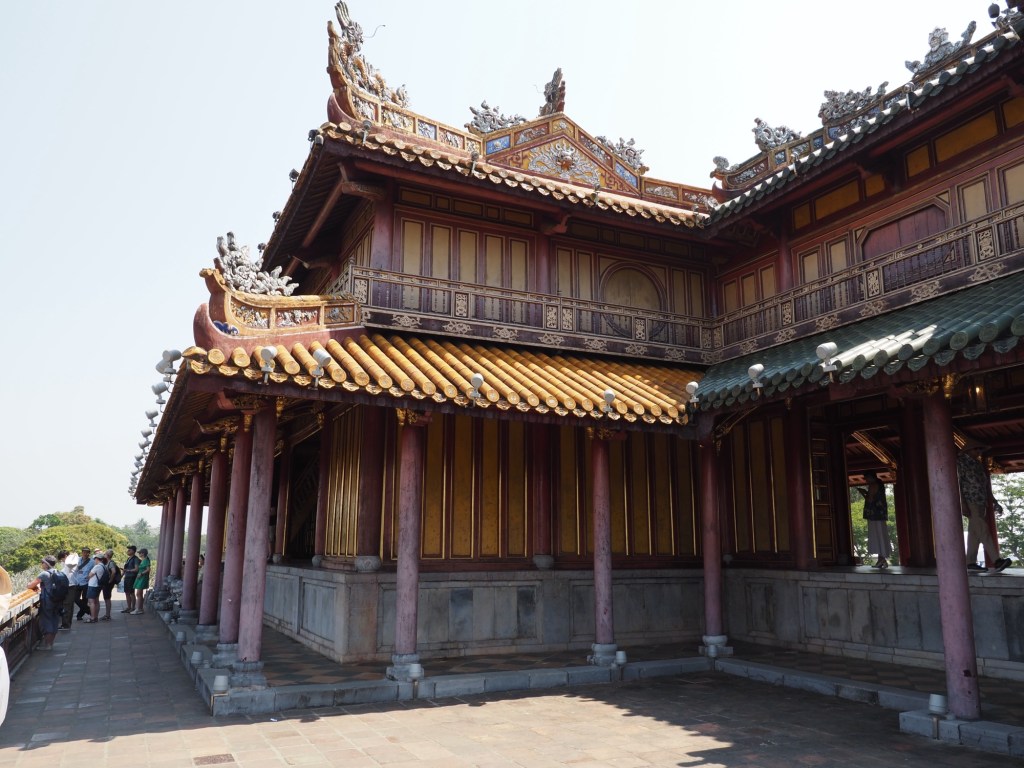
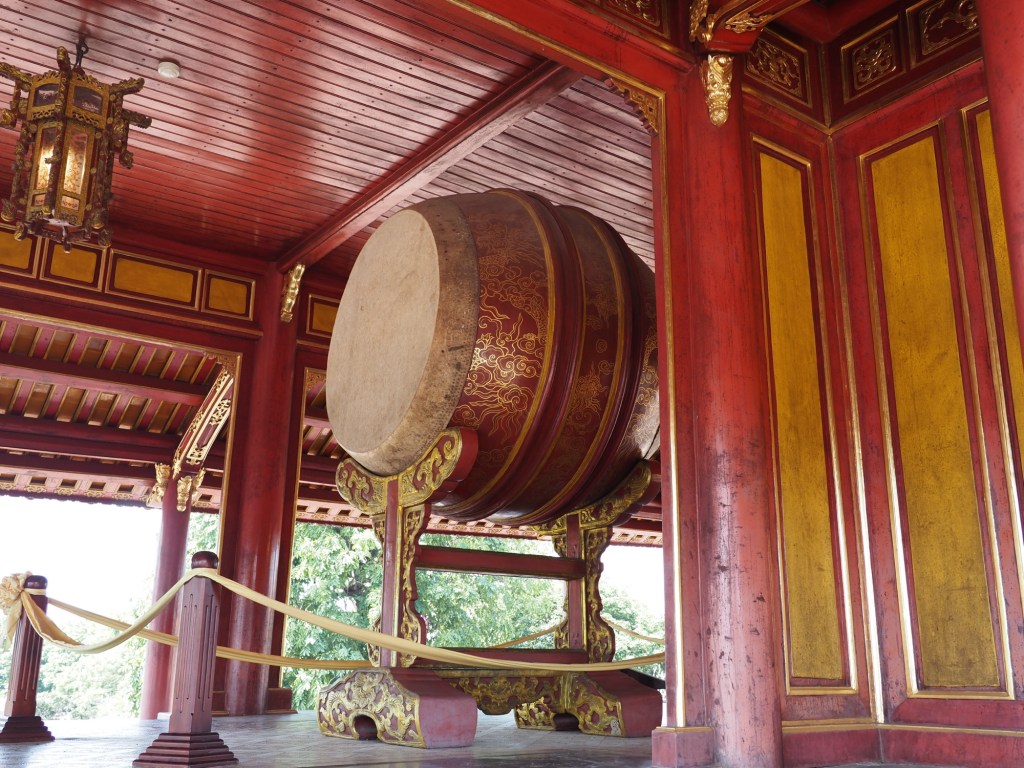
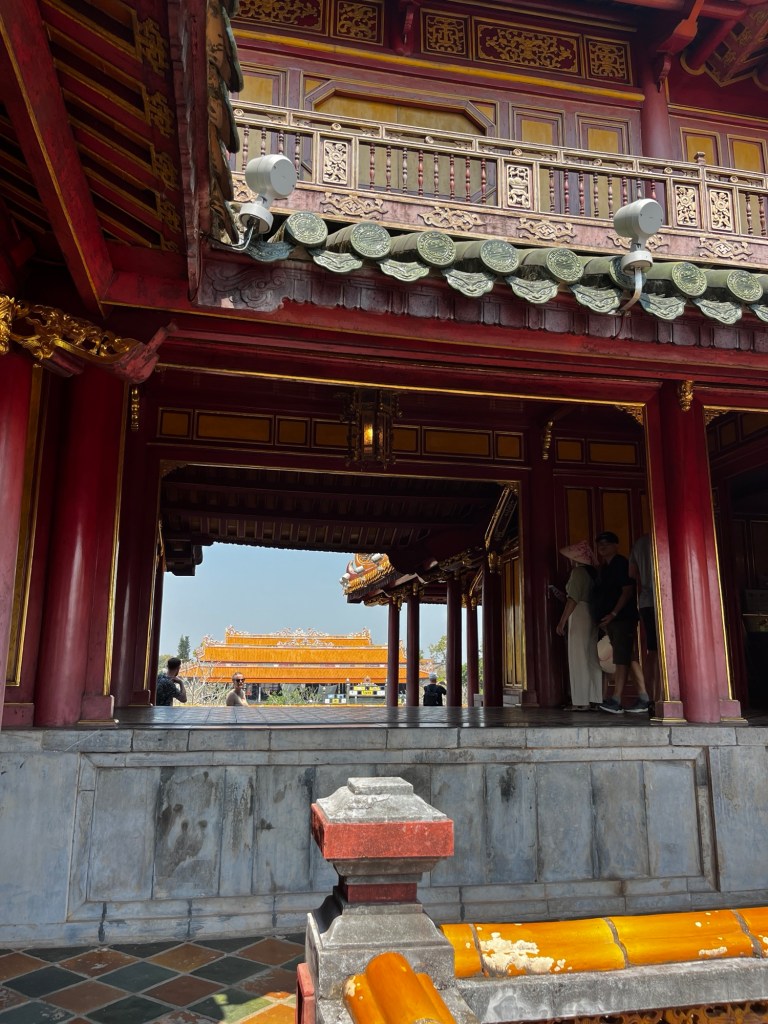
The layout is simple. The emperor’s palace (yellow roof) is in the center of the enormous grounds. To the north are various palaces for wives and concubines. To the east are the offices for the administrators and to the west are the offices for the army.
Depending on your role you wore garments of a specified colour. Army wore green, management wore brown or red (I can’t remember). I guess you stayed in your lane. Army and management left the imperial city each night.
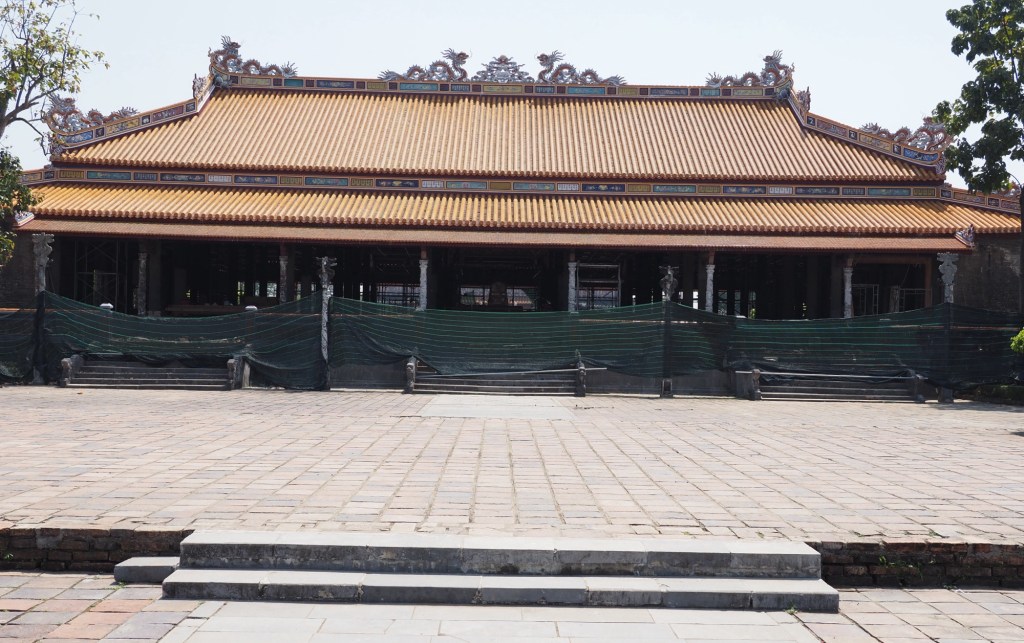
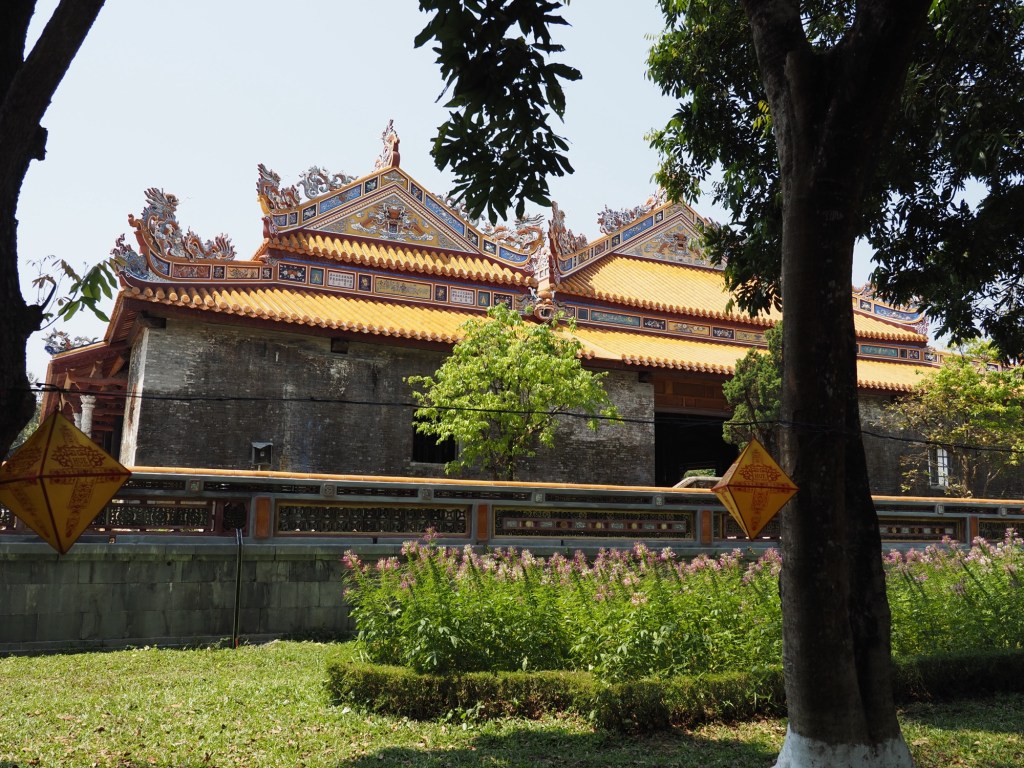
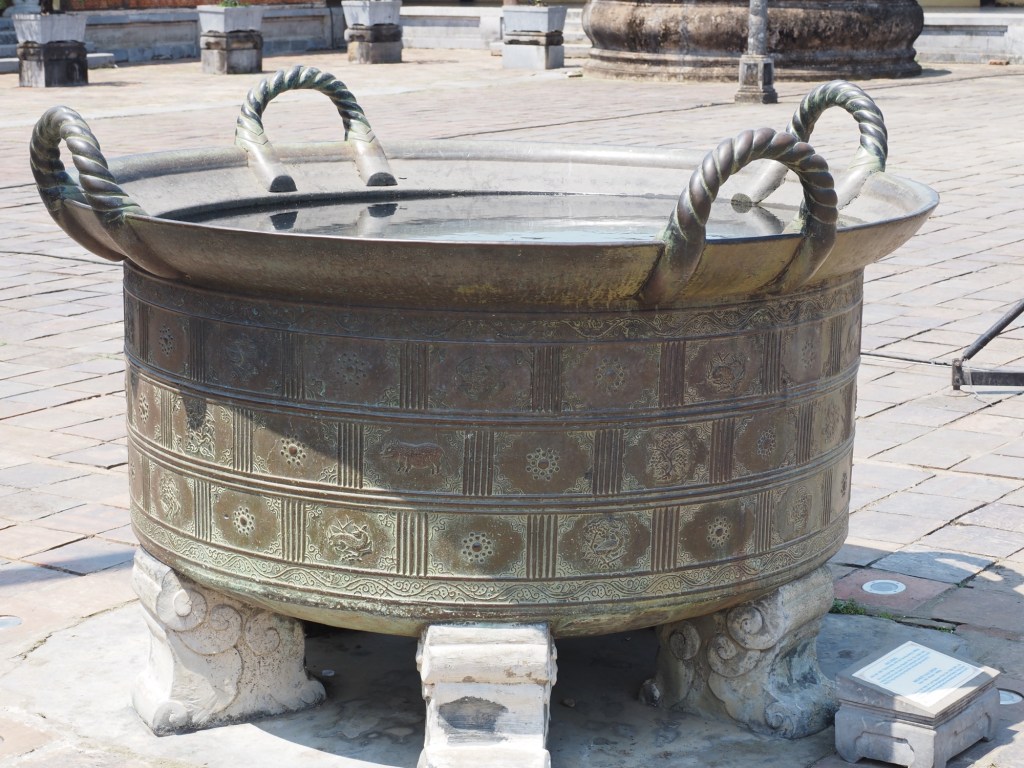
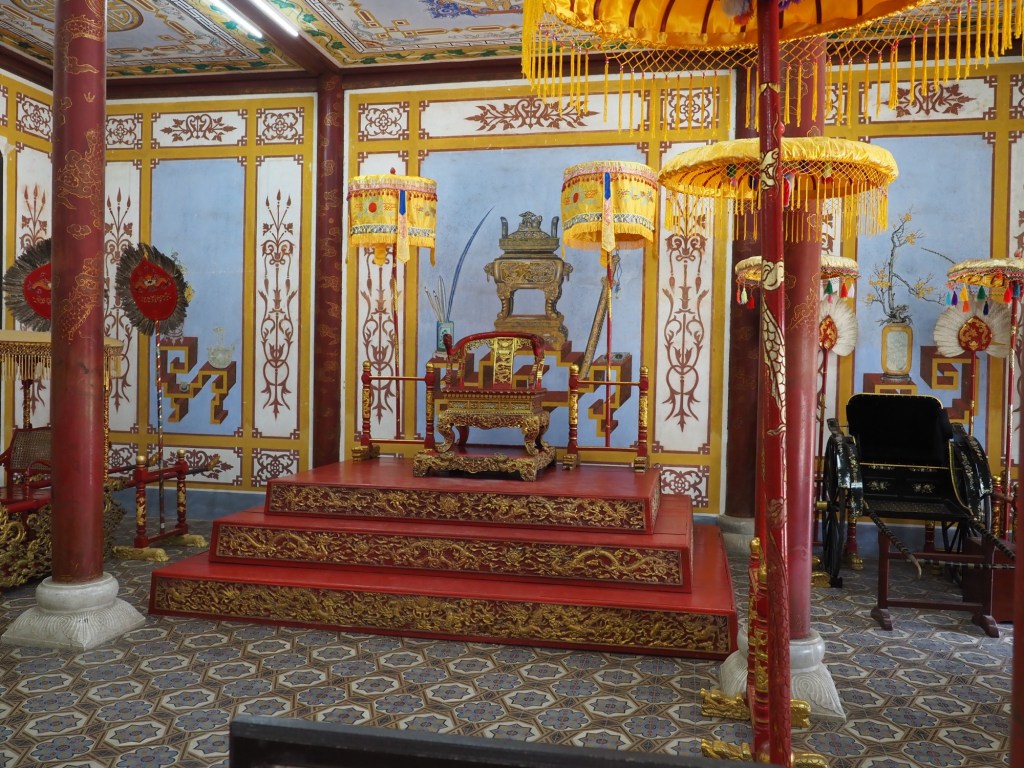
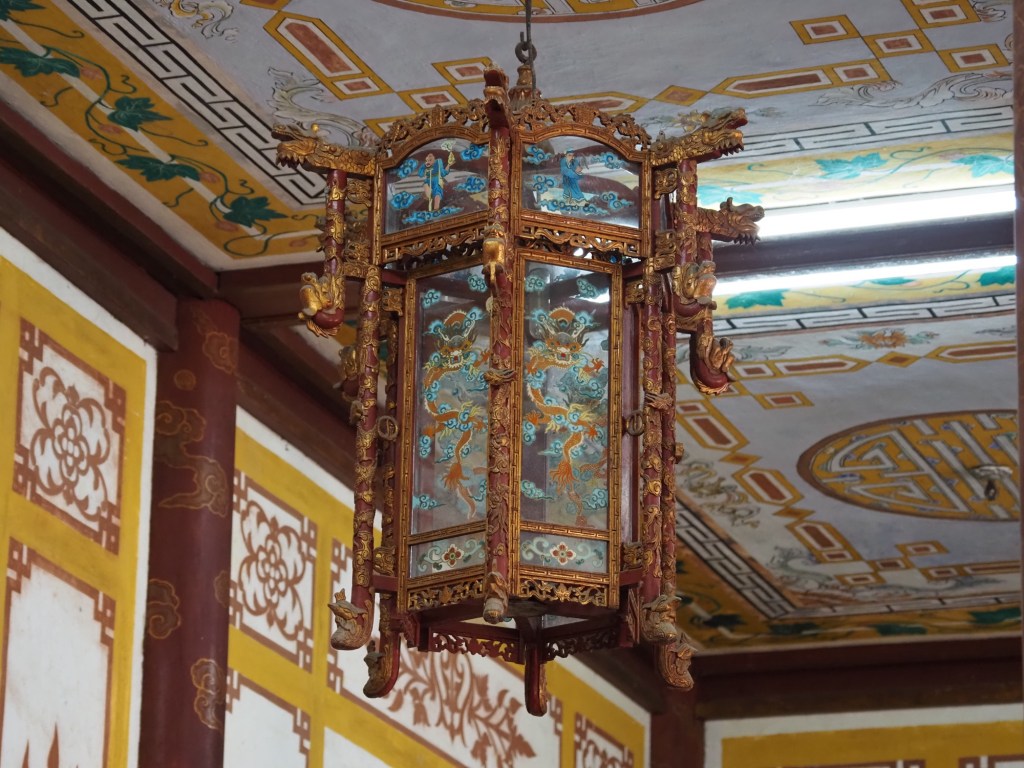
Today many of the buildings are no longer there. These next few photos show wide open spaces where the palaces are meant to be.
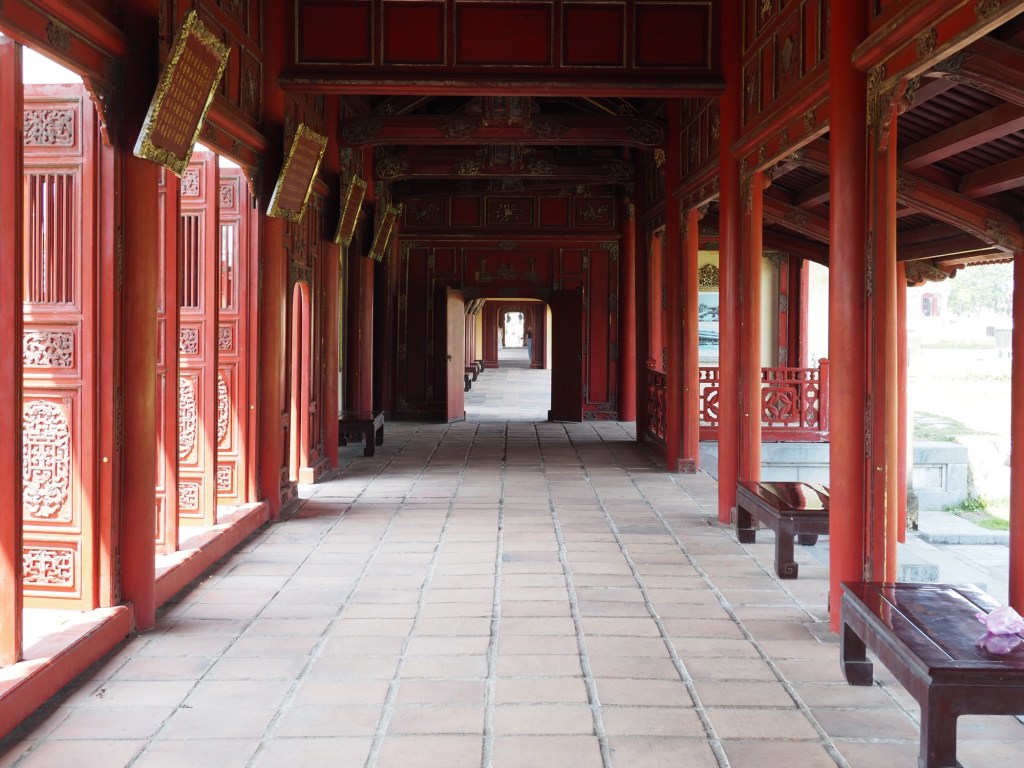
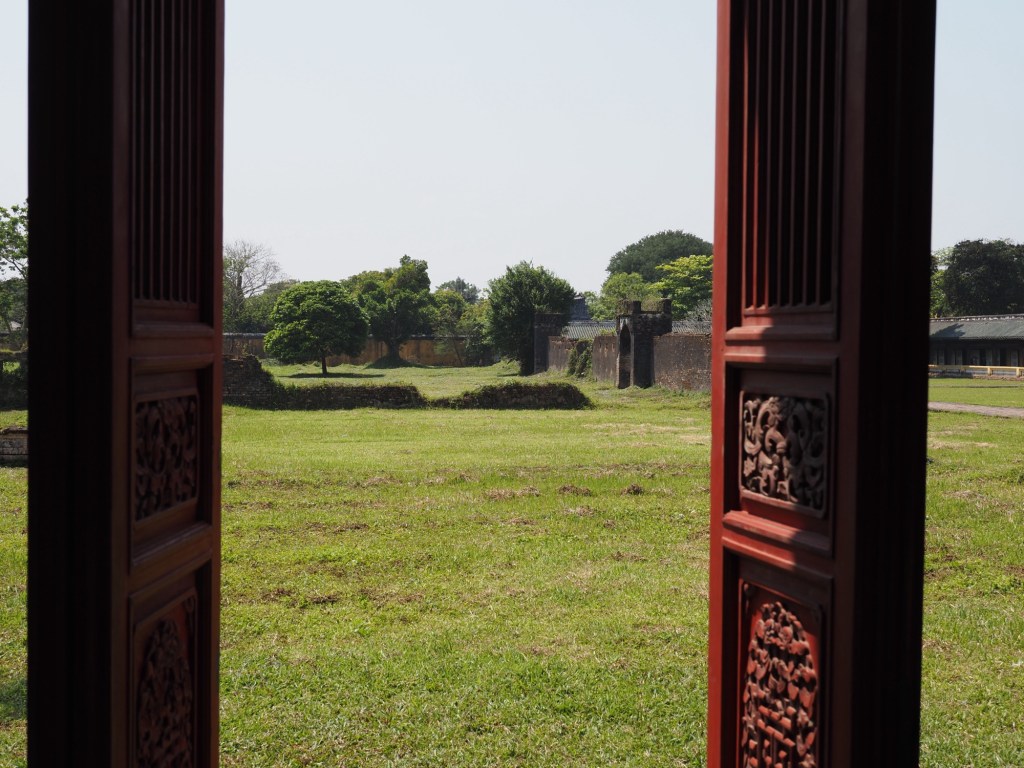
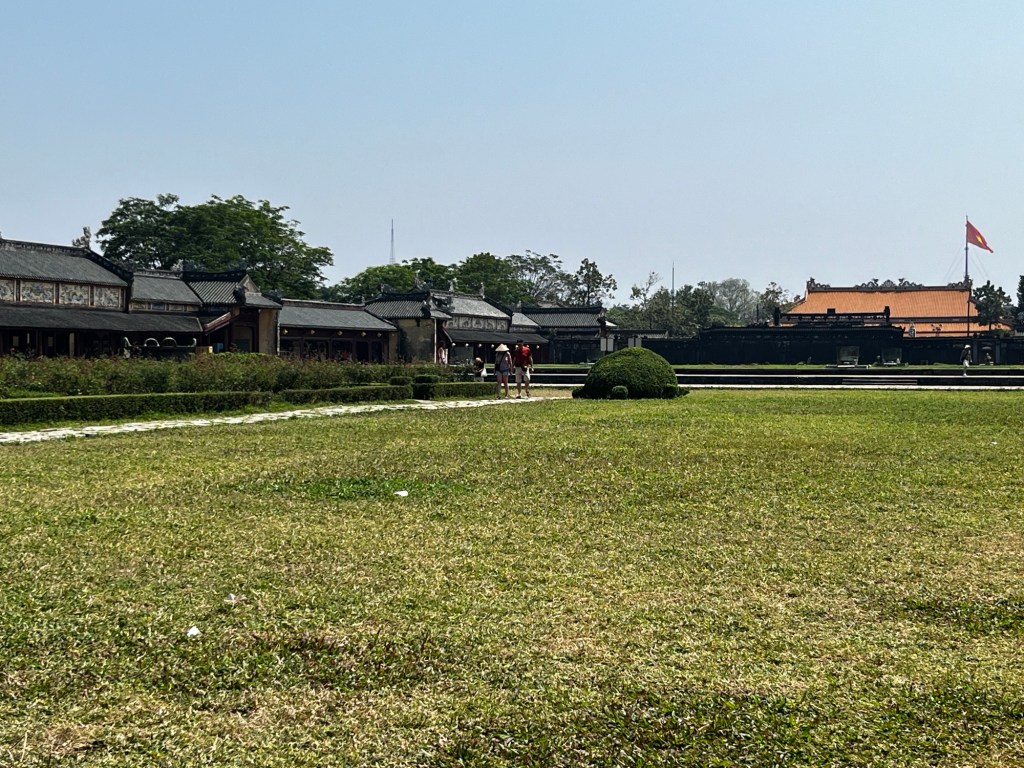
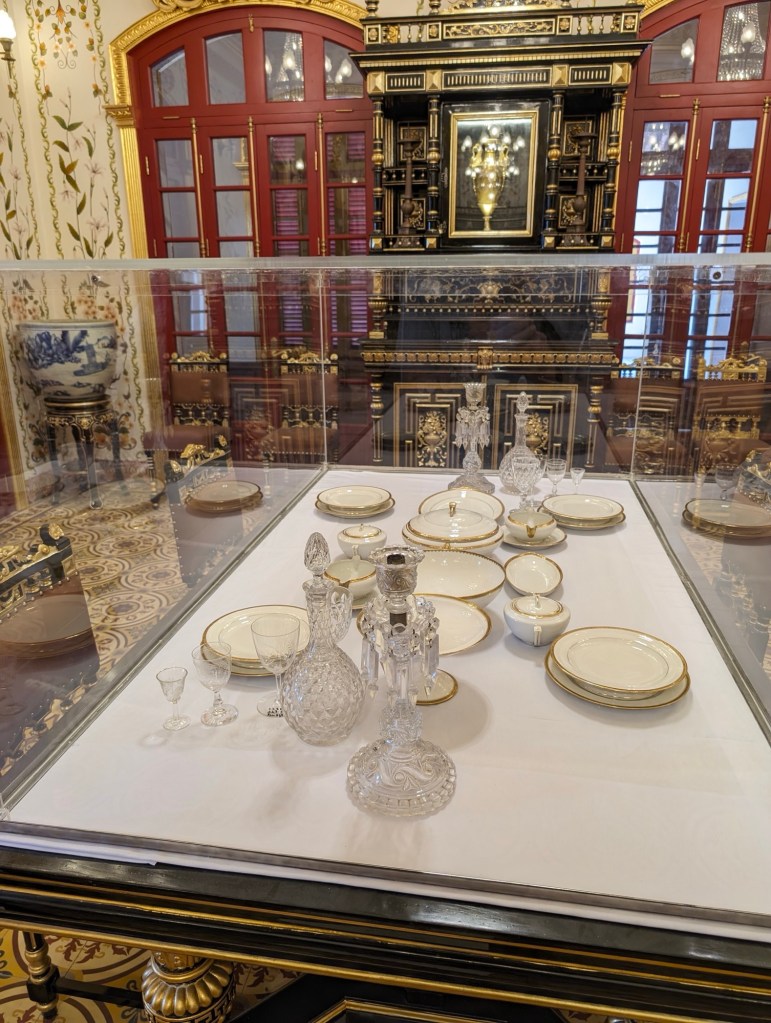
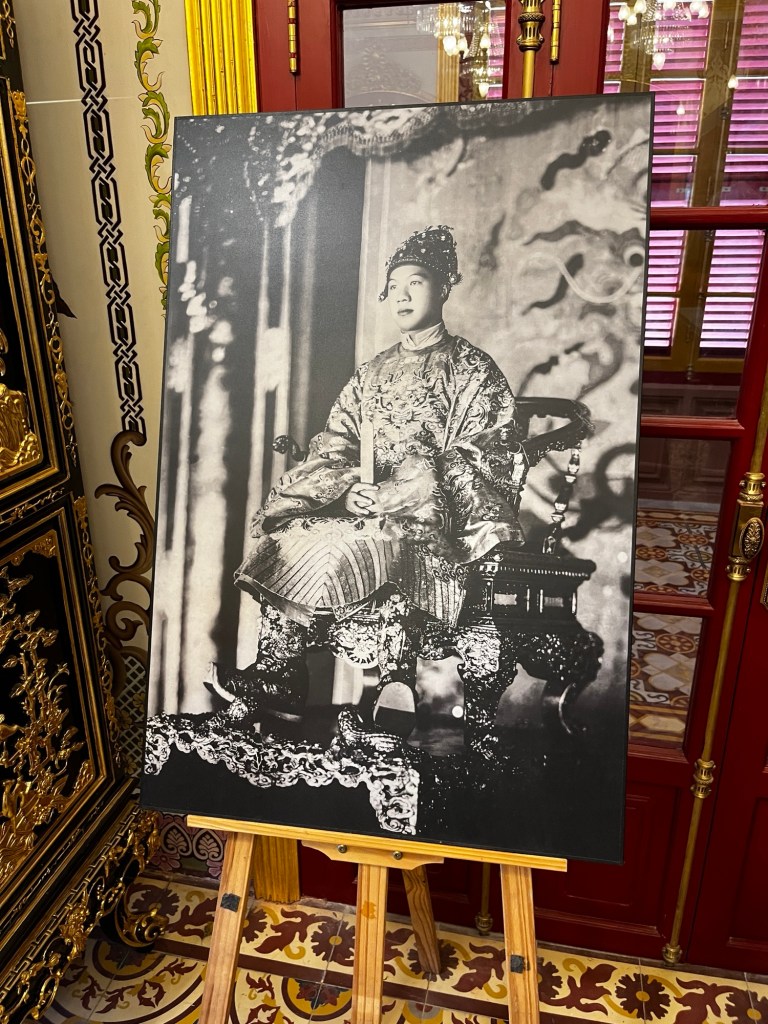
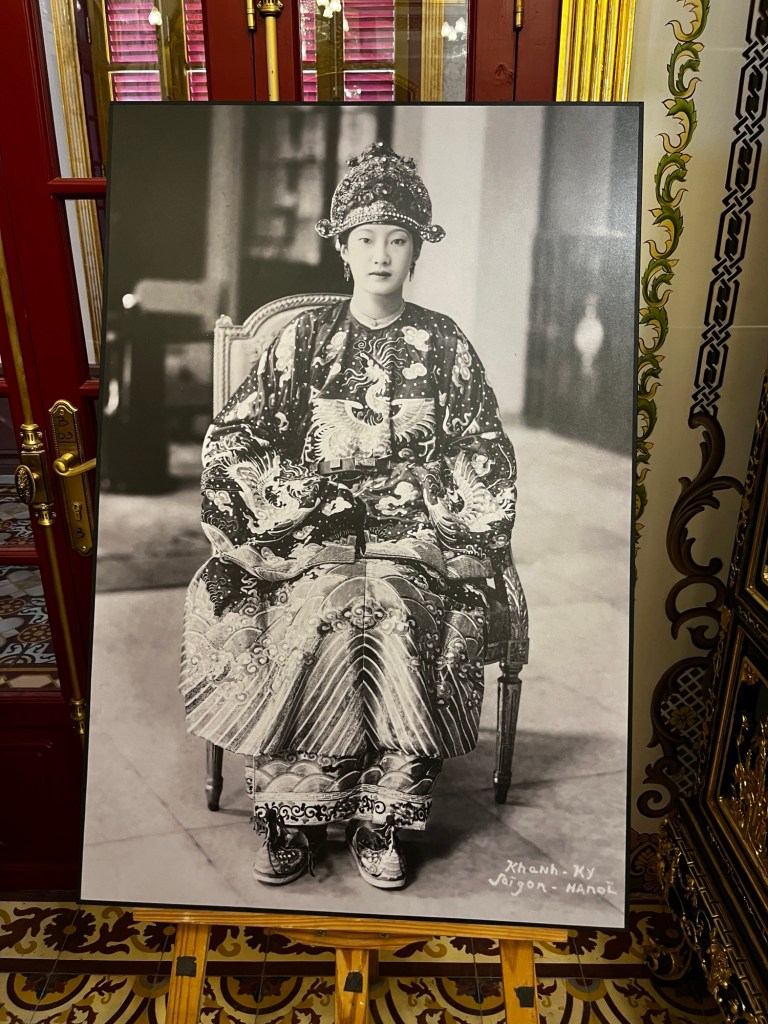
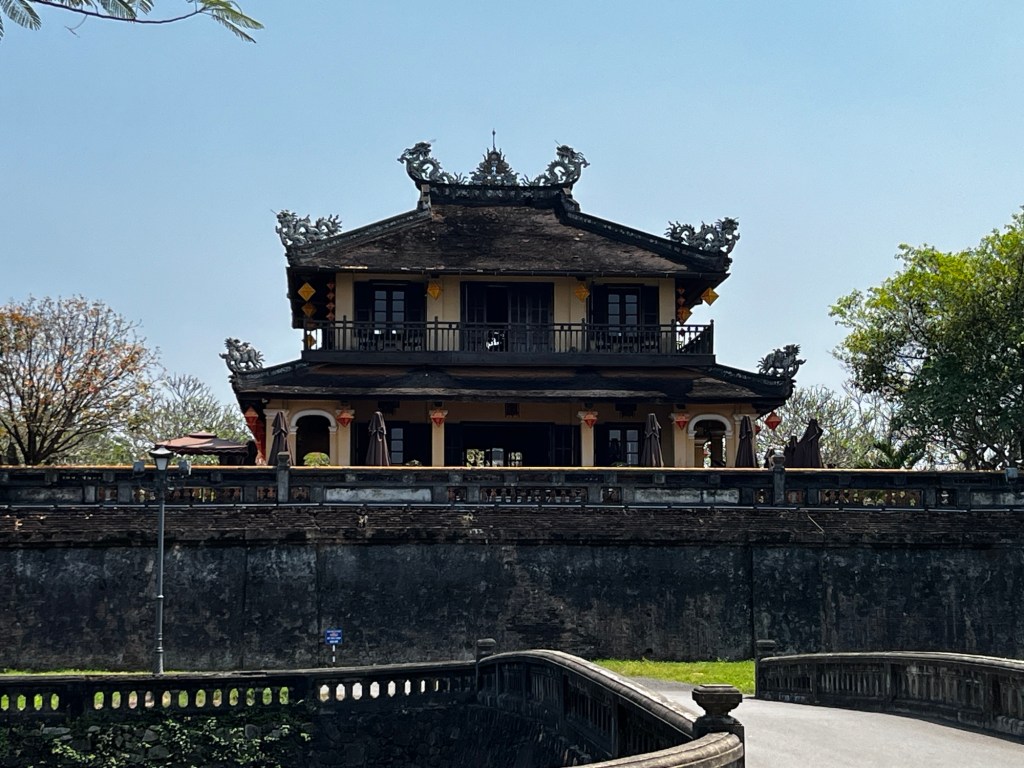
The building in the far north is the Khon Thai residence; it was recently restored and just opened to the public. This residence (not called a palace) was built for the last emperor Bao Dai. Bao Dai did not follow the tradition of multiple wives and concubines. Our tour guide said he felt that that lifestyle was more complicated than running a country. He had one wife and the family lived together.
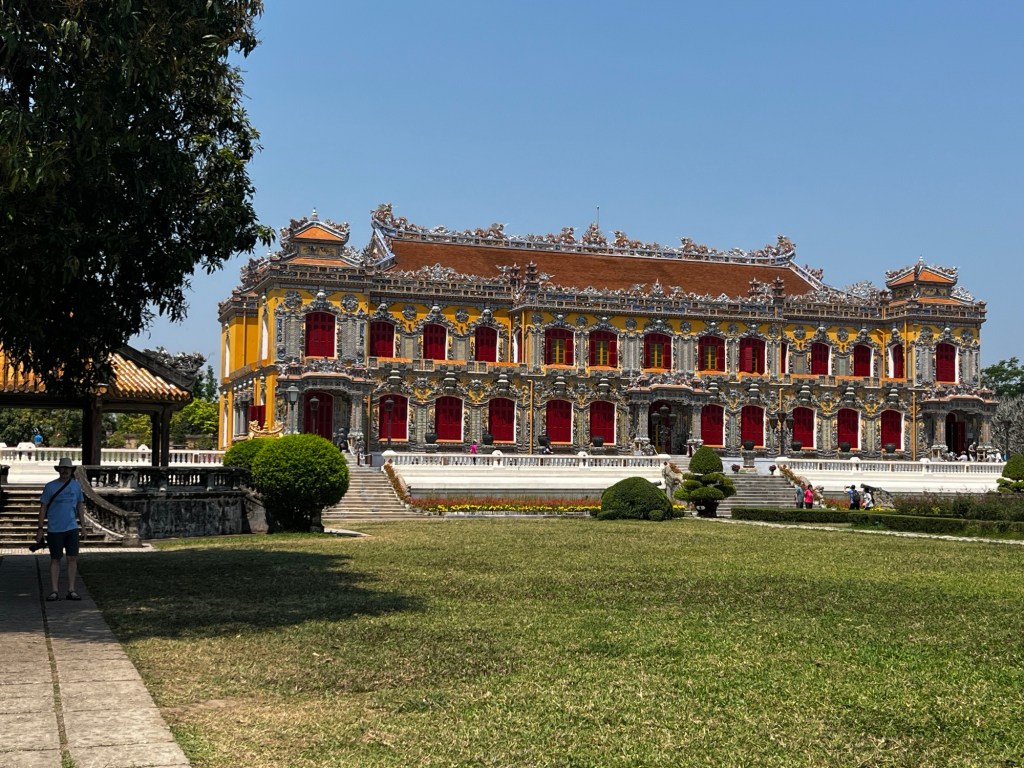
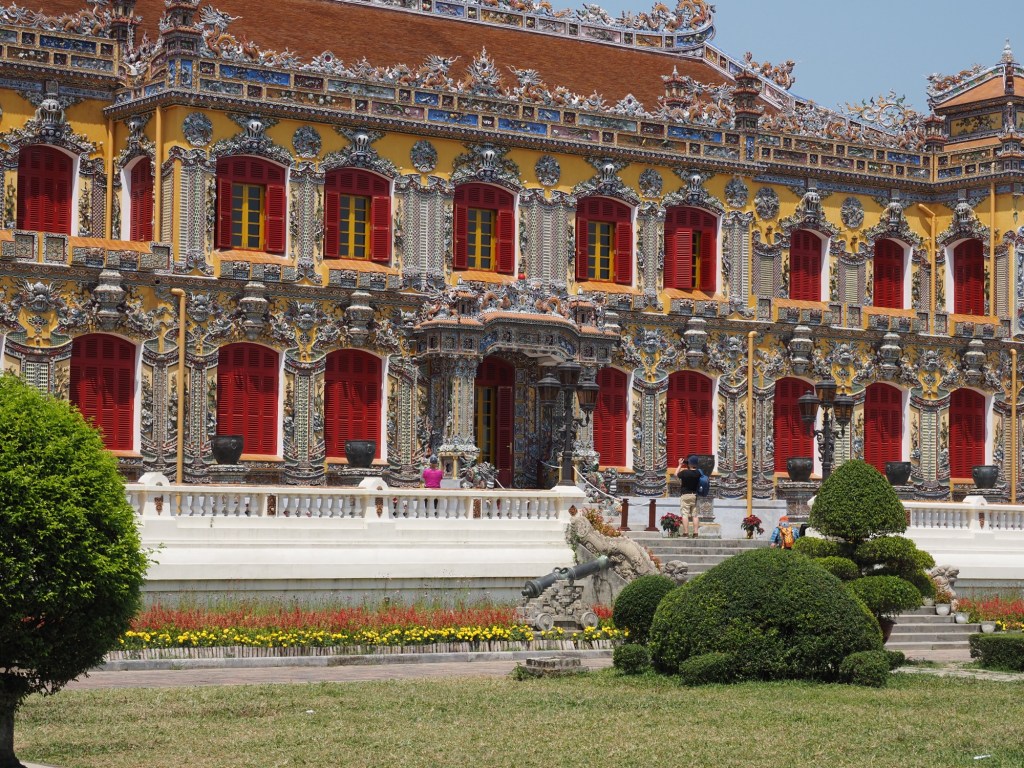
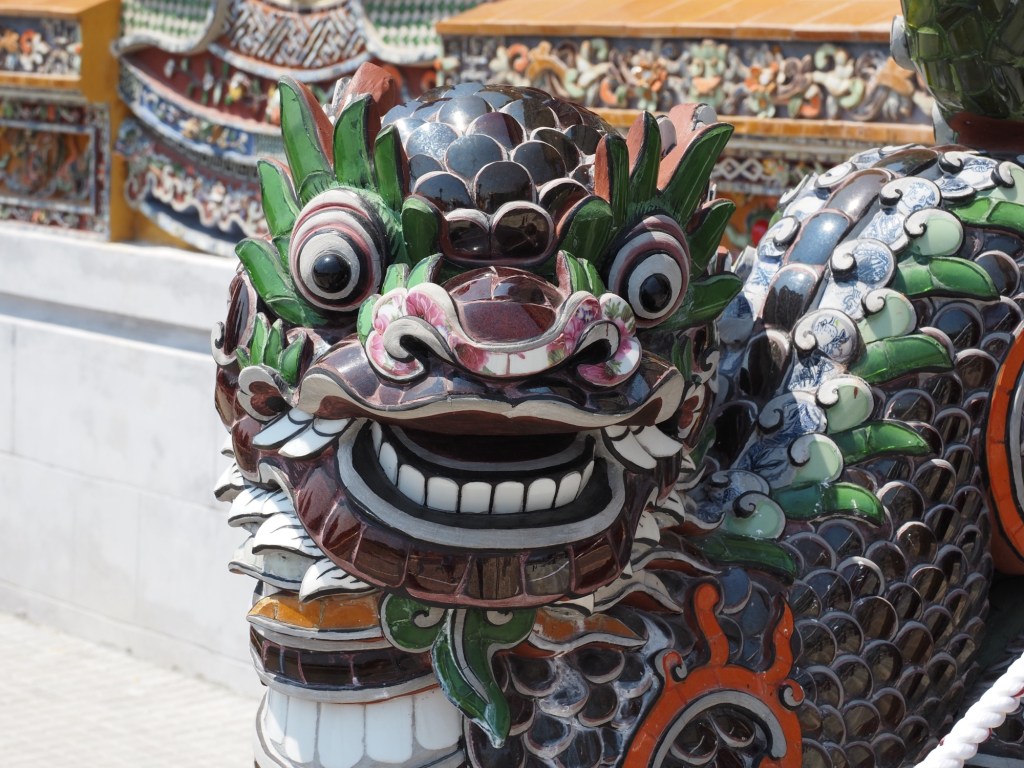
It was nice to view inside this residence.
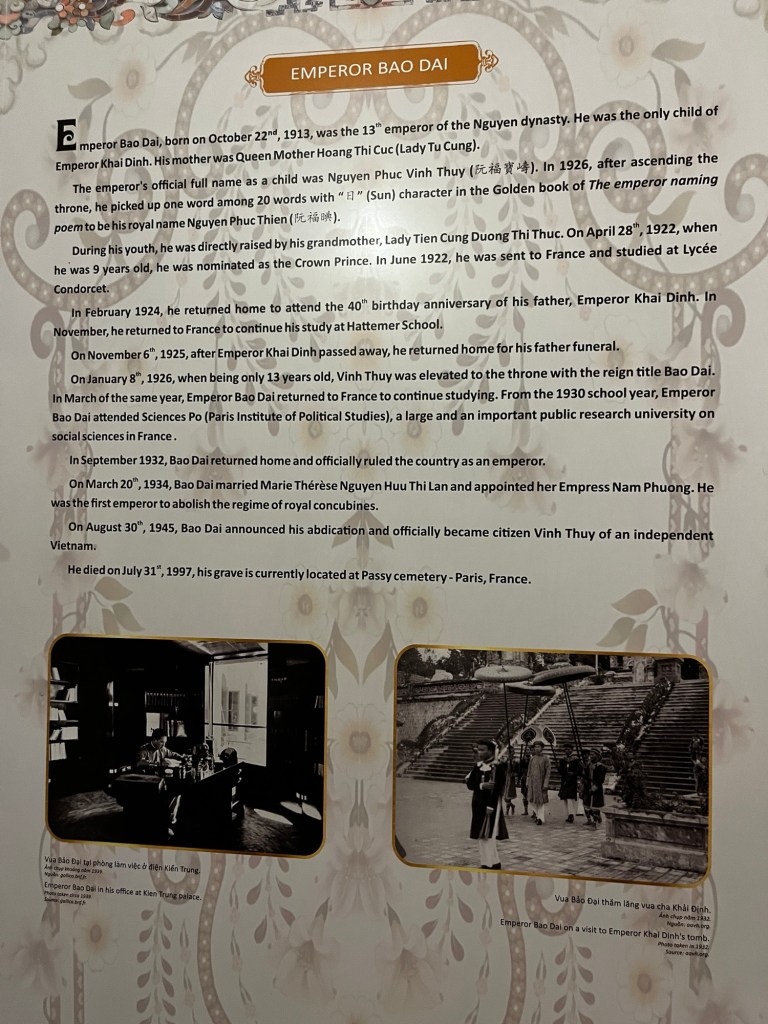
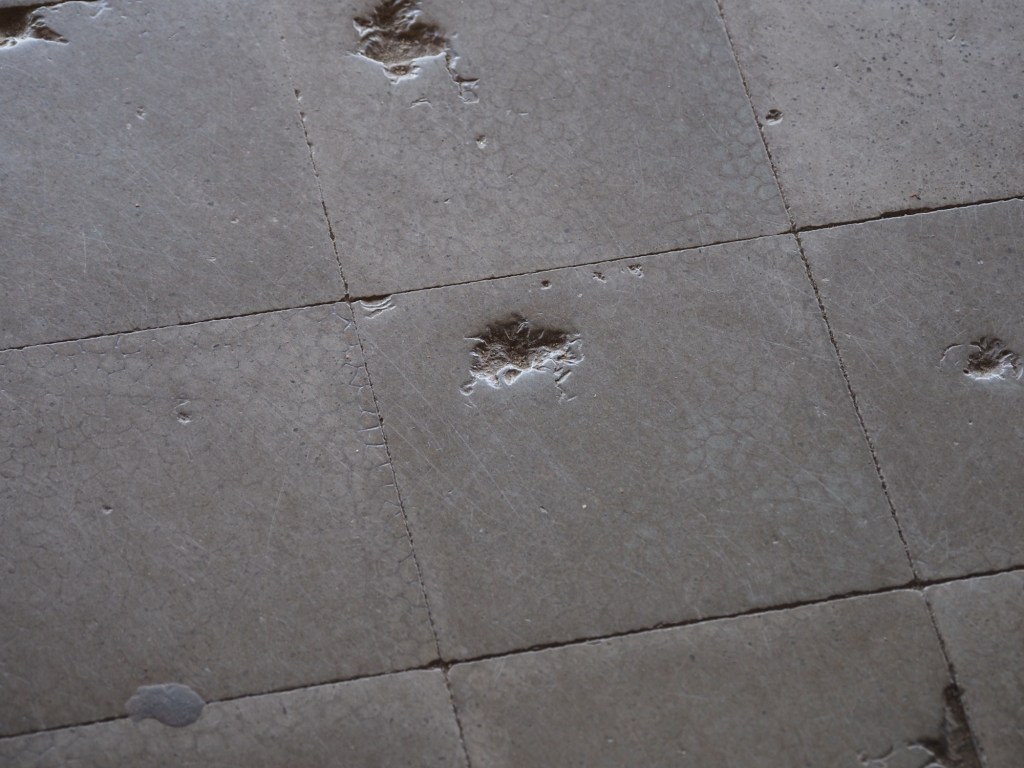
What caused the damage to the Imperial City?
Many buildings were damaged after WW2. A battle within the imperial city in 1947 resulted in significant damage.
While independence was proclaimed at the end of the war (DRV-socialist state) and the last emperor abdicated in a flashy ceremony at the Imperial City, the French were not prepared to give up this protectorate. So control of Vietnam was not settled and French forces battled DRV forces and Viet Cong rebels. In 1955 Vietnam was divided between North and South. The conflict continued and evolved into the Vietnam War.
In 1968 the Viet Cong launched an offensive from inside the palace walls (part of the Tet Offensive) further damaging the imperial city.
Did I mention it is 37C. Having a car and driver is helpful.
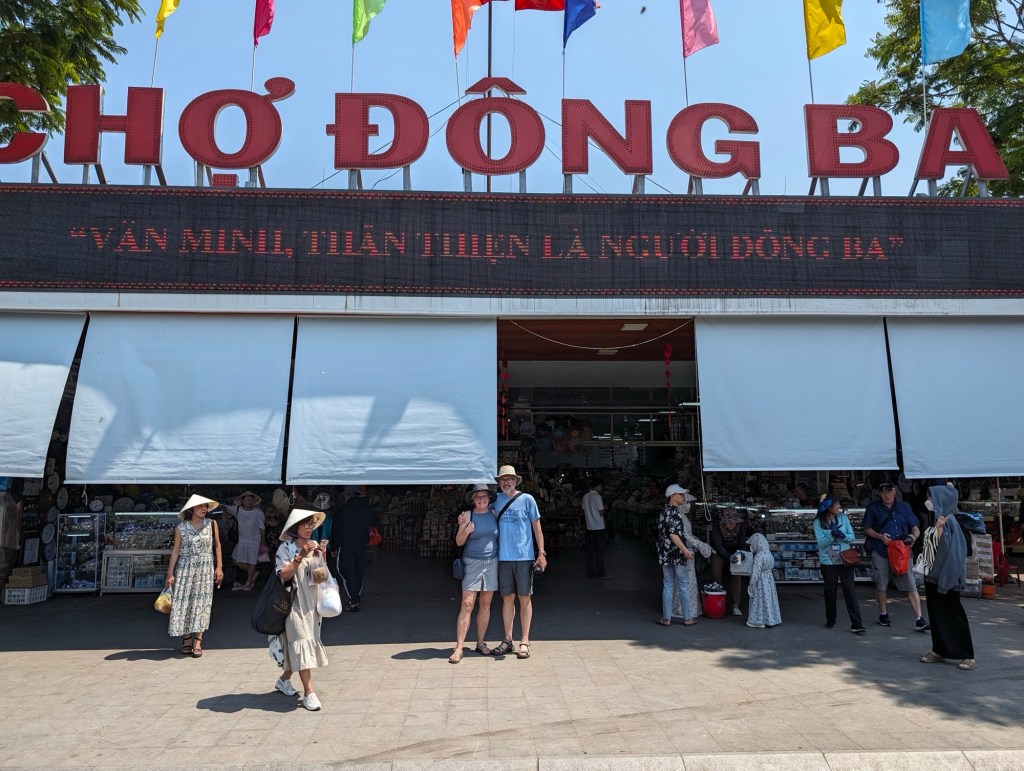
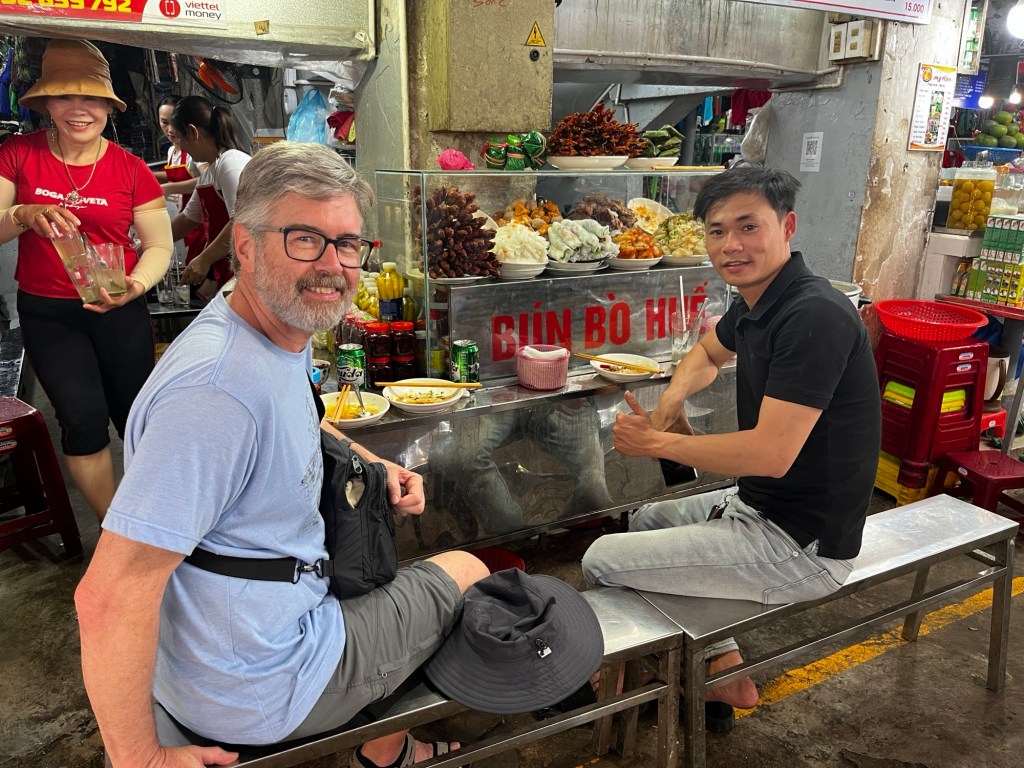
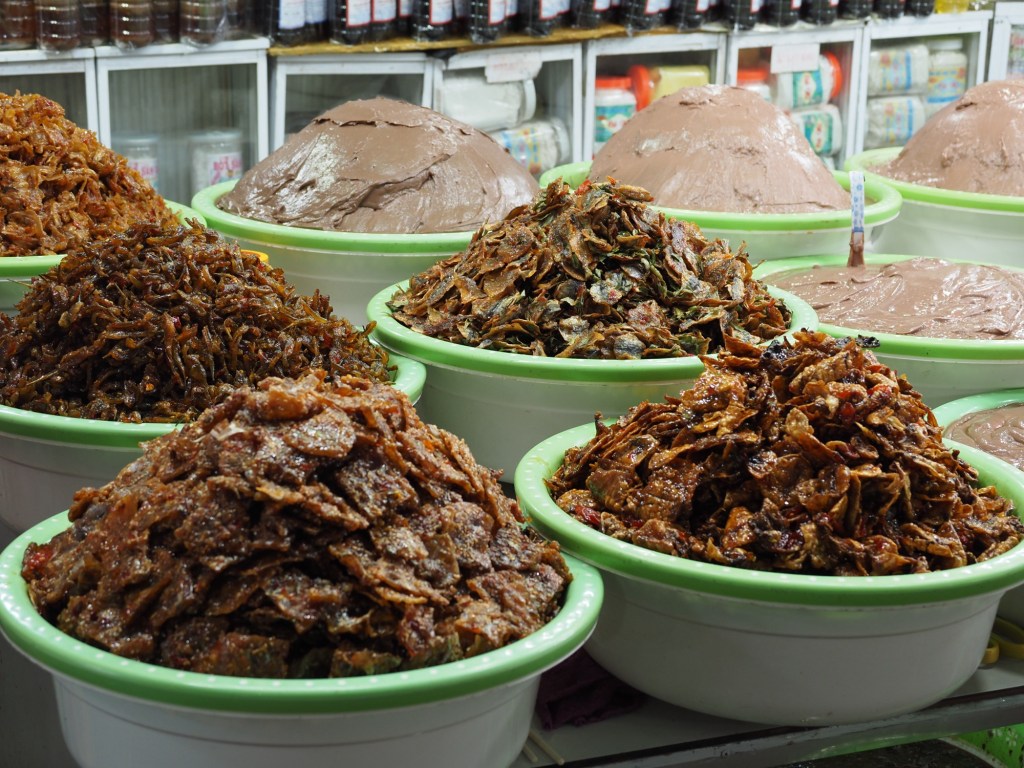
Our next stop is the Dong Ba Market in Hue. We are ready for lunch and a cold beer.
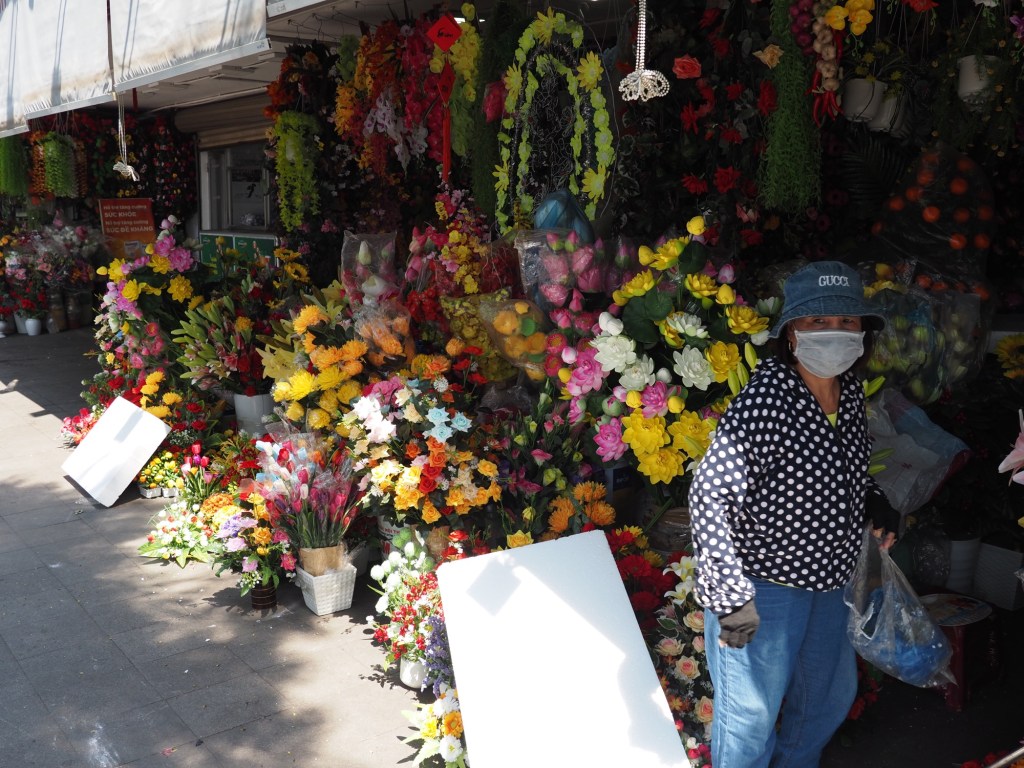
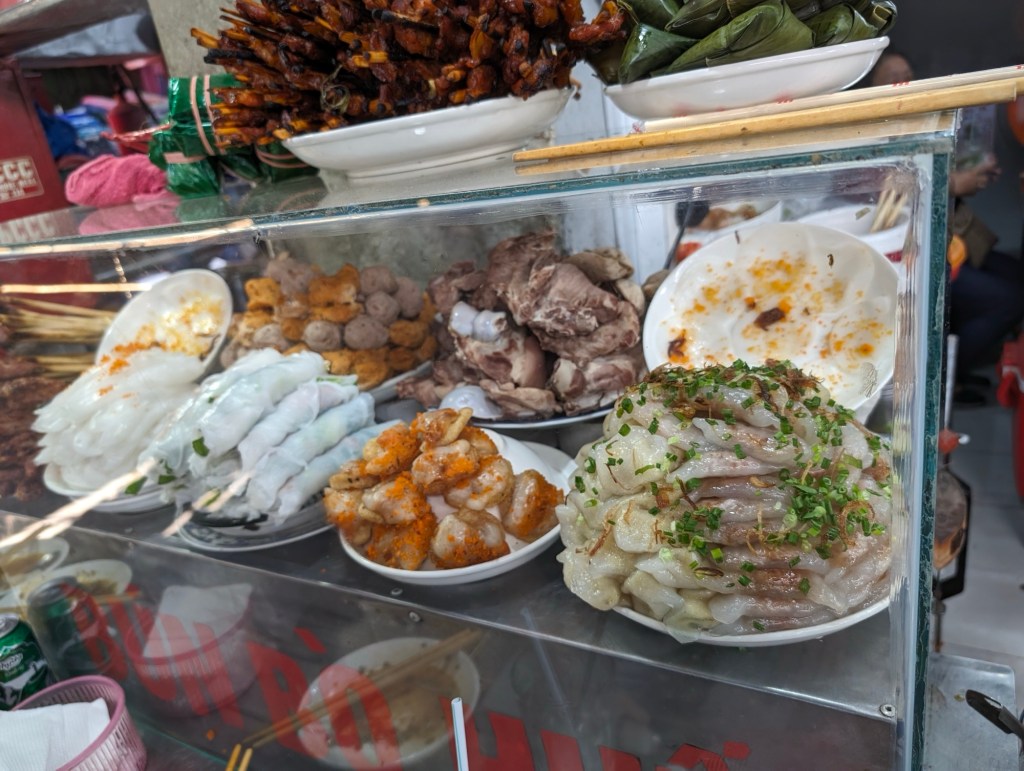
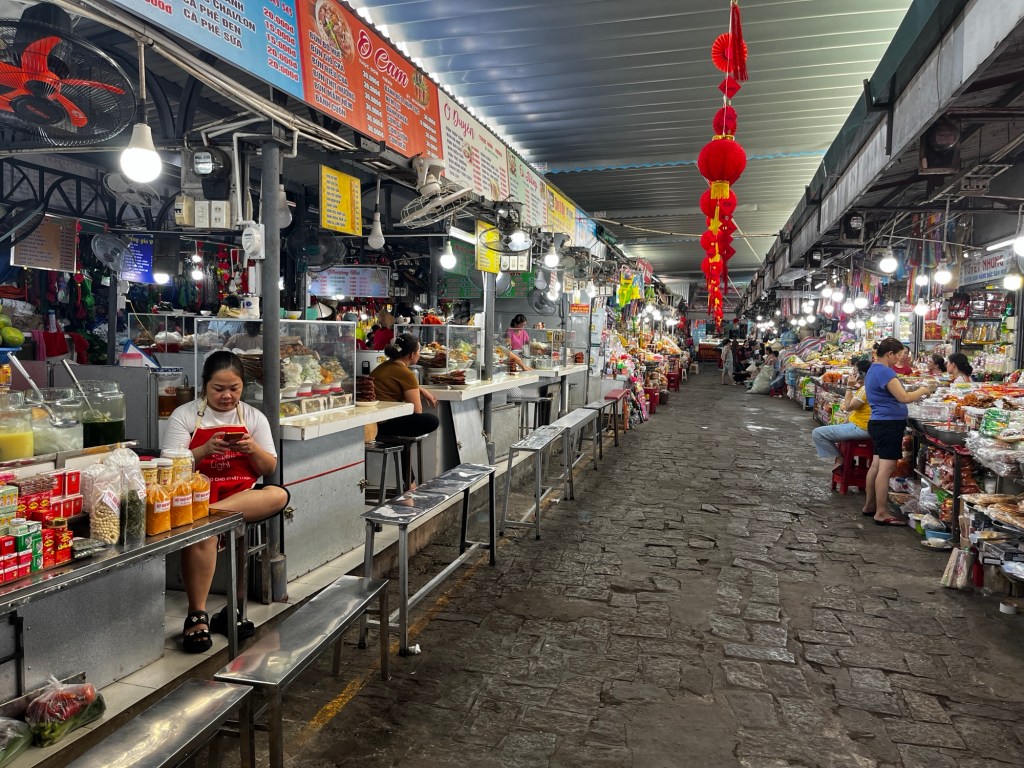
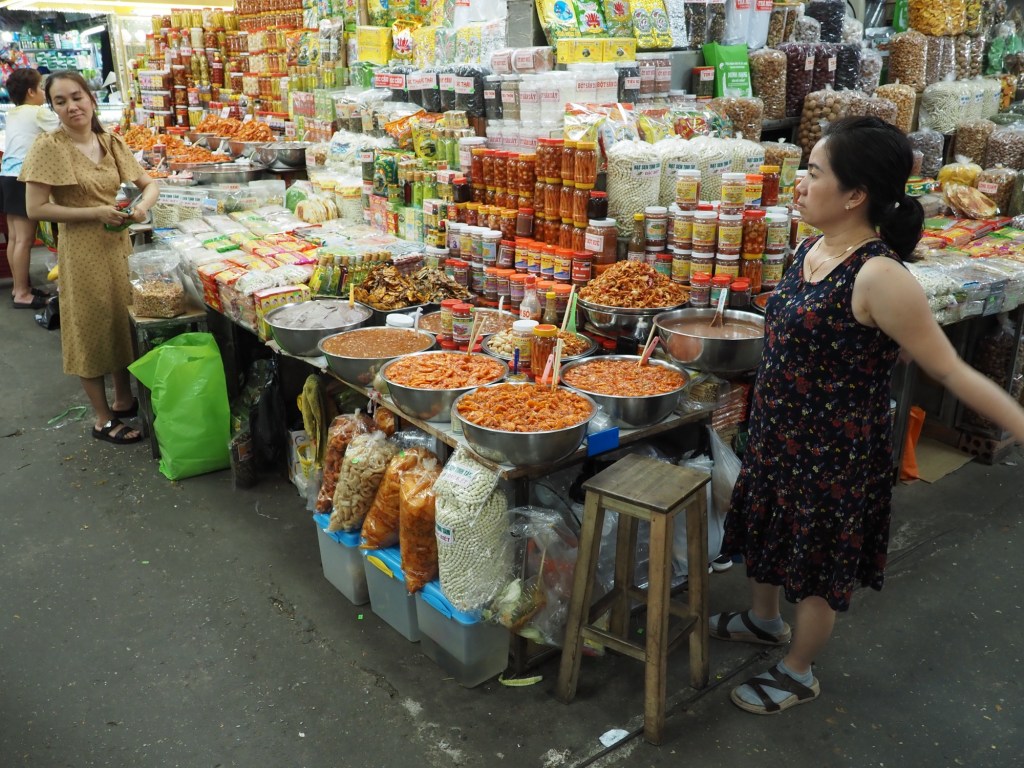
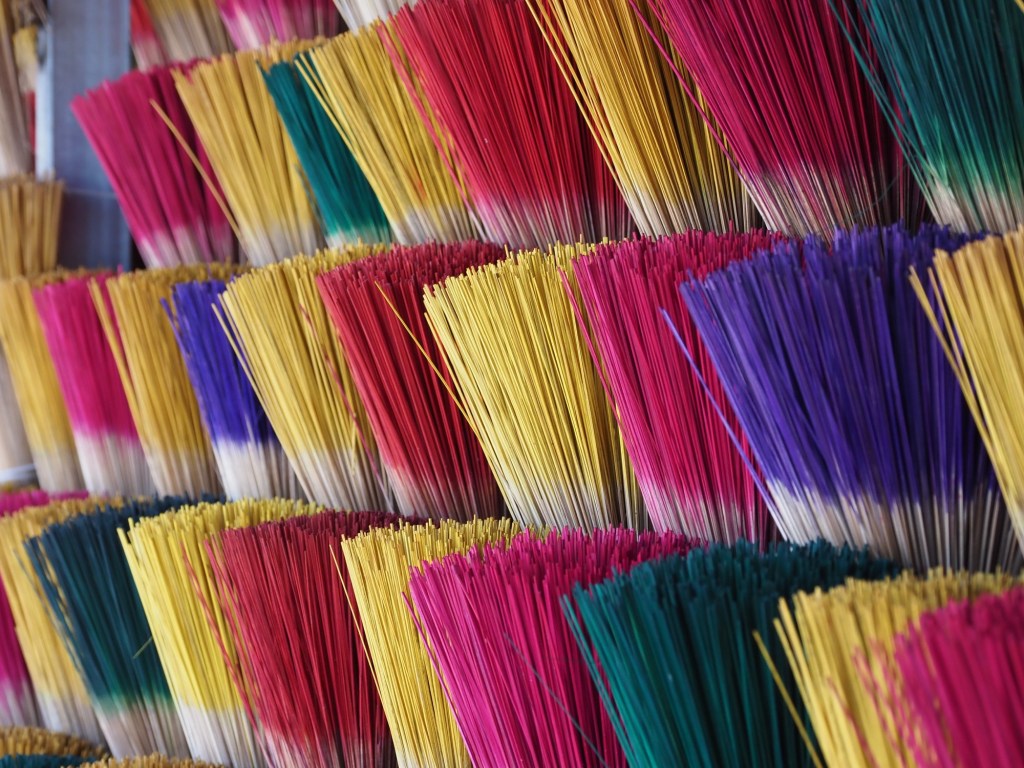
Afterward Tham drives us to Hue Conical Hat Village. I love these hats – called non la; unfortunately not so practical when you are on the road for a few months. What catches our eye are the brooms (still impractical for travellers).
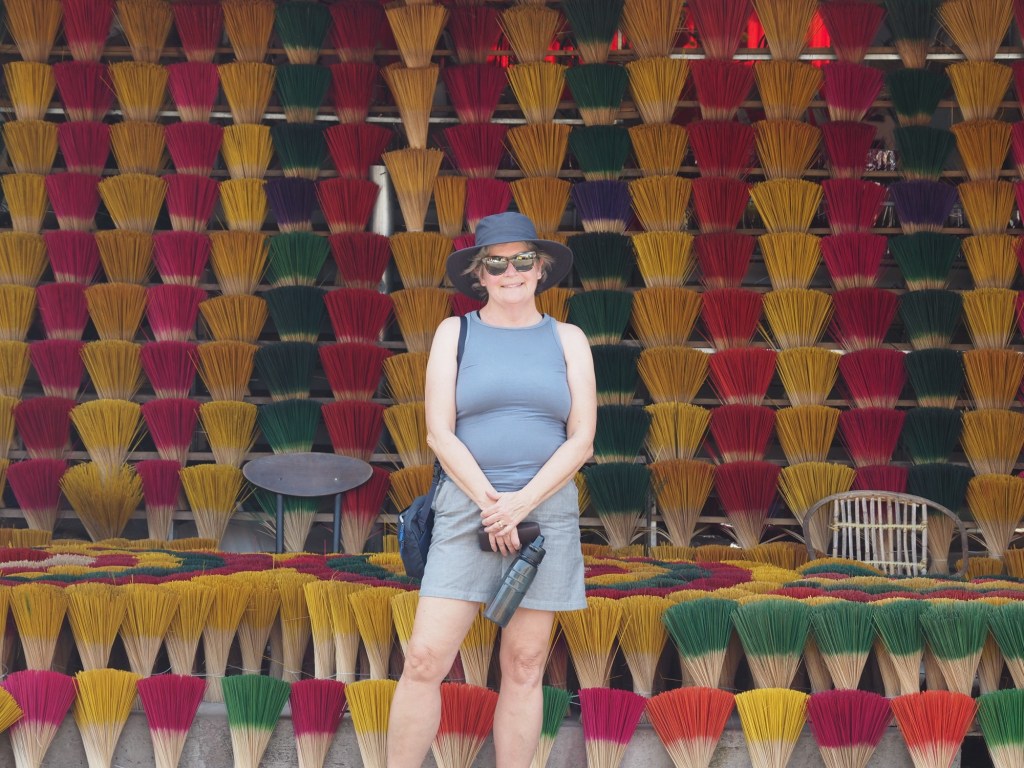
Our brains have had a bit of a rest. There is more to see in Hue. Our final two stops are at Tombs for two of the thirteen emperors.
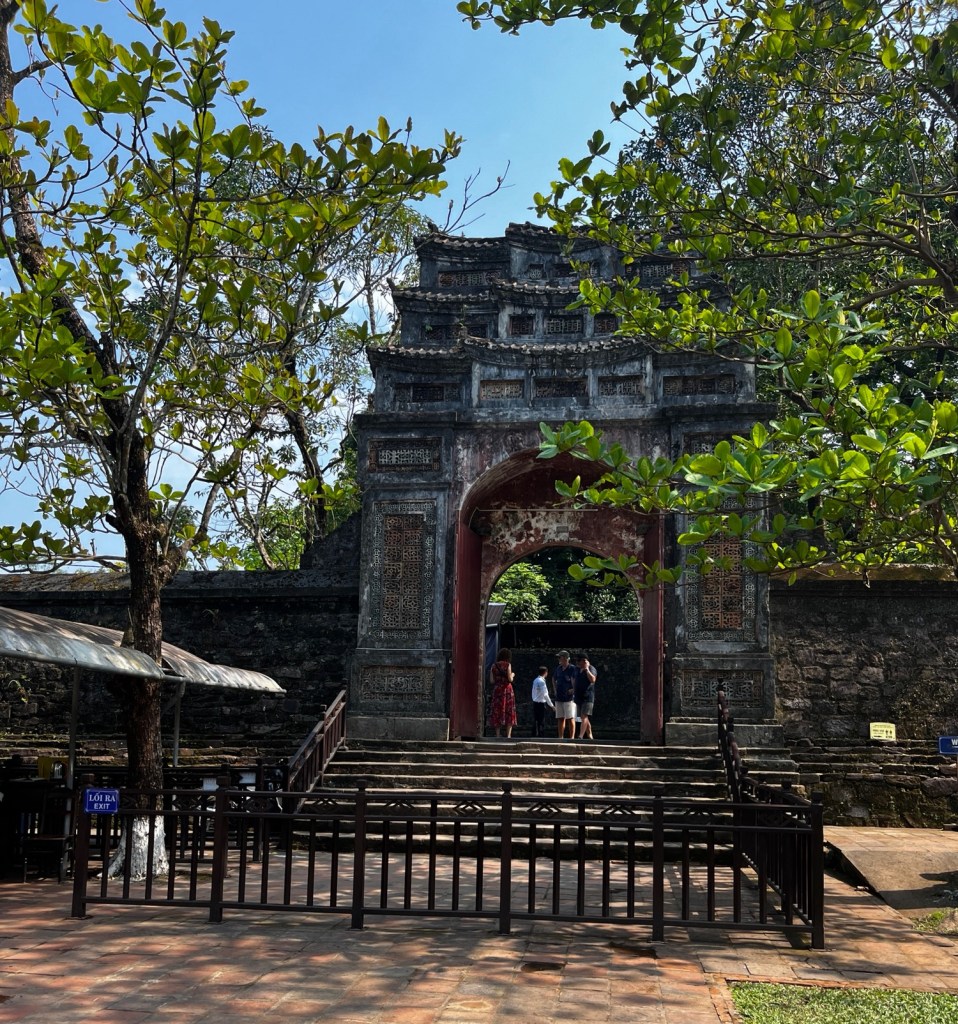
Tomb of Tu Duc
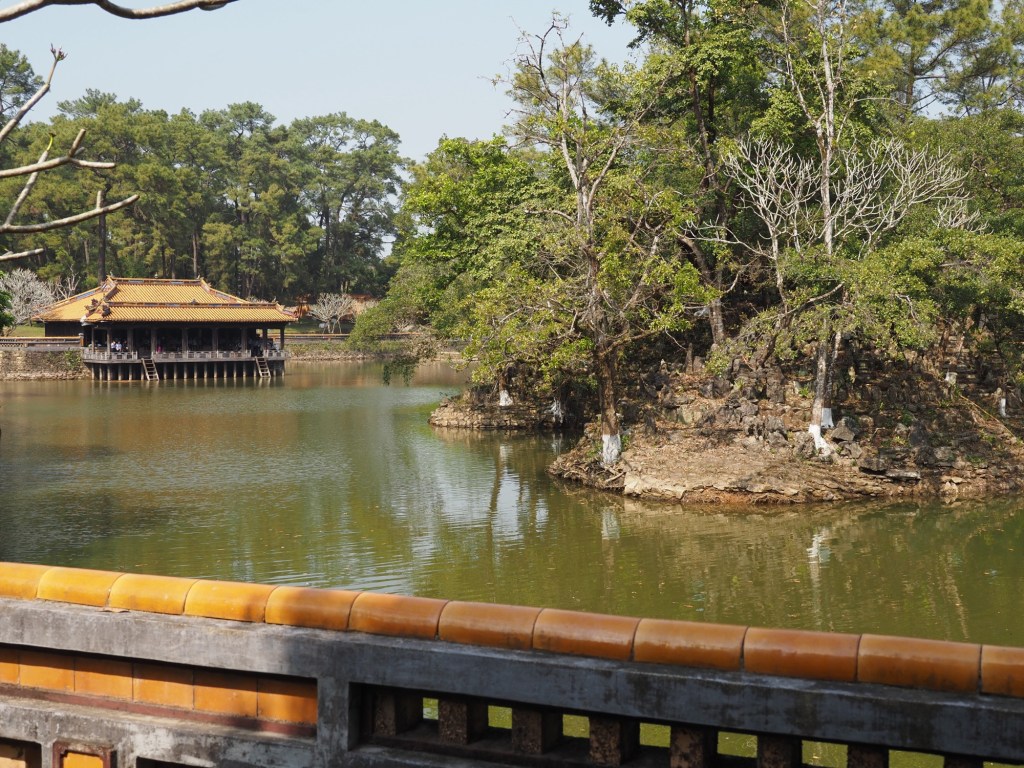
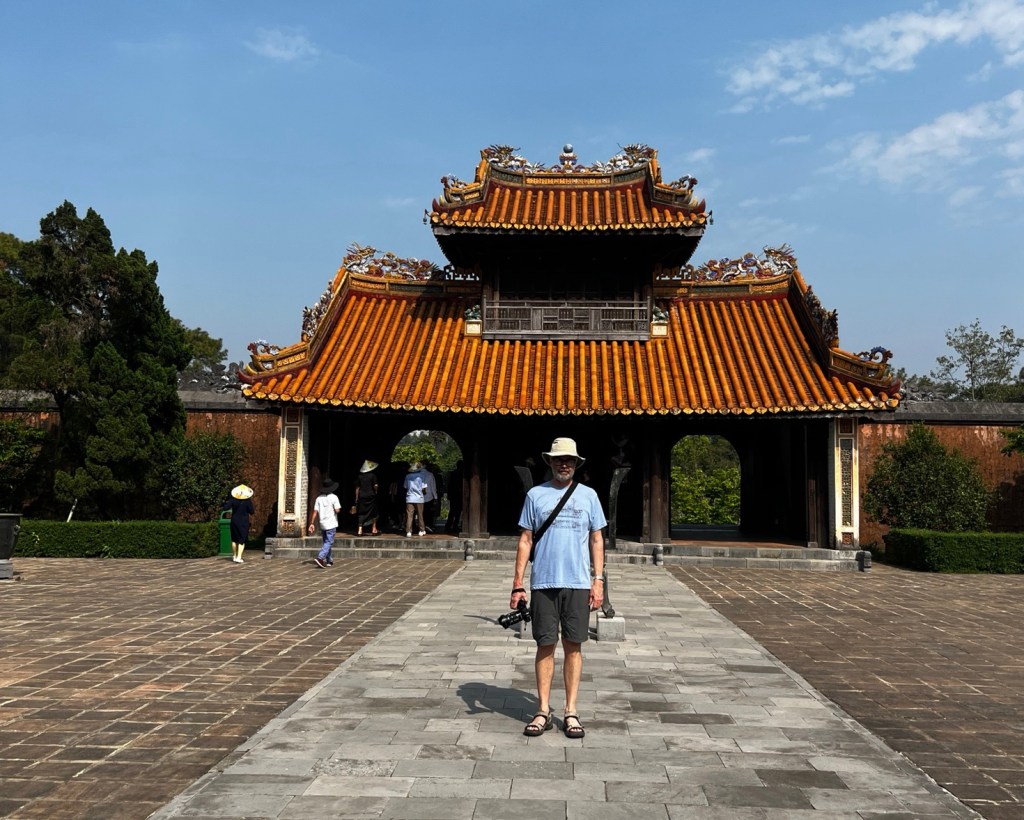
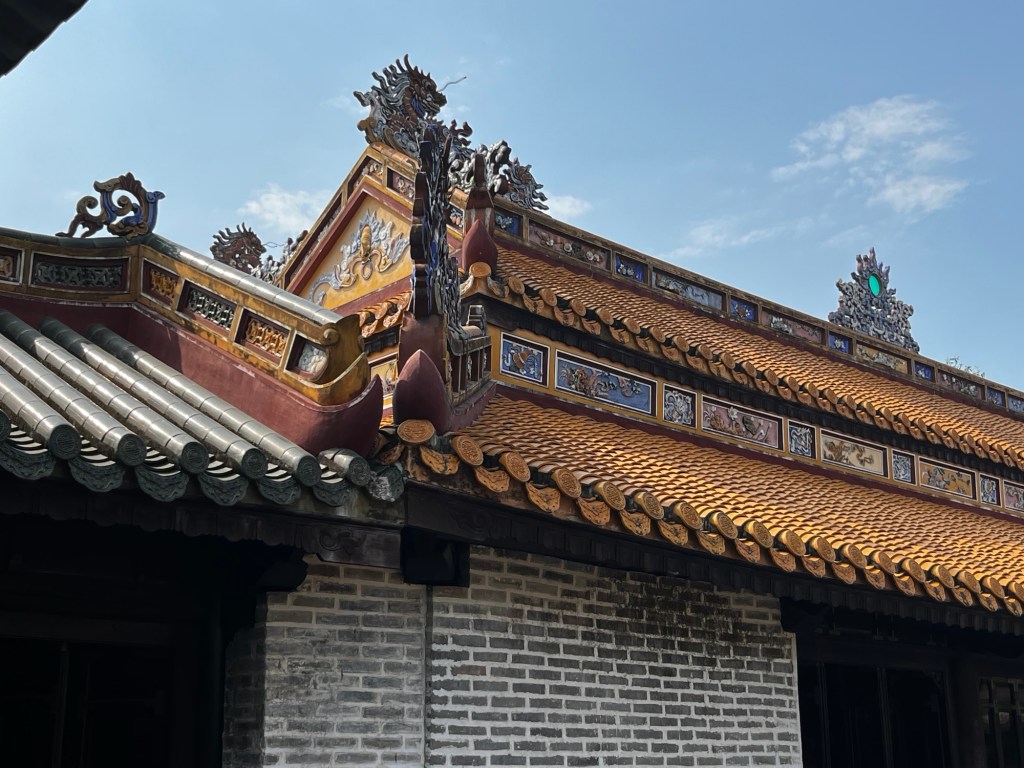
Tu Duc, the fourth emperor, had the longest reign 1848-83. Despite having 104 wives and concubines he did not father a son (heir). Oh dear. His tomb was completed by 1867. Other buildings were added and Tu Duc took up residence. Why not? He was a poet at heart and well educated. He appreciated nature. There is a small island in the middle of the lake. It is a very peaceful place. He was a modest emperor and his tomb reflects this.
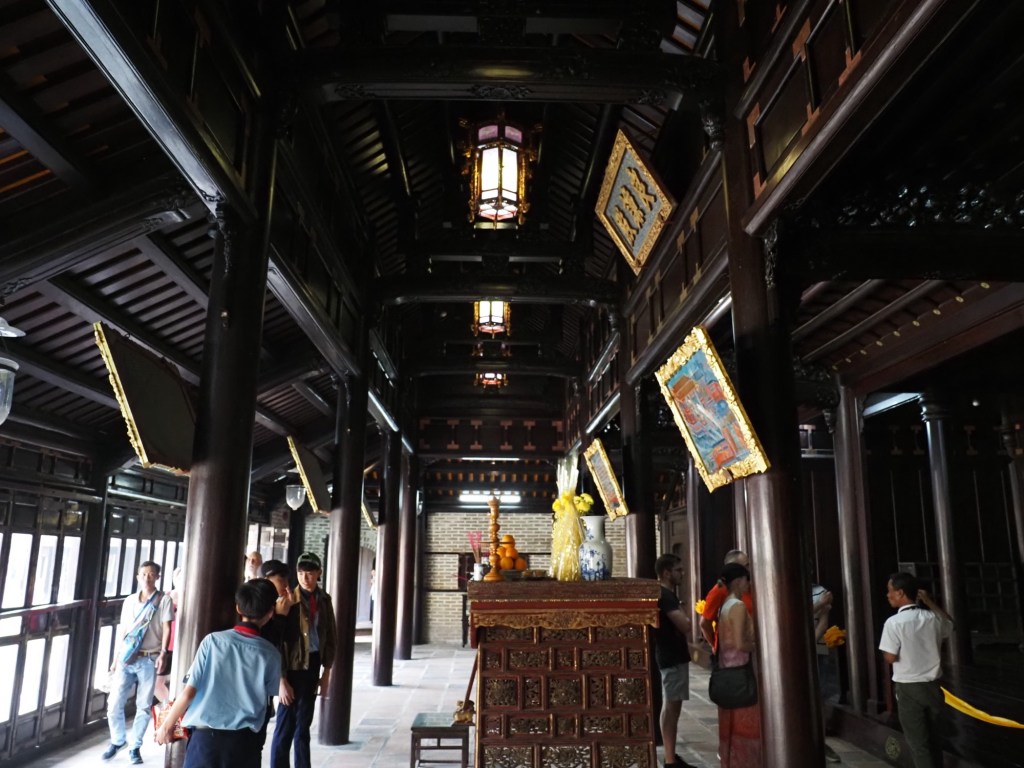
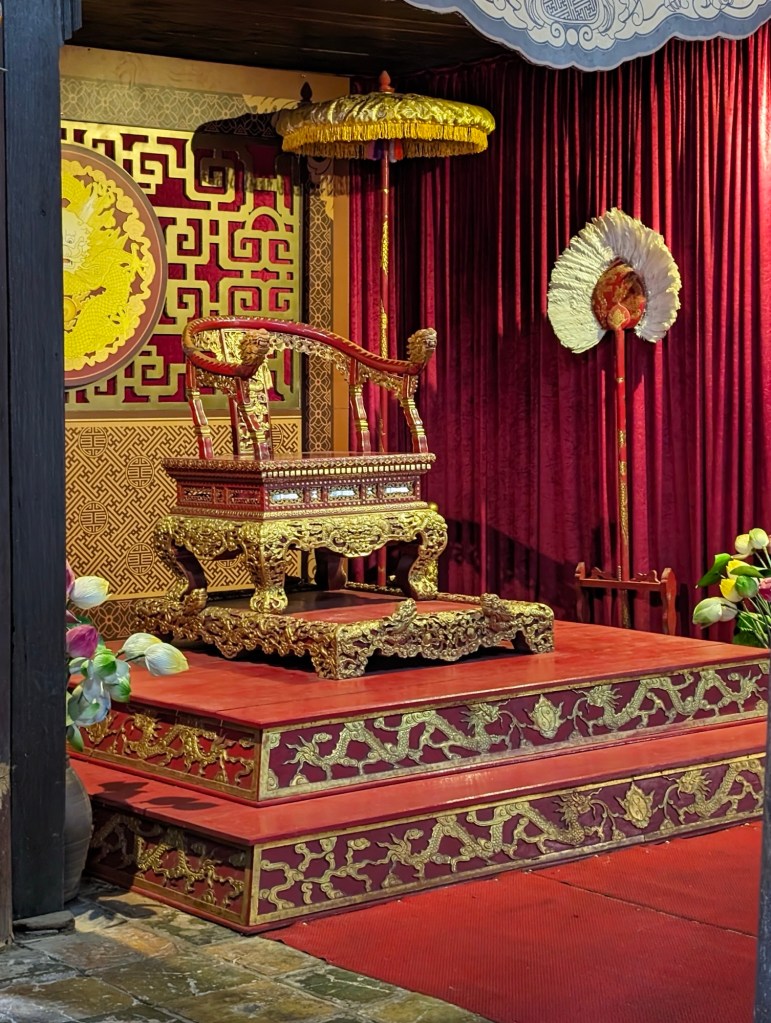
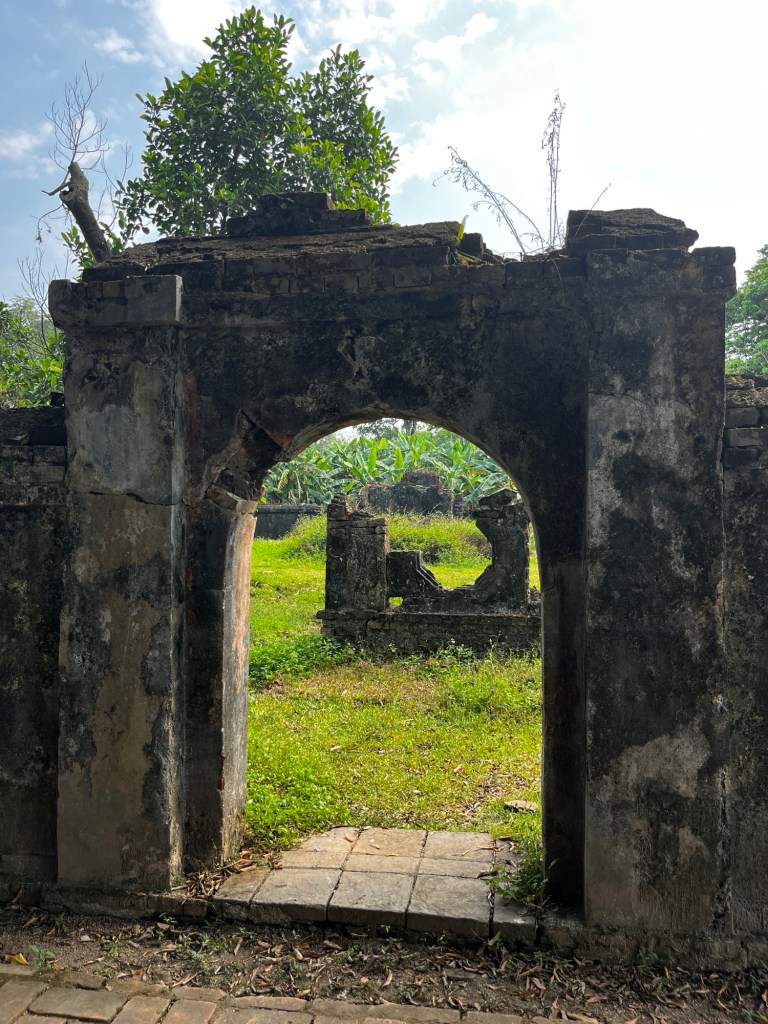
Tomb of Khai Dinh
Bao Dai, the emperor who abdicated does not have a tomb. Bao Dai was progressive given his French schooling and refused more than 1 wife as well.
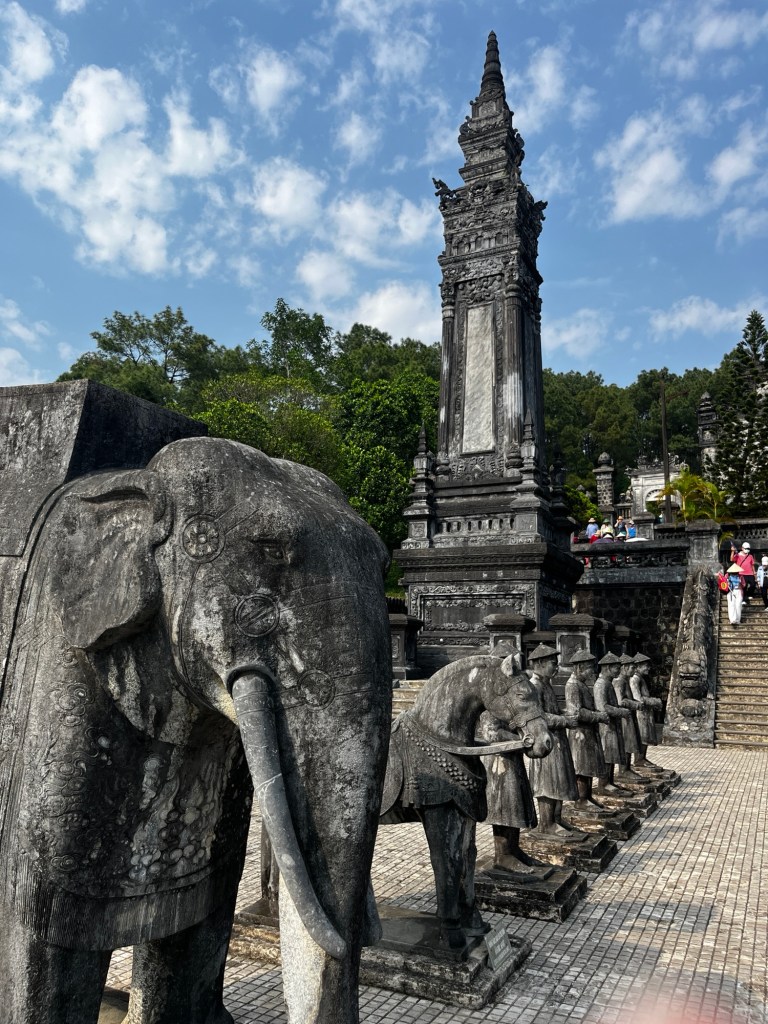
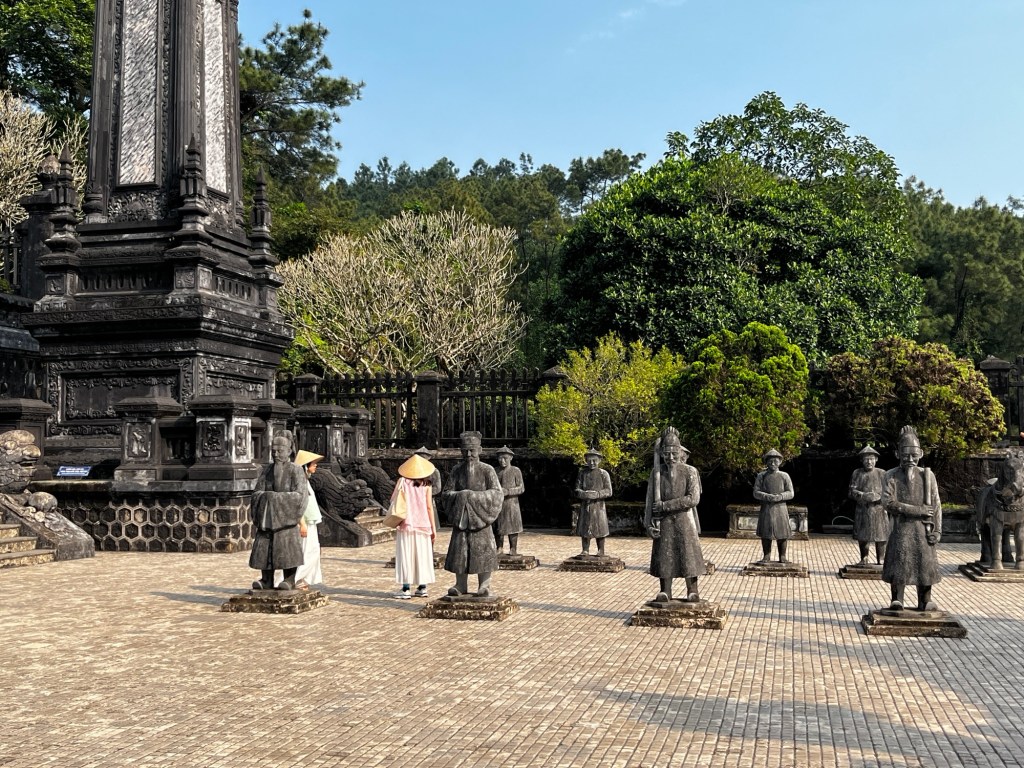
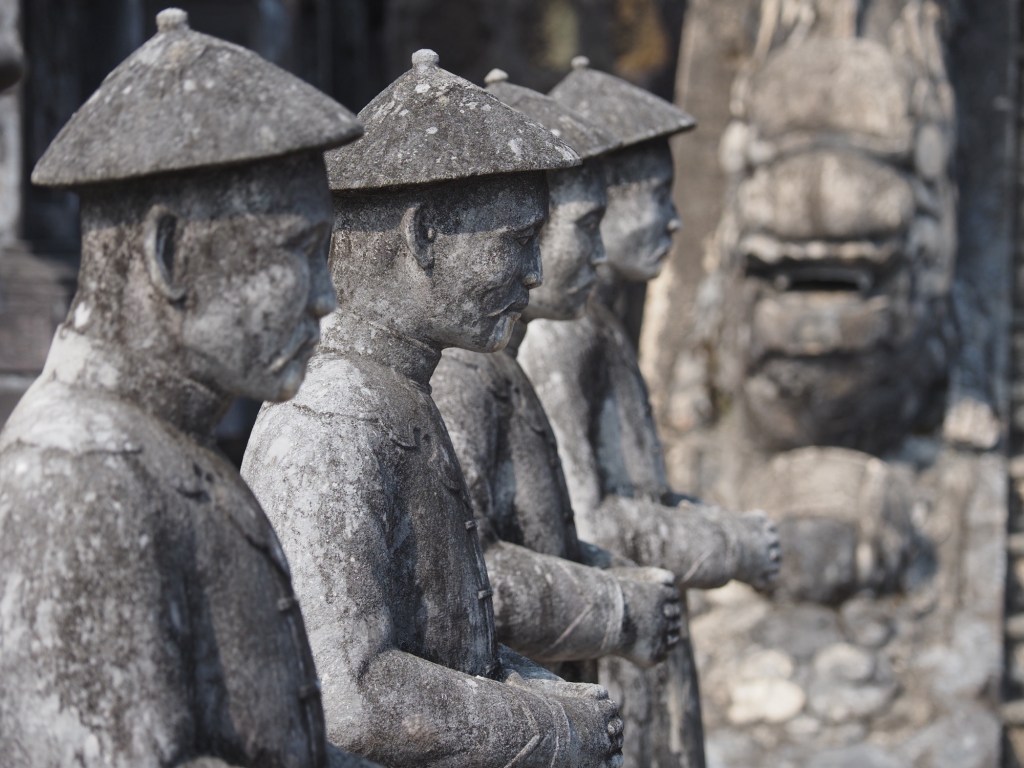
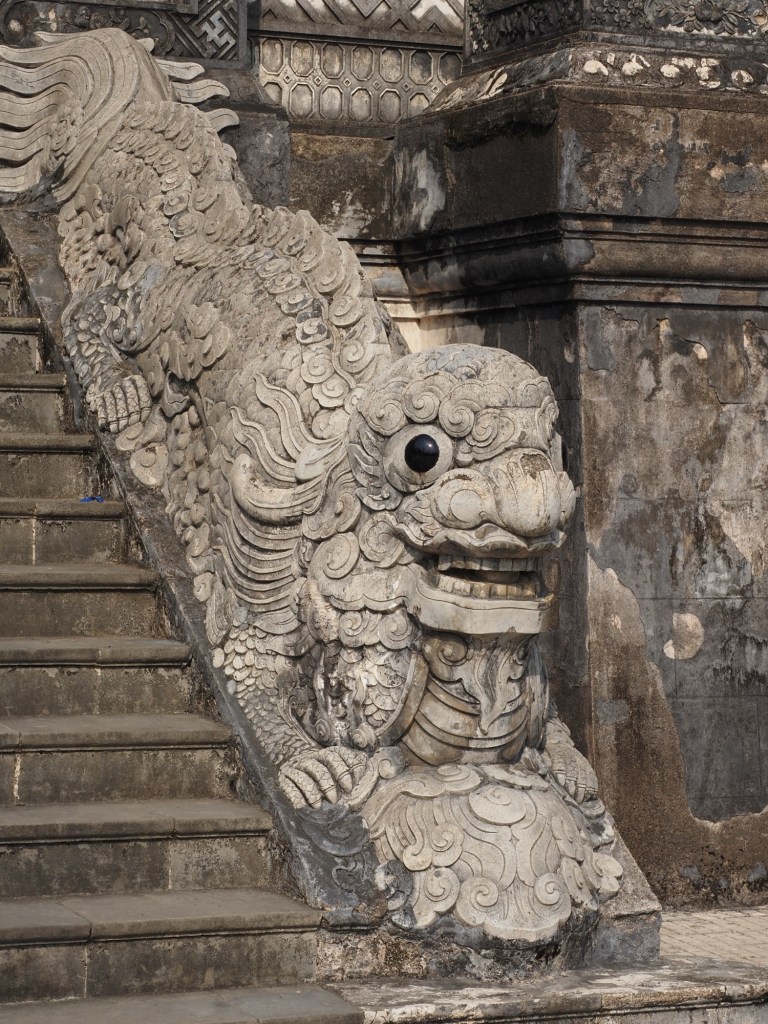
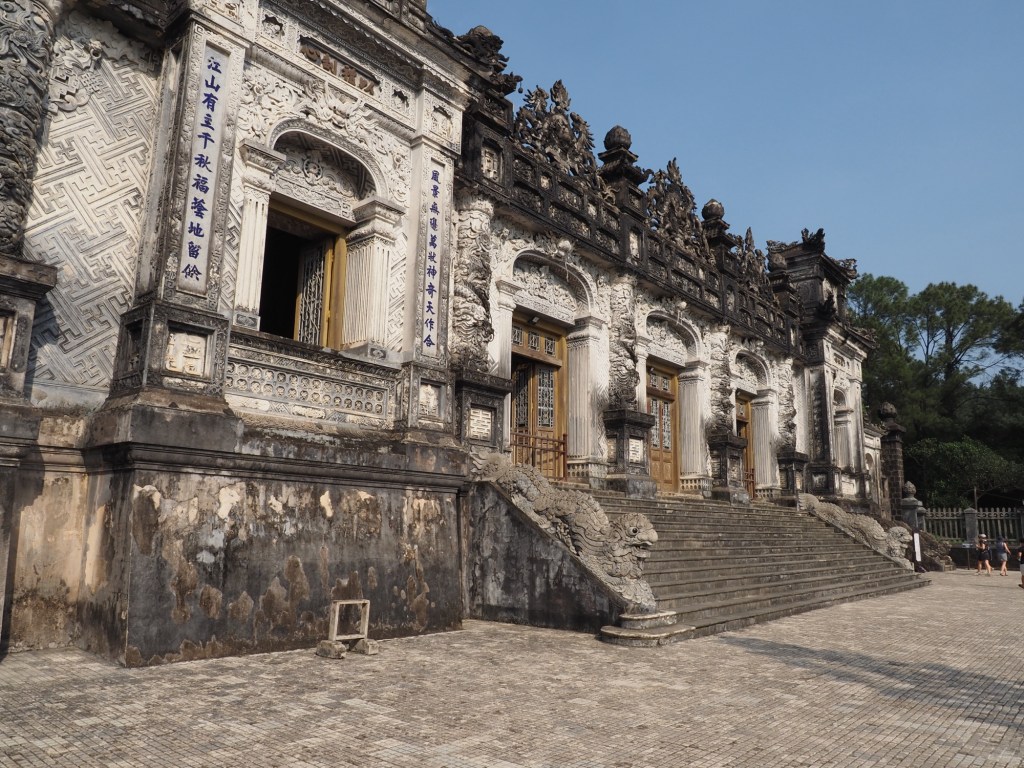
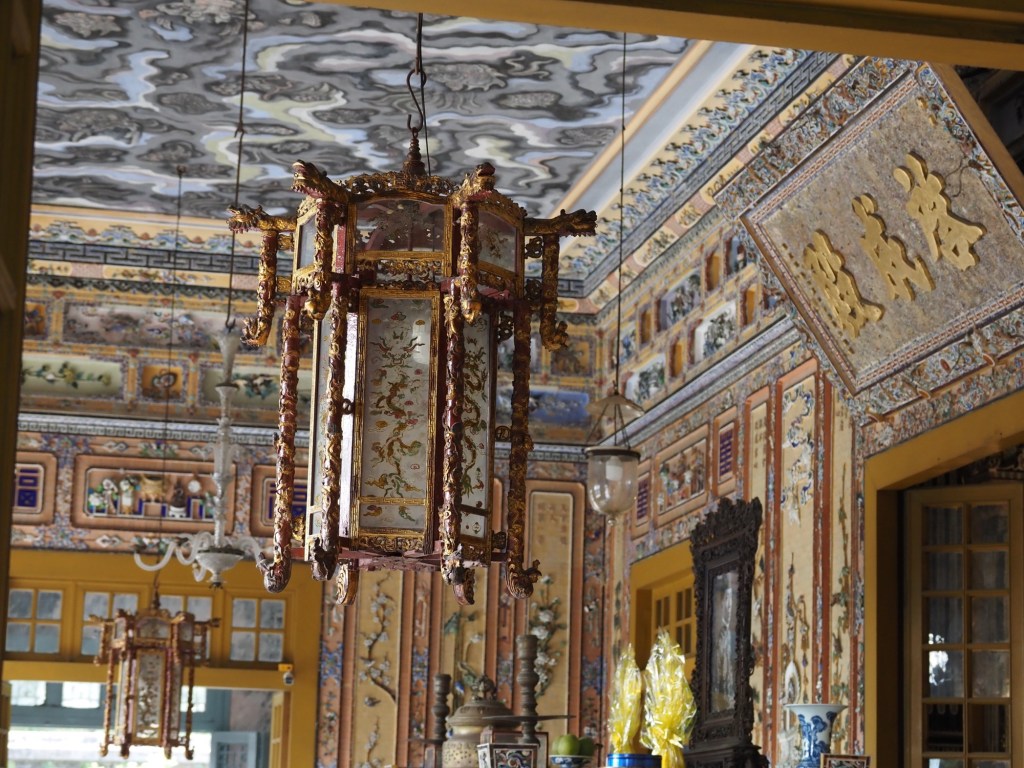
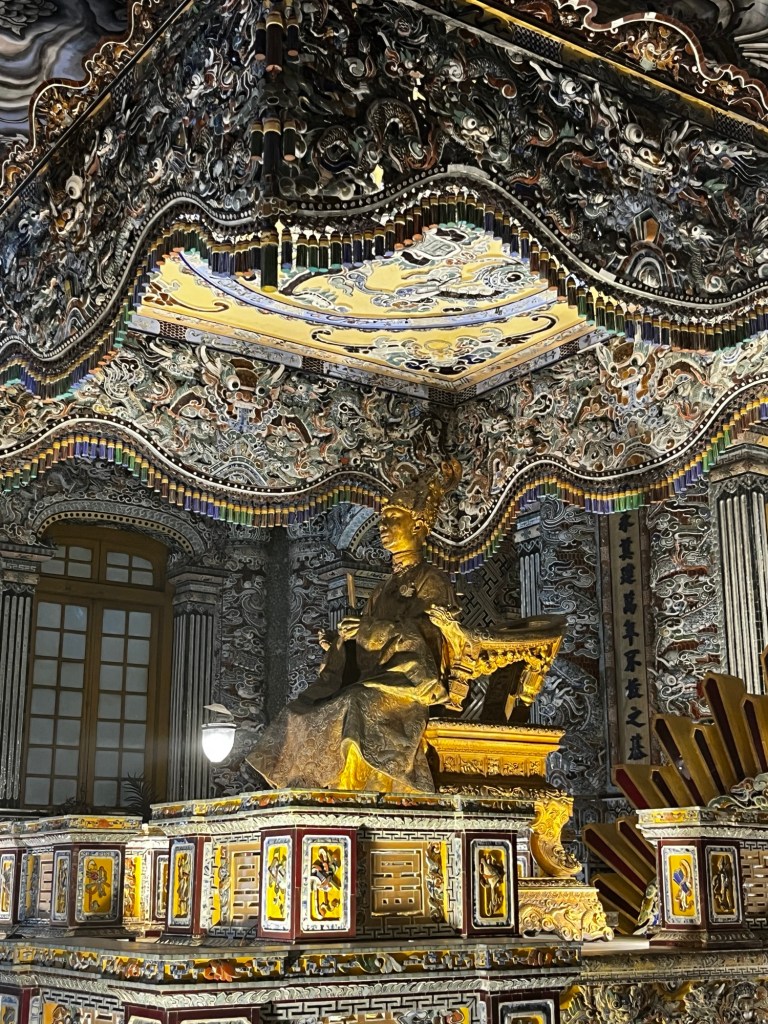
His father and predecessor, Khai Dinh was all about leaving his mark. He became emperor of Vietnam in 1916, commissioned his mausoleum in 1920, passed away in 1926, and the mausoleum was completed in 1931. There is European architectural influence on display.
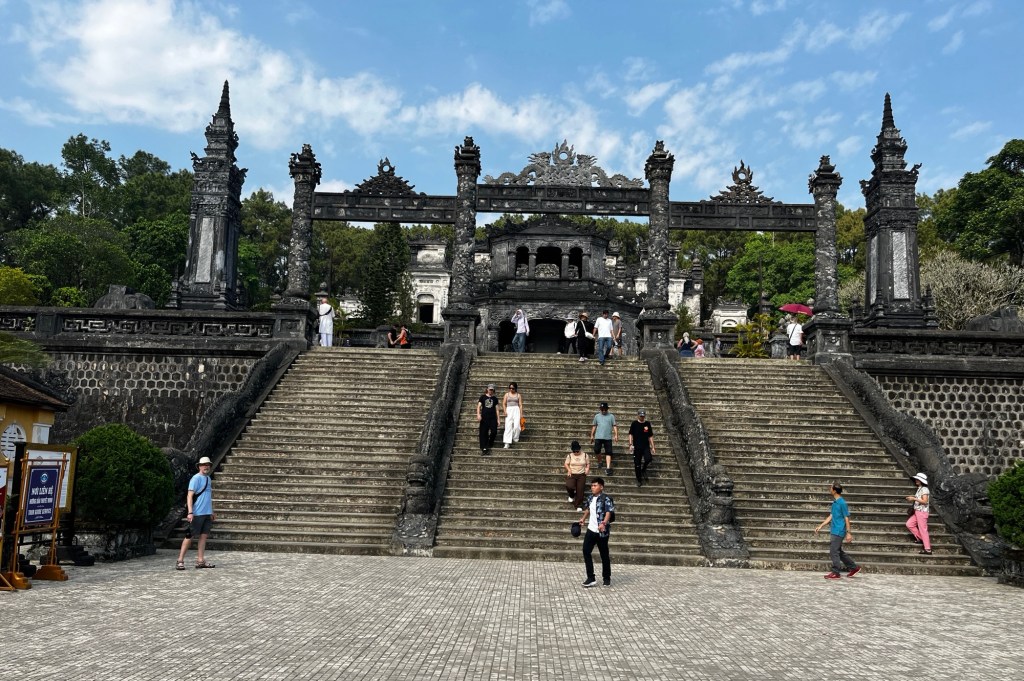
What a day! We are done. The journey back to Hoi An is a nice rest.


 Two Sore Backs
Leave a reply to tamarapil Cancel reply