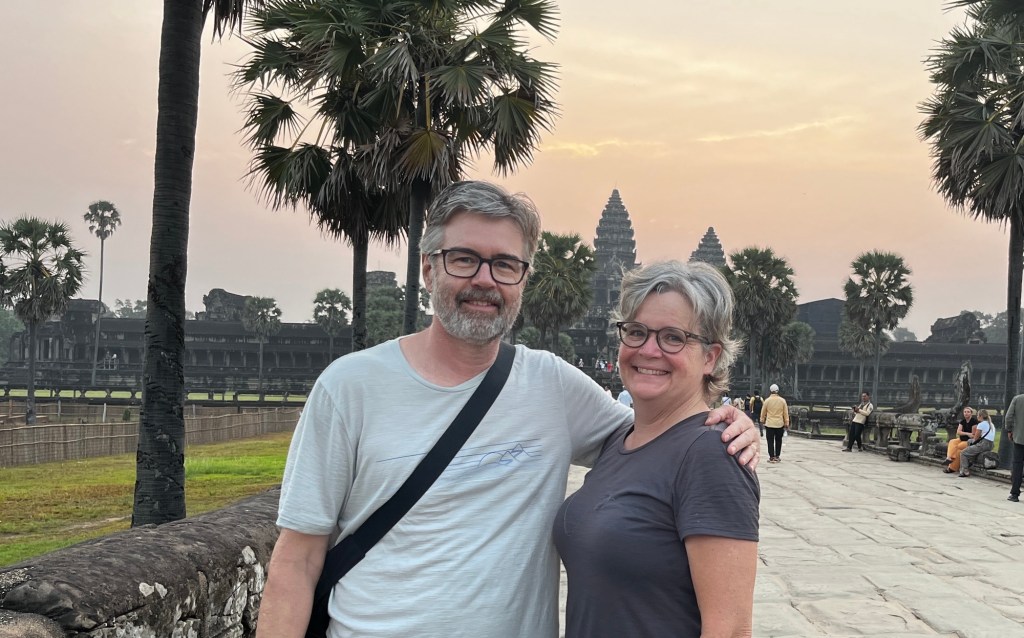
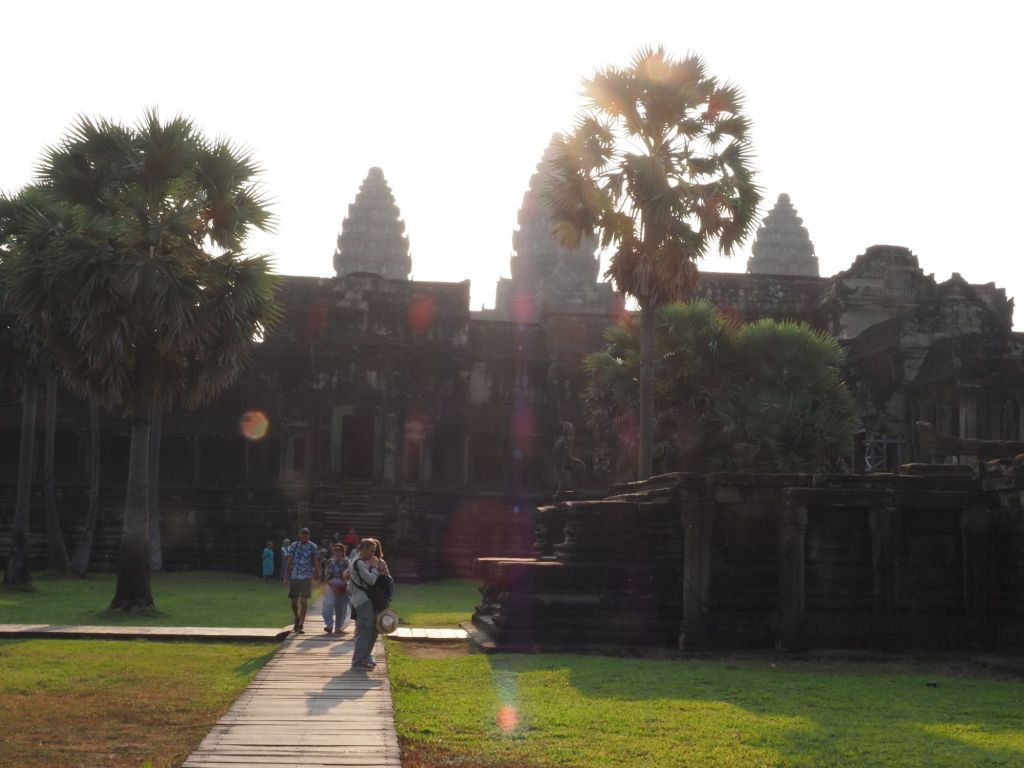
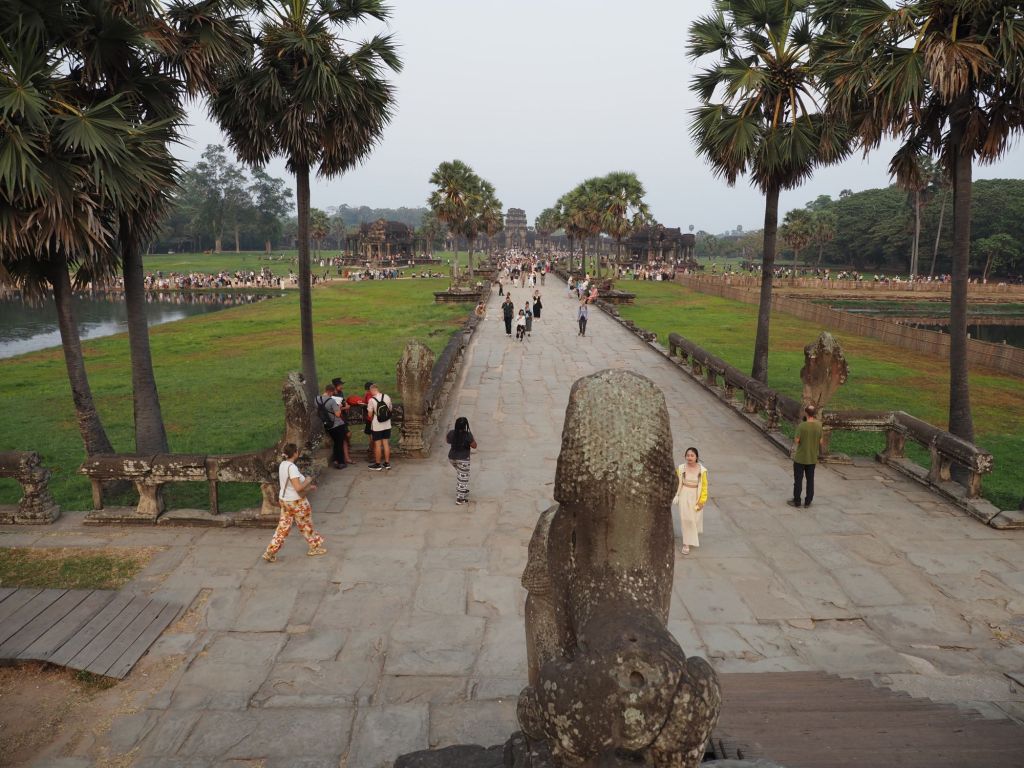
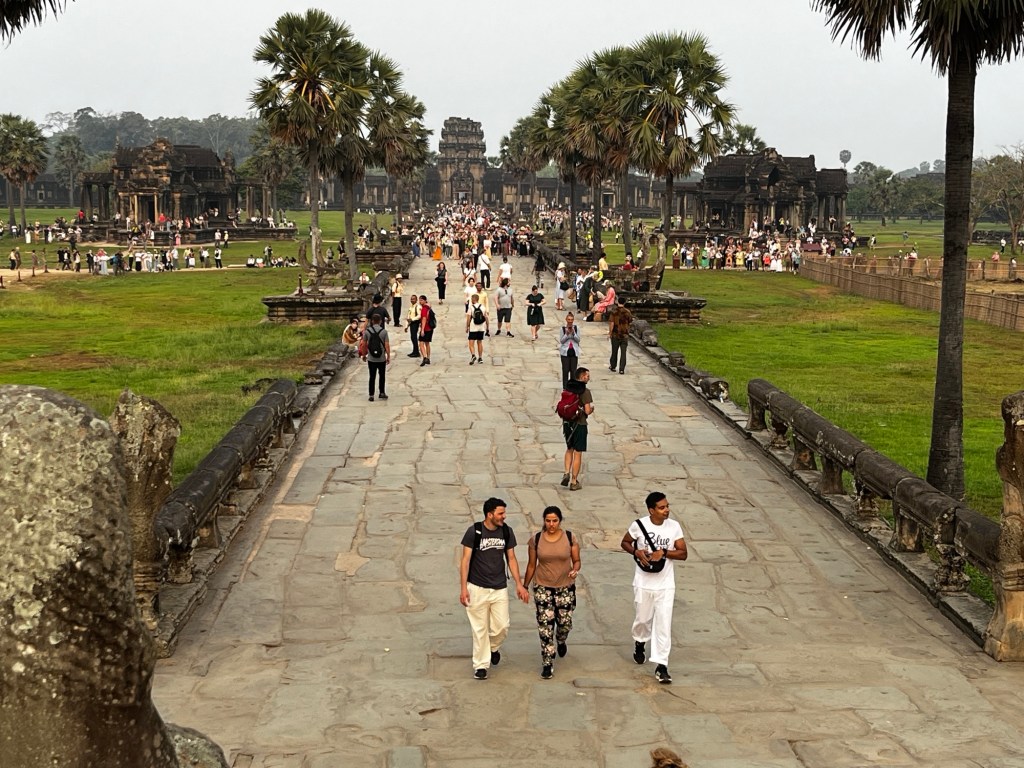
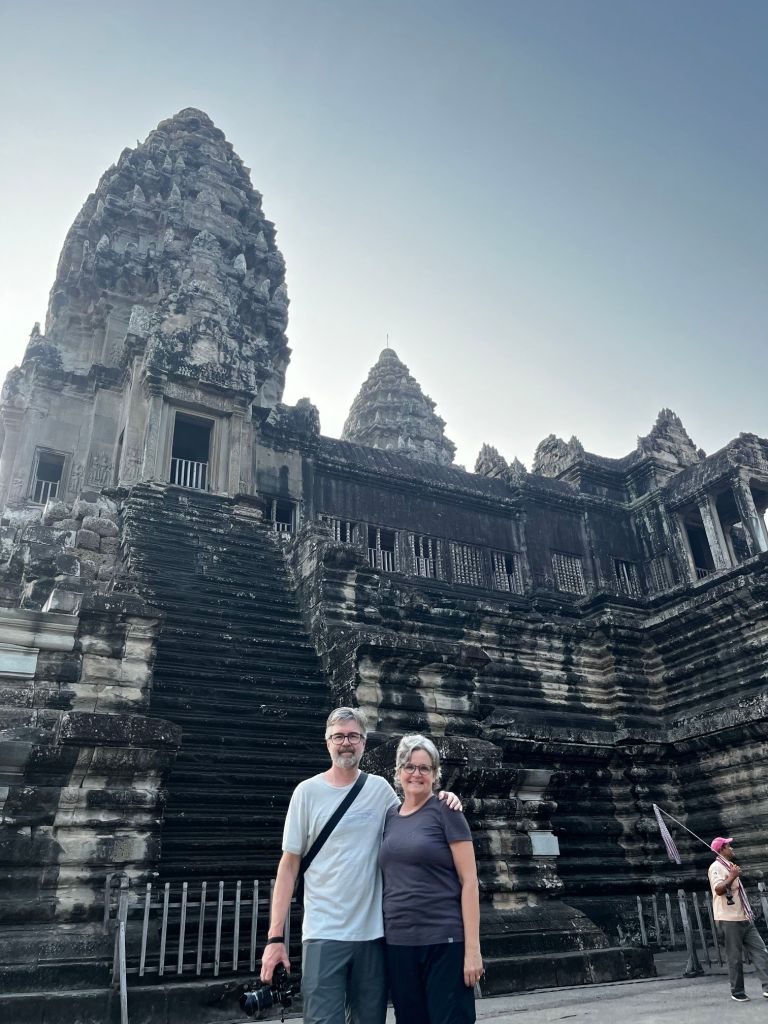
We leave our hotel at 5:00am to be two of thousands to witness the sunrise at Angkor Wat. (Now that we know tourism hasn’t returned to pre Covid numbers it is hard to imagine twice as many tourists arriving for the sunrise.)
Angkor Wat
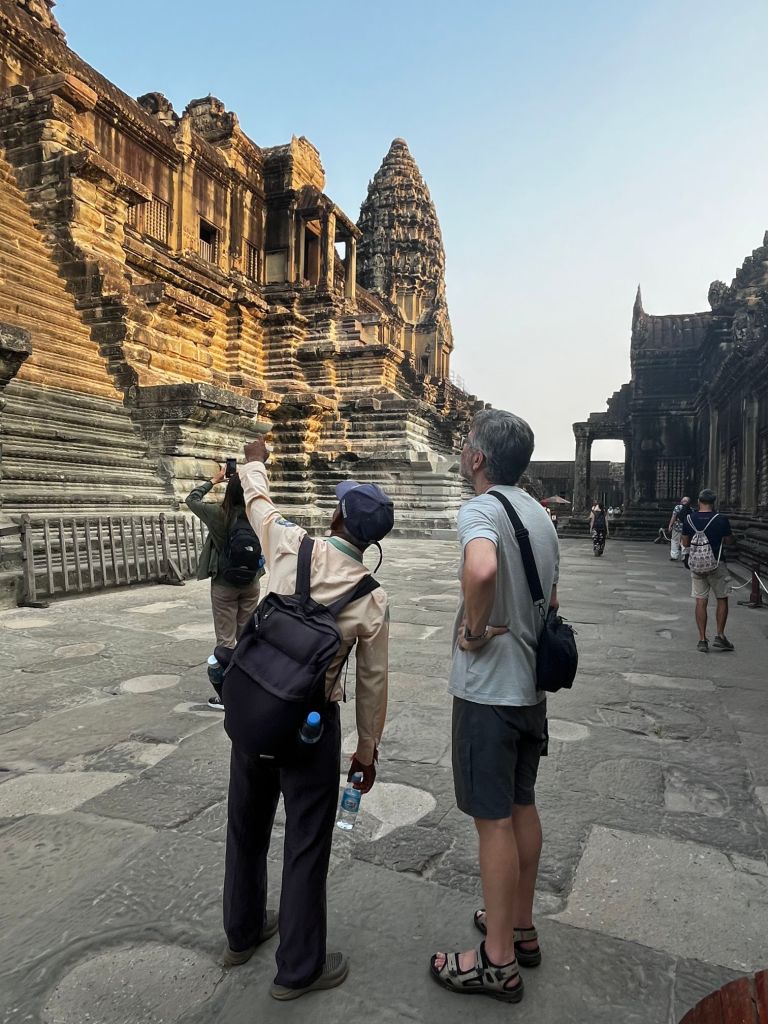
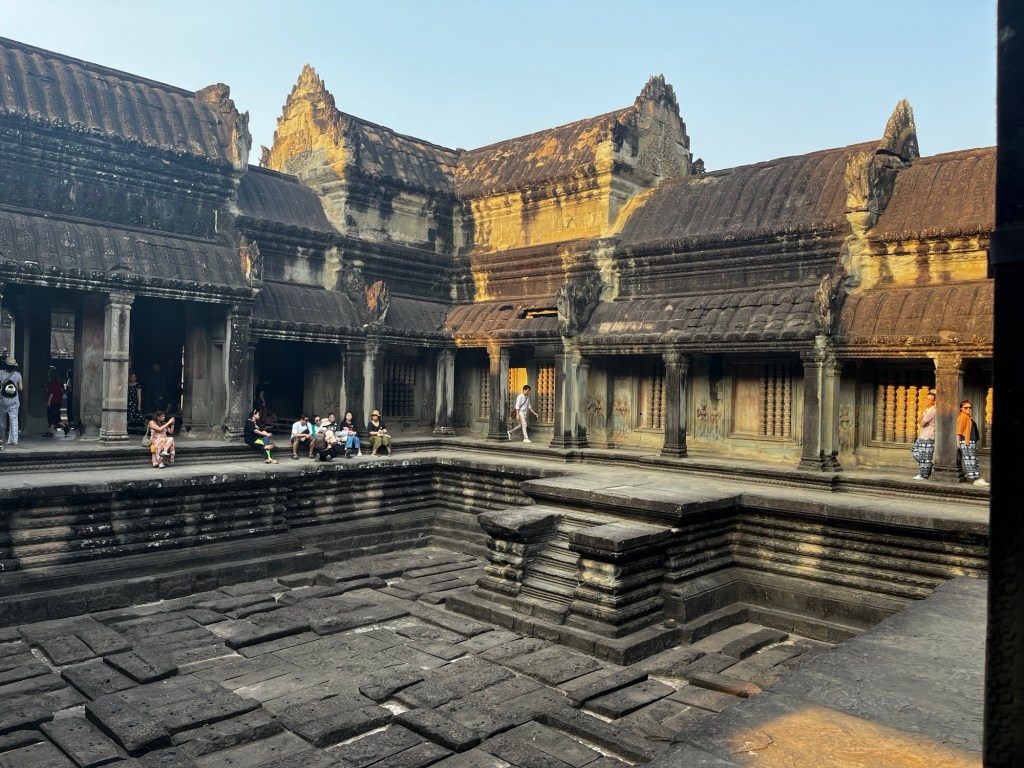
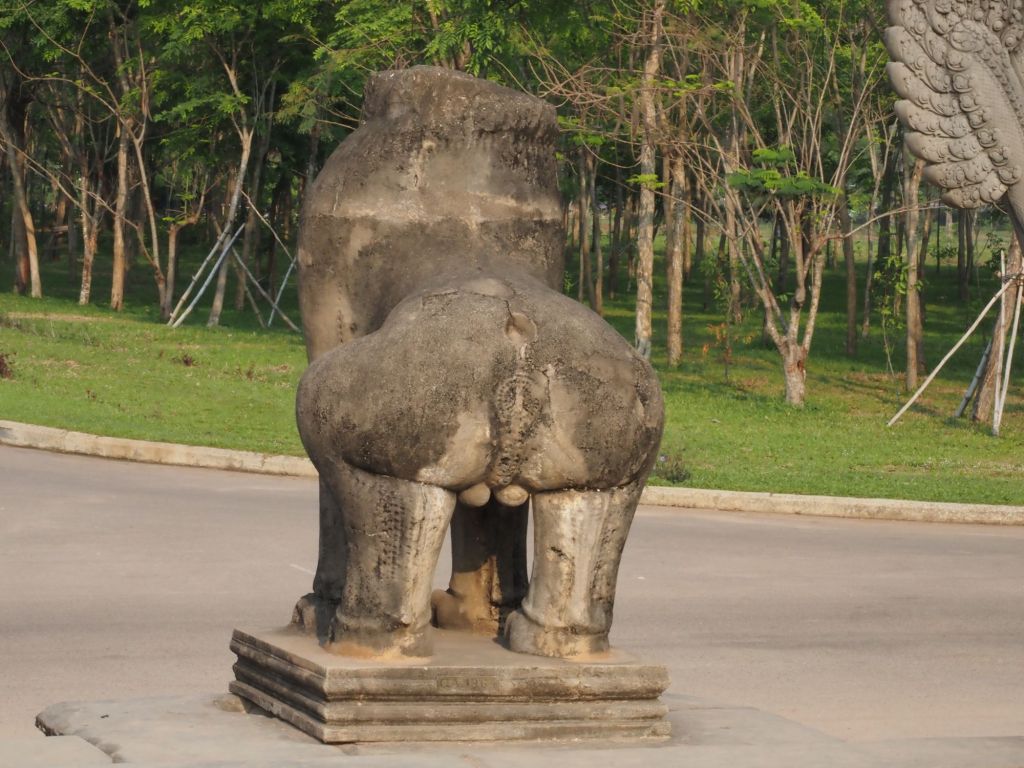
The meaning is city or capital of temples. Got that right! Originally a Hindu temple site, the religious focus became Buddhist under later rulers. The temple complex is surrounded by a walled moat for protection. The complex covers 400 acres. It was built by in the 12th century by King Suryavarman II and dedicated to the Hindu god Vishnu. Angkor Wat’s significance is its location within the ancient Kymer capital city of Angkor.
Fun fact – this is the largest religious structure in the world.
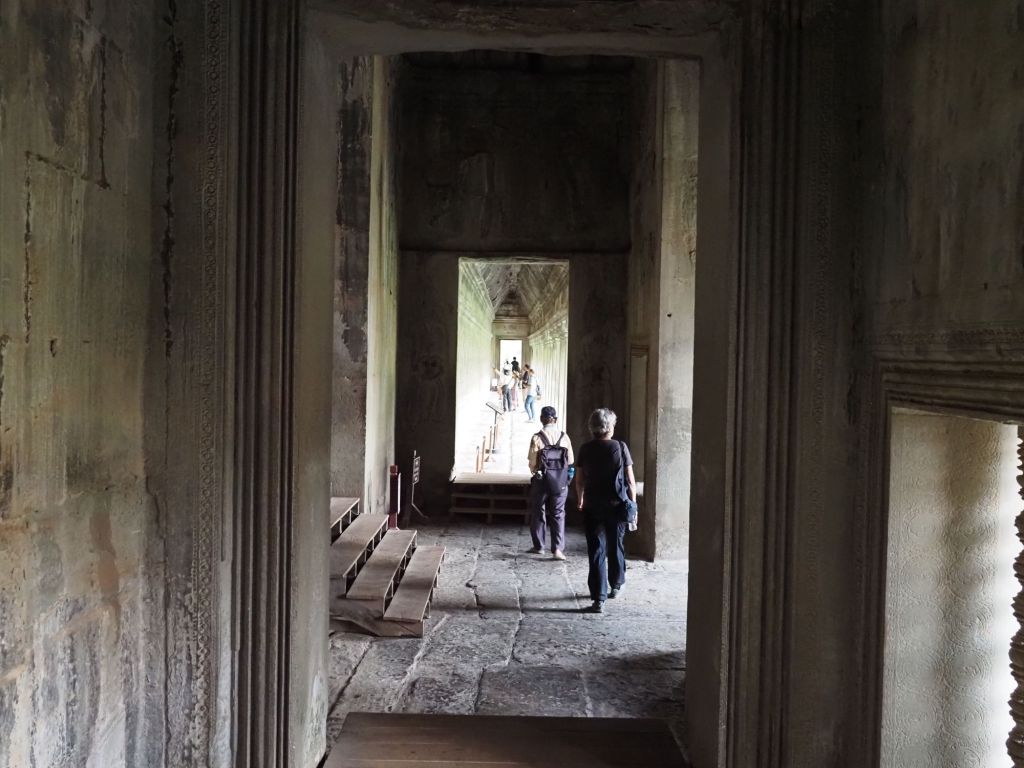
We arrive in the dark and walk in from outside the outer walls. Thank goodness for Ken our guide showing us the way in the dark. Eventually the sky lightens enough to take some photos. We are waiting – then moving to another spot – then waiting again. We think we are waiting to take a photo of the sun rising over the temple. Maybe not. Our guide Pon seems to get impatient and we walk up to the temple itself to wait for opening time. Kinda crazy!
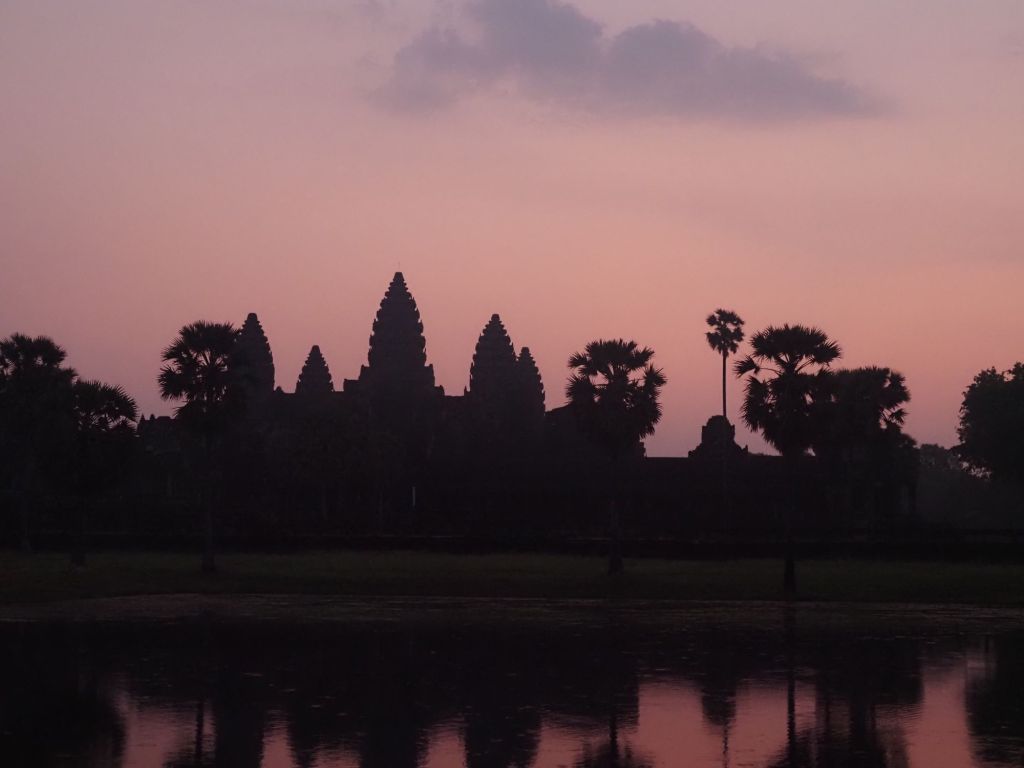
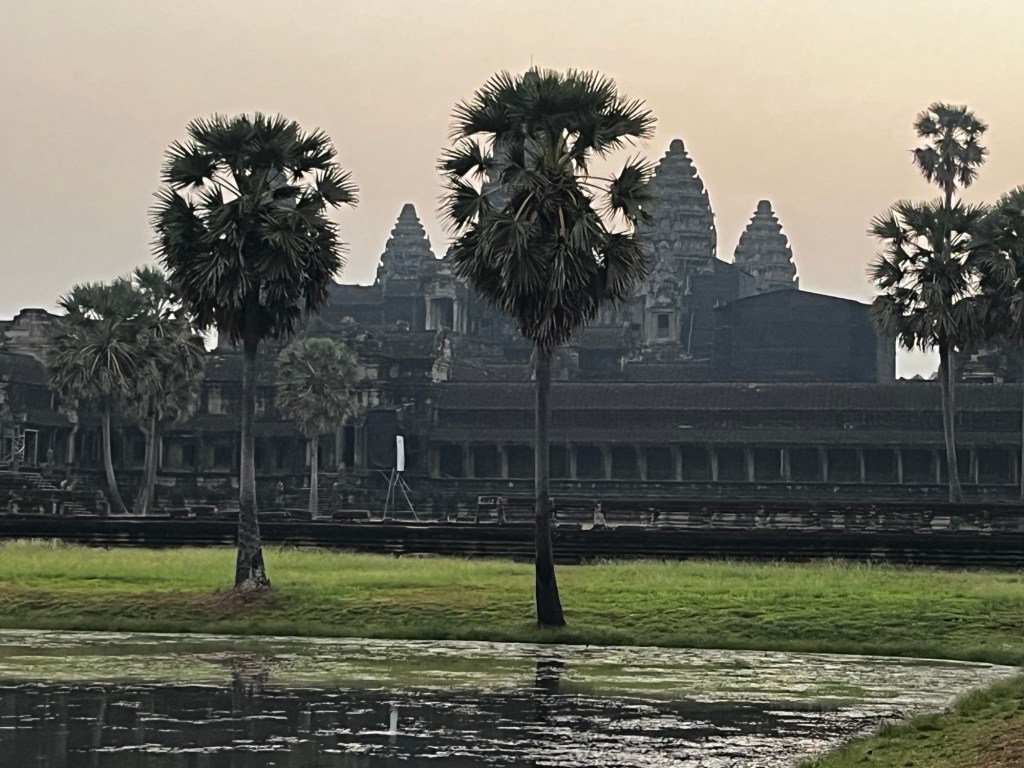
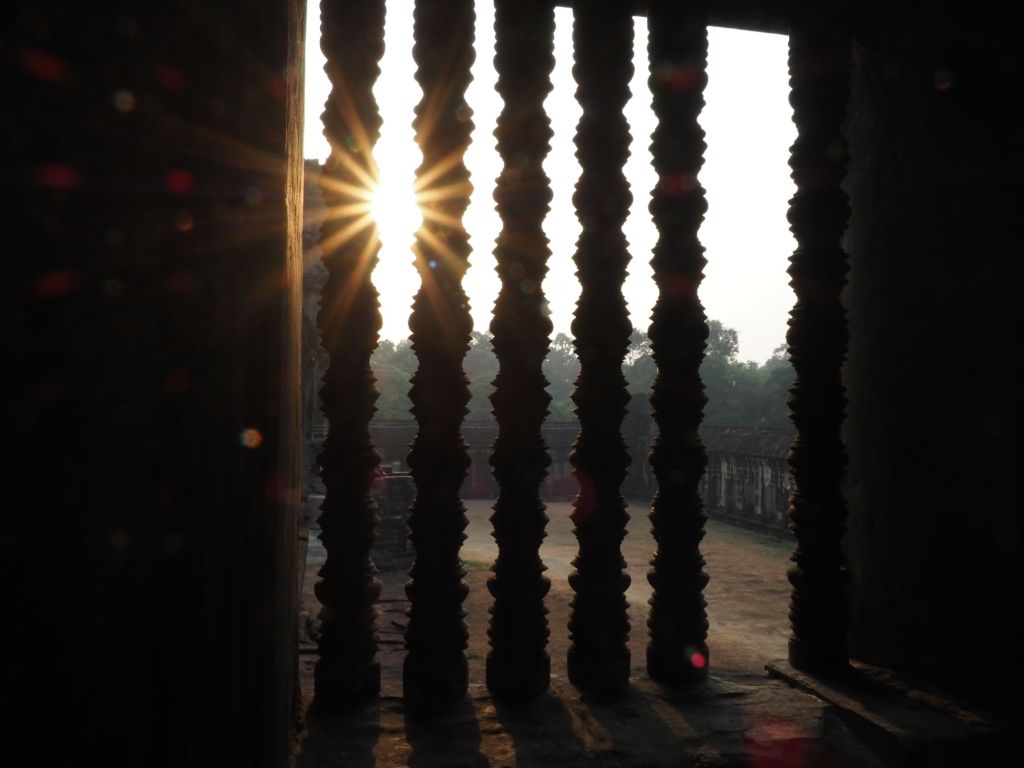
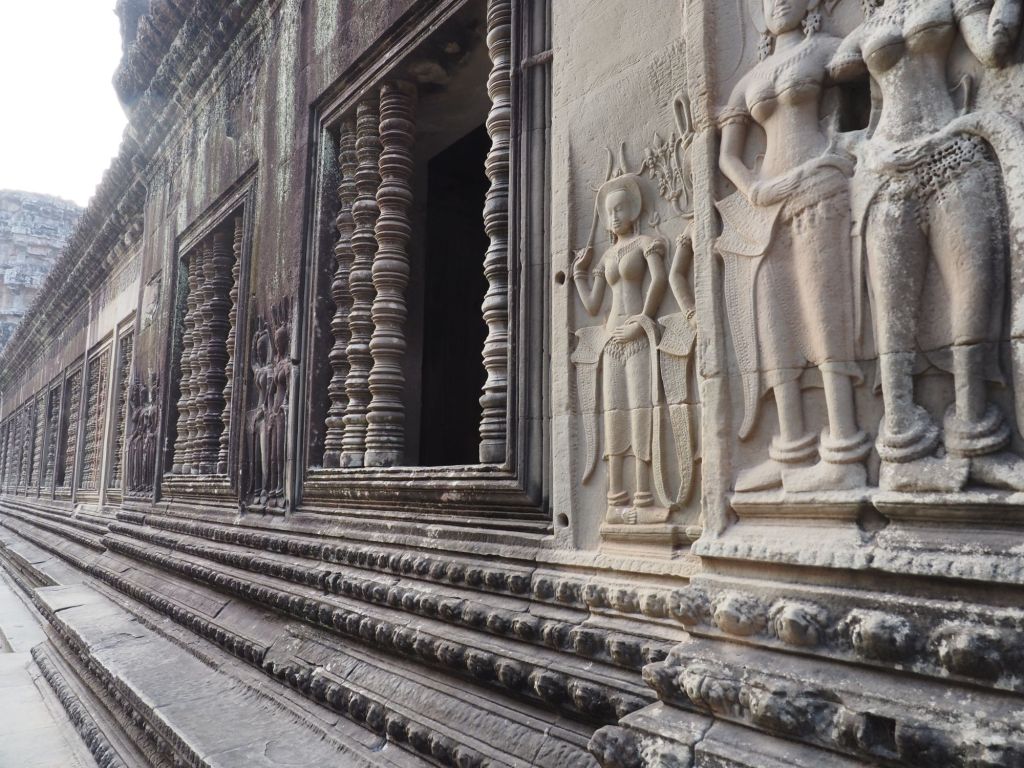
And how did this temple come to be?
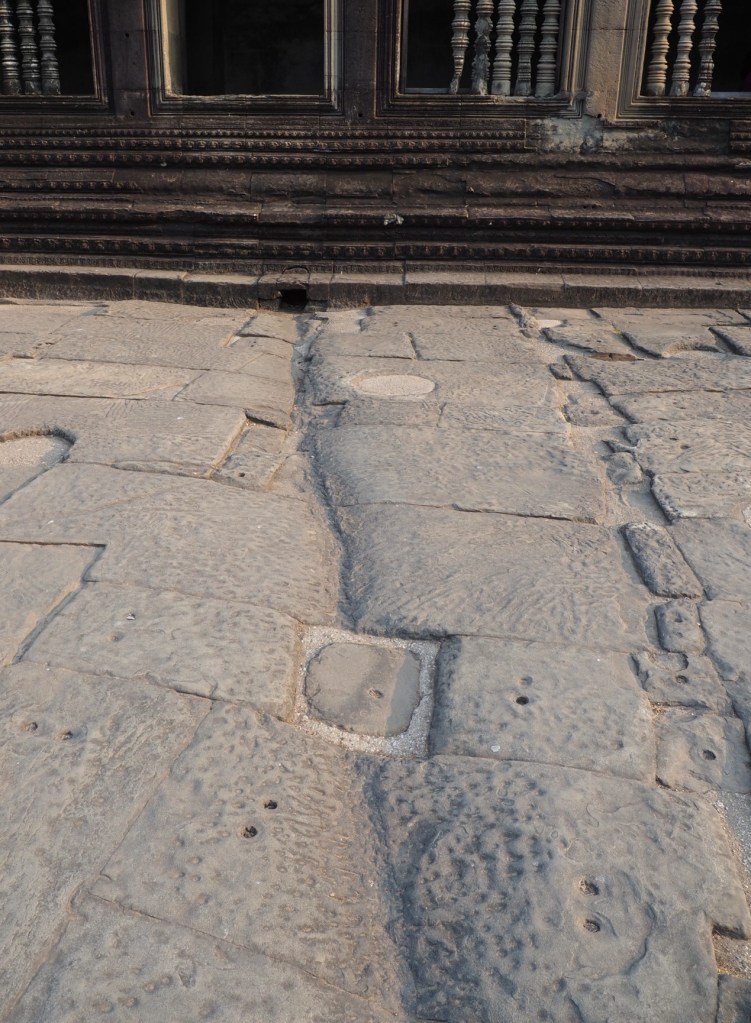
All these massive sandstone bricks were cut at various quarries at nearby Mount Kulen and transported about 40 kilometres by a canal system to Angkor. It is estimated there are 5-10 million bricks at Angkor Wat. The largest bricks weight 1,500 kg. Holes in the brick indicate a means of maneuvering these large stone bricks around and in place. This work was done by elephants.
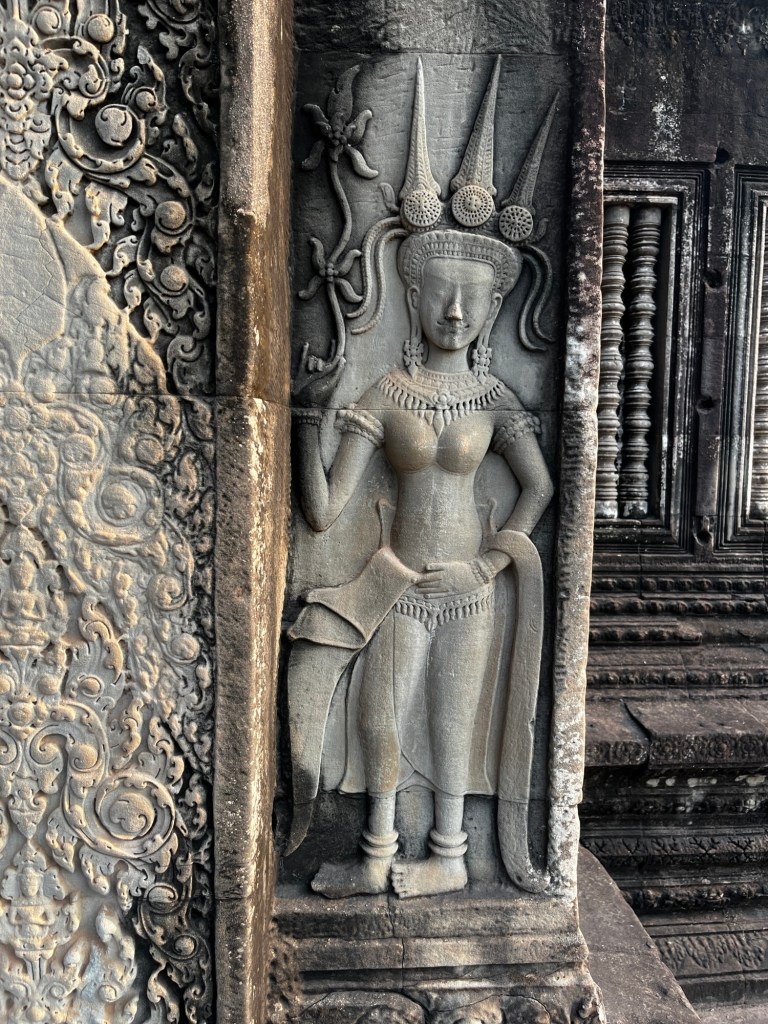
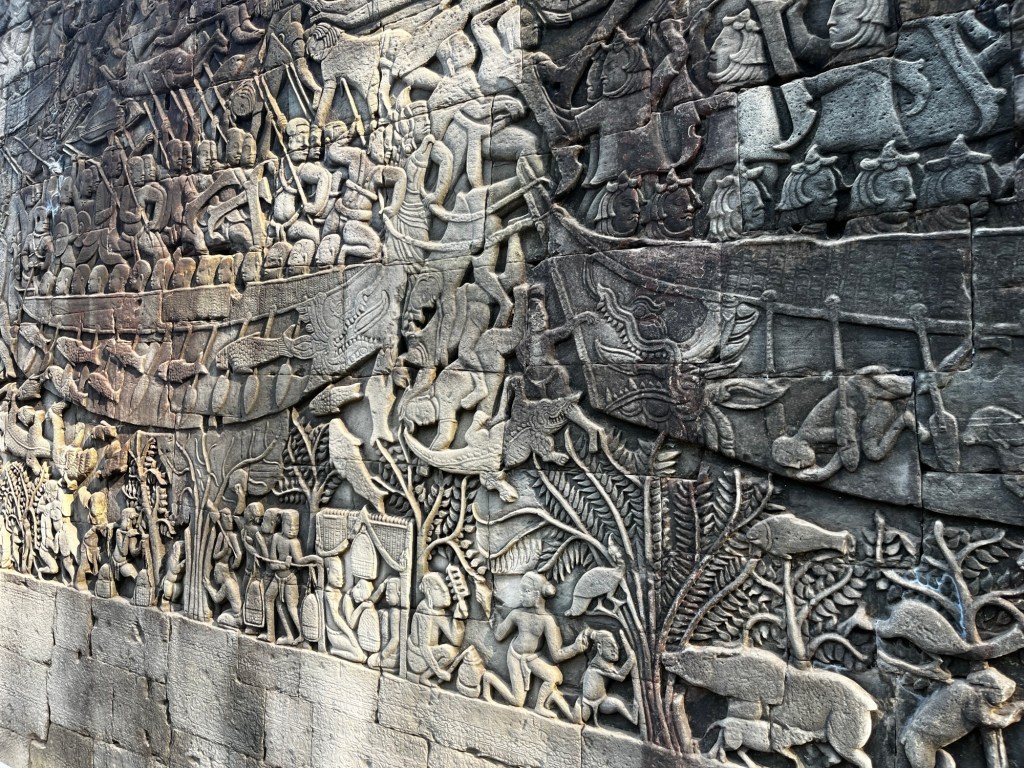
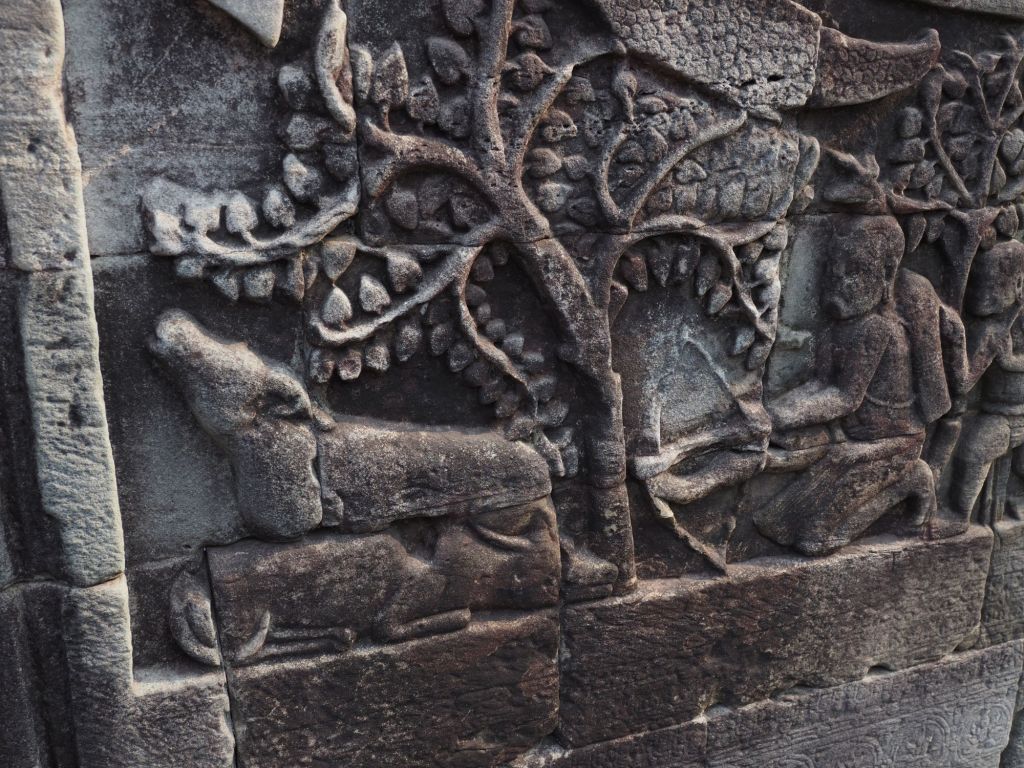
Then artisans went to work on the intricate carvings.
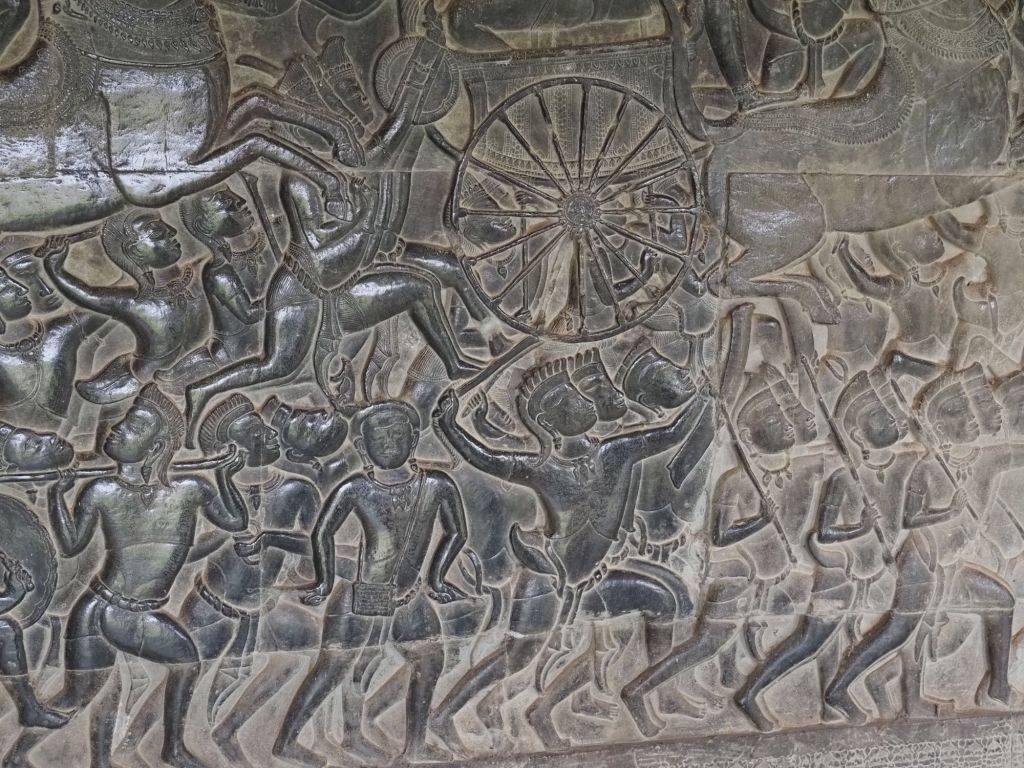
It is all rather overwhelming and amazing!
Angkor Thom
Many of the next temples we visit are within Angkor Thom. For perspective, Angkor Thom is more than 5 times as large as Angkor Wat. It is also surrounded by a moat.
Angkor Thom came later and is the last capital city of the Kymer empire. It was established in the late twelfth century by King Jayavarman VII.
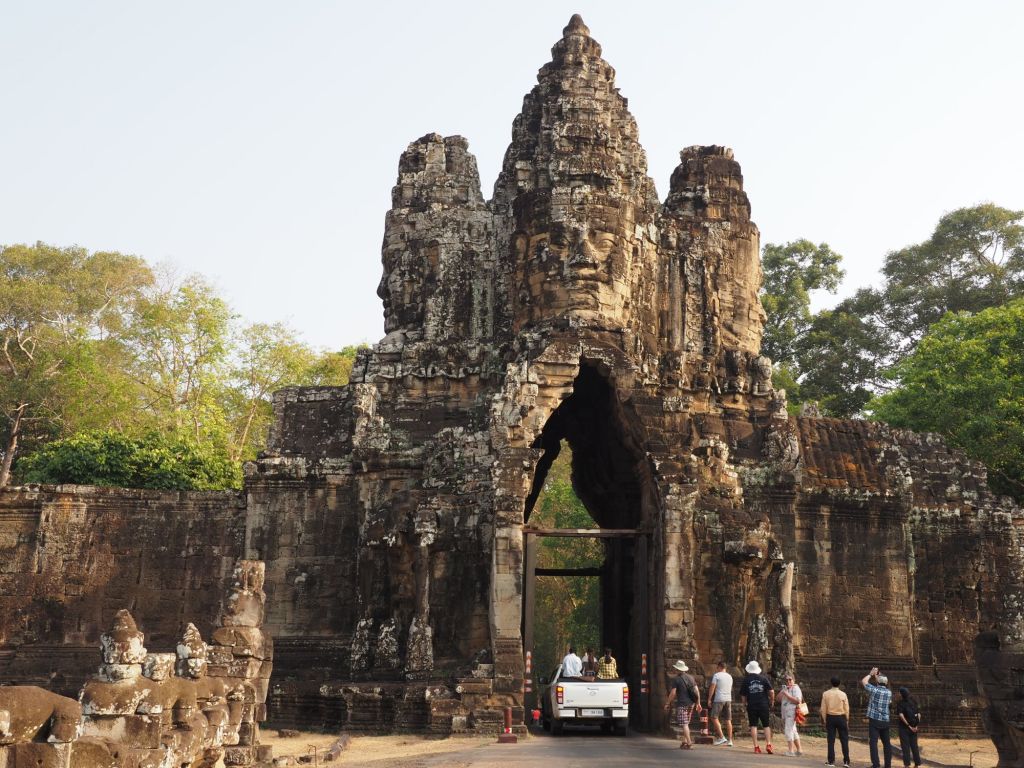
South Gate of Angkor Thom
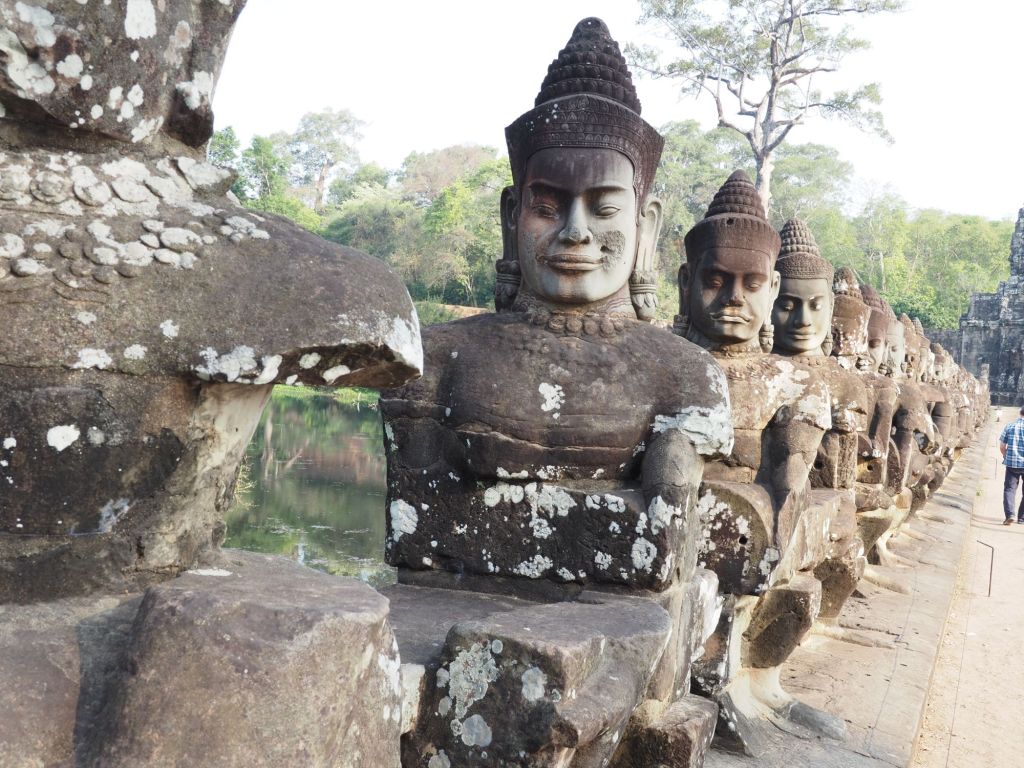
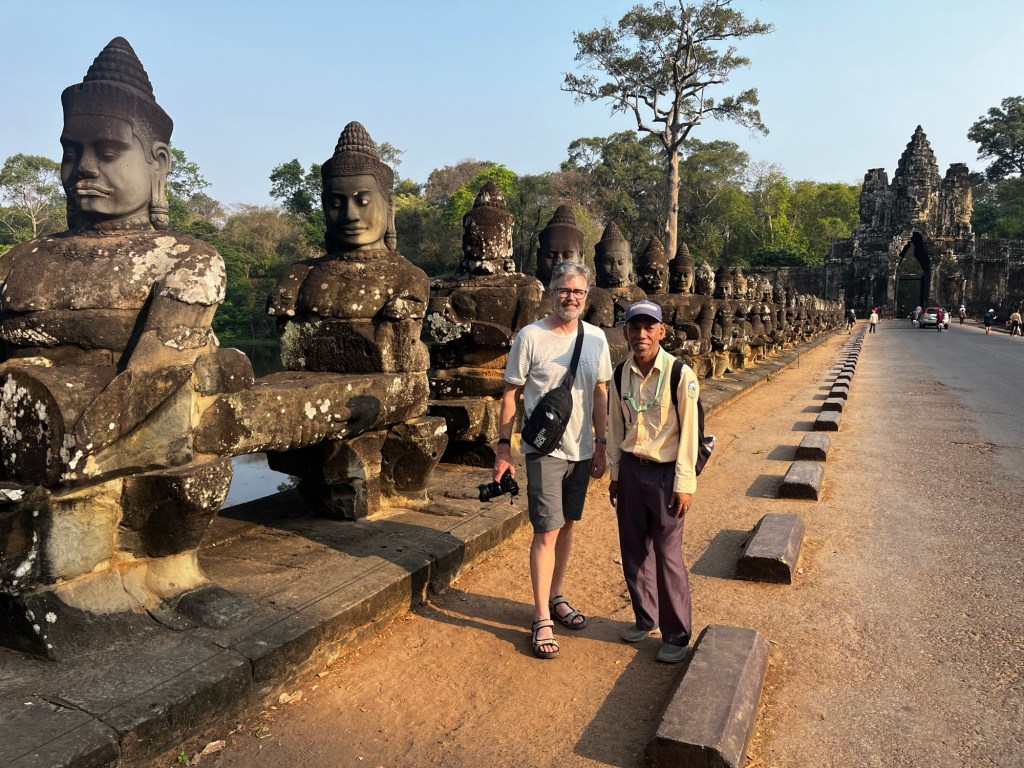
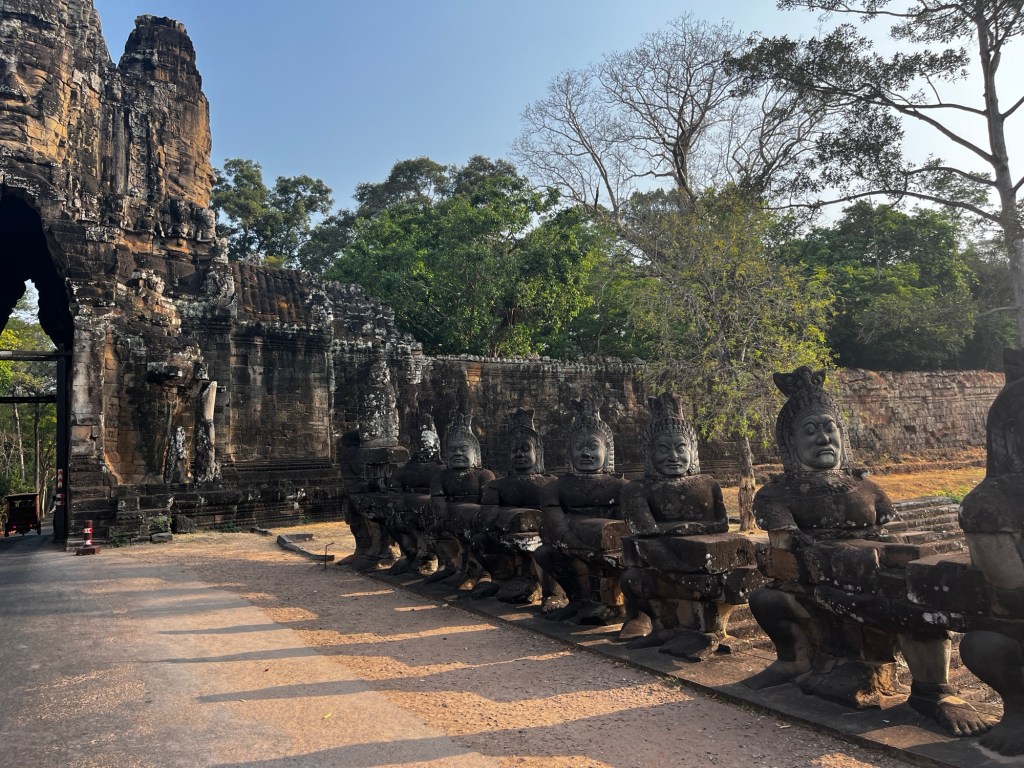
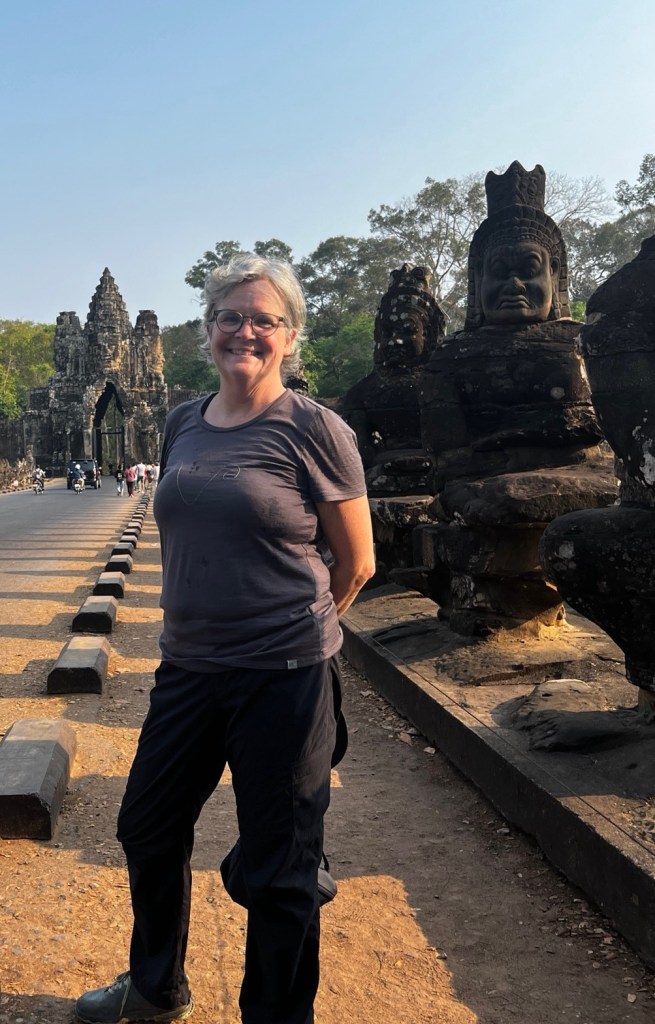
This gate is flanked by two seven headed naga (serpents) with 54 stone figures pulling on the body of the Naga. Half the stone figures represent good and half represent evil. 54 represents the 54 provinces encompassing the Kymer empire. Interestingly, only 26 provinces are in present day Cambodia. The remaining 28 provinces are within Vietnam, Laos and Thailand.
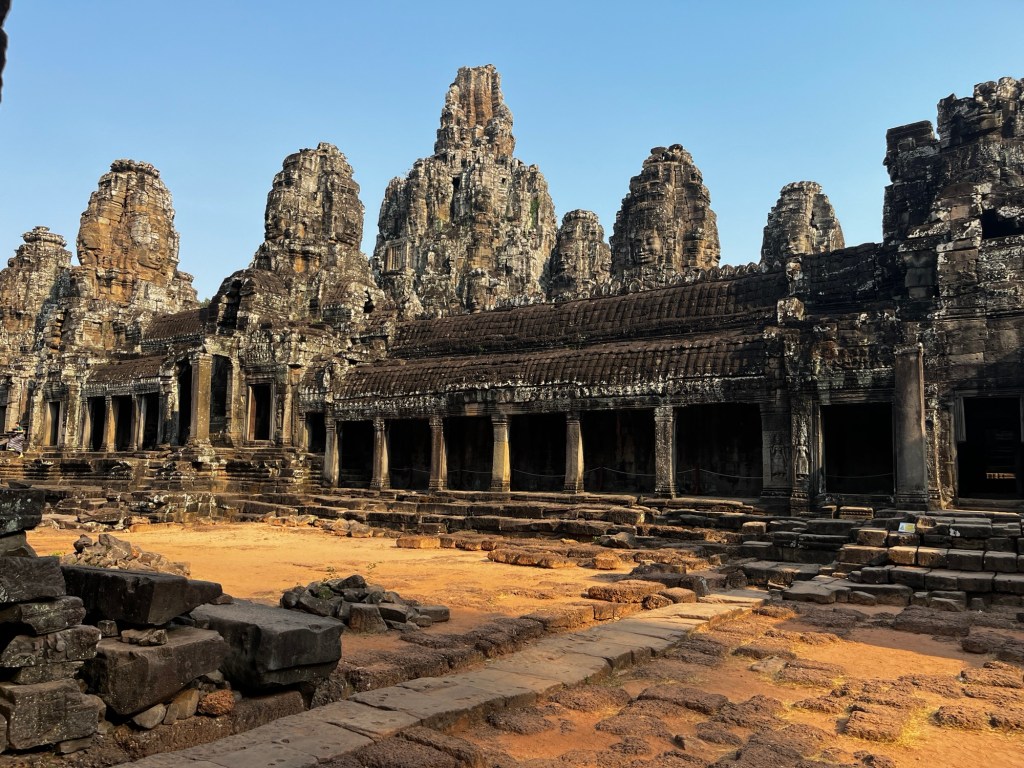
Bayon Temple
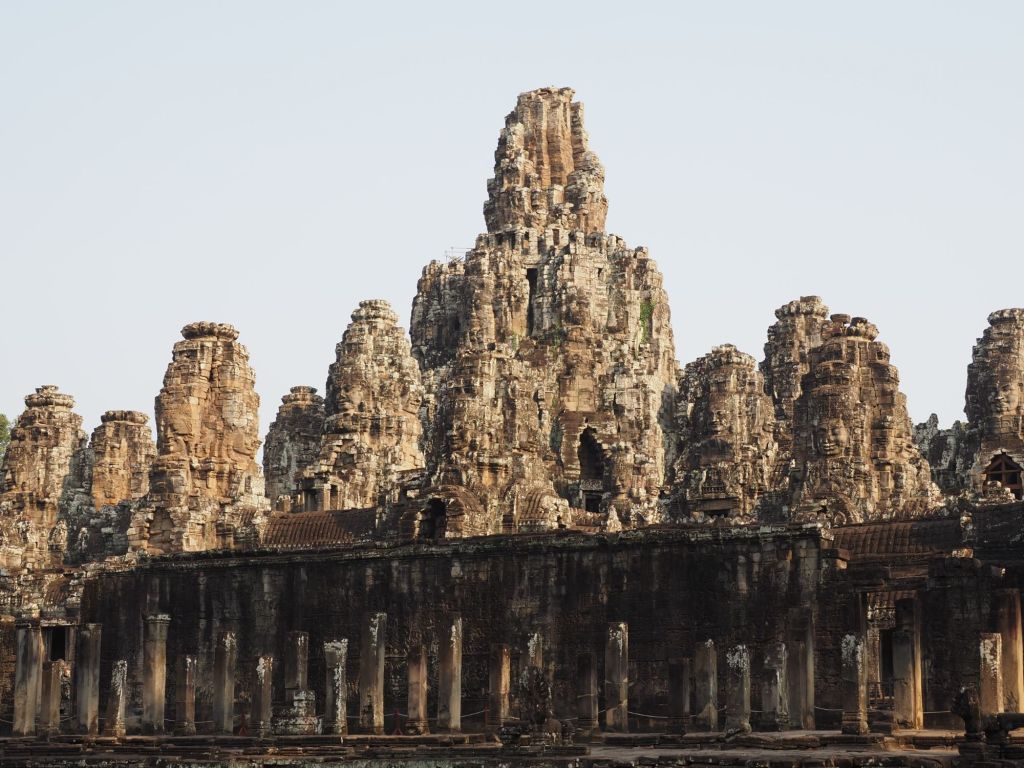
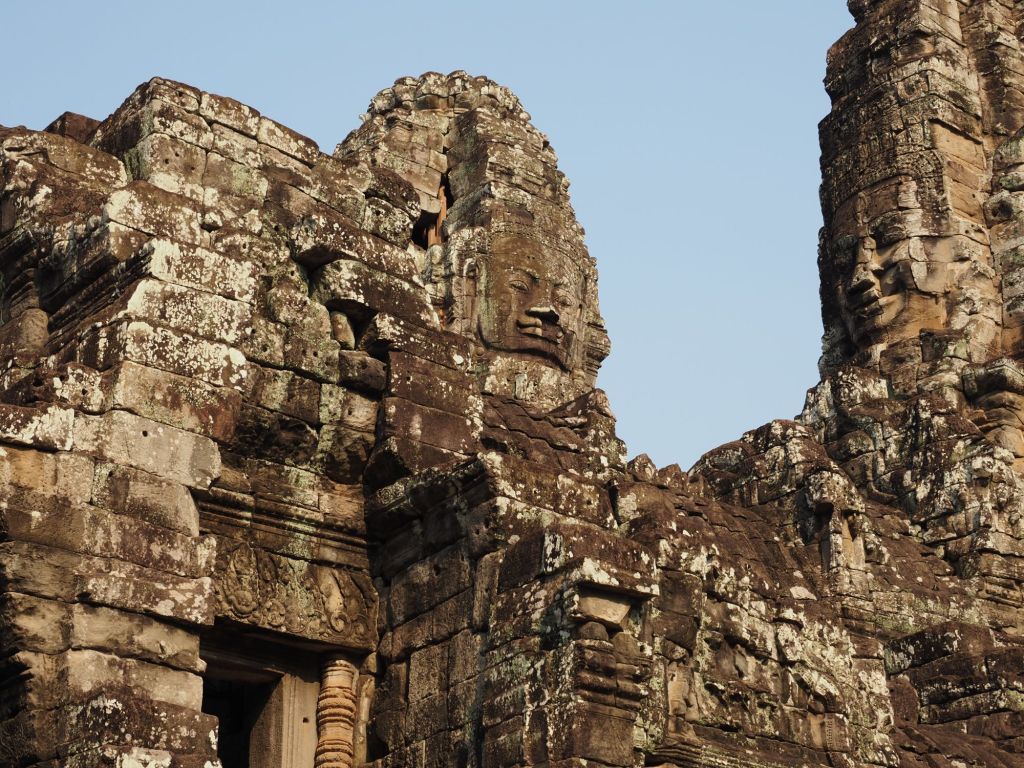
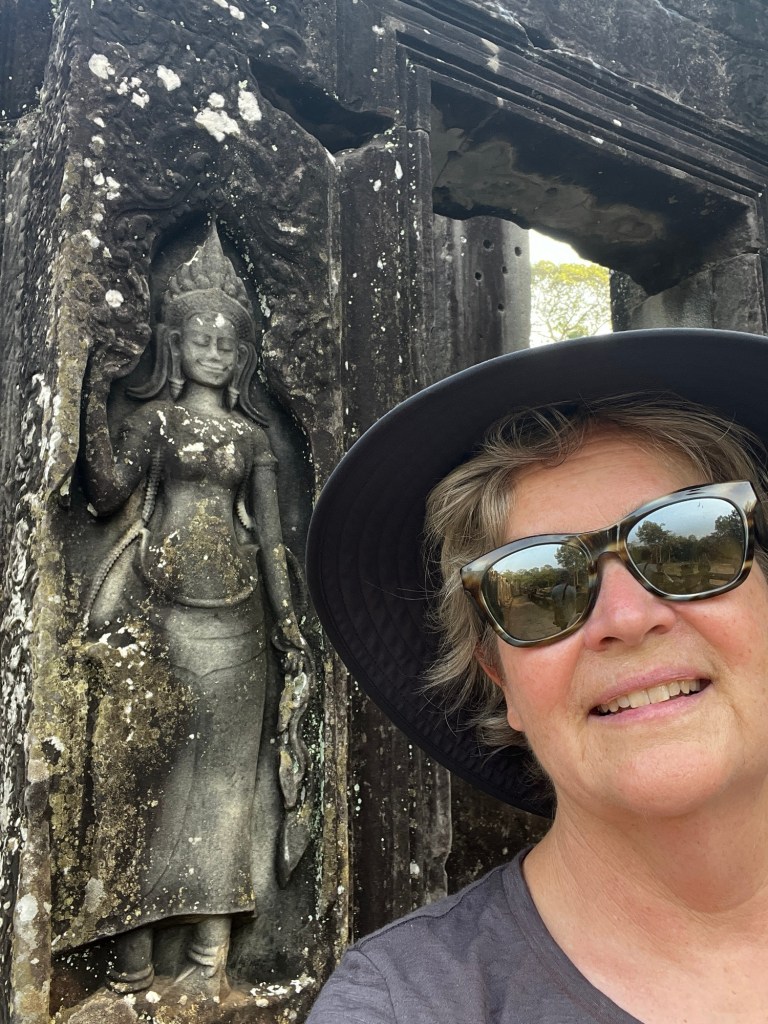
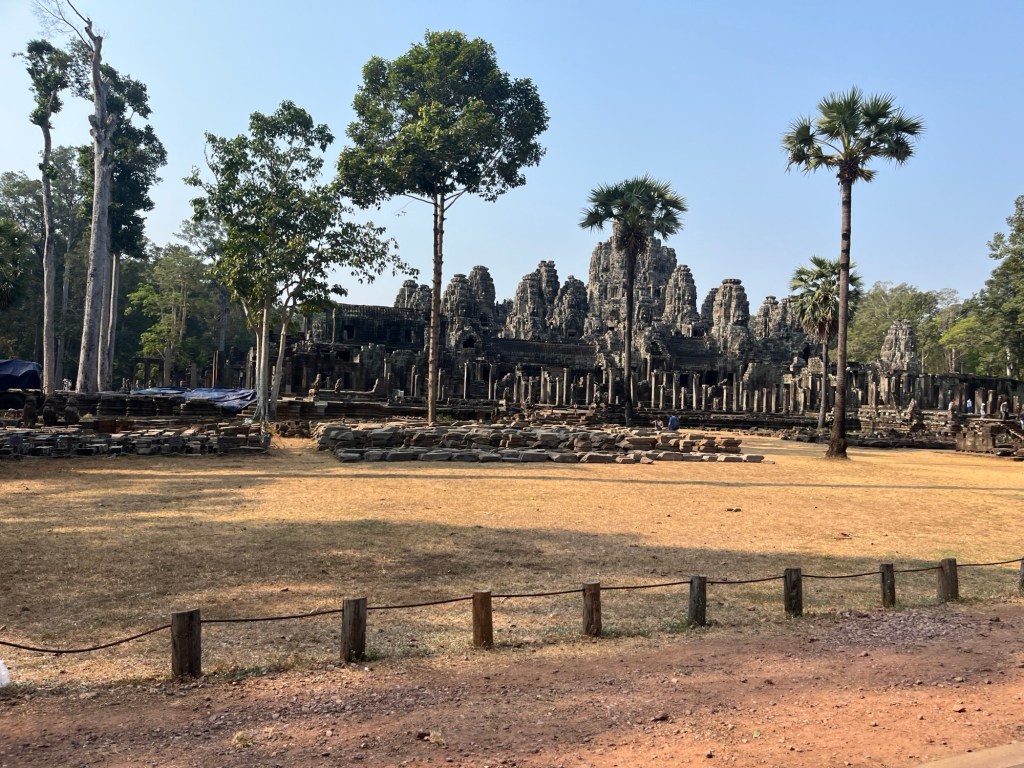
This temple is the central or state temple in Angkor Thom. Bayon’s most distinctive feature is the multitude of serene and smiling stone faces of The Buddha – probably in the likeness of King Jayavarman VII.
Baphuon Temple
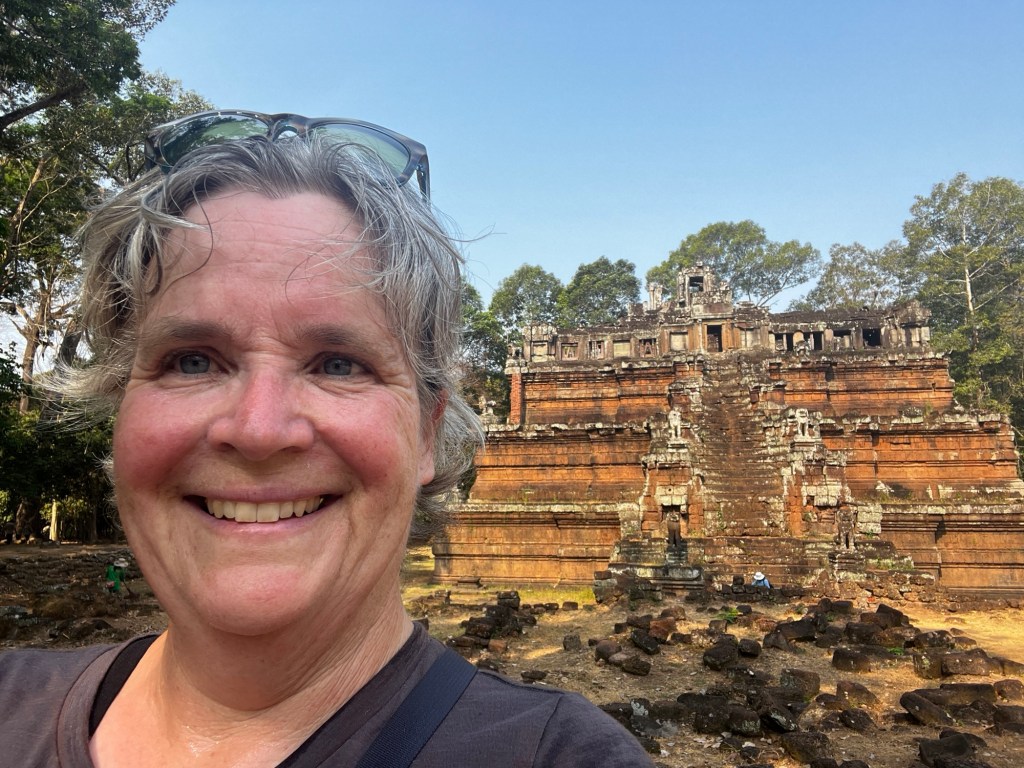
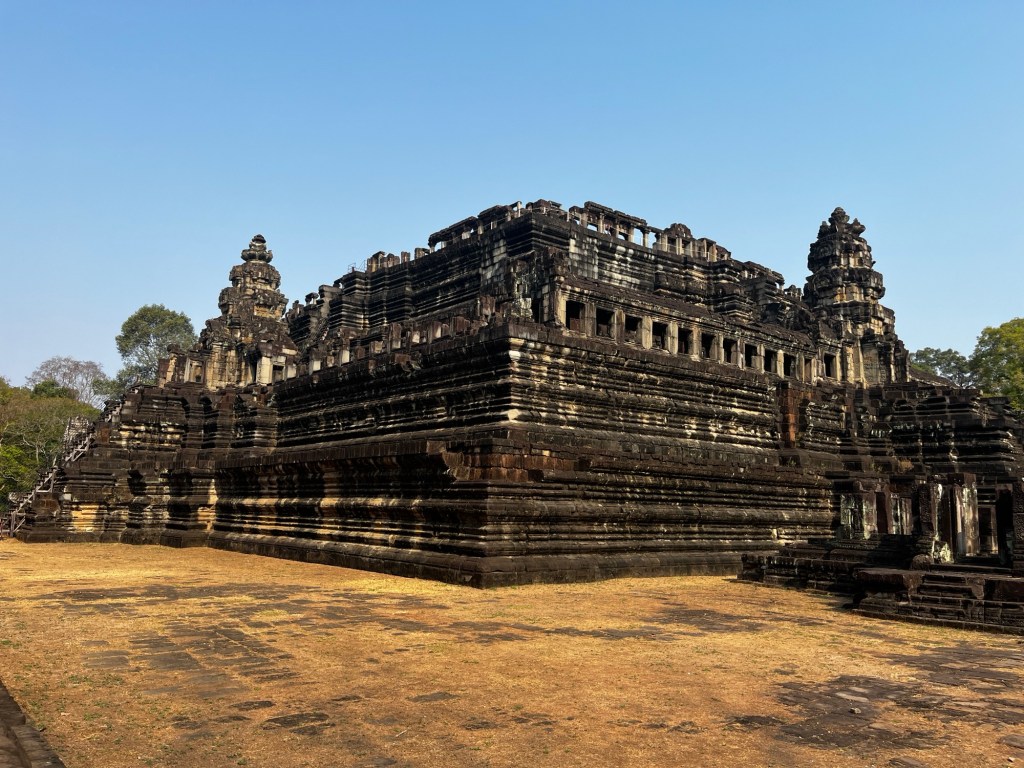
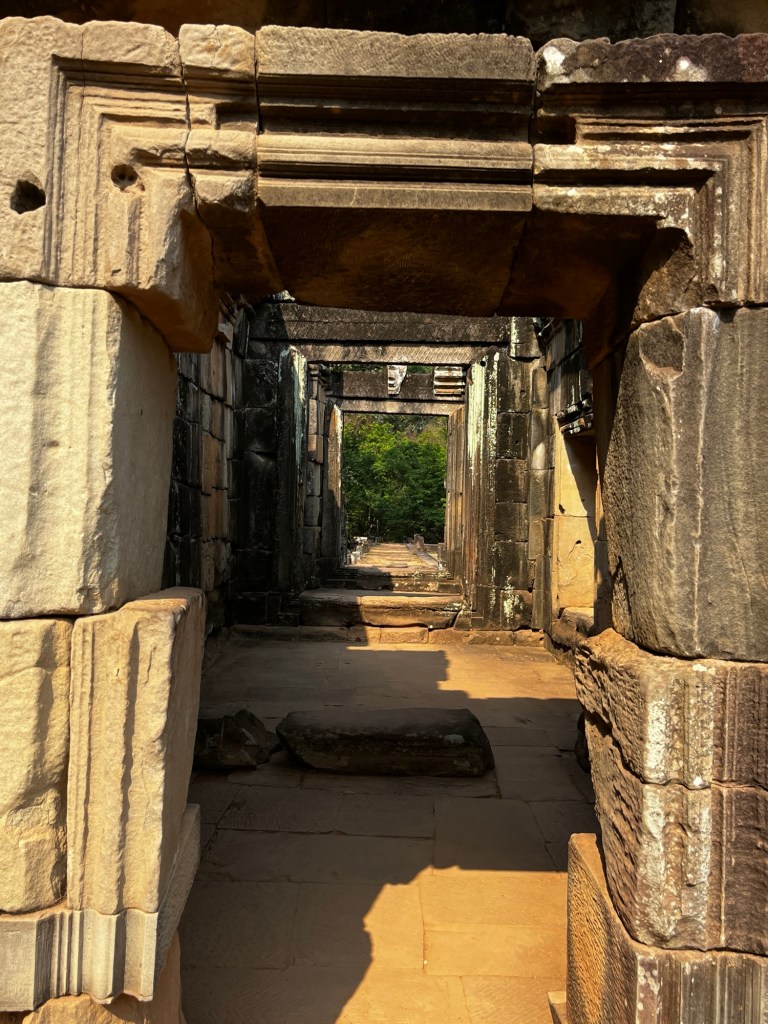
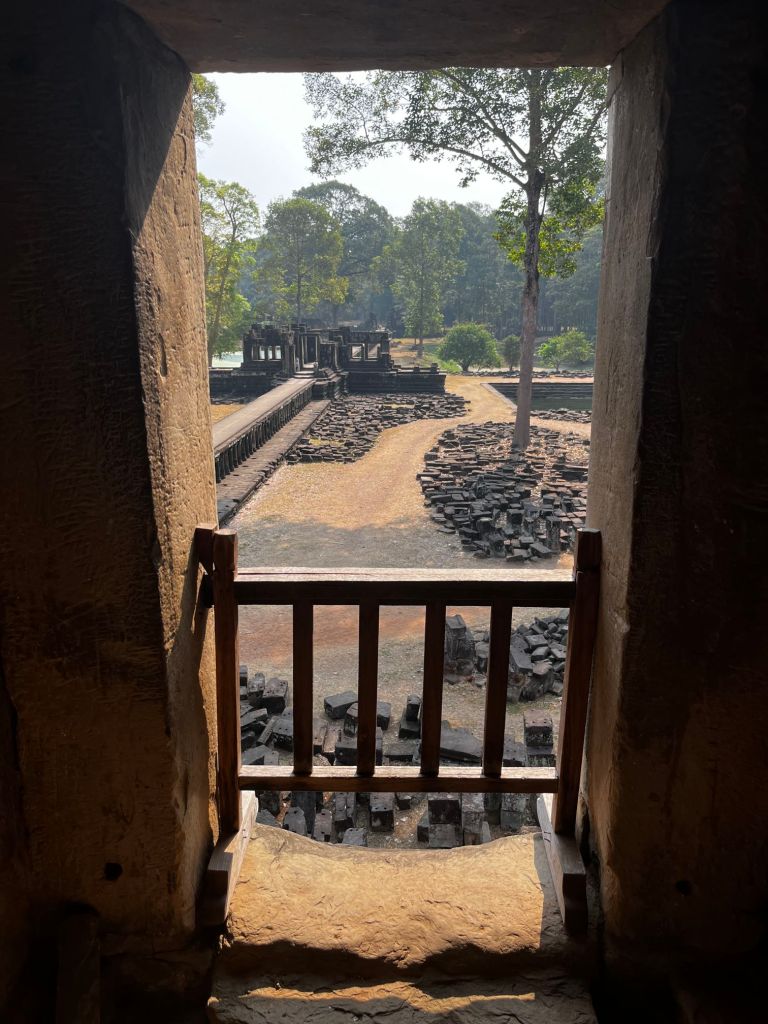
This temple is an 11th century state temple. Built with three levels and considered a mountain temple. In the heat we felt we were climbing a mountain. Pon did not join us as we scampered around.
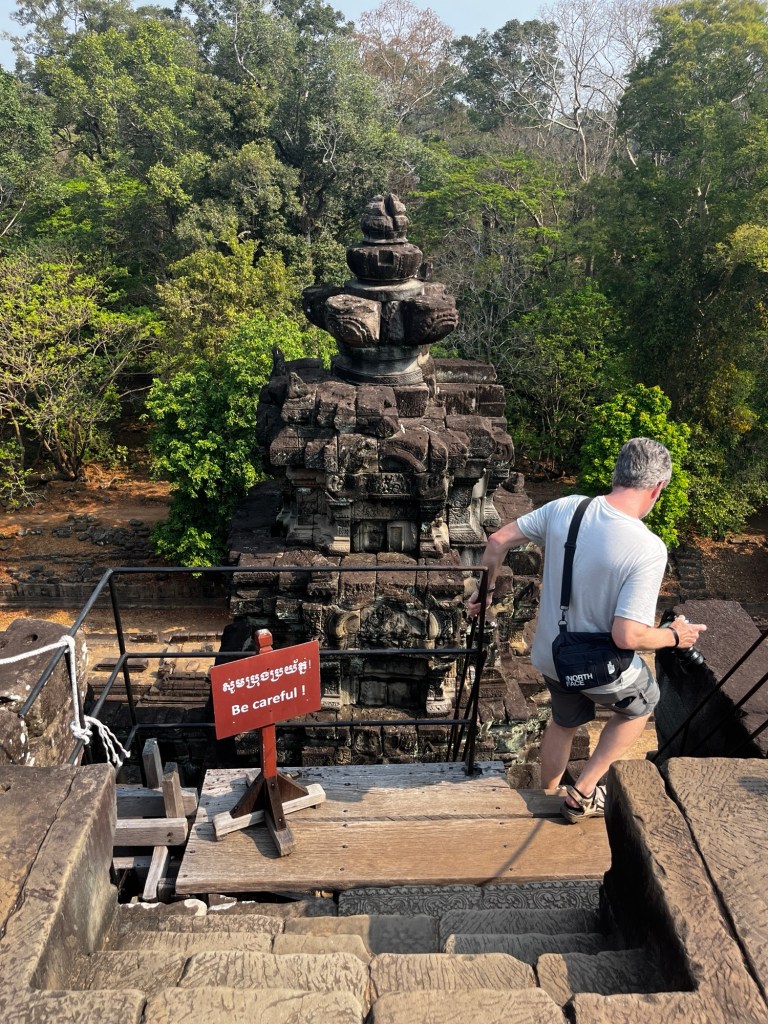
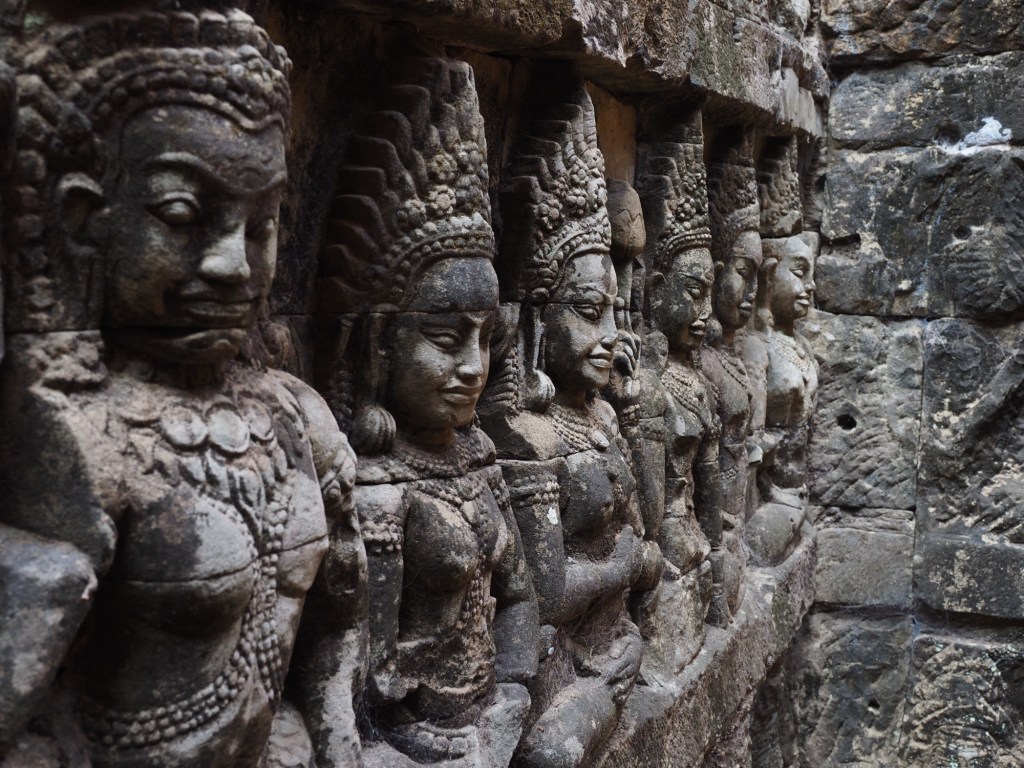
I’ll mention that Channara always has ice cold water and ice cold towelettes when we arrived back at the tuk tuk. We drink so much water this day and don’t need a toilet stop!
We move on and leave Angkor Thom.
Ta Prohm Temple
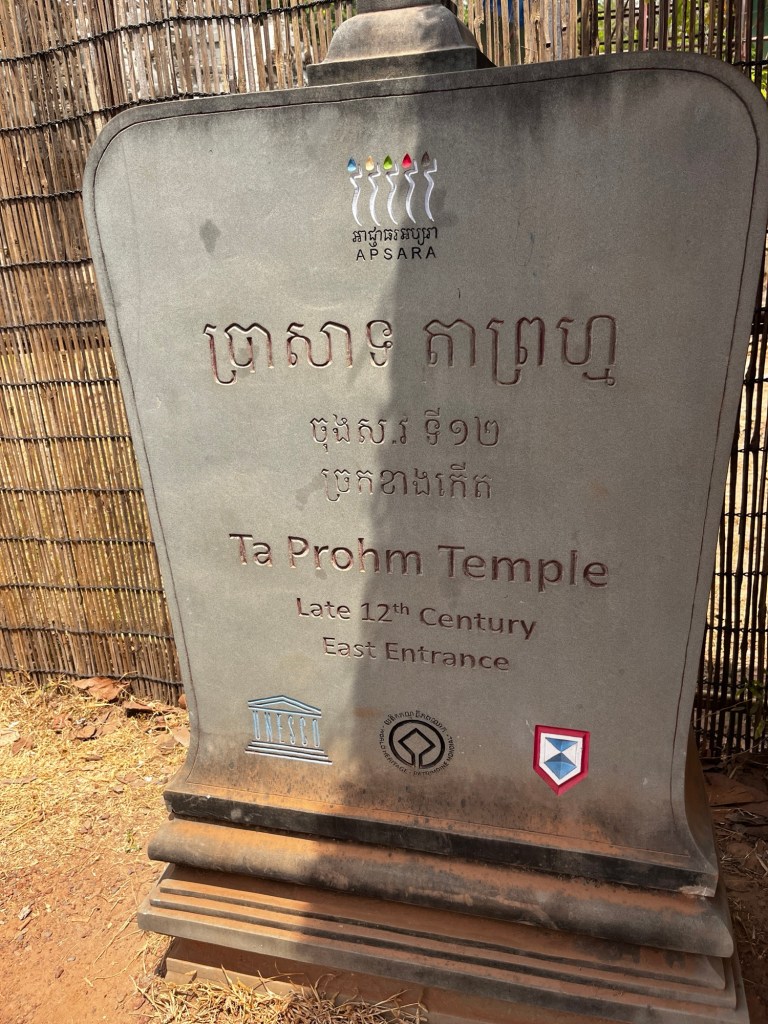
This temple was a Buddhist monastery and center of learning dedicated to the king’s mother. What is incredible is that about 80,000 people were living here or visiting this temple.
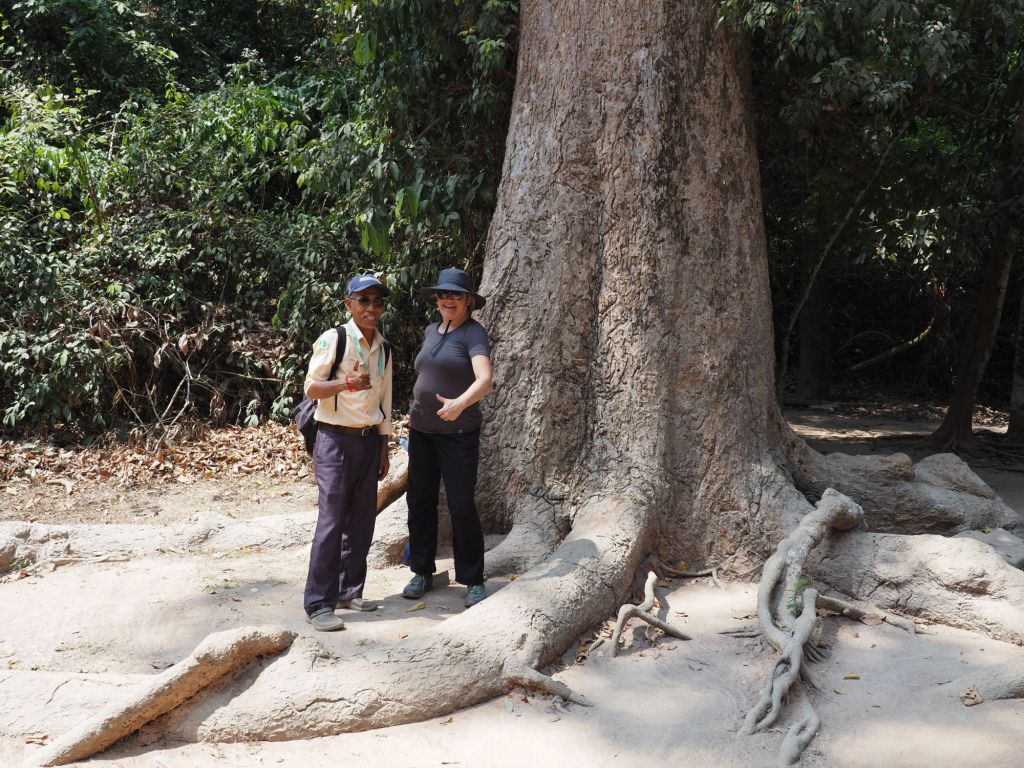
This temple is just outside Angkor Thom so easily reached on the small tour. Because it was built without mortar, Mother Nature and eight centuries have turned this temple into an interesting meld of stone and tree.
Ta Prohm is a very popular temple stop because it is depicted in Angelina Jolie’s film Lara Croft: Tomb Raider.
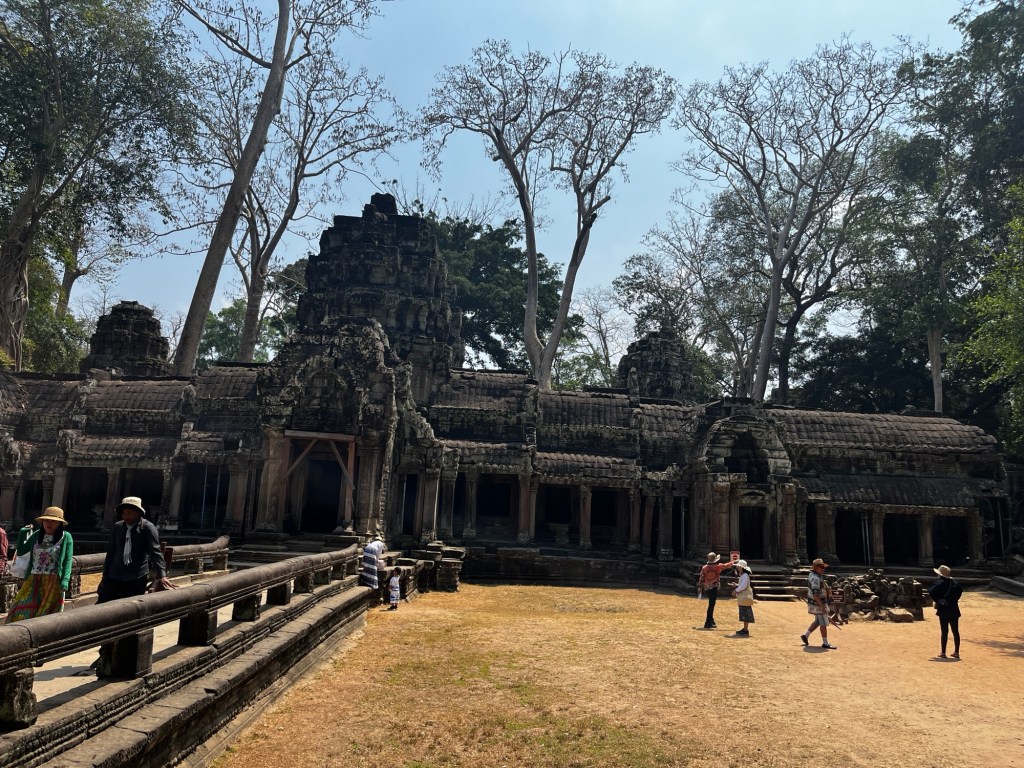
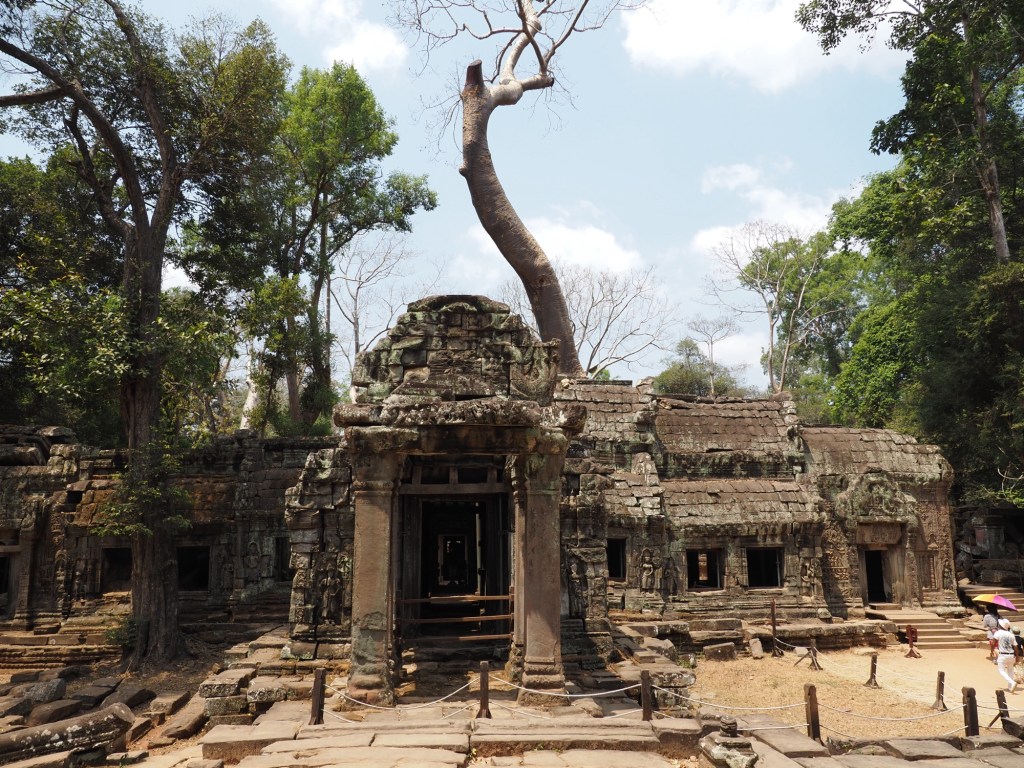
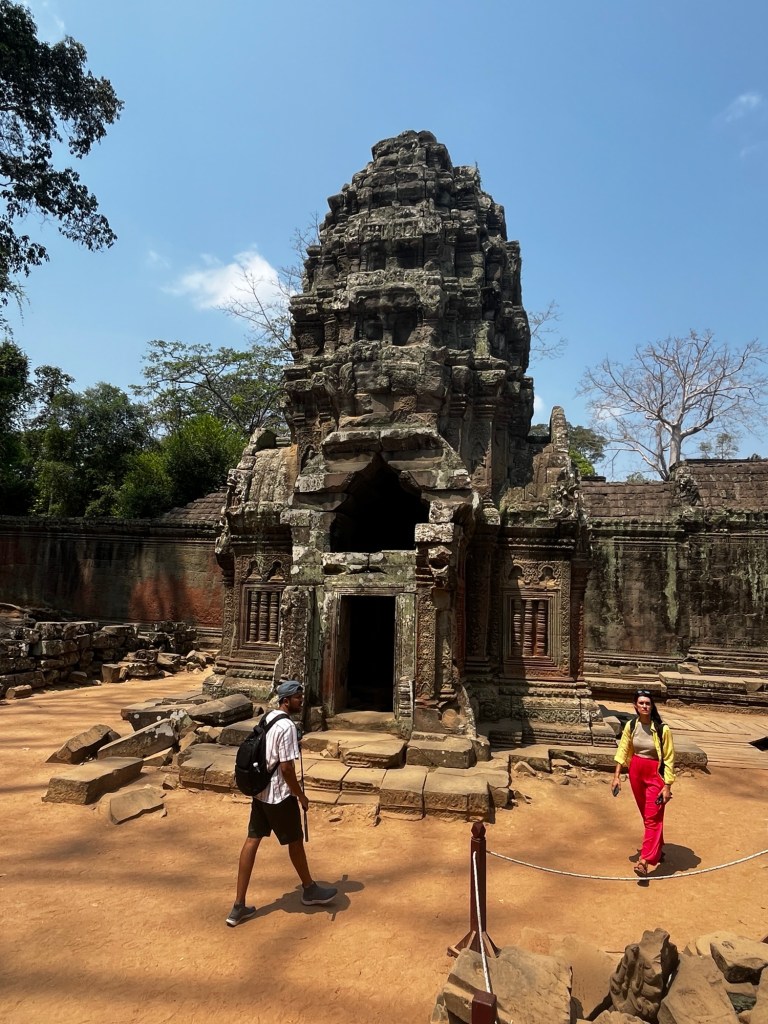
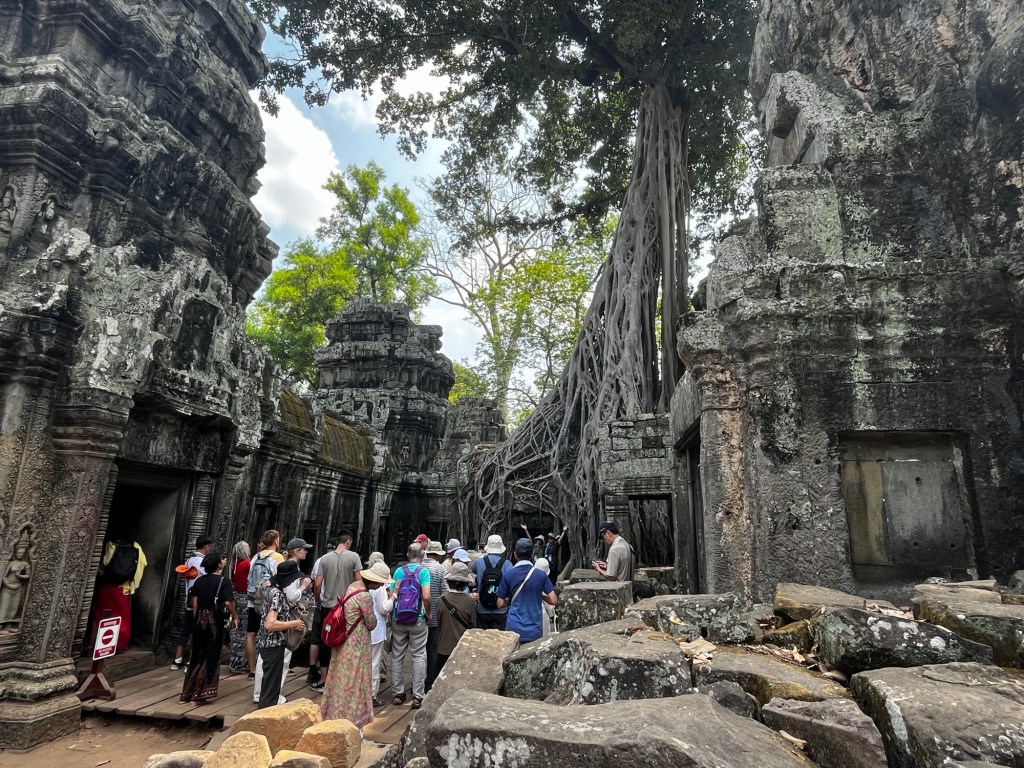
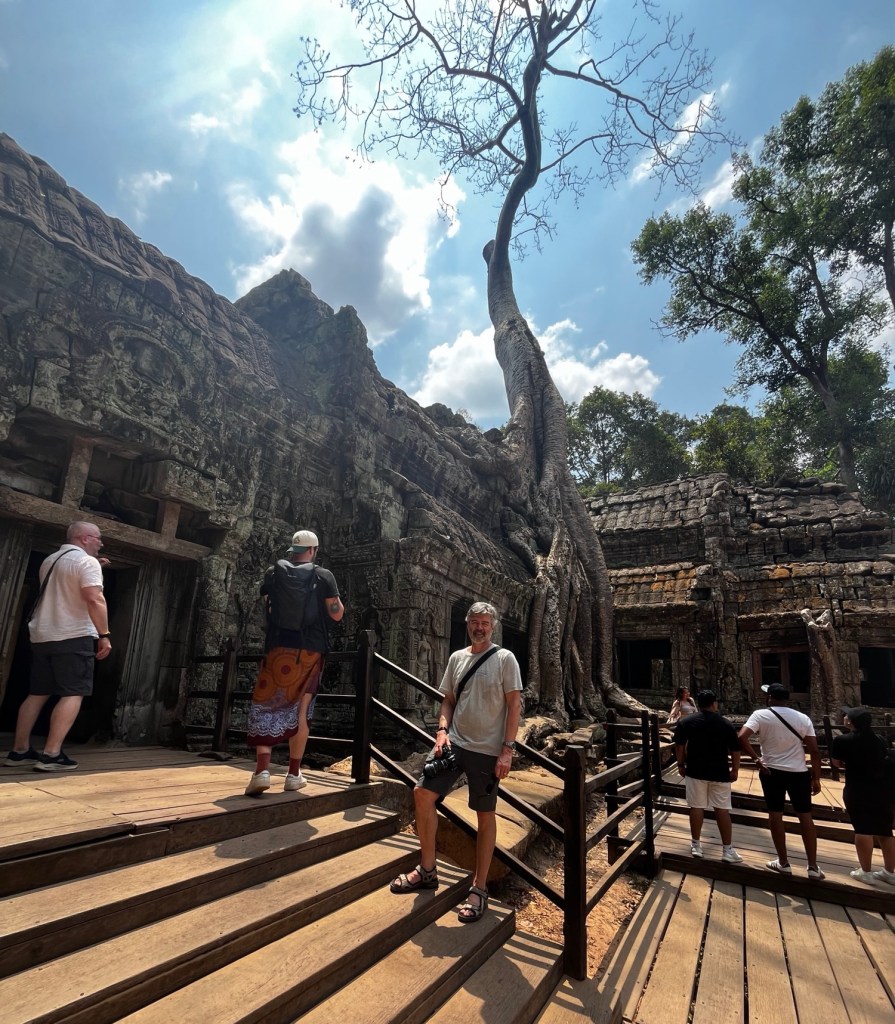
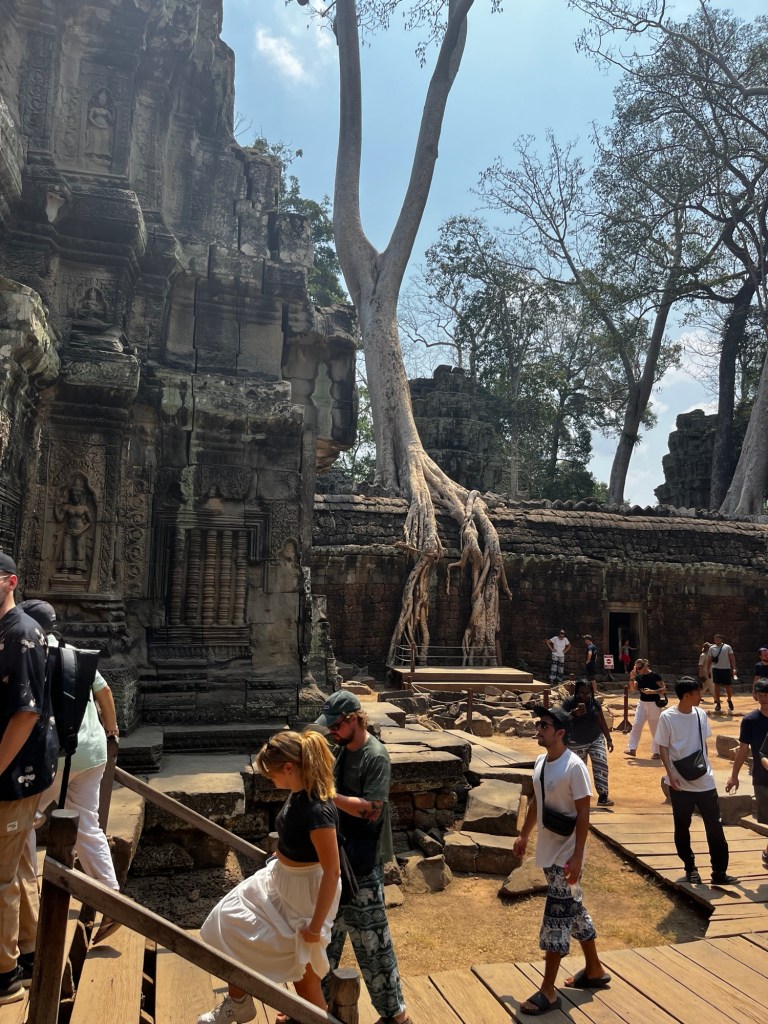
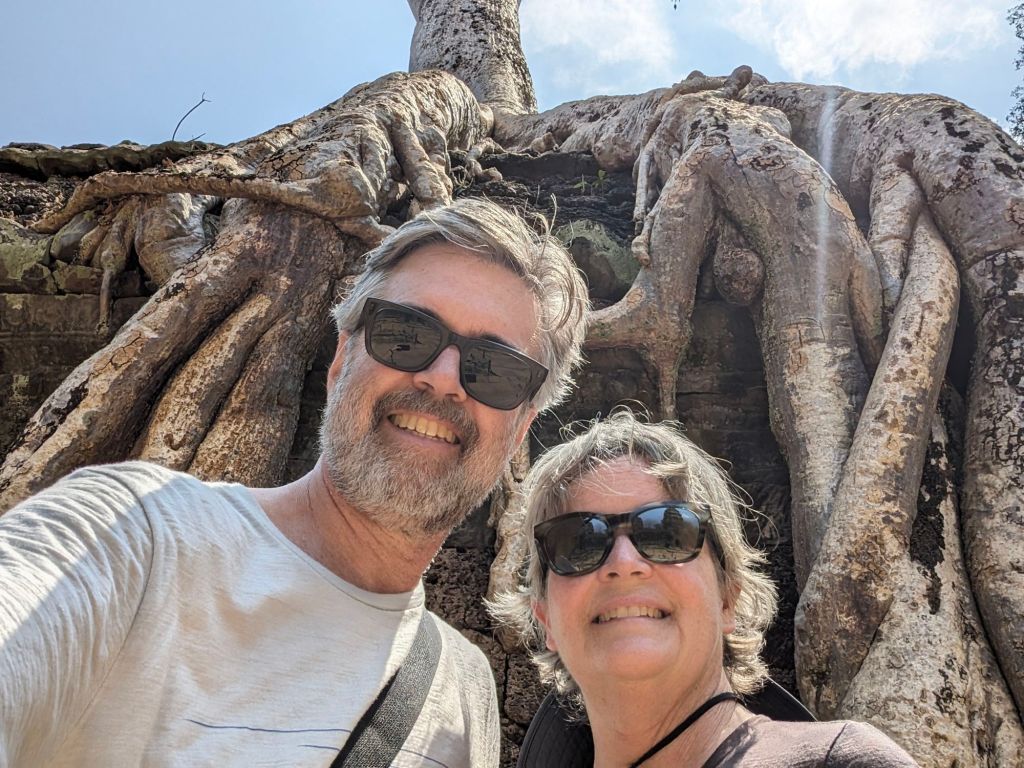
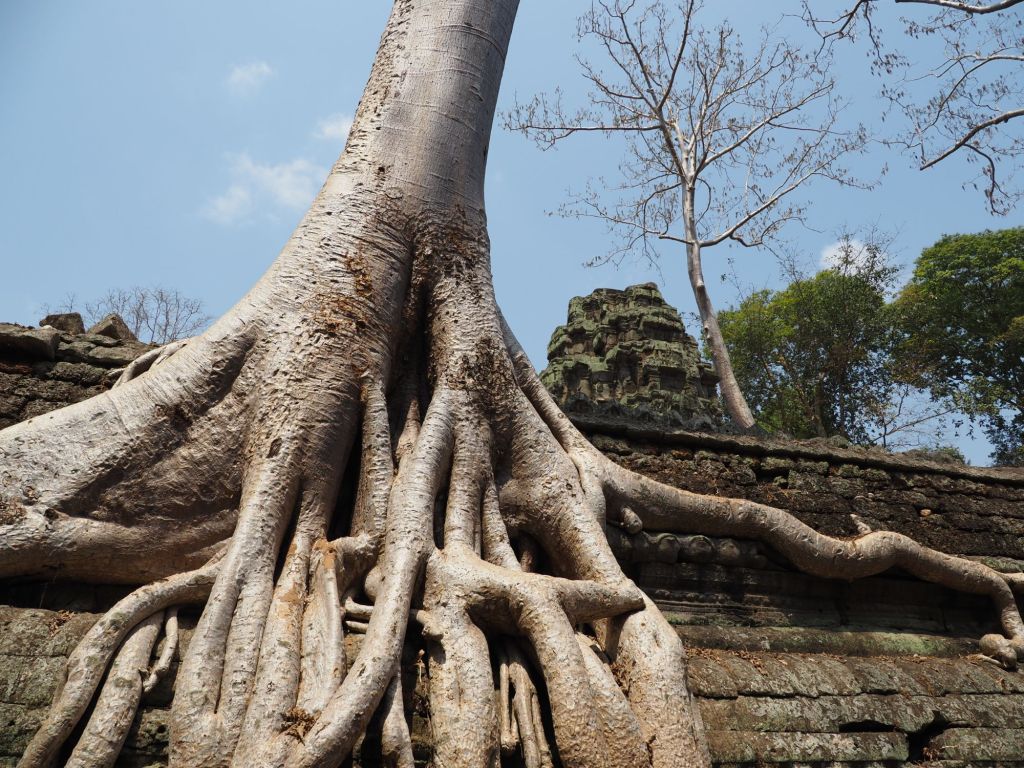
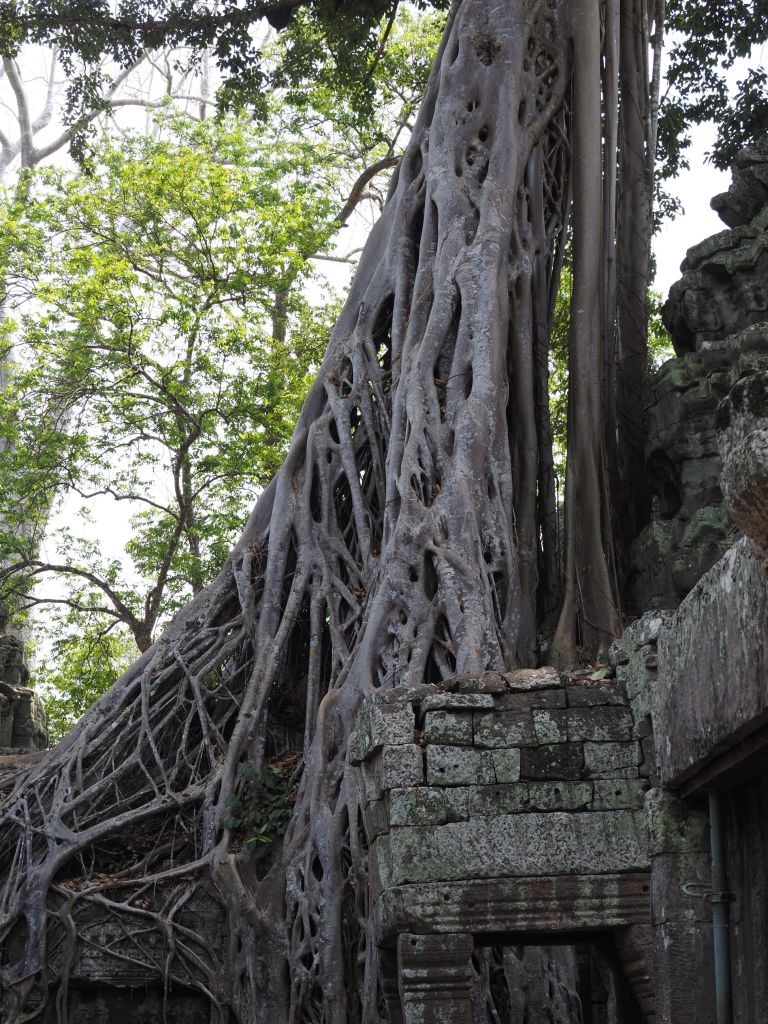
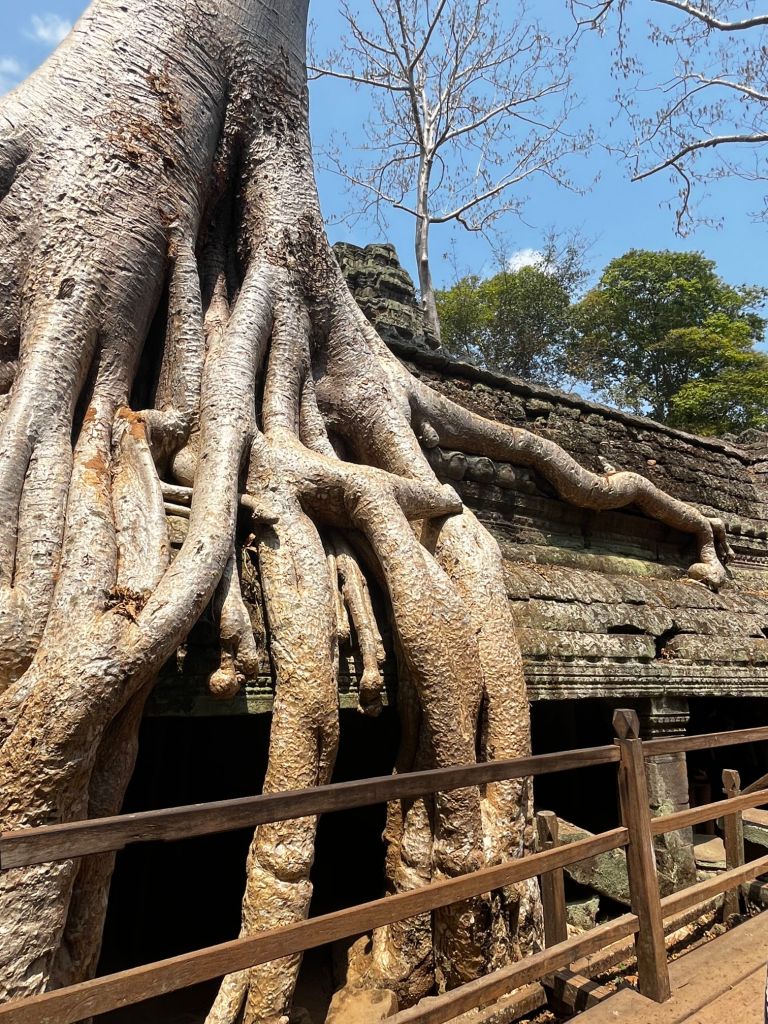
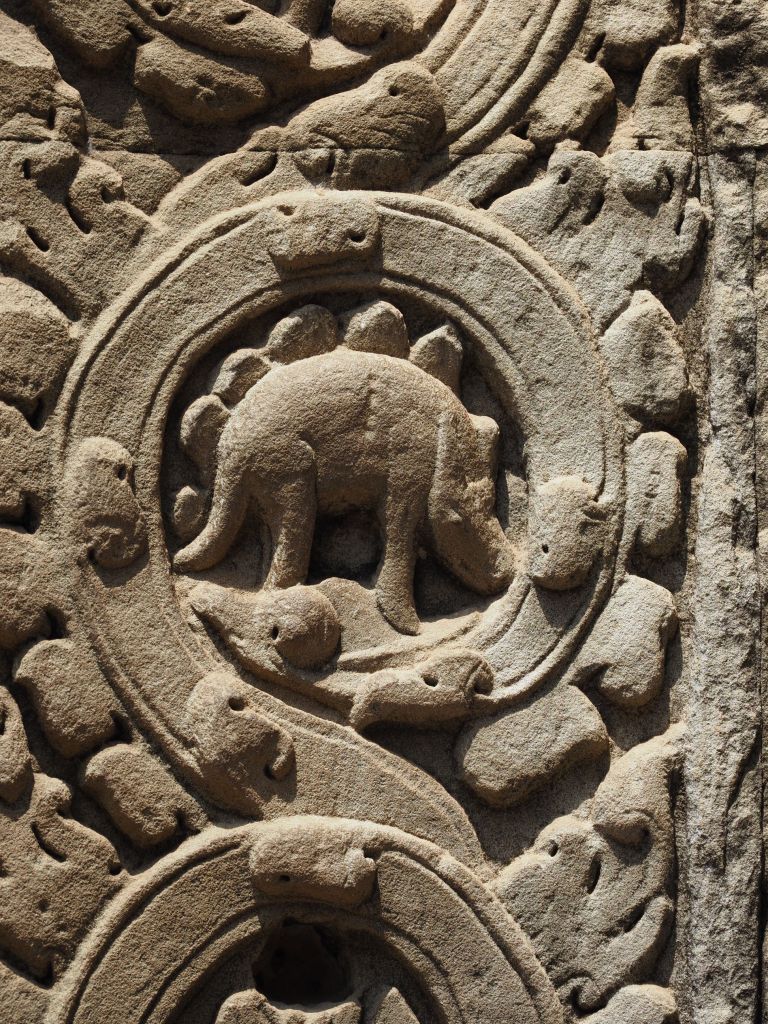
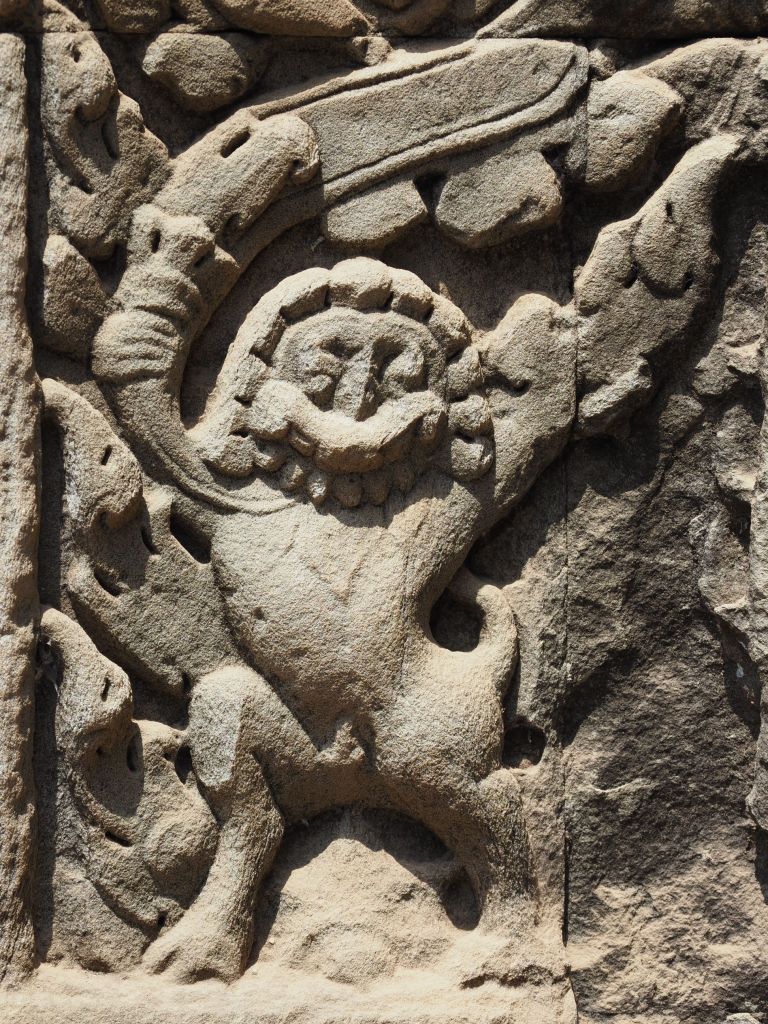
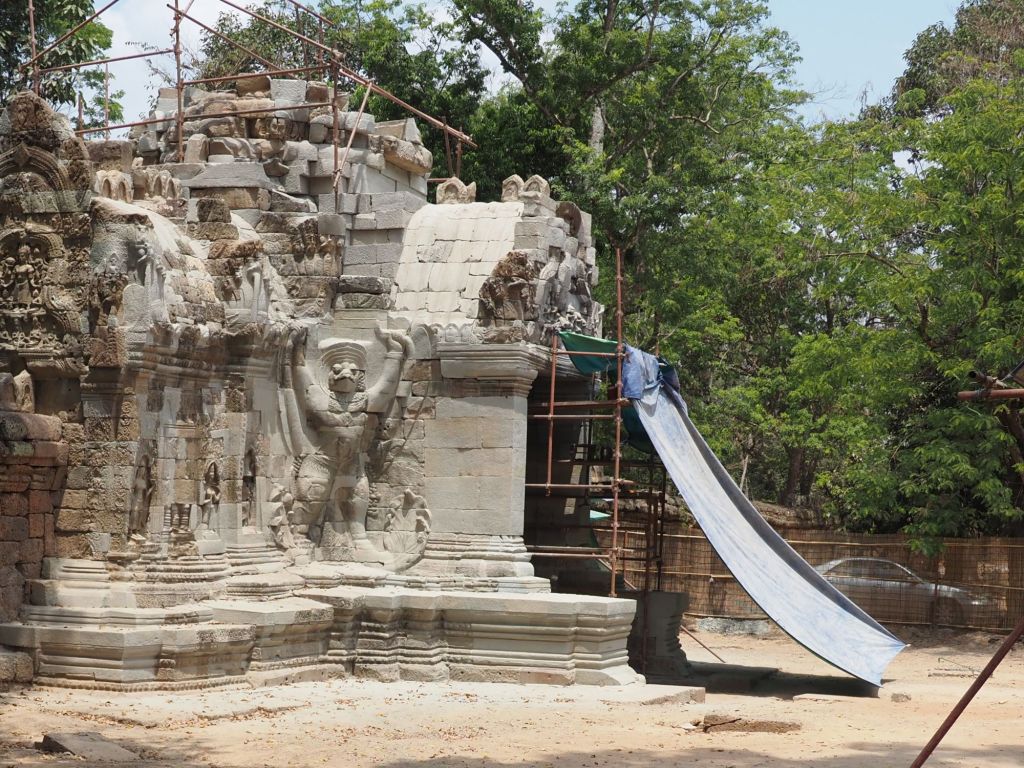
And inside……
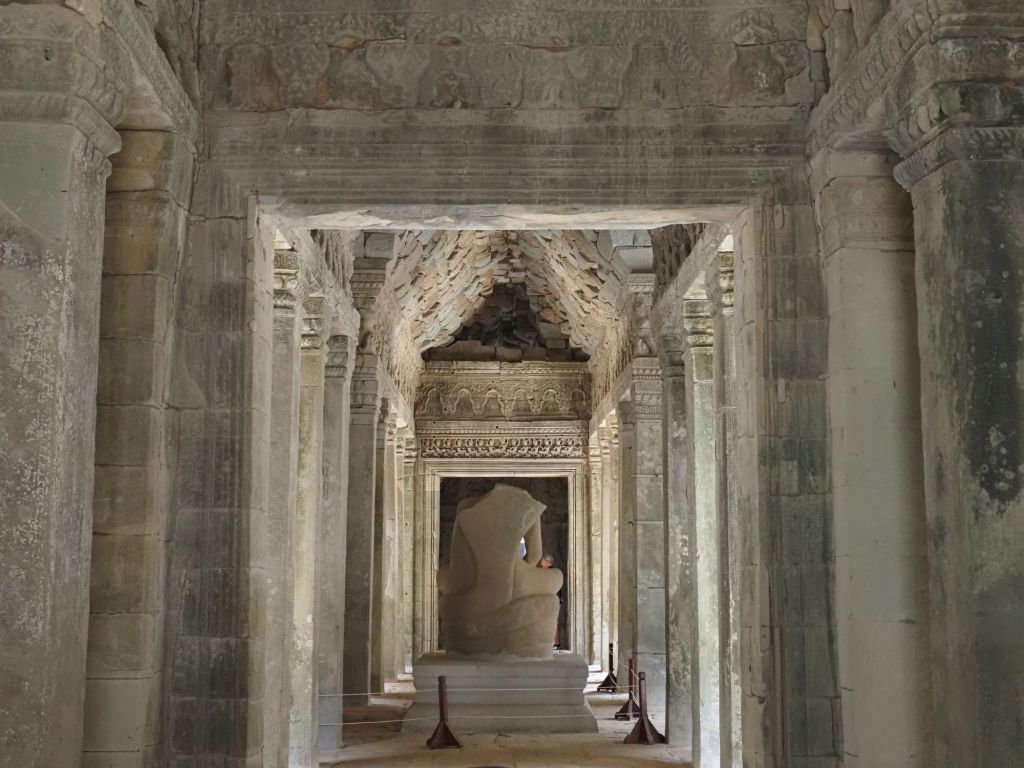
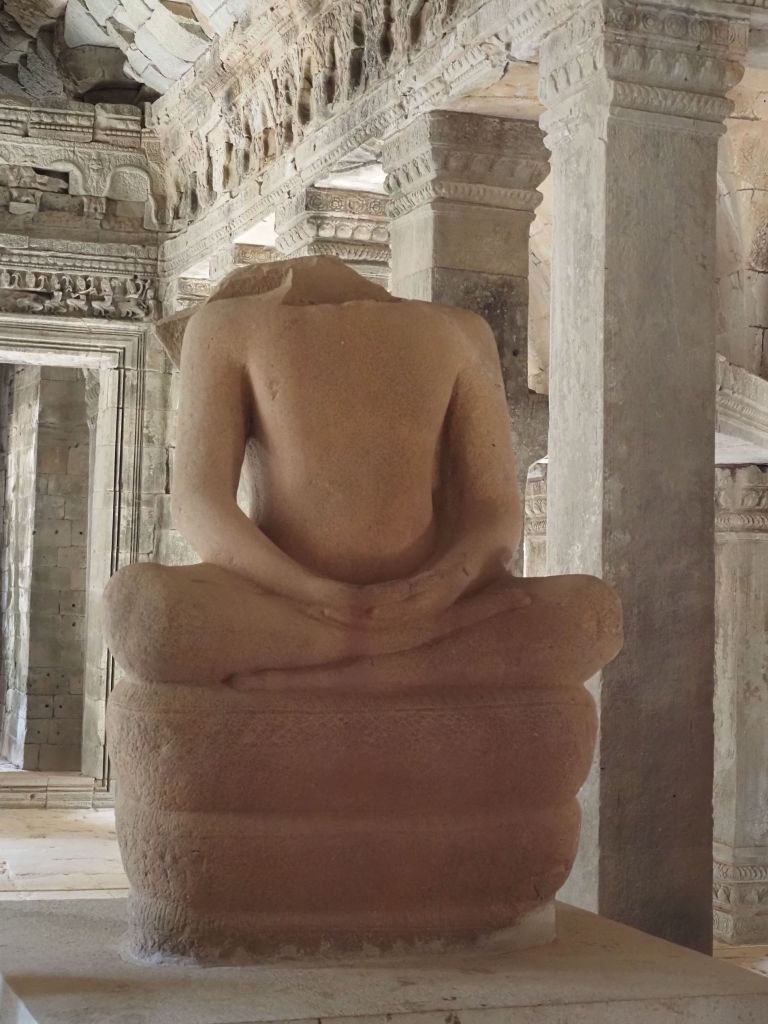
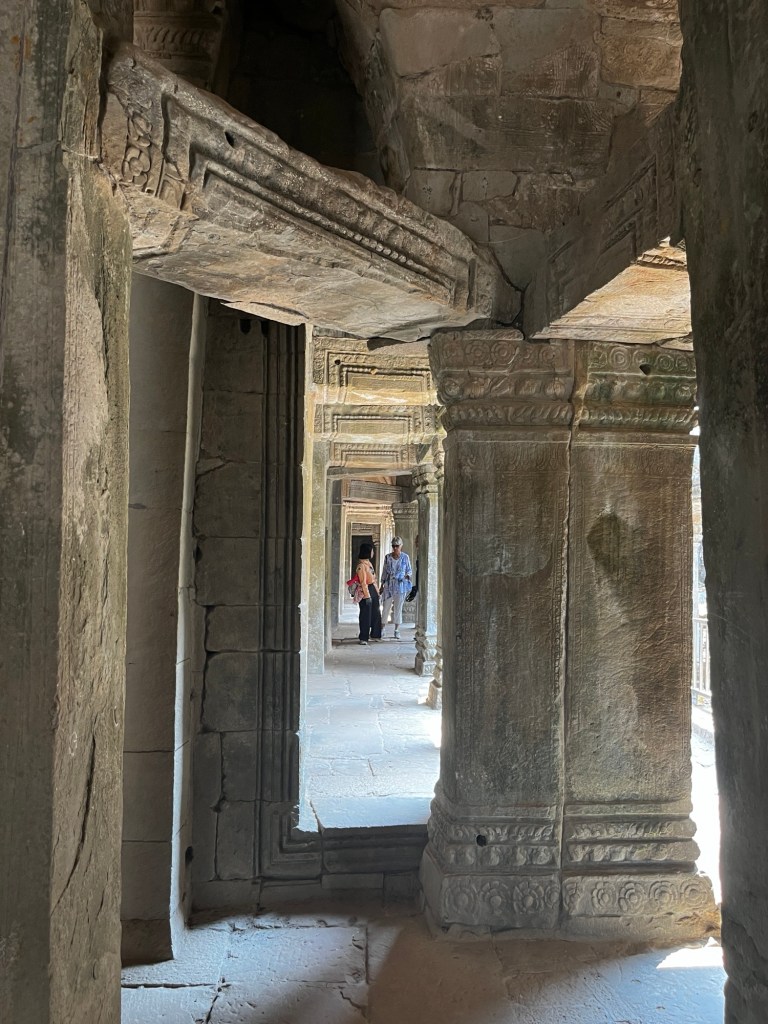
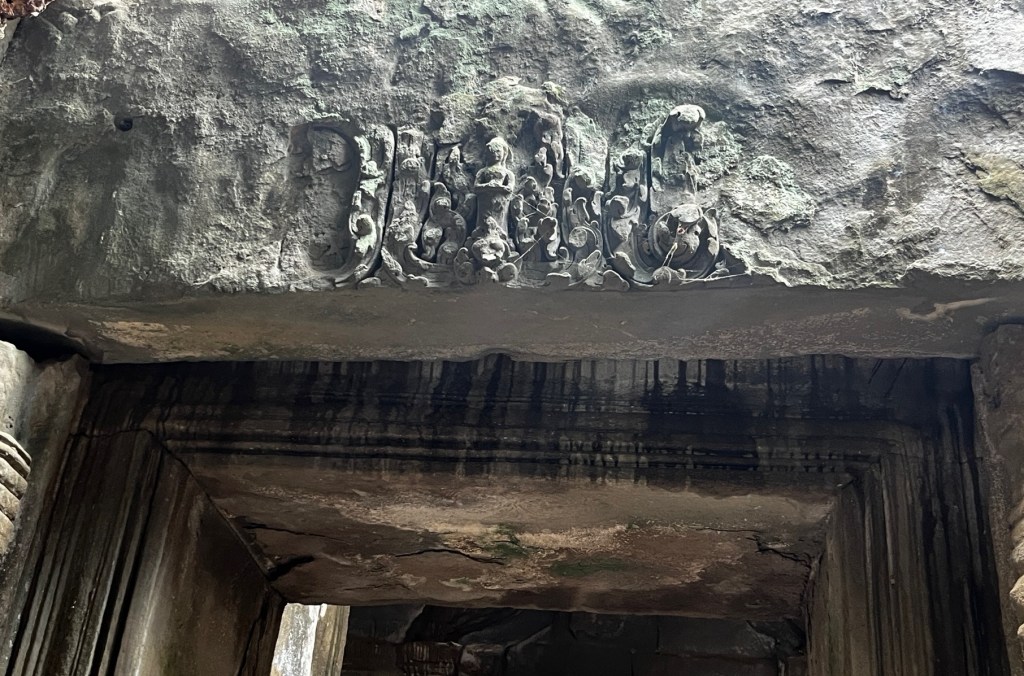
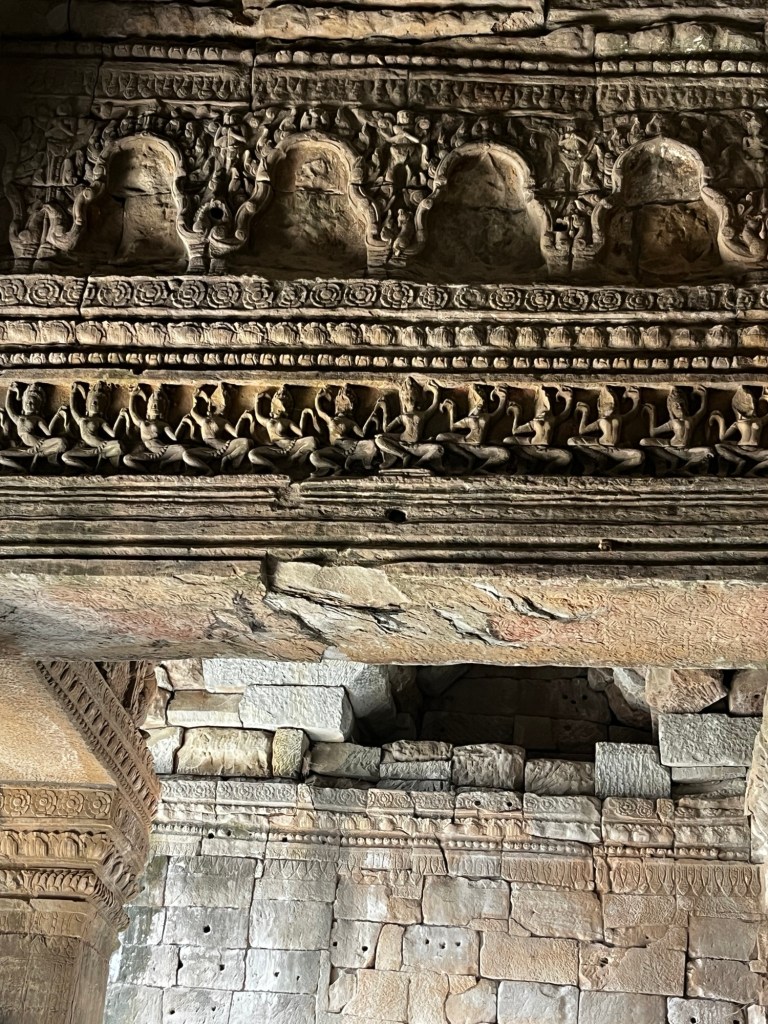
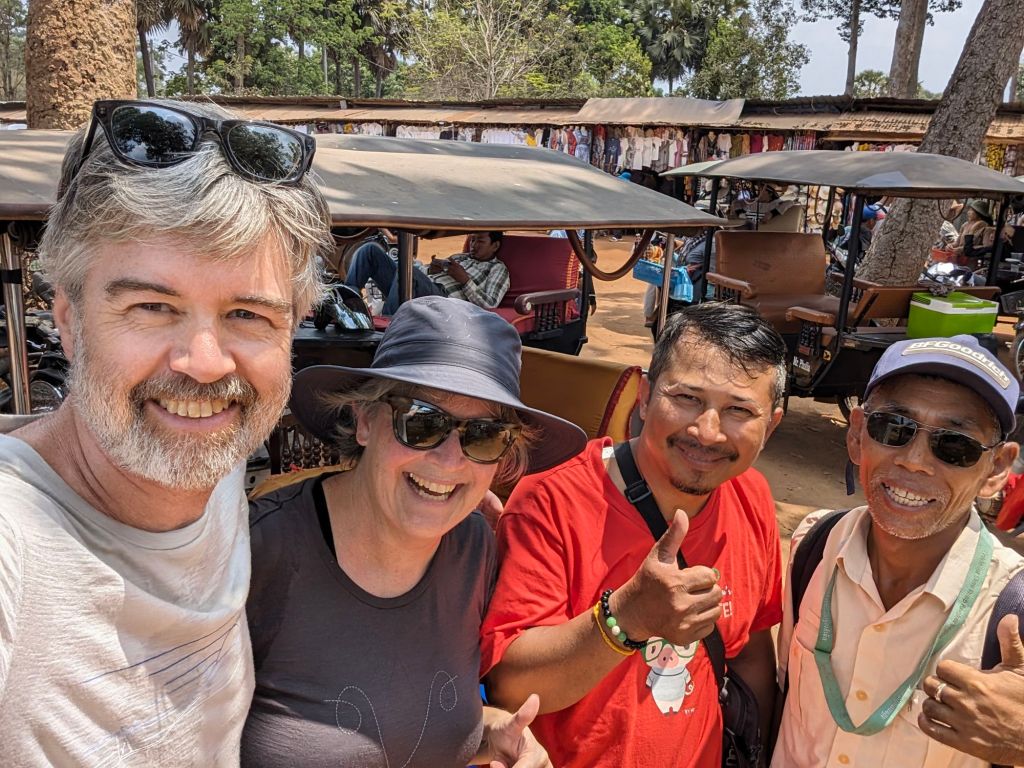
Smiling faces after a lunch break
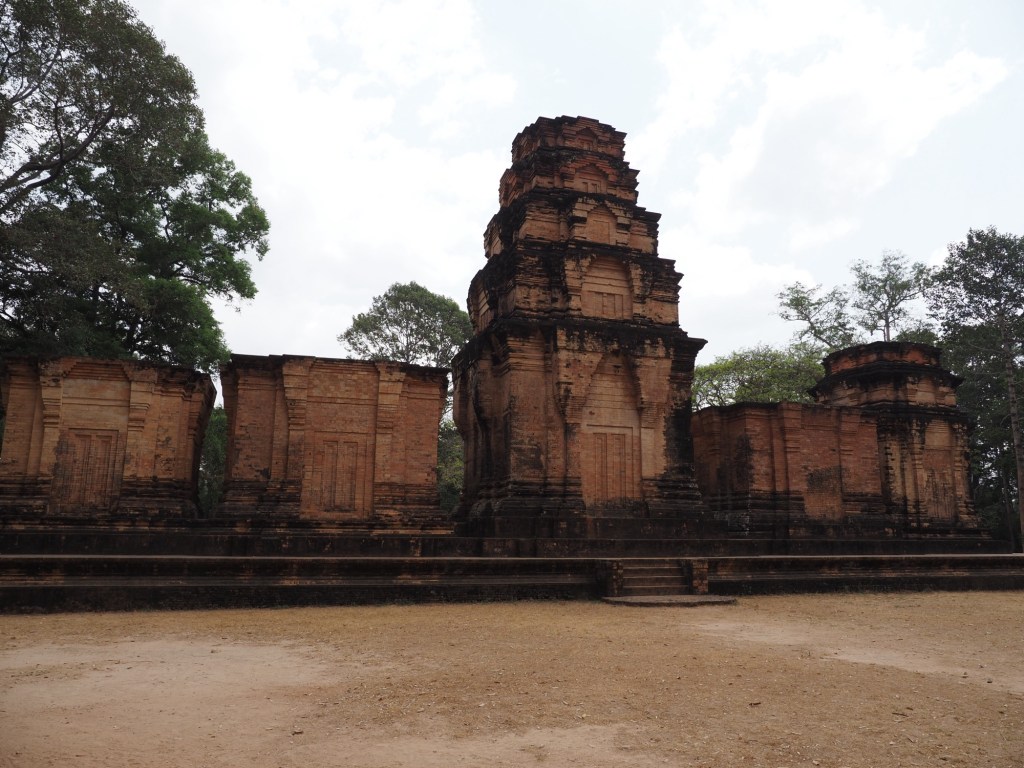
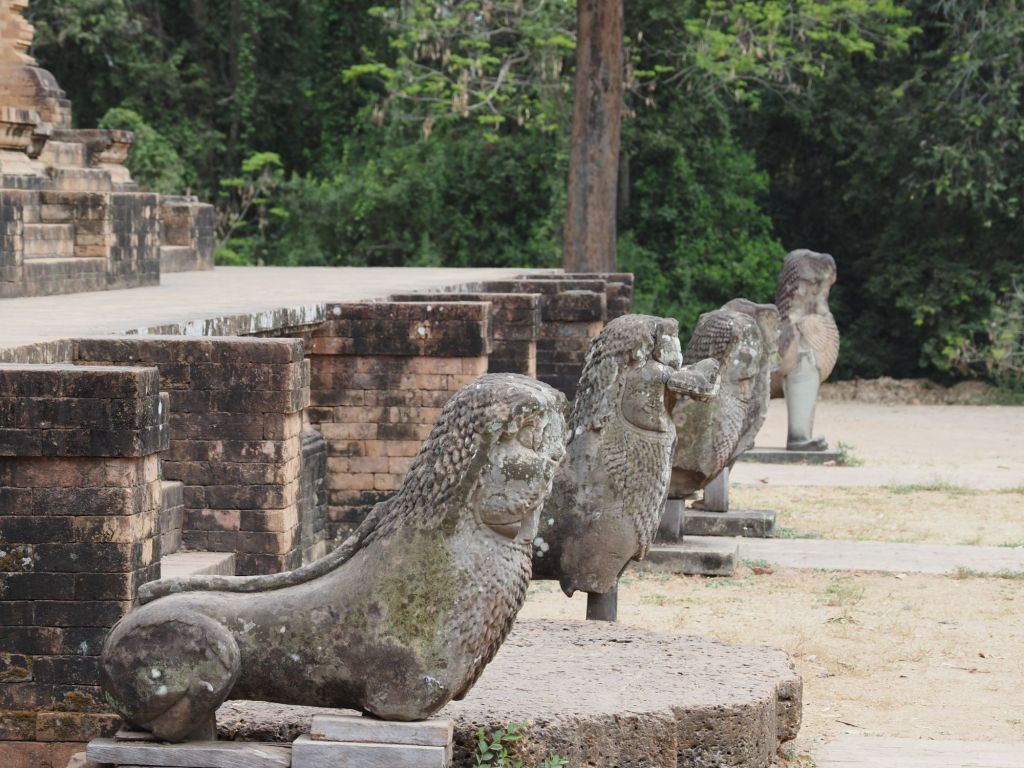
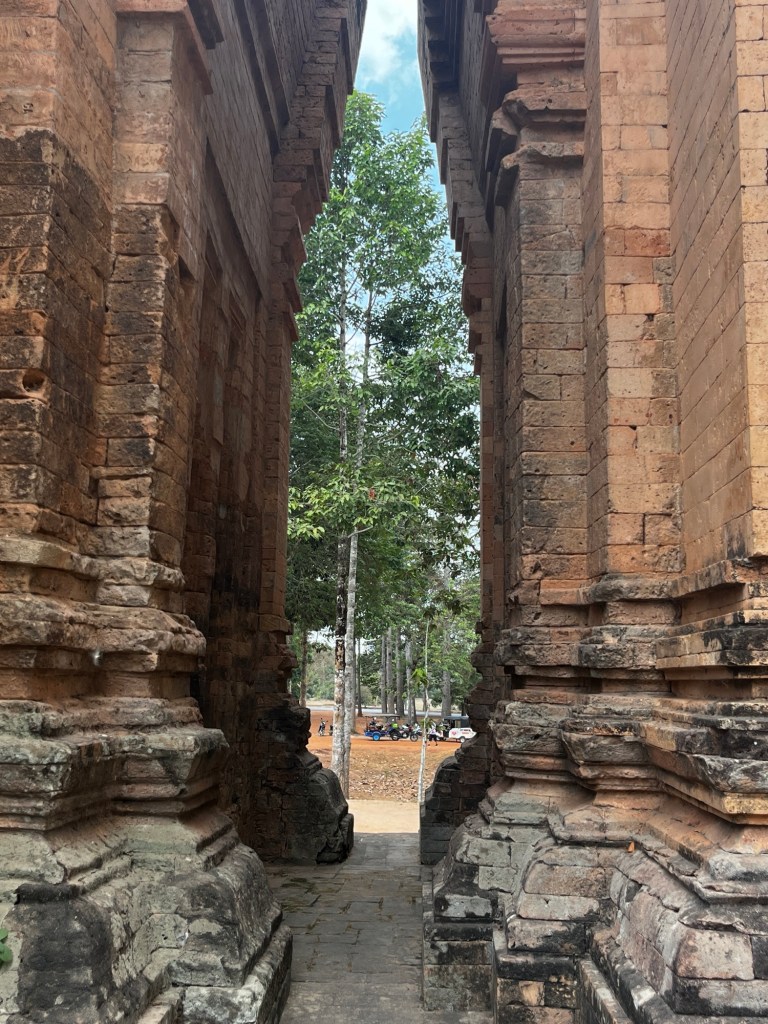
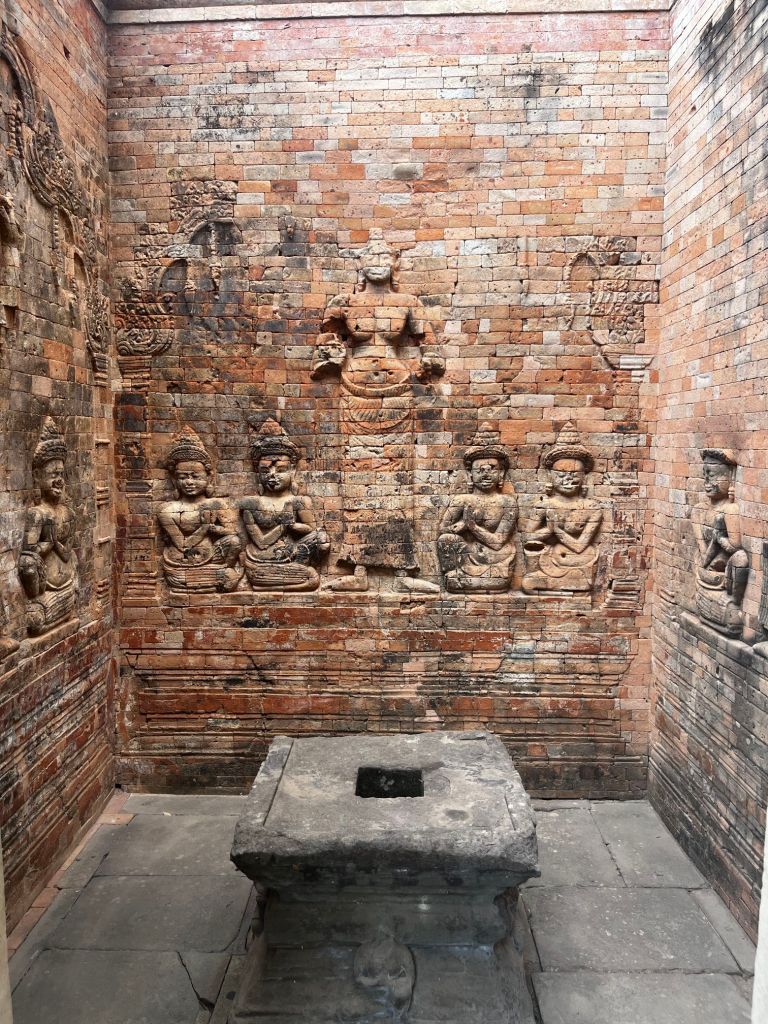
and Kravan Temple
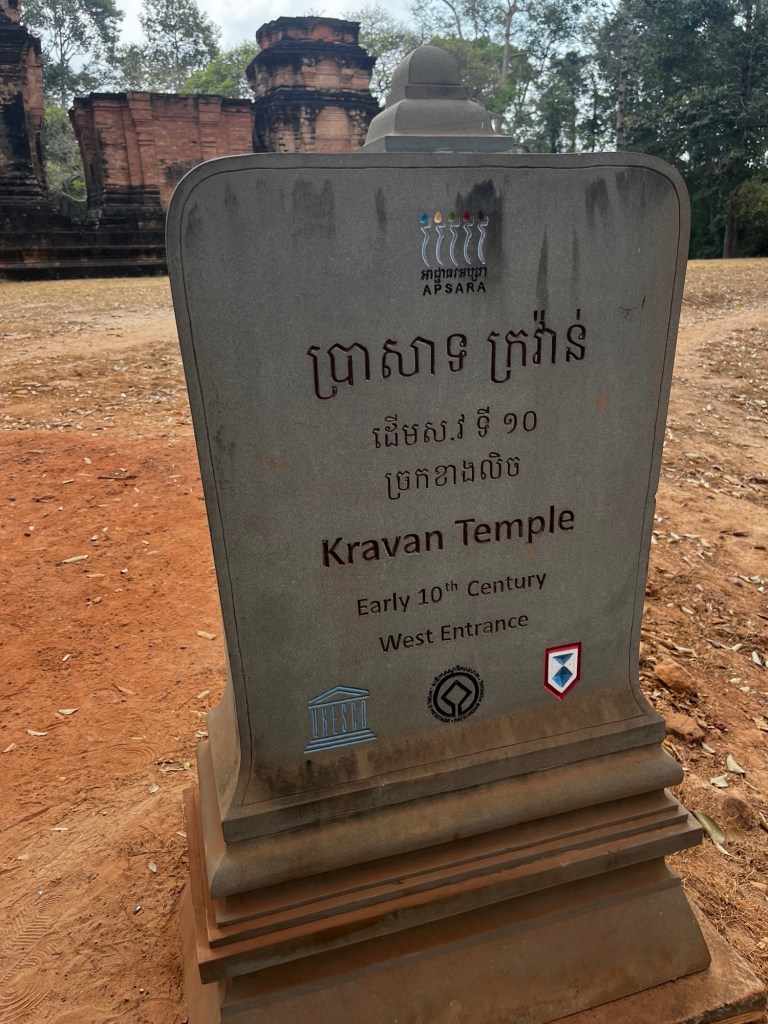
This Hindu temple was built in the 10th century. It is smaller and made from smaller plain reddish brick. Its significance is the carving within. The depictions of Vishnu and Lakshmi in low relief (or simpler method) are not a common style.
It is quiet here.
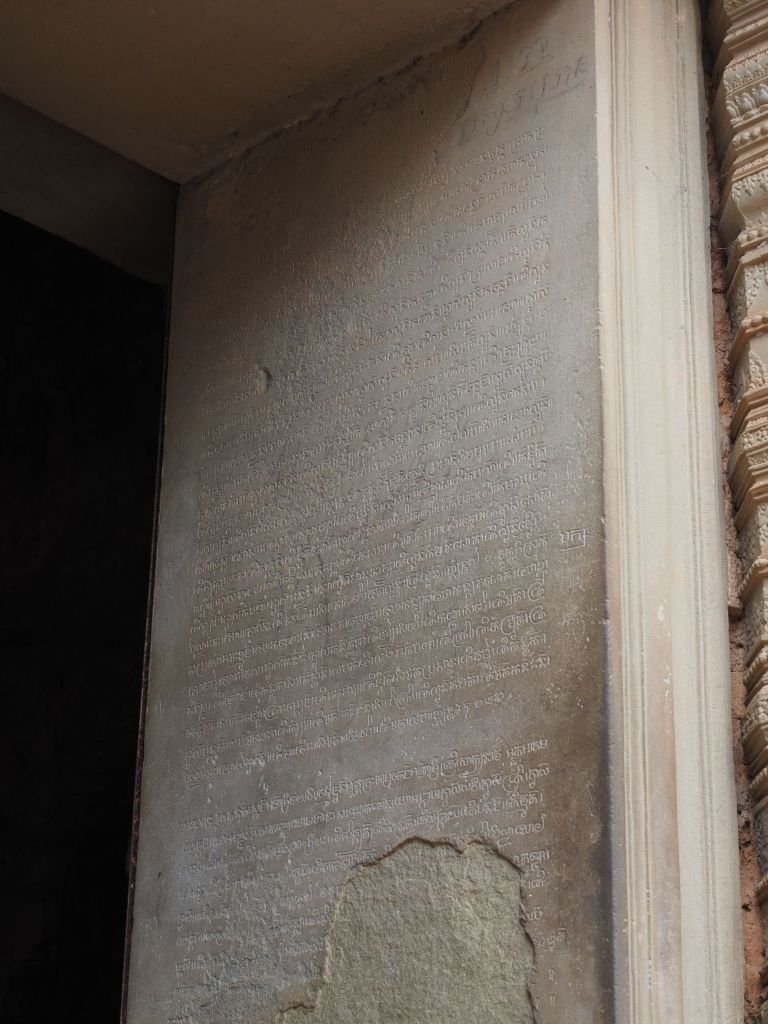
That’s a wrap on the small tour. Our heads are spinning.
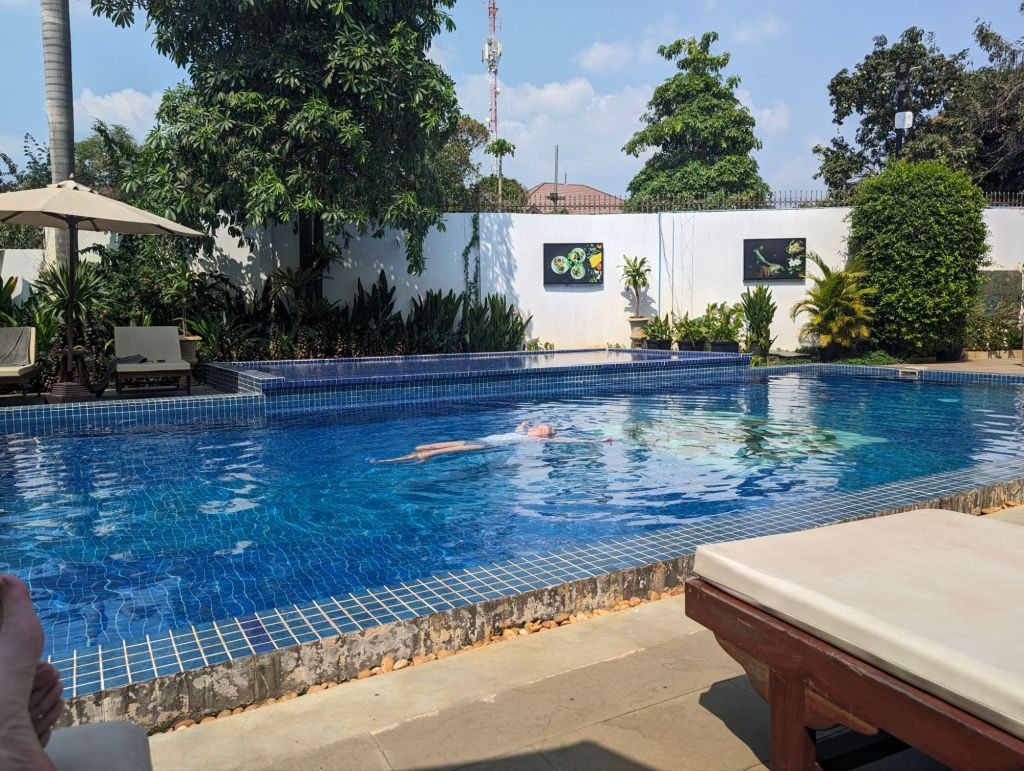
We are back at the hotel in the early afternoon and all we want to do is relax at the pool.
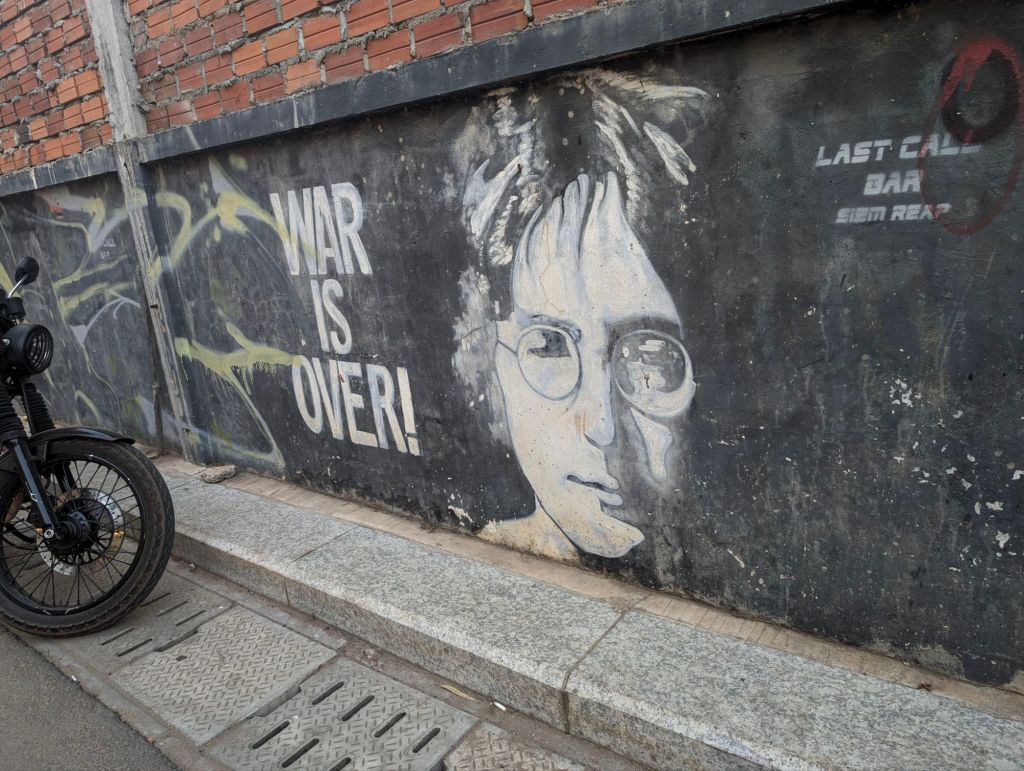
Later on, well rested, we walk along the river down to Pub Street and Old Market for dinner and shopping. Siem Reap’s annual river festival is wrapping tonight so the main roads along the river are closed to cars and full of people. The sidewalks are jammed with stalls selling just about everything. It is craziness. We didn’t get any photos.
Tomorrow is another day …. for temples. We’ve signed up for the big tour. Stay tuned.


 Two Sore Backs
Leave a reply to valeriejwilkins Cancel reply