Battambang seemed to make sense as a stopover between Siem Reap and our next major stop, which was Rainbow Lodge in southern Cambodia, near Tatai. We didn’t do much research, so the original attraction was actually a highly rated cooking class that I thought might be fun.
The hotel we were staying at offered free transport from the bus depot, so we called them after arrival and within a few minutes we were met by a Tuk Tuk driver named Ket Morb.
Of course, nothing is really free. Part of the deal is the drivers have a chance to sign you up for tours. We played along, decided to skip the cooking class, and arranged for the half day tour beginning at 1:30 pm the following day. What an extraordinary bit of luck.
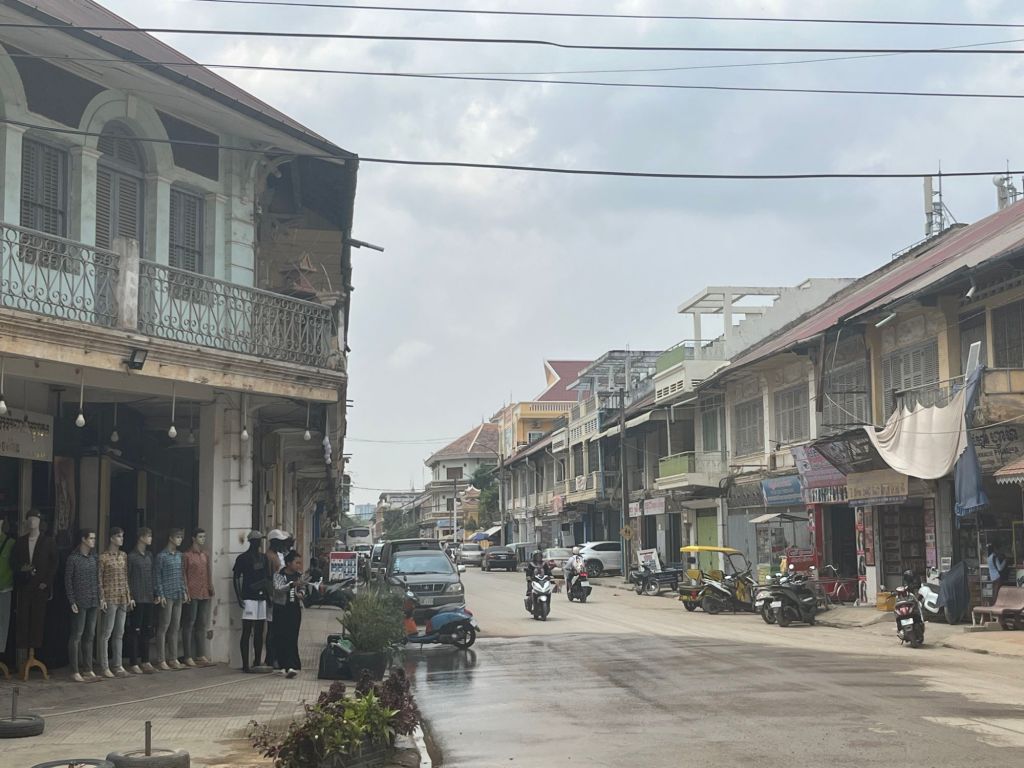
We got up the next day, had breakfast at the hotel, and then wandered downtown.
There wasn’t much to see – I think it would be different at night. But here are a couple of pics:

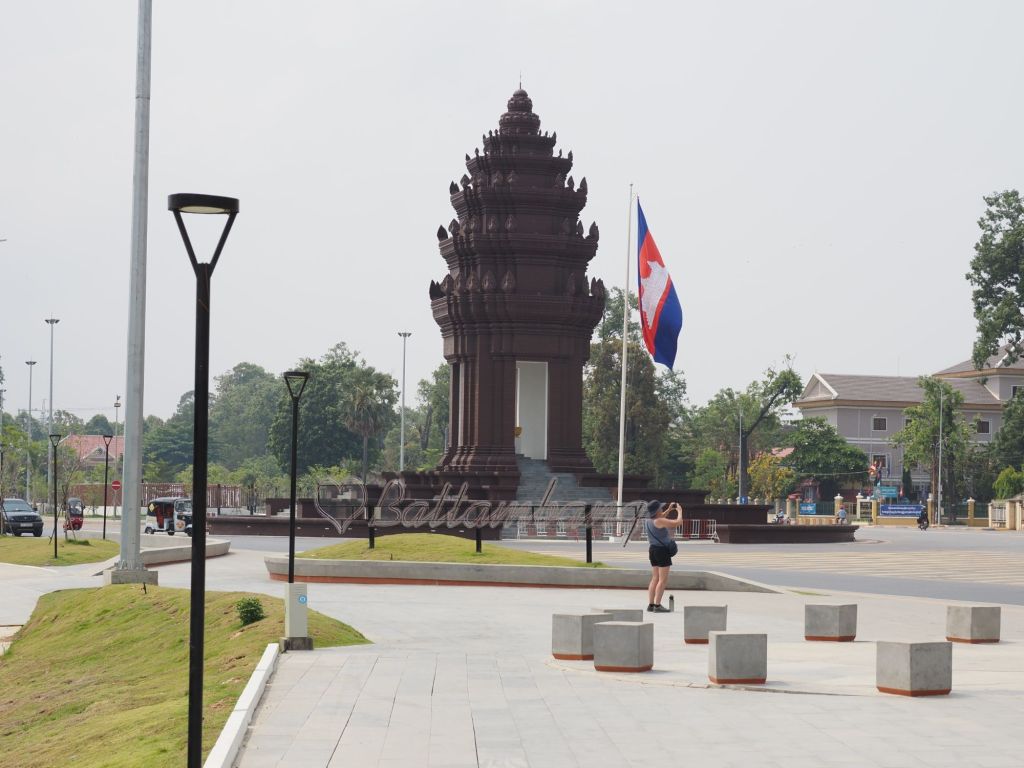
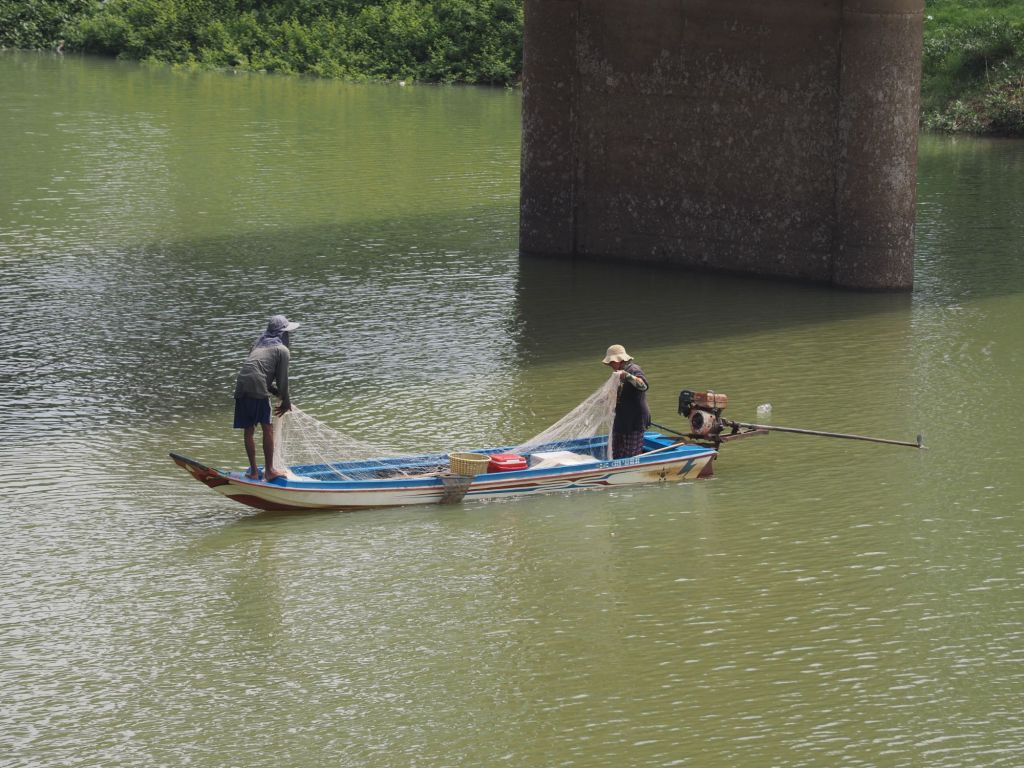

To be honest, we spent no time researching either the monument or the wat. We were pretty much done that stuff after Angkor Wat.
Then it was back to the hotel for a bite to eat and to rest up for the tour
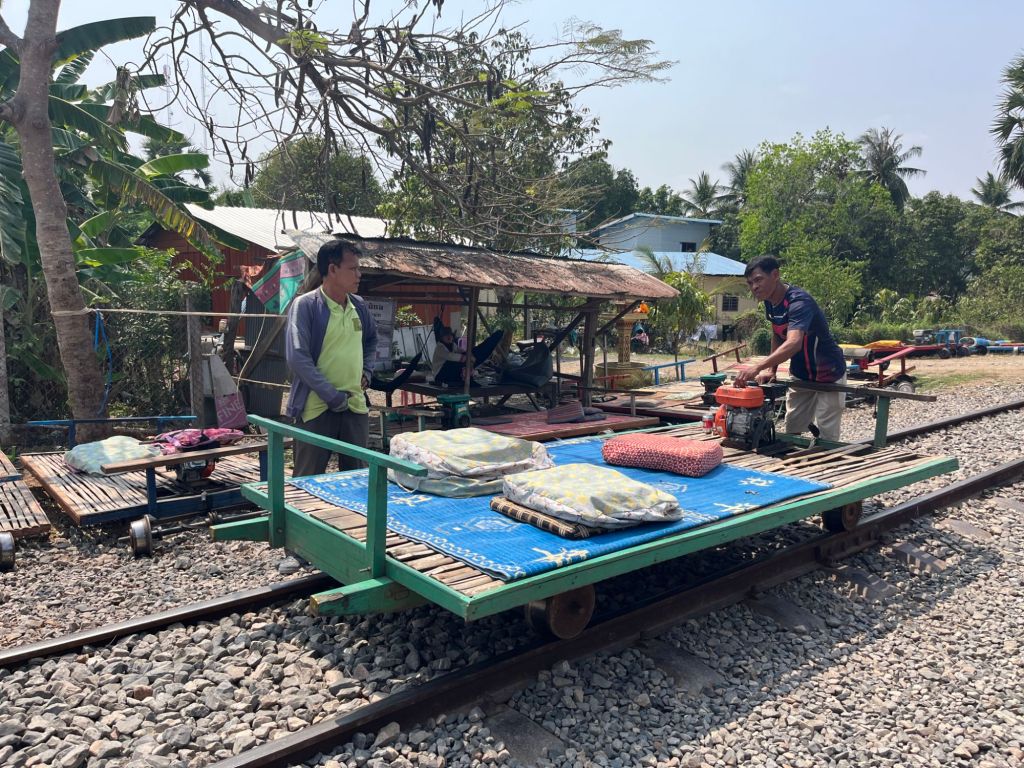
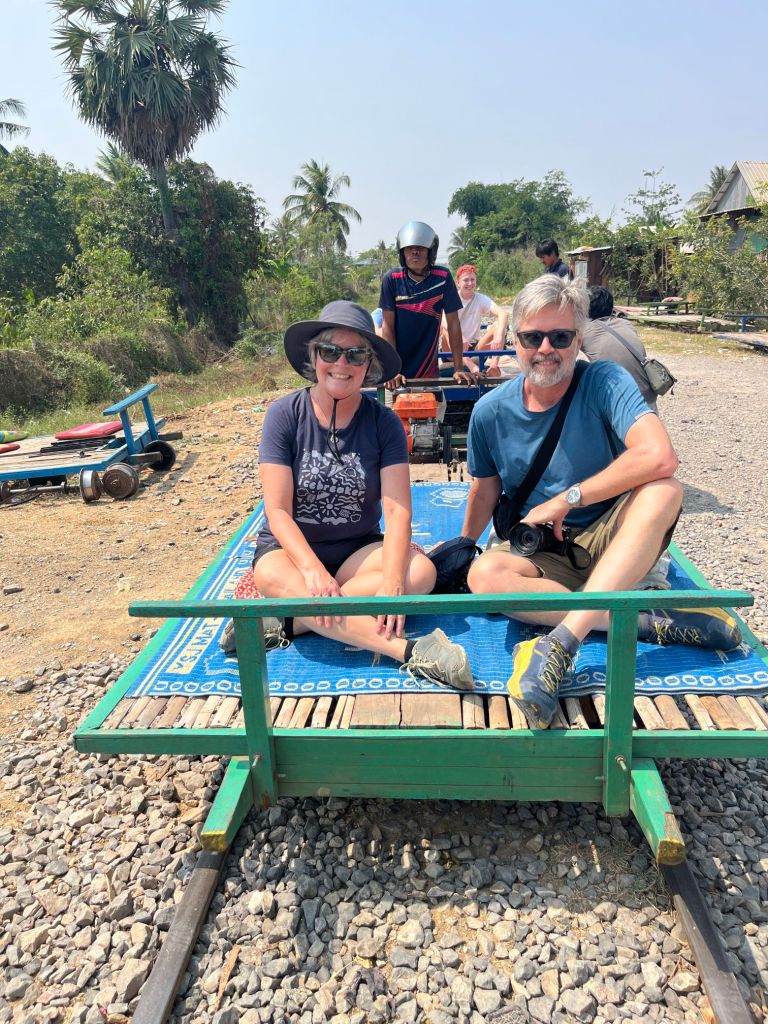
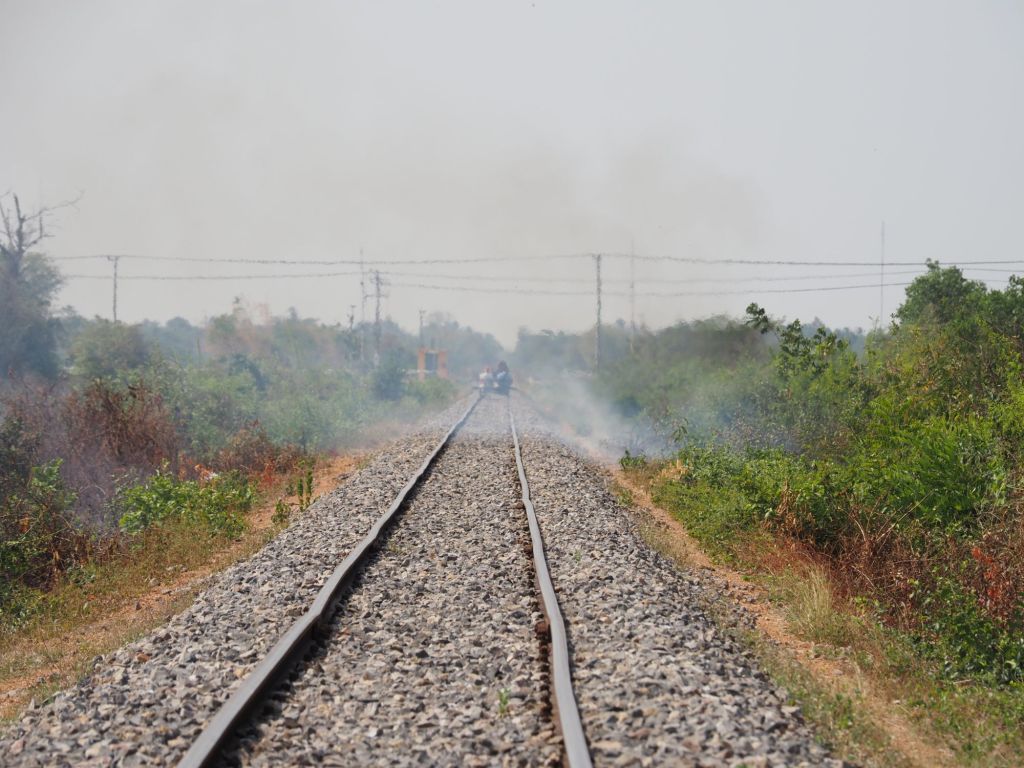
The first tour stop was the Bamboo Train. This was how local farmers moved their meat and produce to town before trucks took over. Val was super keen on this part of the tour. She has trains in her blood – her grandfather was a railroad man who spent years working in Cuba and Kuala Lumpur. (This will be a focus of ours when we visit KL in a few weeks.)
The bamboo trains are pretty ingenious. They are basically a platform that sits on two loose axles, held together by gravity. A simple Briggs and Stratton engine is mounted on a sliding mechanism. Pull back on the engine and a rubber belt looped around one of the axles is tensioned, causing it to rotate.
The lightweight design makes it manageable for operators to take them off the track when they meet one coming in the opposite direction. There was only a single rail line.

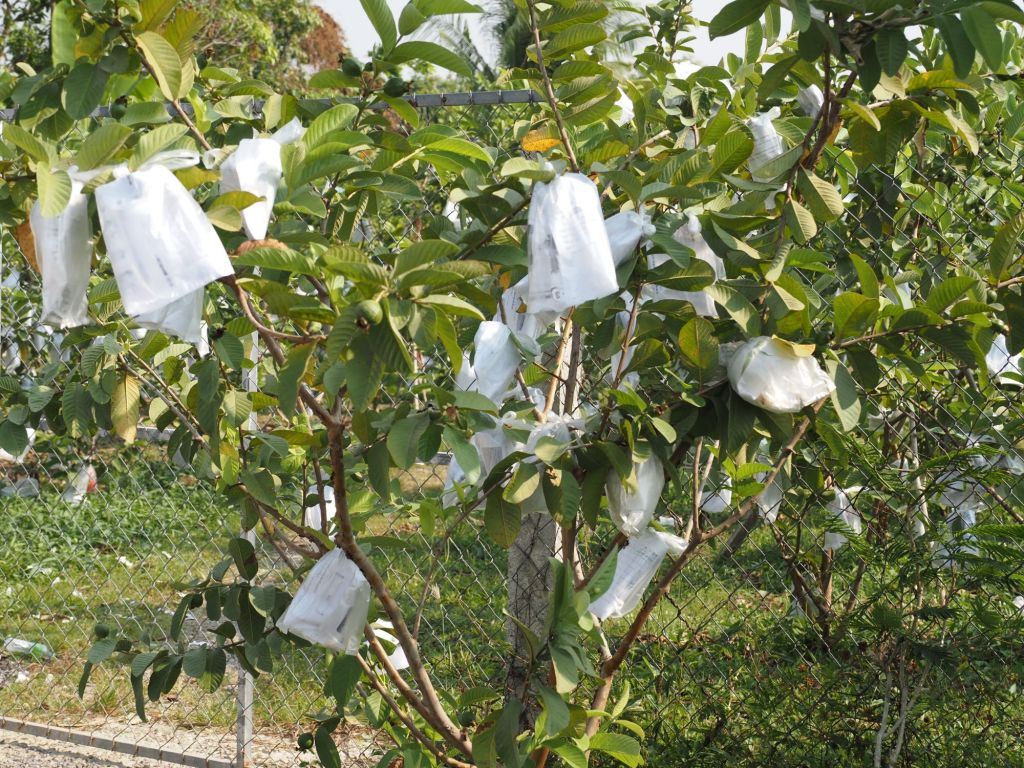
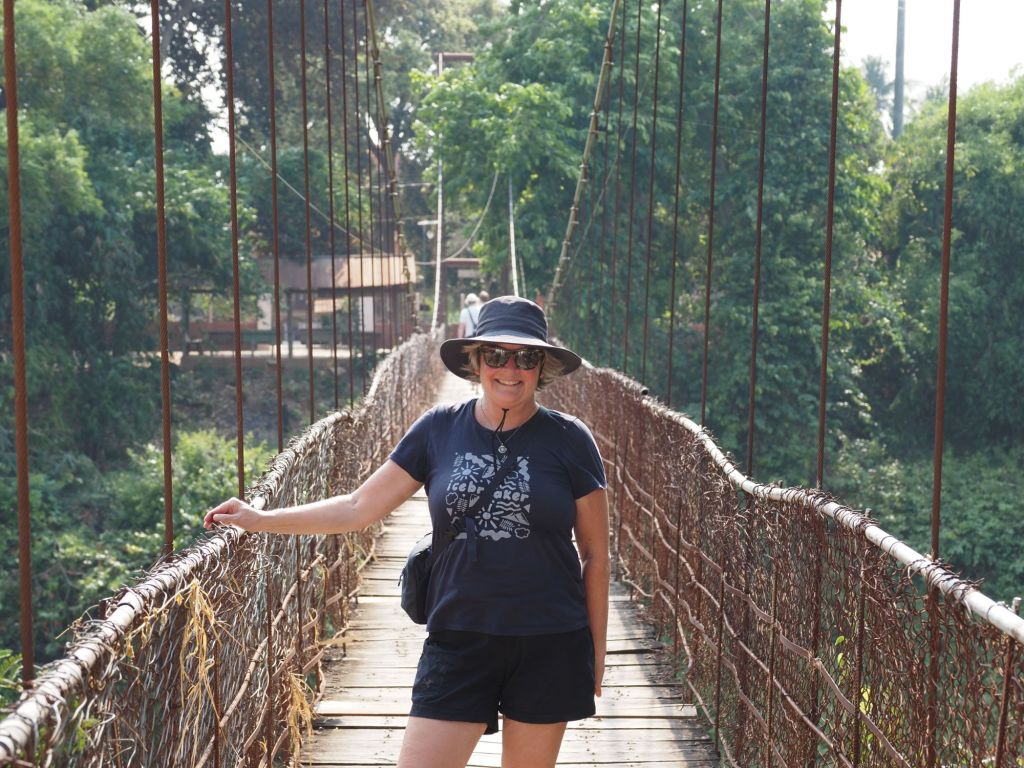
Next stop was the swinging bridge. Ket stopped along the way to show us a guava orchard.
Then it was on to the caves. Ket stopped along the way to show us a roadside barbecue stand. It was hard to get a photo, but if you zoom in you’ll see that pest control is part of the plan.
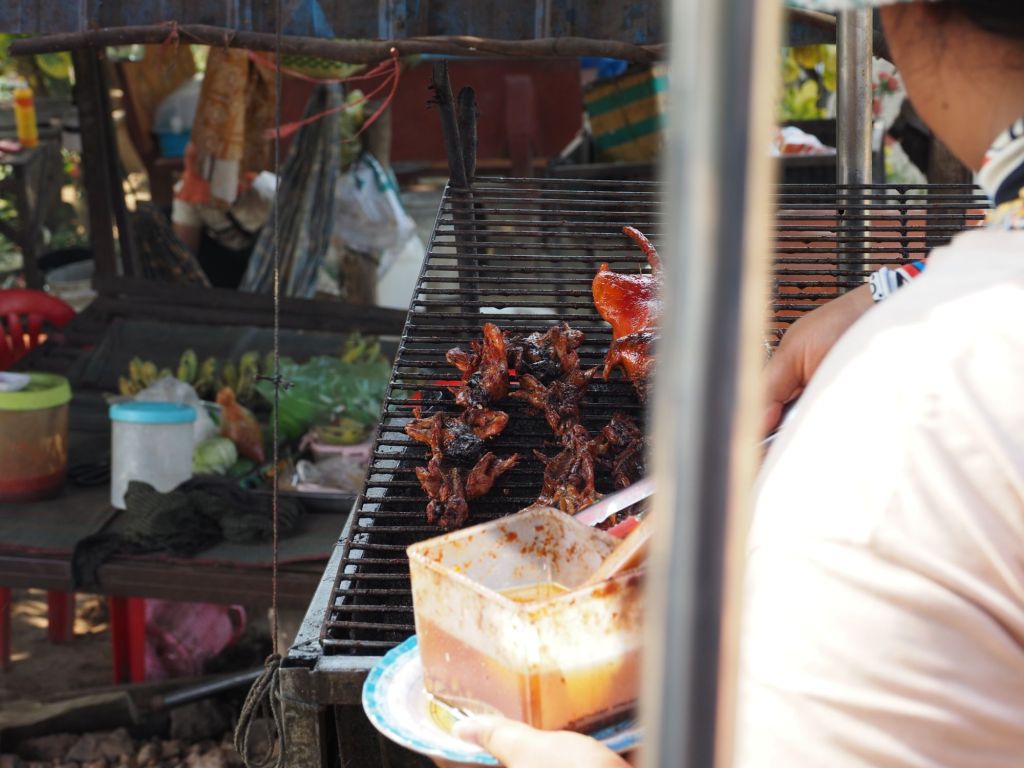
The small ones are clearly rats. We asked what the big one was – it was at least 5 times as big. And the answer? “Rat”. Yikes.
They’re supposed to taste like chicken, but we can’t vouch for it.
Then it was back on the road to the caves. We were dropped off and shown the roadway that goes to the top – it’s too steep for the Tuk Tuk.
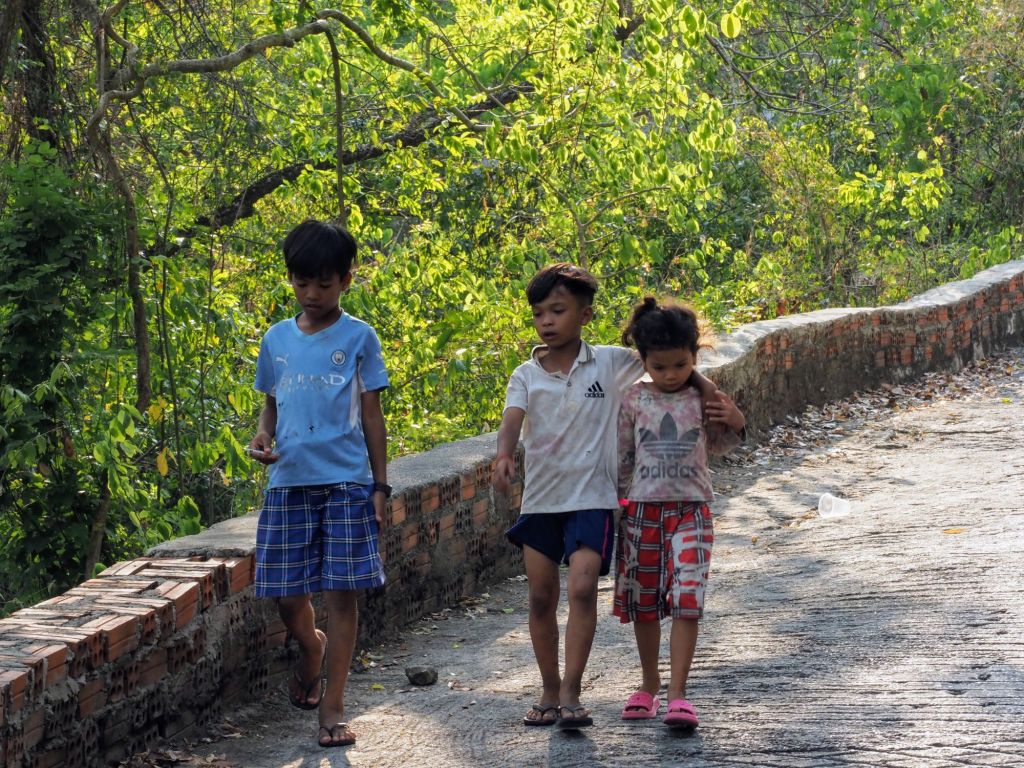
It’s a good hike, and it was nice to see these cute kids along the way.
The first cave was the killing cave. I get a visceral reaction when I say or write “killing cave”.
This was one of the Khmer Rouge killing fields. We talk more about it in the Phnom Penh post, but many victims were arrested, interrogated, tortured, taken here, and tossed in alive. It is unimaginably horrific.
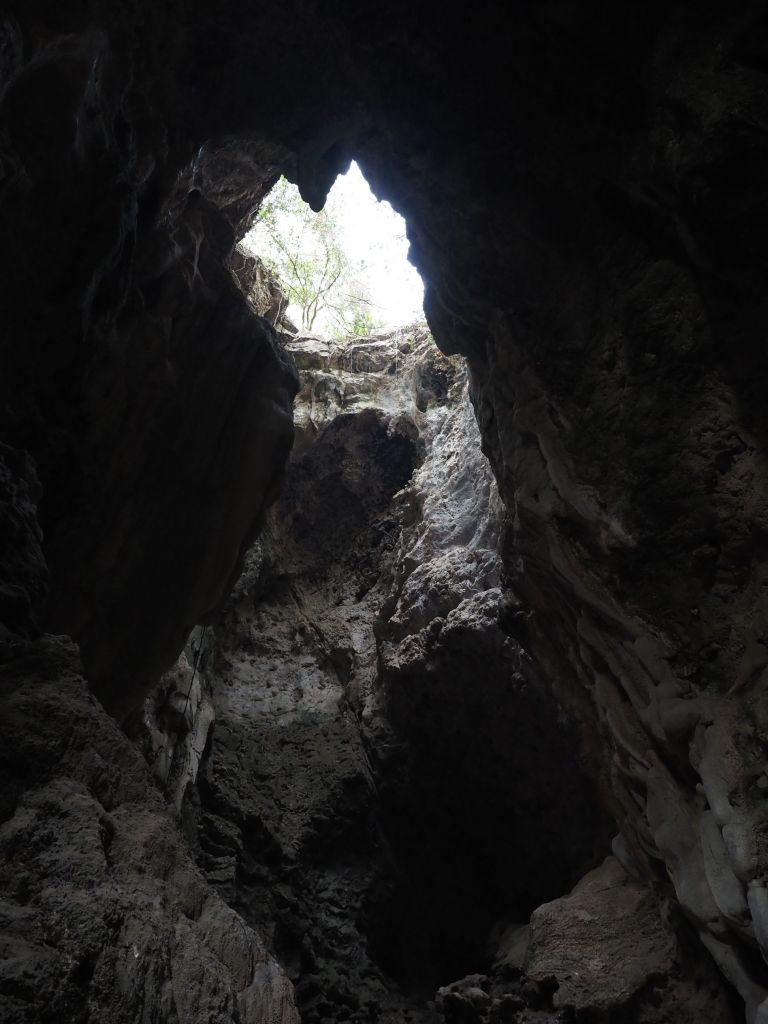
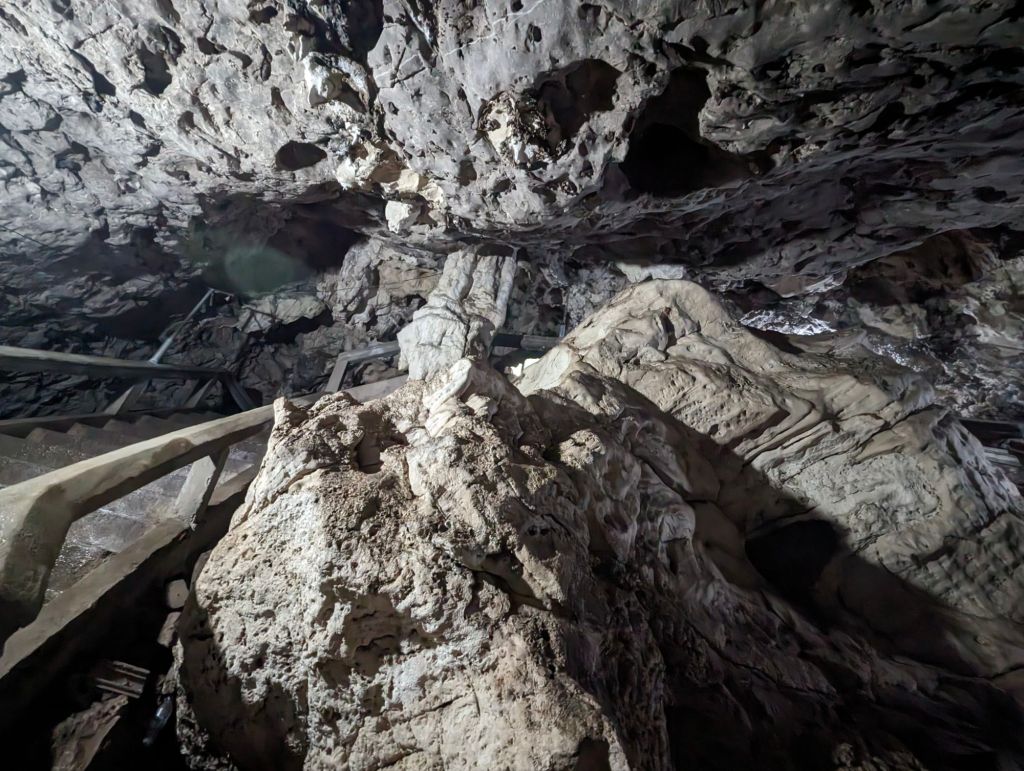
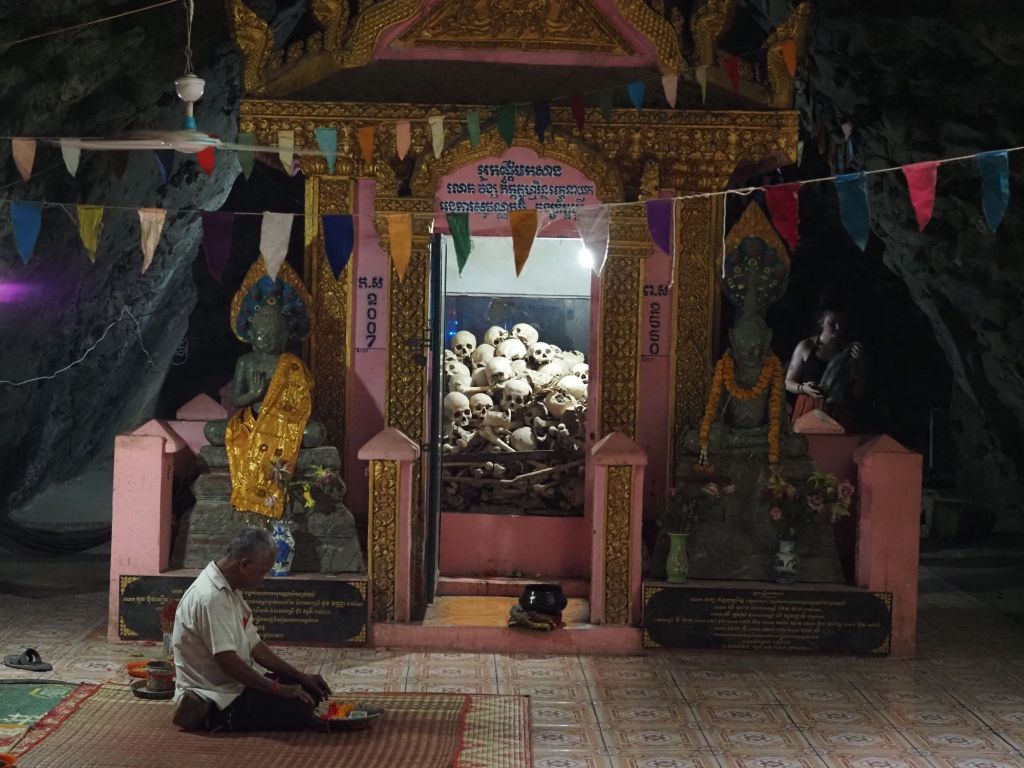
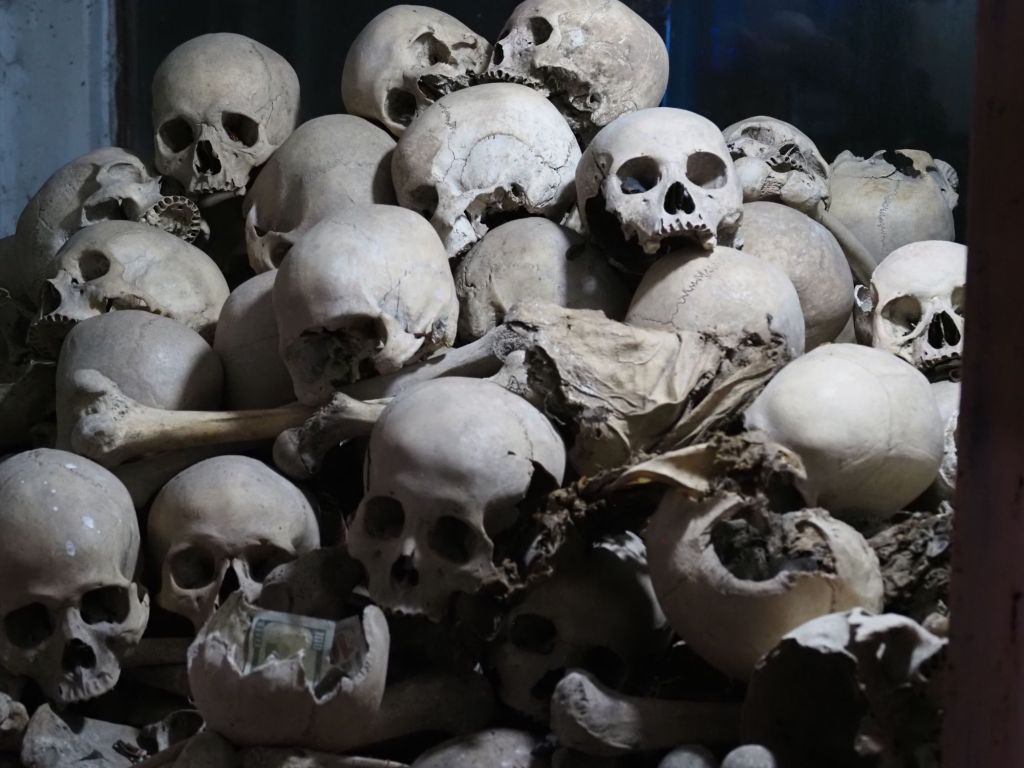
Gut wrenching stuff.
Next, and last, was the bat cave, so we hiked to the top of the mountain for photos before taking the steep staircase down. The best view of the bats is from the bottom.
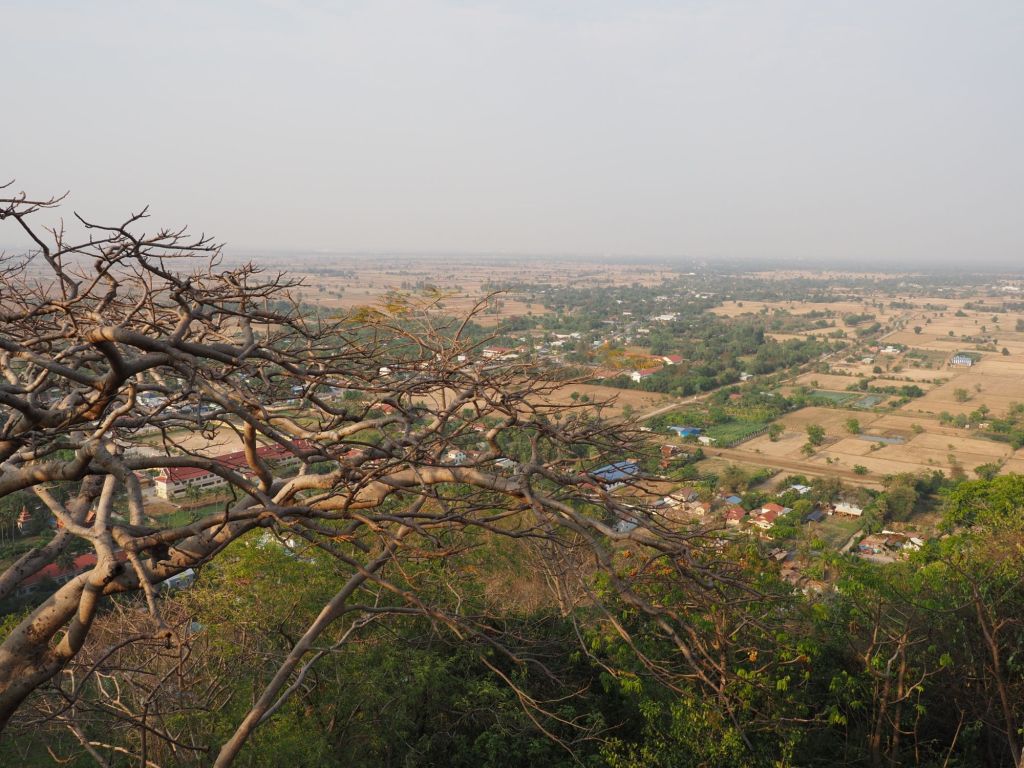
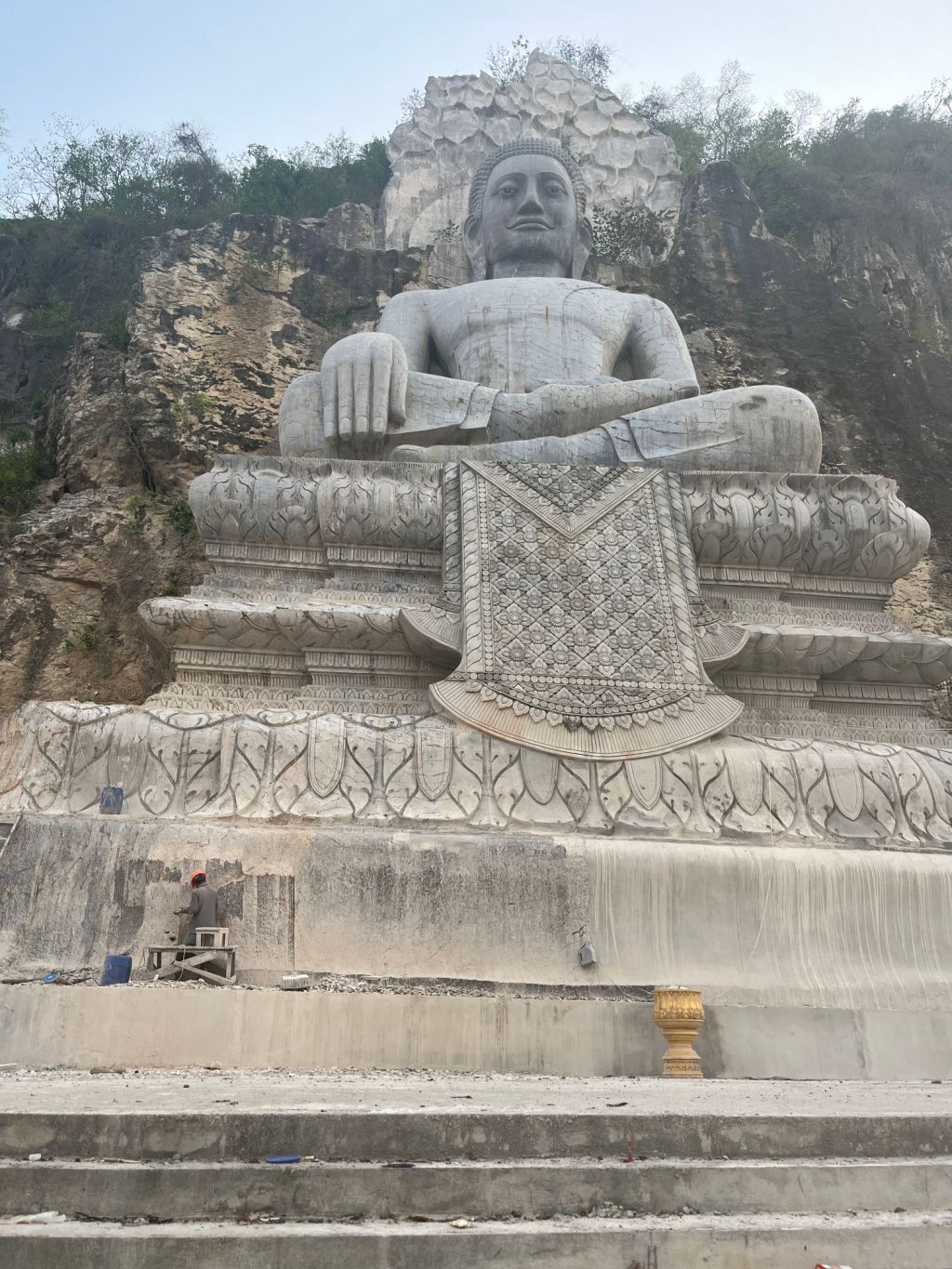
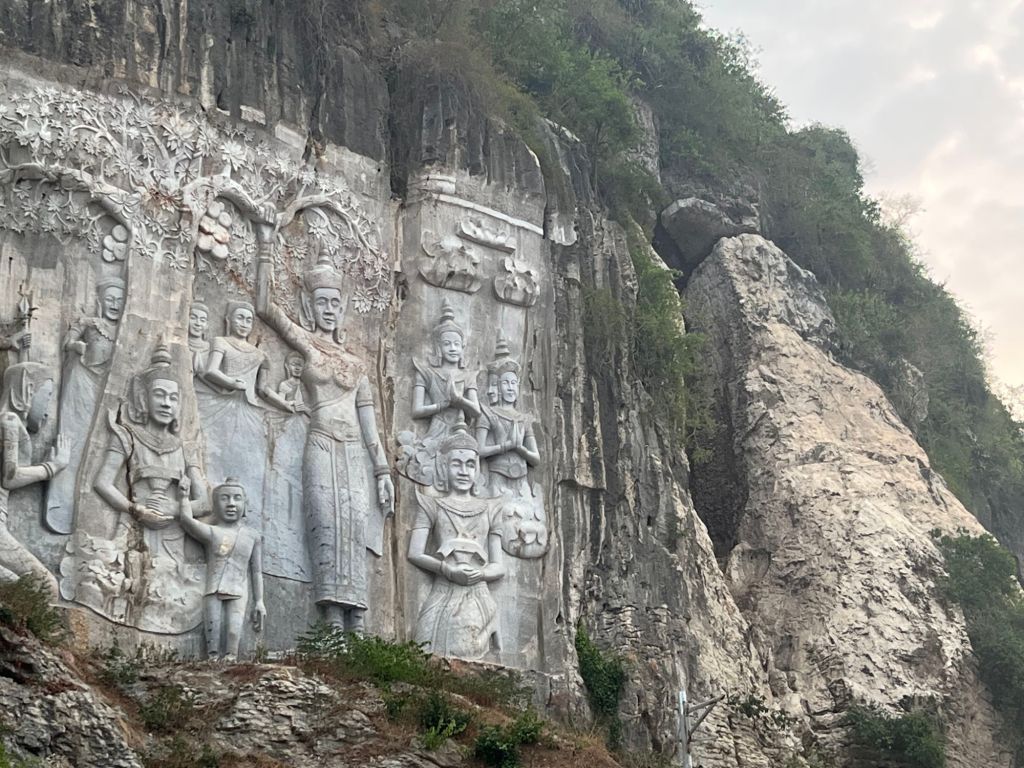
At the bottom of the mountain they are finishing an enormous sitting Buddah rock carving.
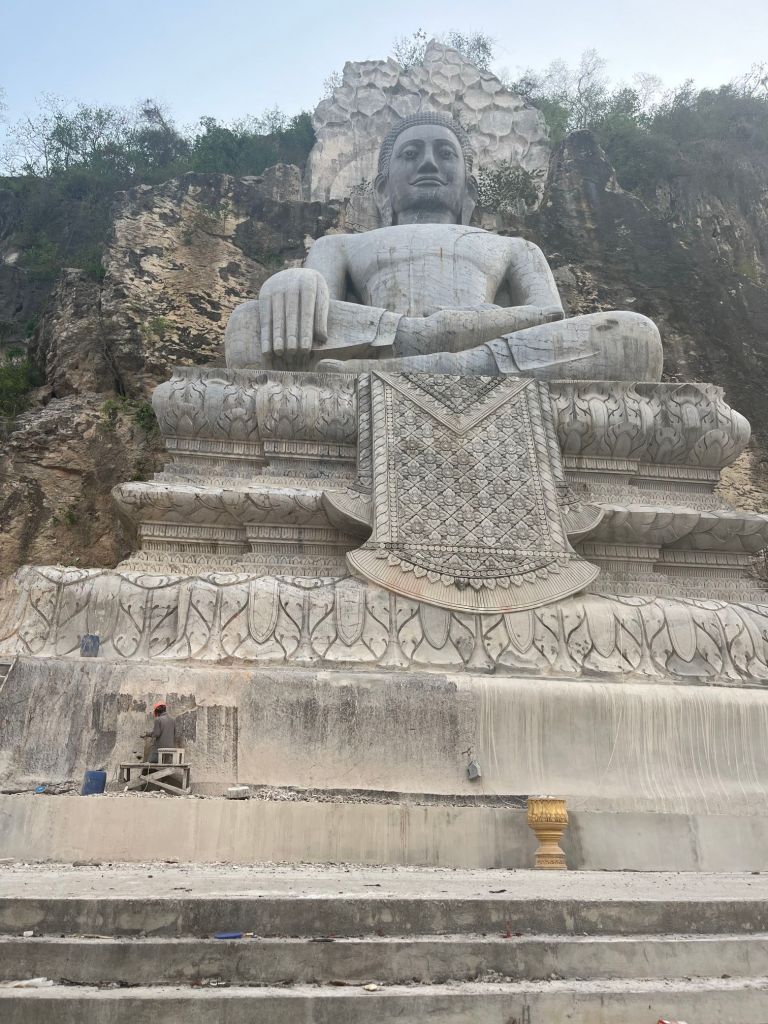
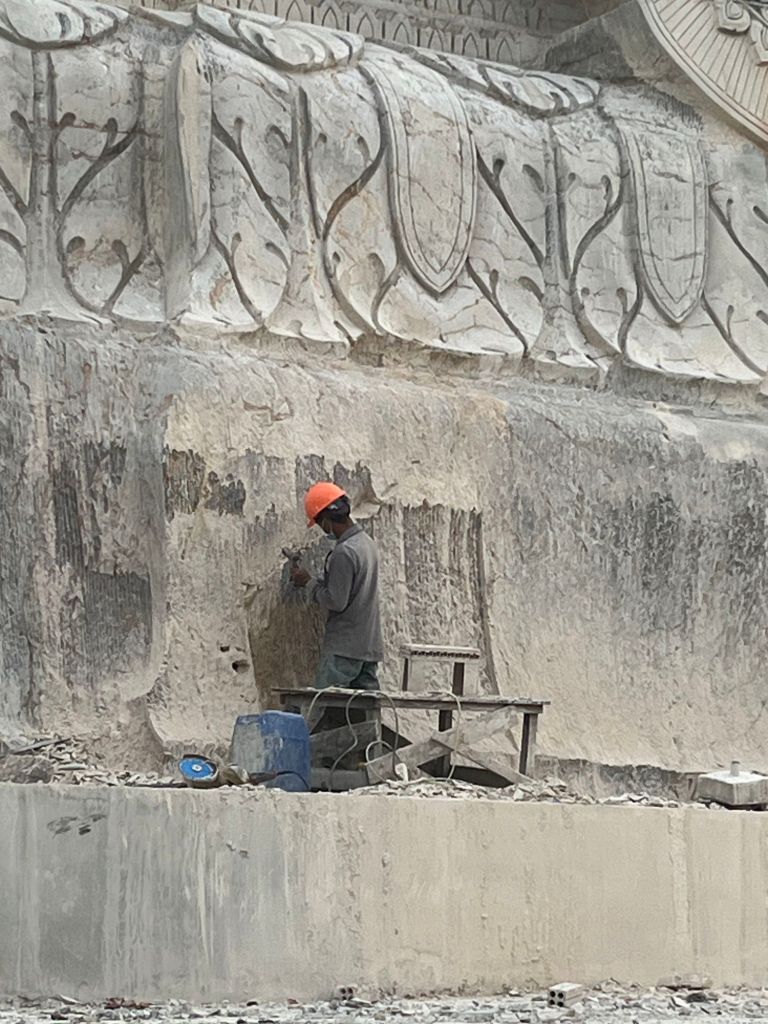
The bat cave is to the right of the Buddah and other carvings.
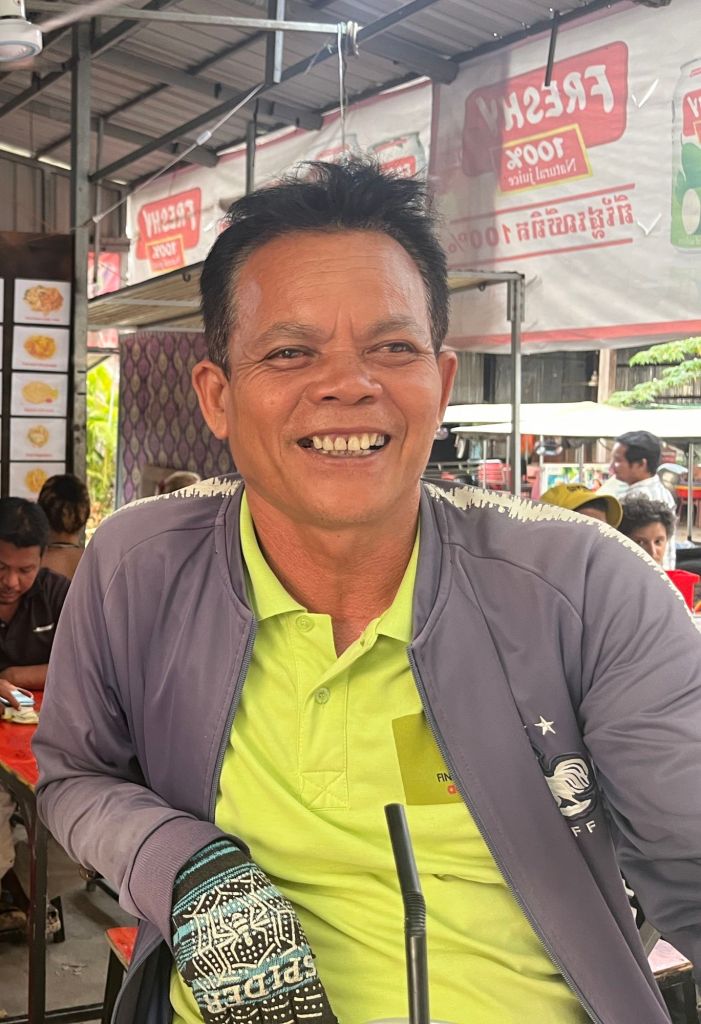
While we were waiting for dusk, when they emerge, we had a chance to chat with Ket. He was very young when the Khmer Rouge came to power. He and his family were thankful they were simple farmers at the time. They survived, living beneath a large tree, gathering and growing their own food. They were not targeted.
I suppose in the eyes of Pol Pot they were living the perfect life.
Ket is a really interesting fellow – great story teller, very charismatic, speaks very good English.
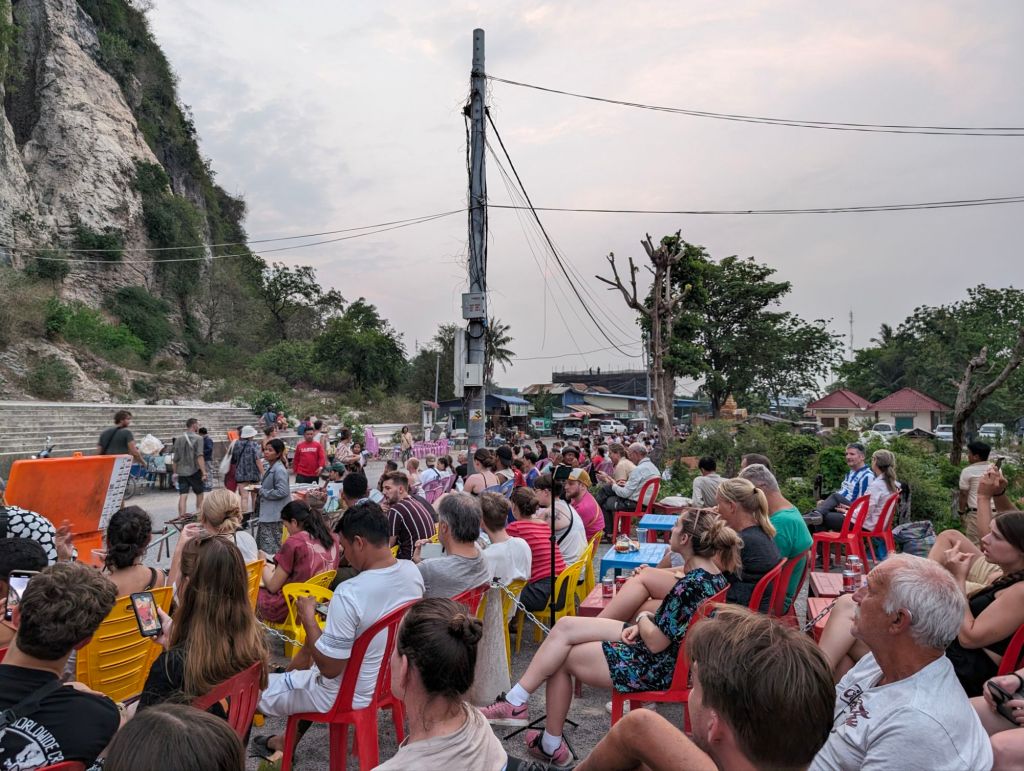
We were told there are 15 million bats in the cave. They poured out at this rate for over 20 minutes!
We saw very few mosquitoes in Battambang.
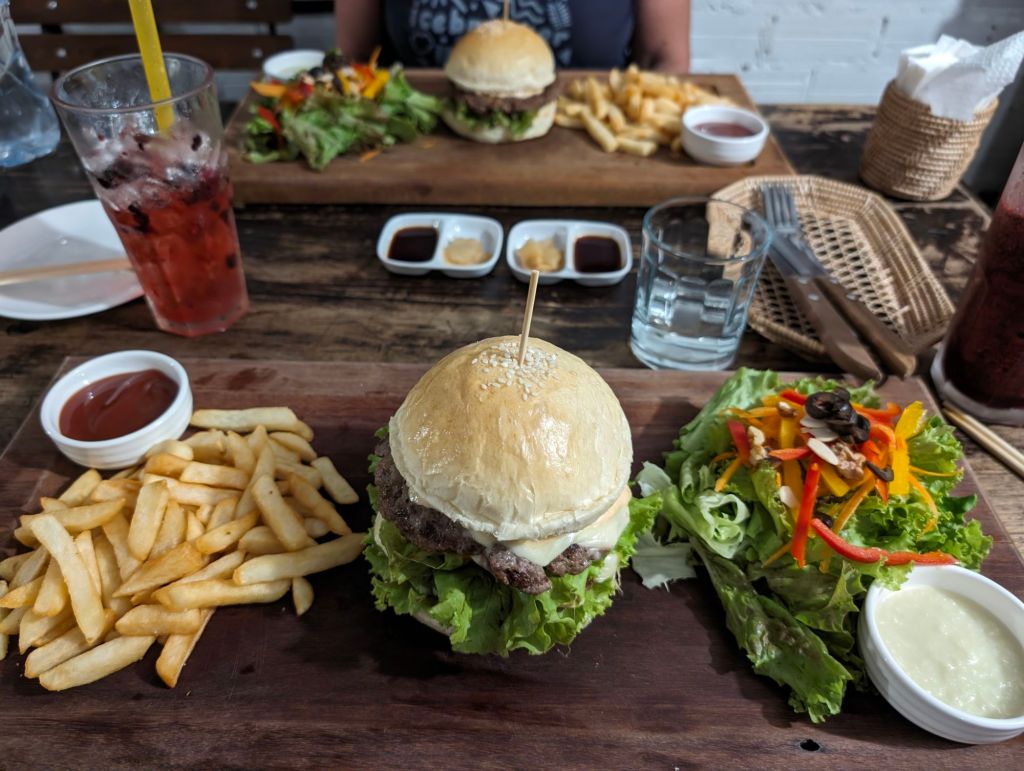
On the way back to the hotel, we stopped at The Gecko for burgers and sushi. The burgers were so good we forgot to photograph the sushi.


Leave a Reply