First I’ll bore you with some family history and describe our journey from Ipoh to KL. Or skip ahead for the food tour section.
My grandfather grew up in England and graduated as a railway engineer. Given the dominance of rail at that time it was a good occupation. He joined the British Colonial Service and left England: working in Cuba and then Malaya. Both locales were reliant on the railway to get resources to world markets. He met my grandmother in Cuba, they married and started a family. In 1939 my grandfather took a position as signals engineer for the Federated Malayan Railway in Kuala Lumpur. (btw, a signals engineer is responsible for the safety of the trains and track)
My grandmother followed shortly after with two young sons in tow (my uncle and my father). All was well for 2 years, until the Japanese invaded and forced their evacuation to Singapore. As the invasion approaches, my grandmother and her two boys left on one of the last ships to sail out of Singapore (ironically, the CP’s Empress of Japan). My grandfather stayed to assist the commonwealth troops keeping Singapore safe.
Singapore fell to the Japanese on February 15, 1942. My grandfather and many others were prisoners of war until the Japanese surrender on September 12,1945.
The family reunites in England.
My grandparents return to Malaya soon after a short convalescence for my grandfather. Many of the colonies had been impacted during the war. Resources were required to rebuild. The British Colonial Service employees needed to get back to work.
Prior to our trip I didn’t know much more of the family lore than this. My grandfather was not the same person after the war (ptsd) but his war experiences were not shared except with one friend. Moreover, while my grandmother returned to Malaya with her husband, the two boys went off the boarding school in England. Thankfully my grandmother wrote about parts of her life so there are documents to read (and reread).
Only later in my life do I have an appreciation for the bond between my father and his brother. They were each other’s family during the very long absences of their parents. And it goes a long way to explaining my father’s parenting style (I was raised to be independent and he was not very demanding of me – in a good way). I never dared ask my grandmother what is was like leaving two boys at boarding school and taking a ship half way around the world. God, that must have been heartbreaking. No winners in that one.
So this is a pilgrimage of sorts for me. I am tracing footsteps and learning about Malaysia after hearing bits and pieces from my grandmother and rereading her journals. My father was very young when he left Malaya (almost 5 years old) and really had no memory of Malaya. My grandmother writes that when it was time to leave KL and move down the coast to Singapore the two boys were upset that they had to leave their Christmas presents behind (including a toy train set that was the cat’s pyjamas that Christmas).
Onto a bit of Malaysian railway history to set the scene.
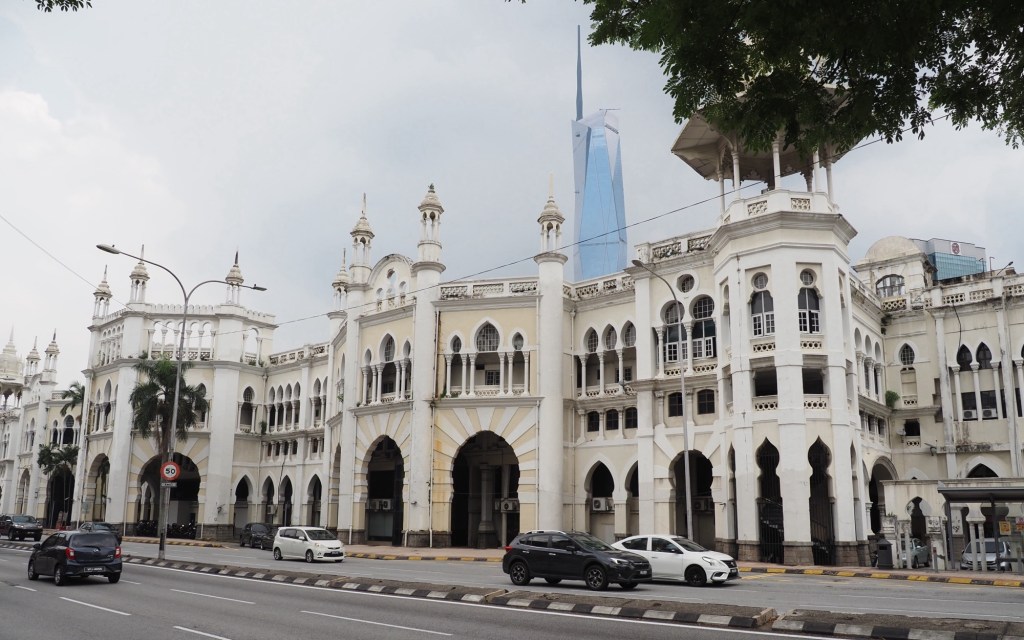
The first railway is built in 1885 to move tin to port. A few years later more rail infrastructure is built to support expanding tin and rubber industries. Both Ipoh and KL are important tin mining towns and soon benefit from these rail lines, rail stations and adjoining hotels. Their rail stations are designed in a colonial era style that combines European and Islamic architectural styles. By 1903 the rail line links Singapore with KL.
Fortunately, KL and Ipoh have retained their magnificent heritage train stations. Unfortunately, both train stations are showing their age and the adjoining hotels are closed.
Today we start at Ipoh and will disembark at KL’s (old) main station.
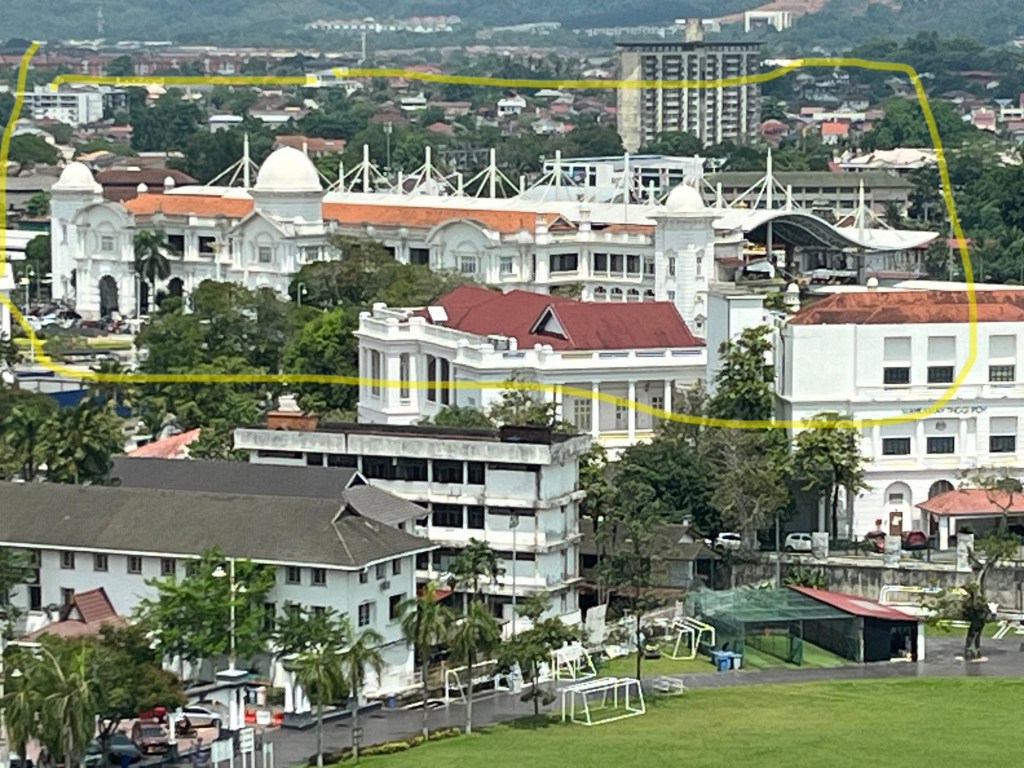
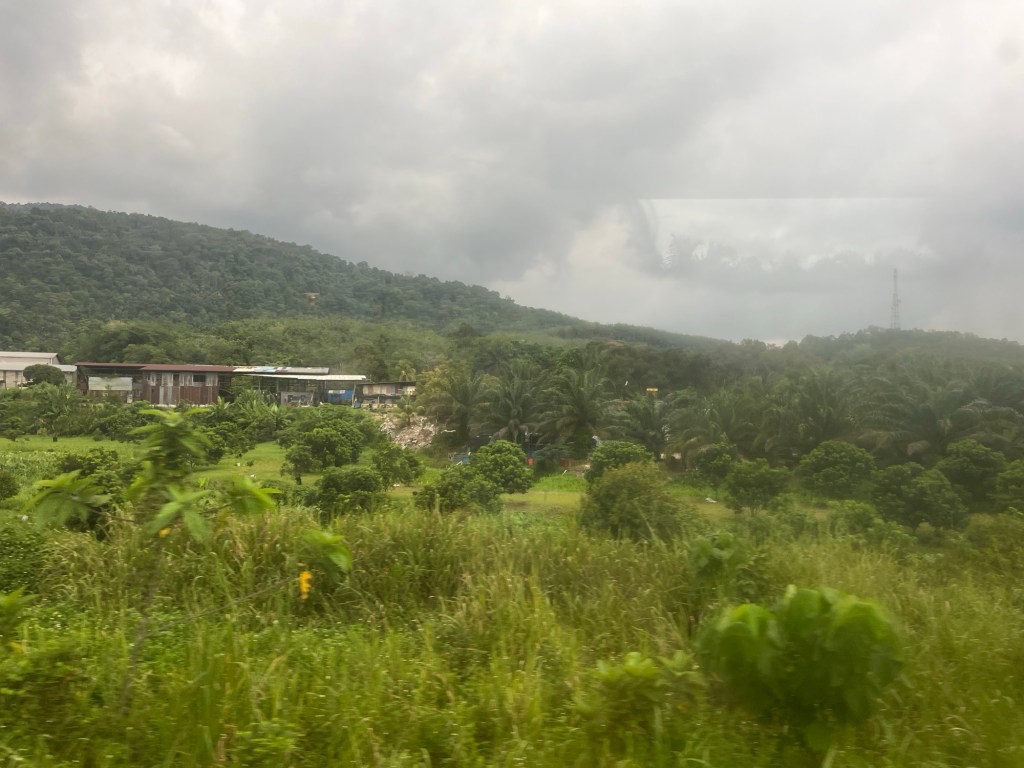
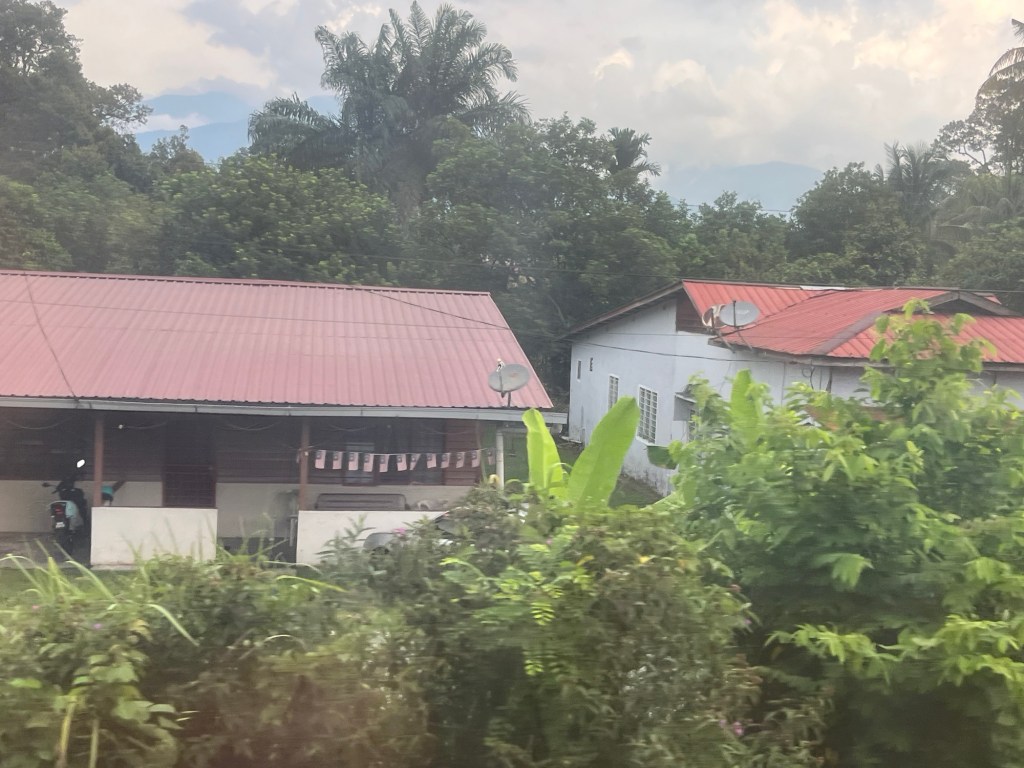
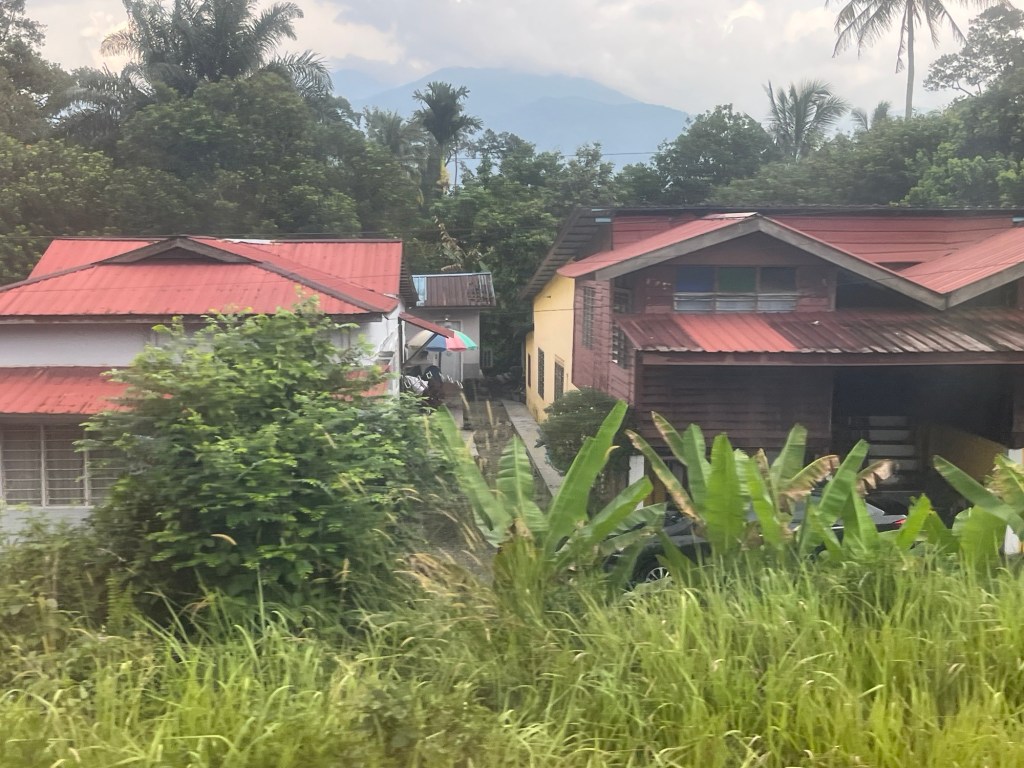
We travel on electrified fast rail. The trip is about 2.5 hours. Here are a few photos taken from the train ( not great quality).
We disembark at KL’s old main train station. The station is no longer the main hub but is an option for high speed train passengers. My guess is that fully closing this station would be politically messy without a future plan for the site.
Inside the station –
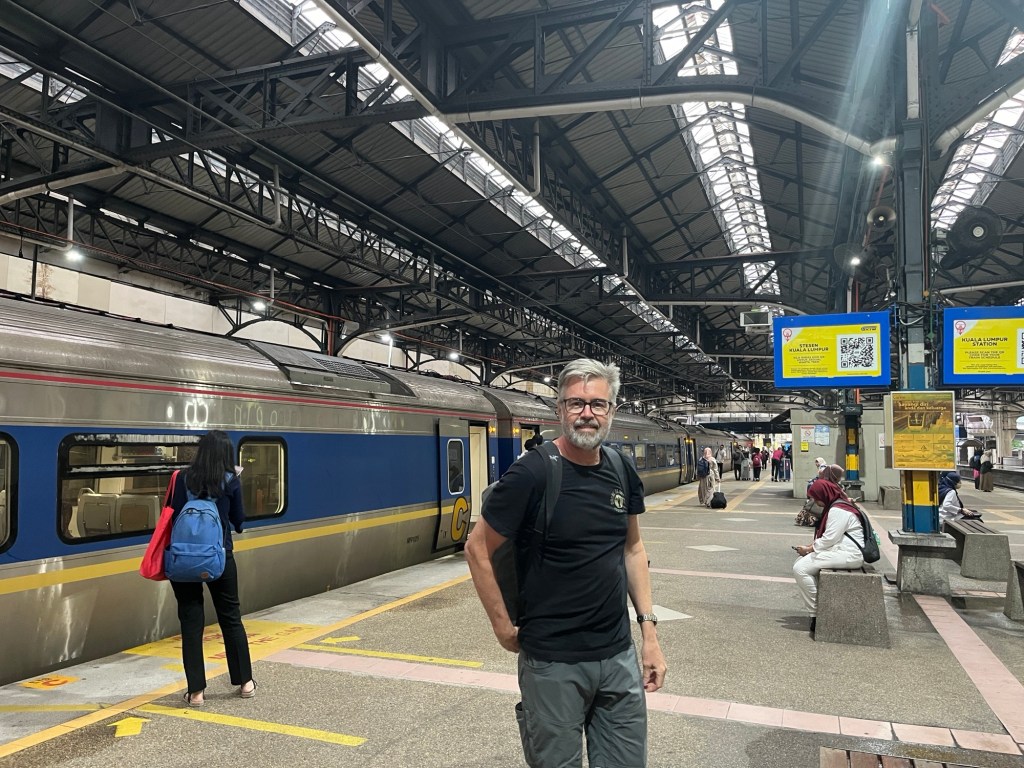
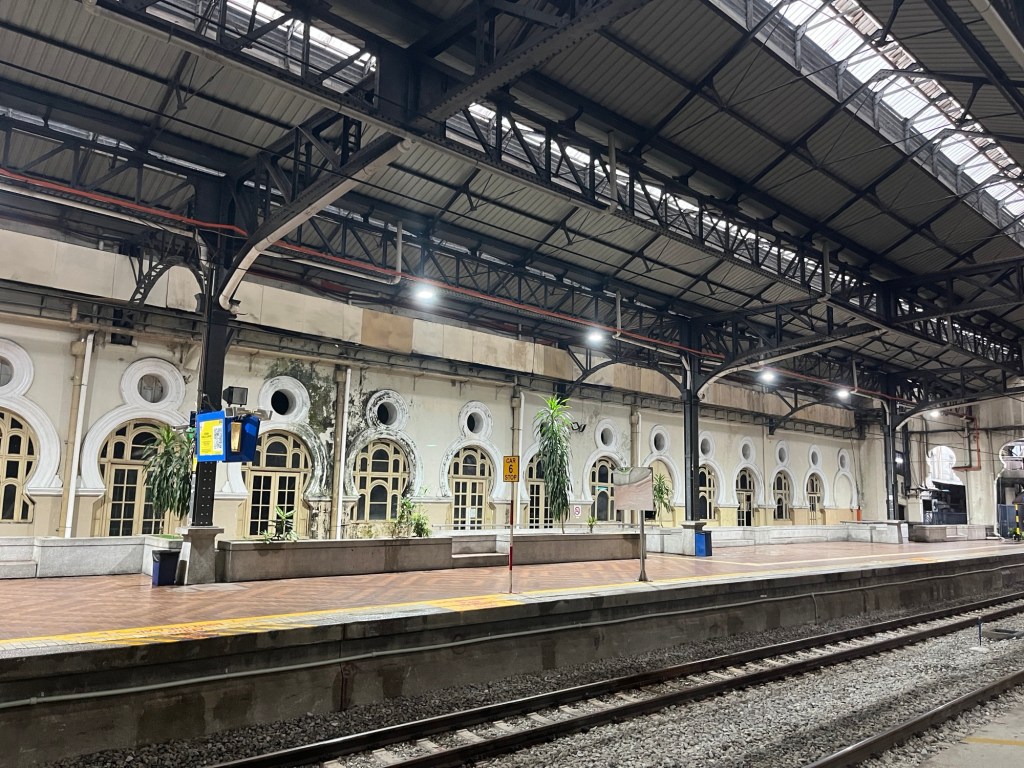
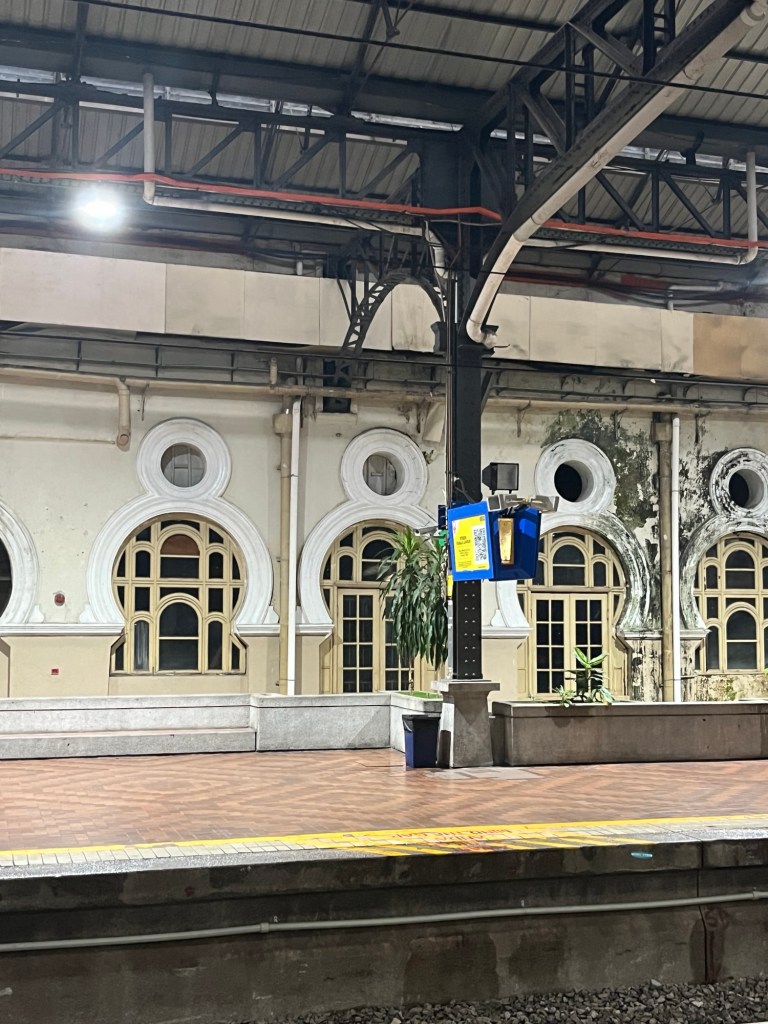
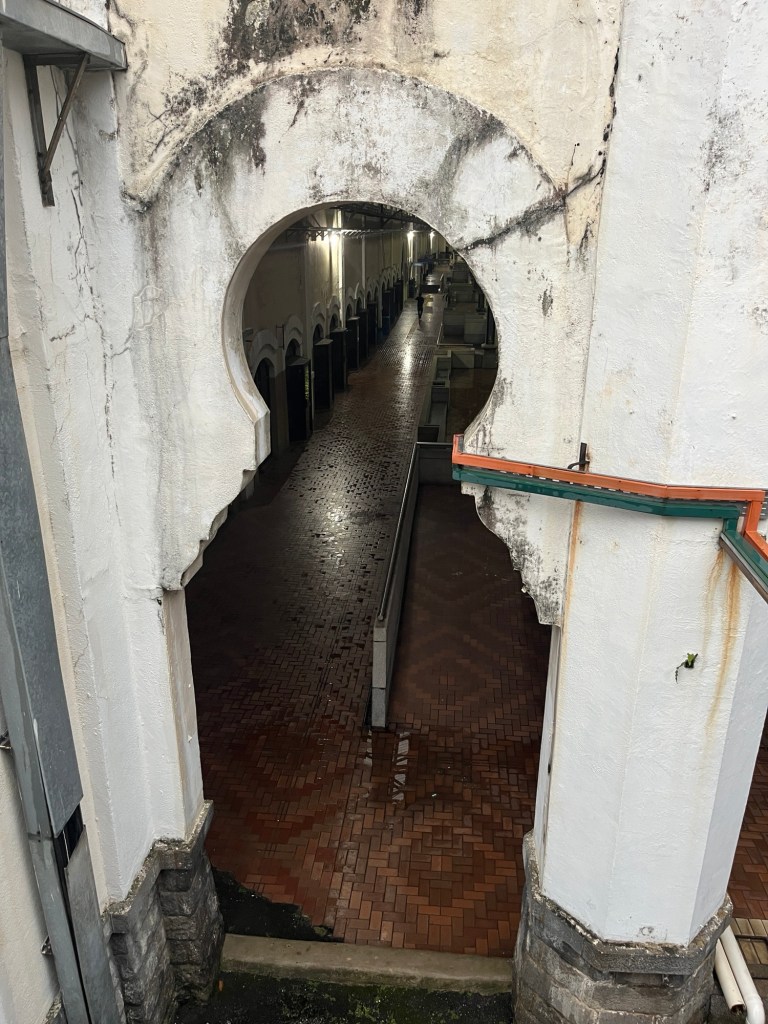
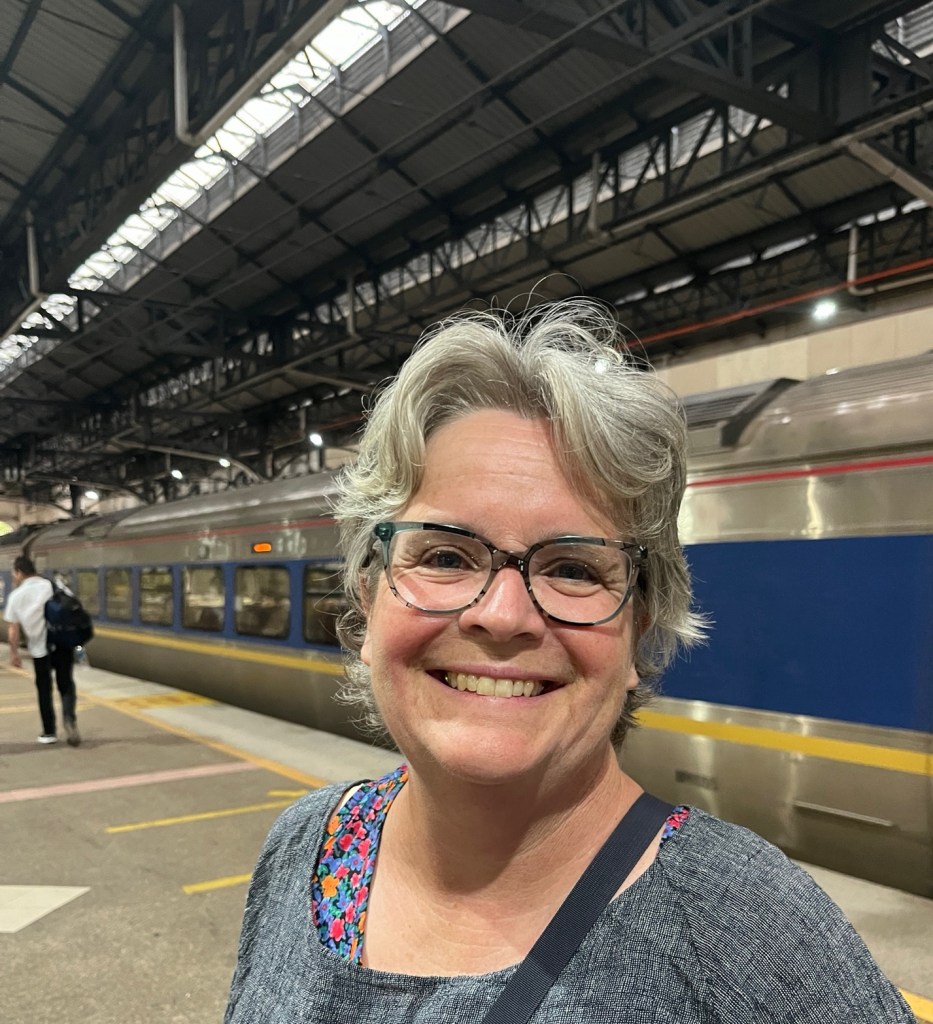
My grandfather would have spent time in this place. We take a few minutes and soak it up.
There seems to be citizen interest in renovating or transforming the space but a lack of political will and money to do so. One comment we heard is that the government likes shiny new investments over heritage. Meanwhile KL’s station is aging not so gracefully.
By comparison, the metro infrastructure is modern.
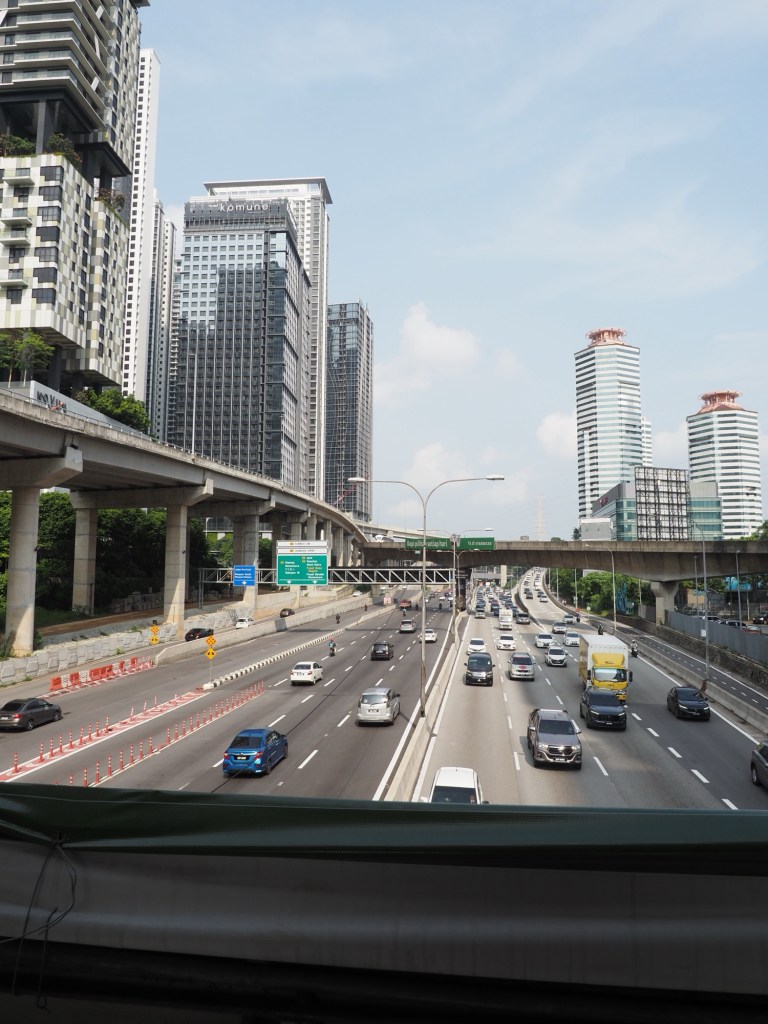
Our hotel is between two stops. Google maps makes the navigation to our hotel look easy. Nope! This first journey is with our backpacks in rush hour. We exit the metro at University station and get to street level. Mistake #1. We ought to have stayed elevated (like the photo) and taken overhead walkways that connect the metro with a large mall. Instead we are maneuvering through traffic lights and car traffic. (Taking a Grab would have been smarter!)
Eventually we get to our hotel-Komune Living. What is that saying – ‘half the fun is getting there!’ 😀
Our room is compact. The hotel offers a separate communal kitchen, lounge/games room, laundry, restaurant, pool. We surmise that some clients are full time university students. The space works for short and long term stays. It is a great concept.
Dinner time. Google shows restaurants and a food court right across the street. Again, we follow Google maps. We access the Vietnamese restaurant from the street entrance, only later realizing there is a mall entrance that is more convenient.
Here is a video taken from our hotel room the next morning. As the saying goes, a picture is worth a 1000 words.
We realize a modern city the size of KL works vertically. The metro is elevated (with underground sections) and cars own the ground level.
Food Tour
Our first sightseeing in KL is a terrific food and cultural tour with Manjeet: booked through ‘withlocals’. We are meeting at Central Market (next door to the train station).
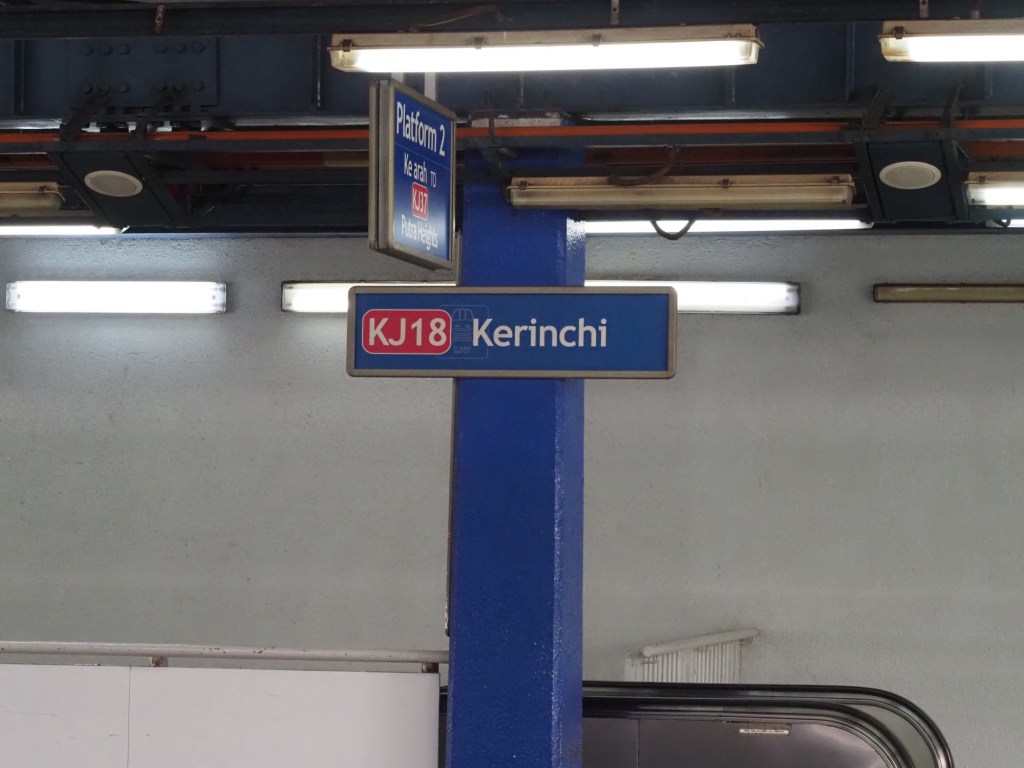
So it is back to the metro. This time we ignore Google and follow the flow of commuters to the other station-Kerinchi. This route is more straight forward. (On our third attempt we further optimize the route: to about 15 minutes 👍.)
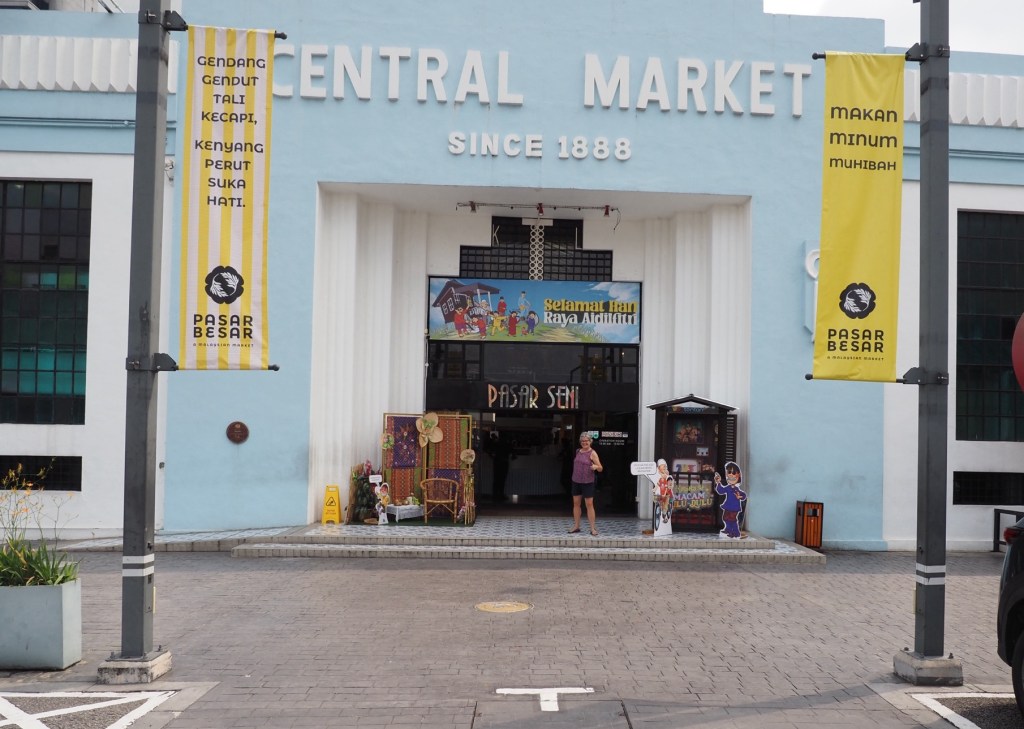
Hint: don’t have breakfast if your food tour starts at 11am ✅
For the next three hours we are walking around the old section of KL including Chinatown – stopping to eat and learn cultural tidbits.
We have noodles in the market and then it is street food, including savory pastries.
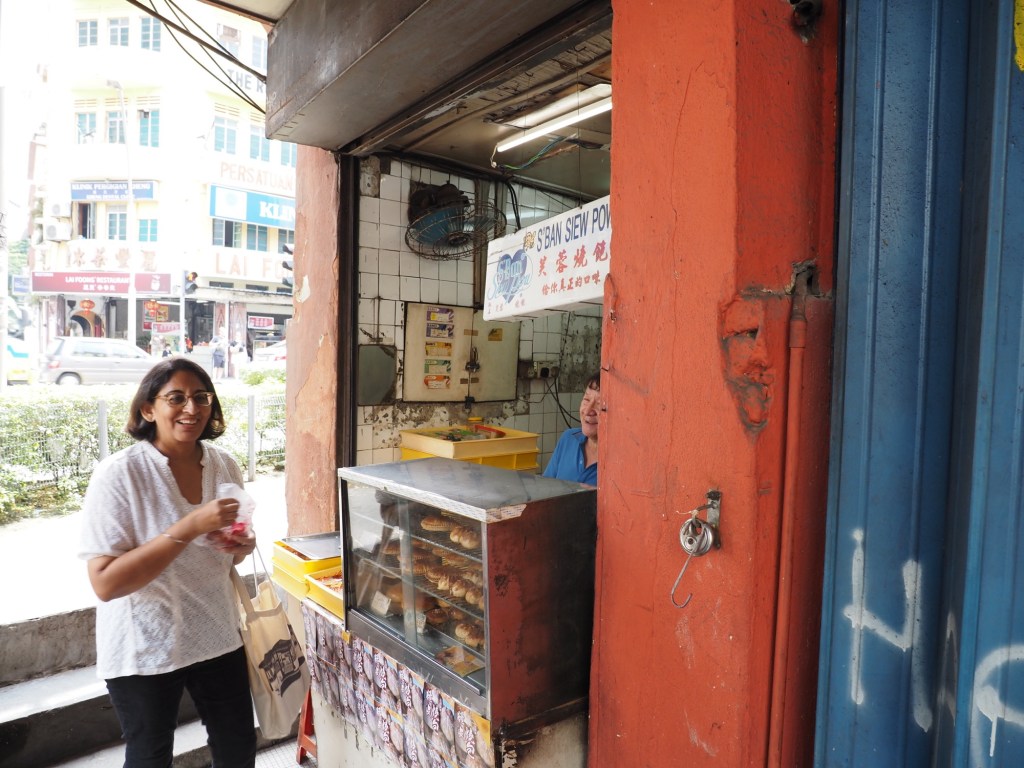
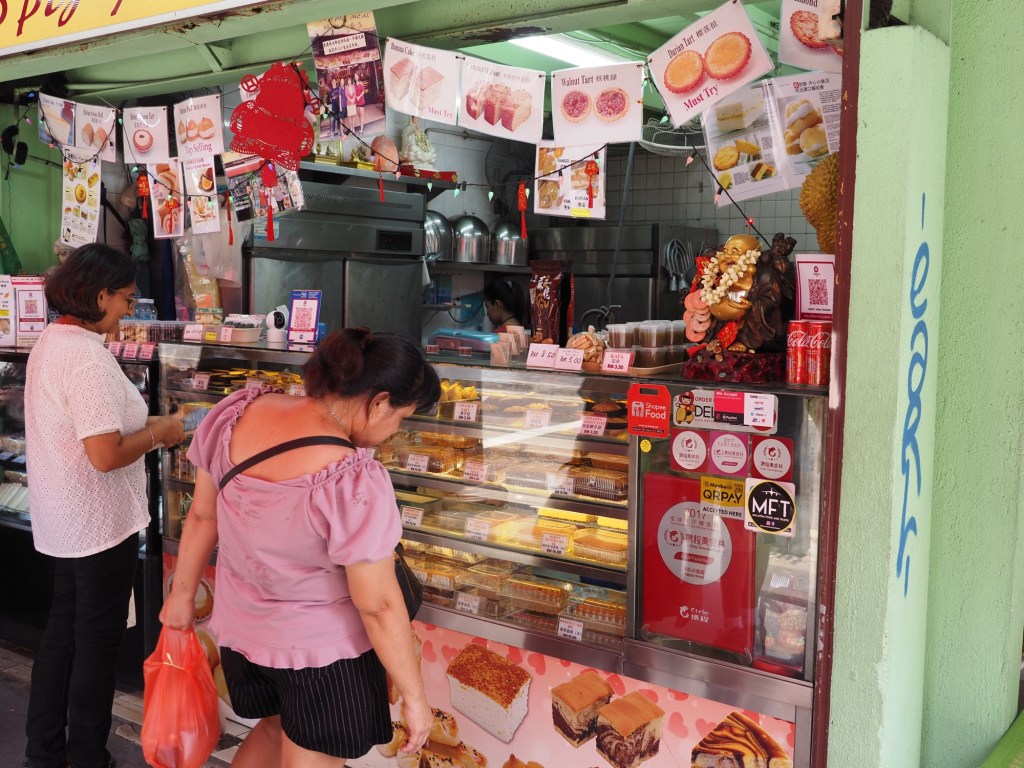
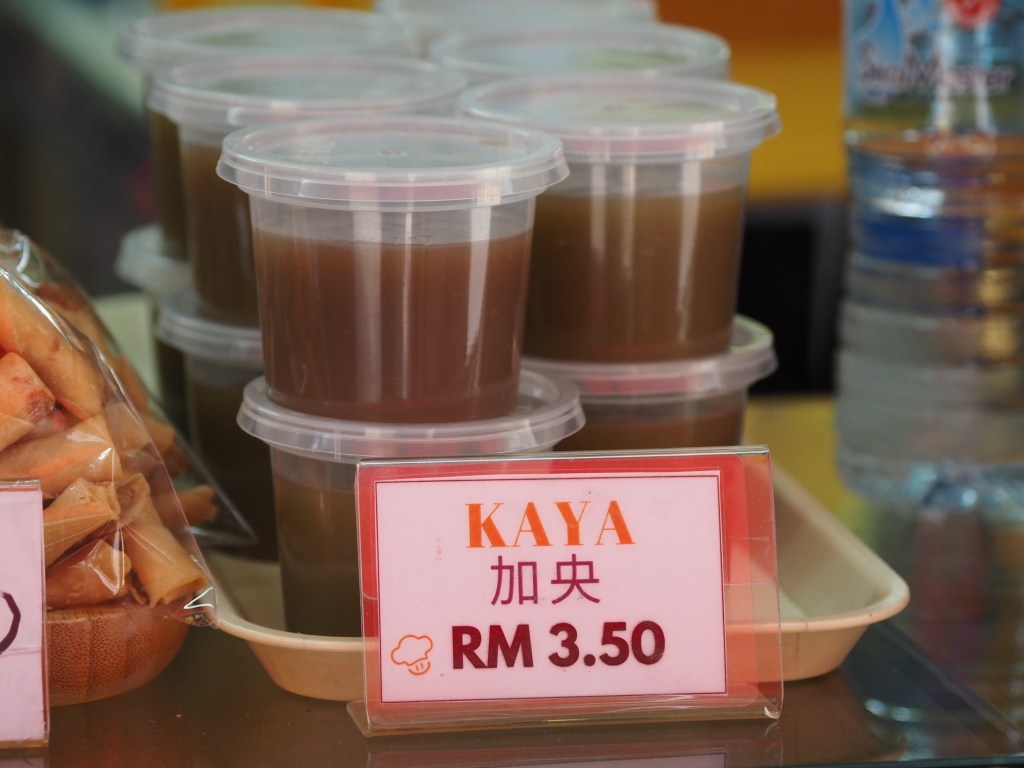
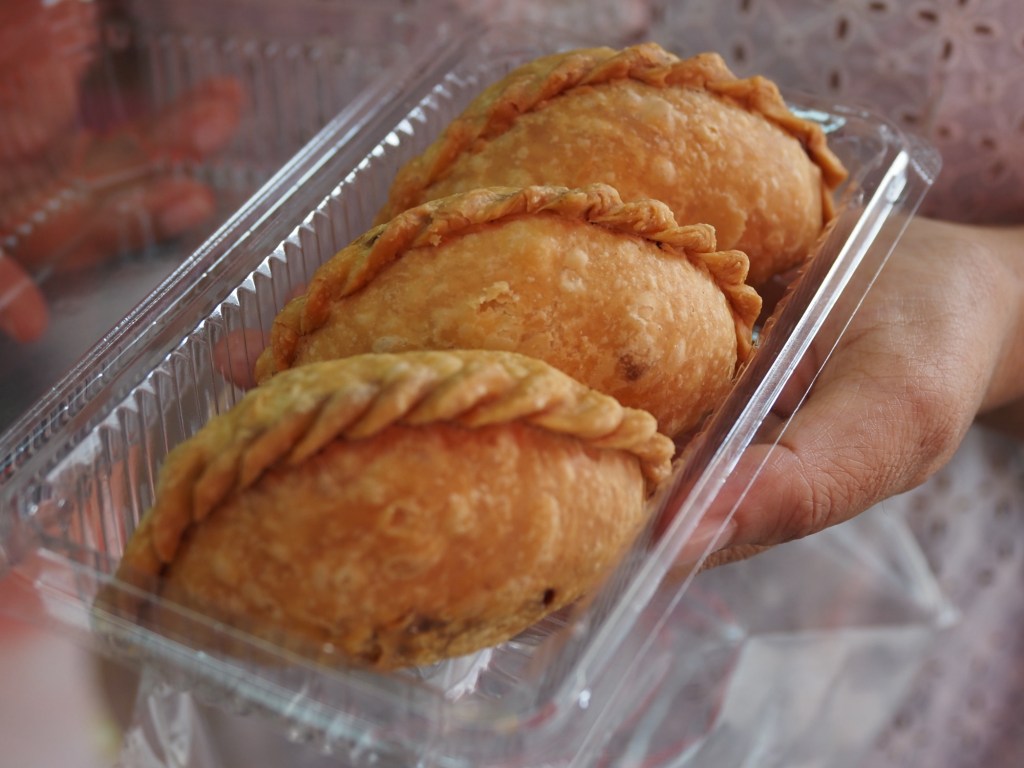
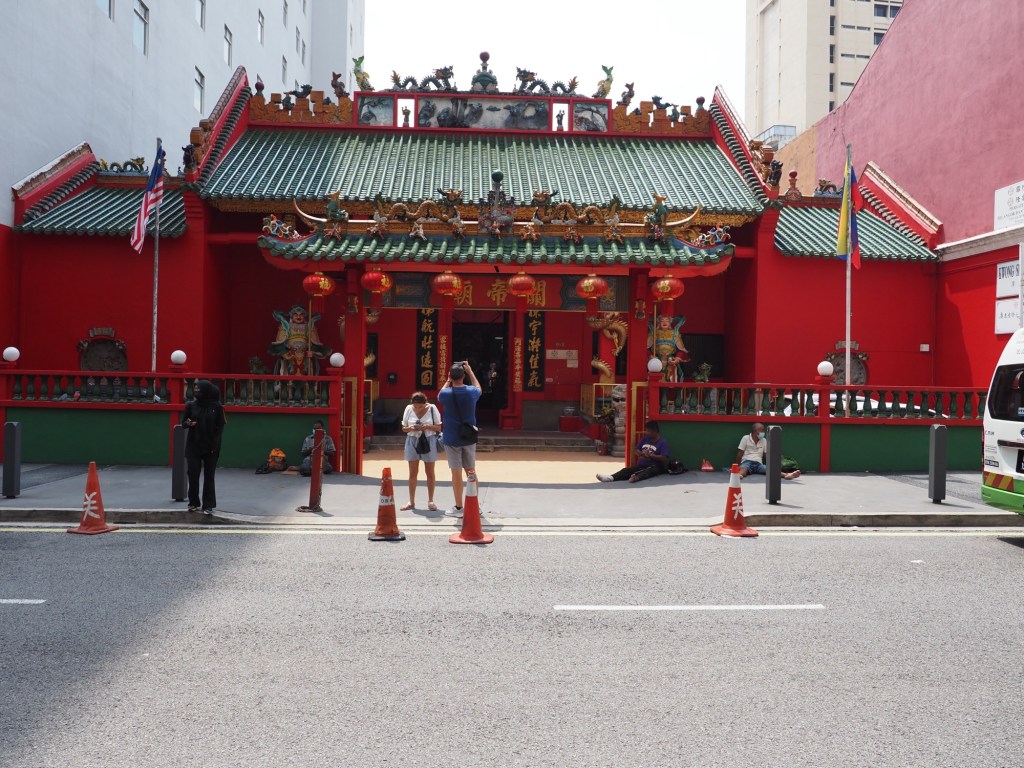
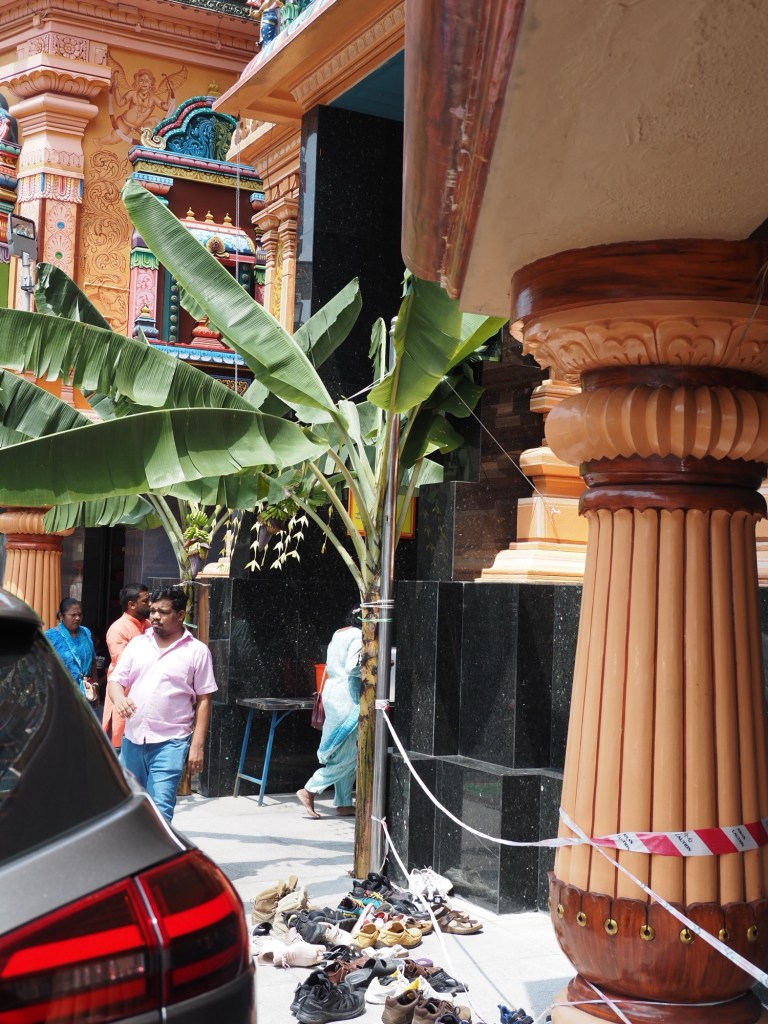
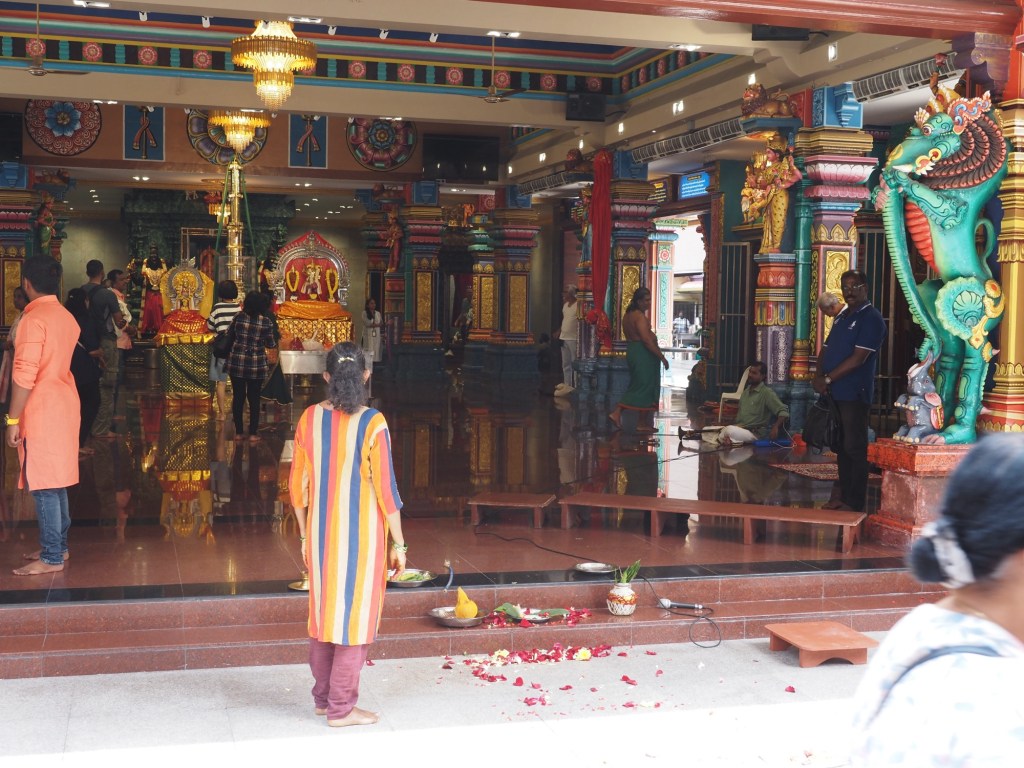
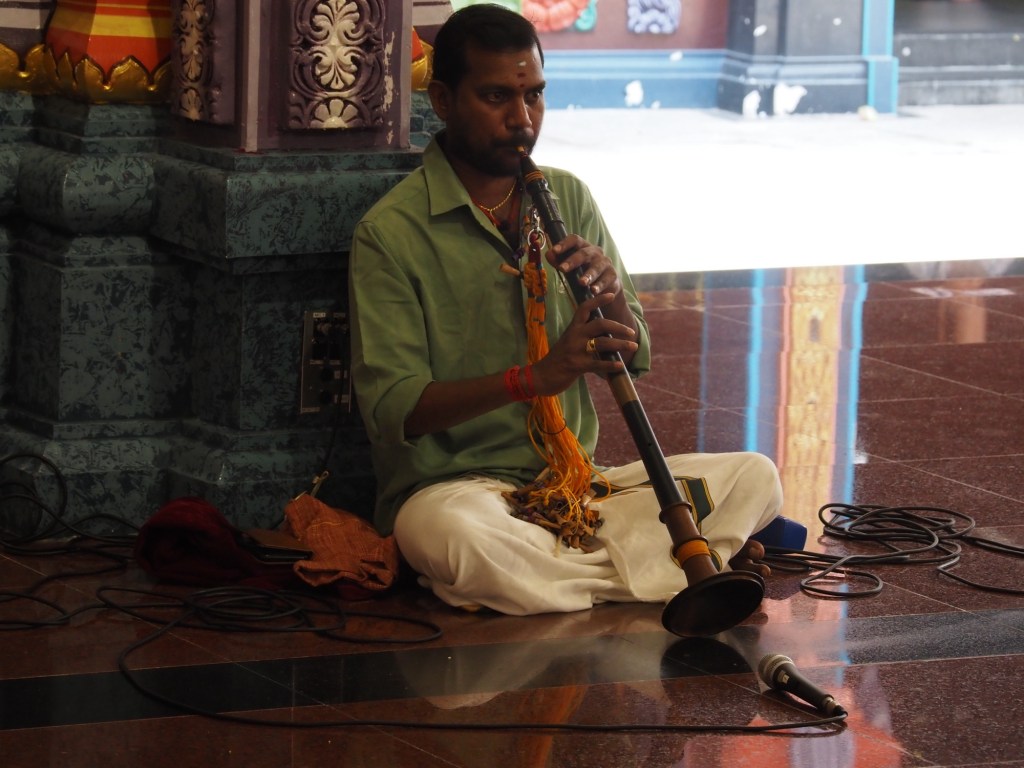
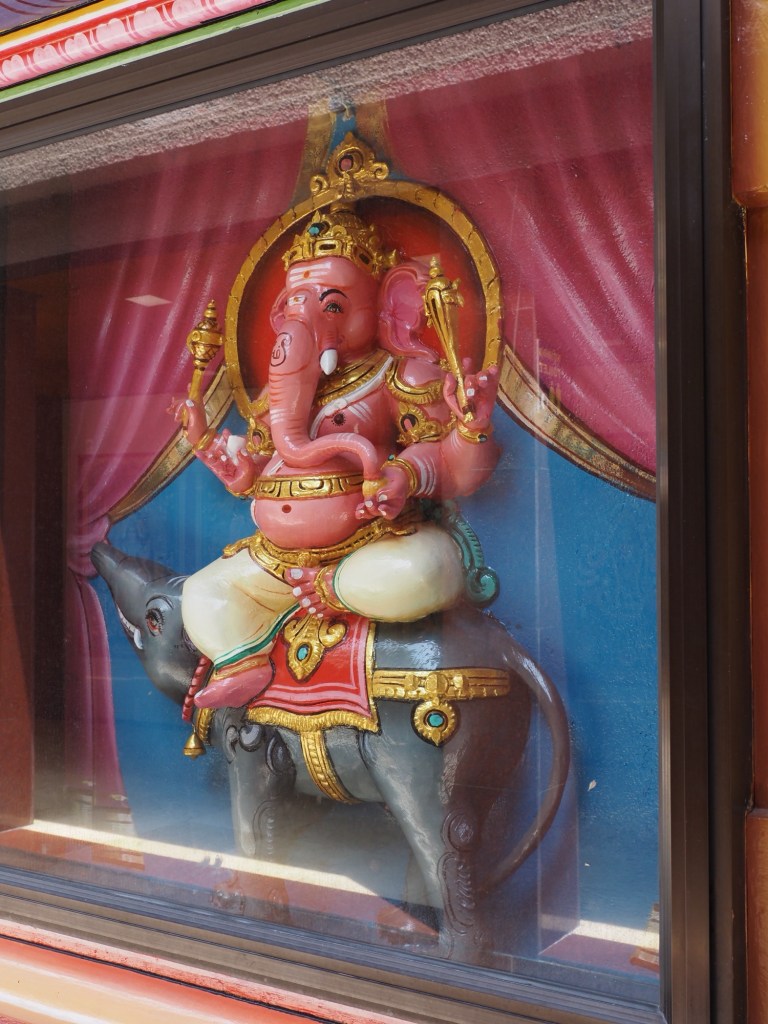
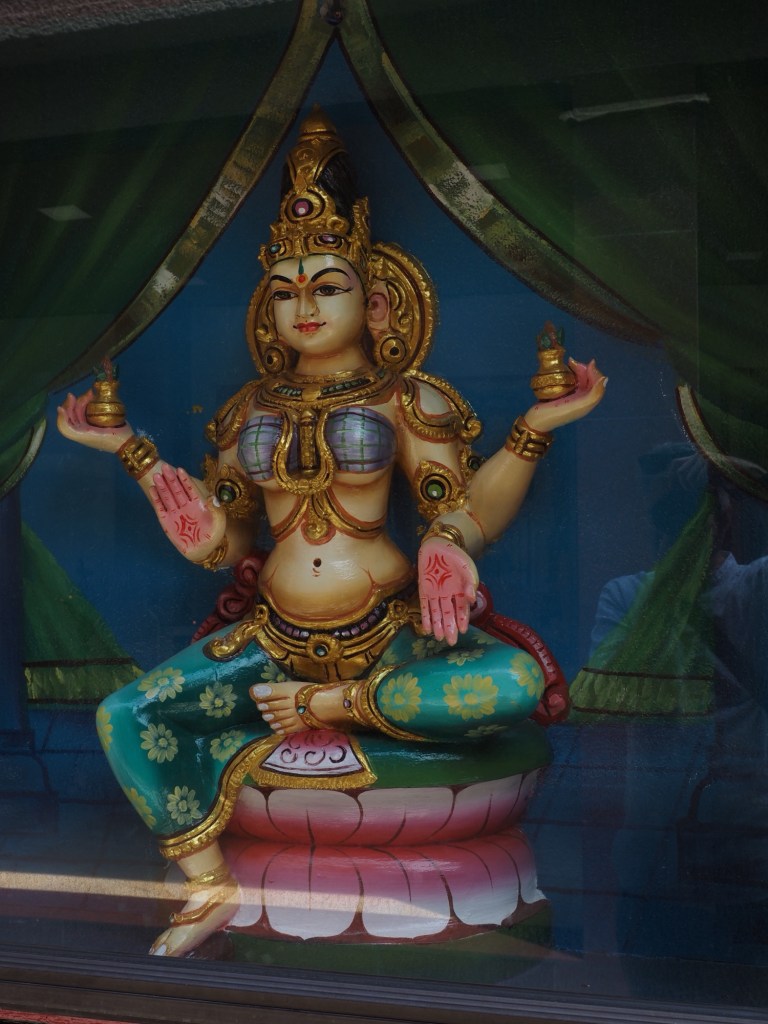
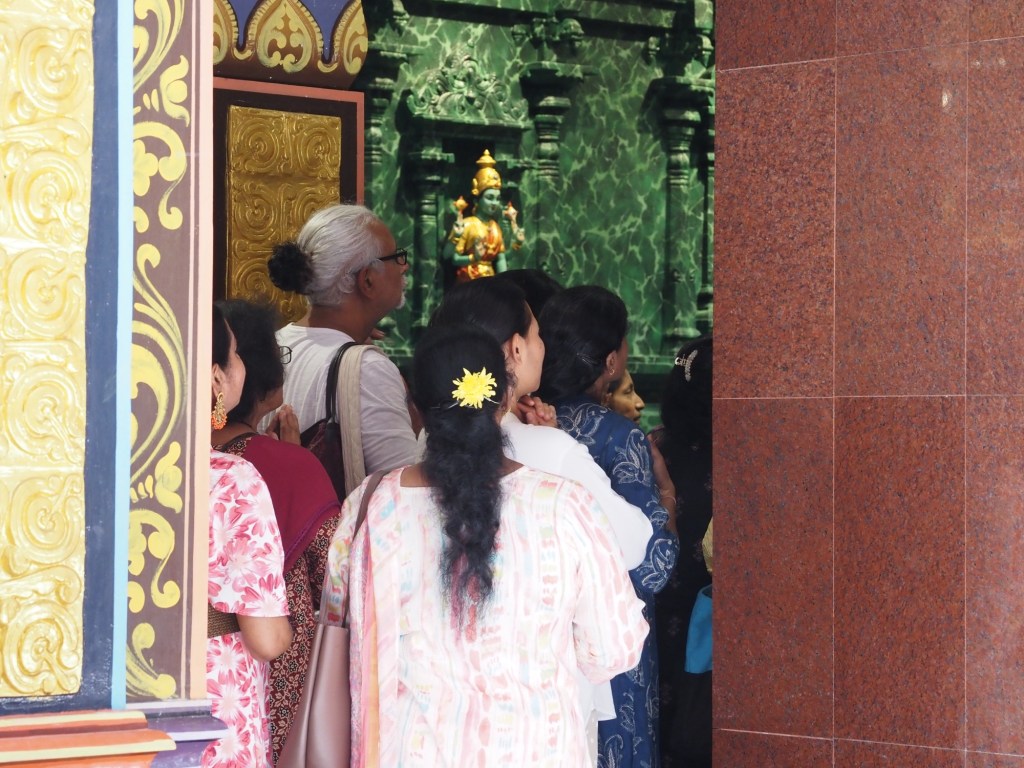
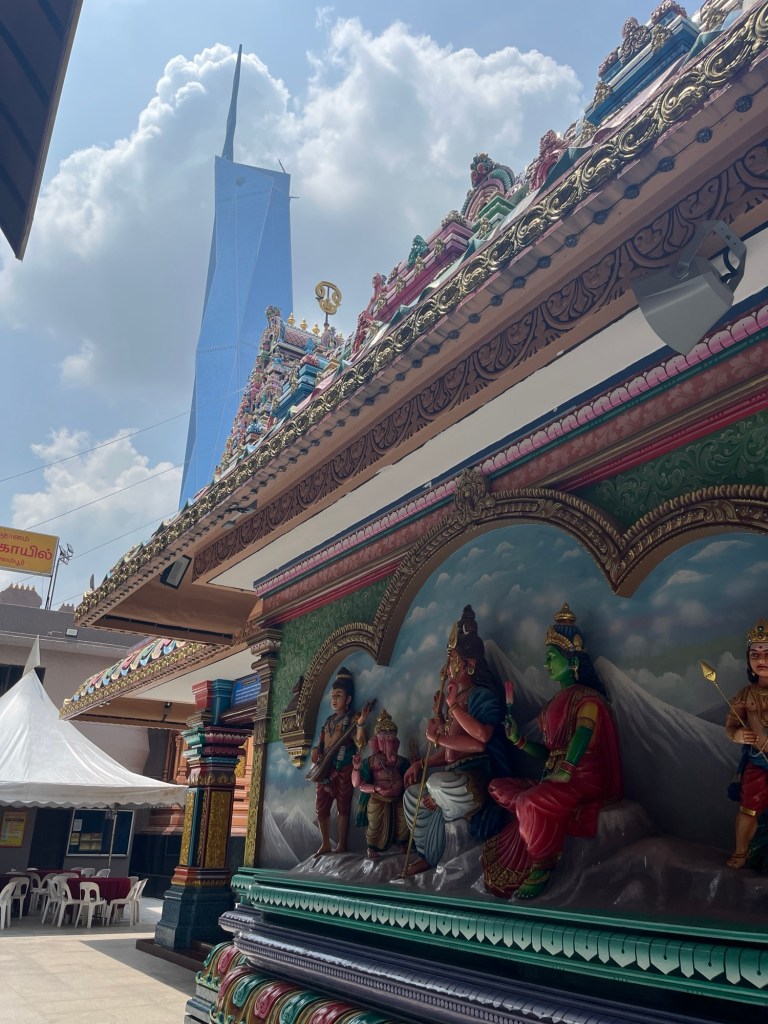
Today is Hanuman Jayanti and many people are at the temple.
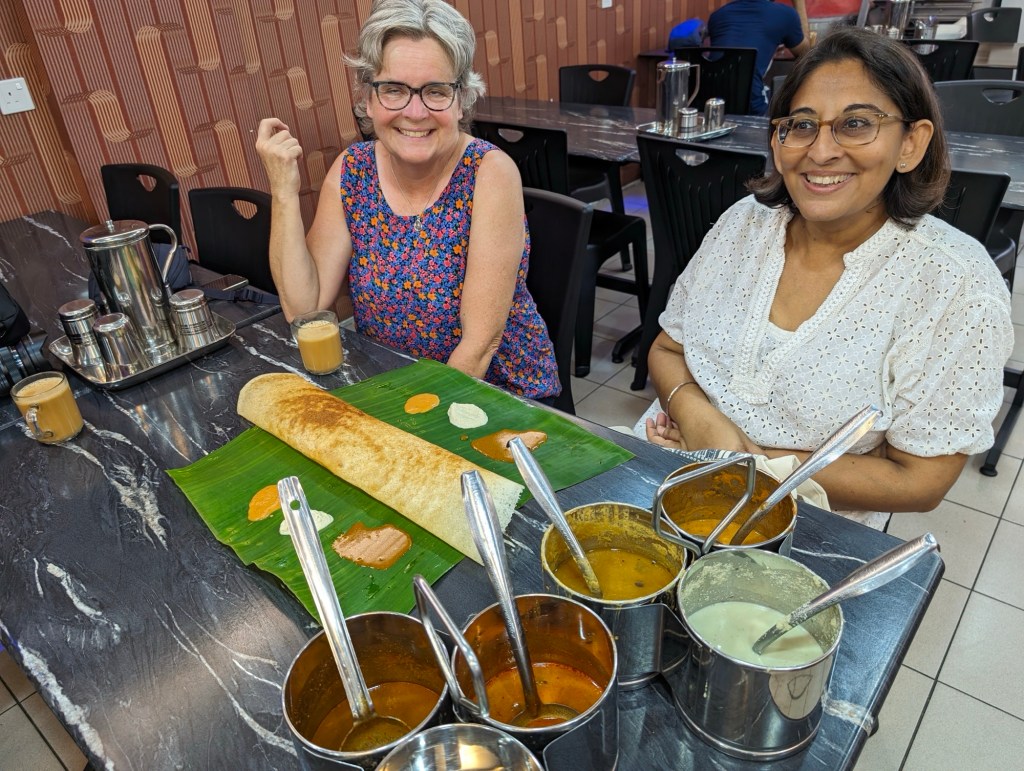
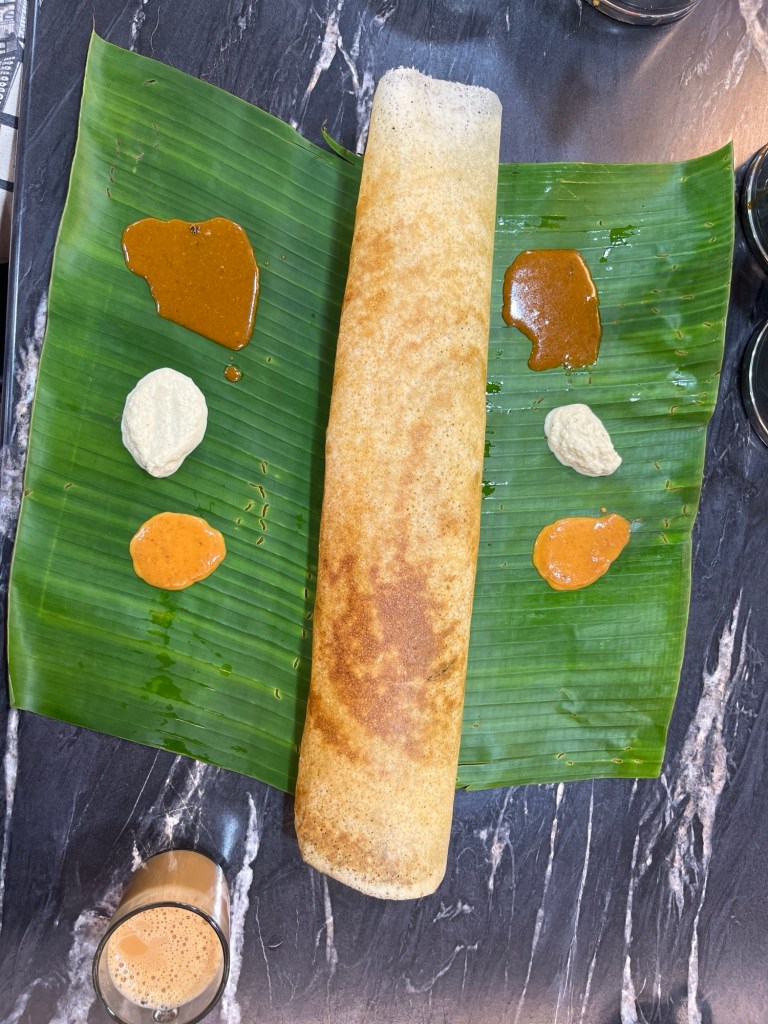
We stop for an Indian pancake.
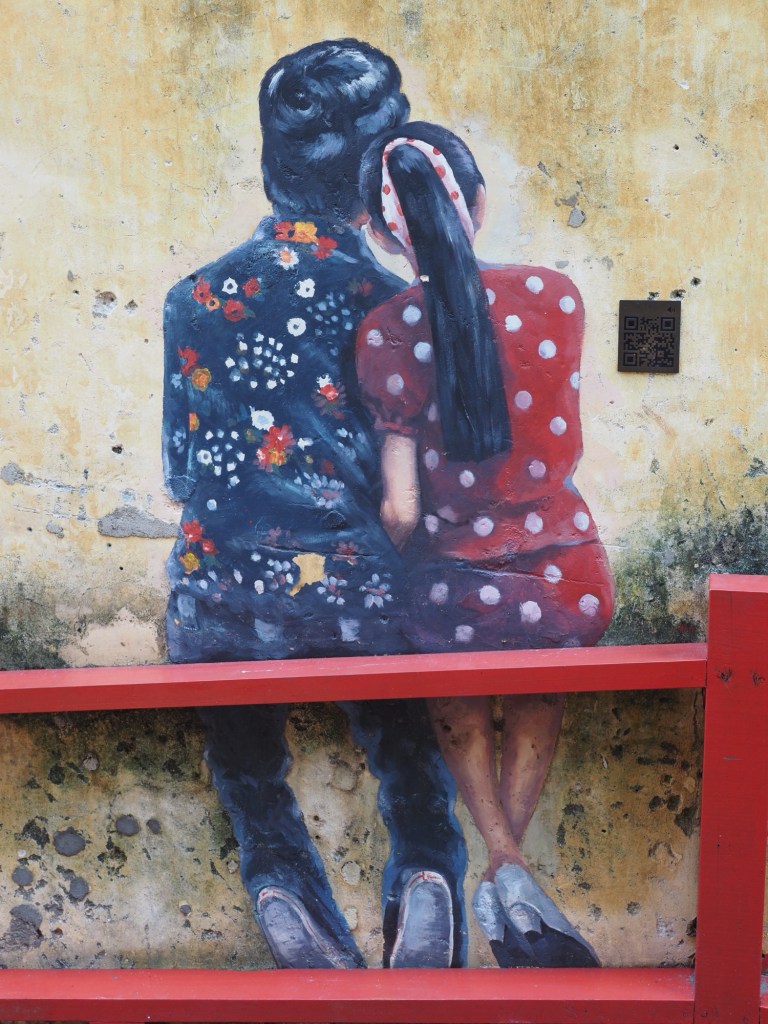
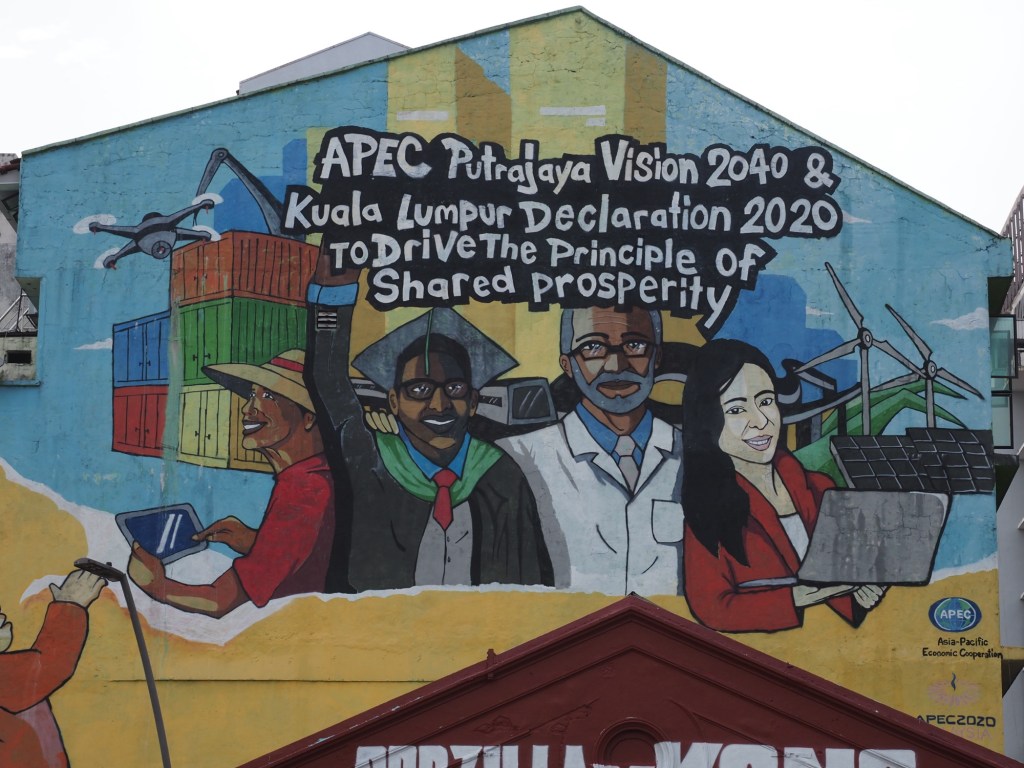
We check out Petaling Street Art
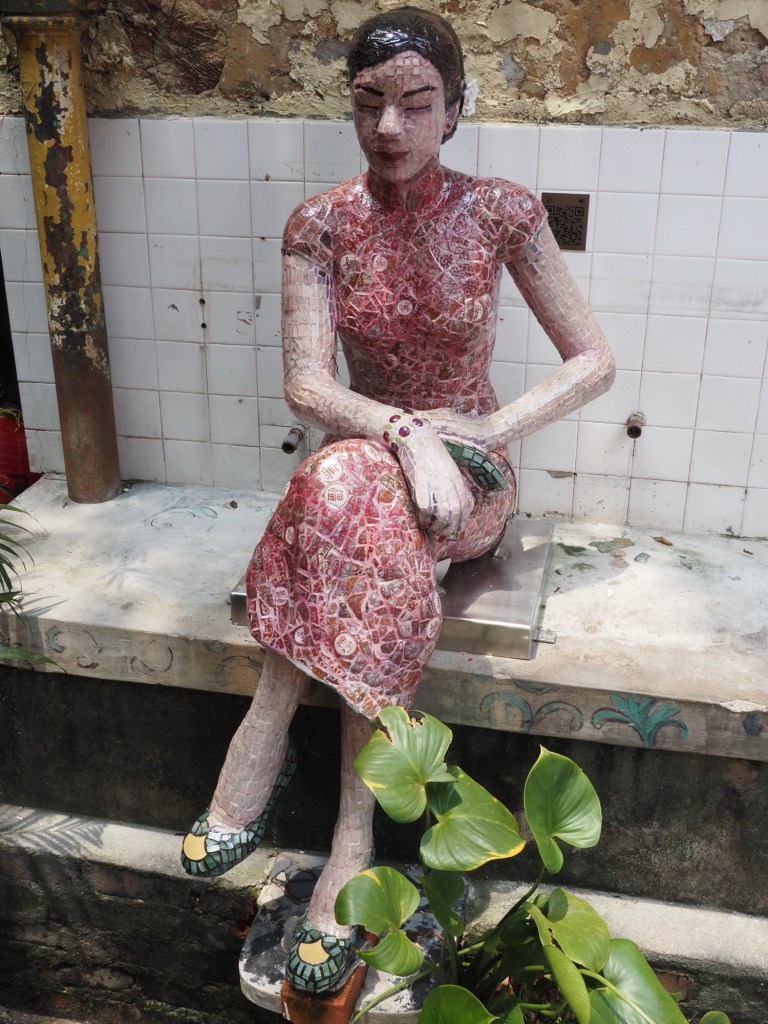
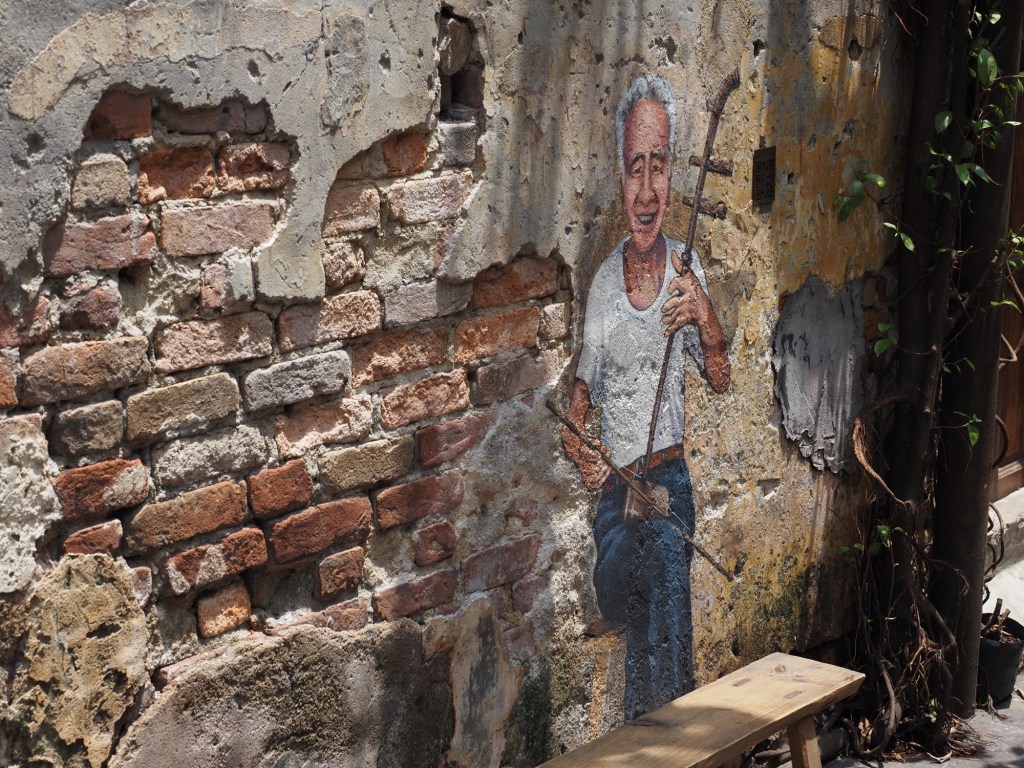
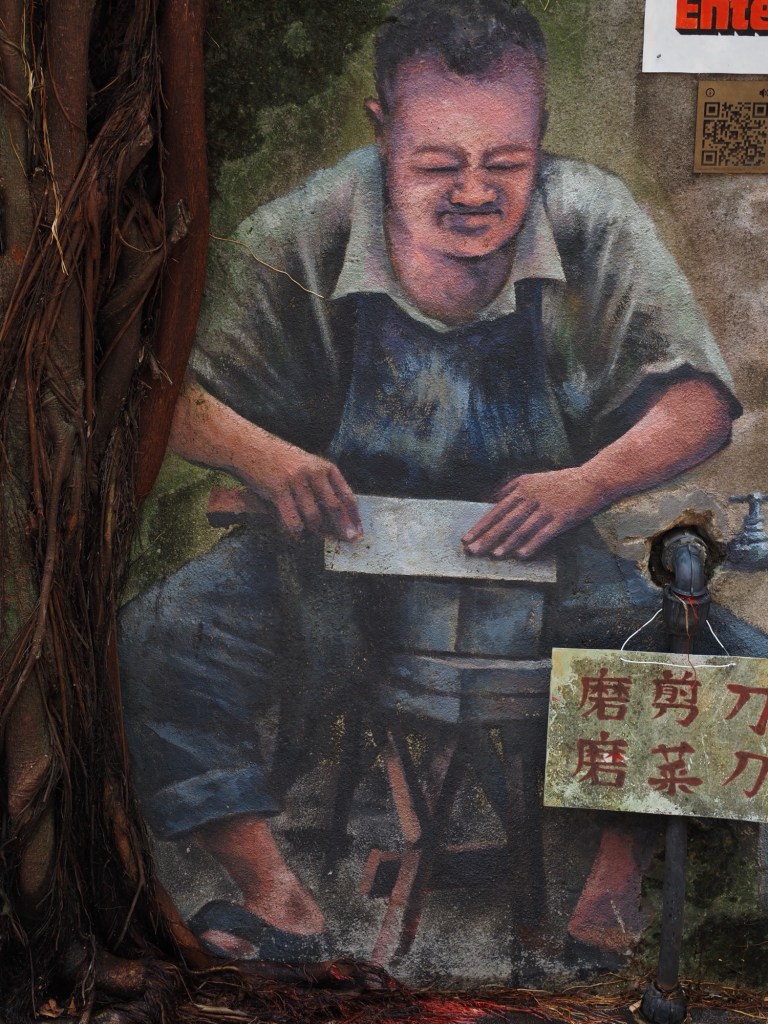
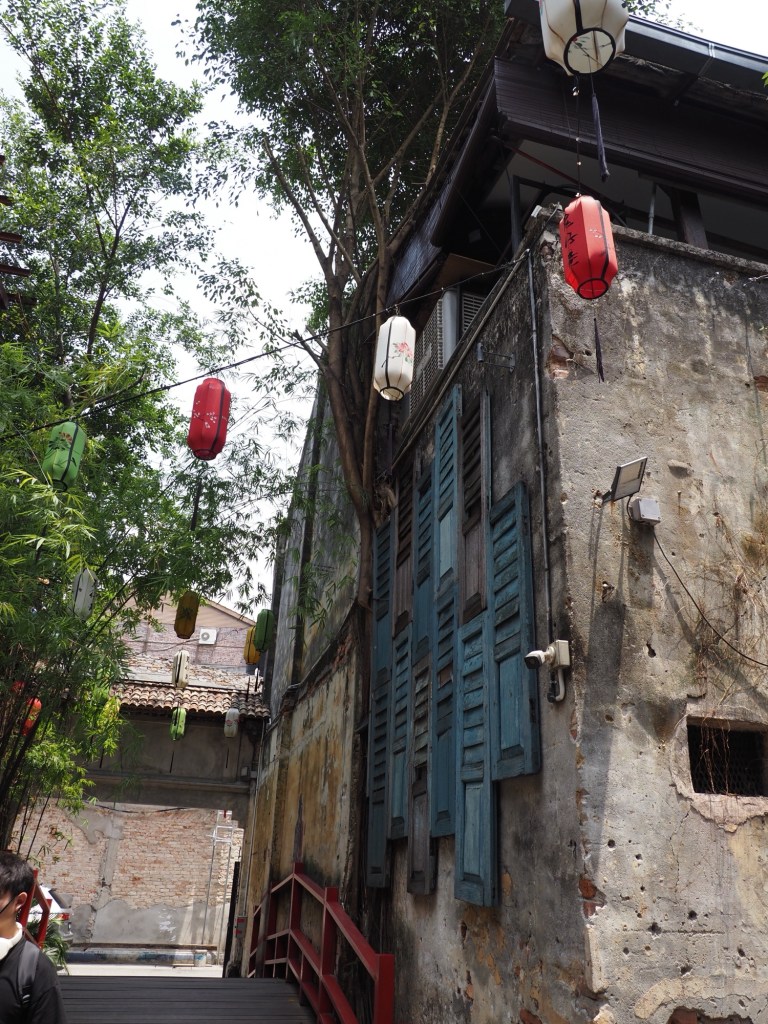
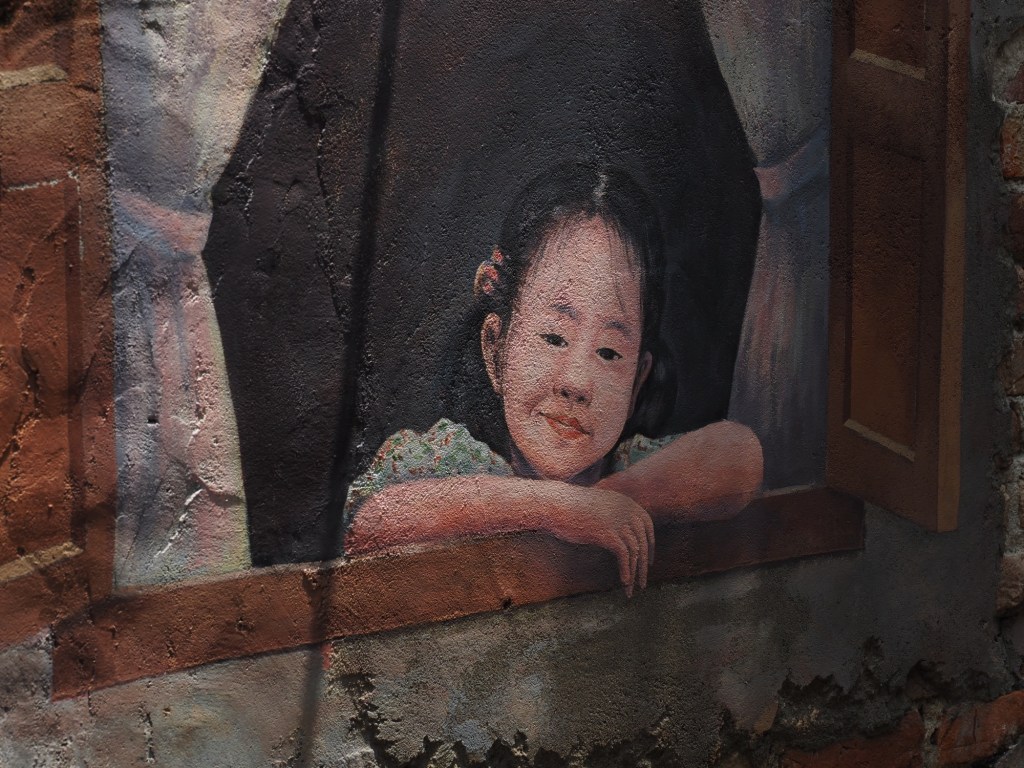
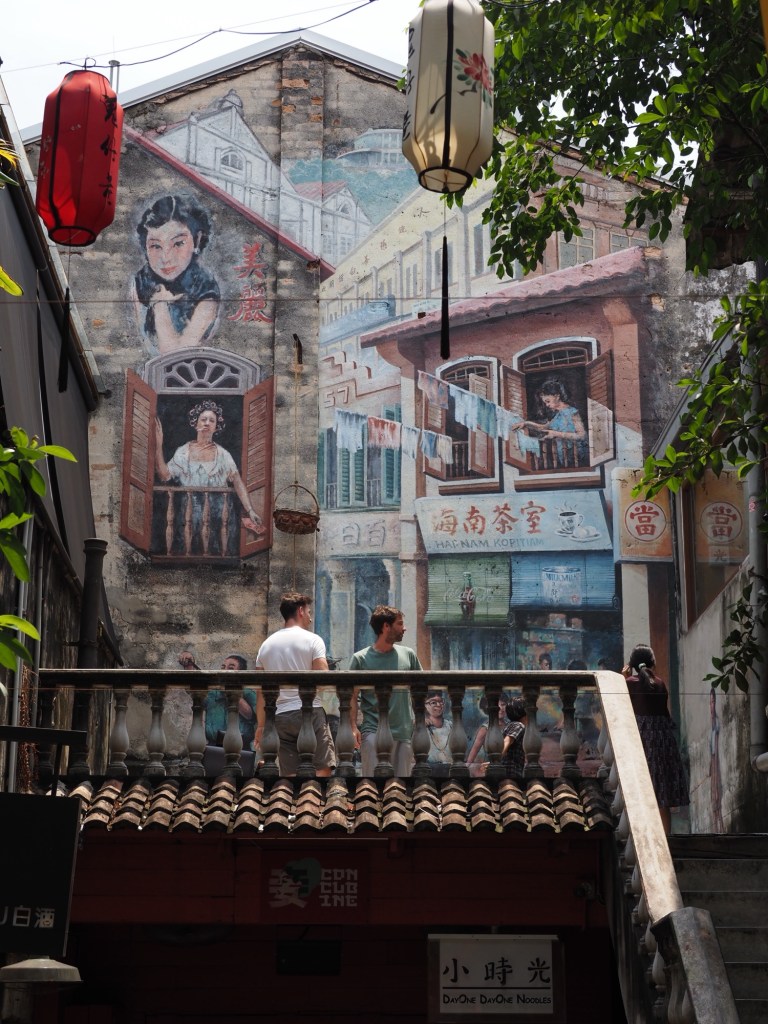
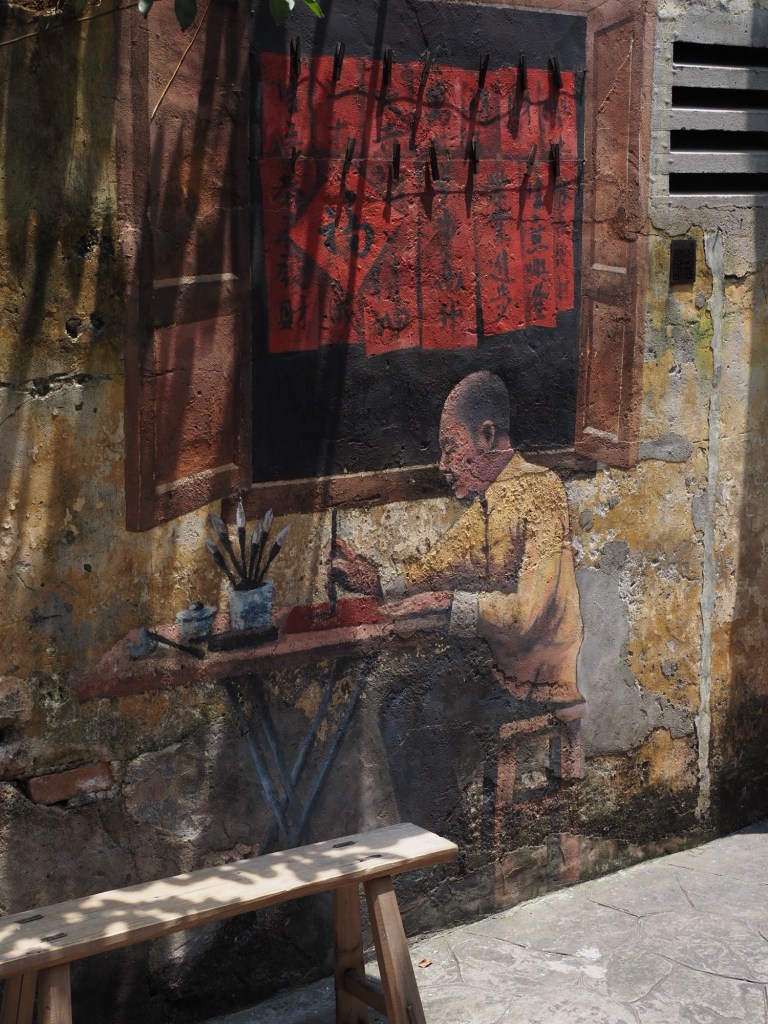
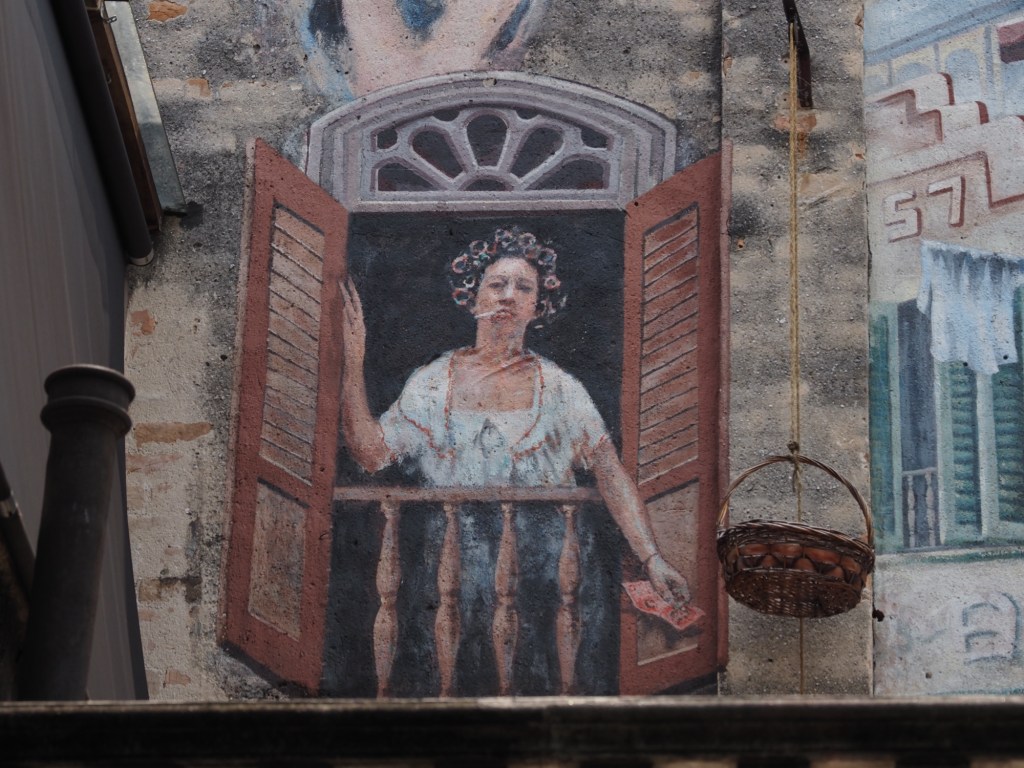

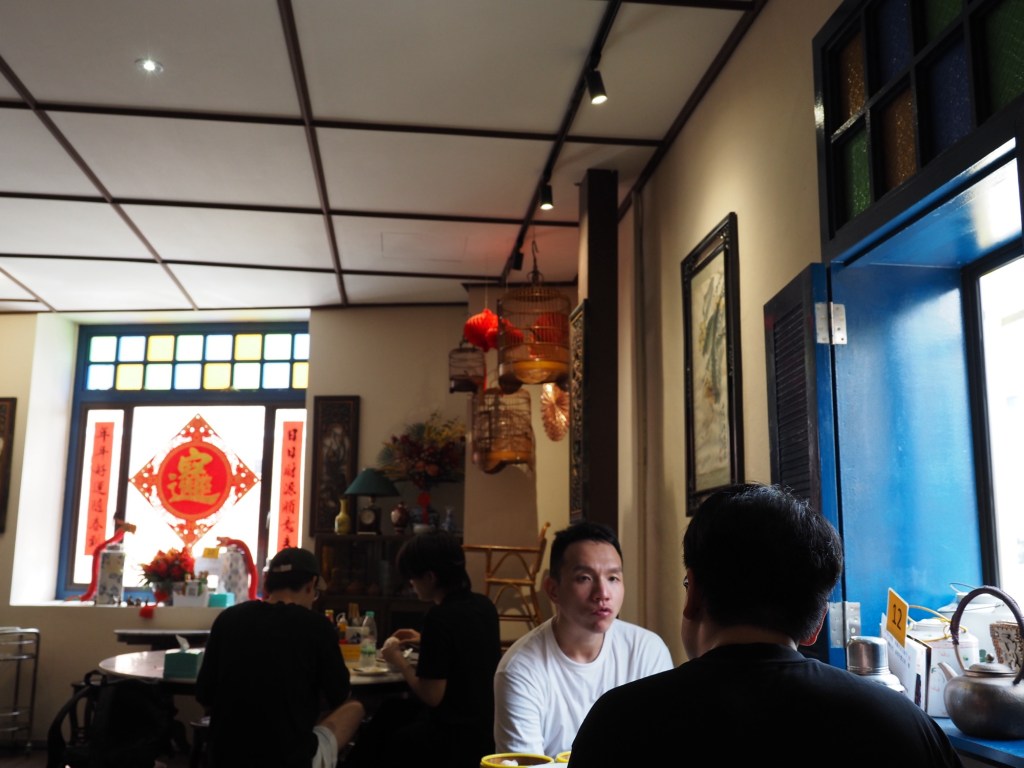
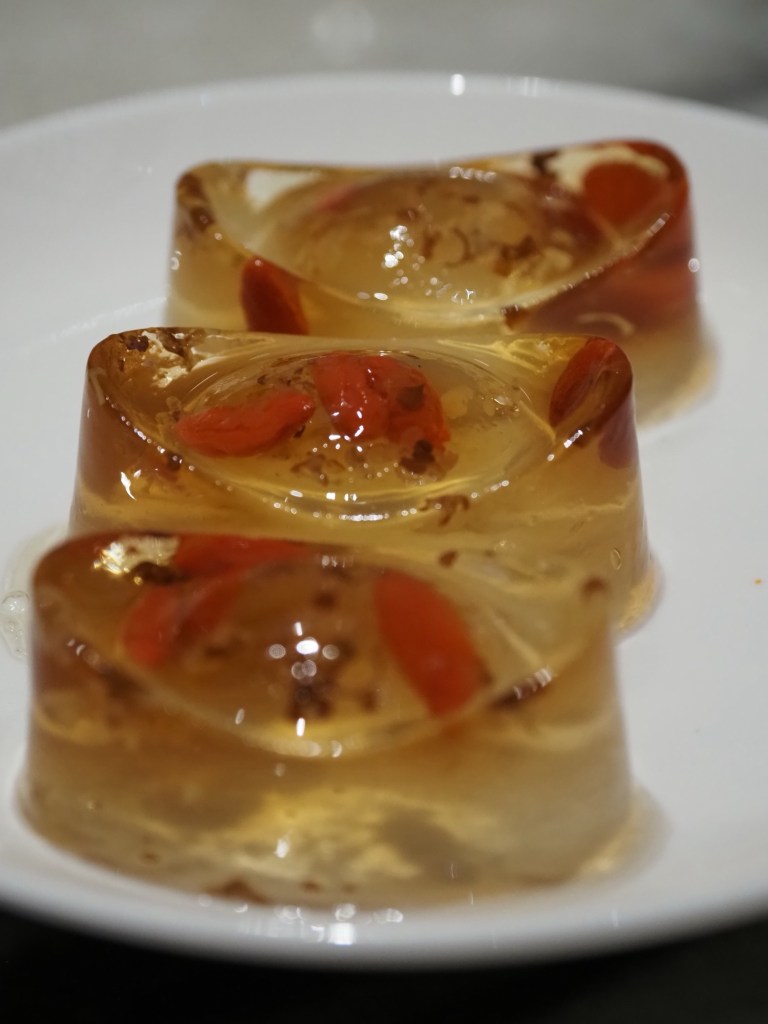
Next food stop is for dim sum with a squishy jelly for dessert.
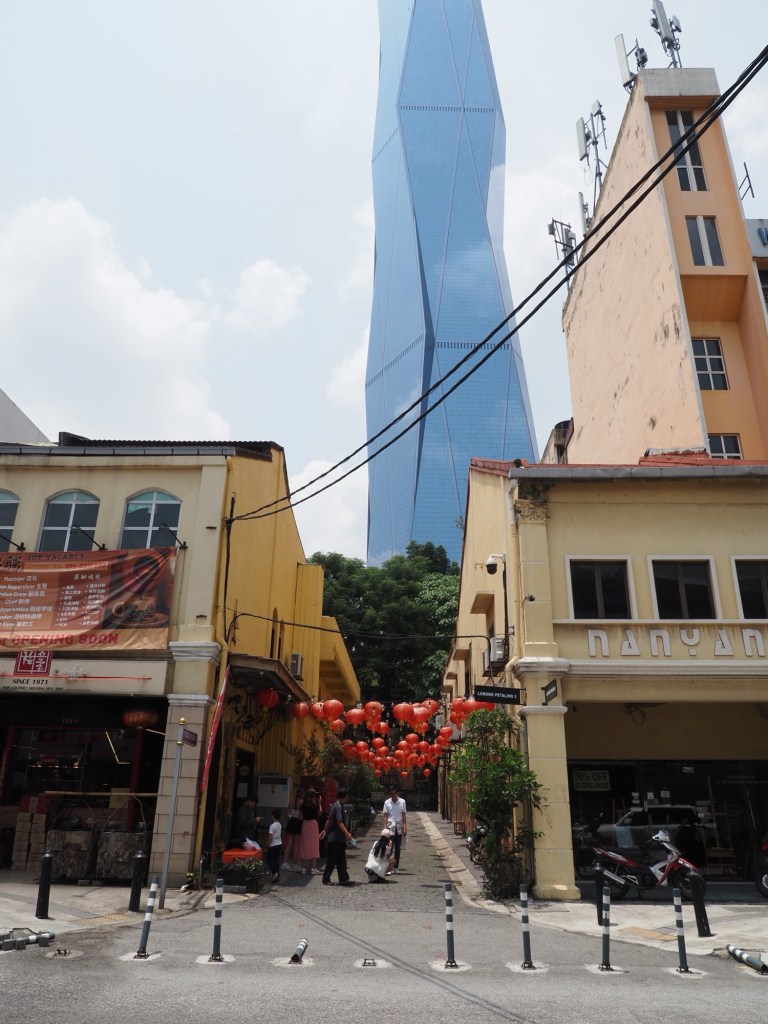
We are never far away from Merdeka 118.
Still on Petaling Street we check out the fruit and veggie vendors. We sample some fruit.
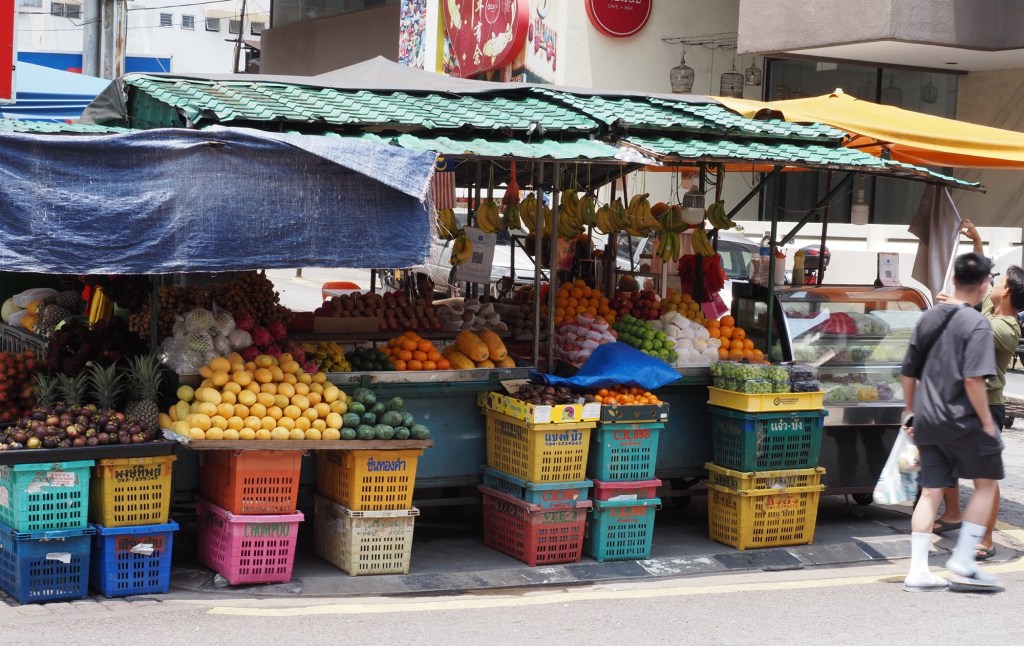
Street food is fun. Check out this video.
The final product.
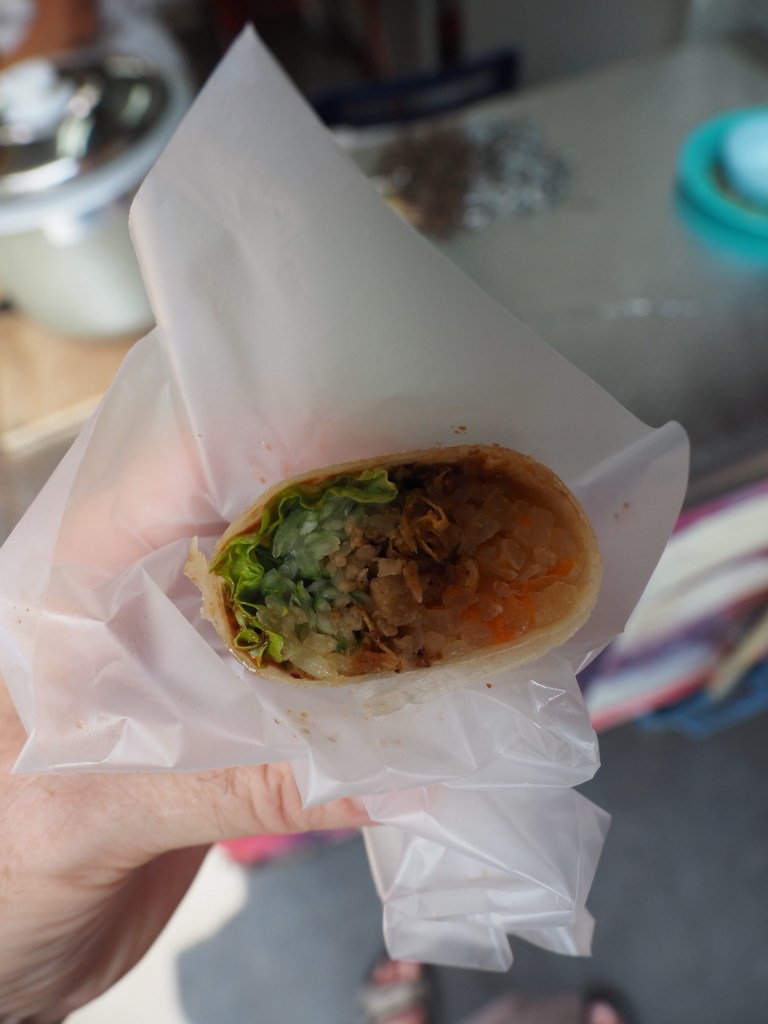
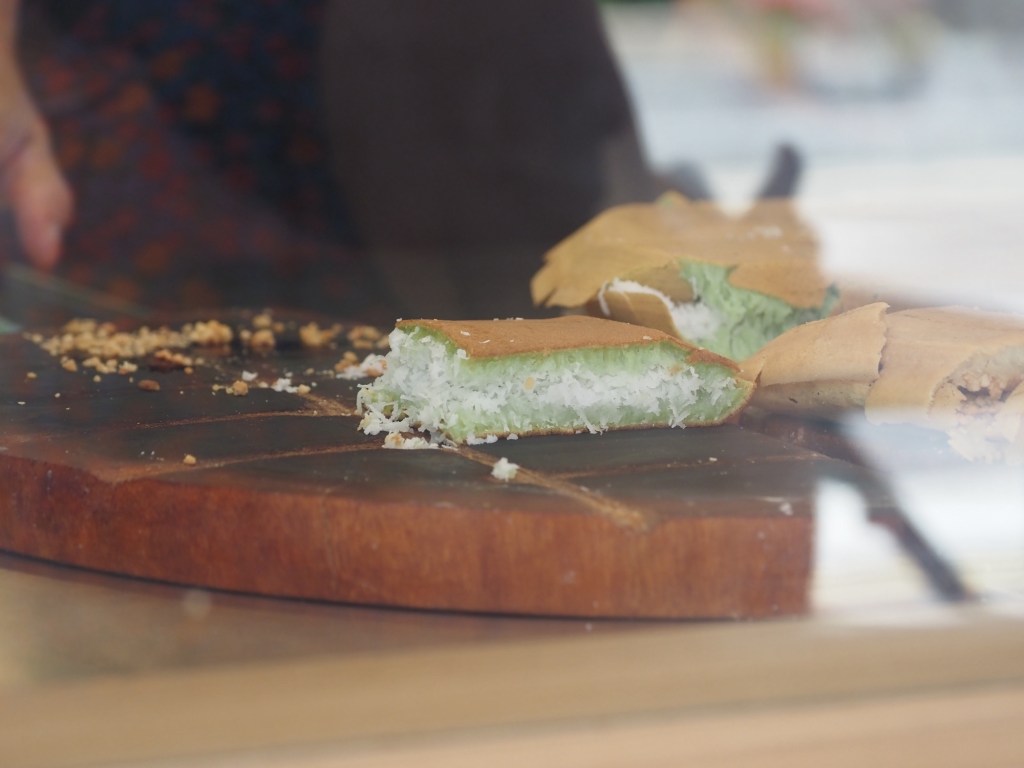
We wrap up back at Central Market for Laksa and a special drink called cincau. Cincau has cooling properties. – it is a grass jelly drink. We’re in!
We say our goodbyes and head off to explore (and walk off some calories!).
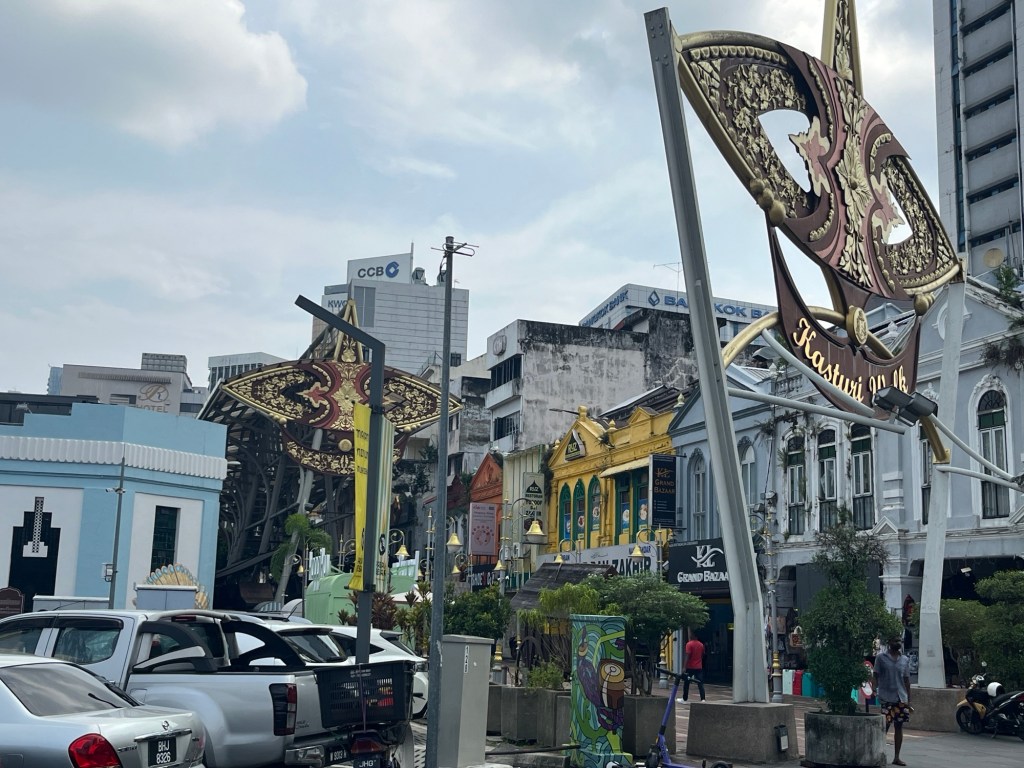
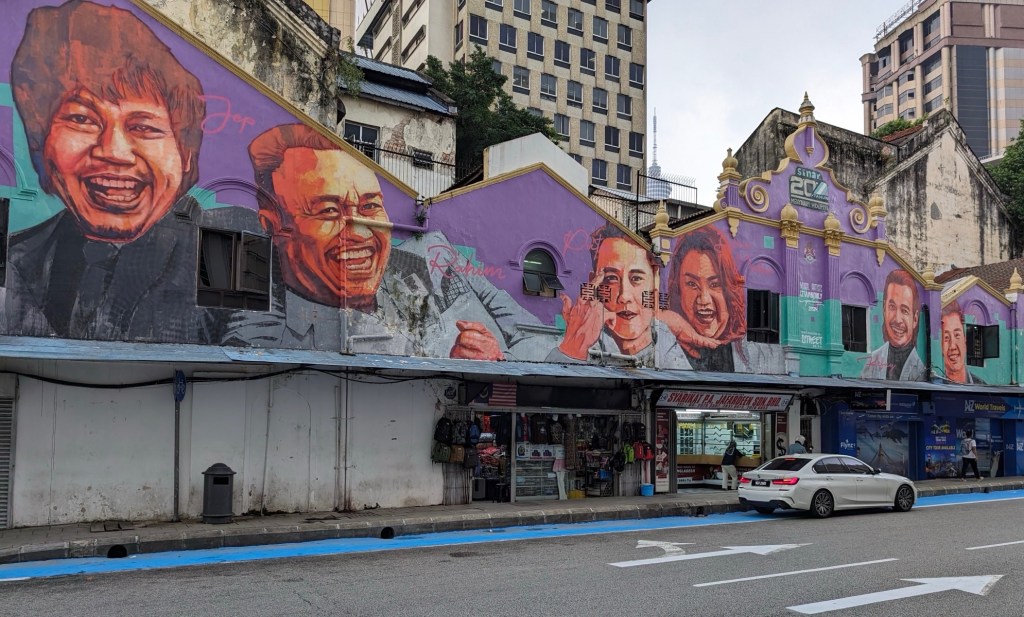
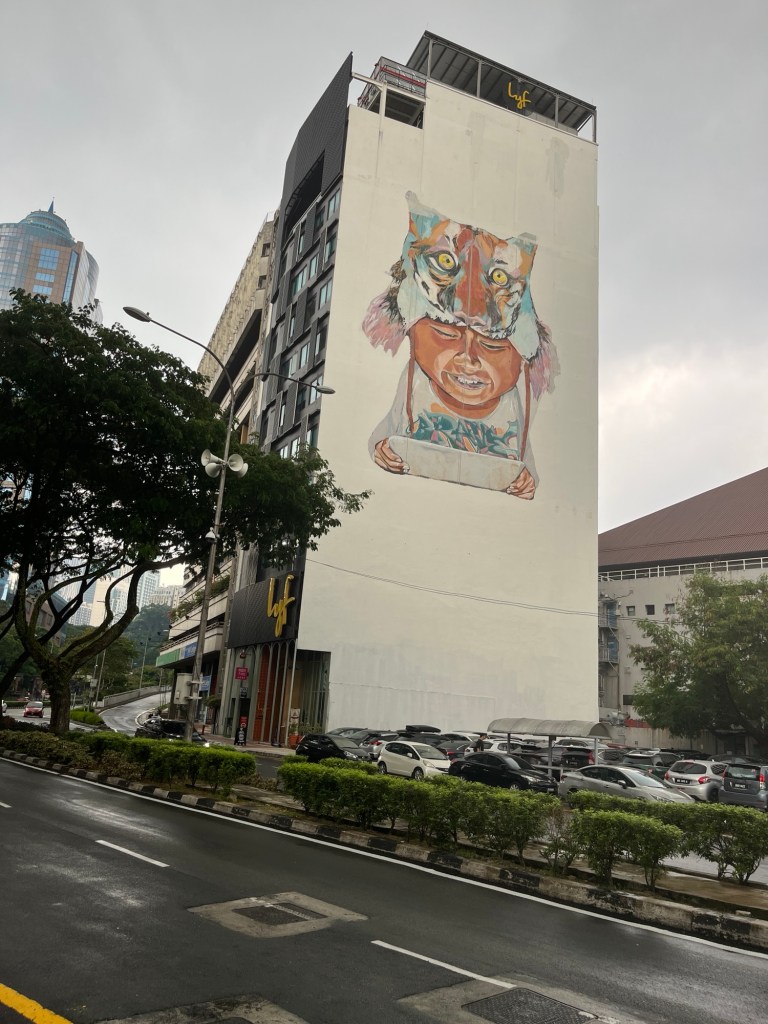
Why not head to the Petronas Towers?
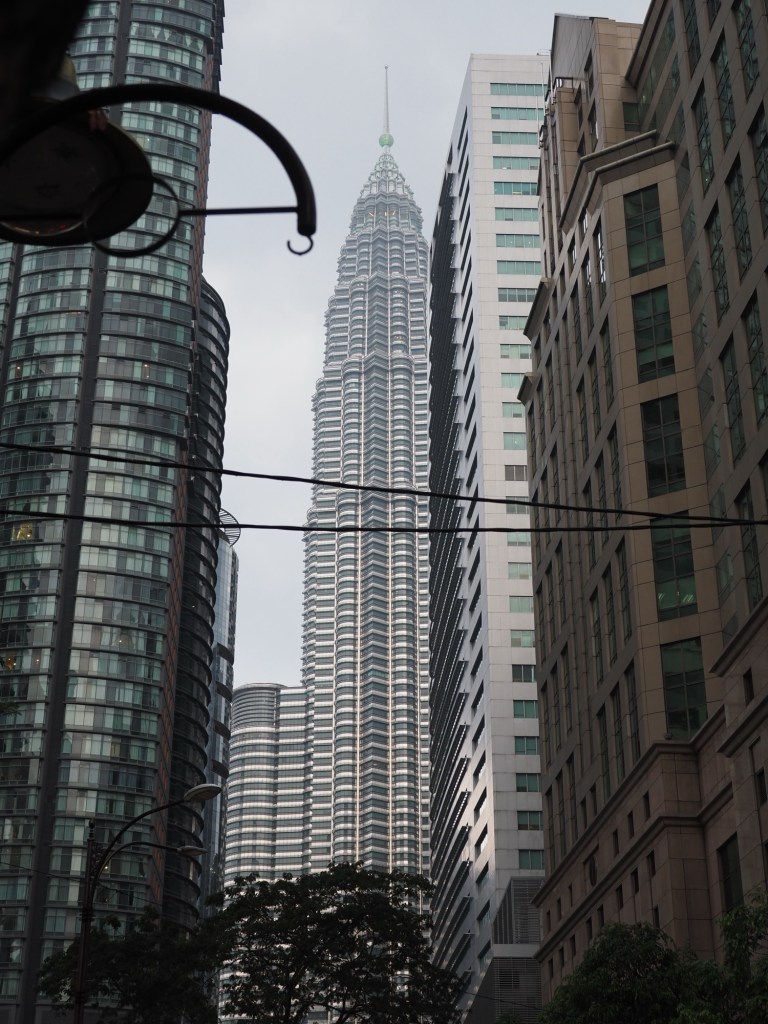
In the half hour it takes to walk to the financial district, the afternoon rains begin. We discover that the Petronas Tower tours are a hot commodity – we buy tickets for the day after tomorrow. And then we go shopping. We update our t-shirt collections in Uniqlo.
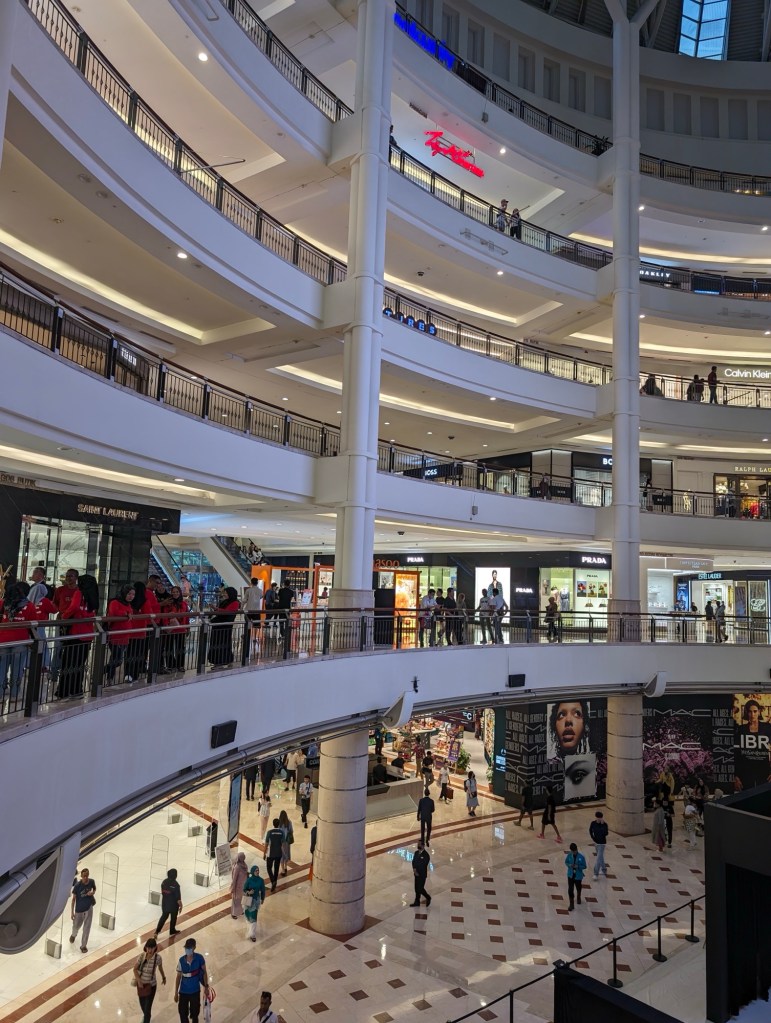
We take the metro back to the hotel. We are still stuffed – dinner is an avocado shake from the food court!


 Two Sore Backs
Leave a comment