After KL, we decided to take a detour away from the railway line, out to the city of Malacca.
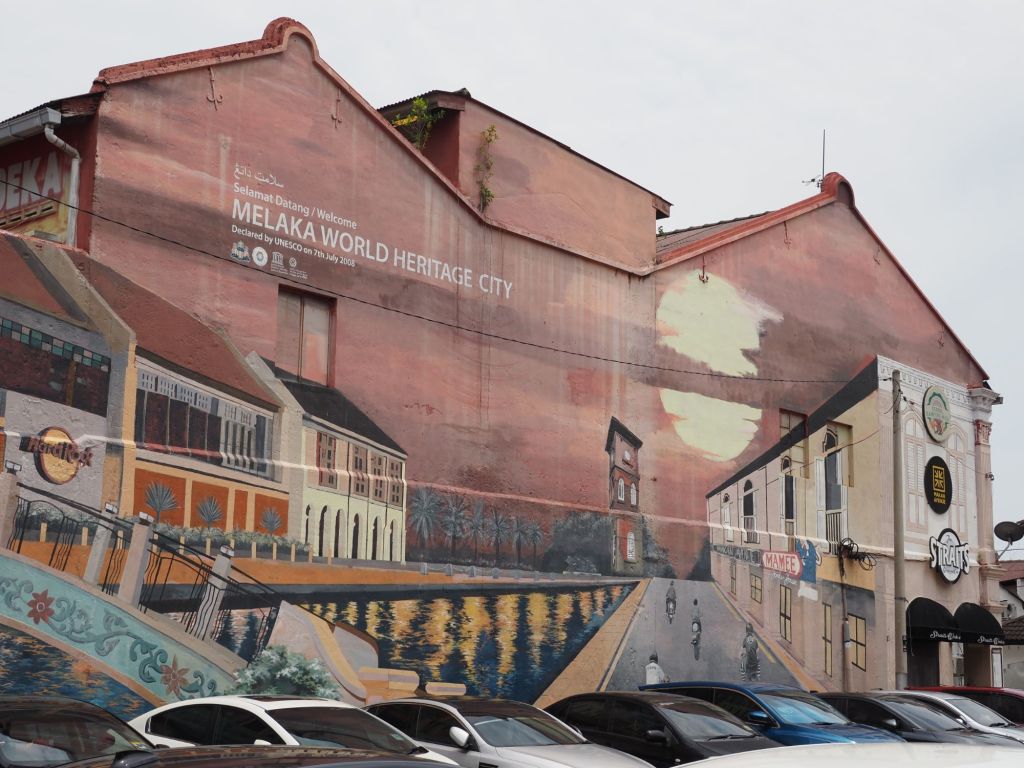
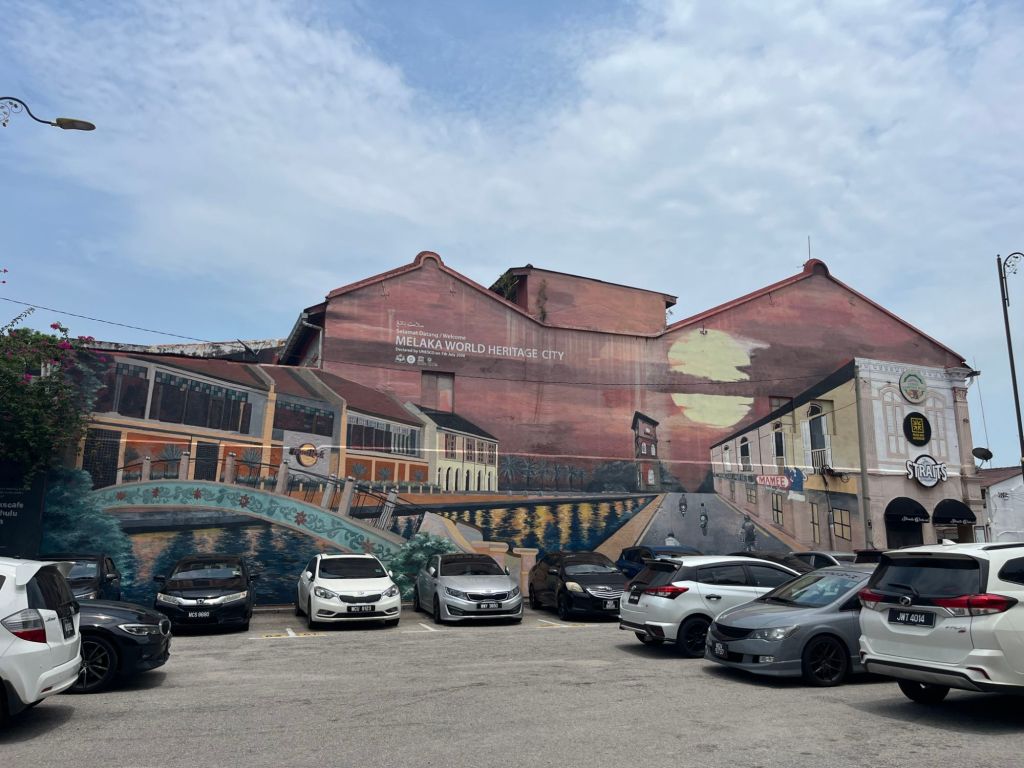
Malacca was declared a UNESCO world heritage site, around the same time as George Town in Penang, mainly due to its history as a trading port.
It’s not on the railway line, so that meant getting back on the bus. As can happen, the bus broke down, but eventually we got to the terminal and took a cab to our hotel.
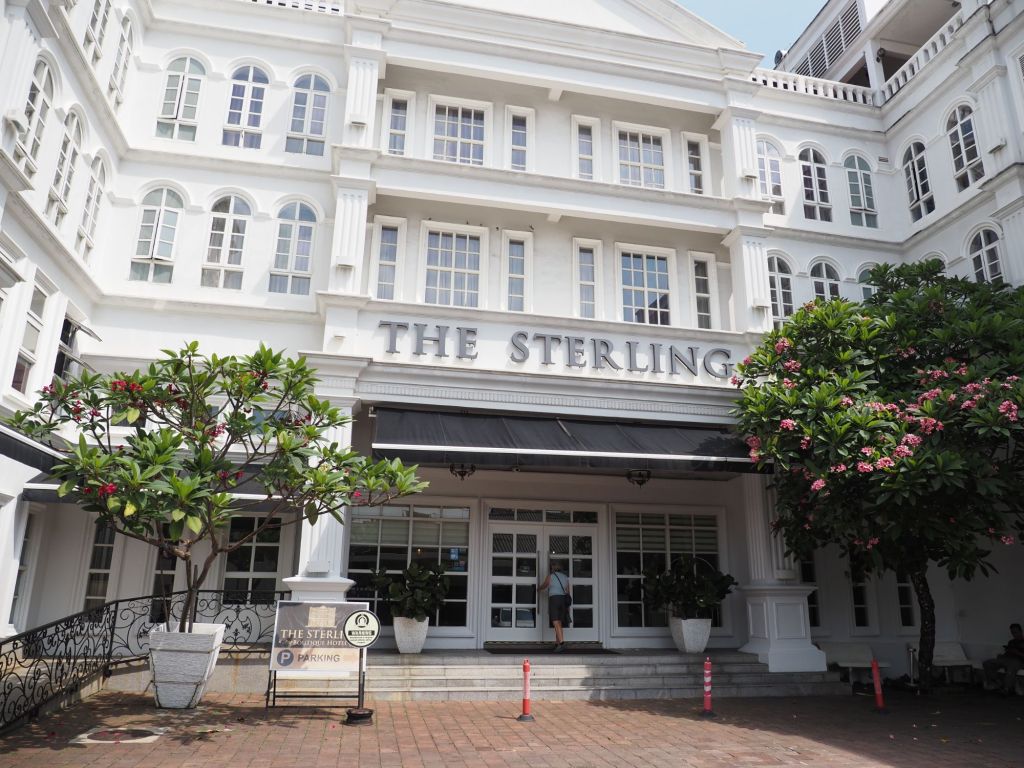
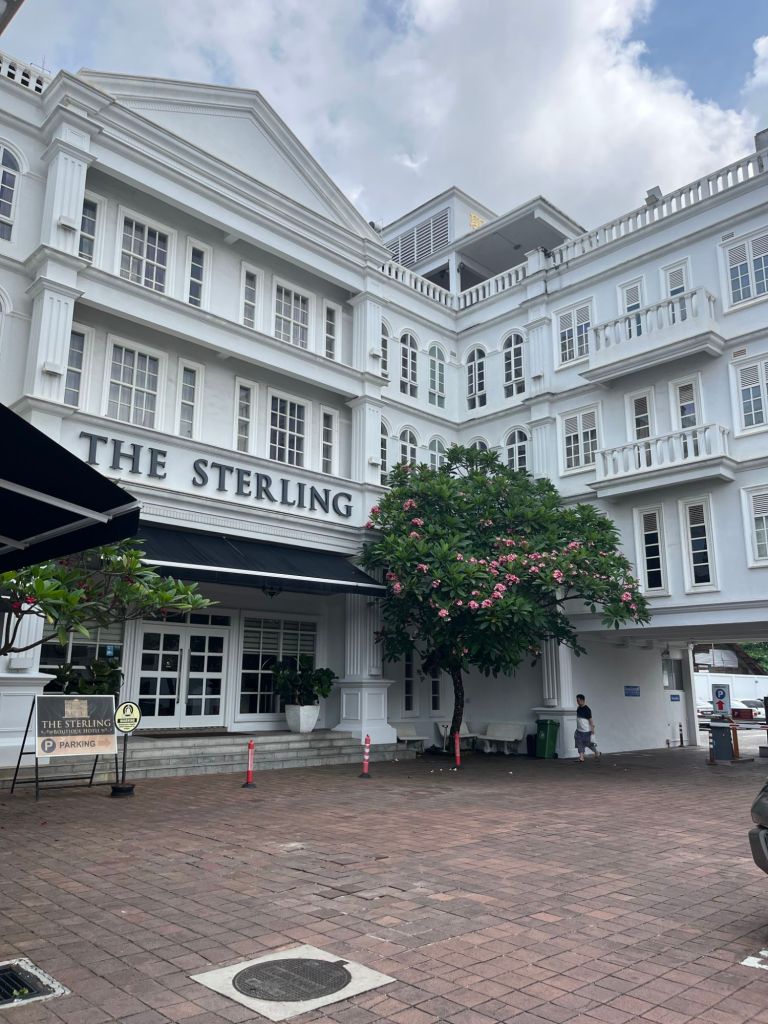
The Sterling is impressive from the outside, but I suspect that adding air conditioning, which is now an absolute necessity, has caused condensation and mold problems inside. Very sad.
Our curling friend Patrick Hung had asked if we’d tasted Chili Crab while in KL. We hadn’t, so we did a bit of googling to find the best in Malacca.
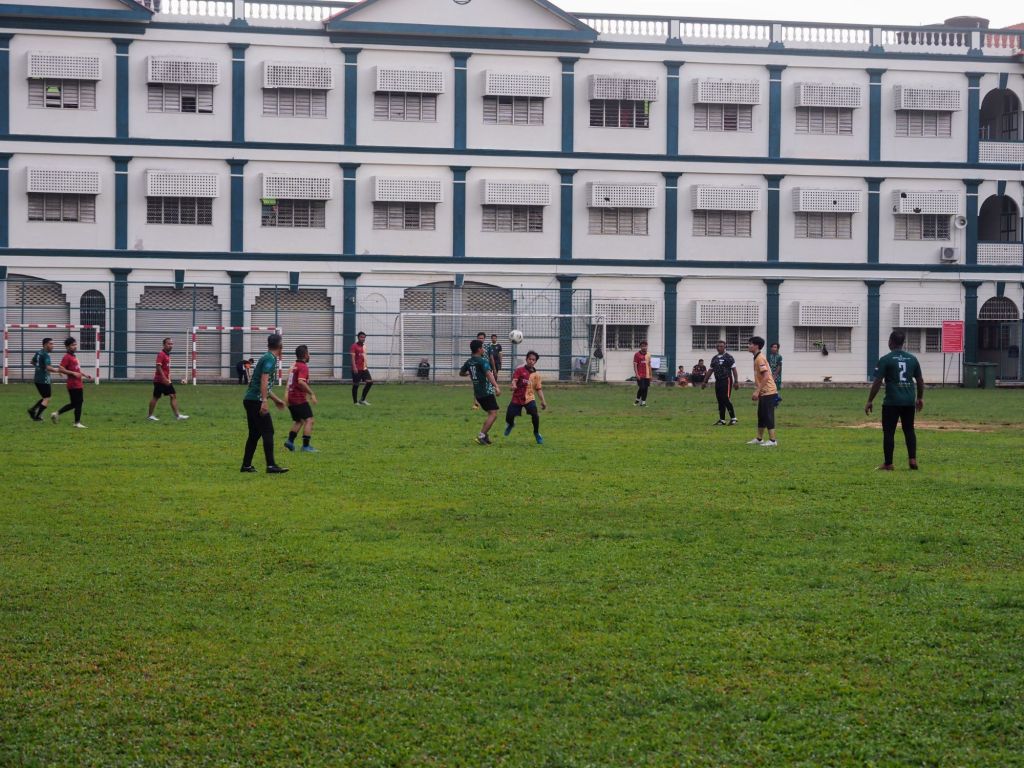
It was late afternoon, slightly cooler than midday, but it was still surprising to see these footballers. The heat is hard to describe – with the humidity it is simply impossible to cool down.
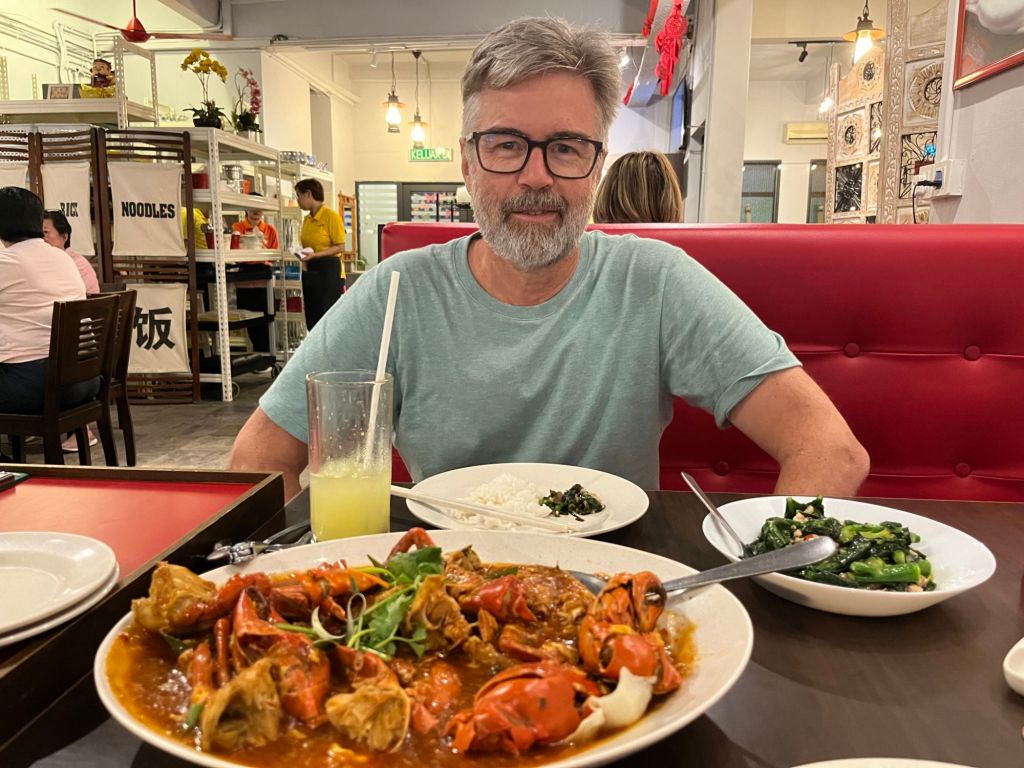
The quest for Chili Crab was a success!
We took the long way back to the hotel, passing some of the historical sites.
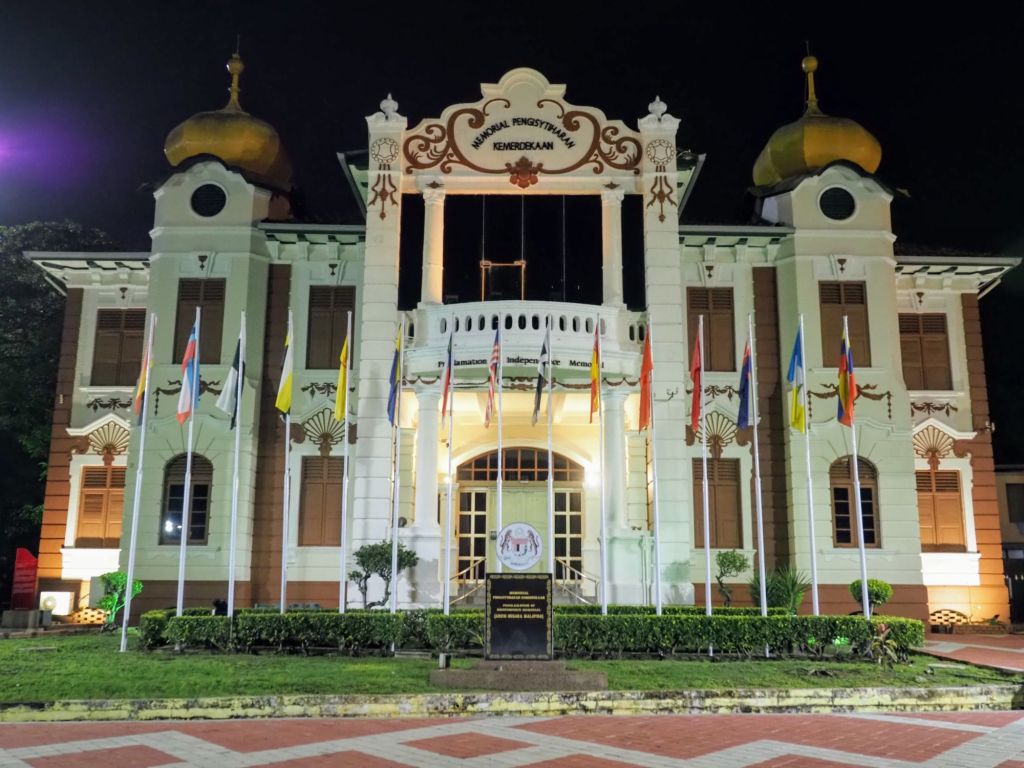
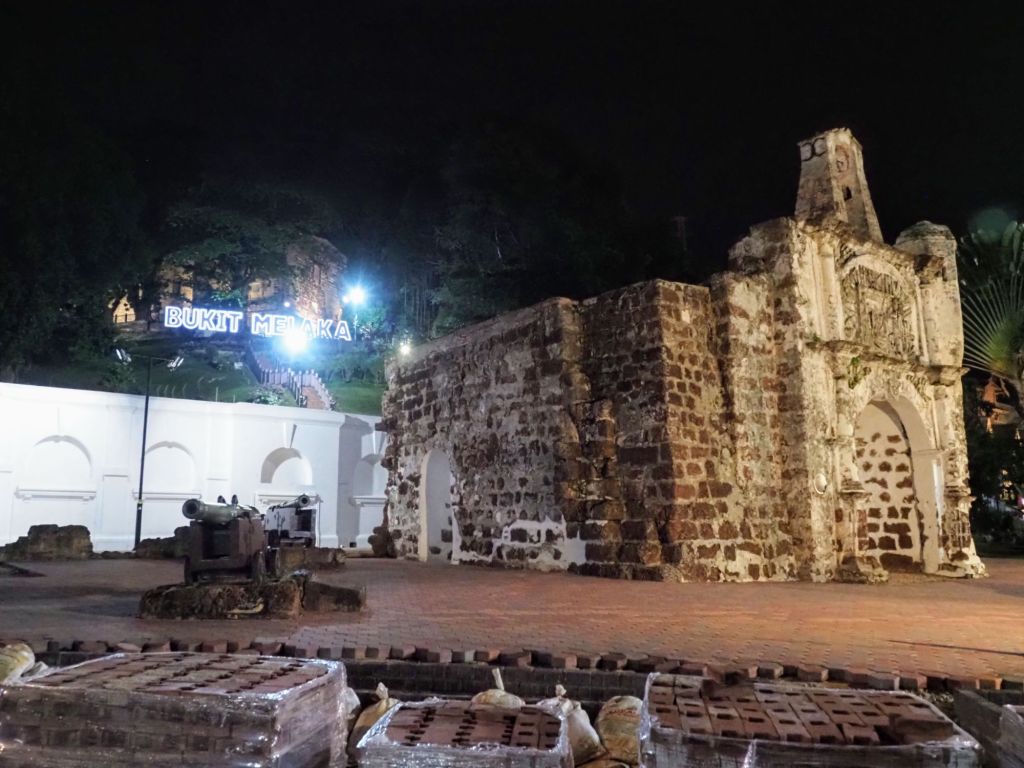
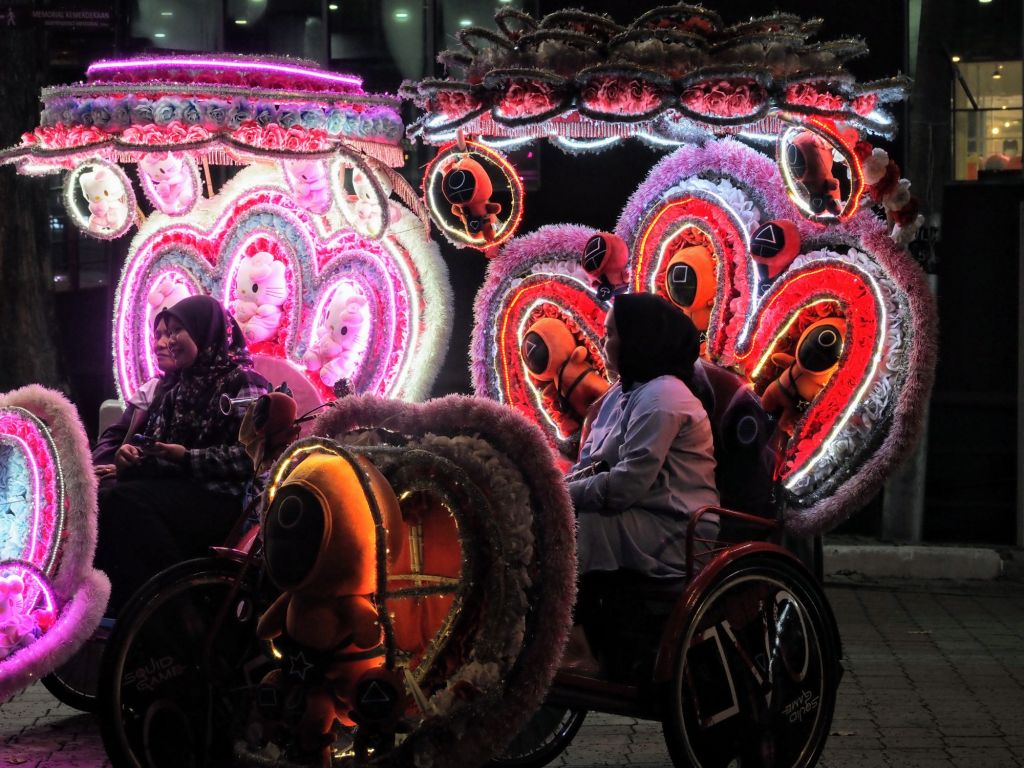
There is a ton of history here, mostly relating to its colonizers – the Portuguese, Dutch and British – but we were running out of energy. We were “historied out” and dying from the heat, so we skipped most of the historical sites. Our days were filled with short walks from the hotel and trying to escape the heat in cafes and restaurants.
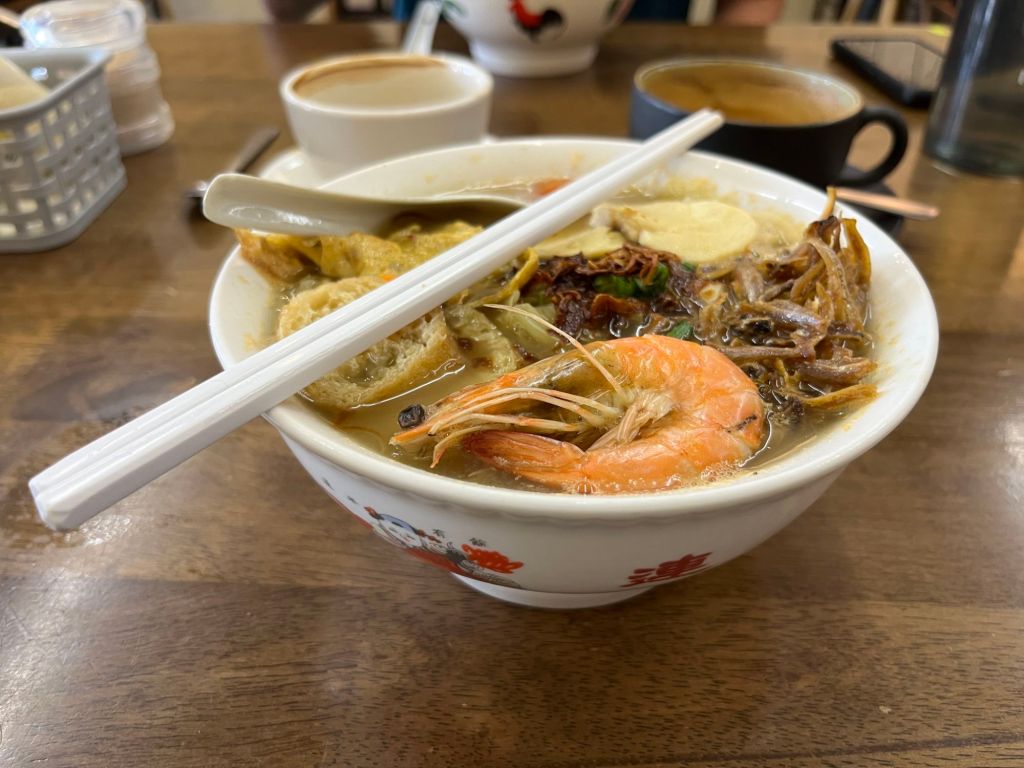
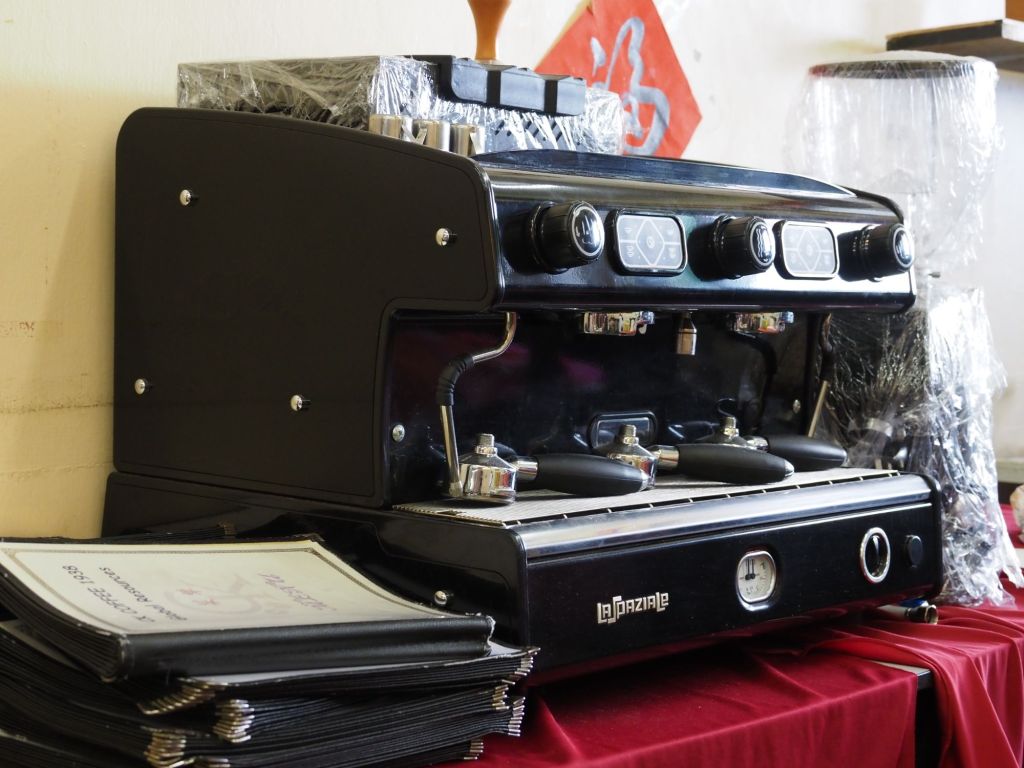
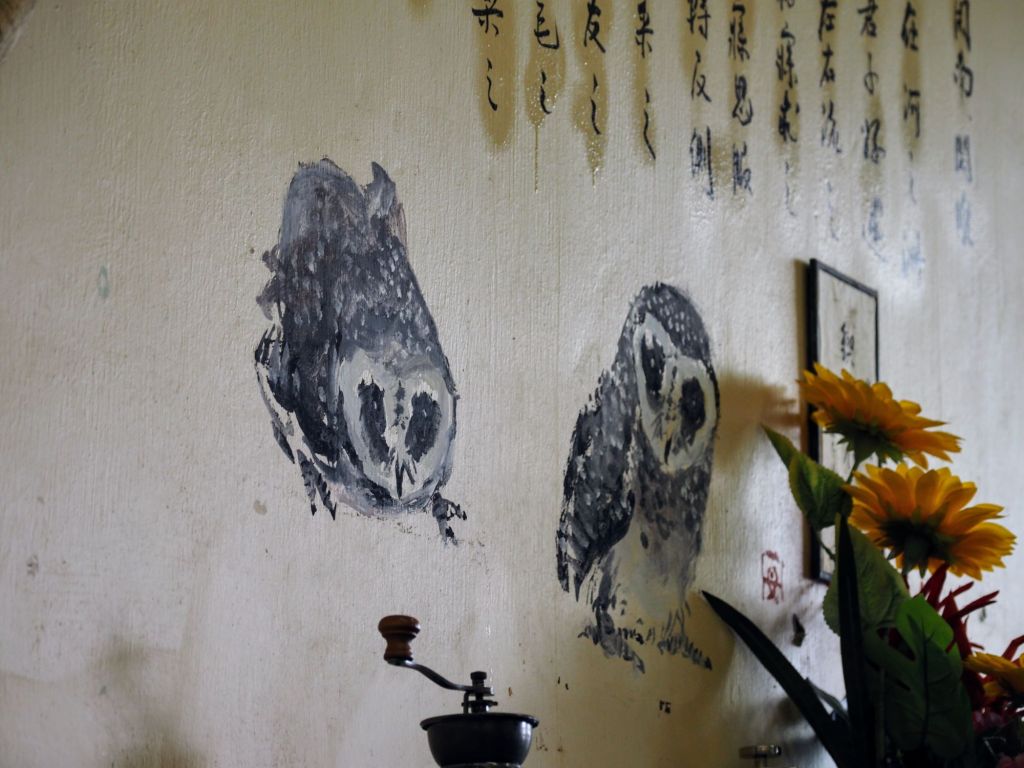
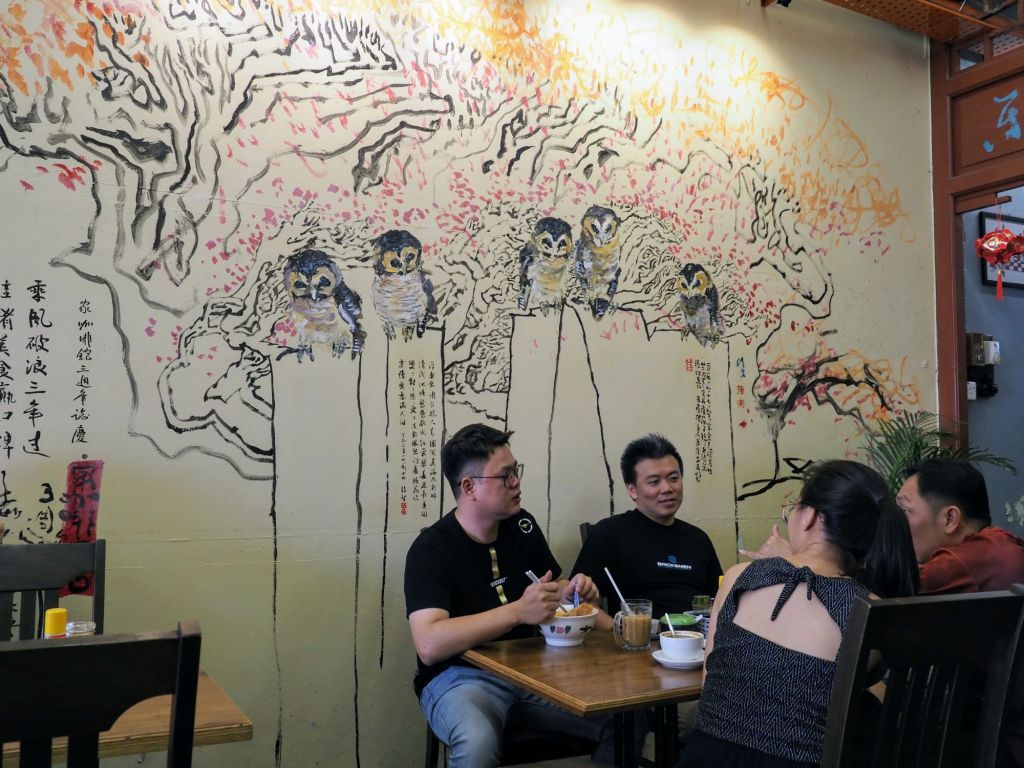
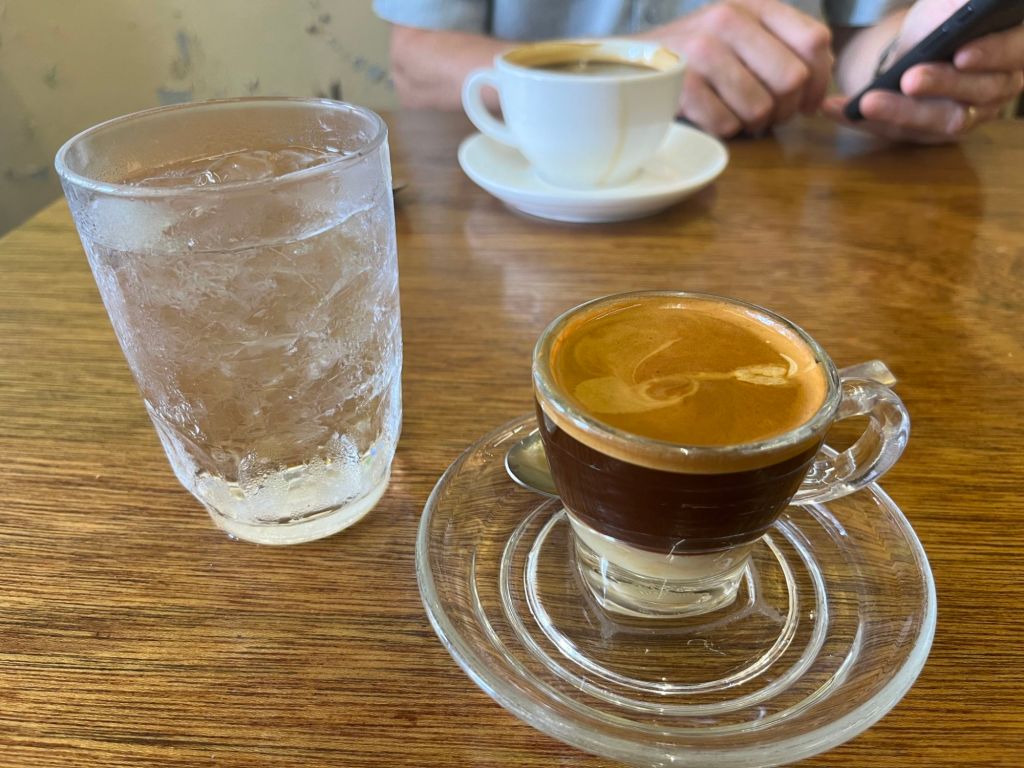
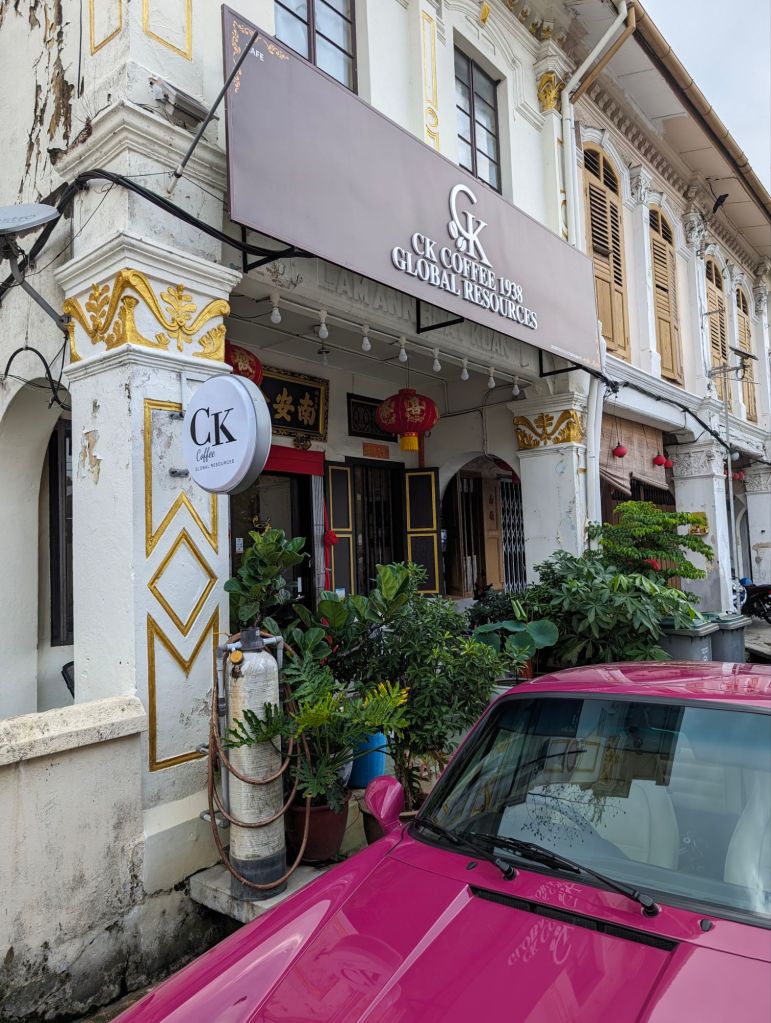
One of our favourites was CK Coffee which had recently relocated to a new space. Coffee, breakfasts and lunch here were so good!
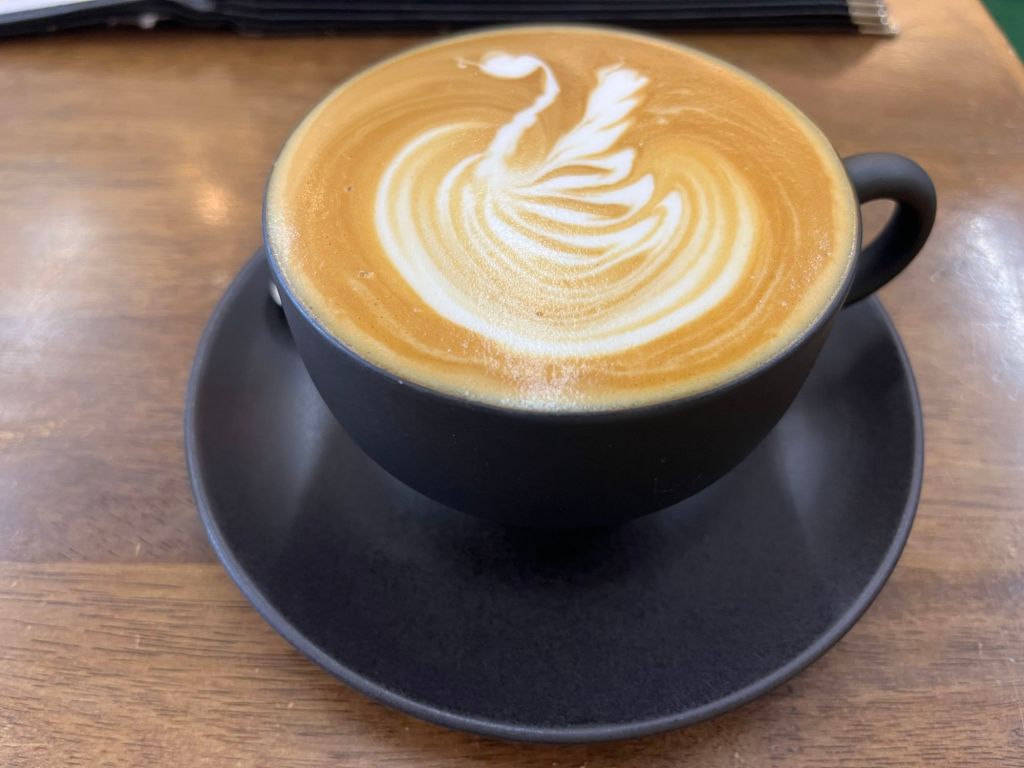
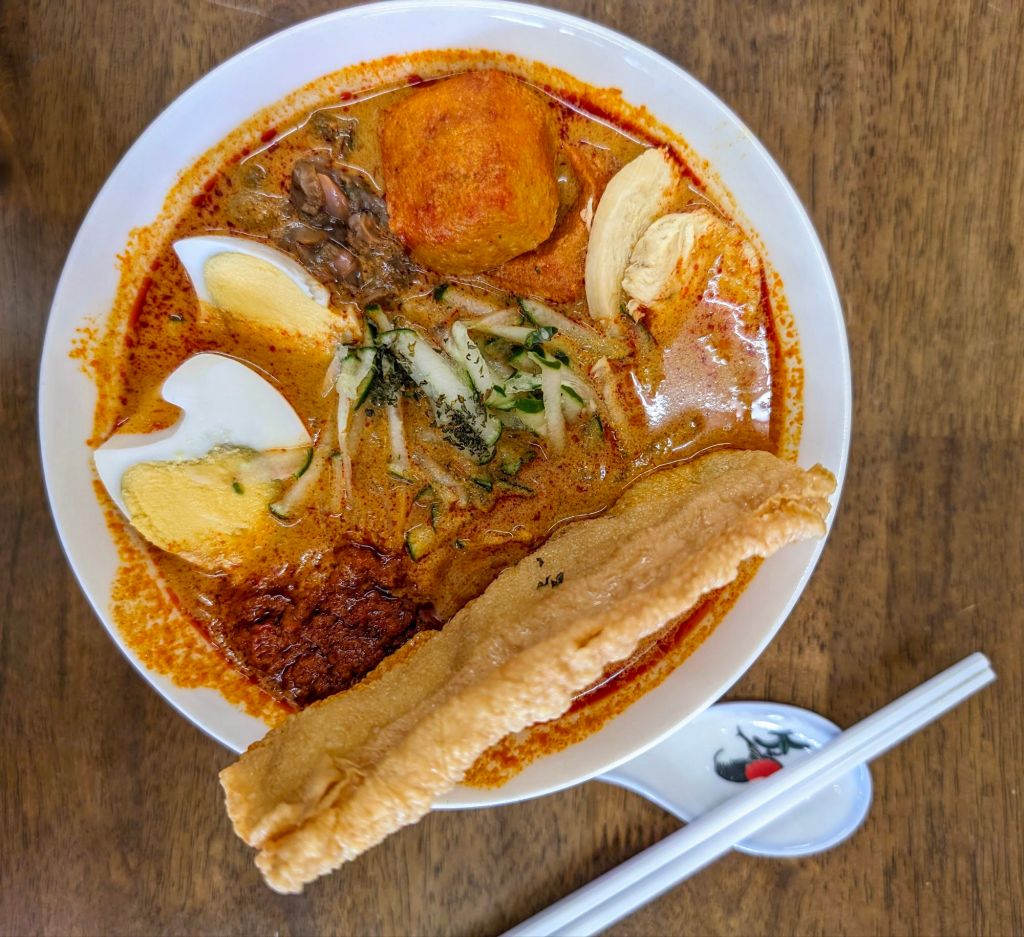
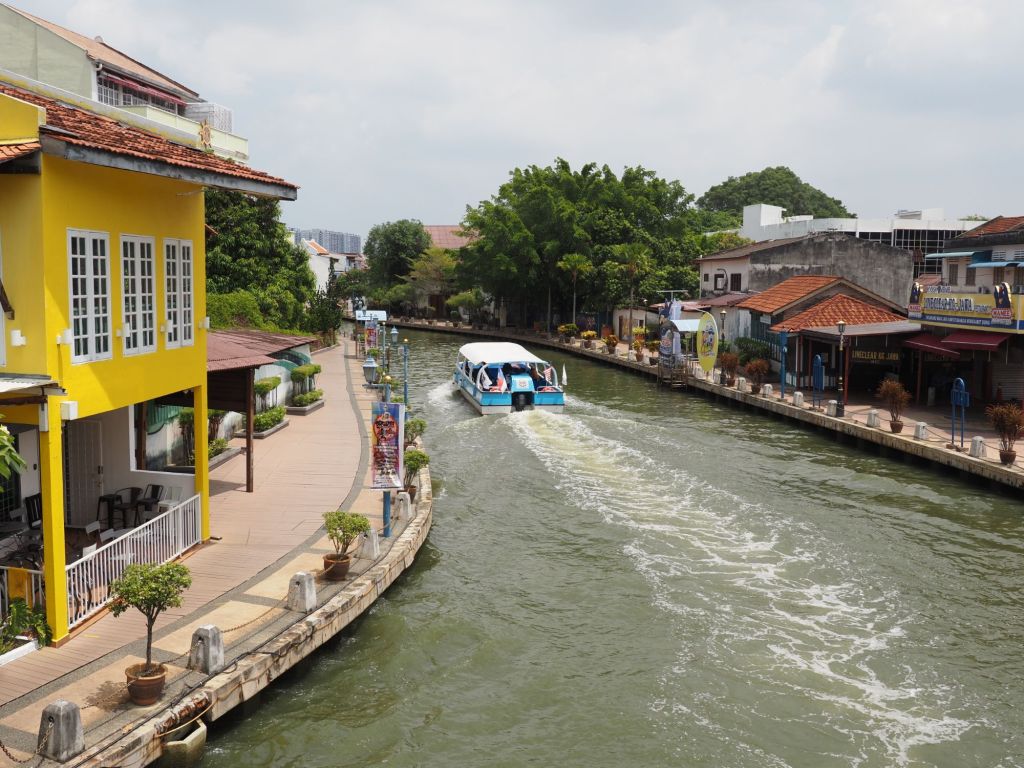
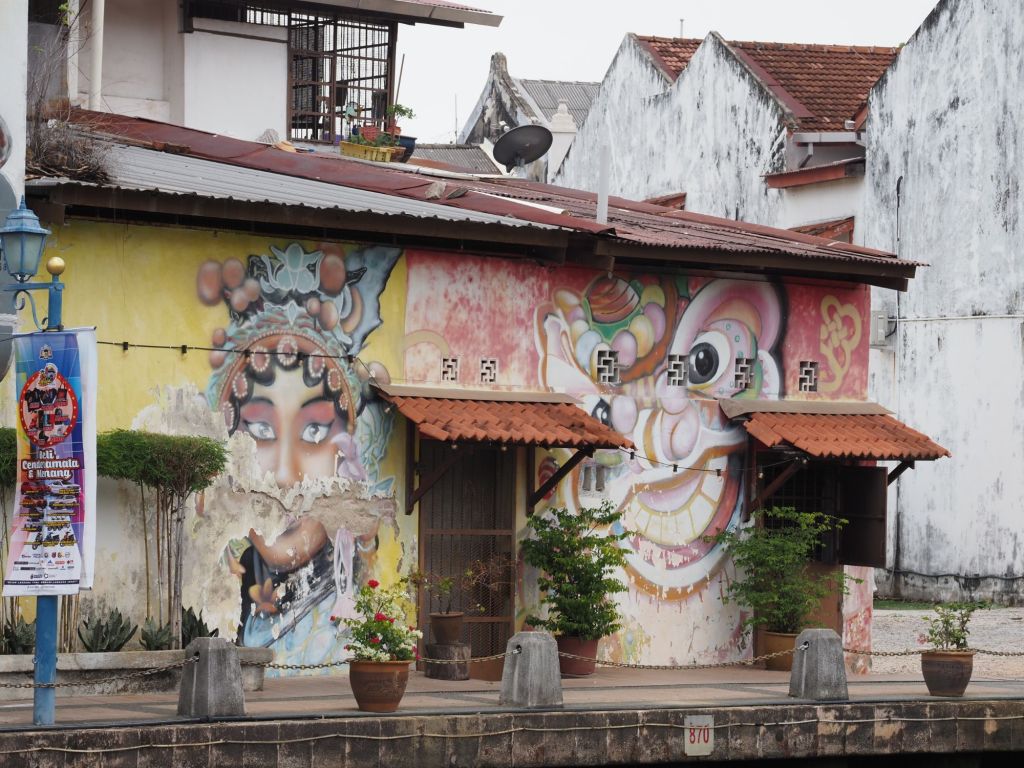
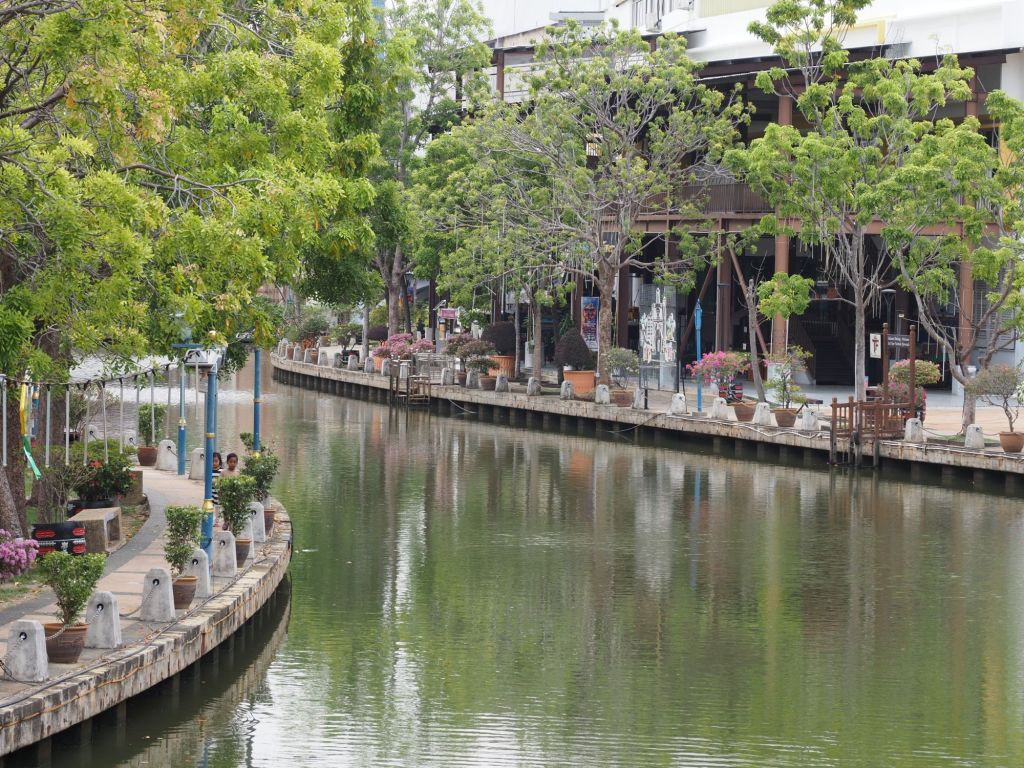
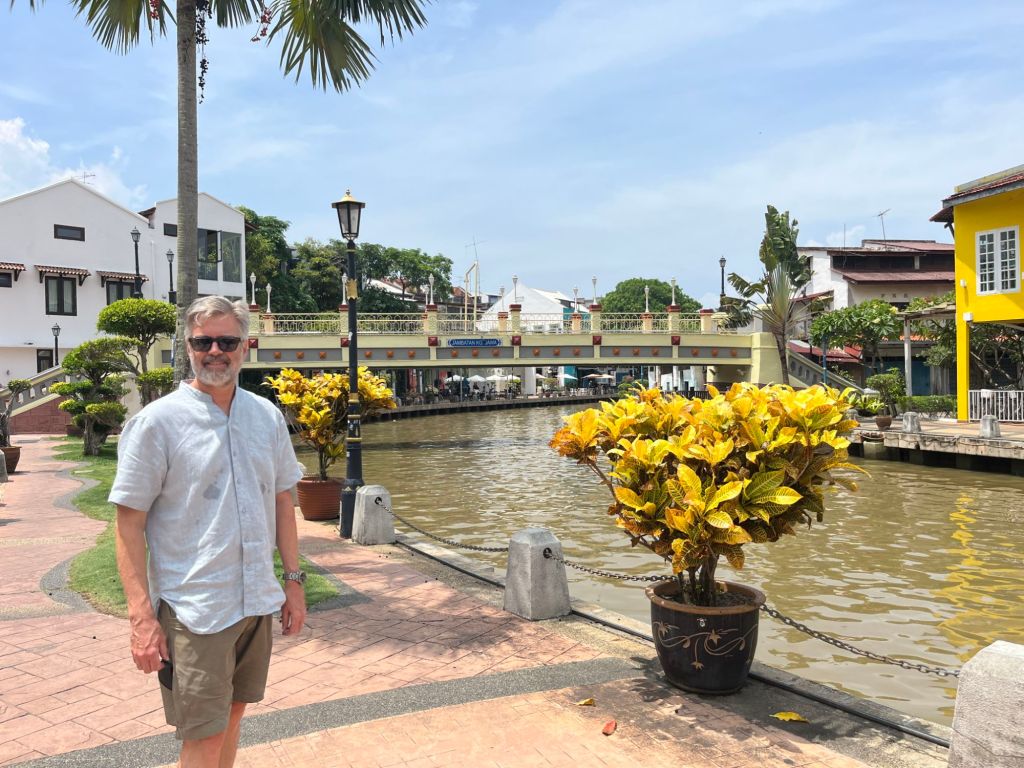
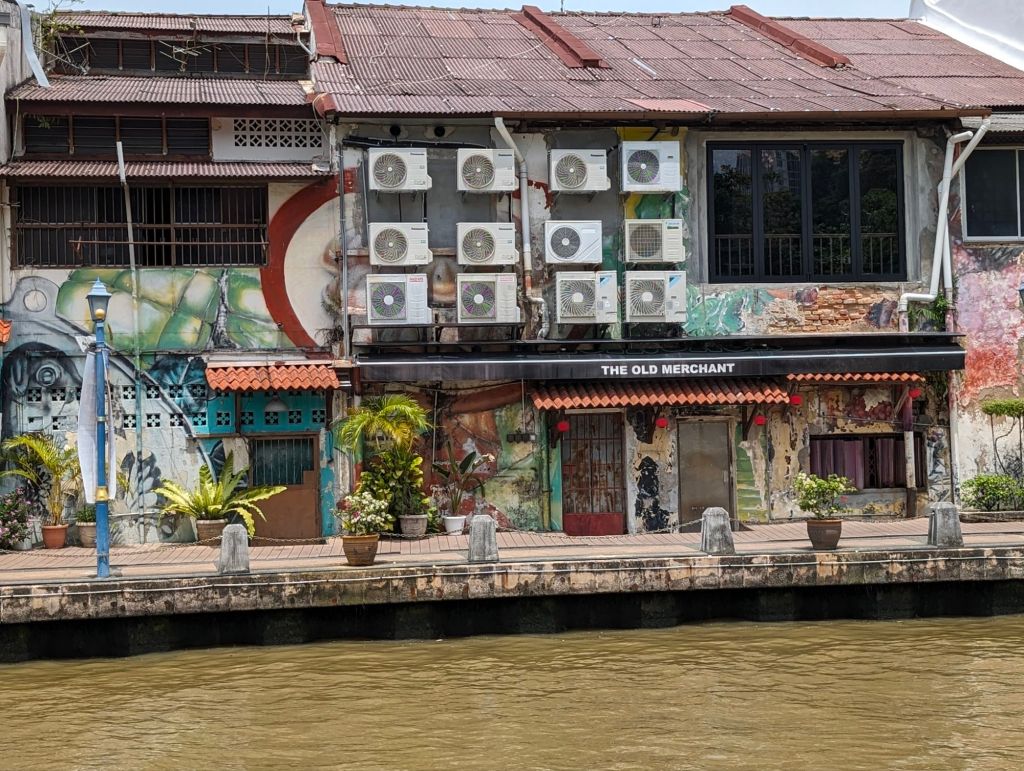
The canal is a major feature of the town – many river walks, restaurants and shops.
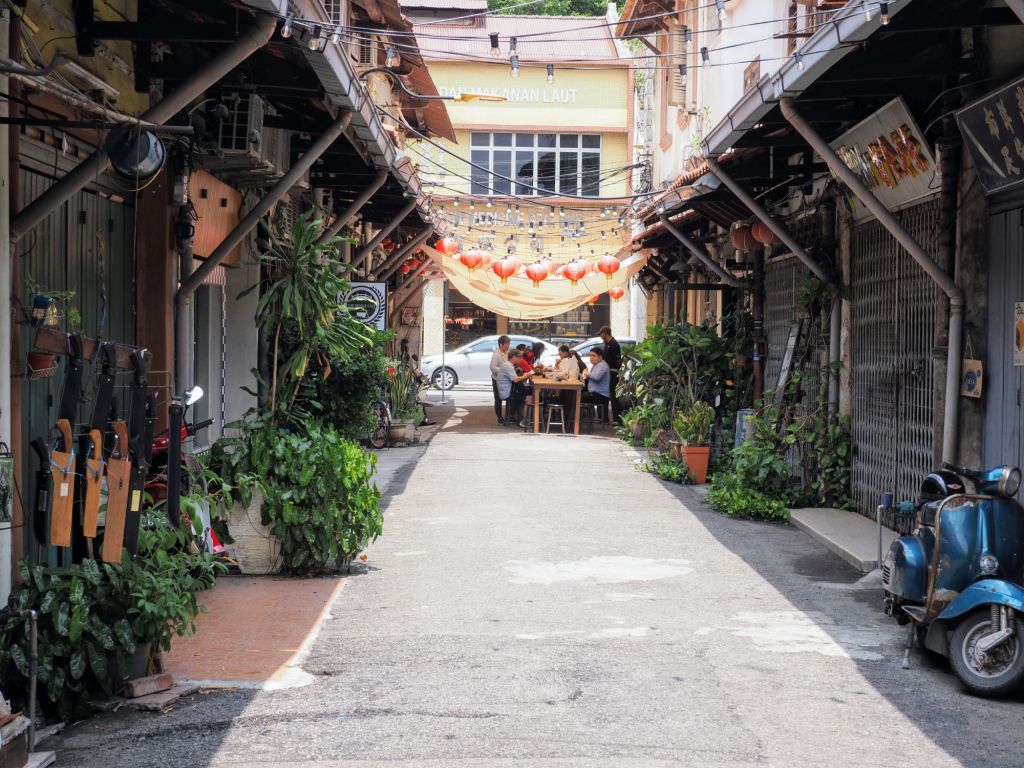
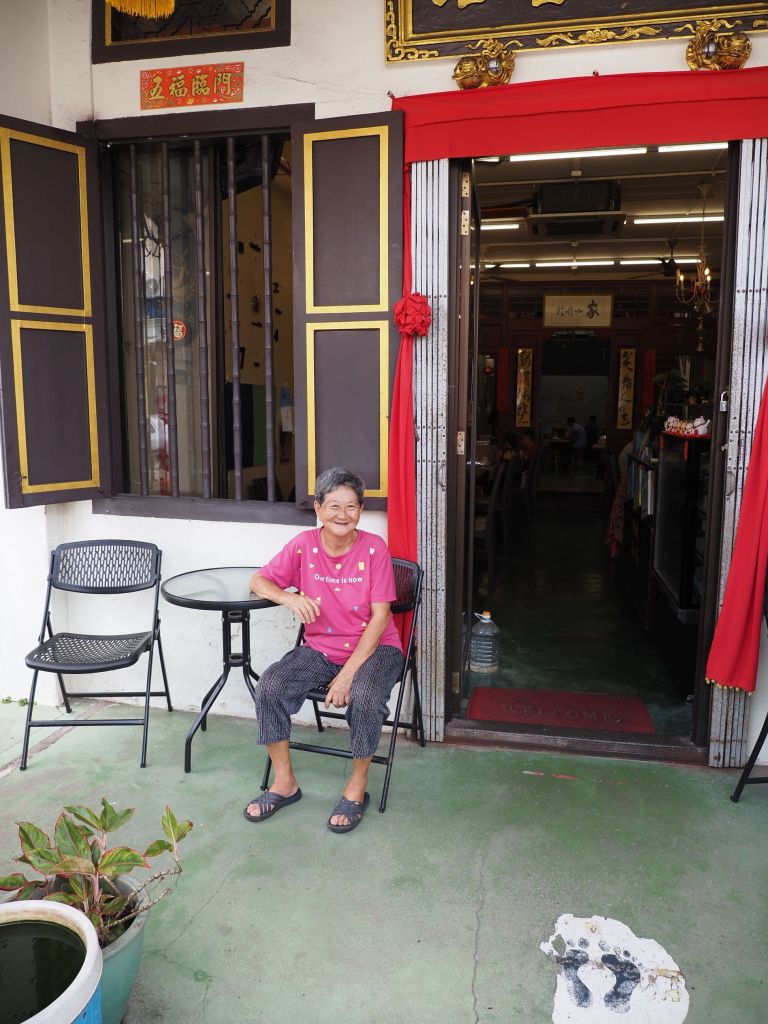
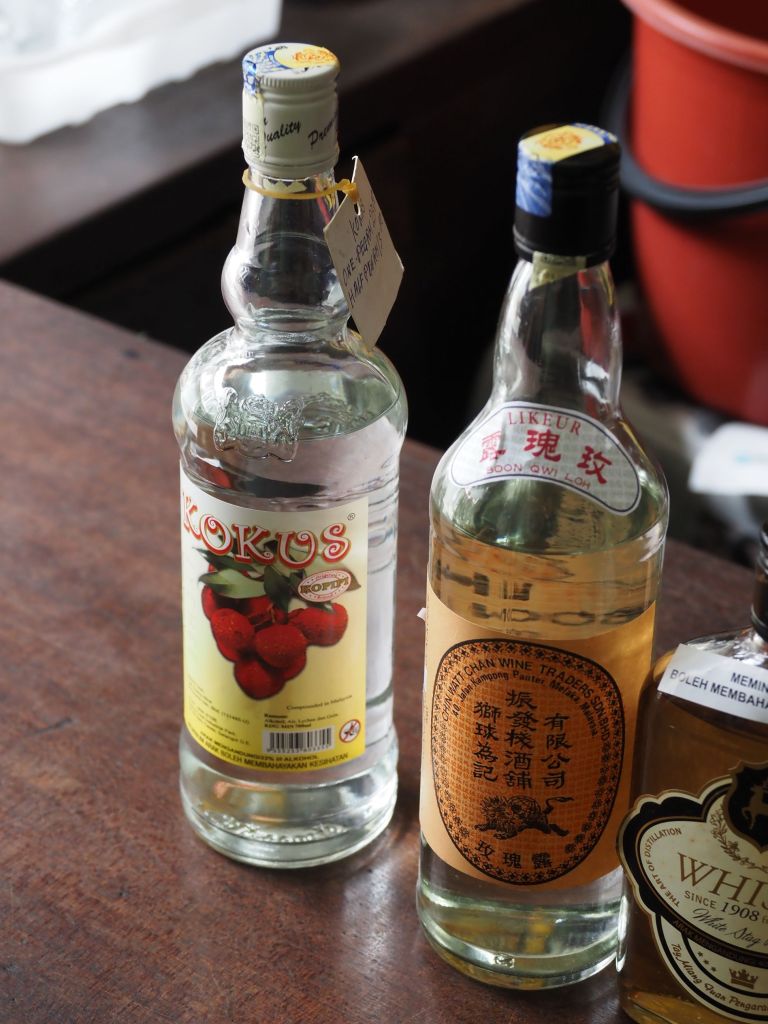
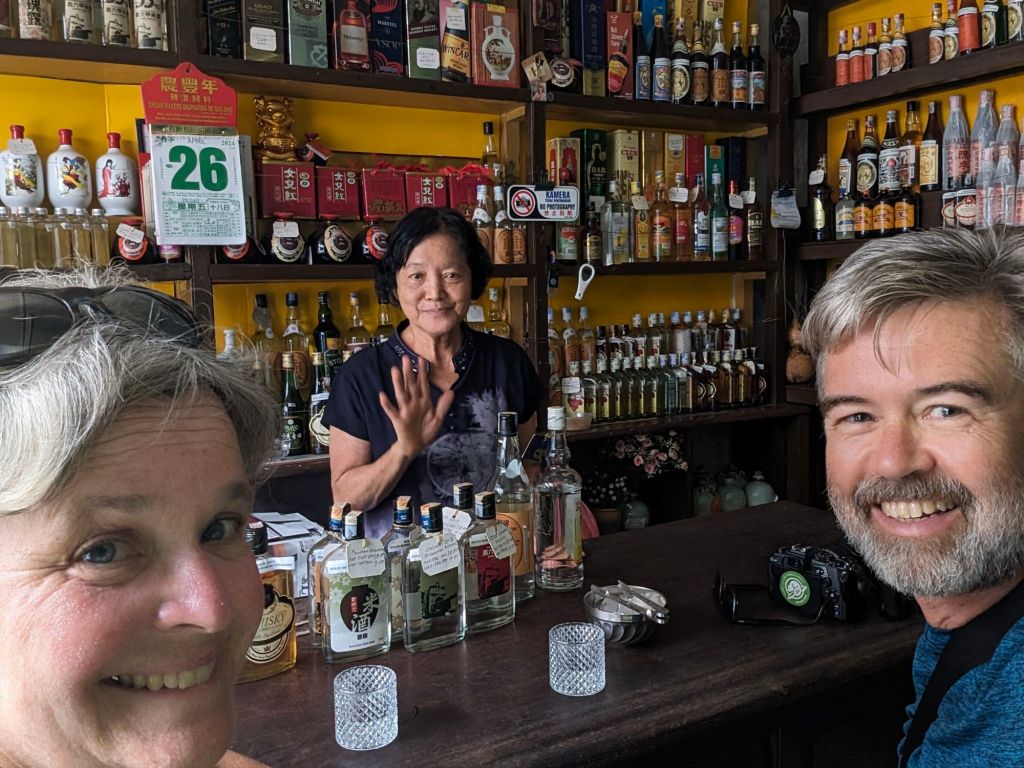
In Malacca, a compulsory stop is Sian Hup Hin. At one time it was an opium den, but now it’s a hard liquor bar run by Aunty Lee Lian Suan. She serves only chinese herbal liquor, rice wines and whisky. No ice, cash terms, not open past 6:00p. She’s tough, but sweet.
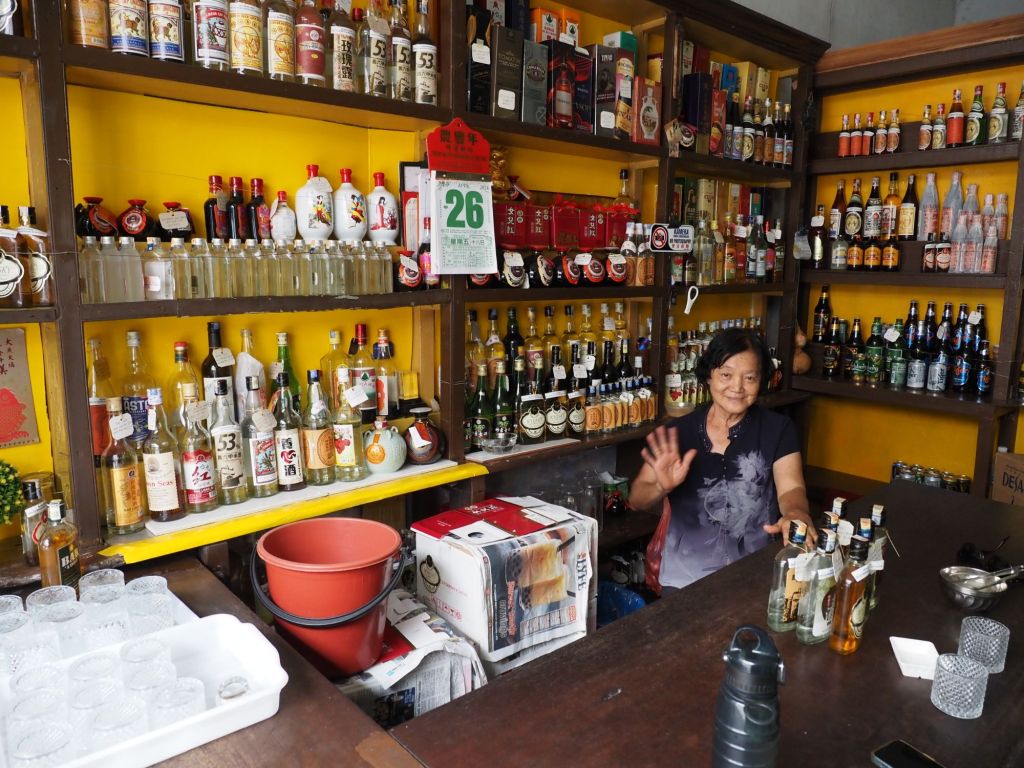
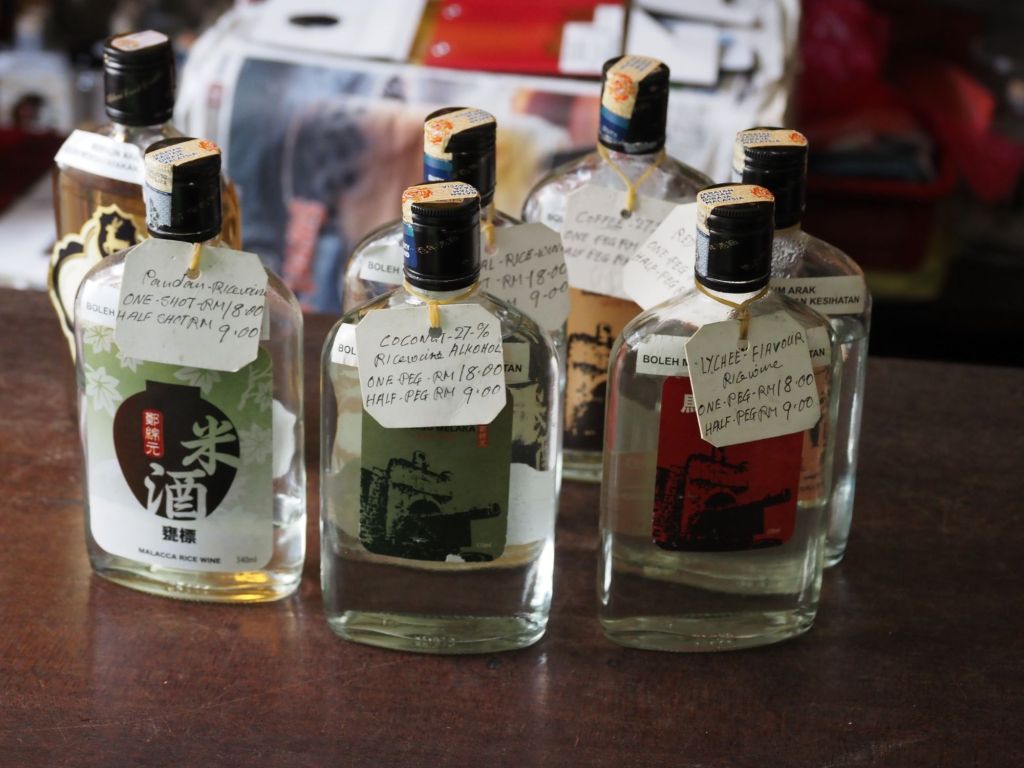
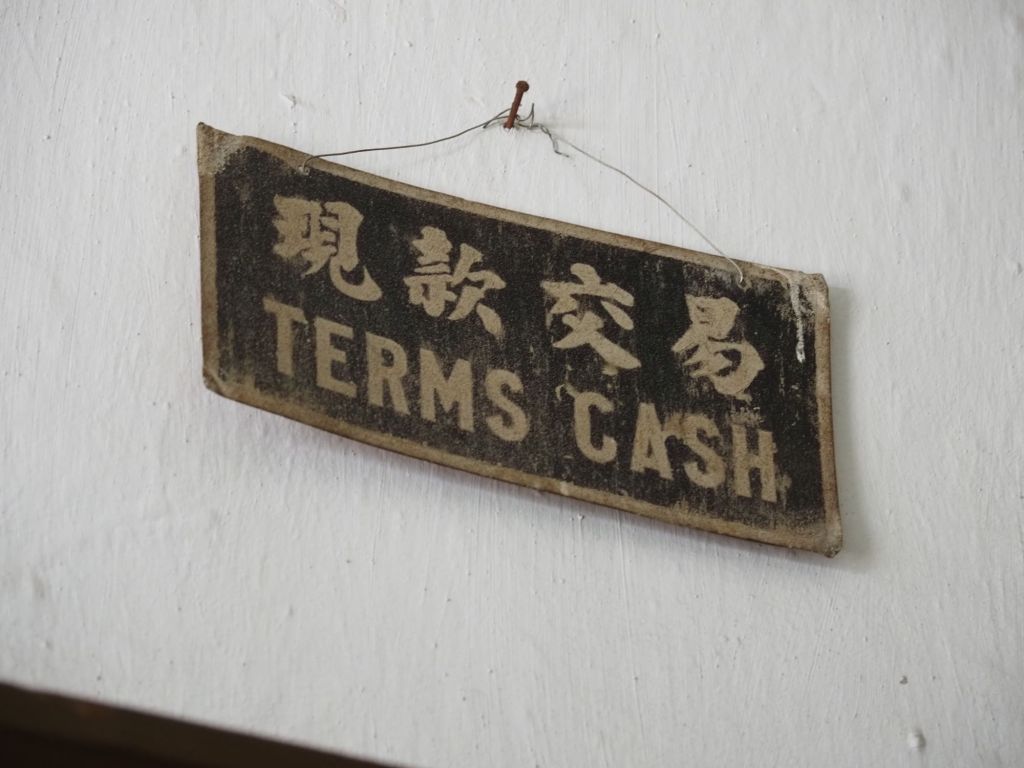
We chose rice wine liqeur, one flavoured with lychee, the other with pink rose petals. Delicious, but potent.
We managed to continue our walk along the canal.
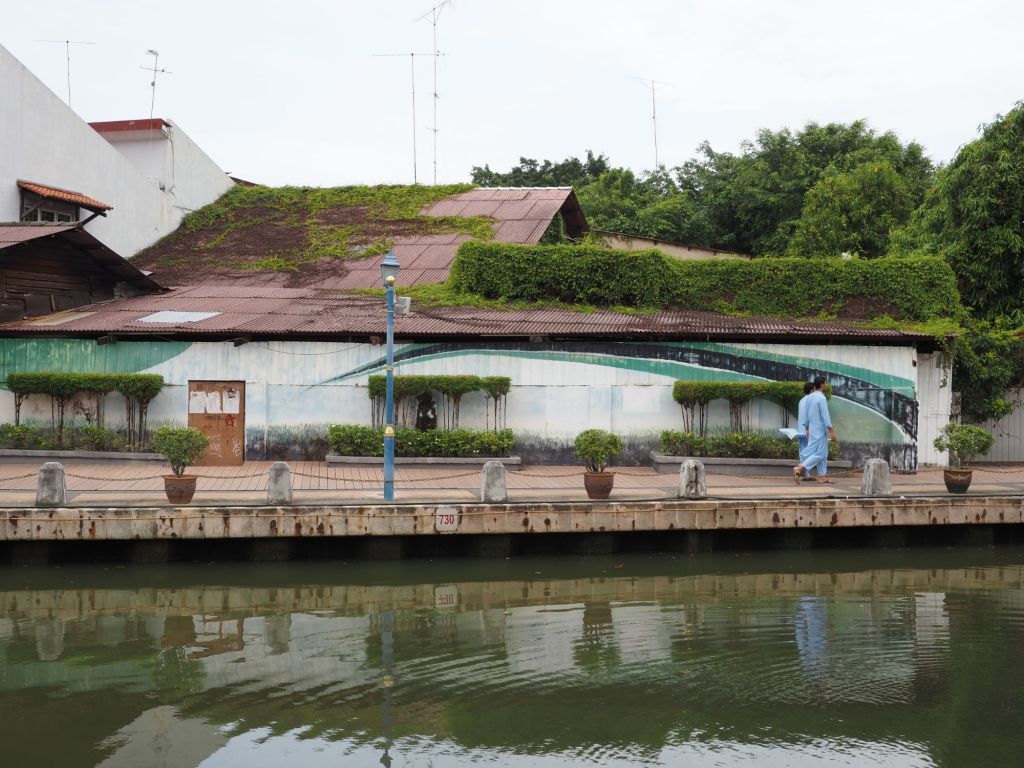
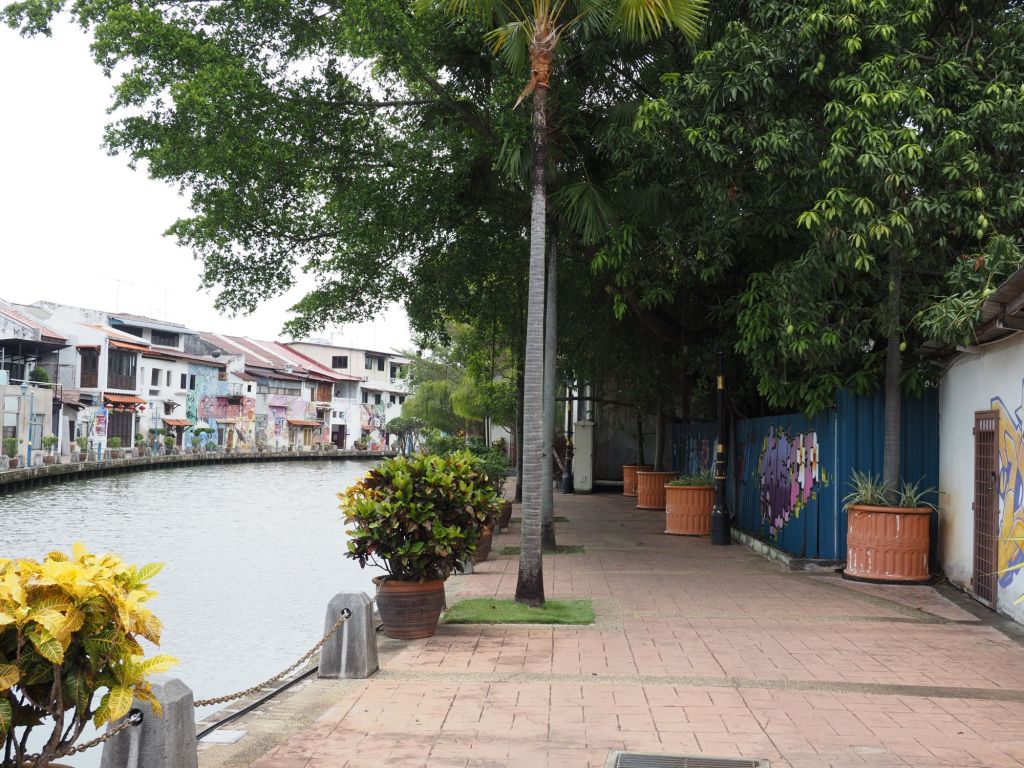
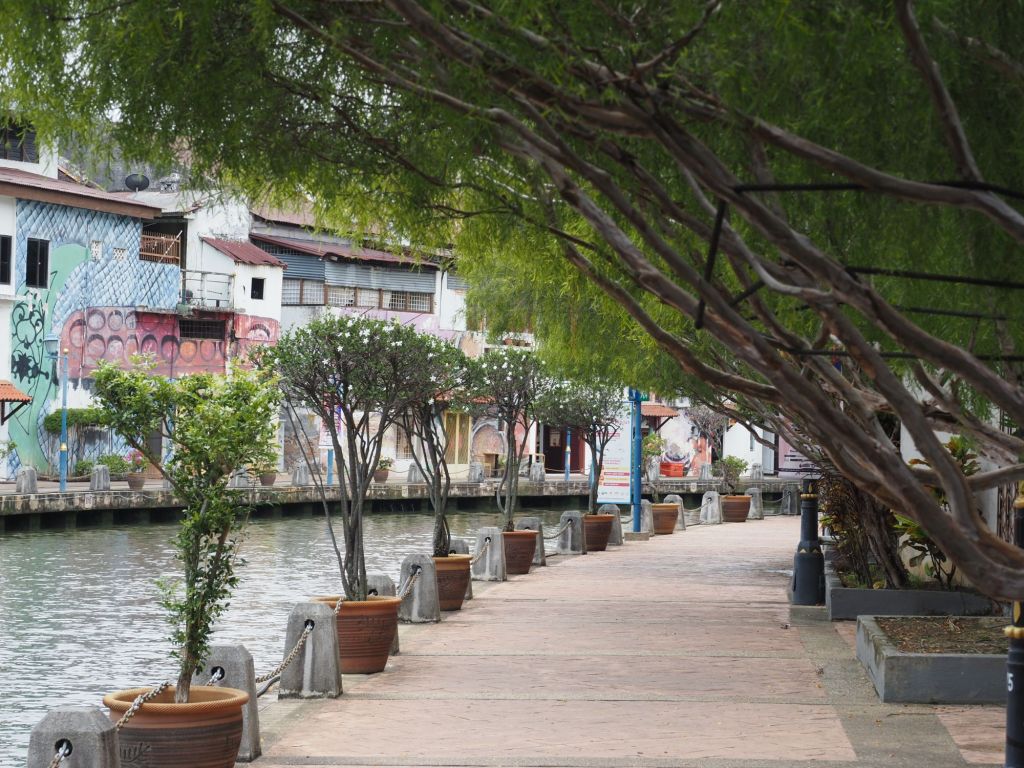
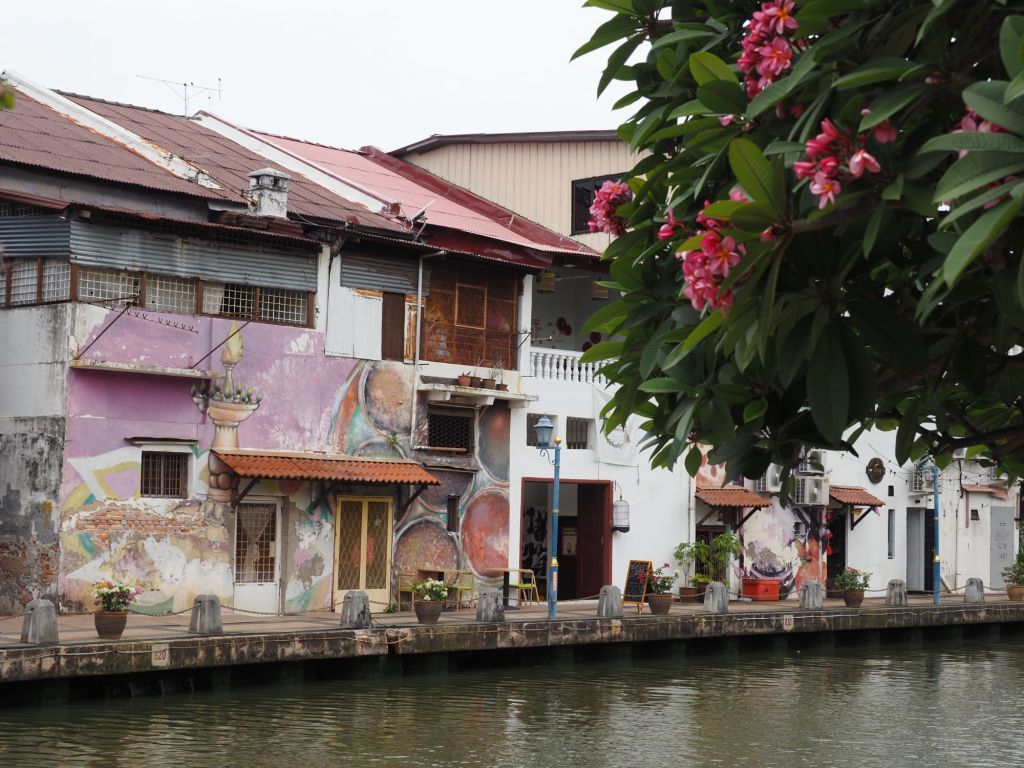
Again, the heat was diabolical, so when we came across the Malaqa House museum, we took refuge.
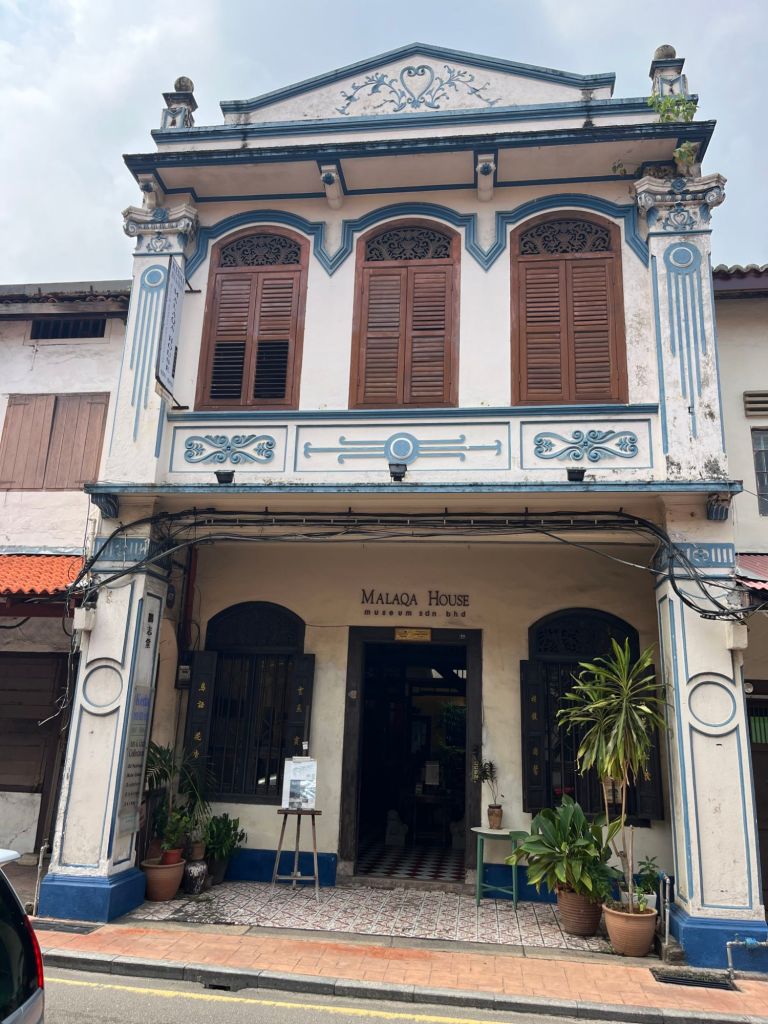
The museum is a restored Baba Nonya House, built in 1880. These houses are two stories, around 26 feet wide, front on the sidewalk, and can be well over 300 feet deep, bordering on a canal.
The first section is a reception area.
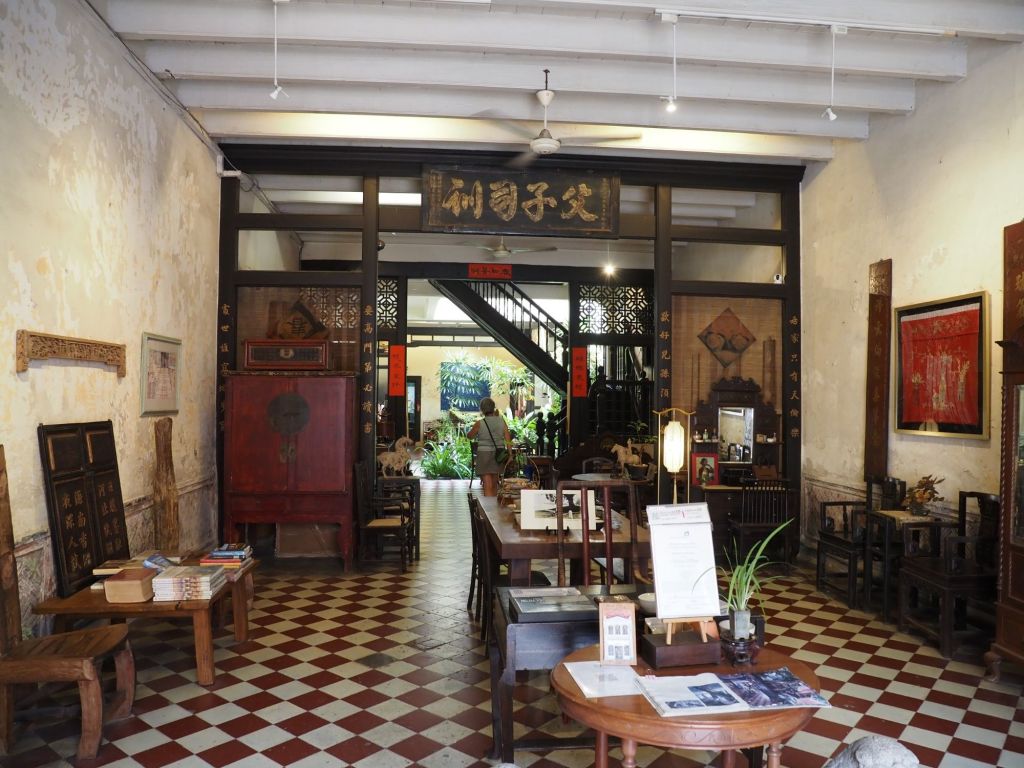
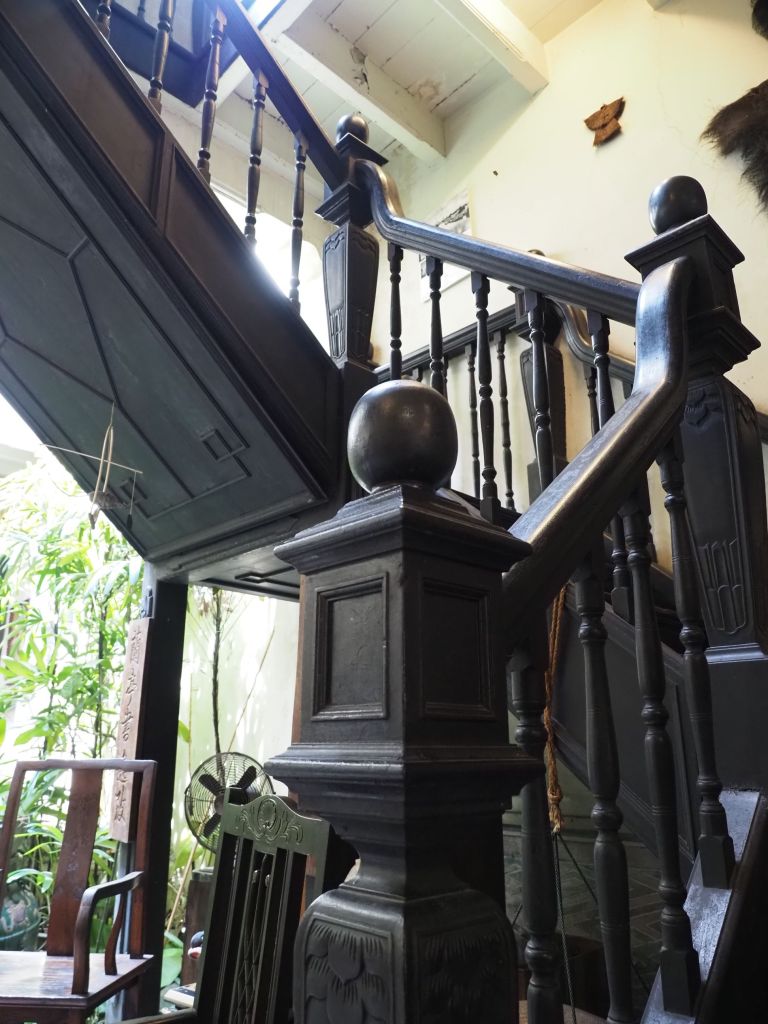
The second section is referred to as an airwell – like an open atrium. Rainwater is collected from the roof systems and directed here, into the shallow well.
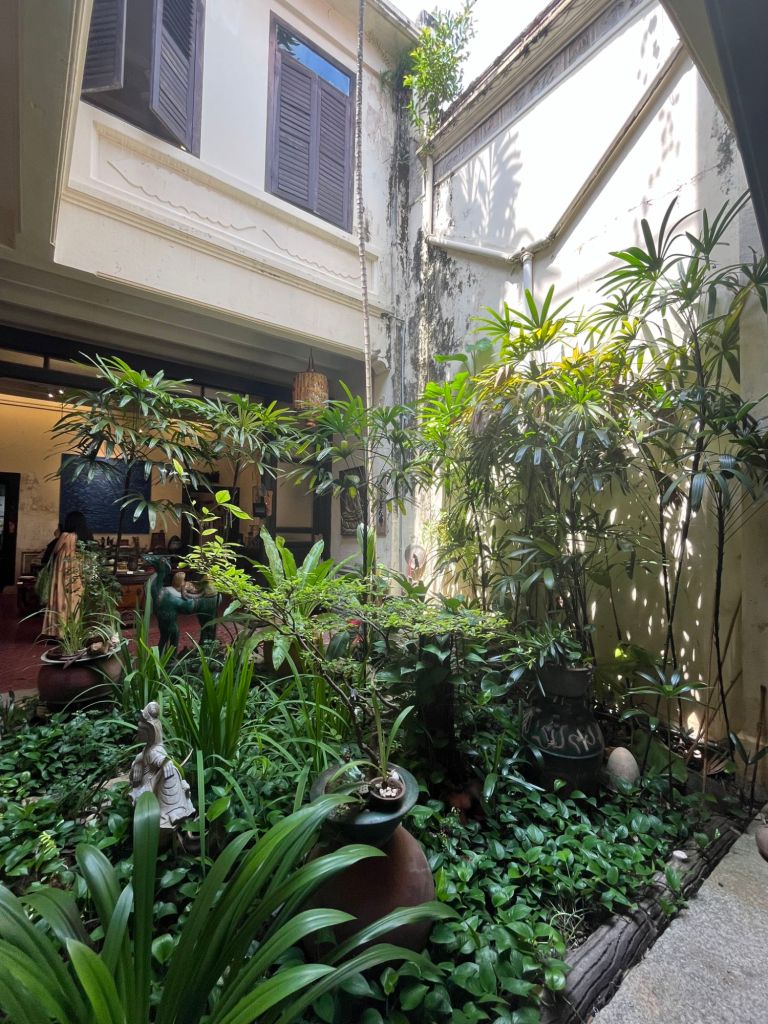
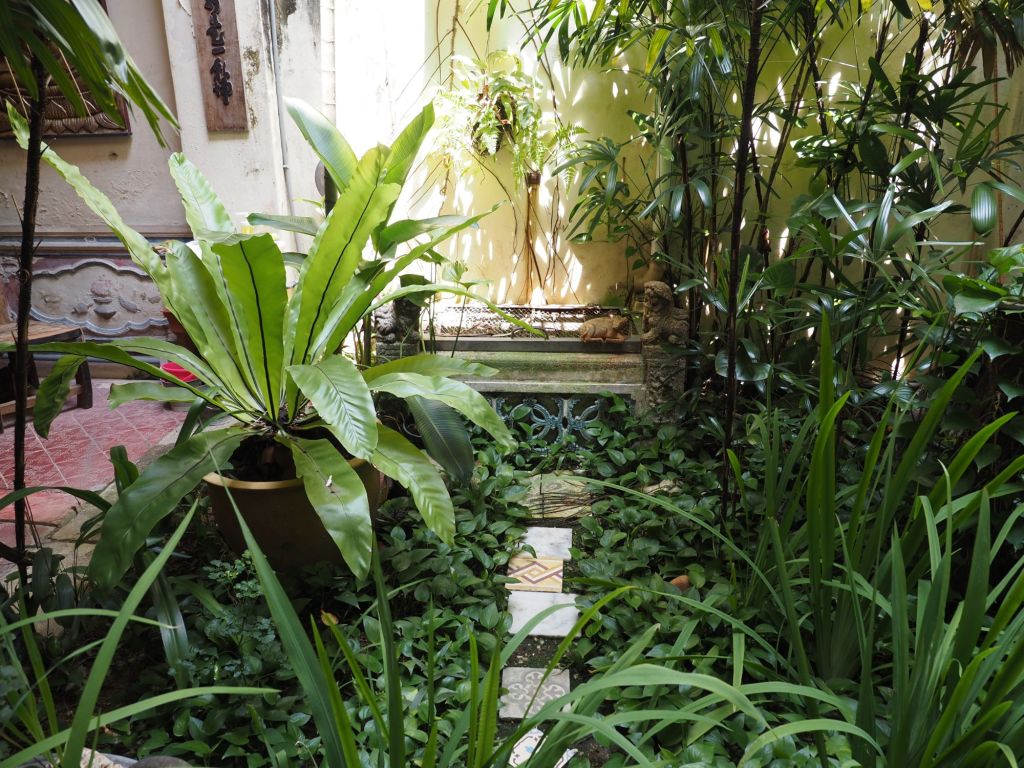
The third section is another living area.
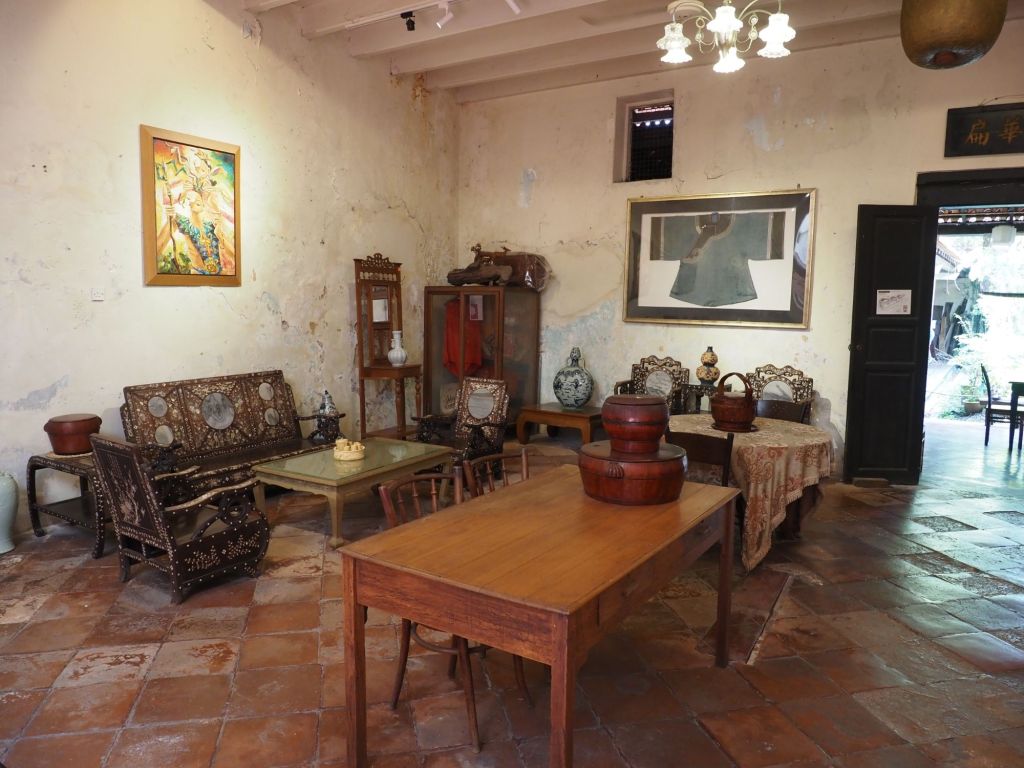
Then another airwell.
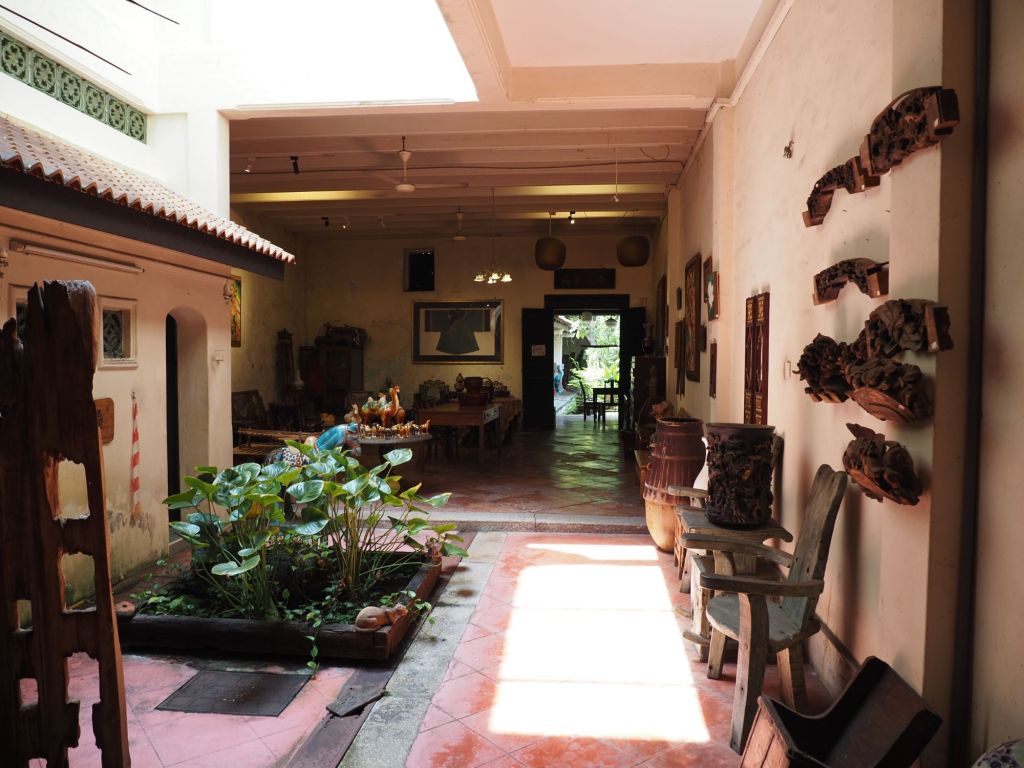
Then another living area – usually kitchen and toilet, that opens to an open courtyard with garden and horse stable. The canal is just beyond.
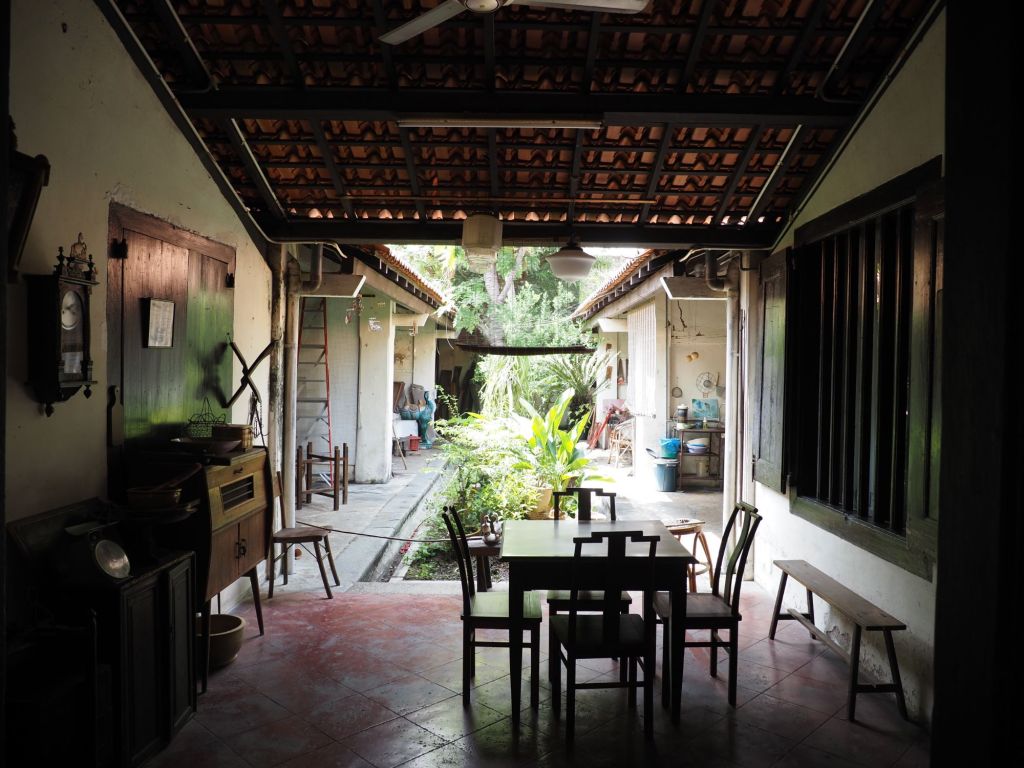
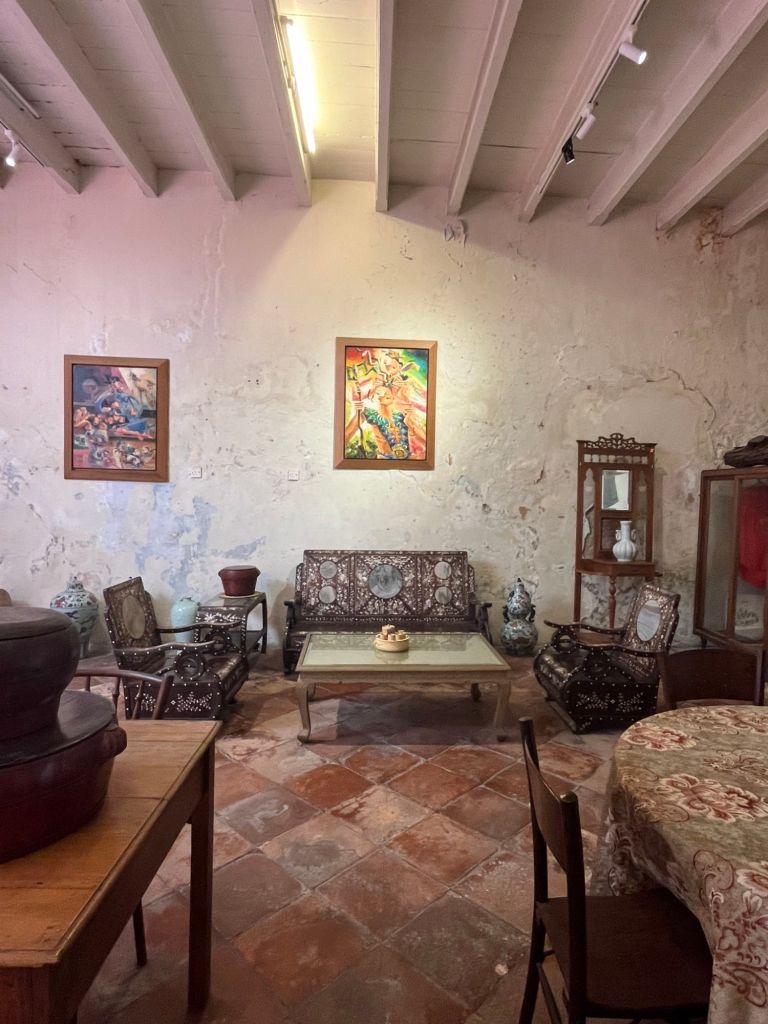
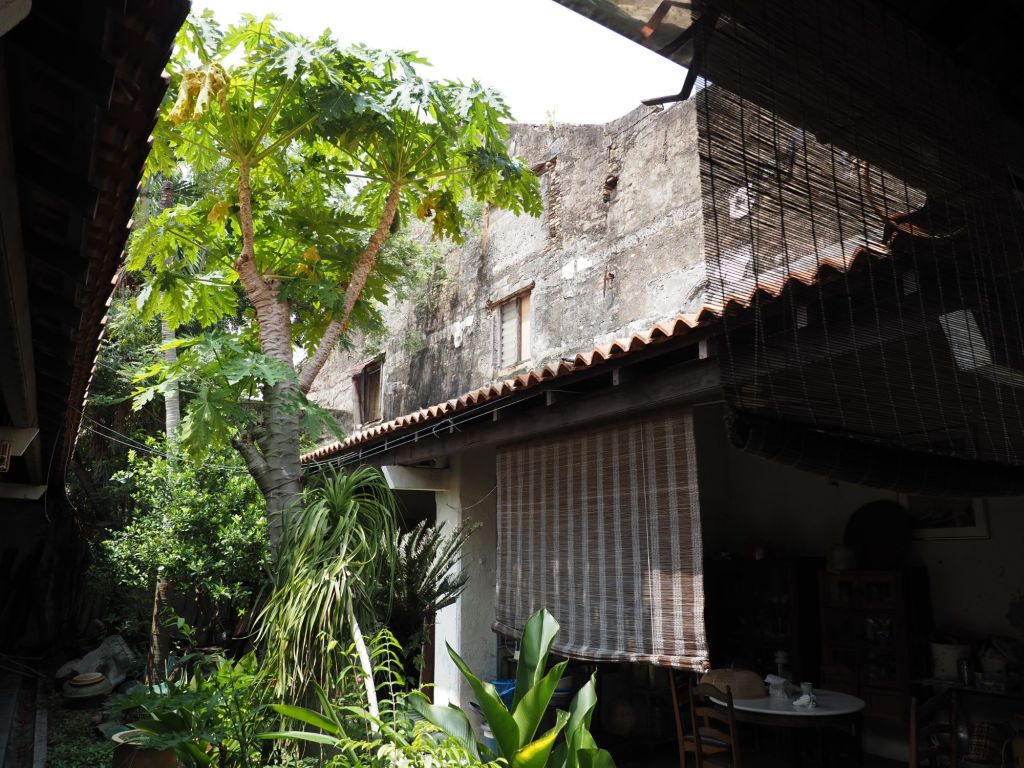
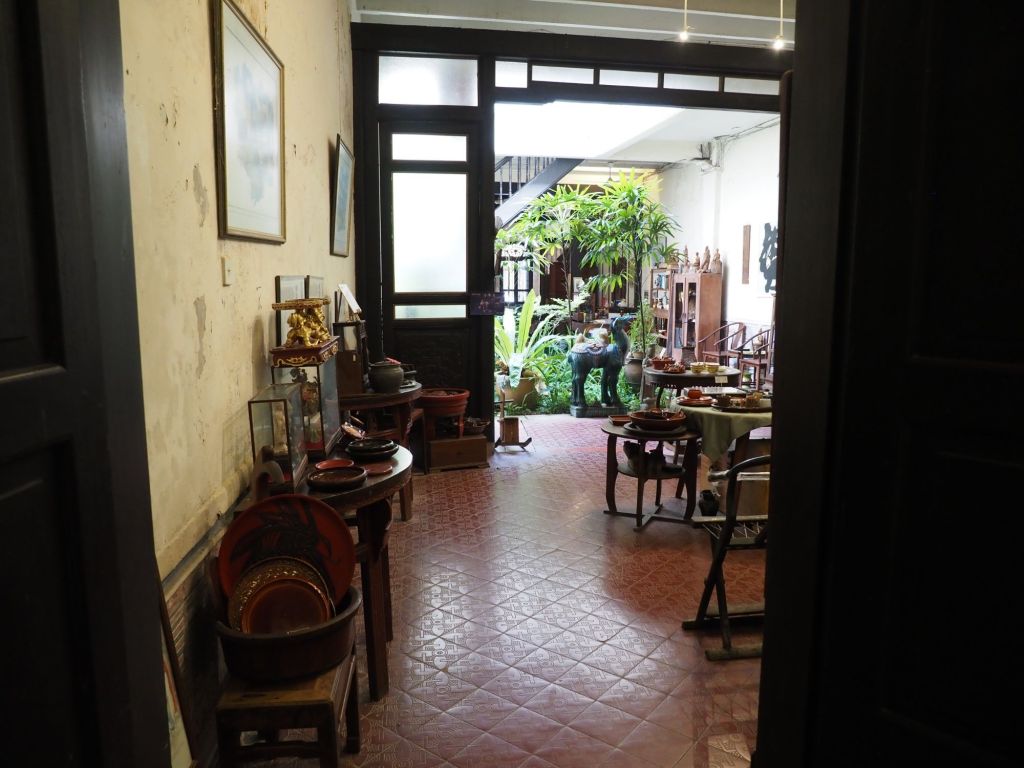
The upper floor rooms were used for sleeping and storage.
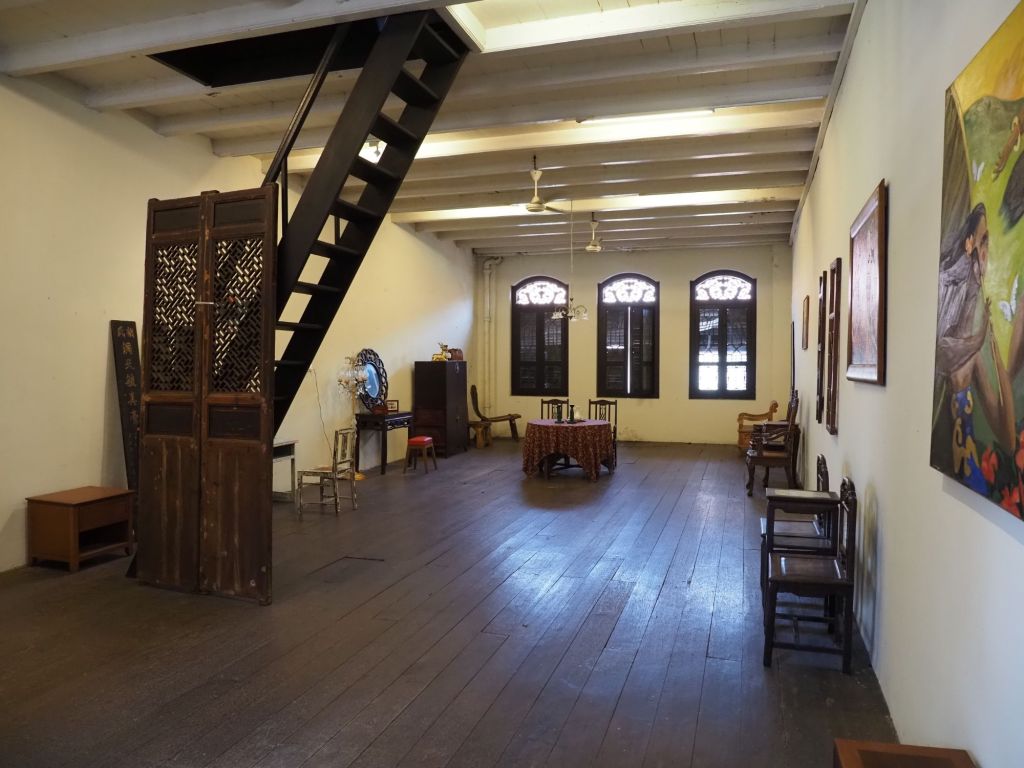
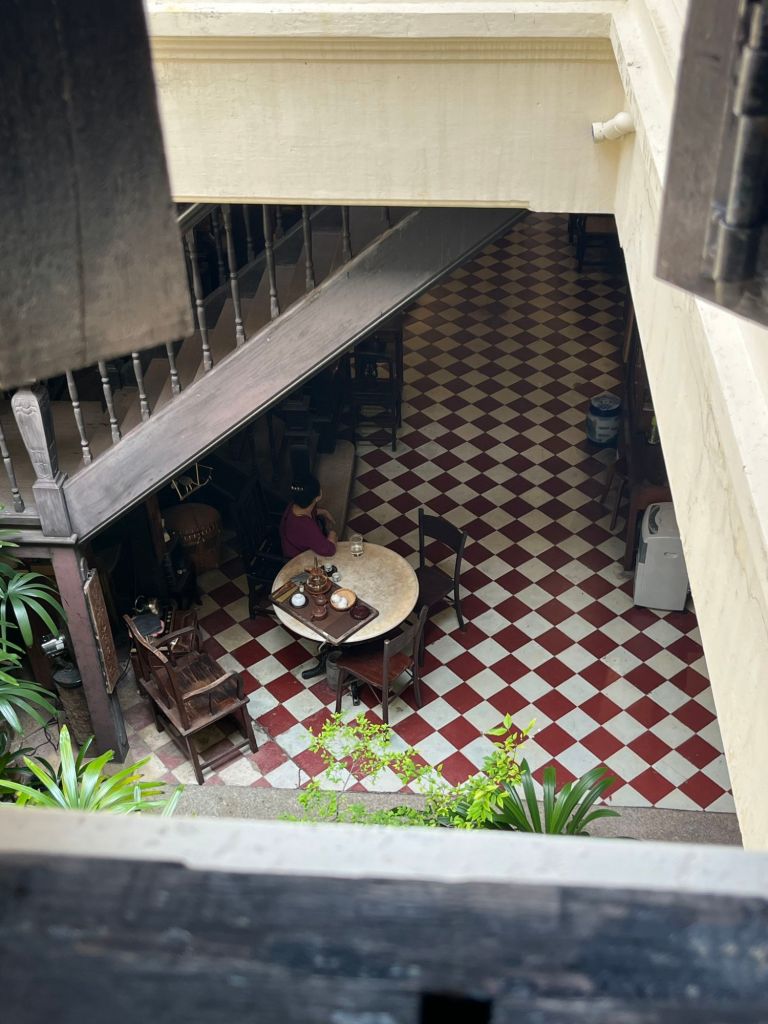
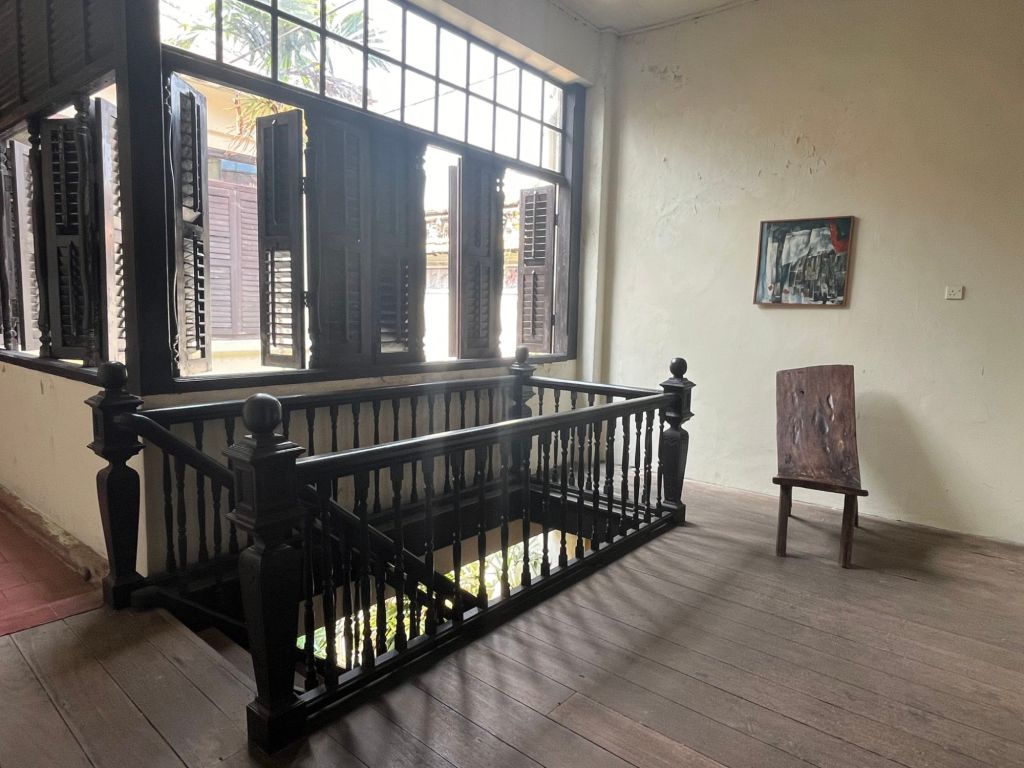
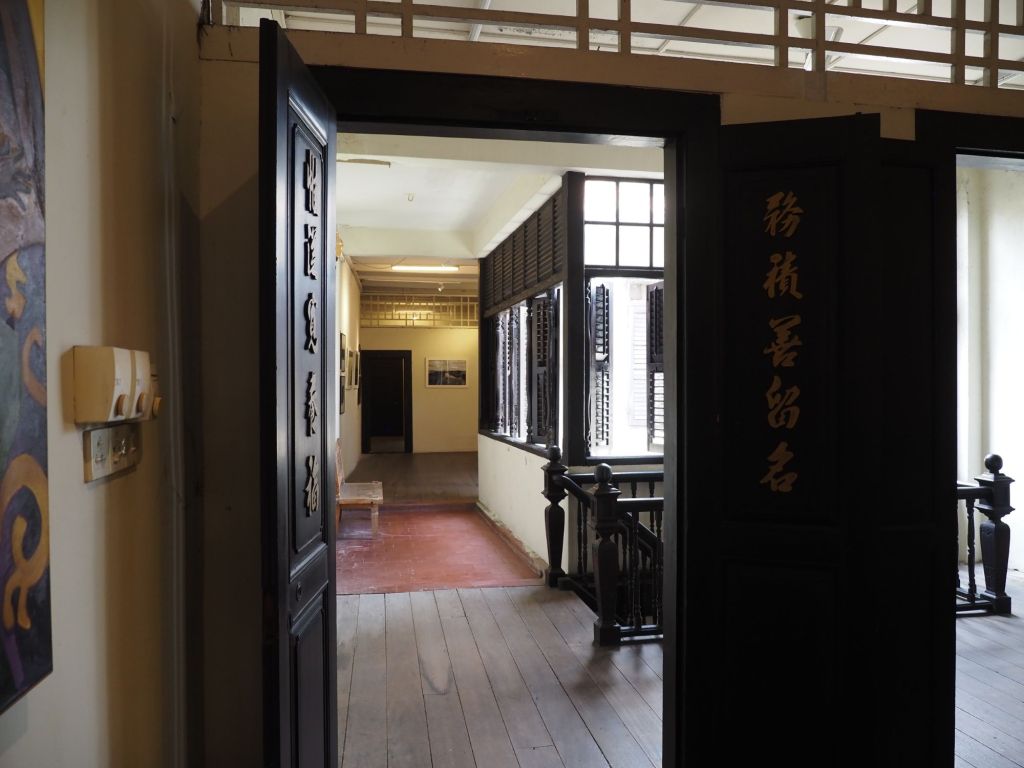
We enjoyed the museum. Very interesting architecture.
Back to the walking tour, and the heat!
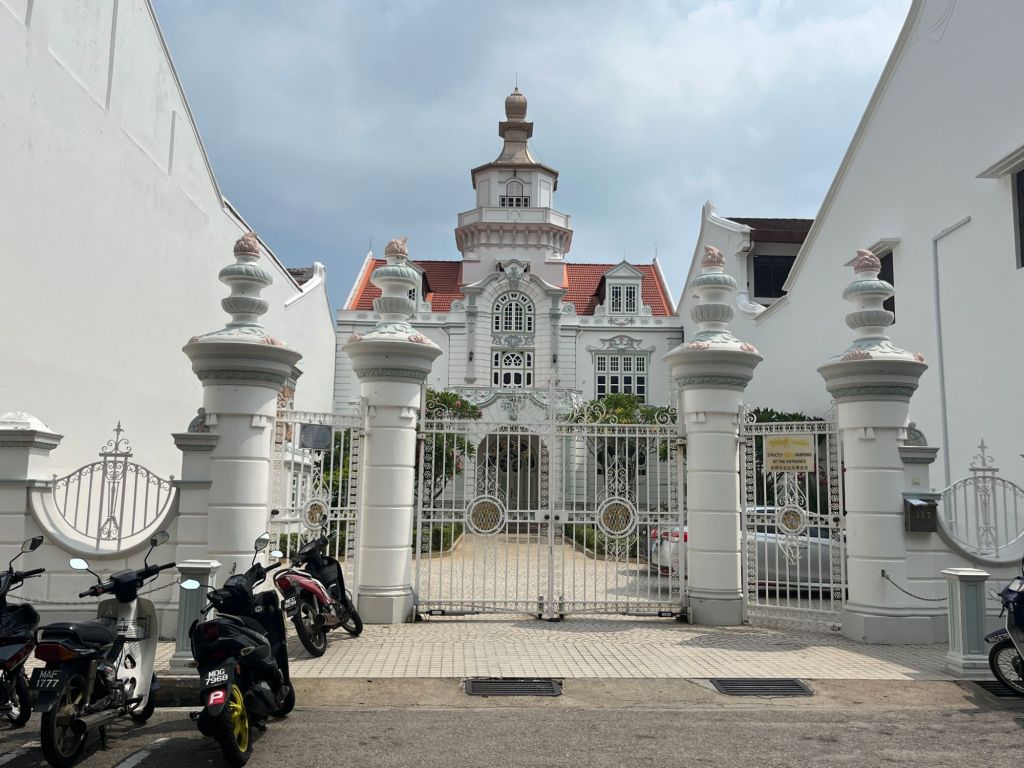
Then the afternoon rains came, so we ducked into a cafe for drinks and a snack.
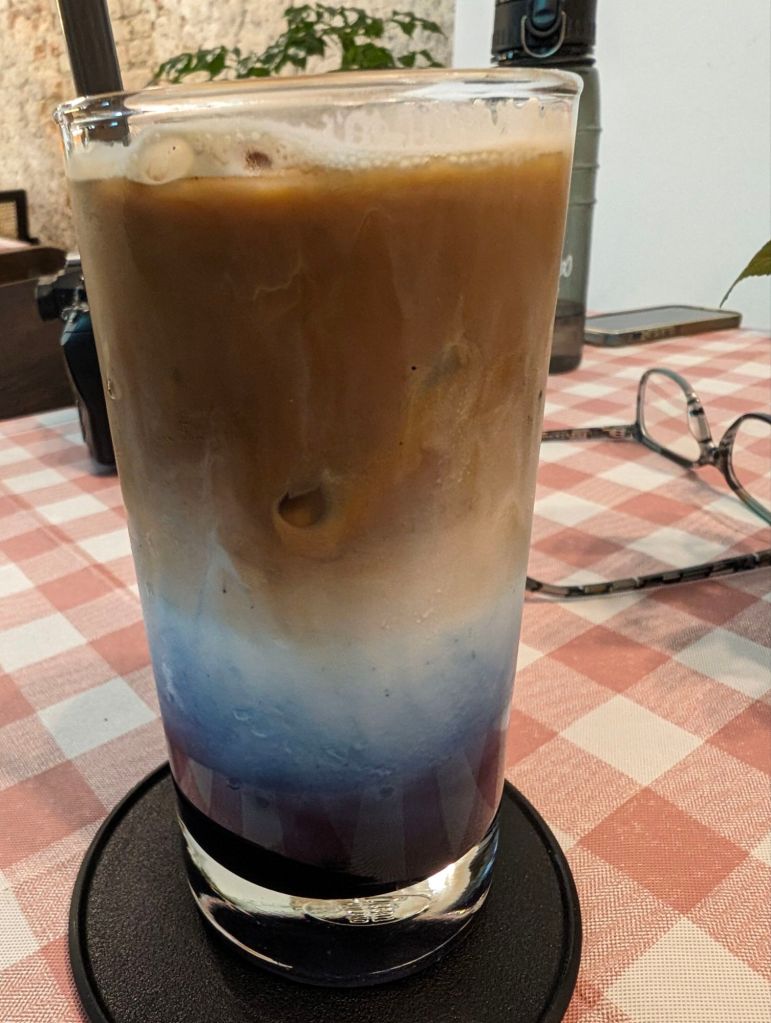
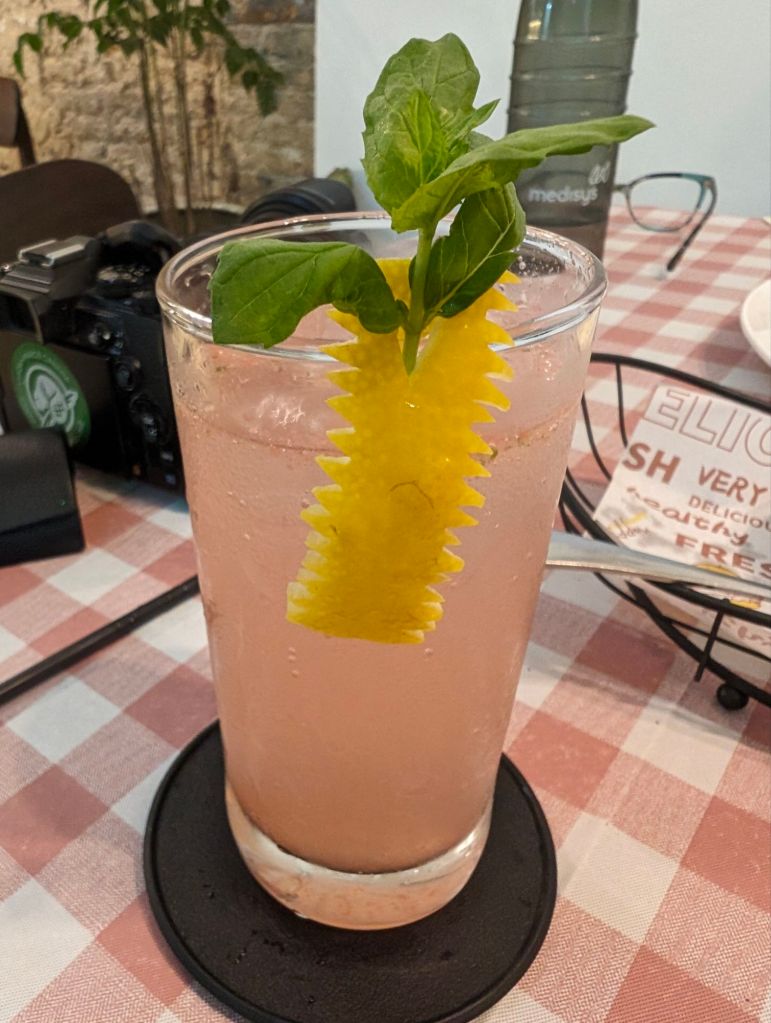
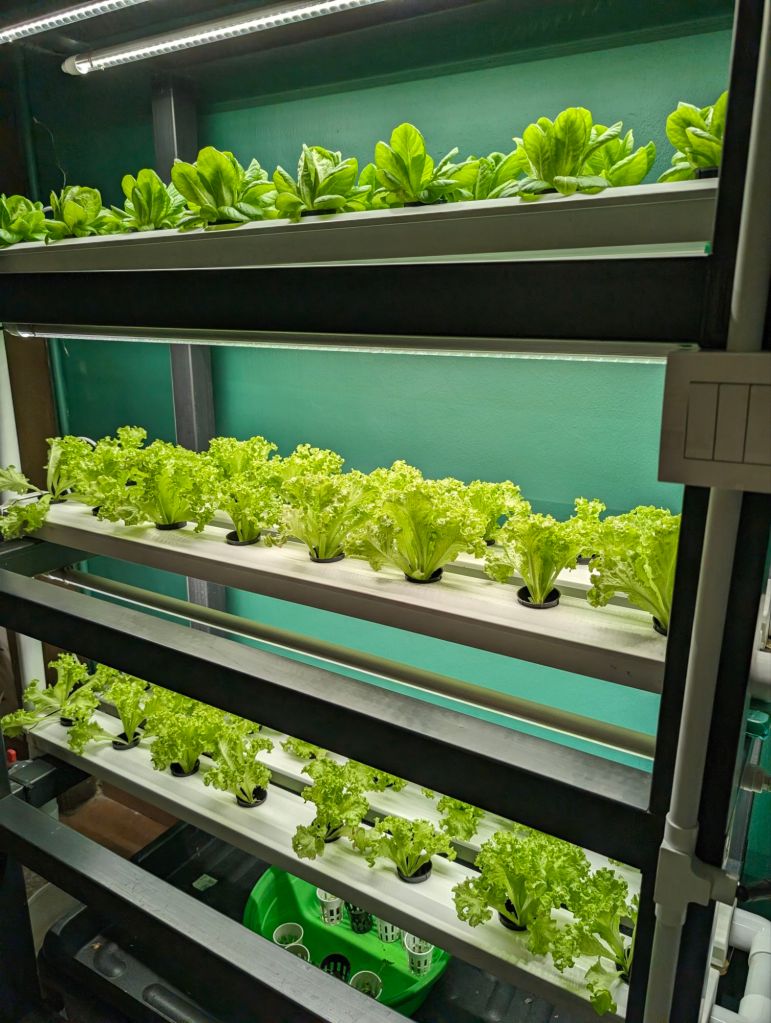
Then, once the rain subsided, it was on to dinner at Wild Coriander, which happens to be housed in one of the Baba Nonya houses.
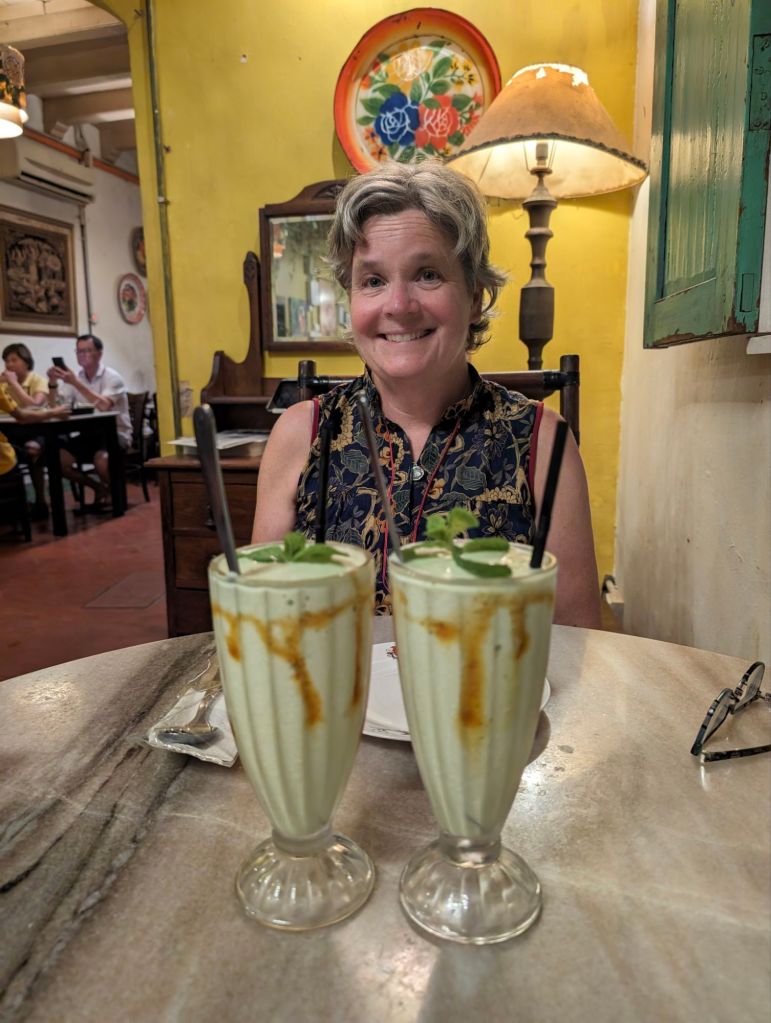
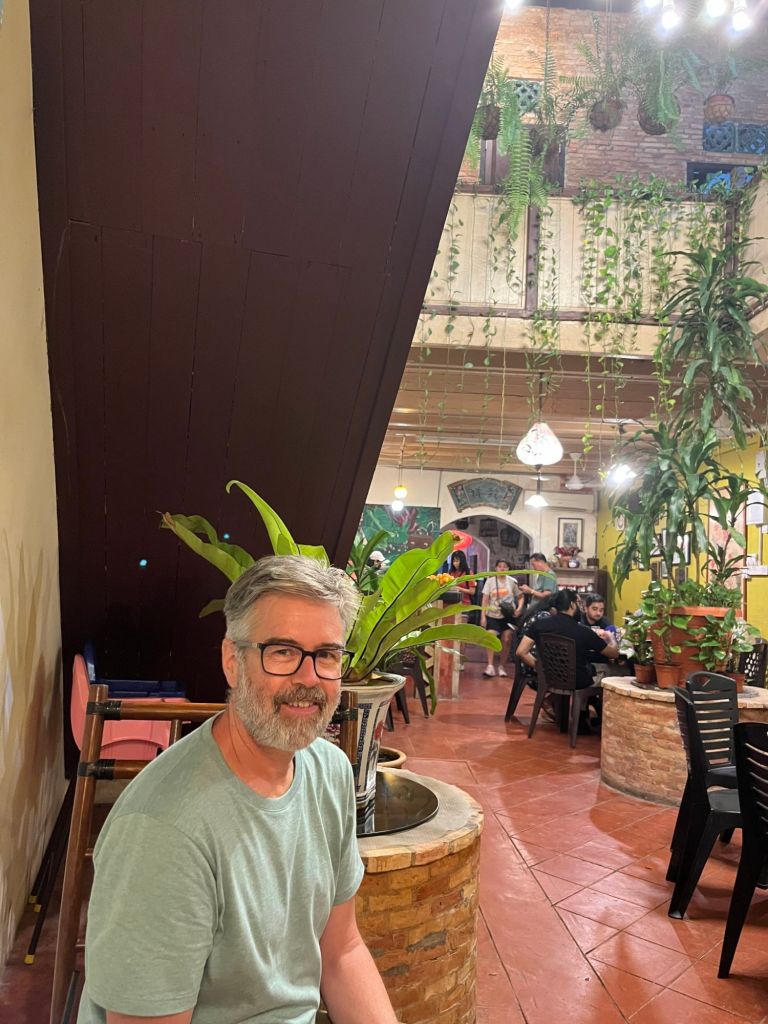
Our server’s name was Carson – he gave us some solid advice on what to order.
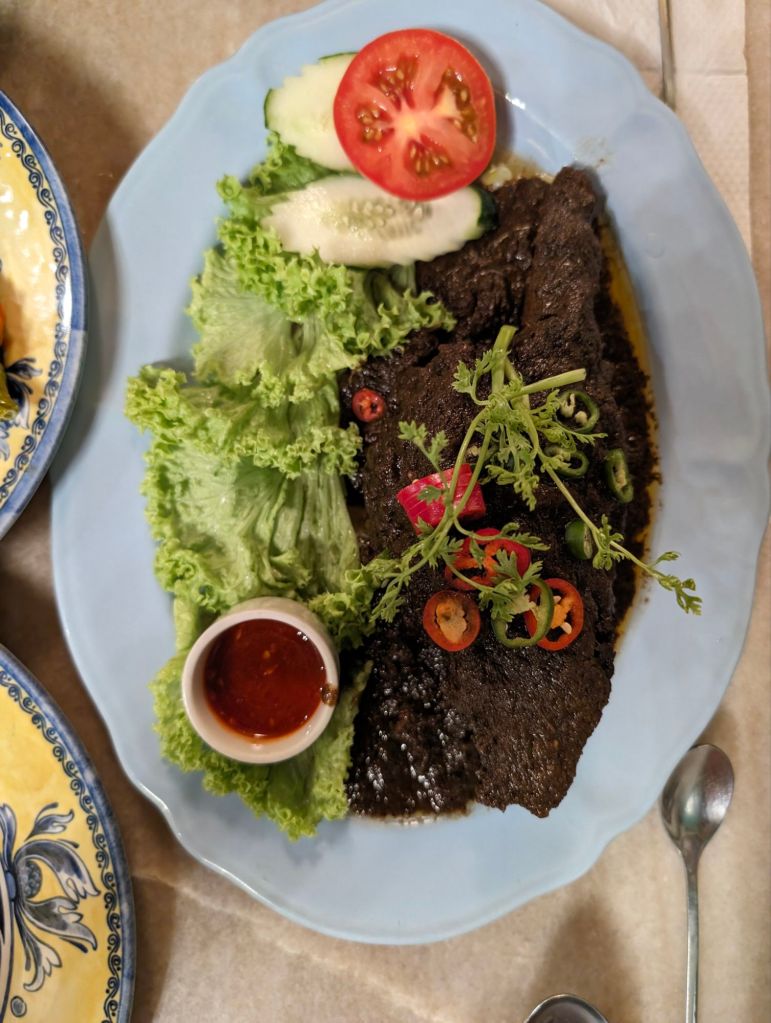
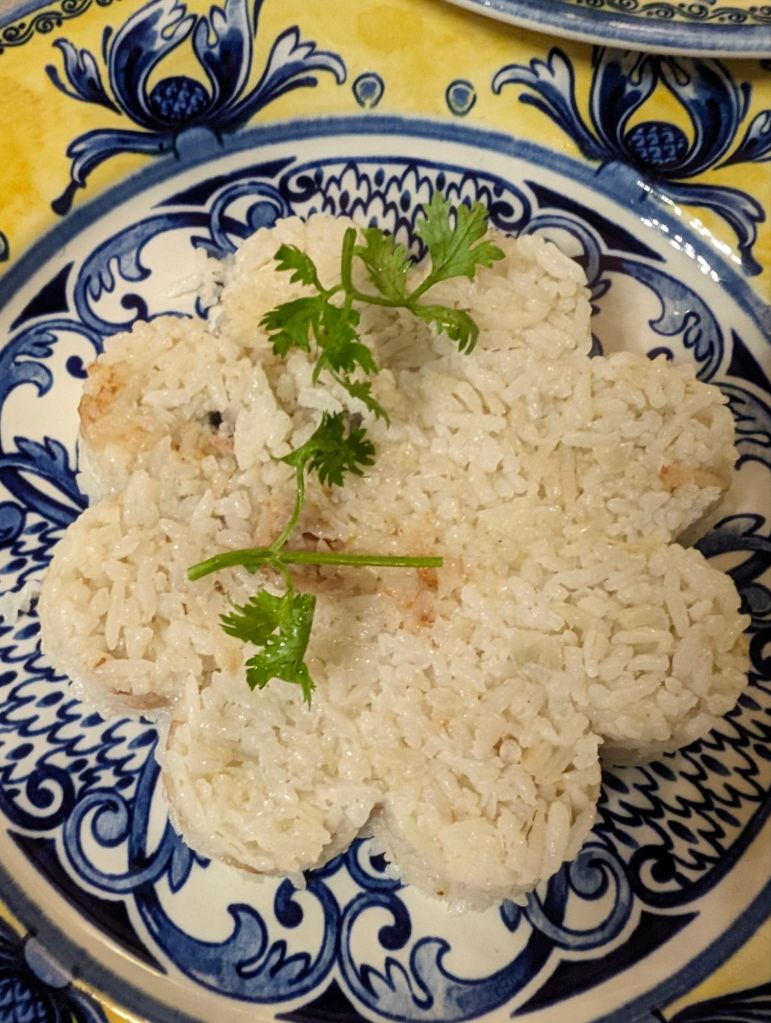
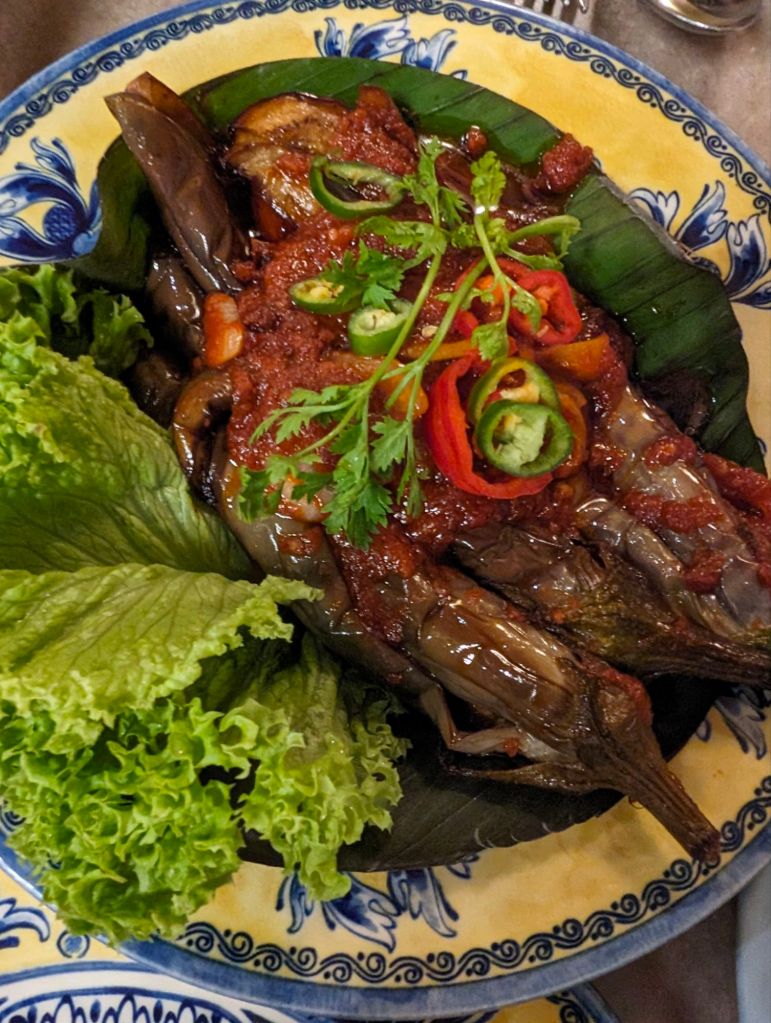
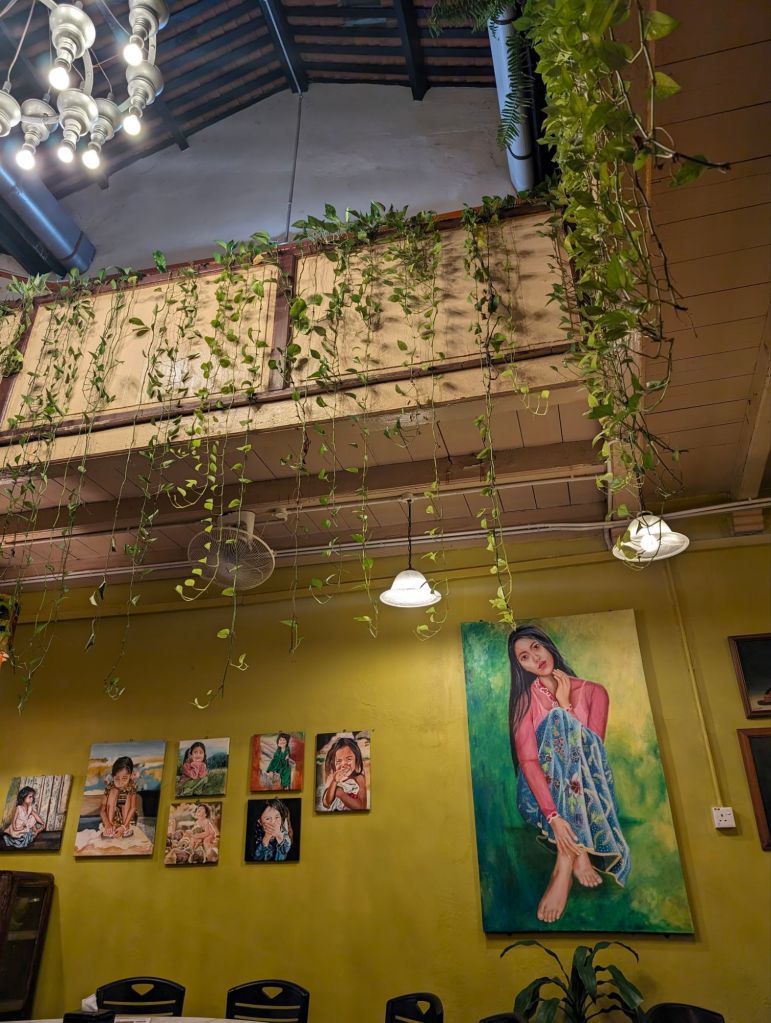
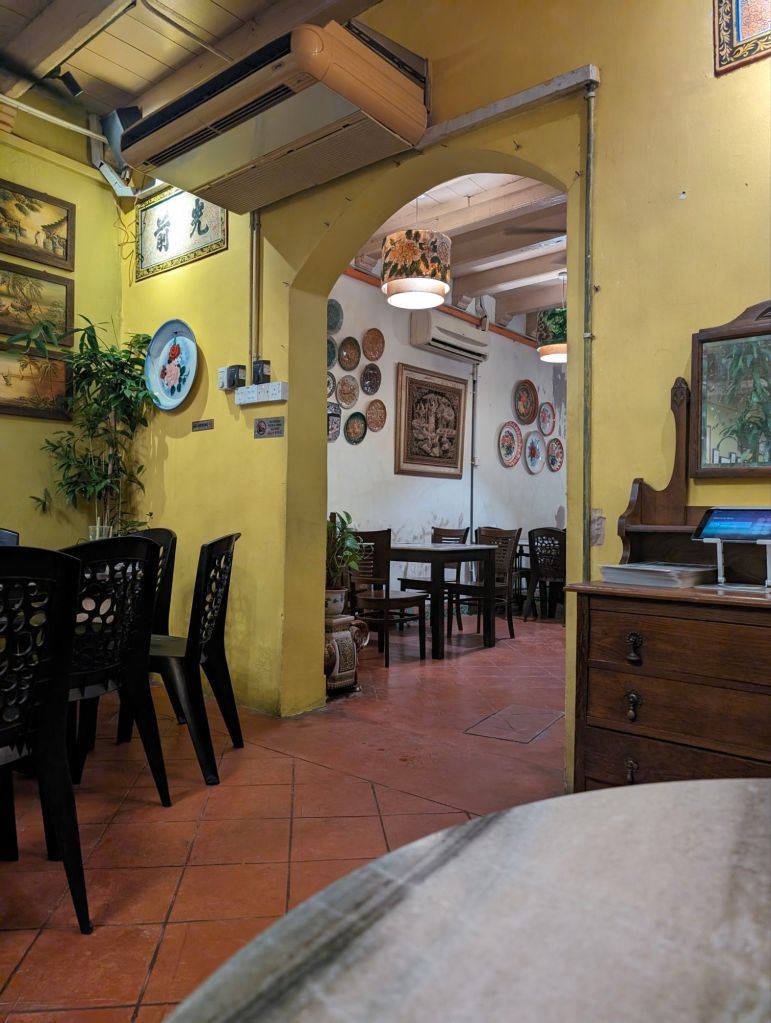
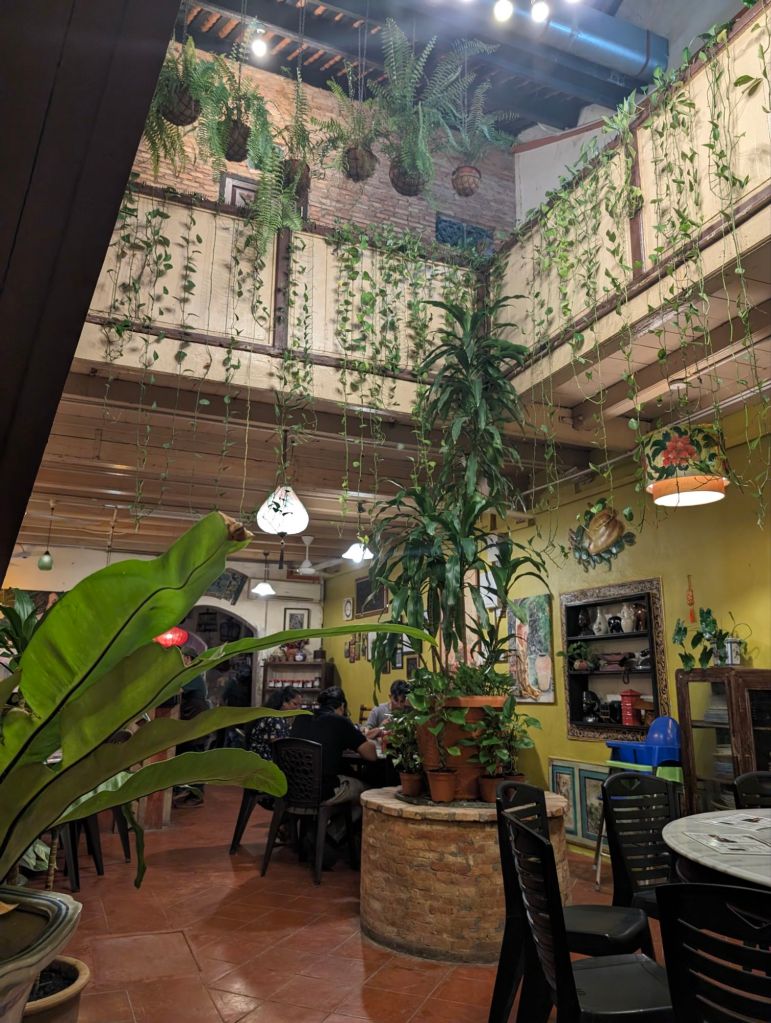
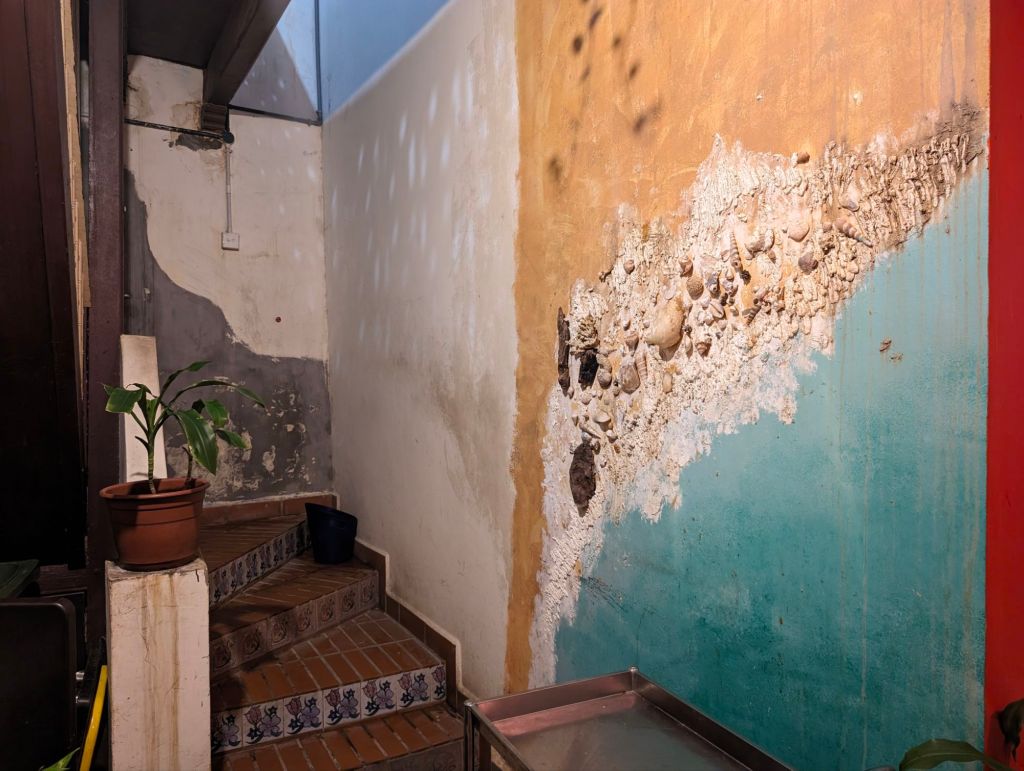
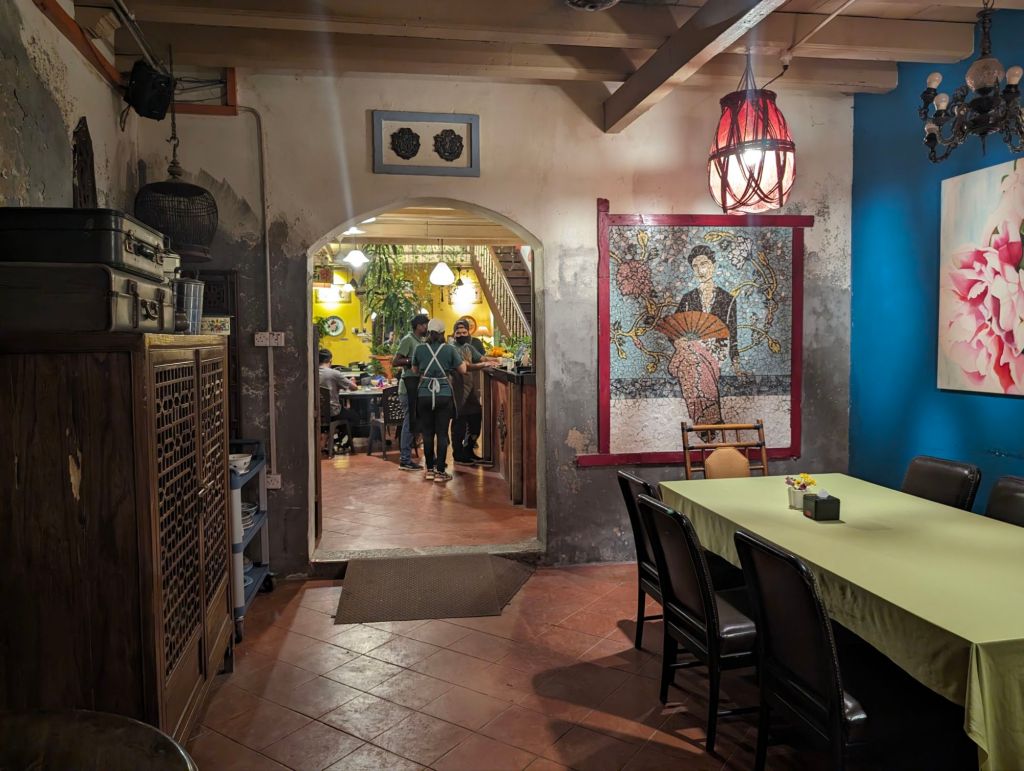
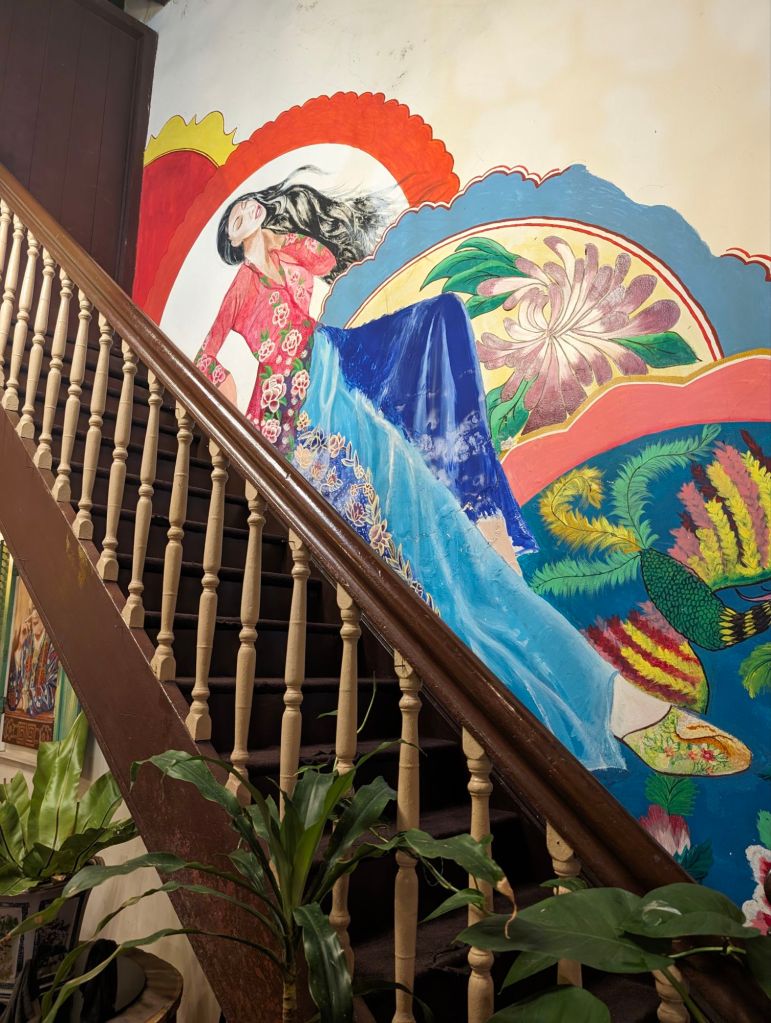
I asked Carson how deep the building was. He said, without any hesitation, “1,000 feet”. Hmm. Maybe he meant 100 metres? In any case, it was big, and there would have been lots of living area on the second level.
It was dark and beginning to cool when we left. A pleasant walk.
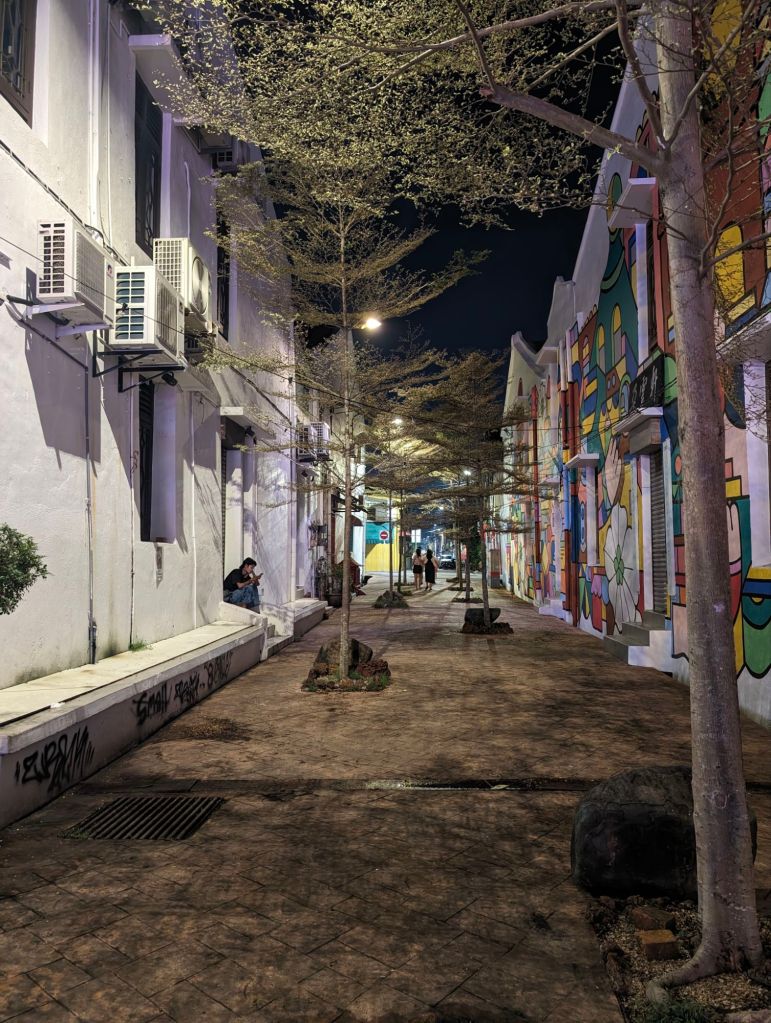
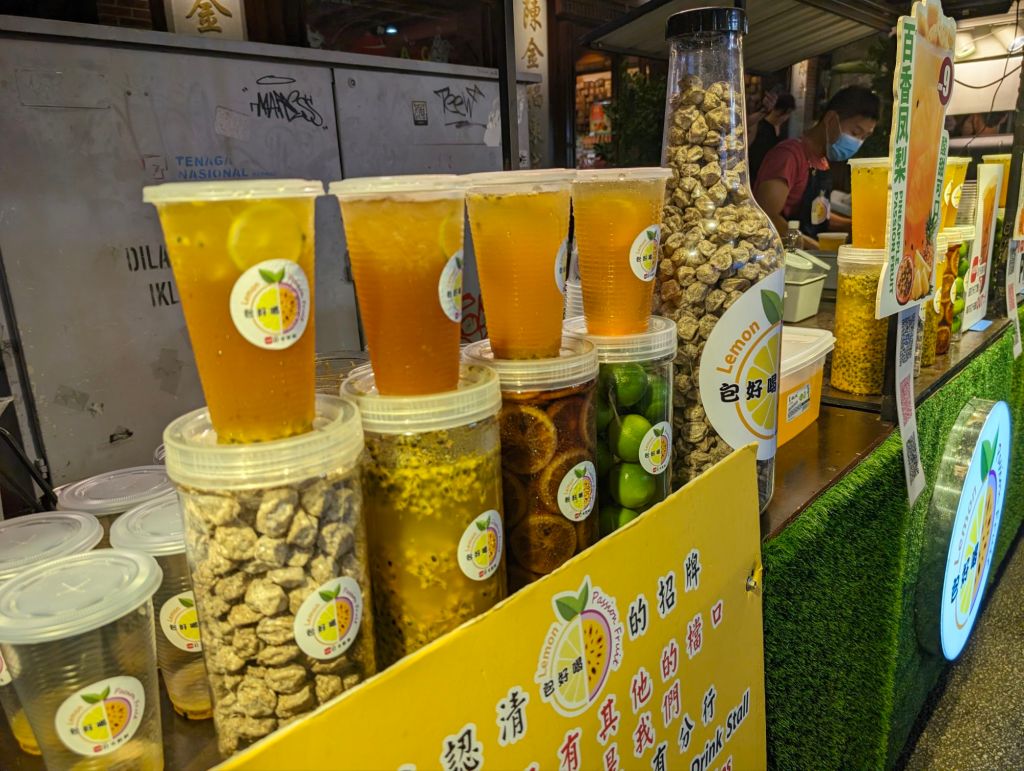
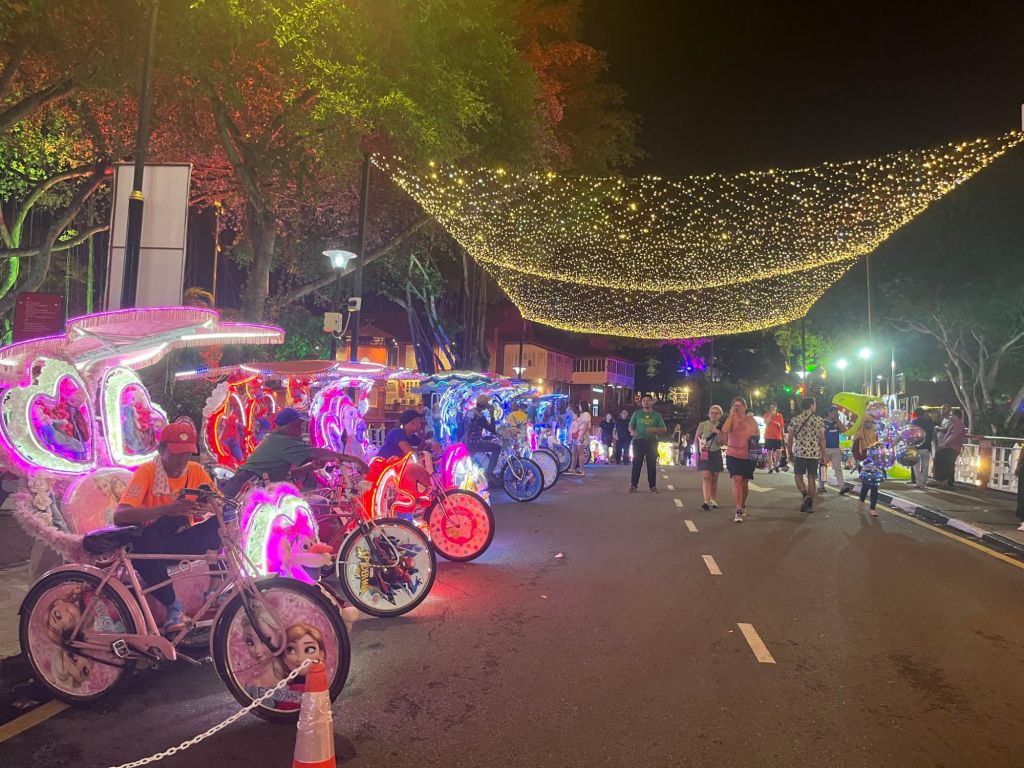
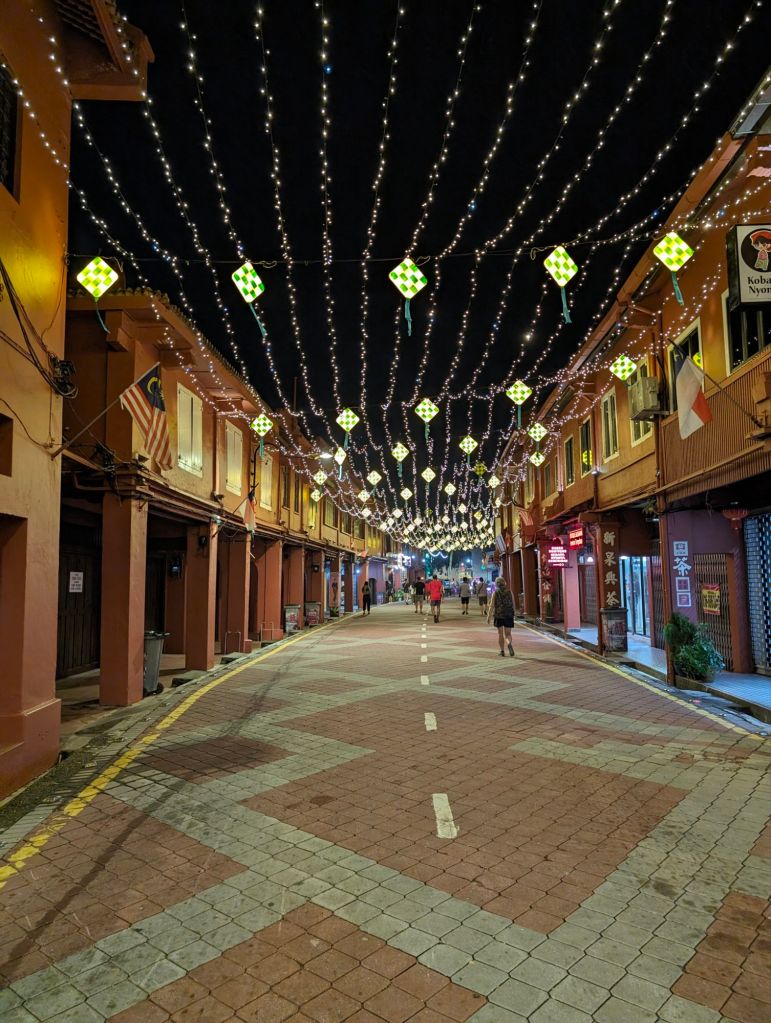
The following day, it was back to CK Coffee for breakfast, then a final walk (in the heat of day), before we caught the bus to Singapore.
This was possibly the last bus ride of our trip. We had seats near the front, which gave us a great view.
As we approached Singapore, we also had a great view of the colossal traffic jam heading into the city. What should have taken less than 3 hours took 7. But we survived. No more buses for a while.


 Two Sore Backs
Leave a reply to valeriejwilkins Cancel reply