warning: this post is lengthy. My posts from Greece will be much shorter: I’ll let the photos tell the story. I promise.
____________________________________________
This is our last stop in SE Asia.
Reflecting back, we begin in Laos – a country not so progressive or well heeled and we finish in Singapore, the perfect modern city state. Two contrasts for sure.
Tanjong Pagar neighborhood
To stay close to the action and not break our budget we get a ‘cabin’ at a micro hotel in Tanjong Pagar ($160 cad/night). We are in the restaurant and entertainment district and bordering Chinatown.
Our hotel Signature Tanjong Pagar is worth a lengthy section in this post. Our hotel room in KL is efficient; this hotel room is as close to micro without sleeping in a capsule (popular in Tokyo). We have flashbacks to sleeping on VIA’s Canadian.
This is a premium cabin – with a bathroom and window. The bathroom is very efficient. The window has the benefit of a wide ledge where I stash my main bag. The room size is 8m2.
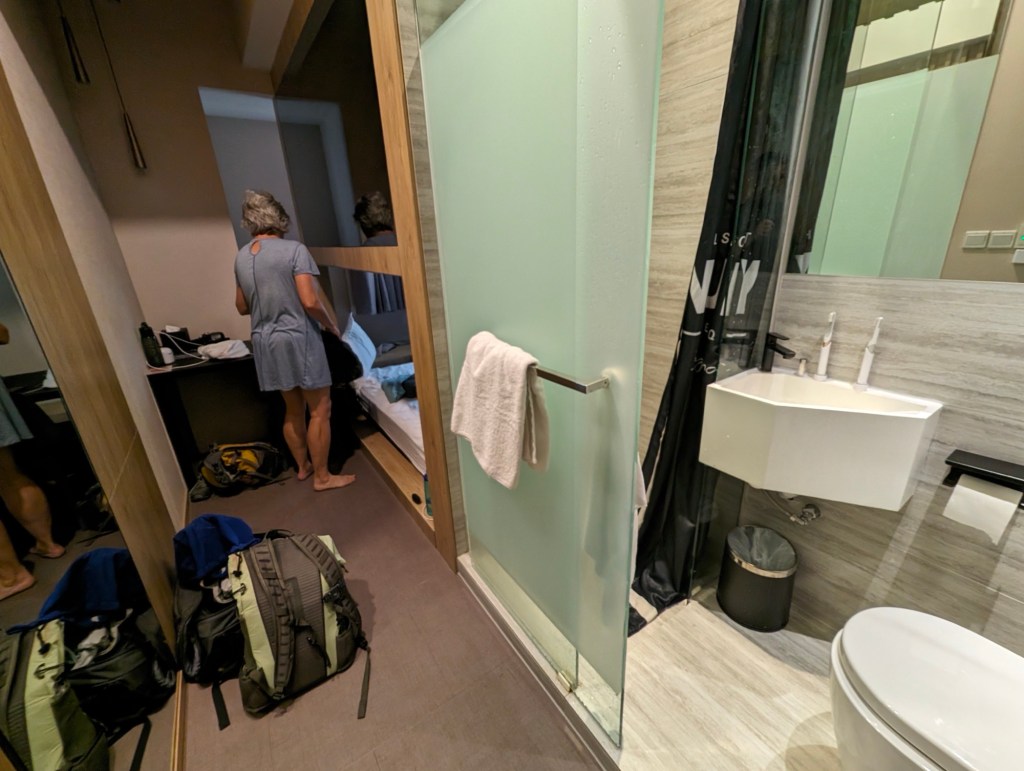
Some of the cabins are doubles and singles – just the bed with a desk and shelving. There are shared bathrooms, showers, lockers, rooftop bar and a nice kitchen with eating area. Communal living. You can rent a bed for an 8 hour shift. Incredible!
With 5.5 million people in a area not quite as big as NYC, creative small spaces make a lot of sense.
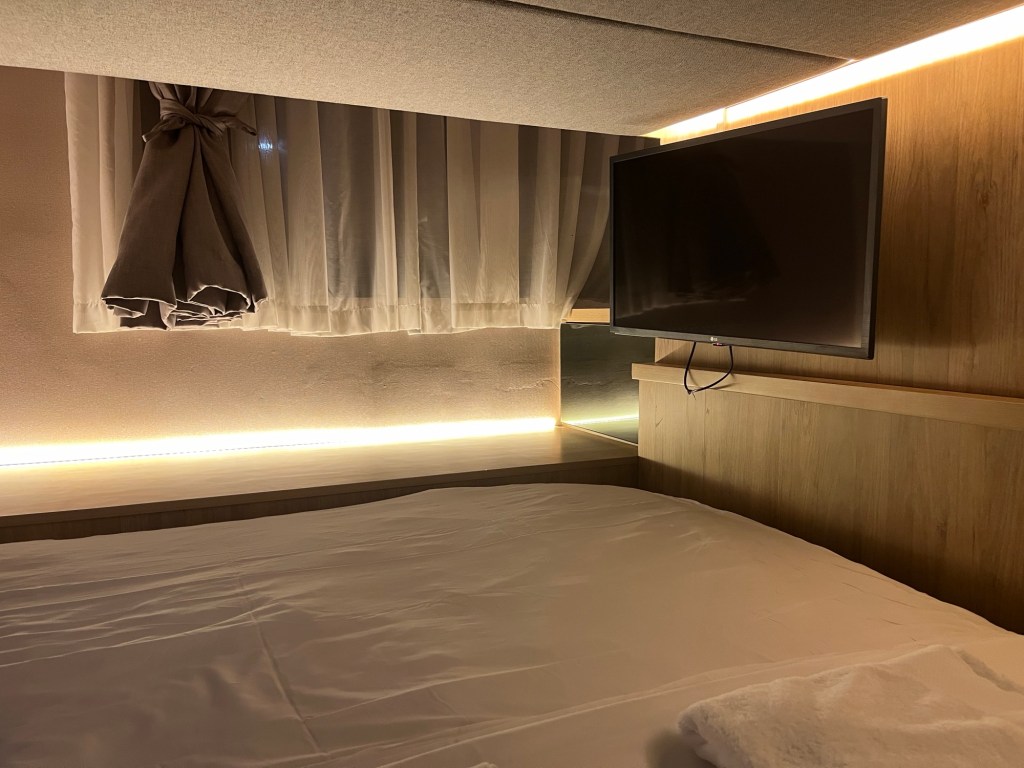
Looks can be deceiving. Our bed is a queen size. If you look closely at the design we effectively have the lower bunk. The room adjoining to the right has a raised queen bed above ours. Fortunately, the sound insulation is great.
The bed is our living room too ;-).
Coffee, restaurants, metro are just steps away. We aren’t in our room much. We would do this again.
Location, location, location
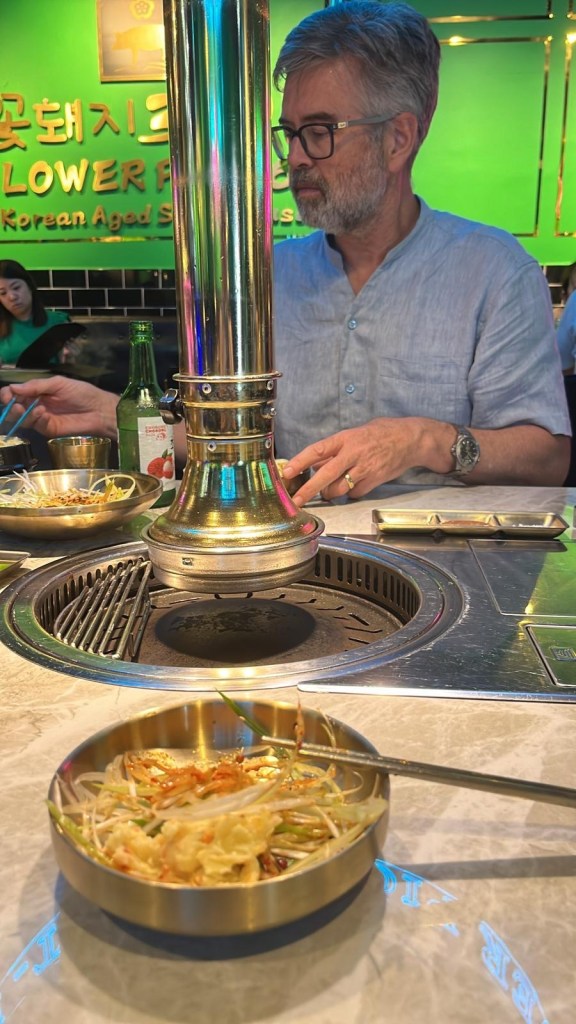
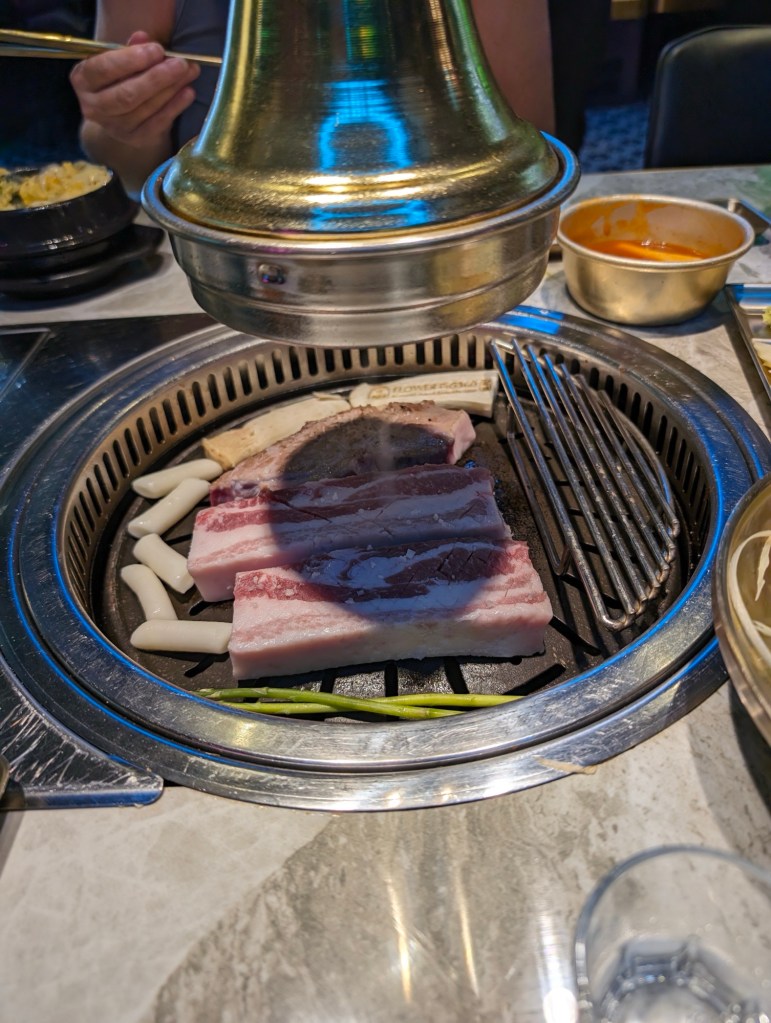
Our location is terrific. After checking in, we hit the street in search of dinner. It is approaching midnight and still lots of energy on the street (Saturday night). Close by we find Korean Bbq! This place closes at 5am. Great people watching too.
Singapore Sights
Learning about the fall of Singapore during WW2, the Japanese takeover, the prison camps, and post war Singapore are a focus. Let’s get that out of the way.
Former Ford Factory
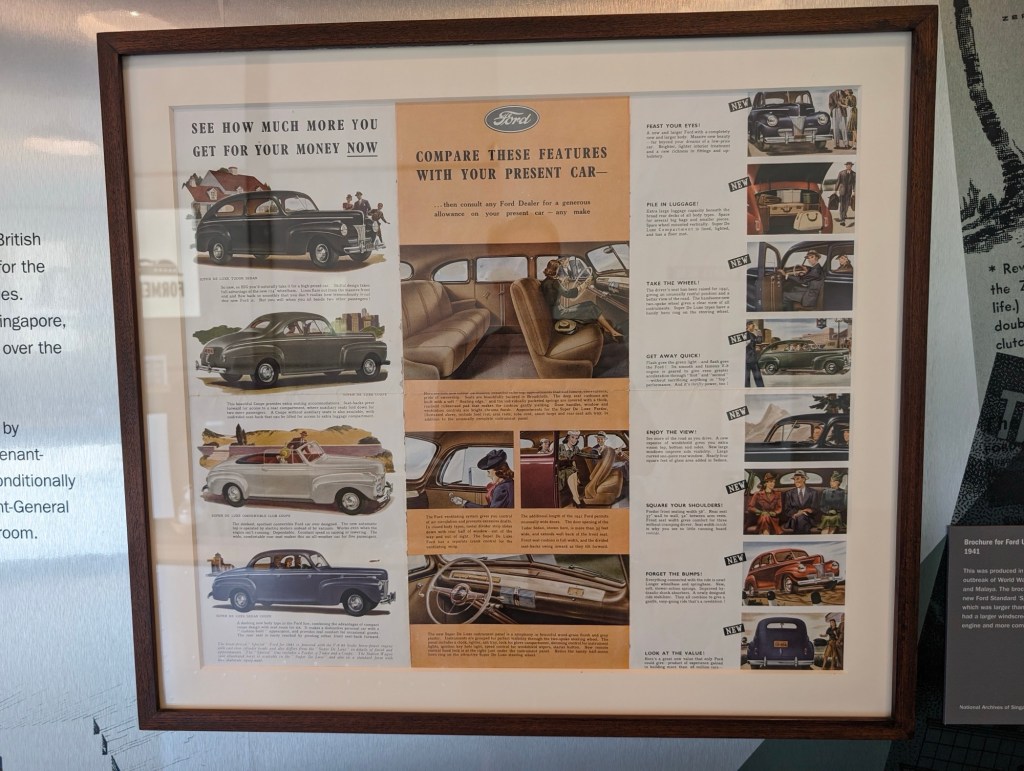
Museums can be a wealth of knowledge. We are here for about four hours and leave smarter.
Ford’s first factory in SE Asia opens Oct 1941 and is repurposed by the British Royal Air Force in Dec 1941. The RAF use the state of the art equipment for aircraft assembly (assembling American fighter planes – the parts shipped to Singapore). Ironically by the time the planes are available to the war effort, the defence of Singapore is a lost cause. These new planes are flown out of Singapore and deployed to Greece.
The Ford Factory’s claim to infamy is the place where the British officially surrender to the Japanese on February 15,1942. You can walk into the surrender room and read transcripts of the meeting. It is quite chilling.
Churchill is later quoted:
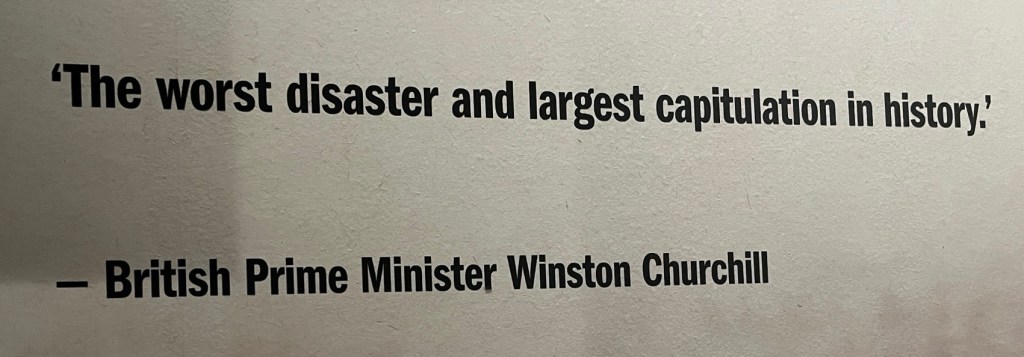
Why? We find out that Britain (and allies) is over confident in its fighting strength, while it has the manpower in numbers, troops are poorly equipped and poorly trained. Britain is fighting WW2 on so many continents it cannot possibly have enough effective armaments for all their troops. SE Asia is supplied with old rifles and old planes (the risk is assumed to be low until Pearl Harbour so Malaya is not the focus). Even bullets are in low supply.
Japan has well trained troops. Japanese expansion starts years earlier – the mission is to grab territory rich in resources (as Japan has very little). With British approval, Japan sends professionals (including photographers) to Malaya to study and work. In fact, these Japanese map Malaya – roads, industry, civic buildings etc. When the invasion begins, the Japanese move quickly from the North and take control using intelligence and maps provided by their intelligence officers.
‘Japanese troops invade on bicycle’ is the short explanation we often hear.
The Ford Factory is the Japanese military headquarters during their occupation. Nissan produces vehicles for the war effort from this factory.
We spend time in the section explaining Becoming Syonan. (Japan renames Singapore to Syonan.) Conditions for the majority Chinese Malayan population are very poor and those held as prisoners live in the harshest circumstances.
Why? A few years earlier, funds and support from the Chinese Malayans make their way to China to fight the Japanese during the earlier Sino-Japanese war (1937) and the Japanese military leaders took revenge. The Sino-Japanese war is part of Japan’s expansionist strategy for resources. Ultimately, Japan sees a bigger opportunity and joins Nazi Germany. Sadly, possibly 50,000 Singaporeans (or more-no one knows) die during their occupation.
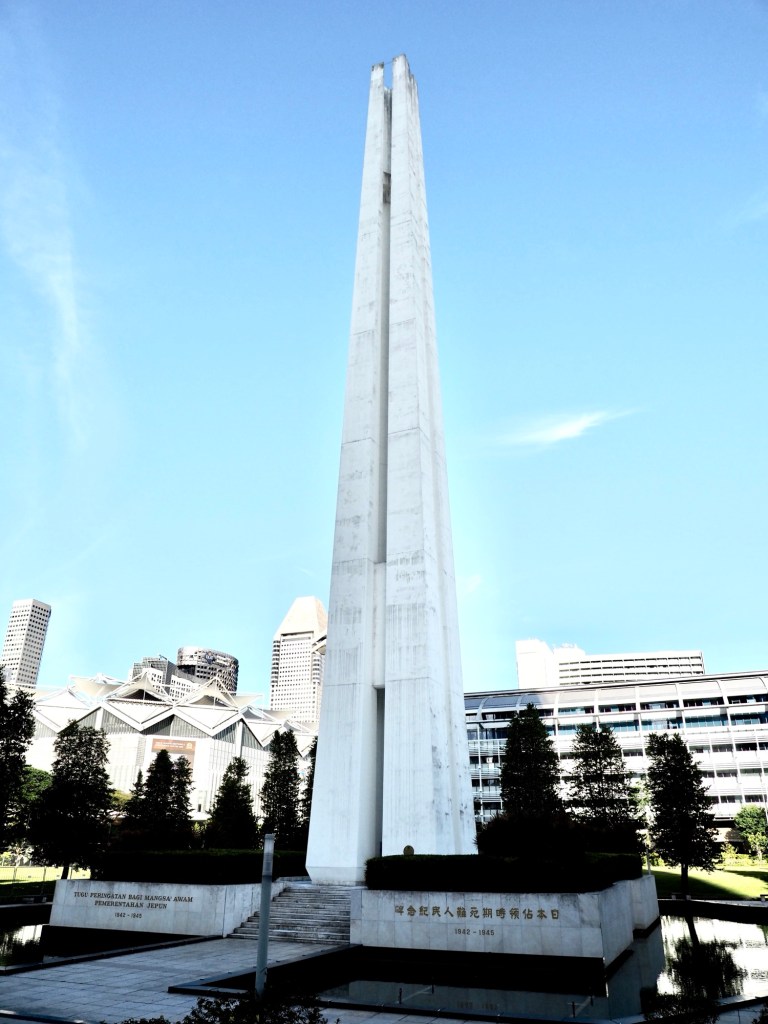
Another section focuses on the allied prisoners of war at Changi and Simes prison camps. My grandfather was at Simes with the other non-military prisoners. Changi Prison held military prisoners. We listen to 30 oral histories about many aspects of their confinement.
Men and women organize amongst themselves, appointing section leaders and other roles. Conflicts are diffused quickly. People are assigned tasks based on their health and fitness. Discipline wrt dress and decorum is encouraged (to keep spirits up). From those oral histories, one senses the little pieces of normalcy are highly valued.
Two examples:
a library is established (any books are available for the collective group)
artists draw in the evenings, happy to share their craft with anyone (and leave a historical record of their surroundings)
In fact William R M Haxworth made 300 sketches and paintings. These have been donated to Singapore’s archives. His day job was as a police inspector prior to his internment.
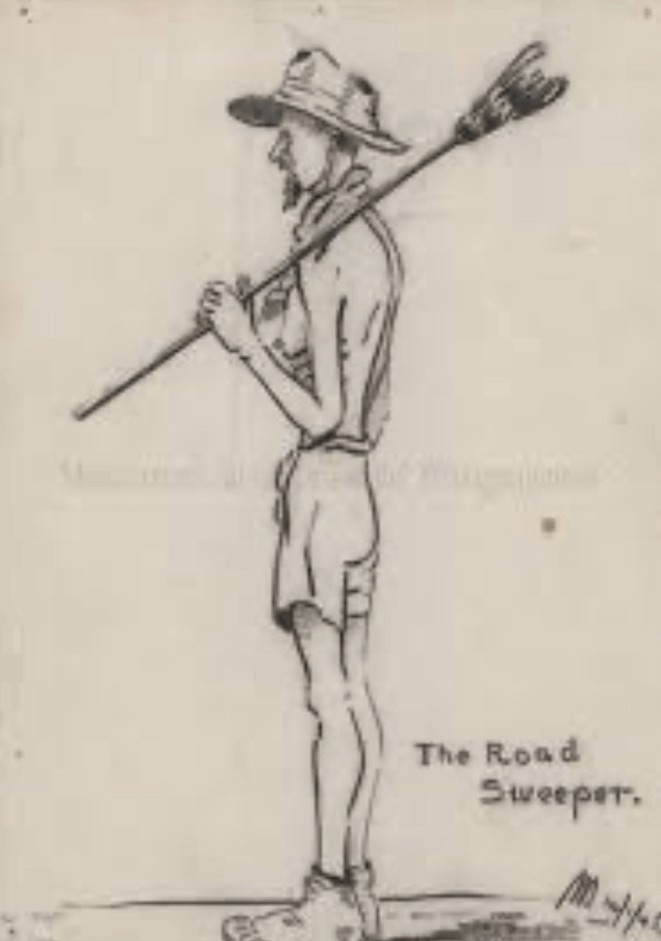
The camps are orderly (mostly self ruled) and the Japanese don’t object. One history told by a woman prisoner concerned flowers. She is in charge of floral arrangements. Possibly she was teaching her Japanese guards or the Japanese officials like flowers in their offices and homes (?). Anyway, she keeps requesting a specific flower saying it is so beautiful. (I can’t remember the flower -darn.) ‘Please bring as many as you can find.’ Turns out that flower is edible and she is able to supplement her diet. The guards have no idea.
Still the conditions are terrible. There is crowding, malnourishment (as the war went on the rations shrunk) and so much uncertainty living surrounded by guards and barbed wire. Some prisoners perish.
I find this information so helpful in forming/processing my idea of my grandfather’s prison of war experience. He spends three and a half years at the Sime Road prison camp.
Timeline – My grandmother, father and uncle leave KL December 26,1941. My grandfather joins them in Singapore after the Malaya railway ceases operating. In Singapore he volunteers as a stretcher bearer aiding wounded servicemen. The Japanese are bombing the city daily. Everyone scrambles into shelters during the air raids. Many women and children are evacuated on the ships that are bringing additional troops to Singapore and Indonesia.
On January 31, 1942 my grandfather accompanies his wife and sons to the dock, waves goodbye, and stays behind to help defend Singapore. My grandmother and two sons leave Singapore on CP’s Empress of Japan. (Shortly thereafter the ship is renamed Empress of Scotland.)
War is awful.
Singapore is liberated on September 12,1945. The Ford Factory is making cars by 1947.
The museum also presents post WW2 Singapore history. Common theme: rebuilding an economy after war (Vietnam, Cambodia, Malaysia).
Another theme is the transformation from a British colony to a separate country.
Reflections at Bukit Chandu
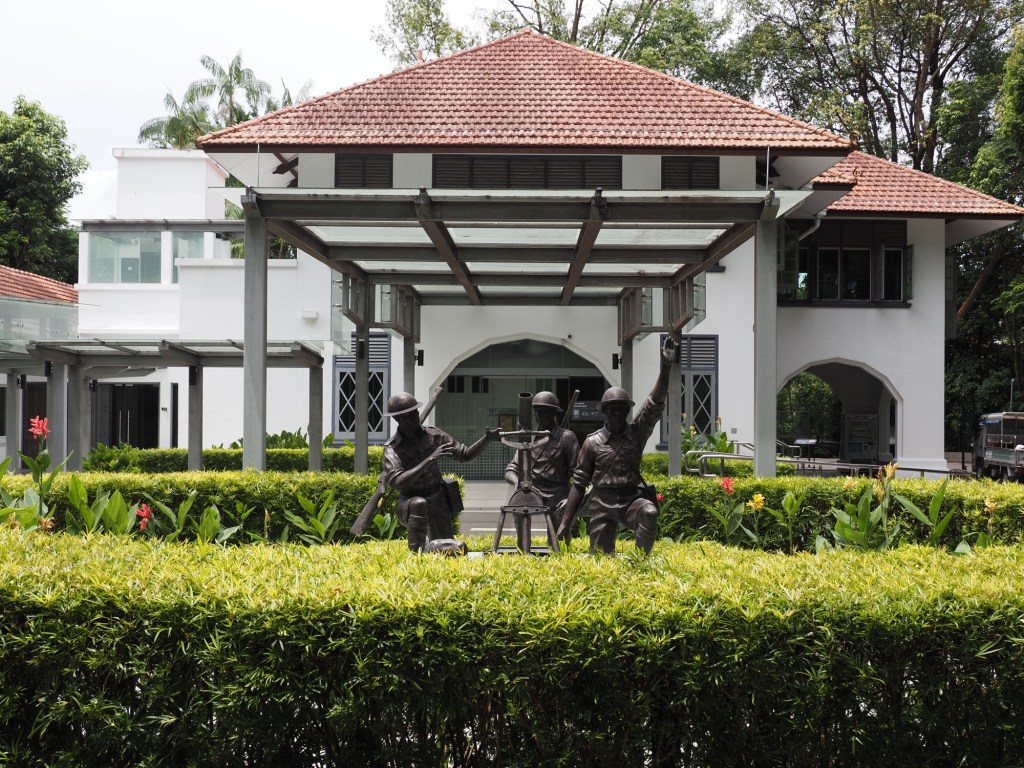
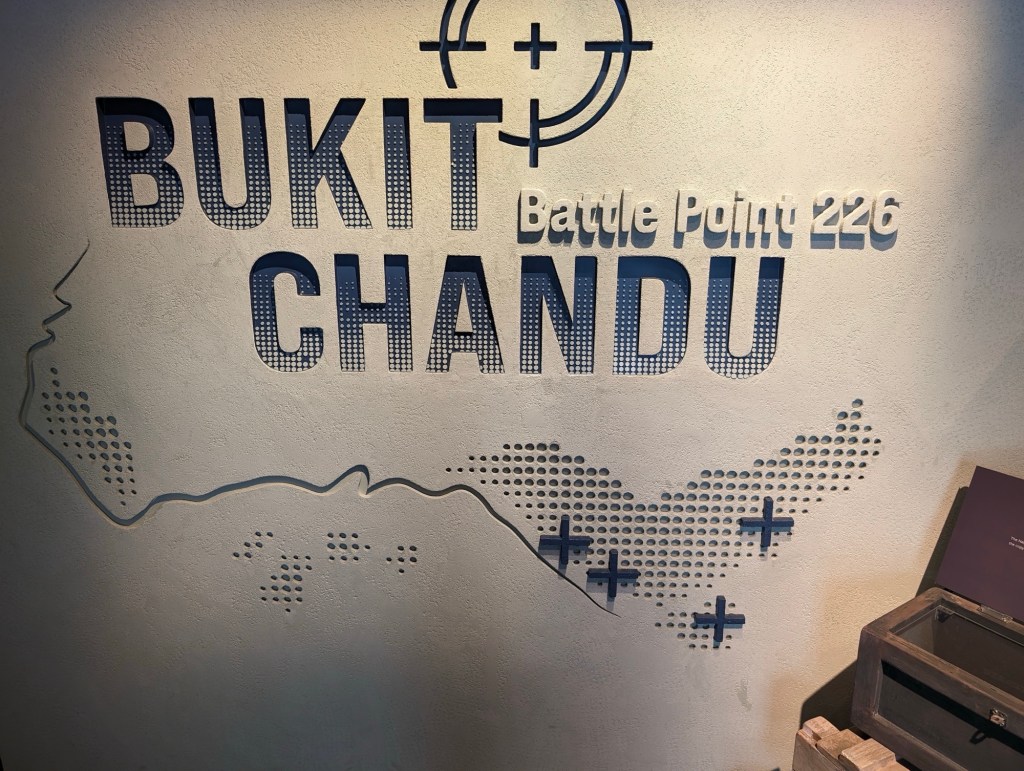
The museum is located on the site of the final battle for Singapore.
The exhibits are impactful. There is an excellent 10 minute surround sound video reenacting key conversations and sound effects from that fateful last battle.
There are supporting exhibits.
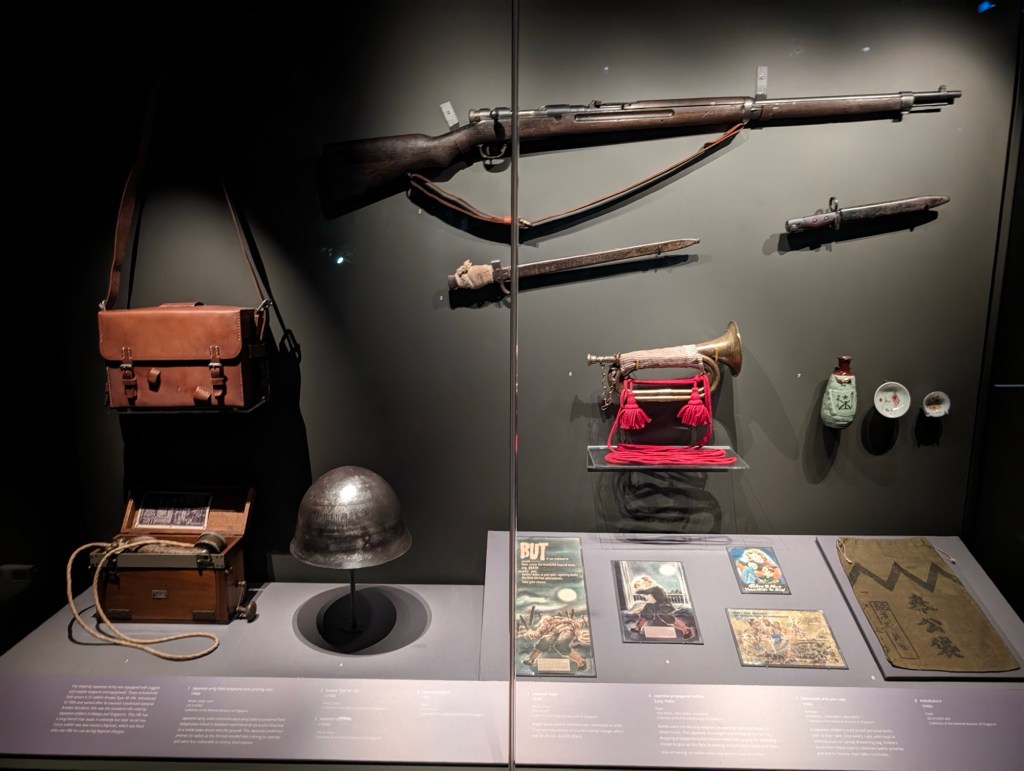
Postcards the Japanese drop from the sky to entice allied forces to surrender.
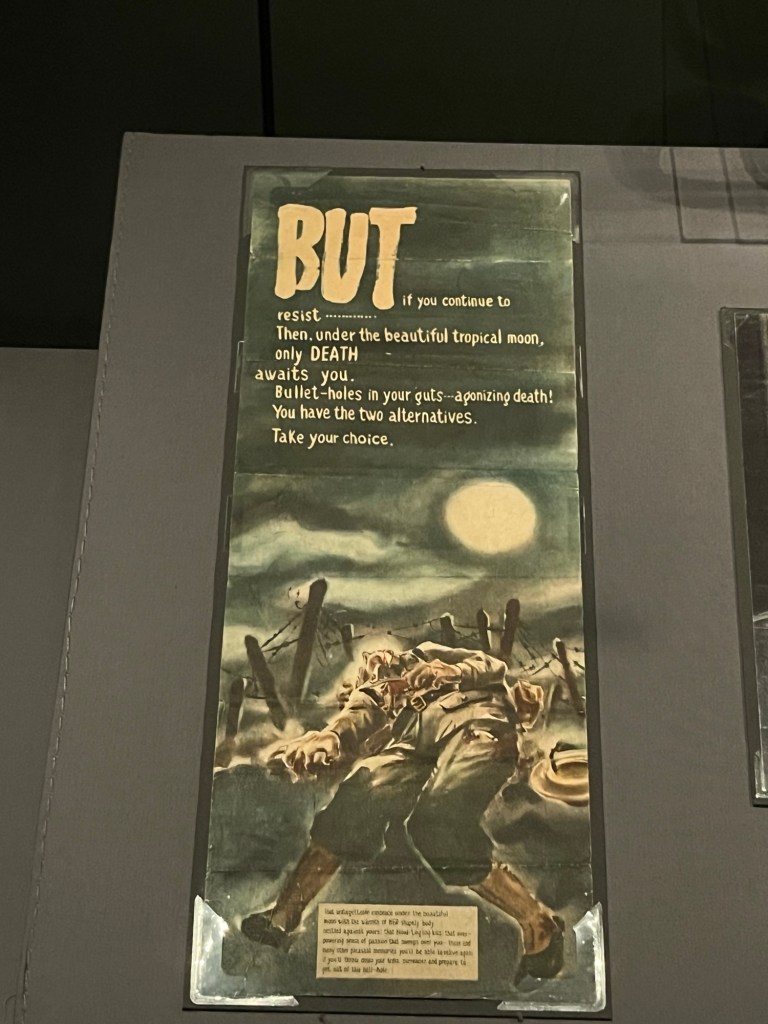
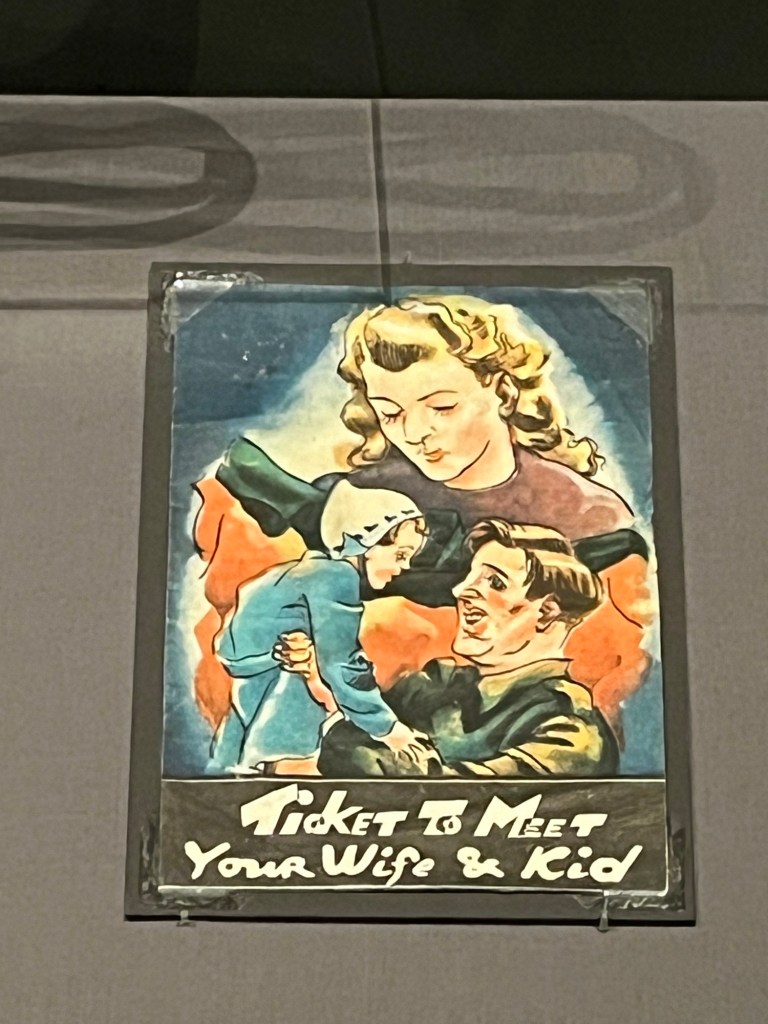
There is a second major exhibit that is fascinating.
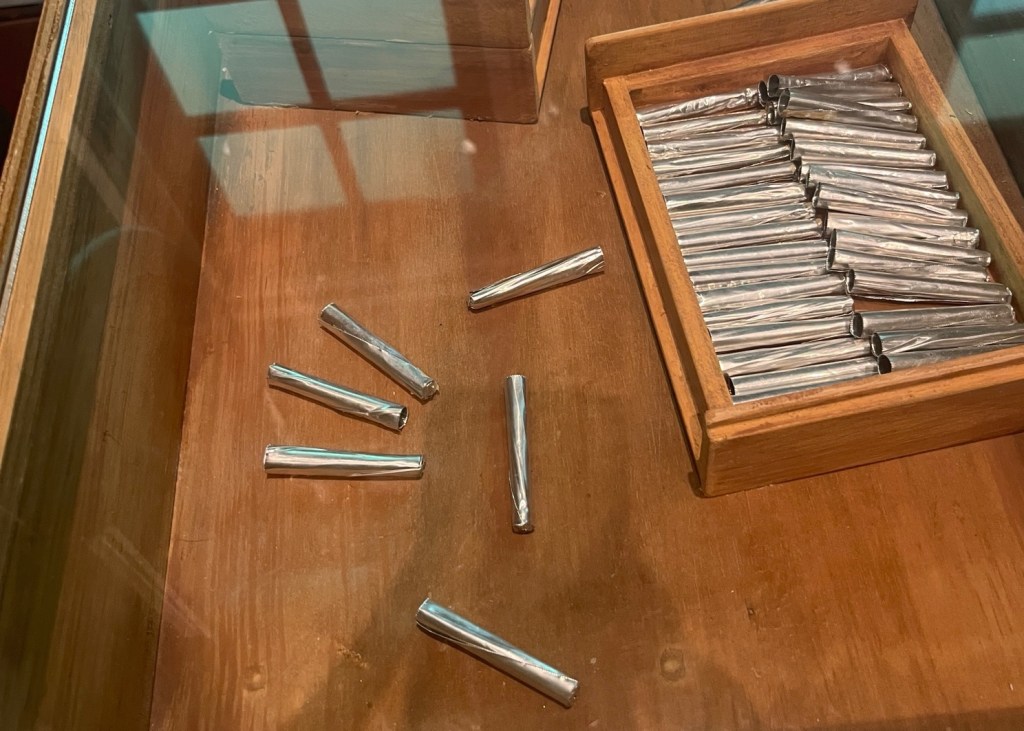
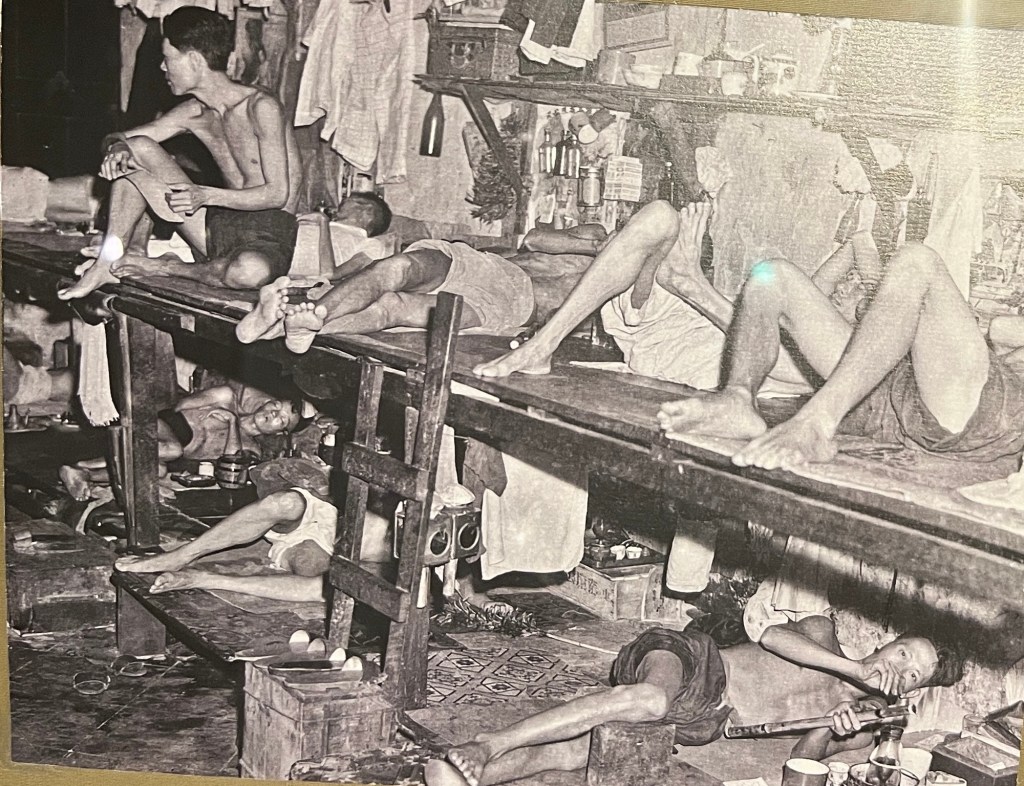
We learn about the opium trade. It gets started in the 1800s. In 1910 opium accounts for nearly half the revenue from Singapore, Malacca and Penang (the major ports controlled by the British). Who knew! This farm crop is regulated, taxed and is a dominant govt revenue source into the 1920s. The harm it causes is acknowledged.
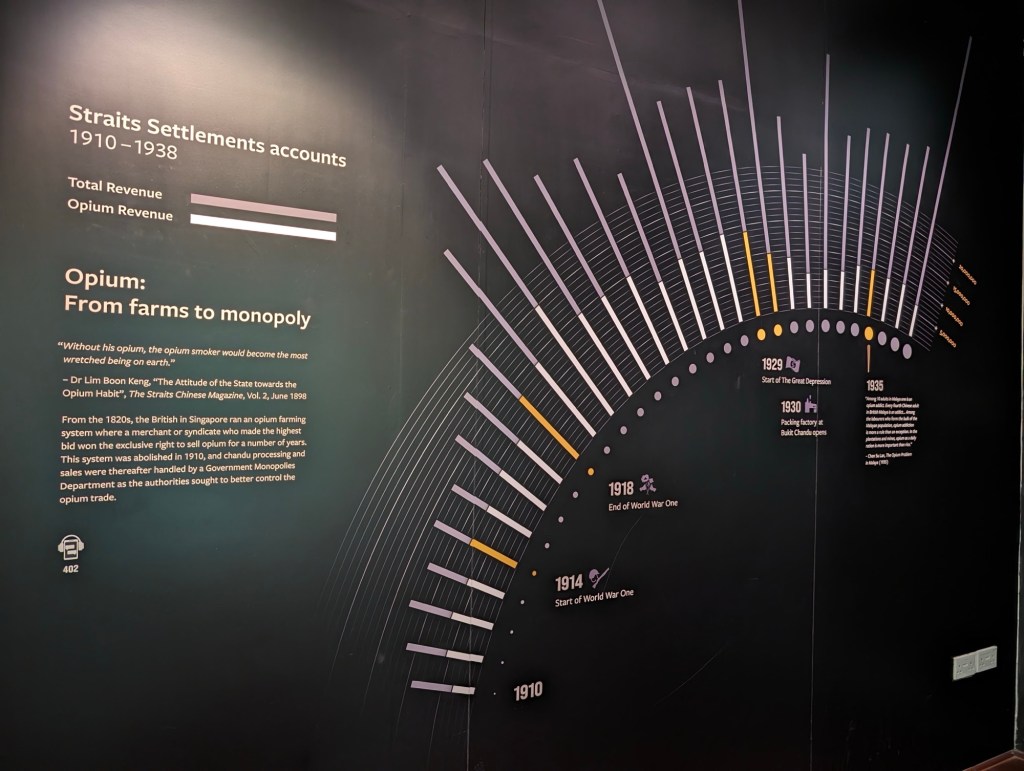
An opium factory opens in Bukit Chandu in 1930.
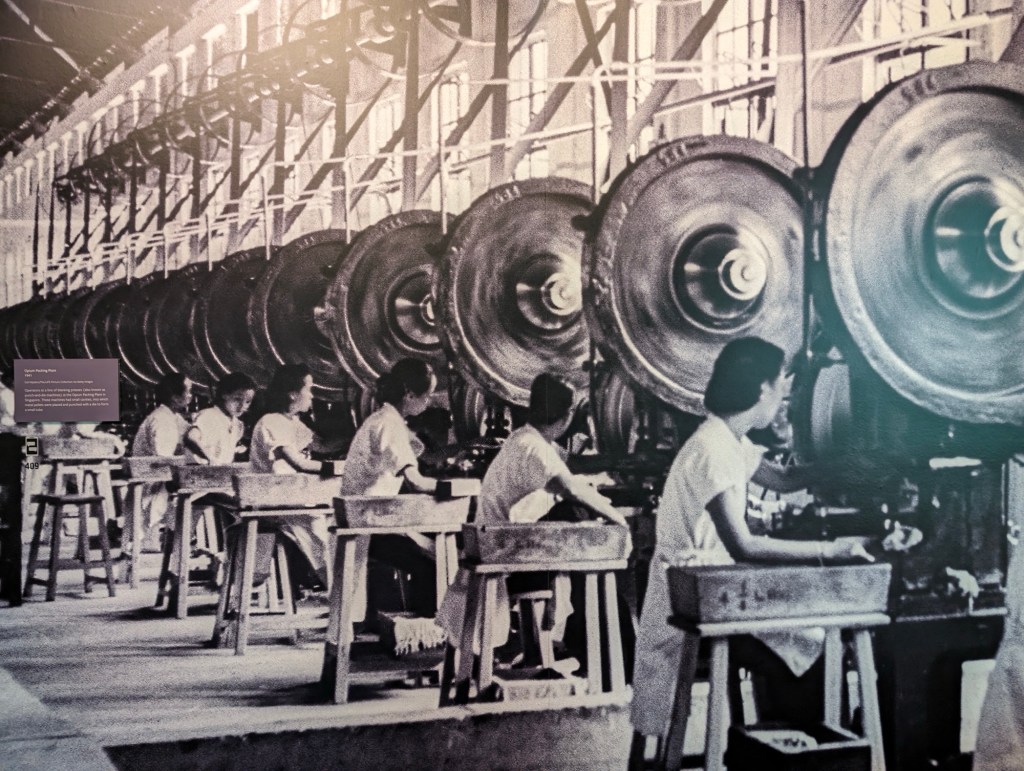
Opium is used by plantation workers and miners. Their daily ration of opium being more important than their daily ration of rice.
Pat points out that the book Wilful Blindness, How a network of narcos, tycoons and CCP agents Infiltrated the West makes the case that fentanyl coming from China could not be possible without the tacit approval of China’s Communist Party, inferring it is a form of revenge on the West for the British encouraging opium use in China all those years ago.
Laundromats
(By the way, that book also talks about money laundering.)
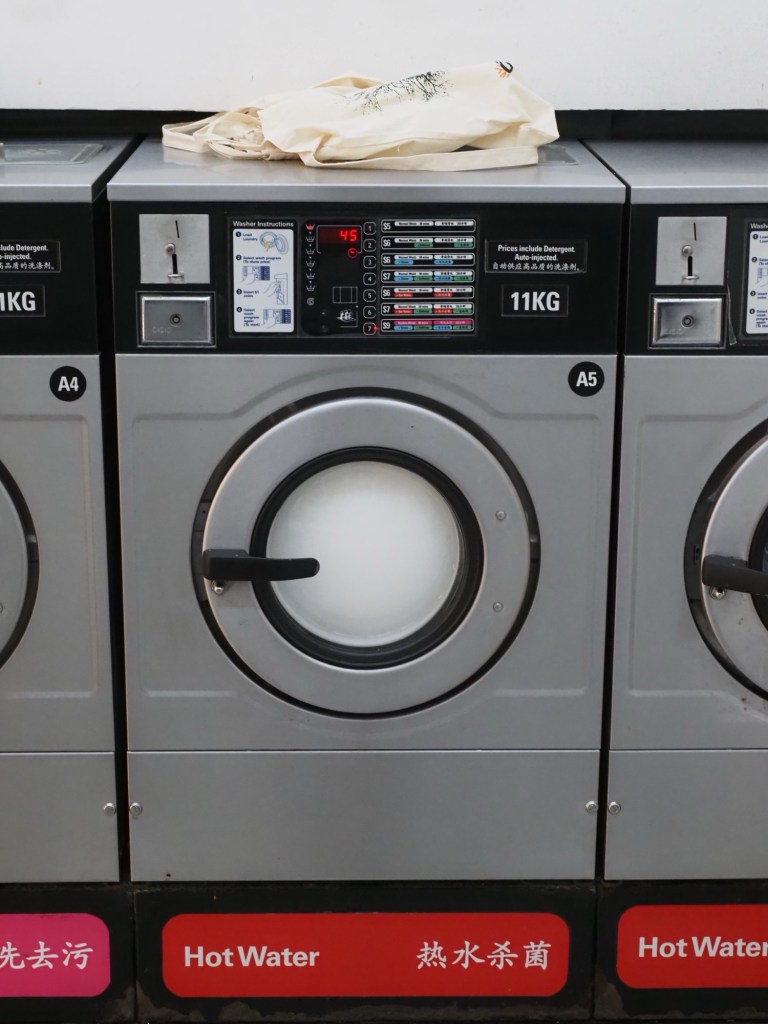
We are intrigued by Singapore’s laundromats. Walking around we pass by many small open air laundromats. The concept makes so much sense. We do some laundry and check it out.
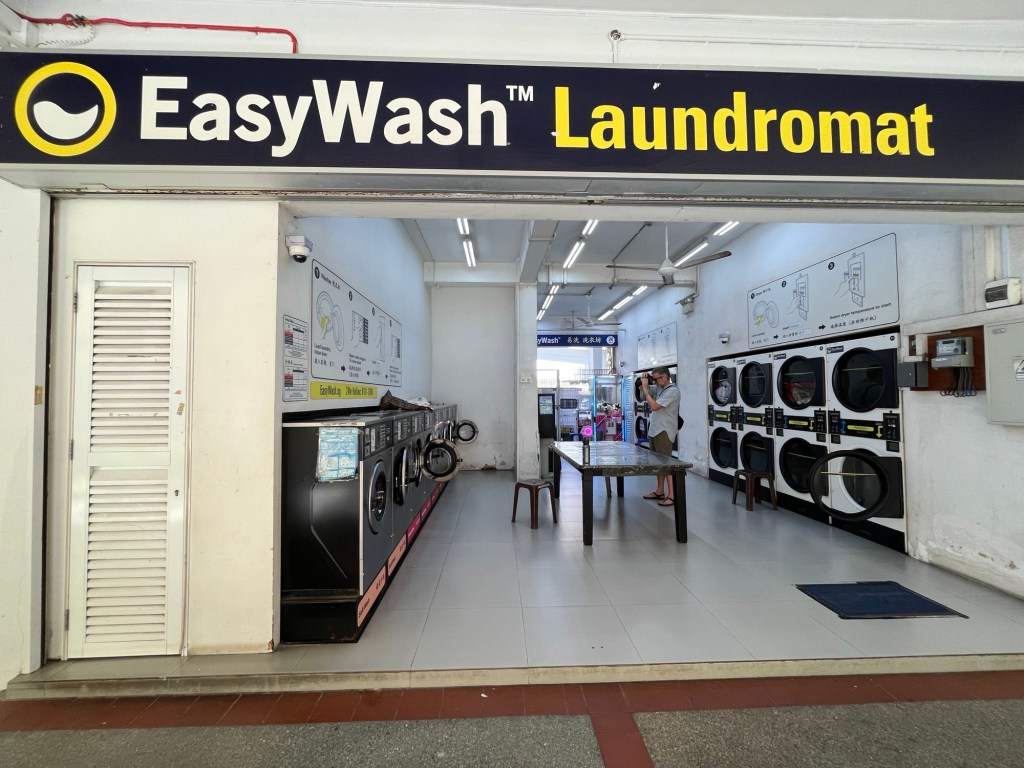
There is a bank of washers and dryers.
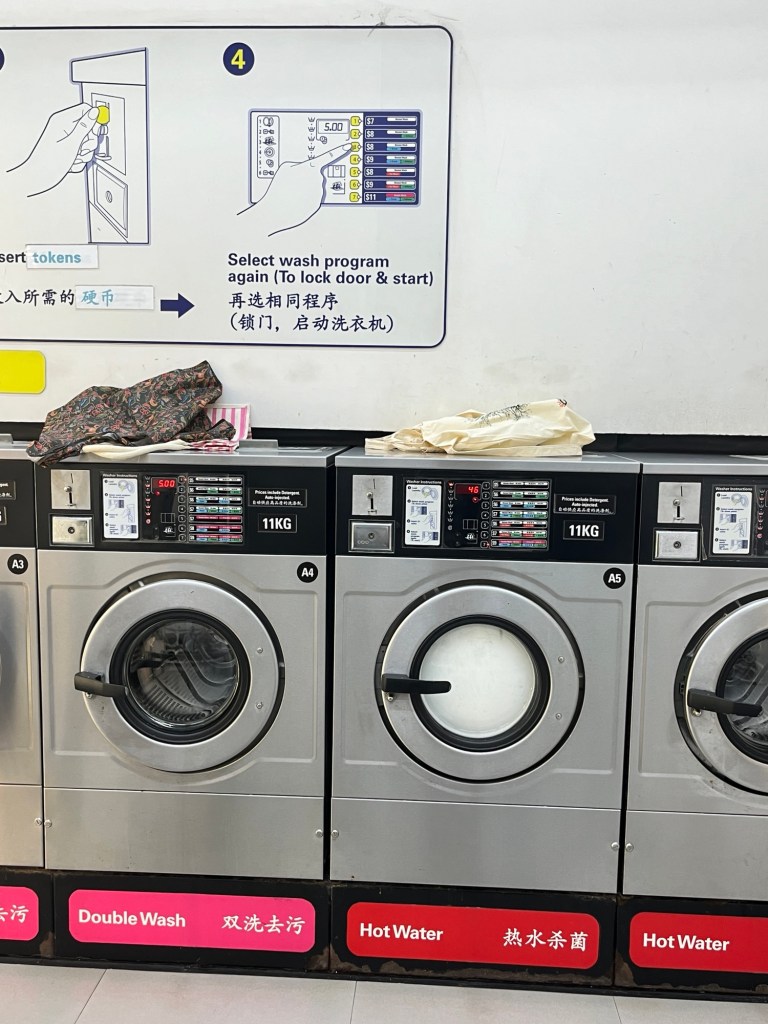
The first decision is temperature / cycle – we select a ‘hot water’ washer. We are cleaning our sandals – a thorough cleaning is overdue.
The second decision is the wash program (do you want fabric softener ….). That selection dictates how many tokens to put in the machine.
Put your garments in, tokens in, select your program, close the door. Go walk thru Chinatown for an hour.
Chinatown
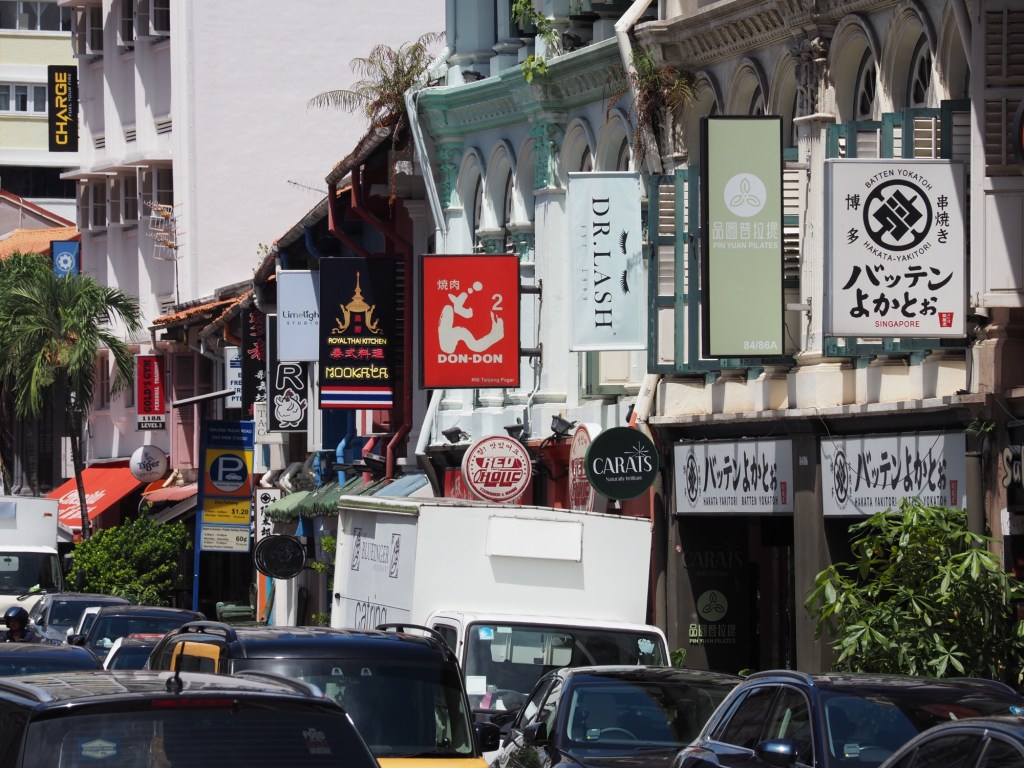
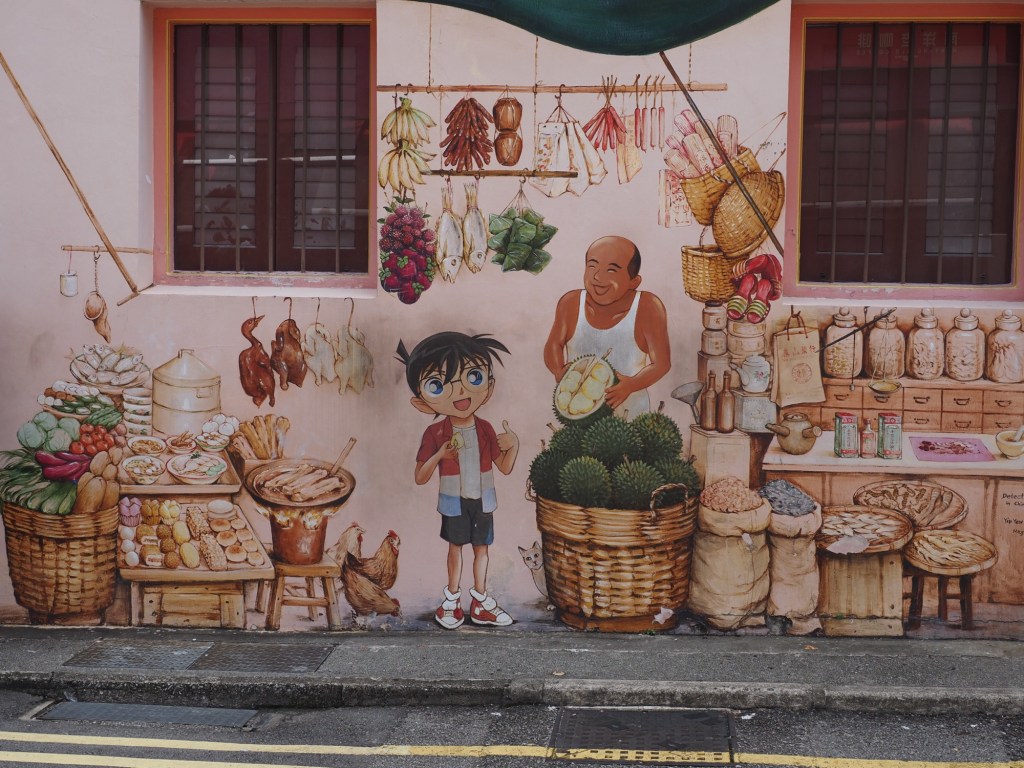
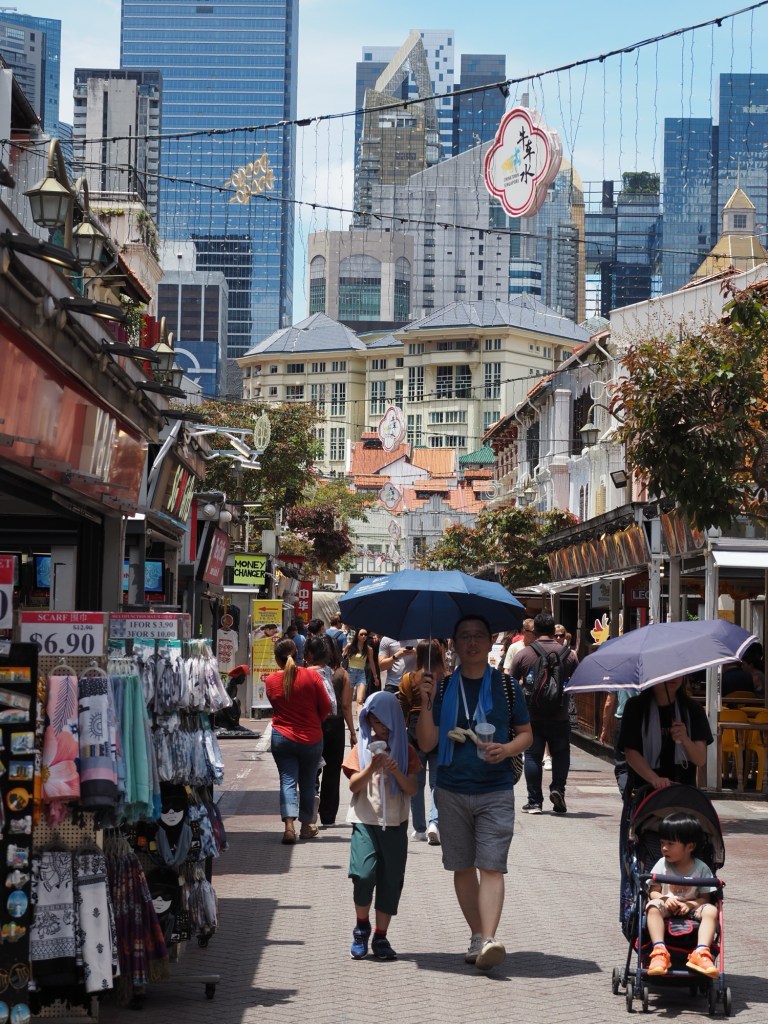
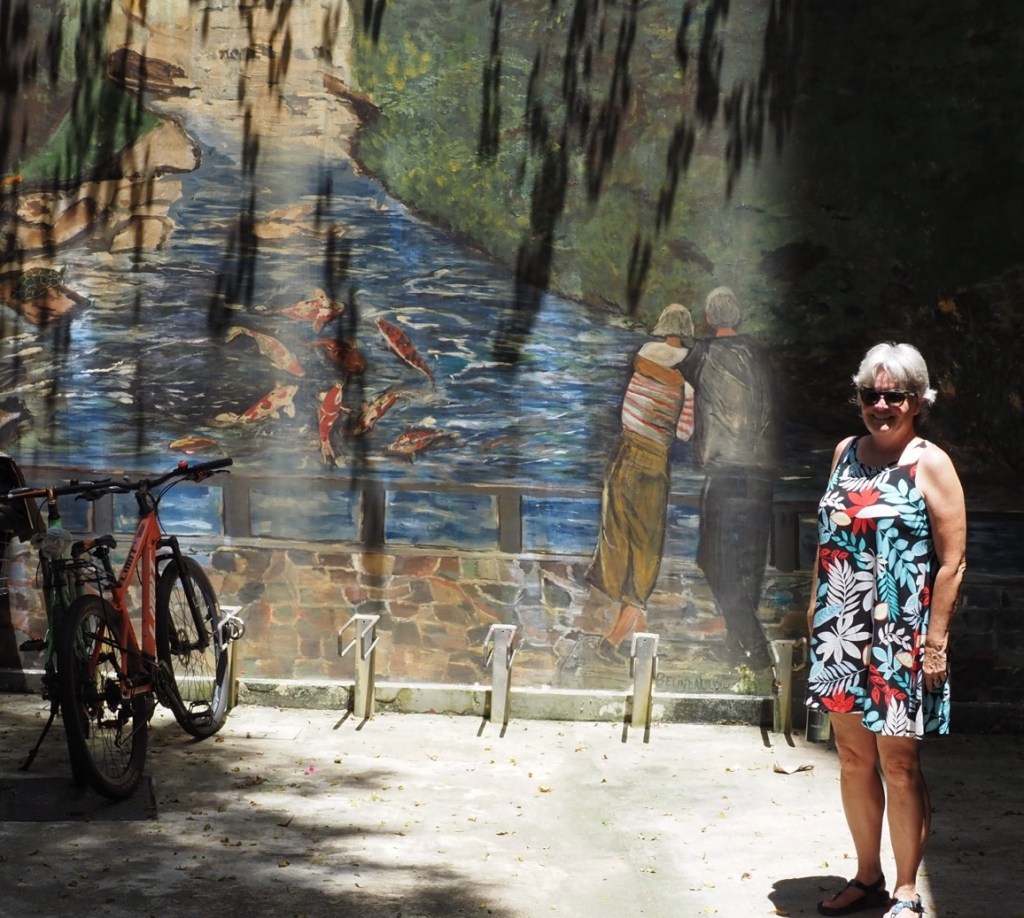
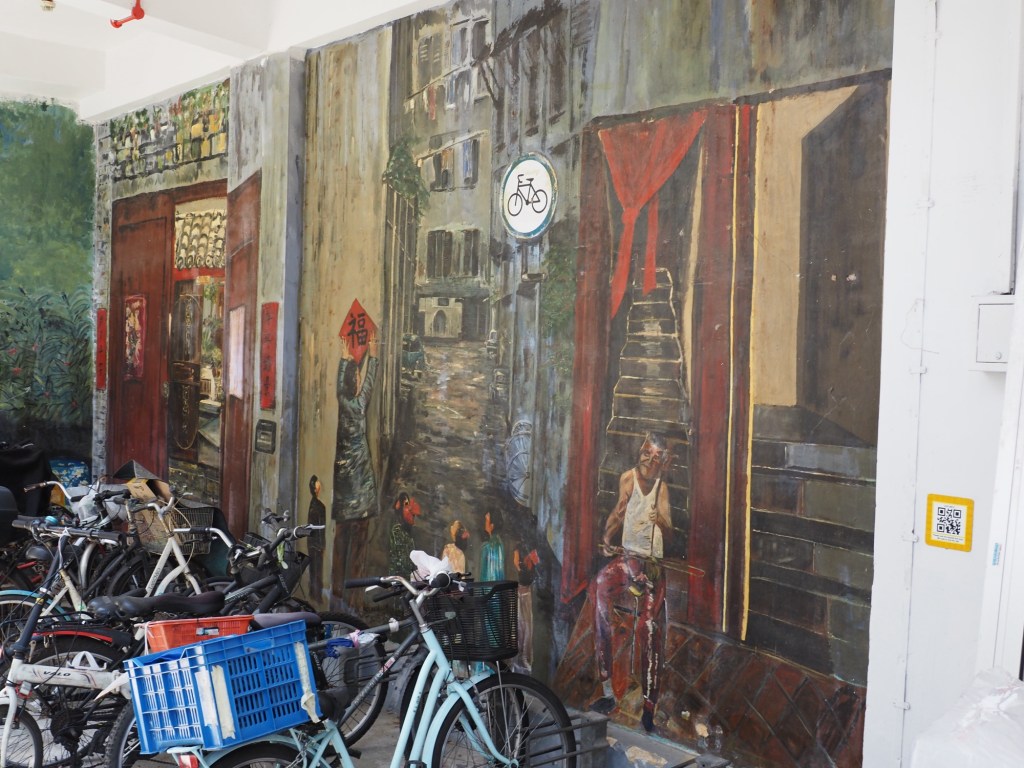
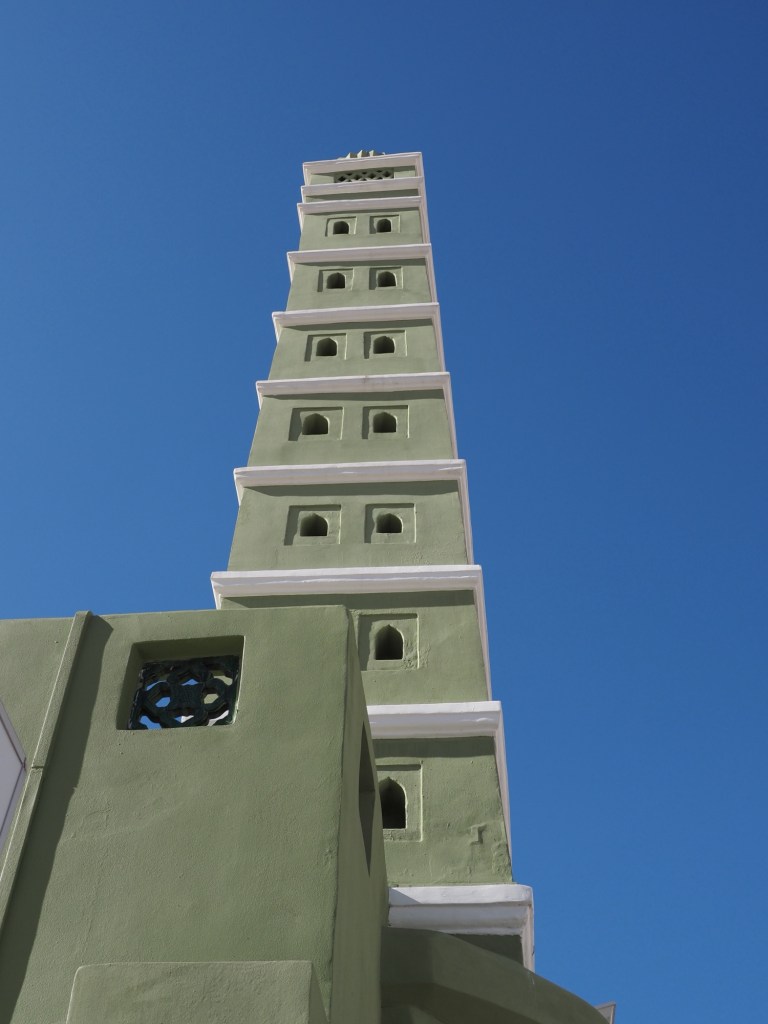
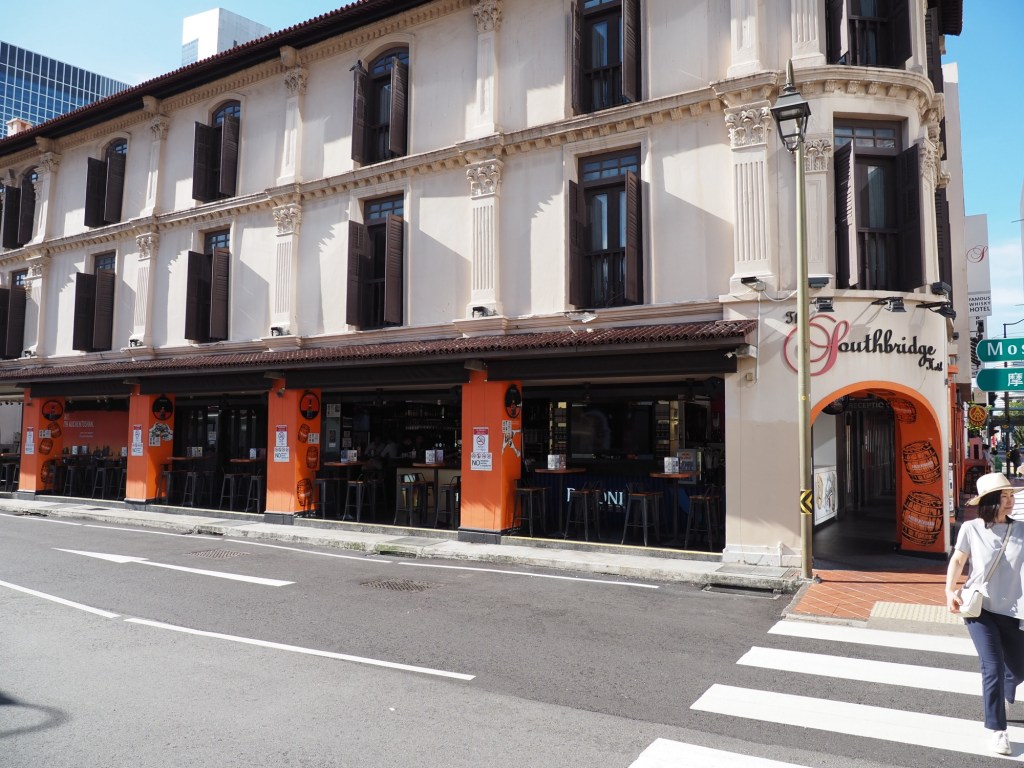
So that’s what we do. Here are some photos.
Downtown
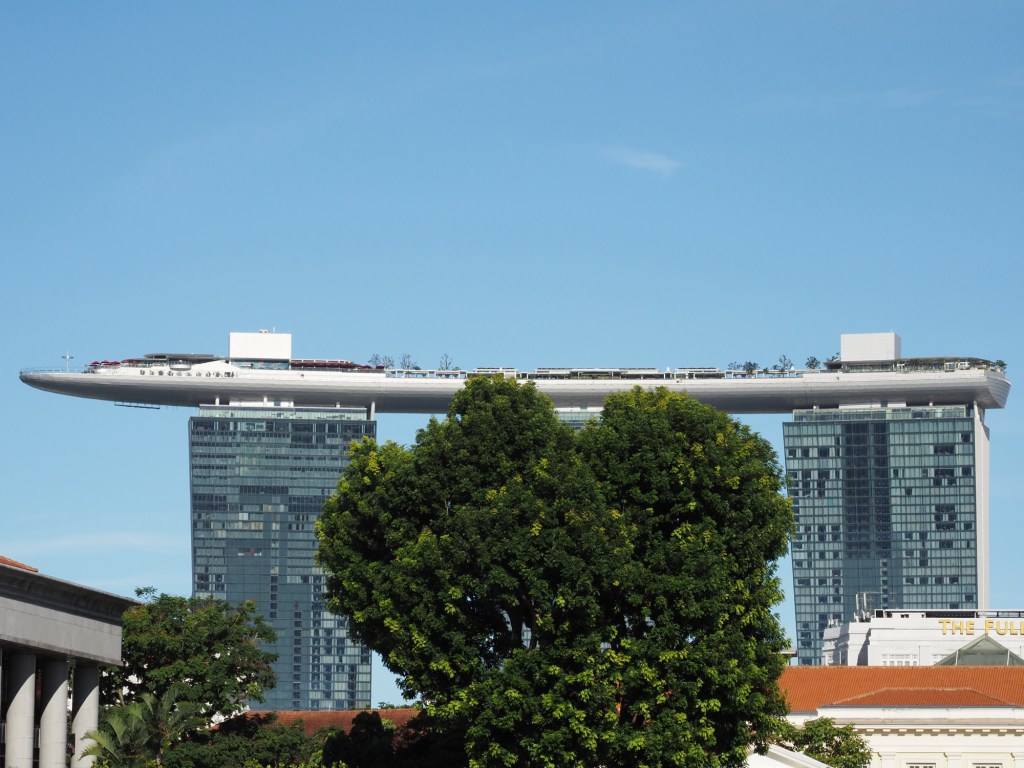
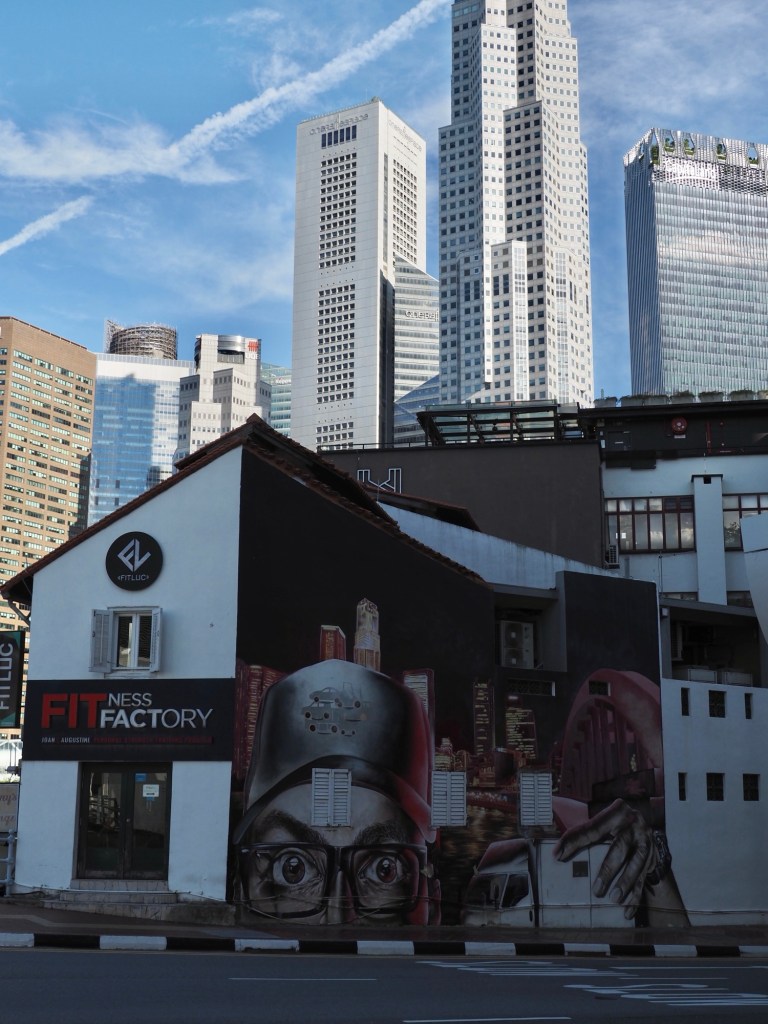
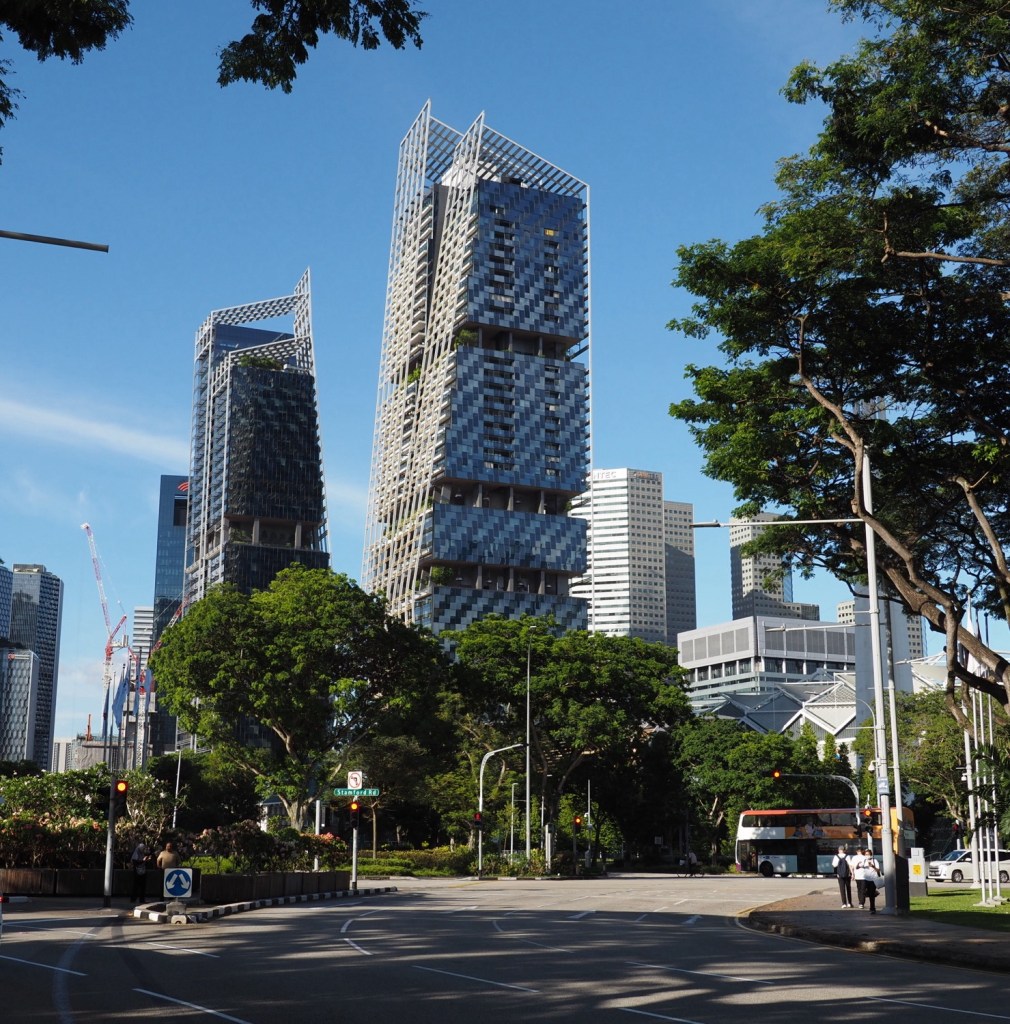
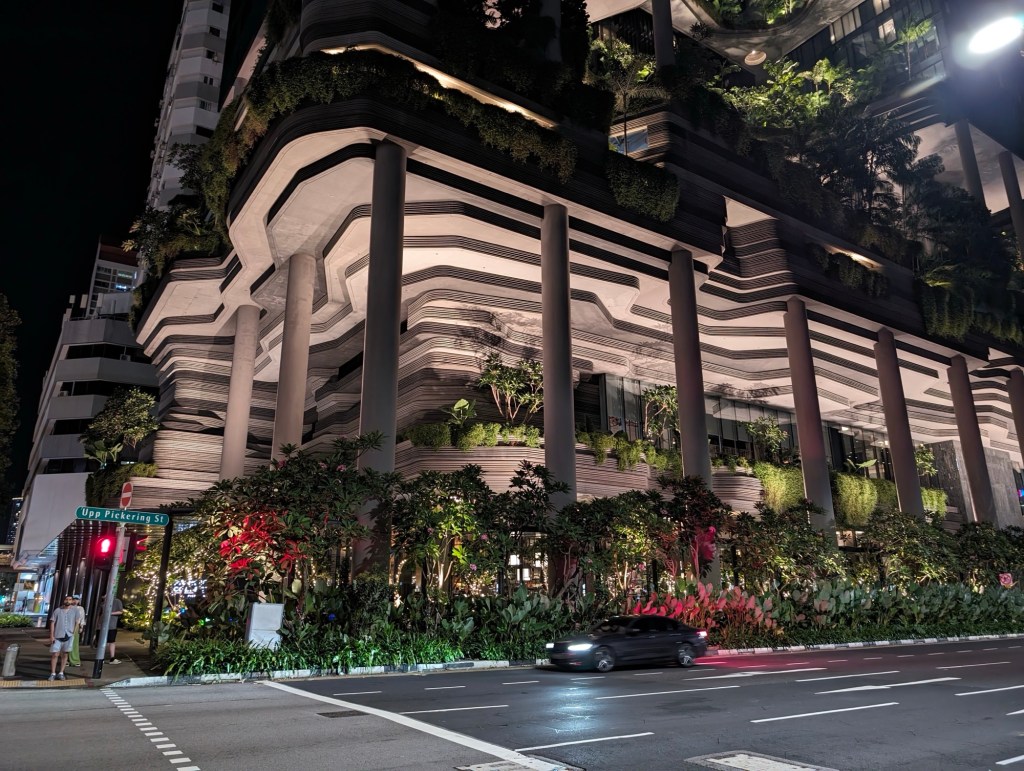
We spend some time downtown as well. (We make our way to Raffles.)
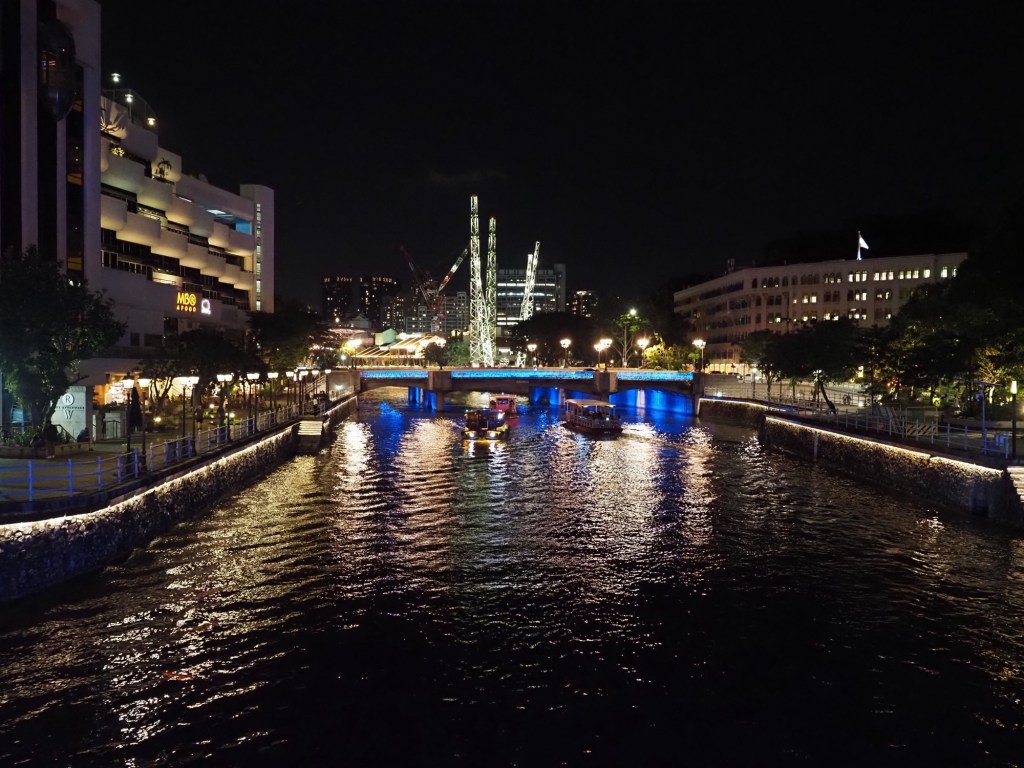
Little India
The next afternoon we walk around Little India. Mango lassies are very refreshing in this heat.
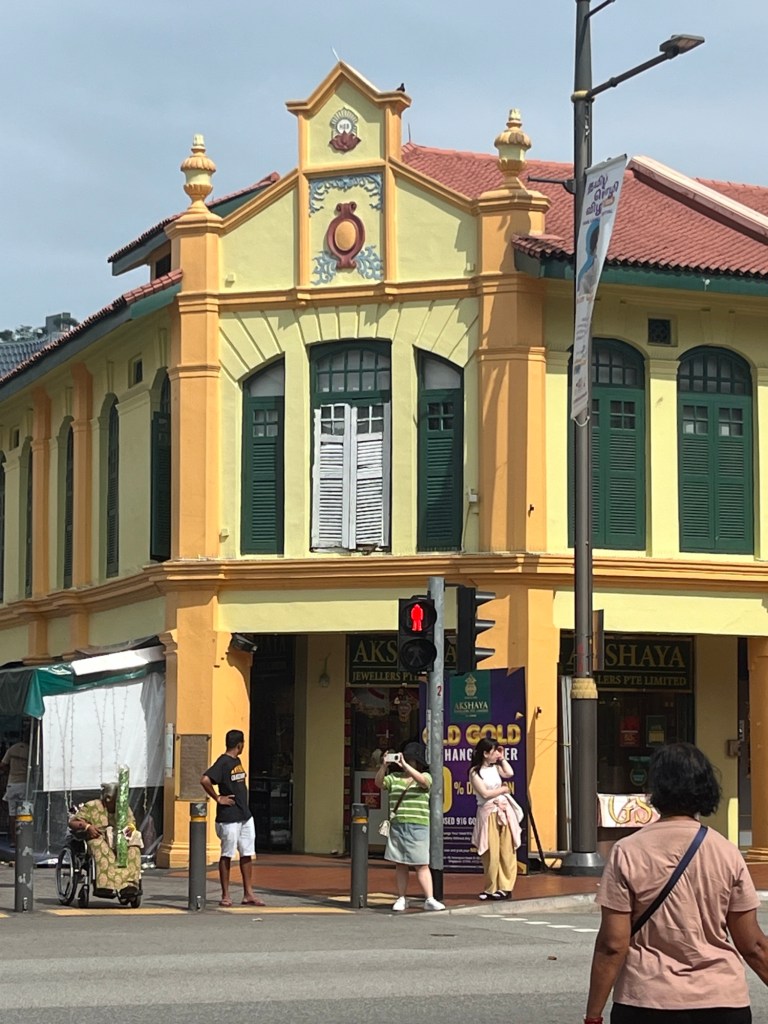
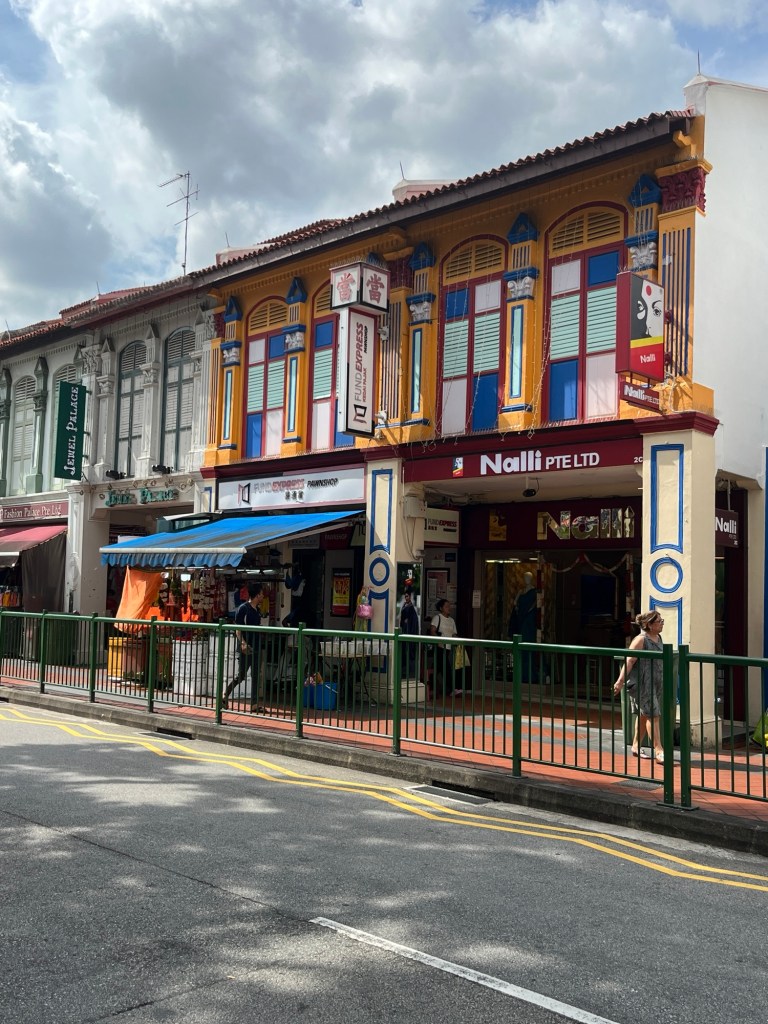
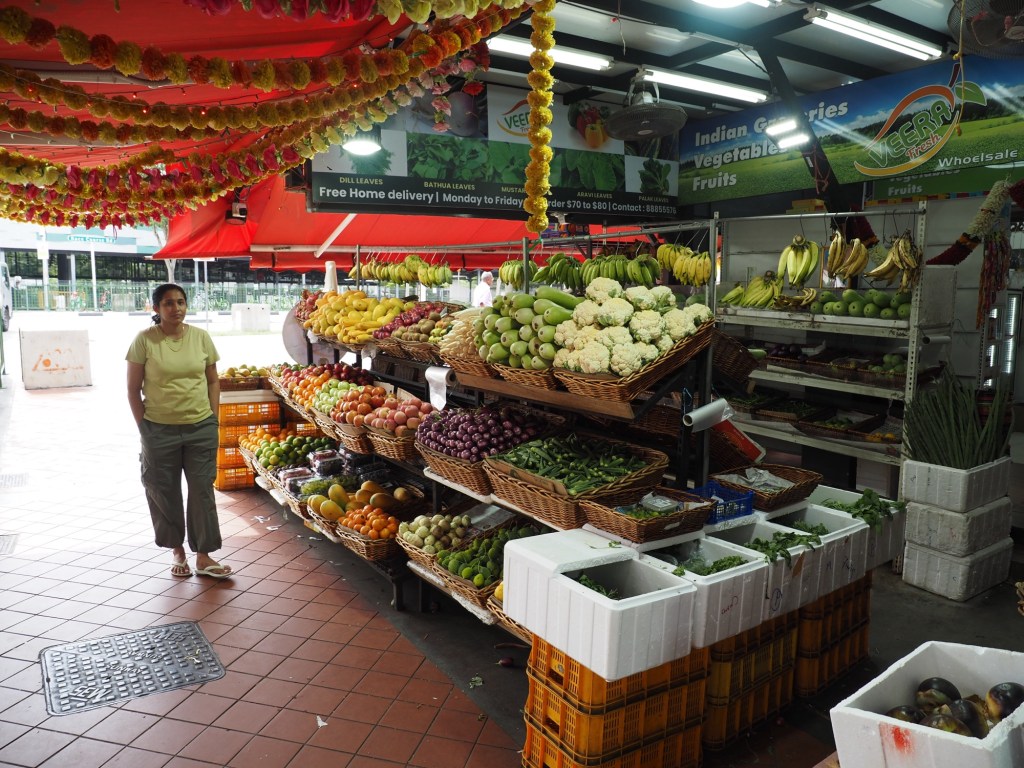
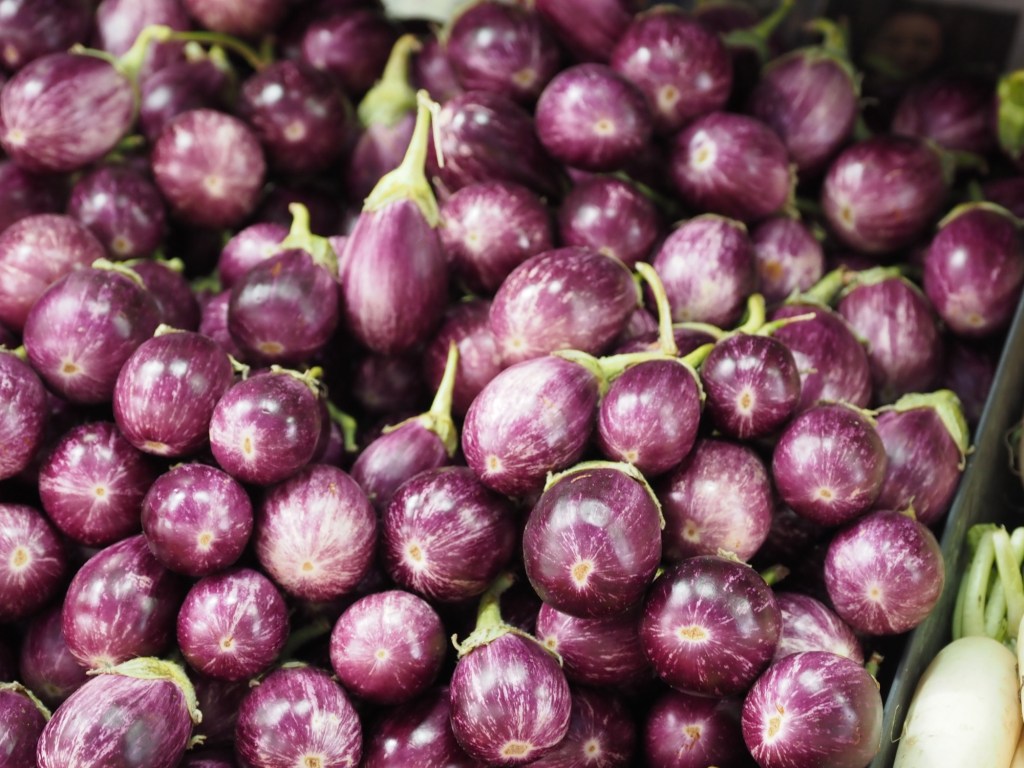
The produce is amazing.
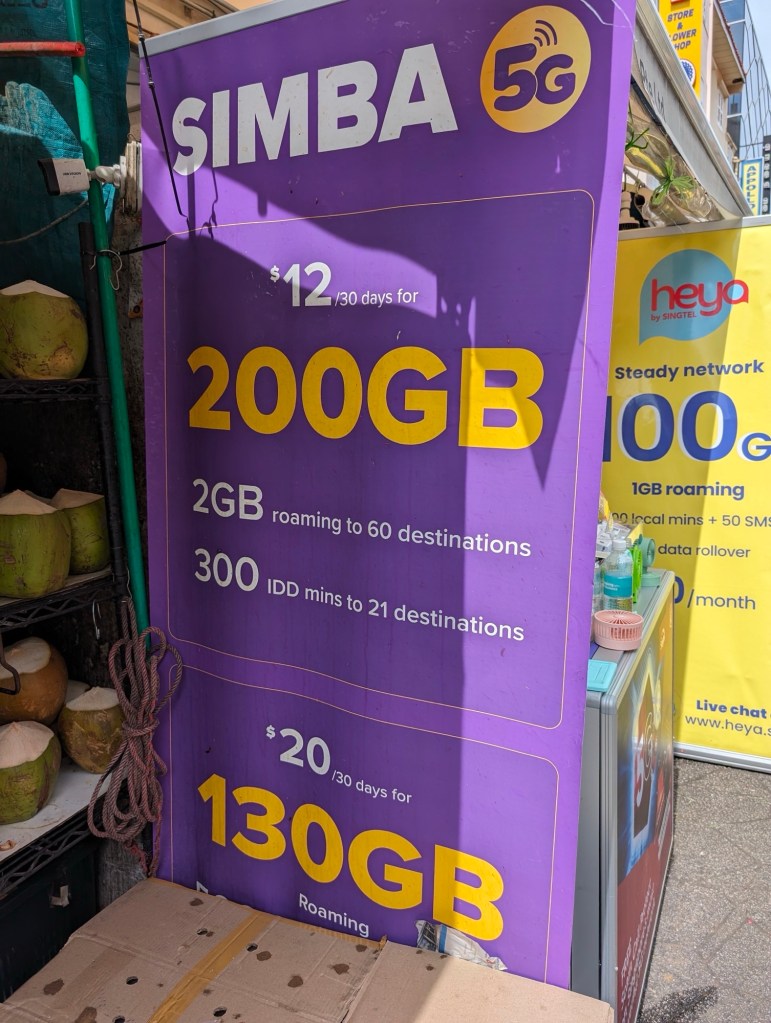
These signs are everywhere. Cell plans are so reasonable in SE Asia!
Rooftops
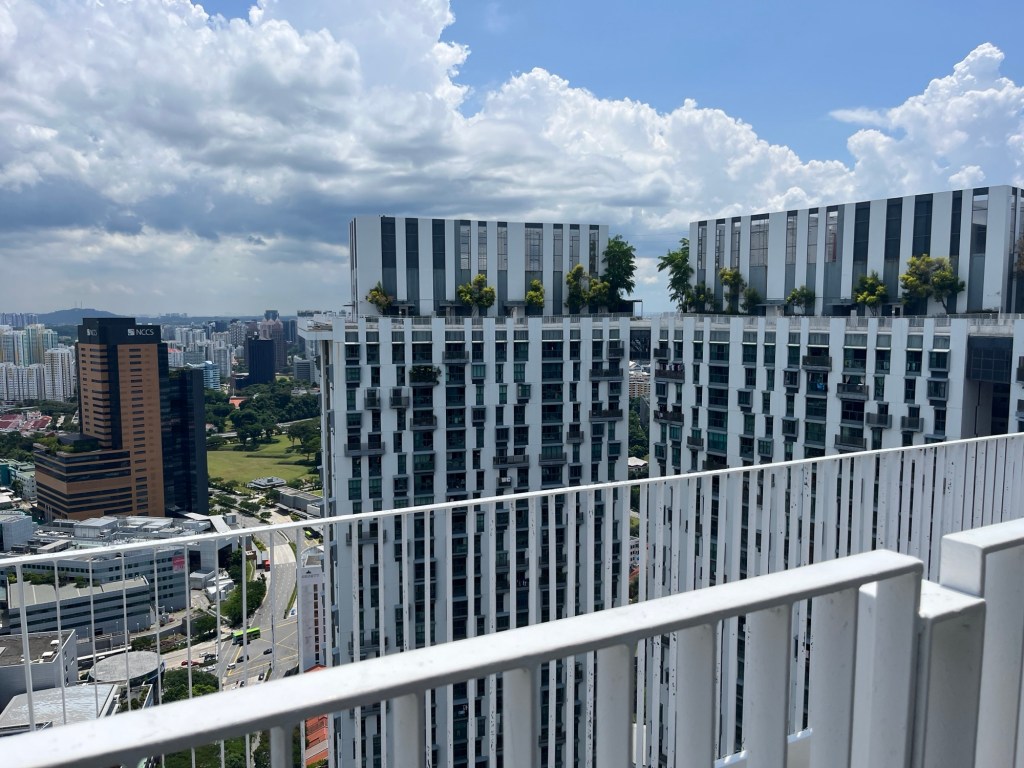
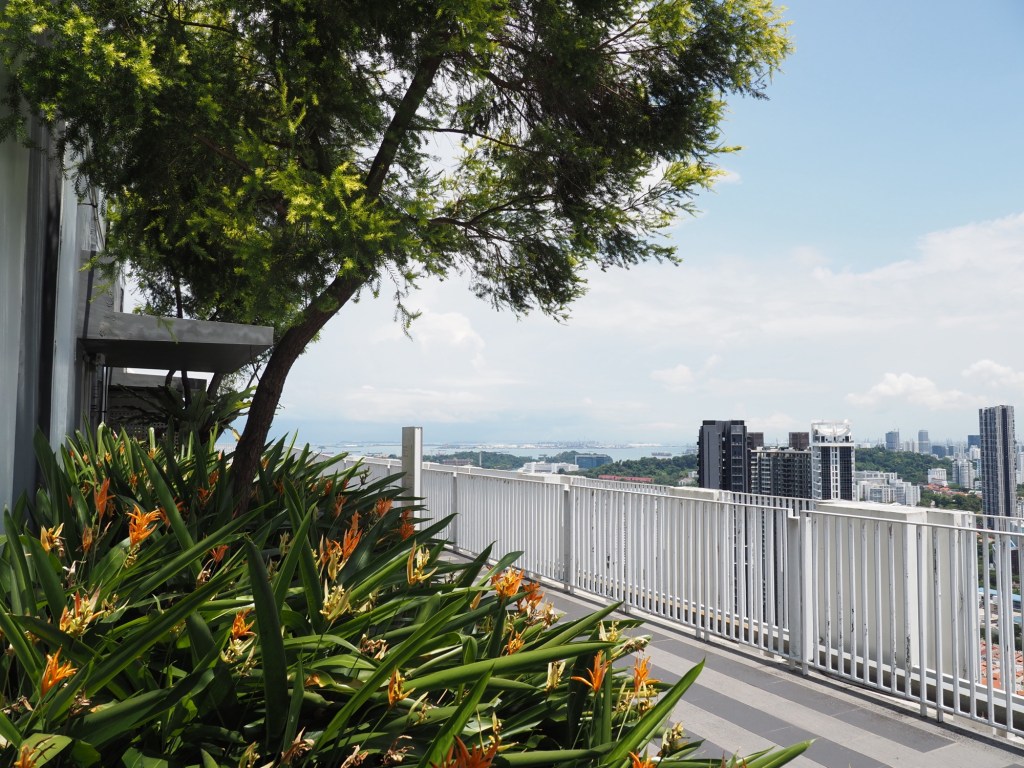
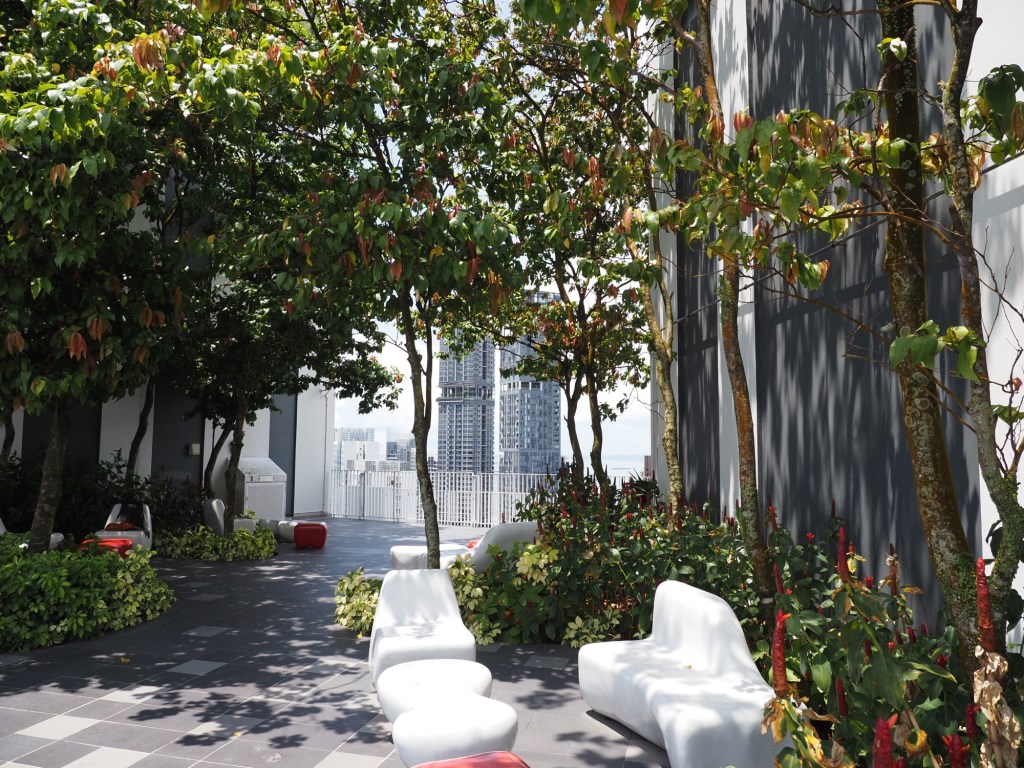
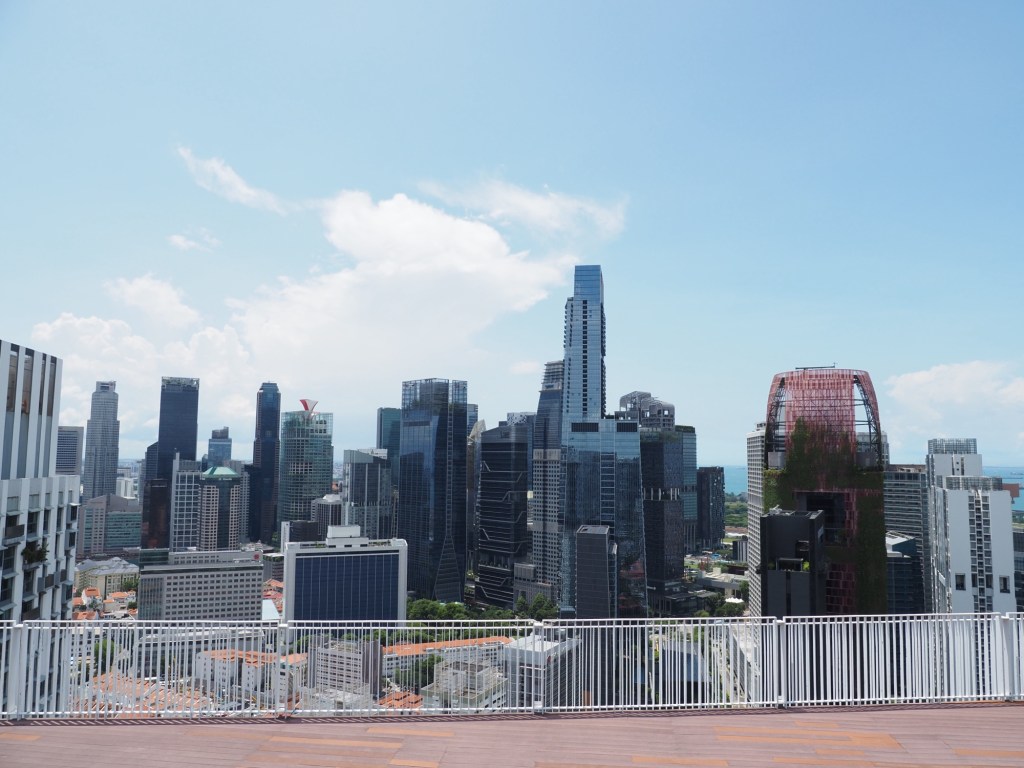
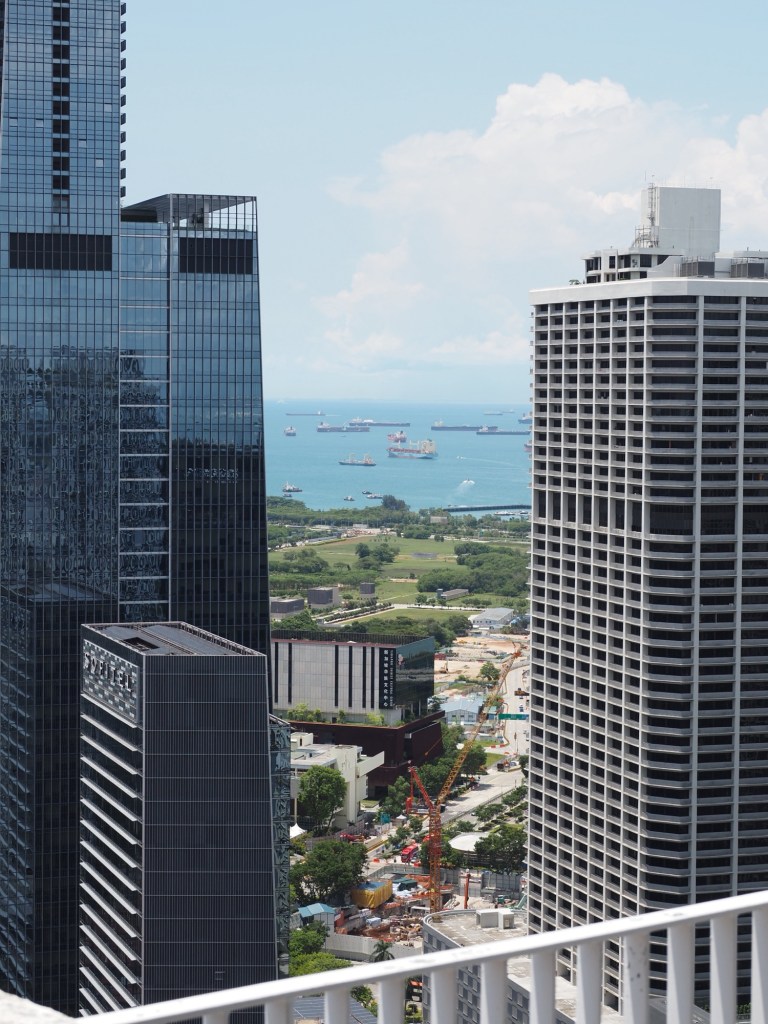
Each day we look up at the seven high rises comprising The Pinnacle @ Duxton. Turns out for $6 you can take the elevator to the 50th floor Skybridge and get a magnificent view of Singapore.
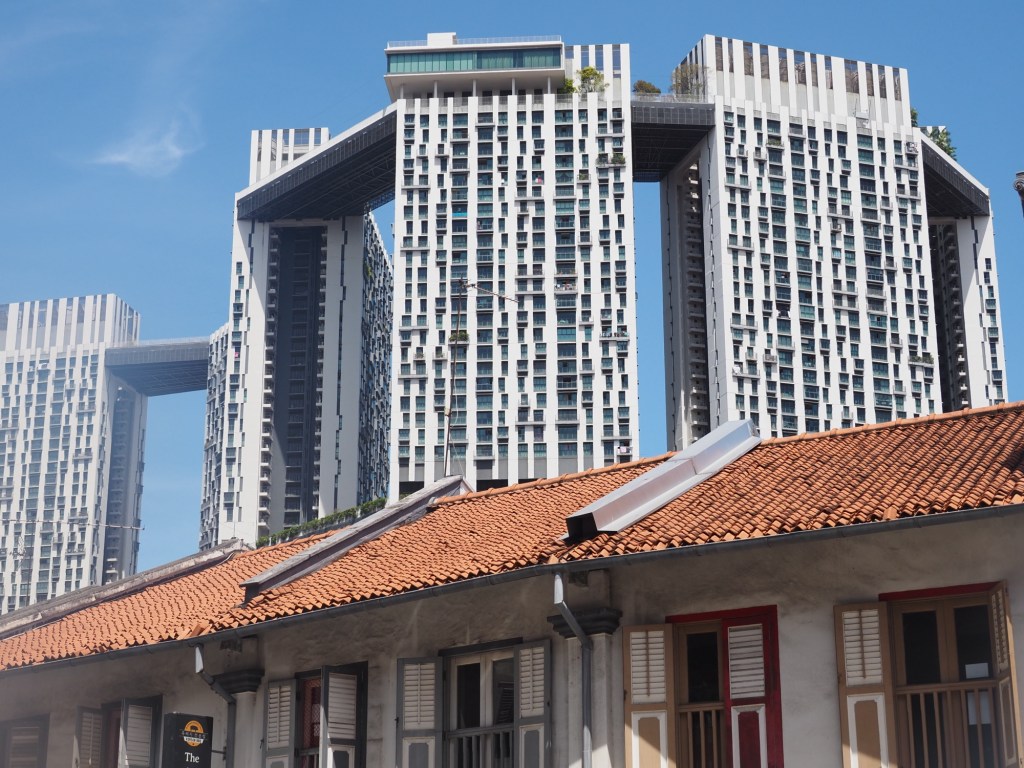
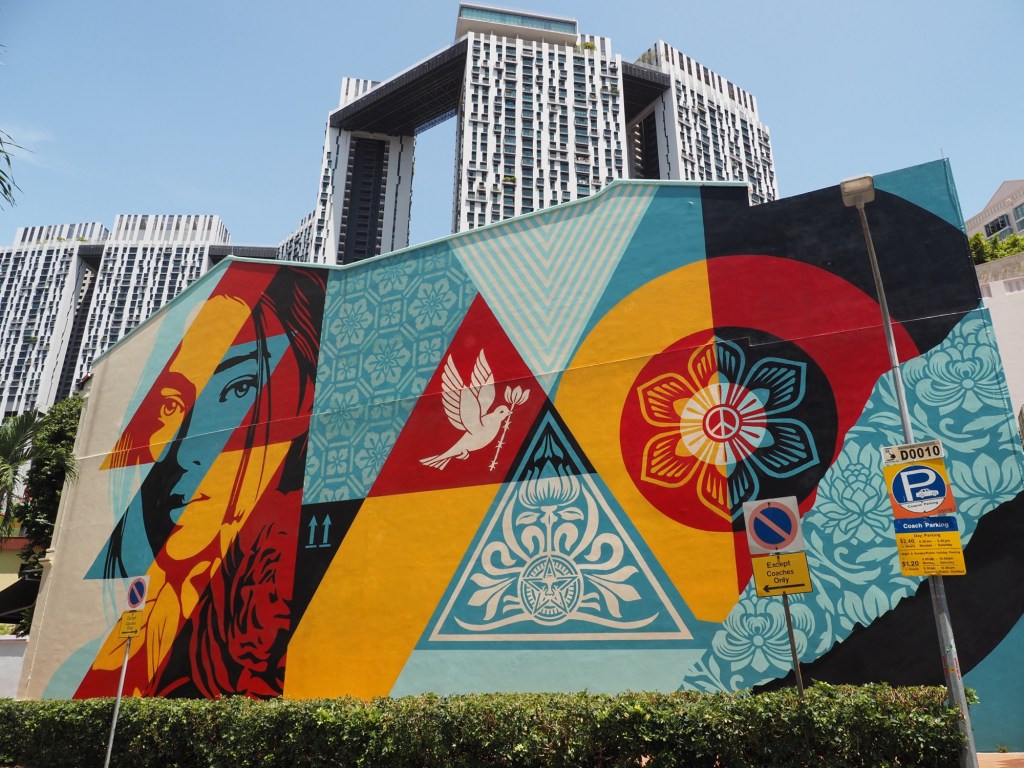
Oh ya, there’s our hotel!
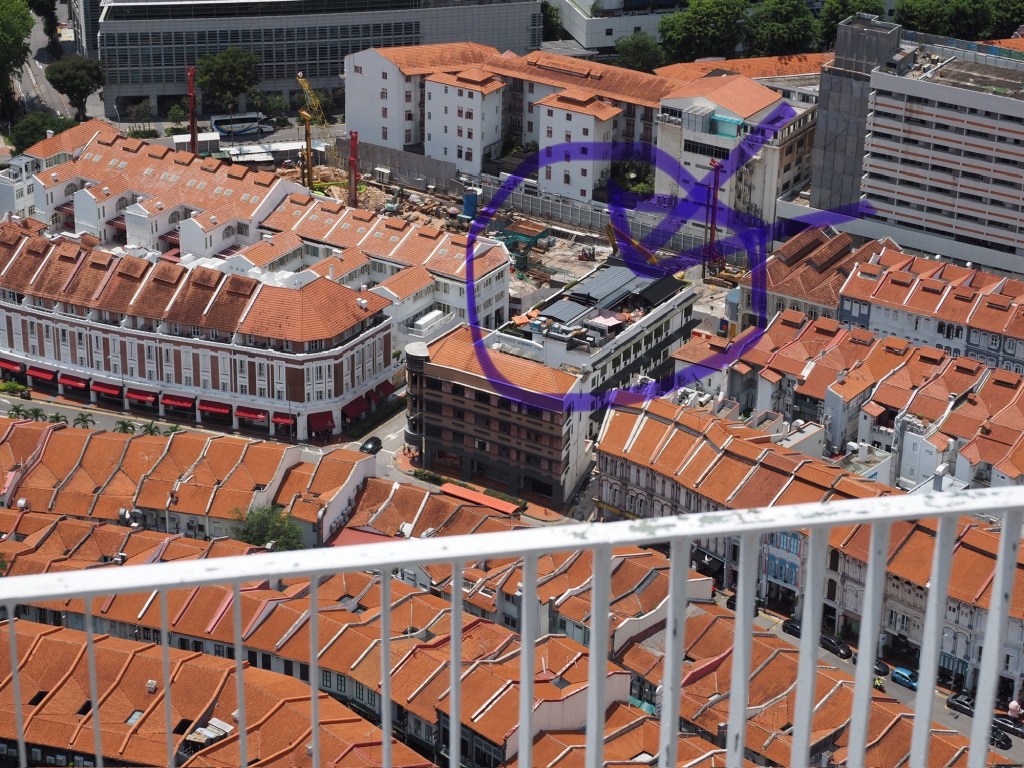
The towers are a public housing complex. Here are a few more photos.
Thoughts about Singapore
I have always been curious about Singapore. Singapore was part of Malaysia for a brief time (2 years) and broke away for racial and political reasons. At the time the country was not wealthy by any stretch, but it leveraged its location and large regional port hub to become a regional manufacturing, shipping and financial services center. Singapore is the second most expensive city in the world!!! The per capital GDP is the highest in the region and nearly double that of Malaysia- second in the region.
Housing
Singapore takes care of its citizens. Housing is a great example.
As I write this NYT has just published two articles on Singapore’s housing market. If this topic interests you here are links:
The Architect Who Made Singapore’s Public Housing the Envy of the World
Where Public Housing Apartments Can Go for More Than $1 Million
Singapore now faces some of the same issues as Metro Vancouver and most of Canada frankly. The articles provide historical perspective on rebuilding a post WW2 Singapore and providing public housing to many citizens going back decades.
Laws
In return citizens accept some control over their personal freedoms.
Did you know that you can receive a $1000 fine if you don’t flush the public toilet. Chewing gum is banned.
Metro
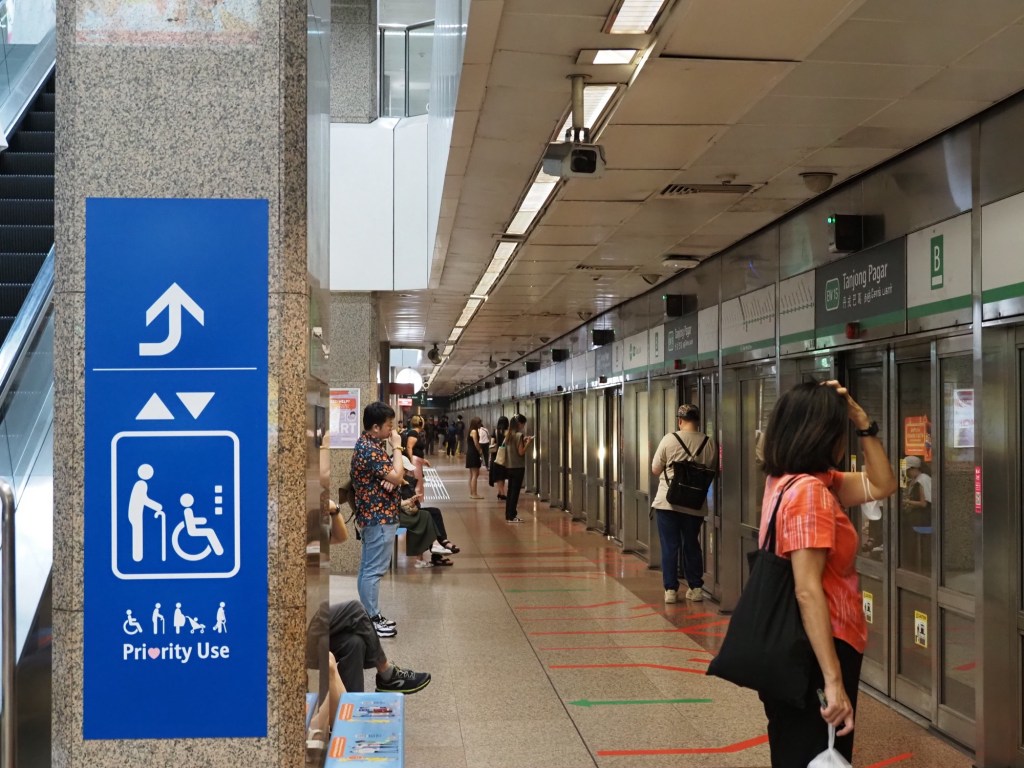
It is awesome. Just tap and go. You get a daily billing through your credit card. No cabs required in Singapore.
And you can be fined for eating or drinking on transit (there are warning signs posted throughout the transit system).
Holidays
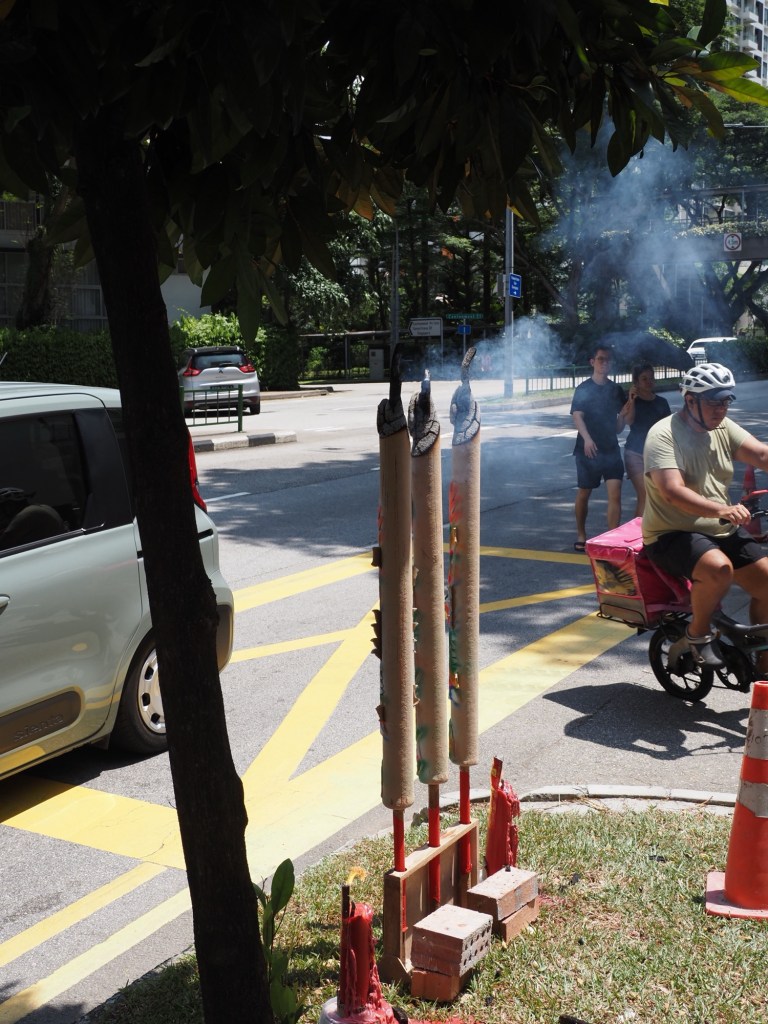
May 1st is Labour Day. Our last day in Singapore is a holiday Wednesday. It feels more like a very quiet Sunday. People are out and about at the park, having coffee, brunch, dim sum or Raman noodles.
Food and Beverage
Coffee places (that serve breakfast)
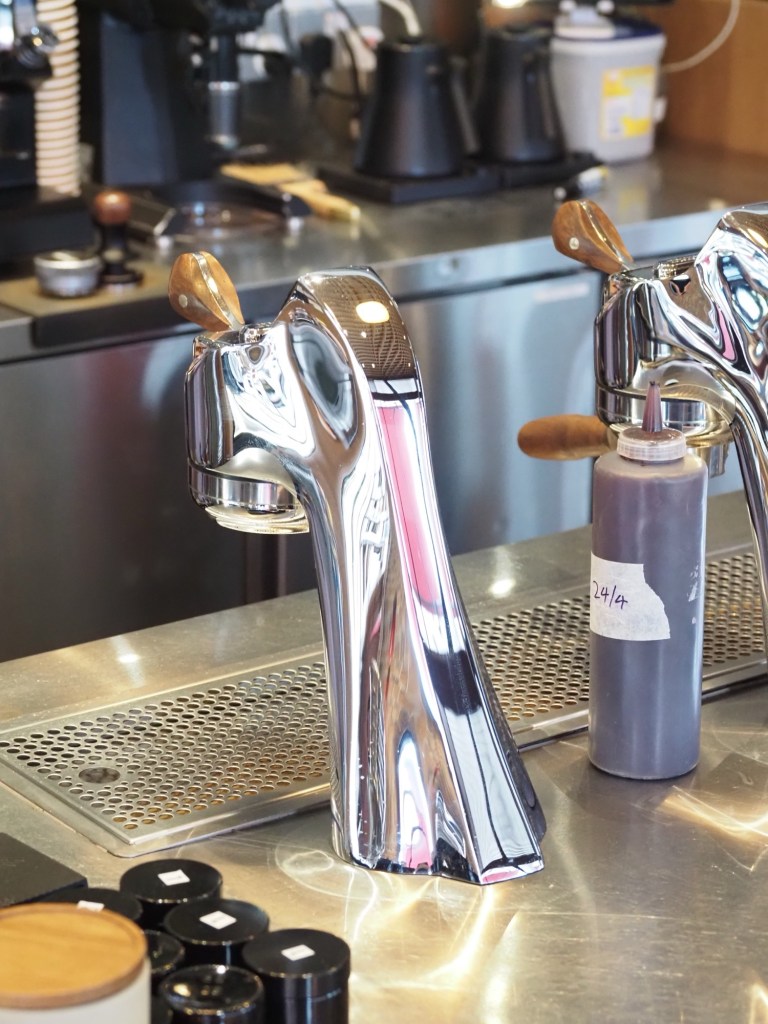
Pat is taken with the coffee infrastructure at Five Oars Coffee Roasters – our morning go to.

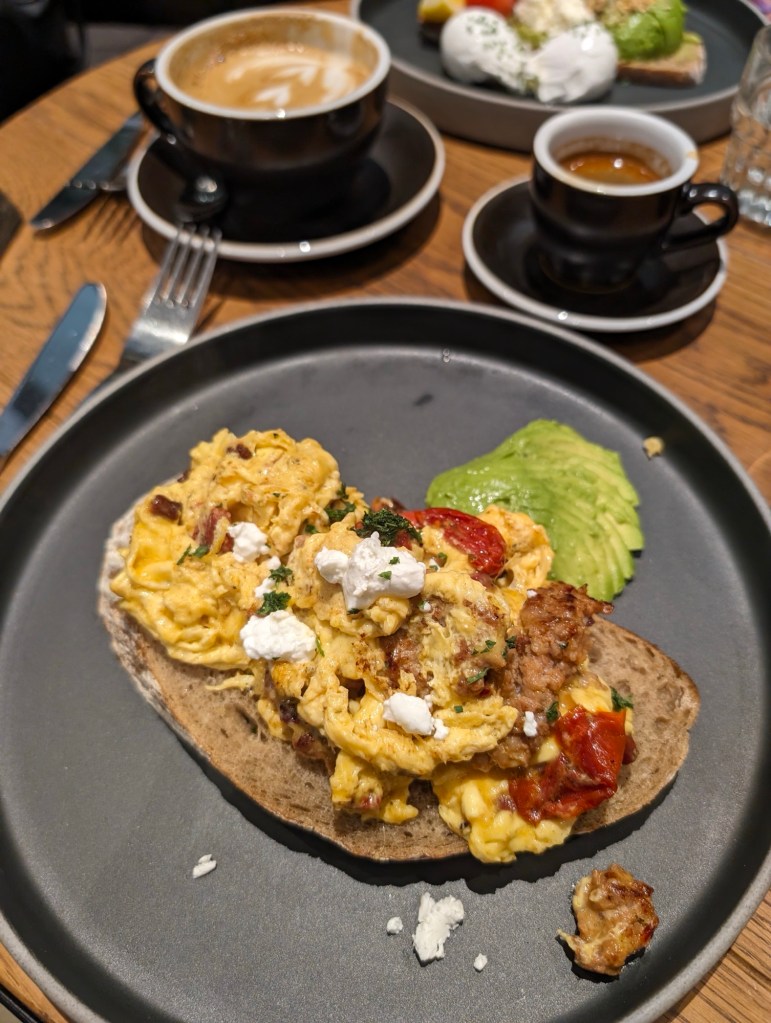
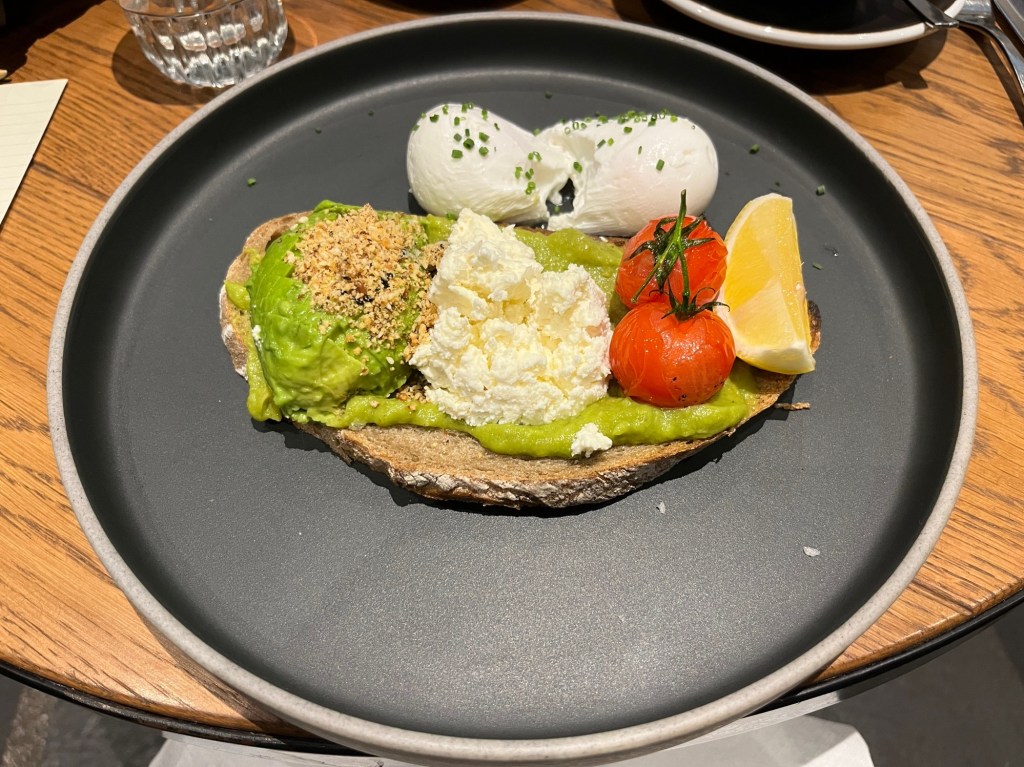
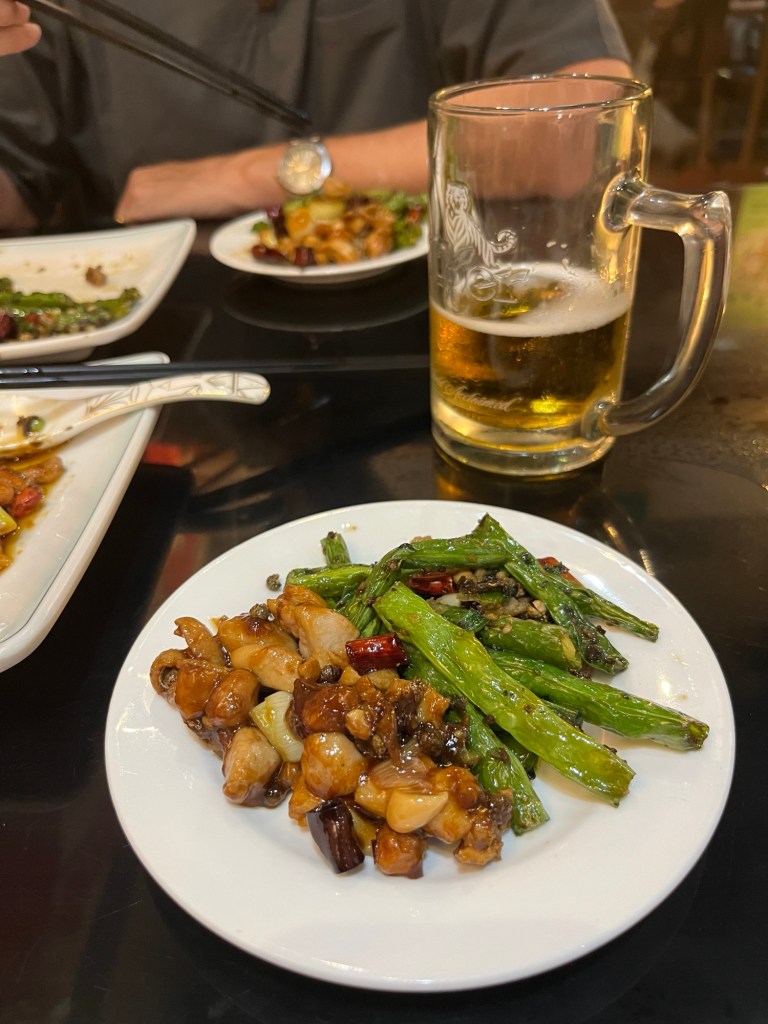
Sichuan Chinese
Dinner in Chinatown – yum!
Raffles
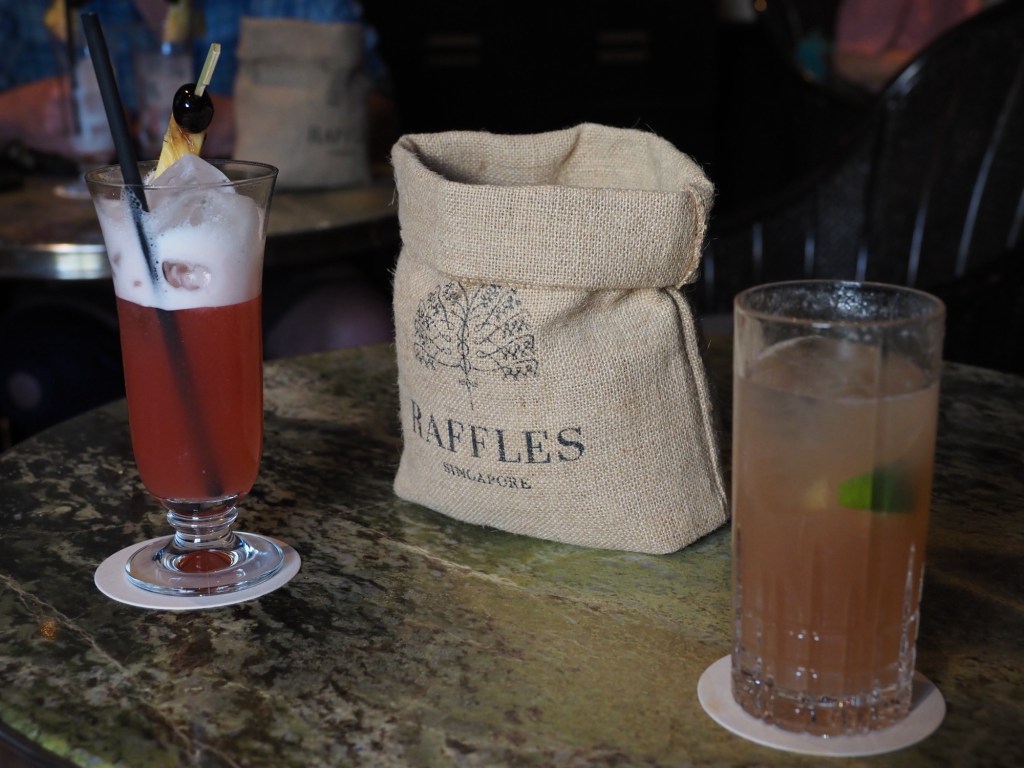
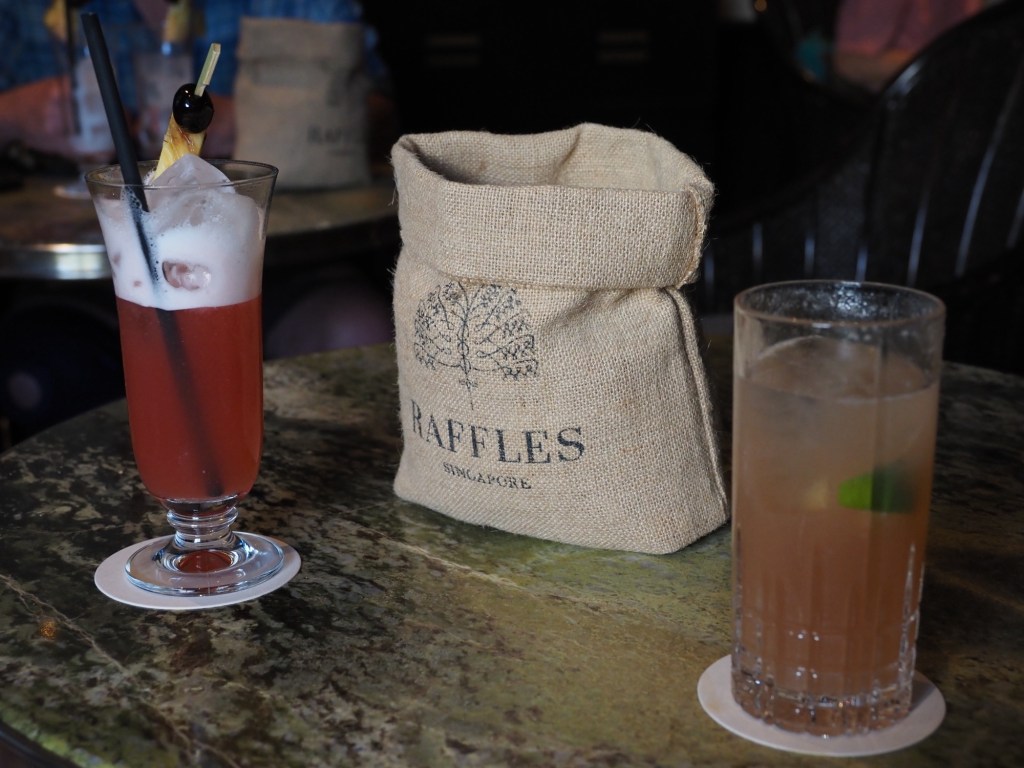
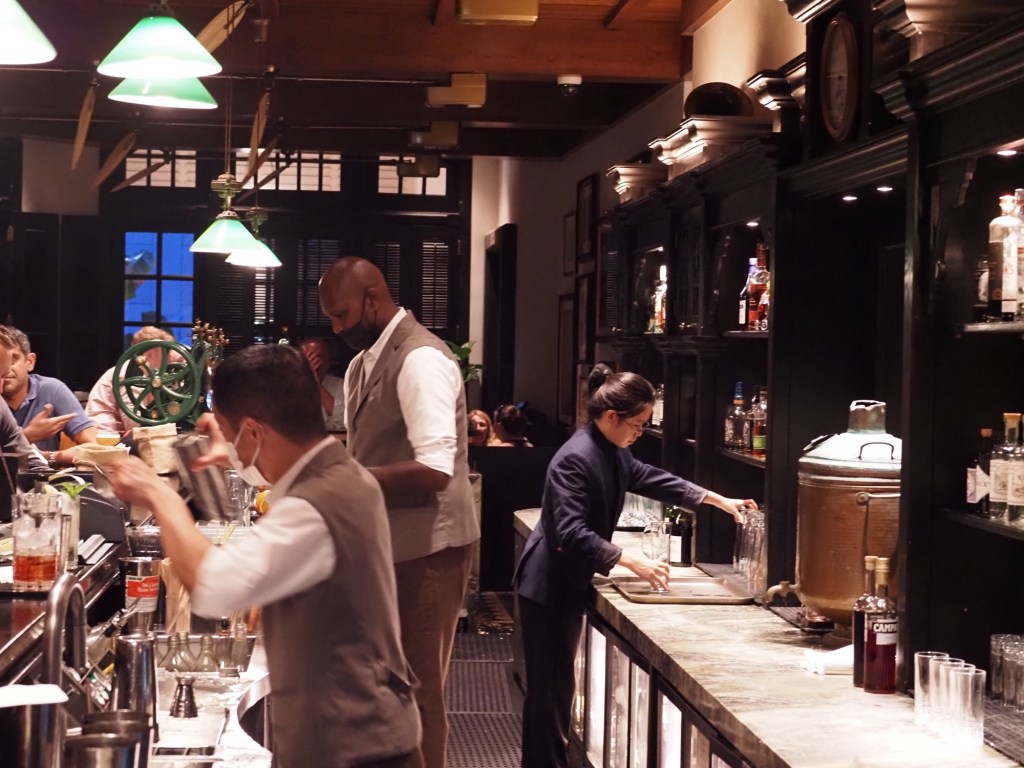
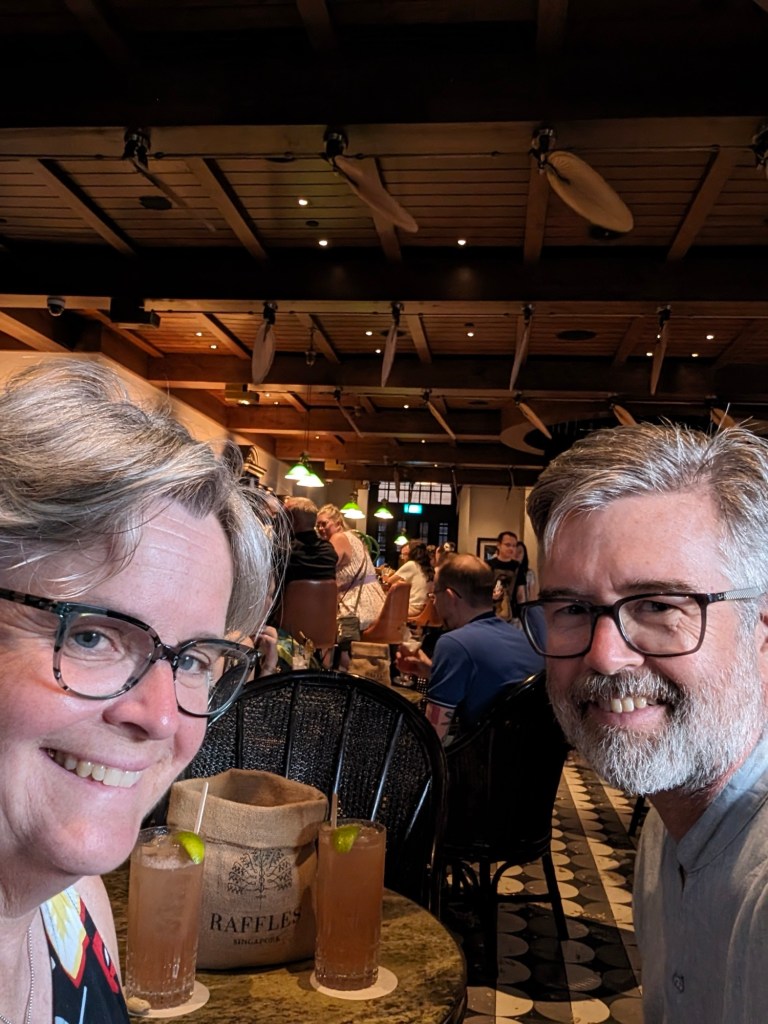
Singapore Slings at Raffles-a must do. Such a grand hotel isn’t it.
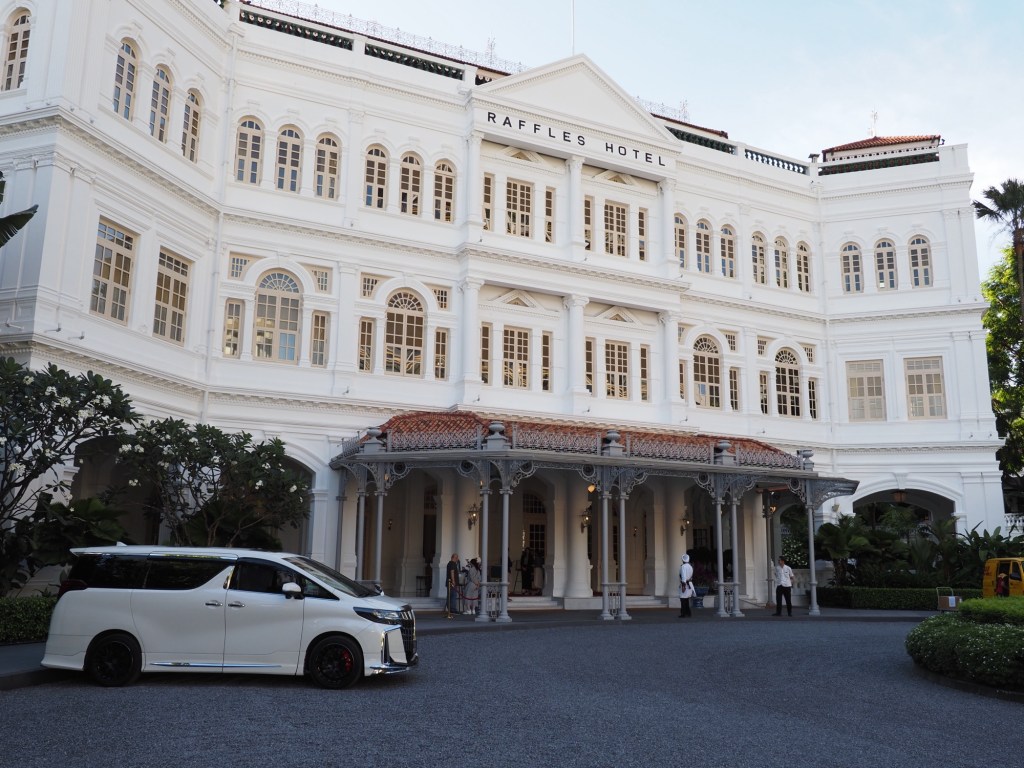
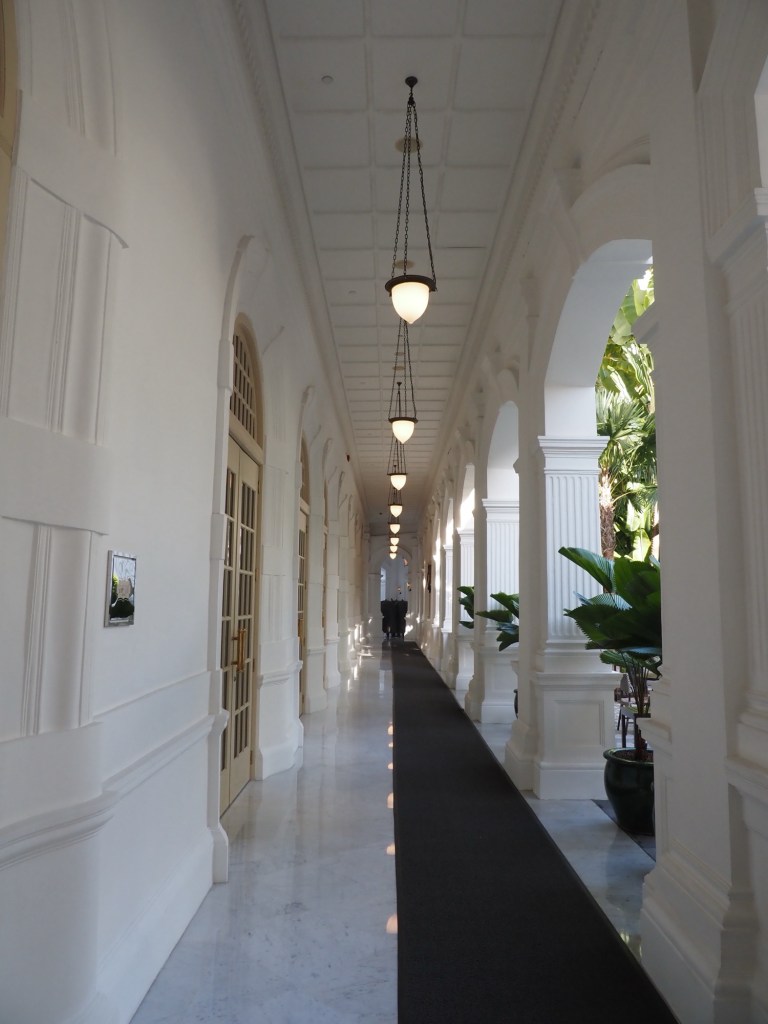
It is a short queue for a table at the Long Bar. So much history!
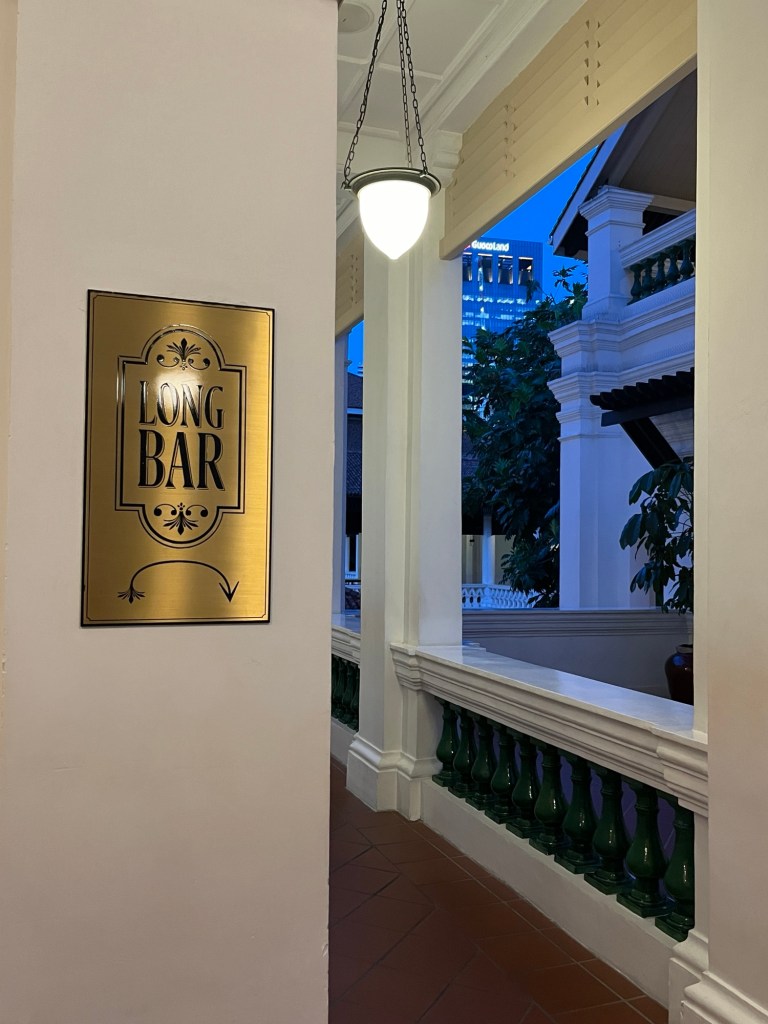
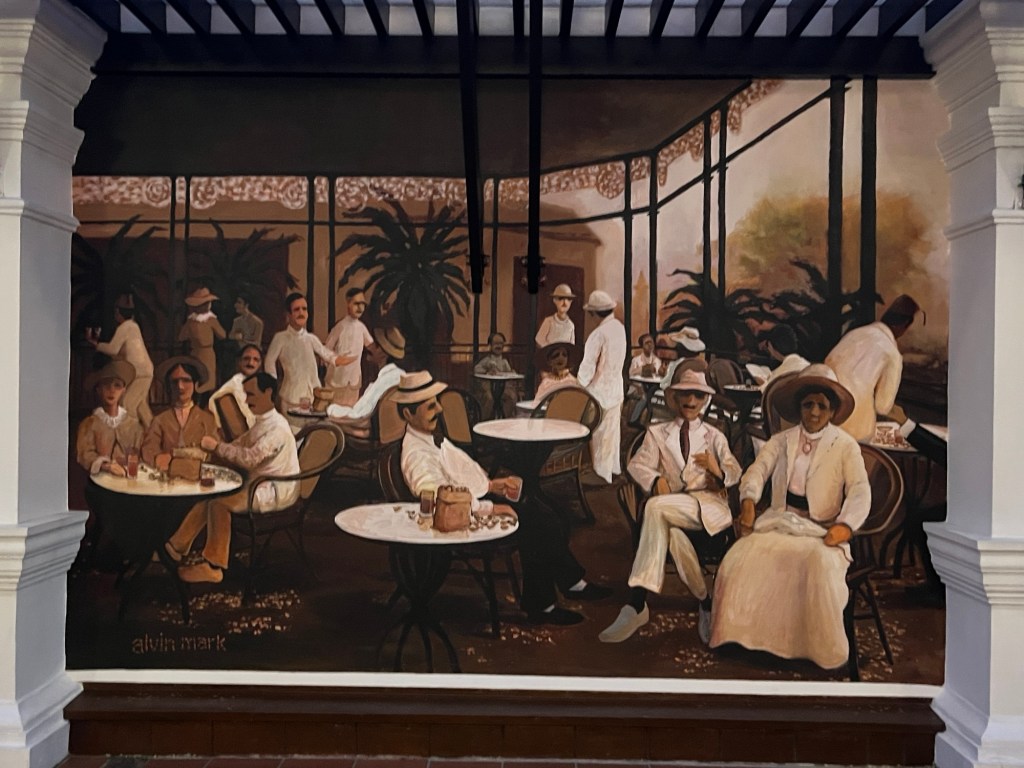
We enjoy the first round so much we order another. And it is such fun to throw our peanut shells on the floor. This is the most expensive bar bill and well worth it.
Birthday Dinner
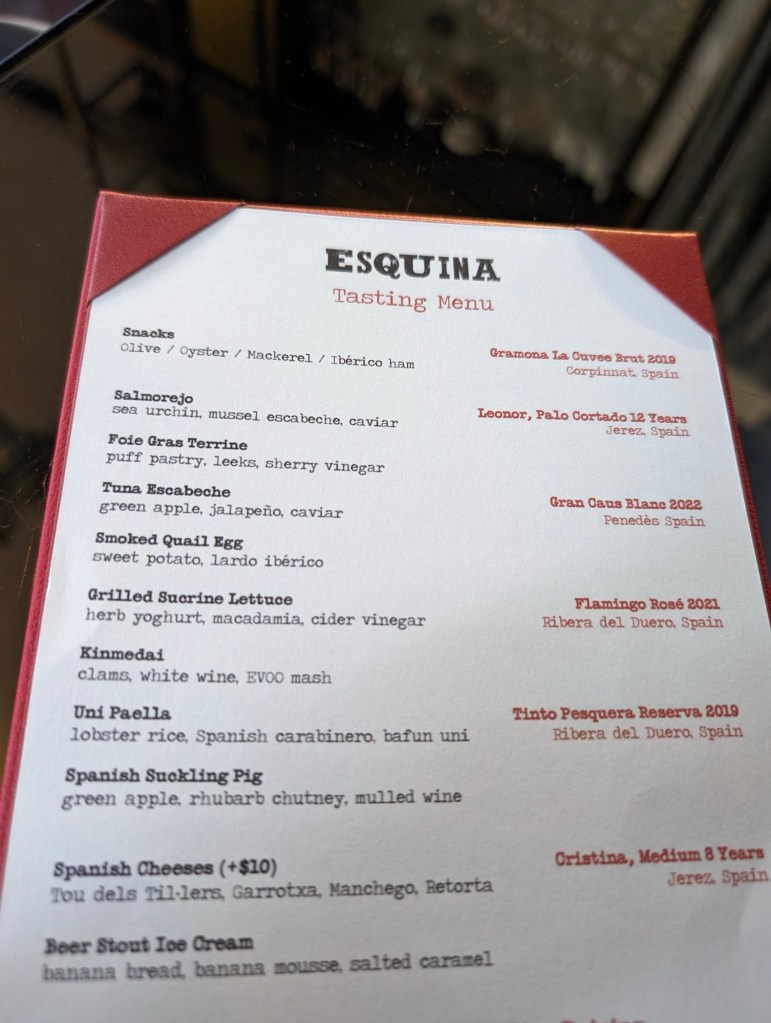
We celebrate Pat’s birthday with dinner at Esquina-a Michelin star Spanish restaurant. Why not try the 10 course tasting menu.
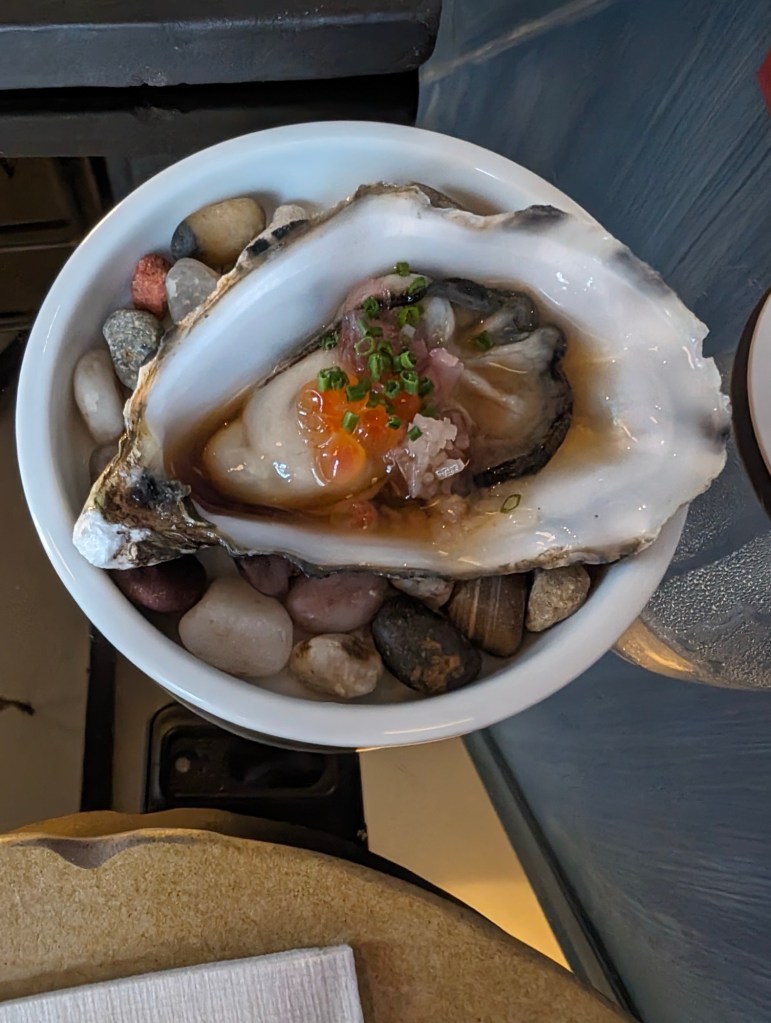
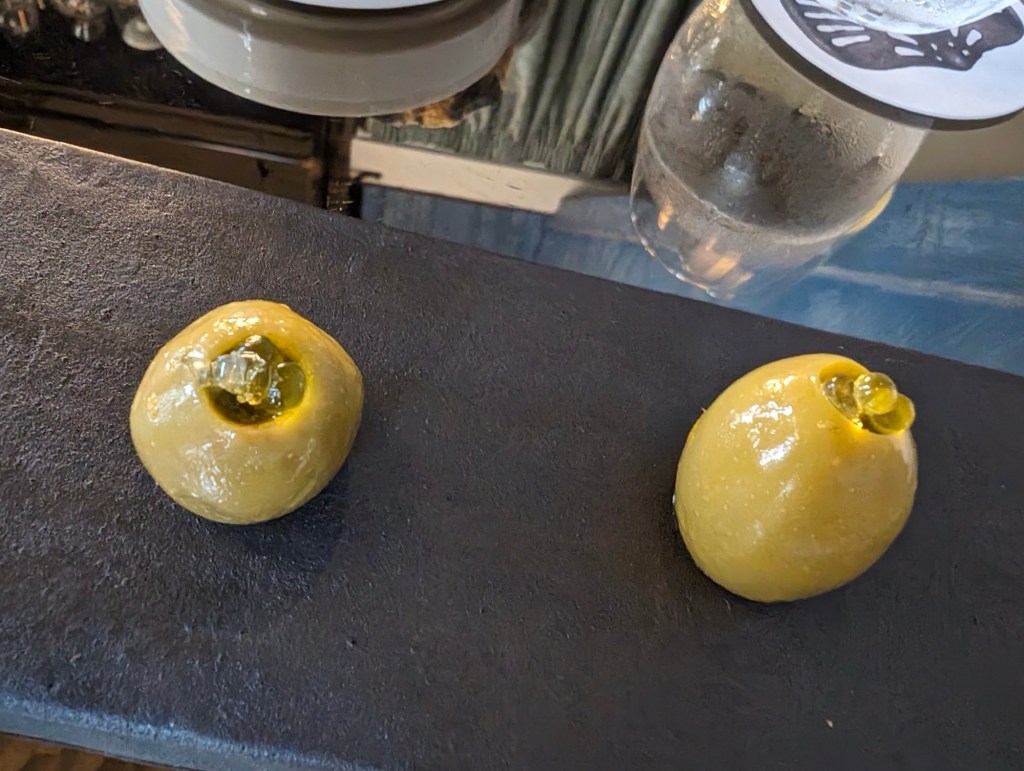
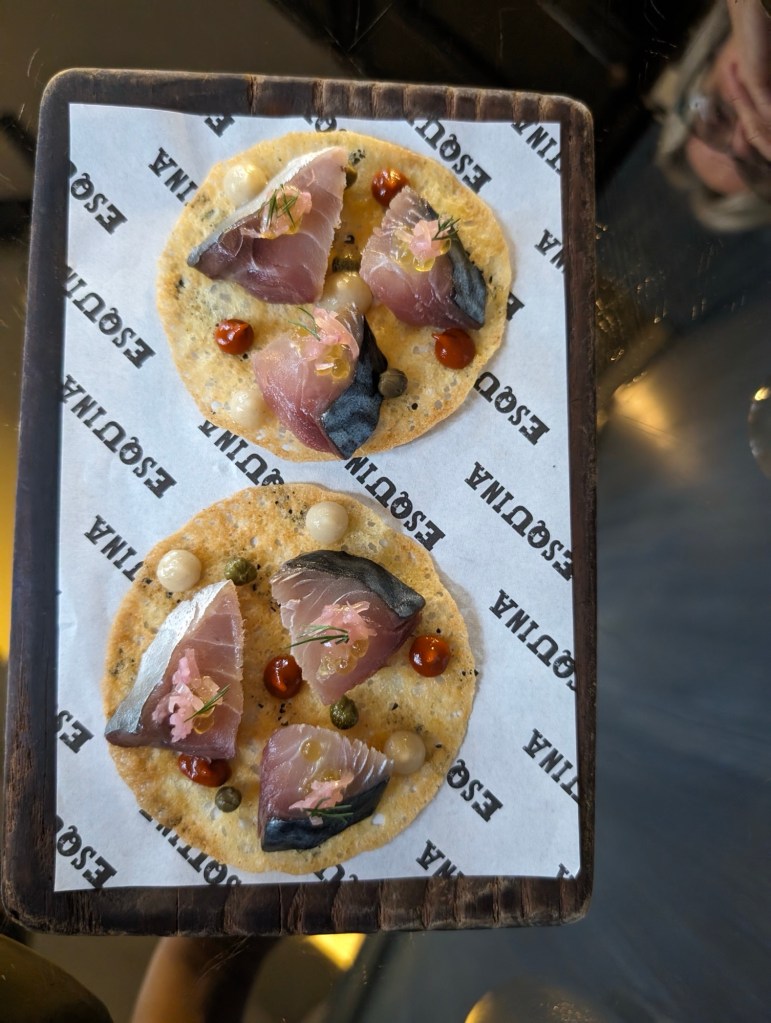
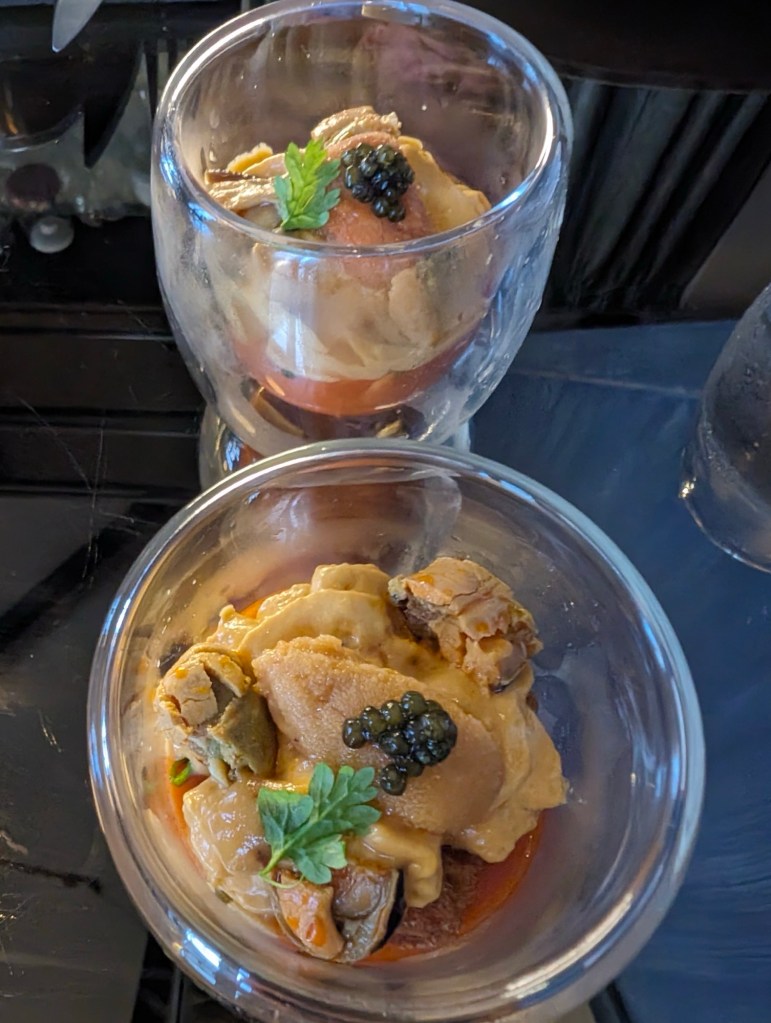
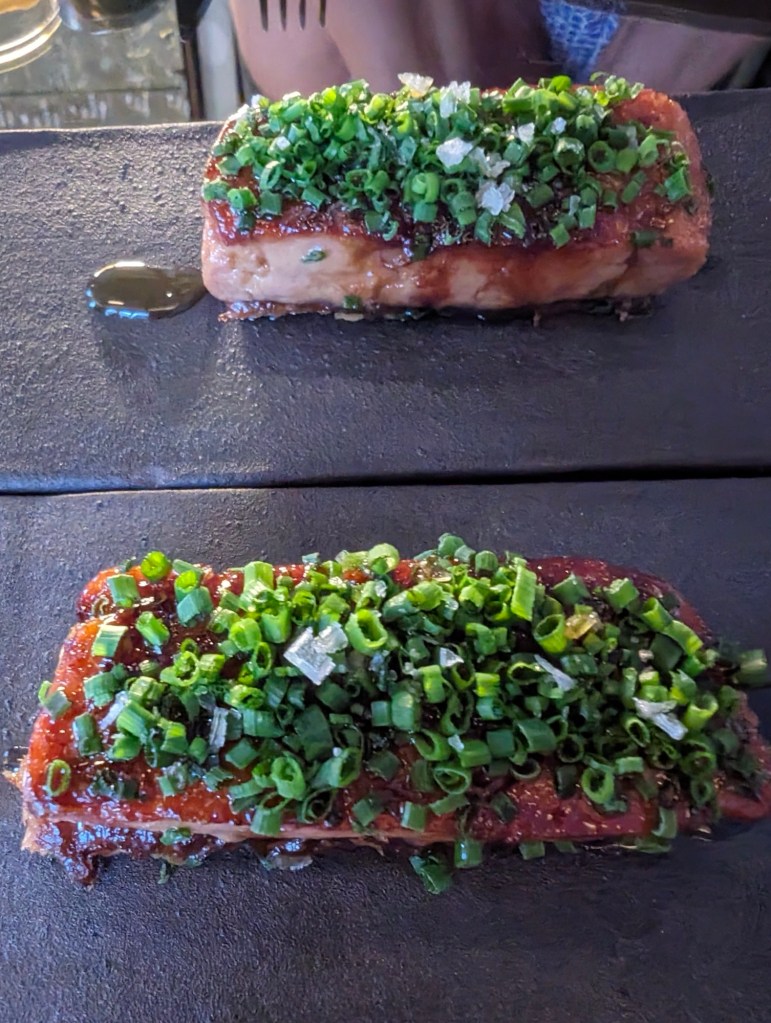
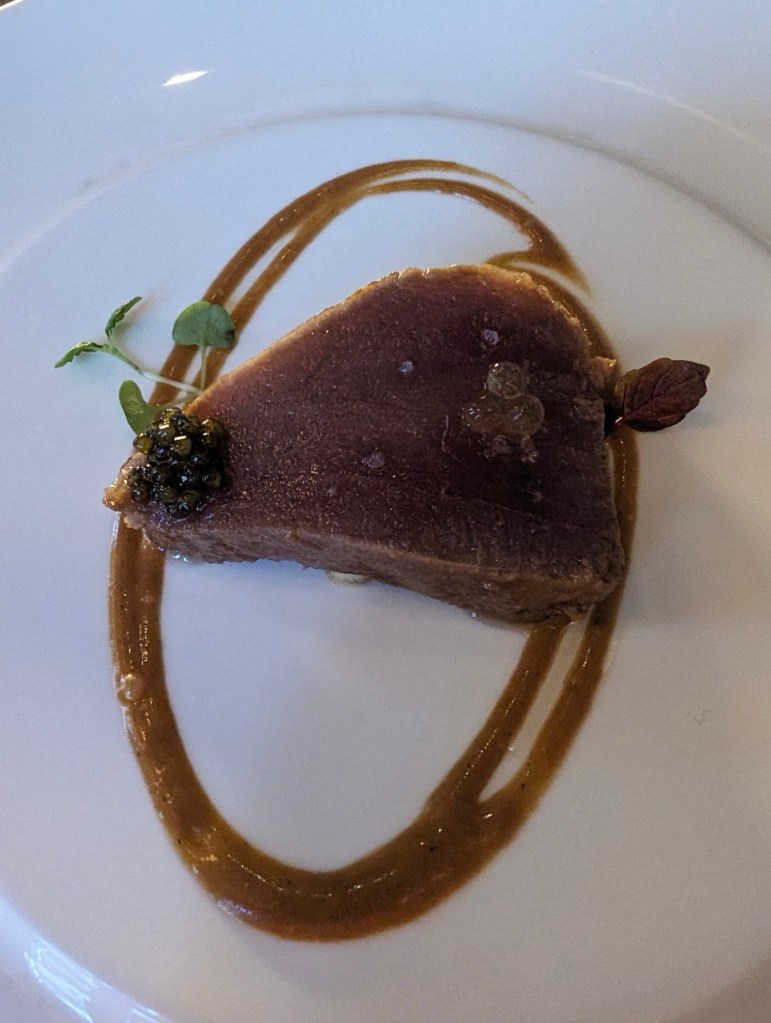
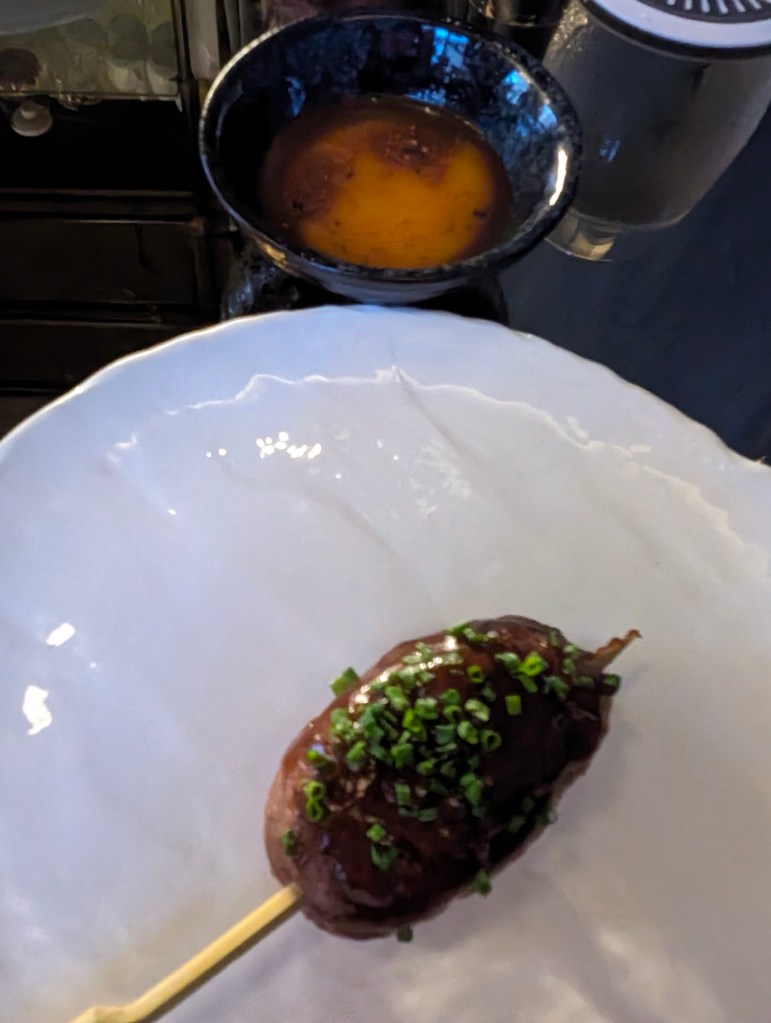
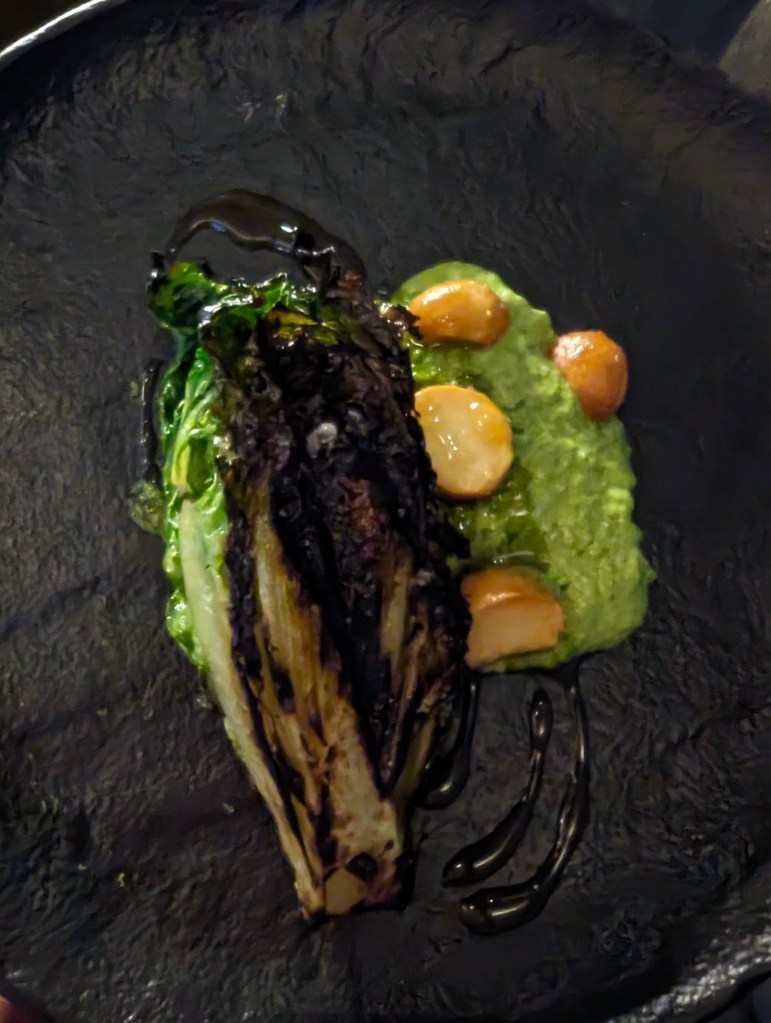
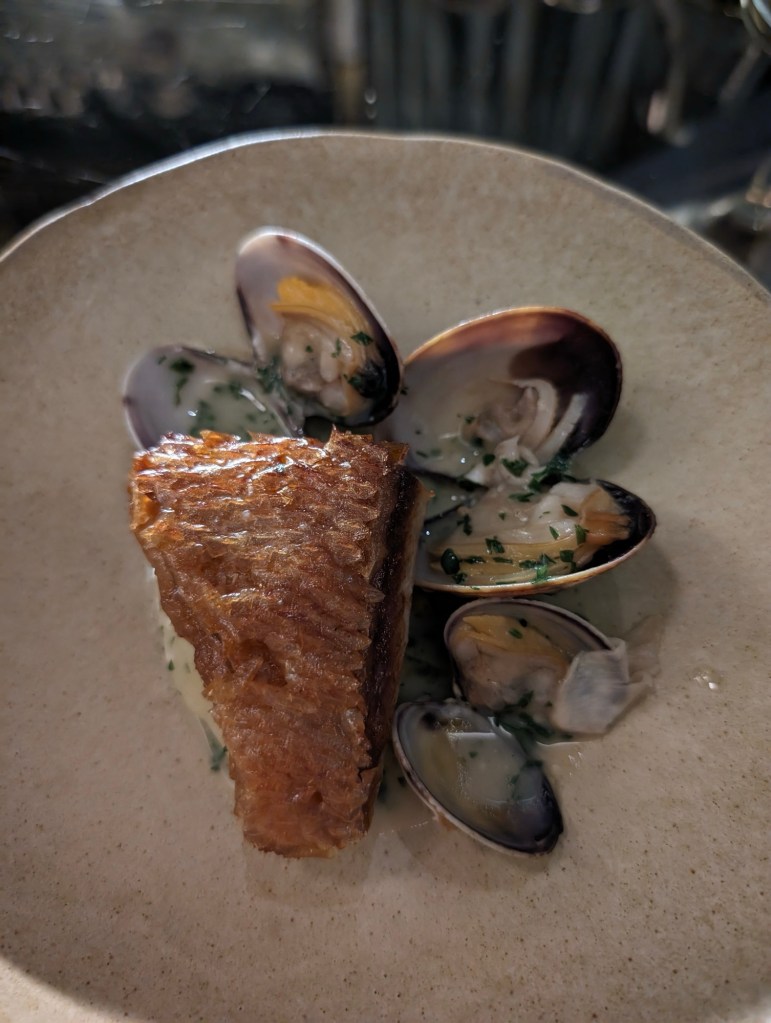
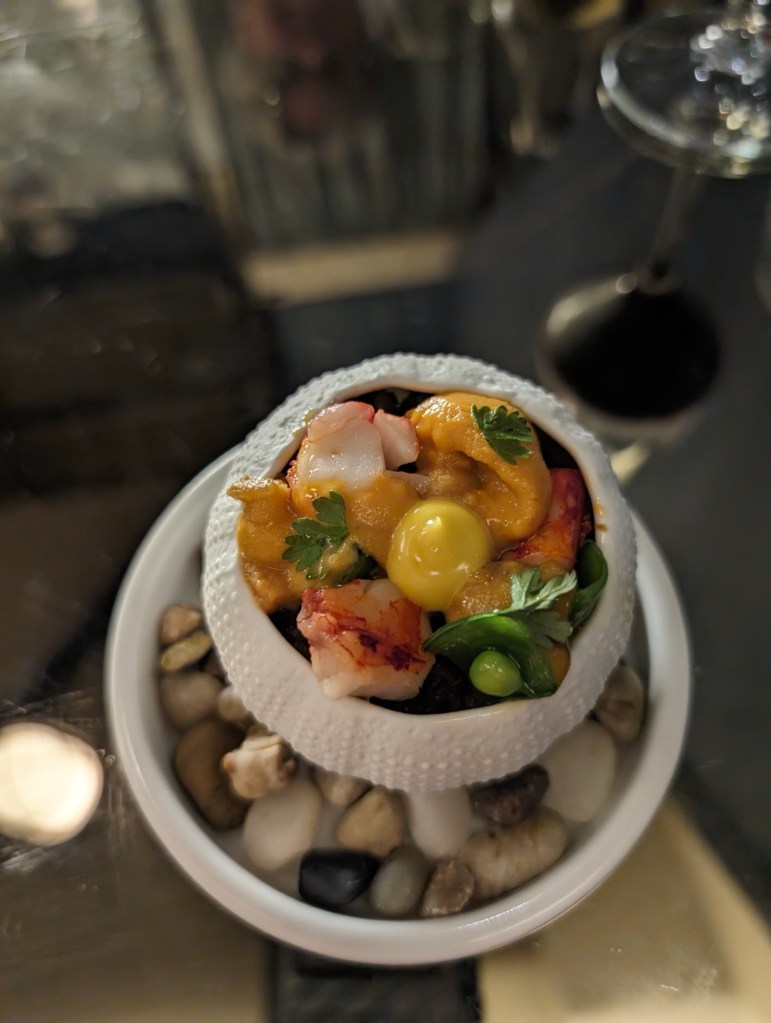
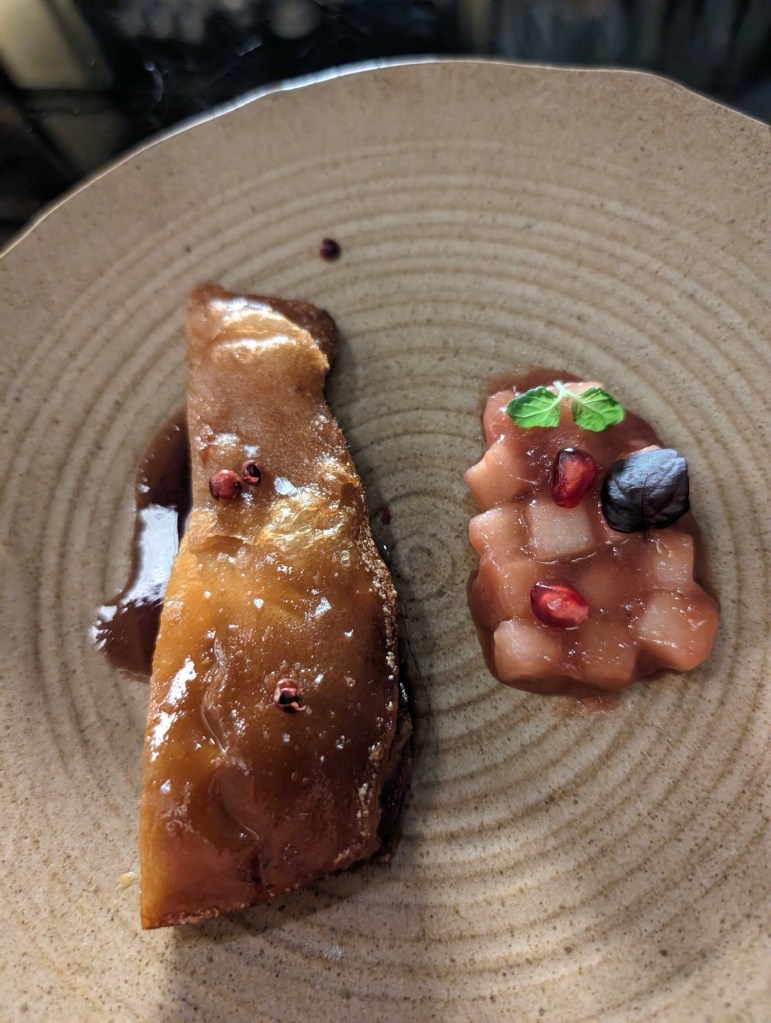
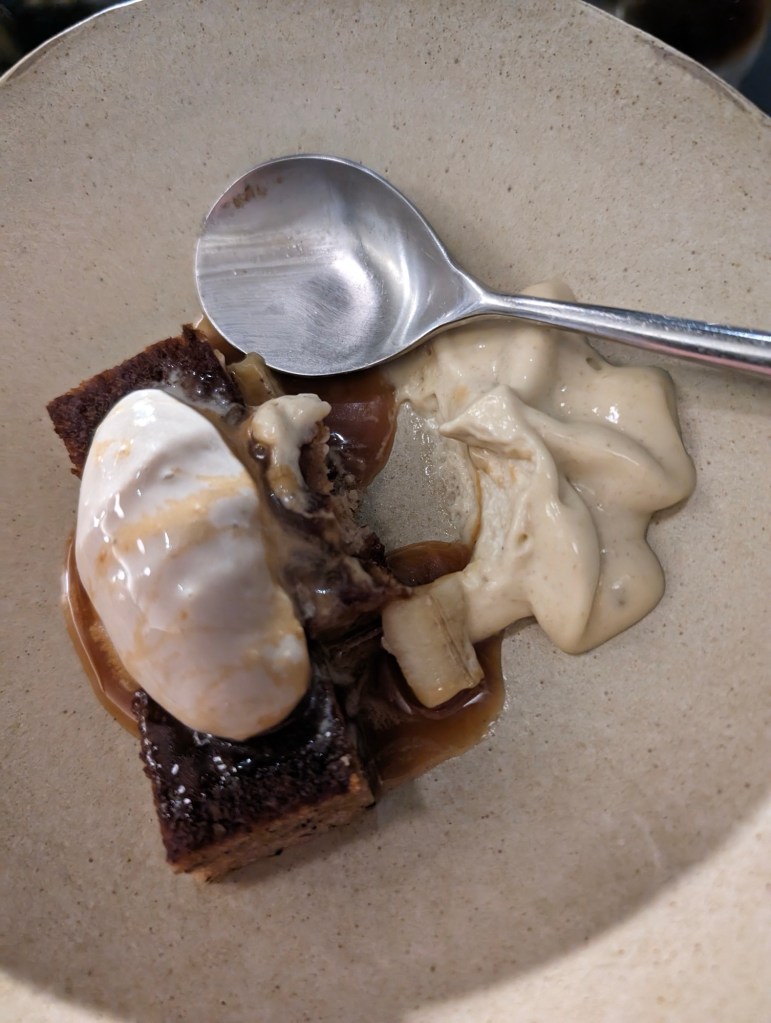
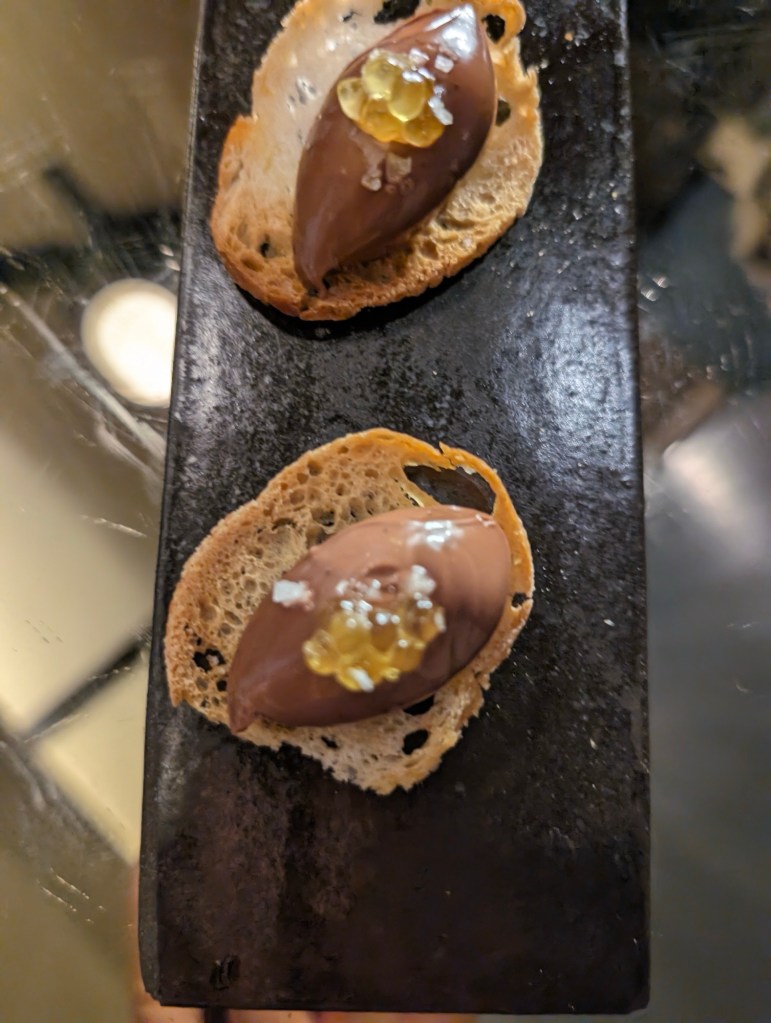
A nice ending to Singapore.
We have experienced so much in SE Asia. Now it is time to explore Greece.
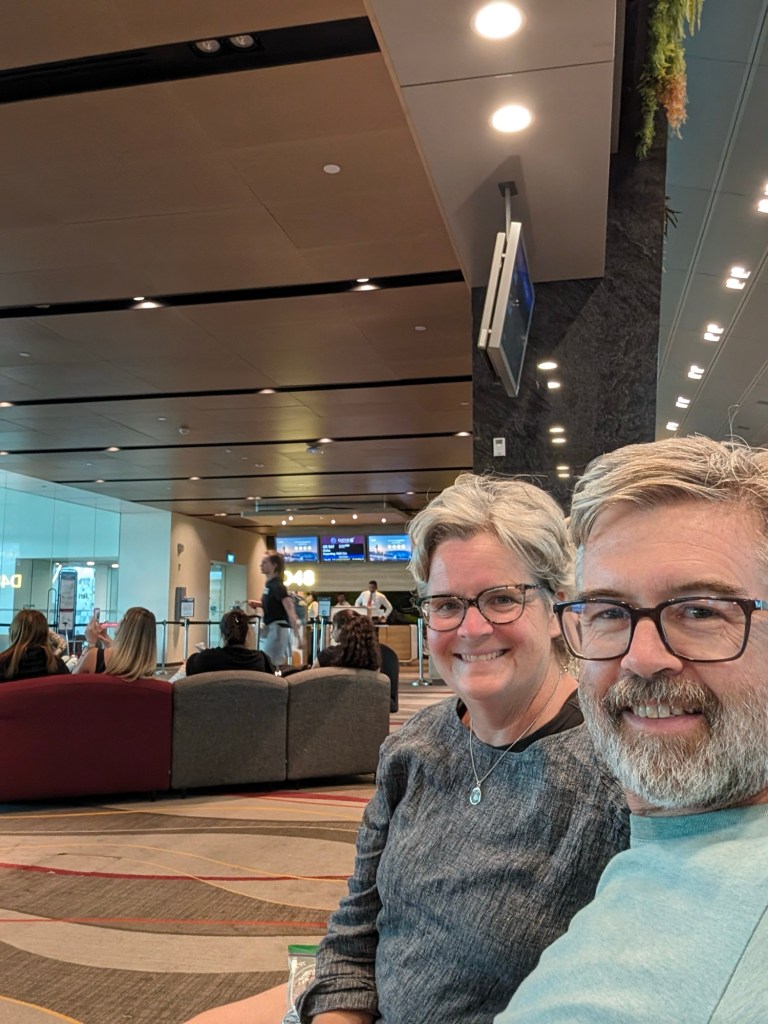
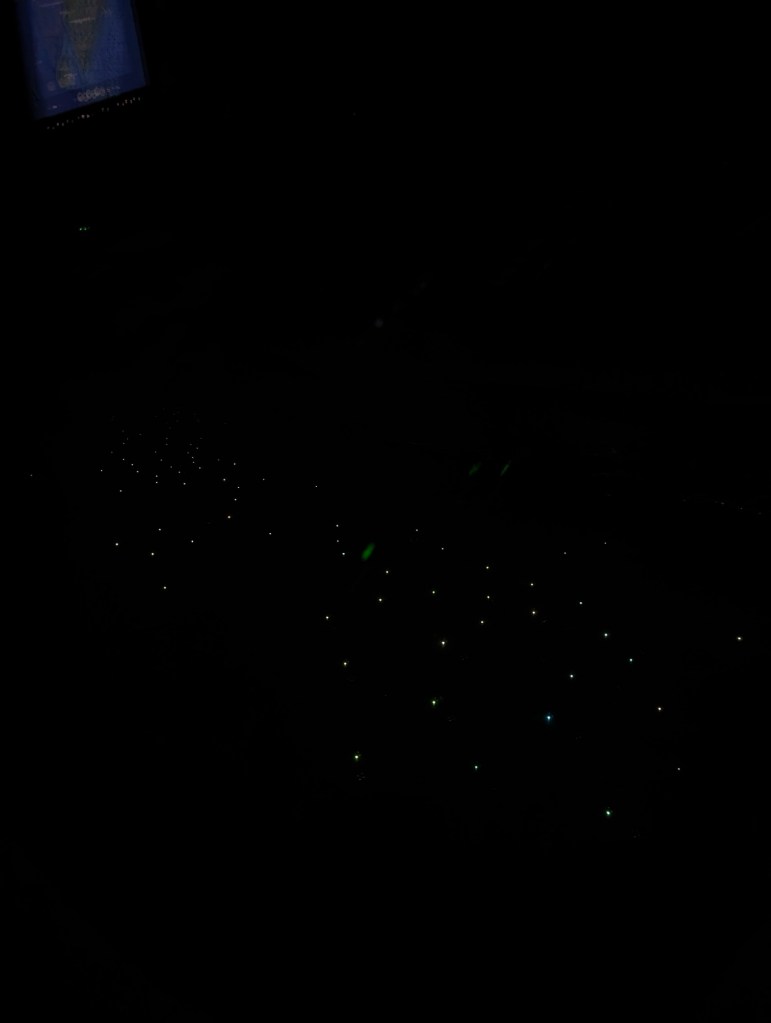
It is a red-eye flight to Doho with a short layover then connecting to Athens. As we fly over the Andaman Sea north of Sumatra Pat snaps this picture of little dots. Actually these dots are shrimp boats fishing at night.
Post script: Cailyn and Dan put an offer on a lovely house in Summerland. (We get a call at 5am Singapore time!) Over the next couple of weeks the i’s are dotted and t’s are crossed. The sale goes through. 🥳 Congratulations!
Cara is accepted into her Masters program at UofT. 👏🏻 Congratulations!


 Two Sore Backs
Leave a reply to Pat McGuire Cancel reply