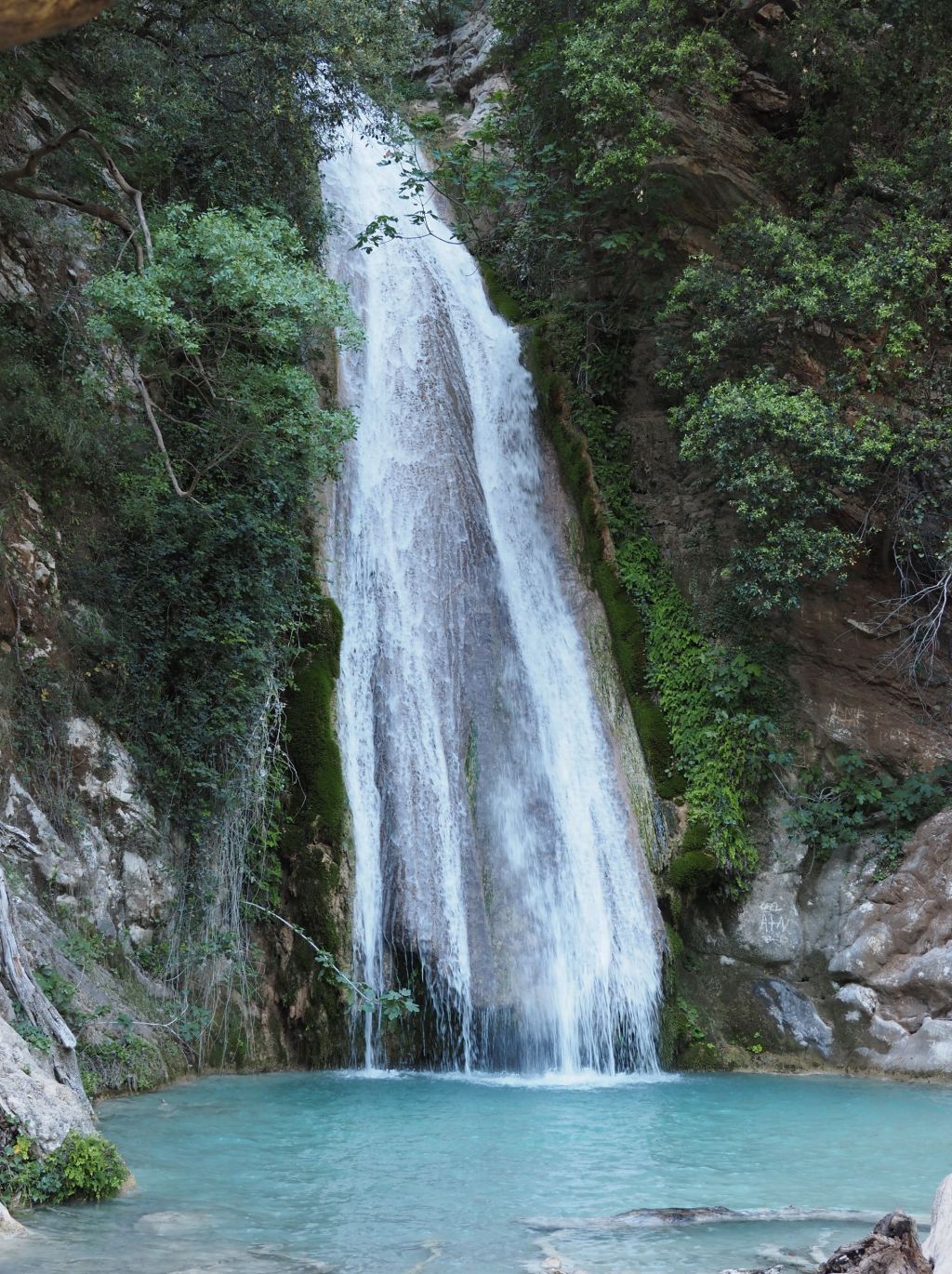
Our awesome travel advisor Aggelos and several others who had been there agreed we should visit Neda Waterfalls. They are a side trip on the way from Pilos to Olympia.
First stop on the way north was lunch in Kyparissia, at a restaurant called Karnagio which is noted for fresh fish.
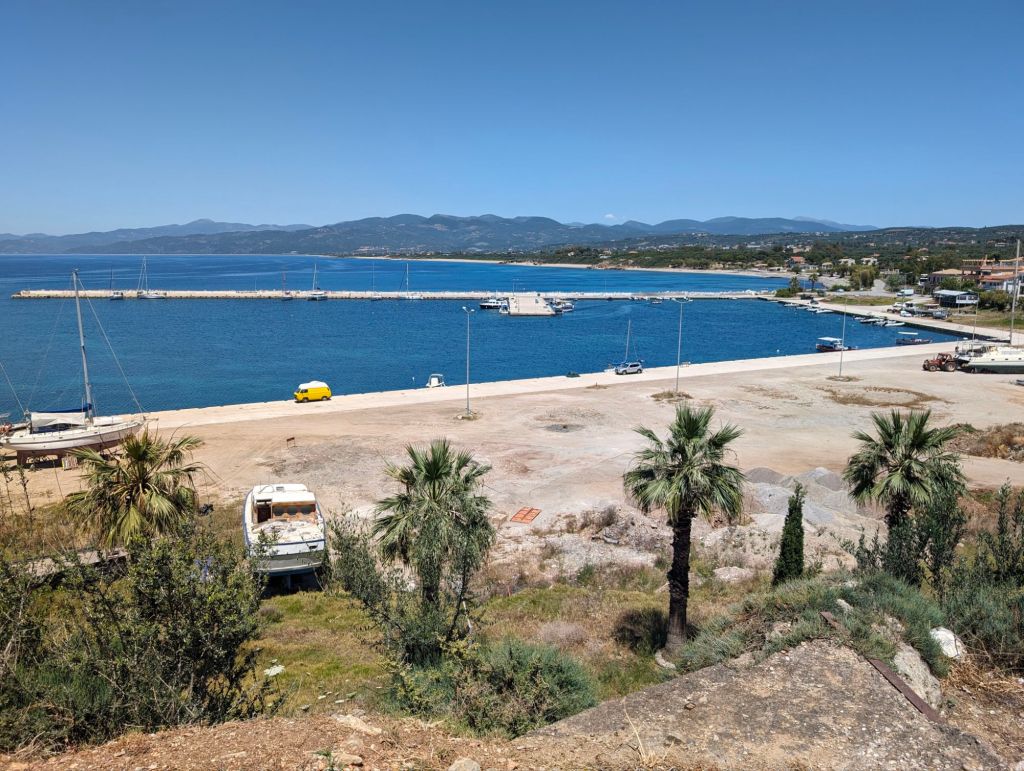
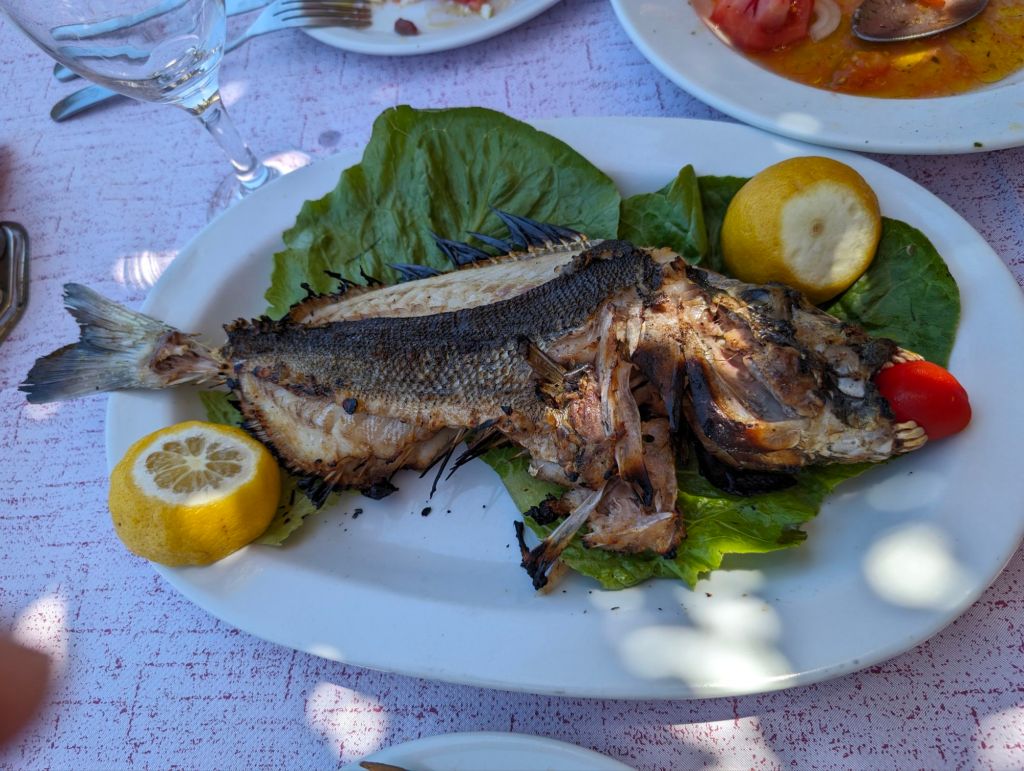
Lunch was great, but the highlight was talking with a German fellow and his family who were travelling around Greece with the same electric vehicles as ours.
Their experience sounded like ours in the Maritimes. Driving speeds are relatively low, so the car’s range is over 450 km. Charging infrastructure isn’t great, but it’s good enough. Unlike the Maritimes, however, the driving distances between towns and sights are relatively short – perfect for EV’s. They were really enjoying the experience.
His only complaint was the vehicle’s aggressive lane assist, which, by Euro laws, must always be enabled. On the narrow Greek roads, he was constantly fighting it.
Greece is investing heavily in renewable energy. Solar panel arrays are common, and many of the mountain tops are lined with windmills. It seems well positioned for the transition to electric, so we had been surprised at how few EV’s we’d seen.
In addition to the daily climate change stories in our news feeds, we had been near the front of a brutal heat wave more or less from Saigon to Singapore, the dust that had blown all the way from Africa was still bothering us, and we were beginning to hear about unusually high temperatures in Athens. Taking flights and pumping gas didn’t give us the best feelings. An electric vehicle, regardless of how small the impact, would have helped.
After lunch, we used the hiking app Alltrails to find the Neda Falls trailhead. It’s essentially the beginning of a very rough section of road a few km from the actual trailhead. We talked to a couple that had driven it in a similar car, but I didn’t want to chance it. We had actually bottomed out right in the middle of the town above the trailhead, and we were trying to be careful with the rental car.
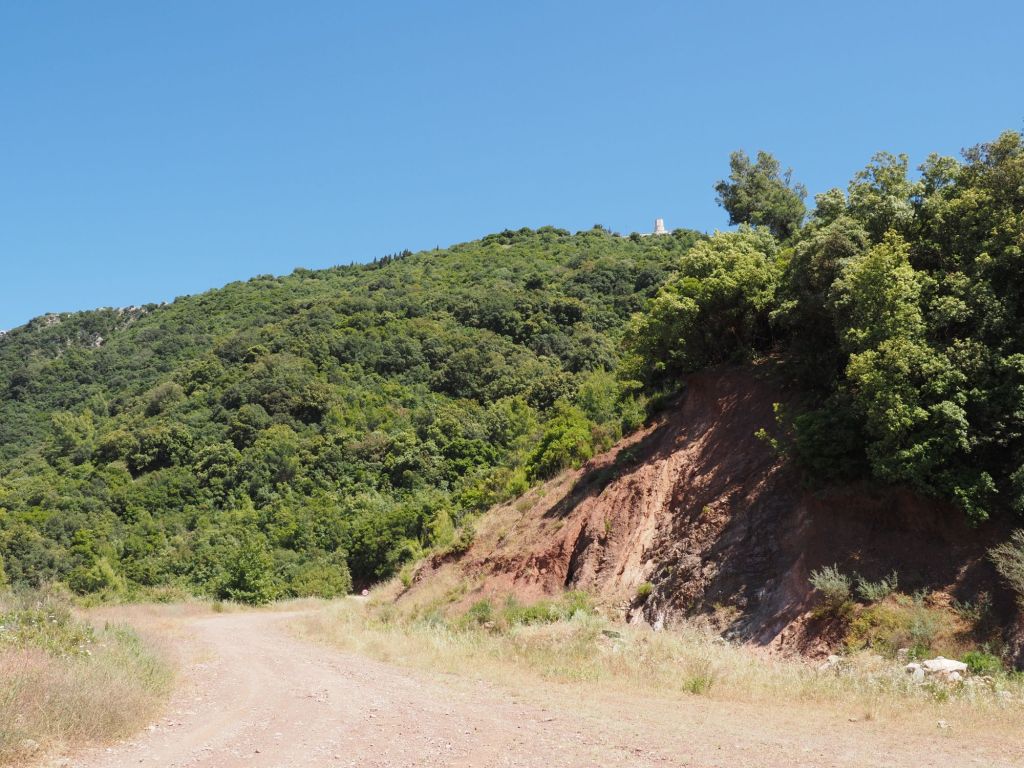
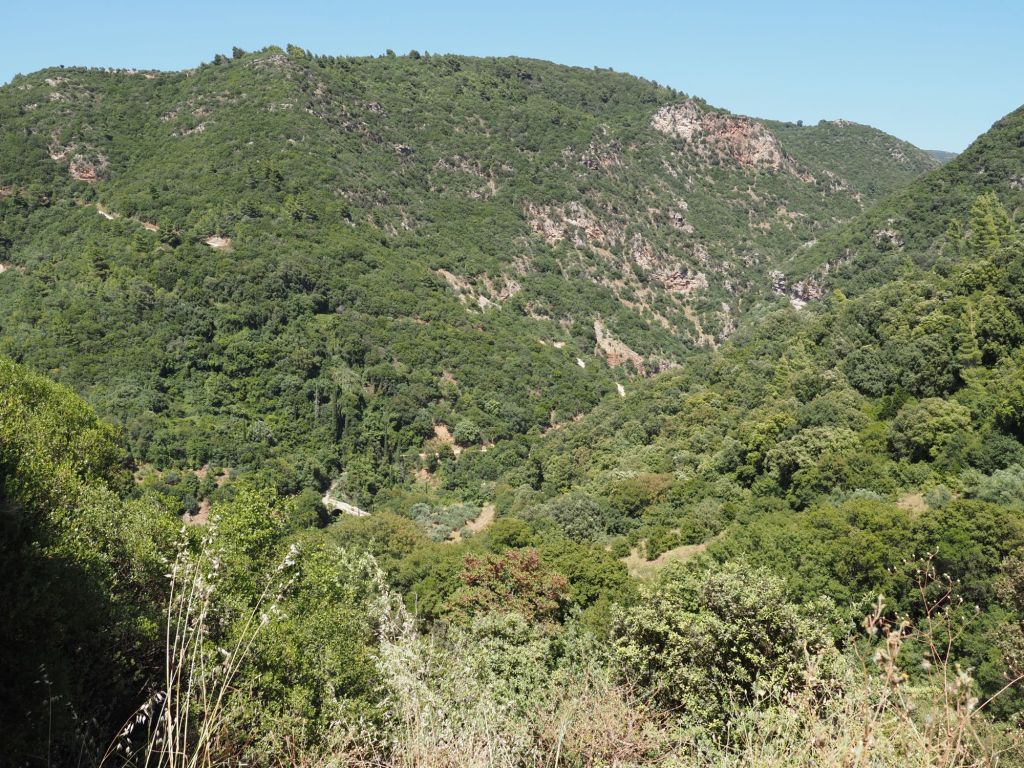
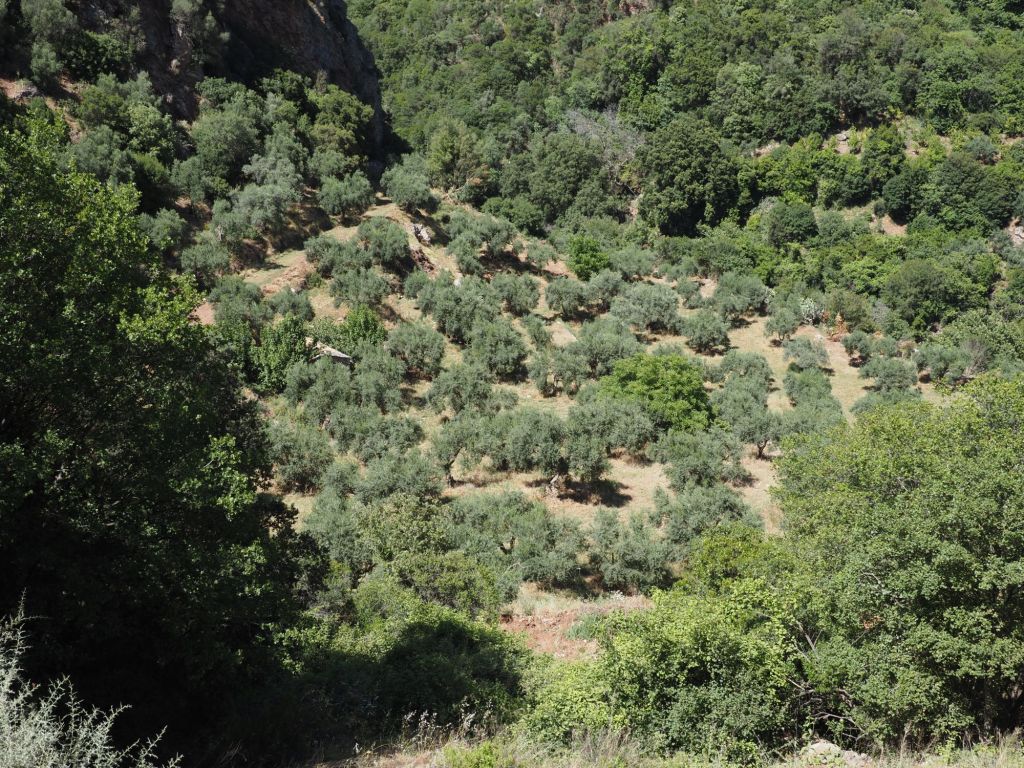
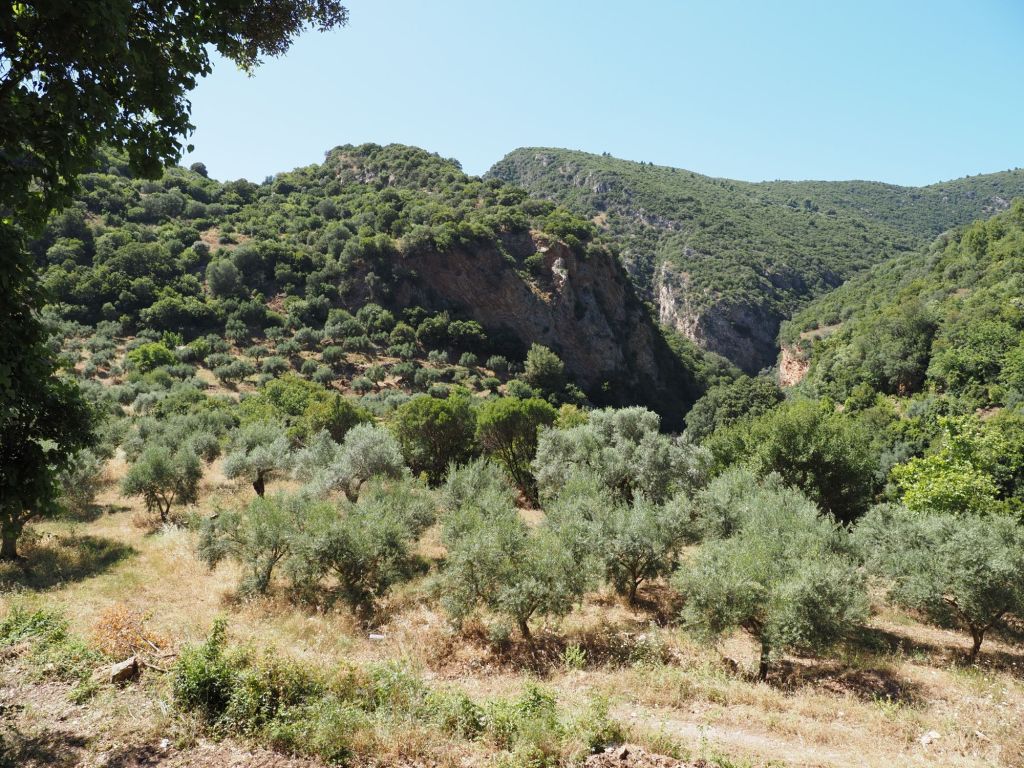
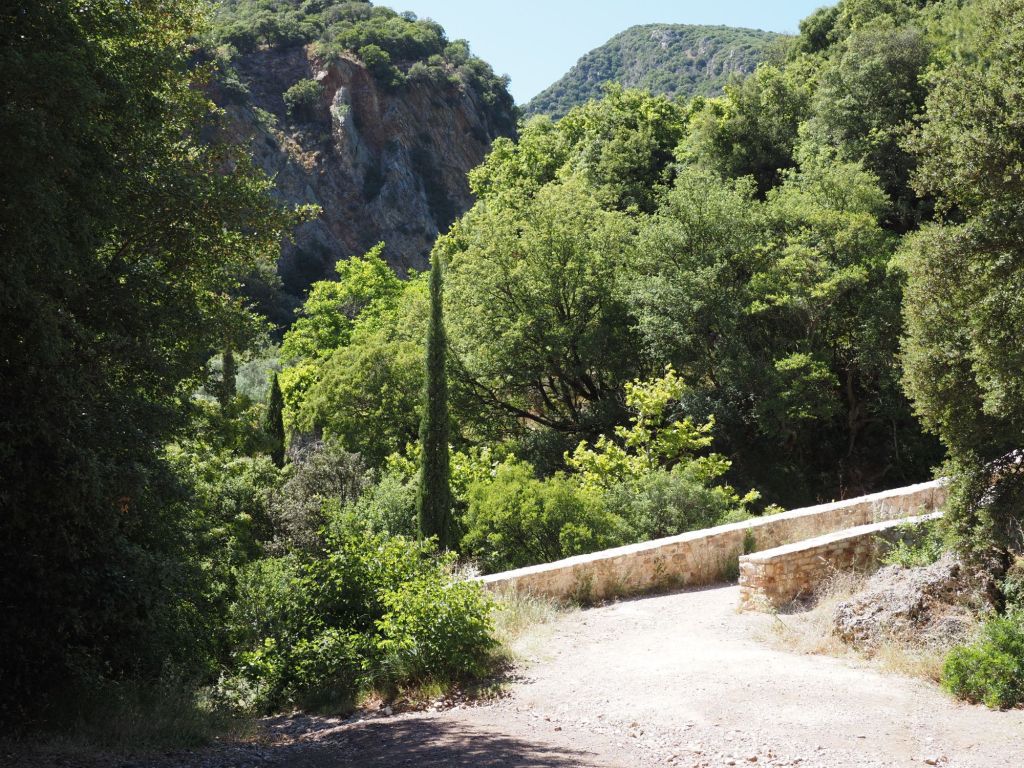
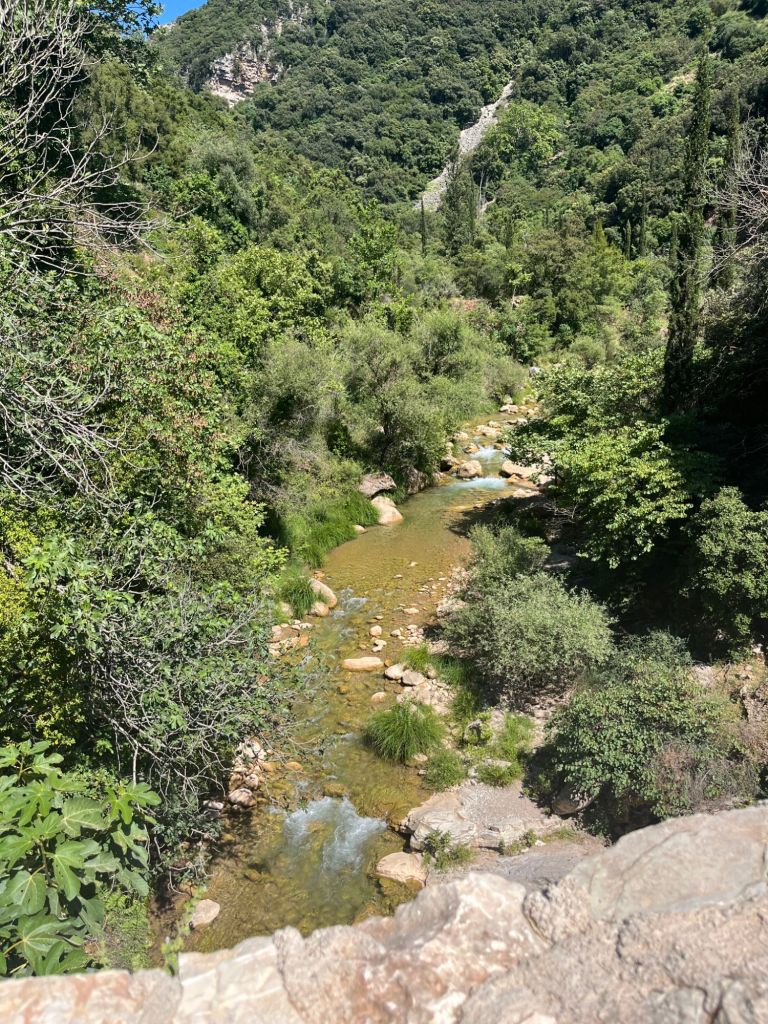

The trail was moderately difficult – slippery in places from water coming off the mountain, narrow footing beside steep drop offs, ropes in spots, but nothing too crazy.
We ran into a group who had been swimming, so I asked them how it was. They said it was good – and the pool was just around the corner.
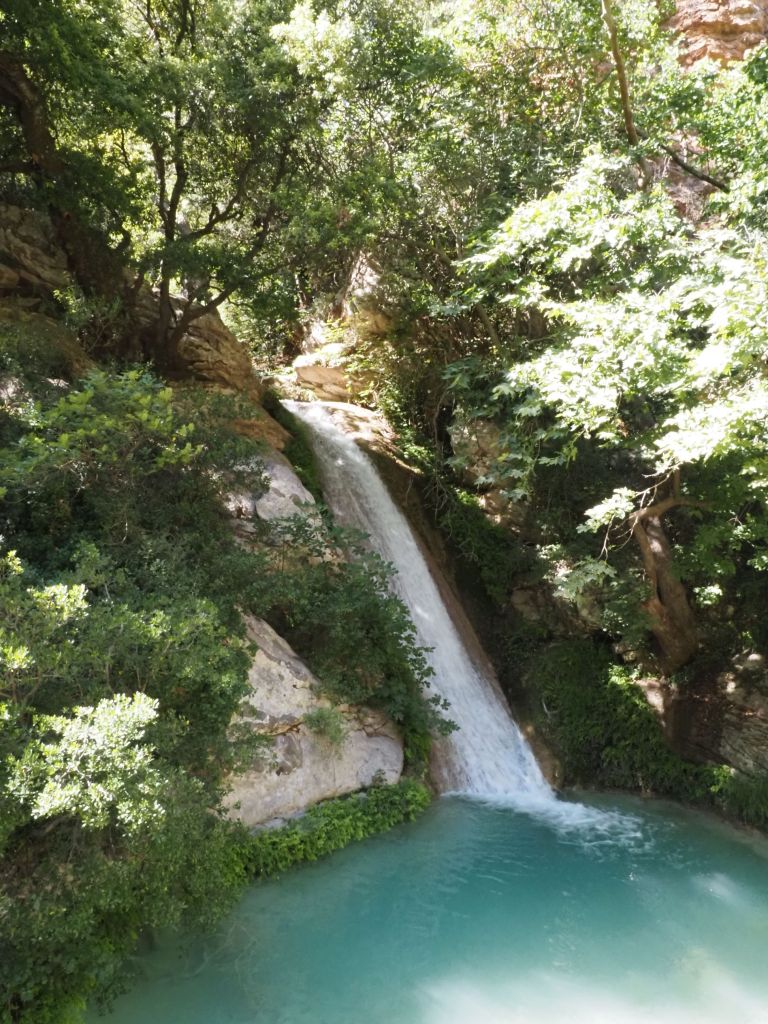
It was pretty, but smaller than expected, so we went further ahead to find the main falls.
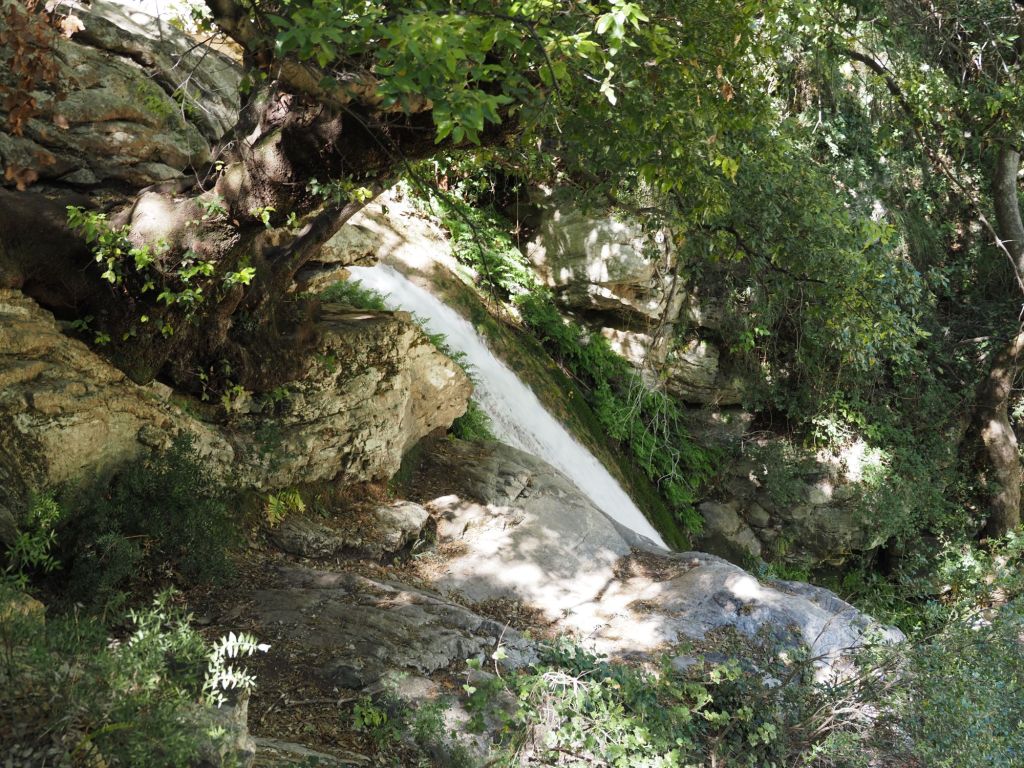
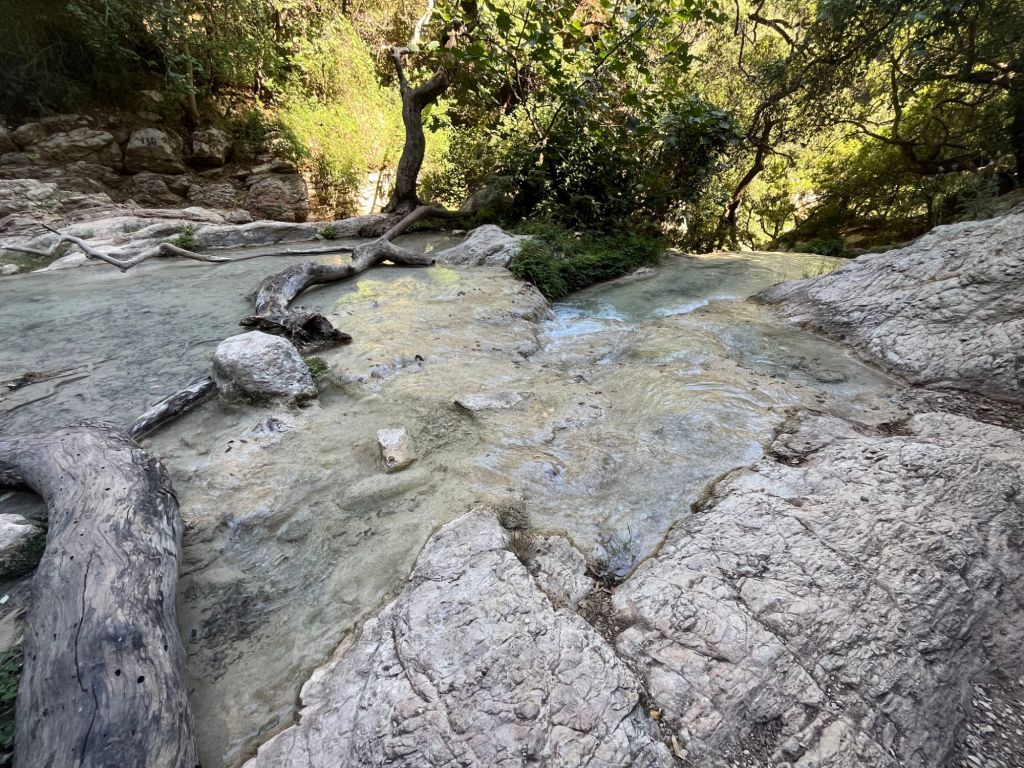
Within maybe 50 metres was the big falls.
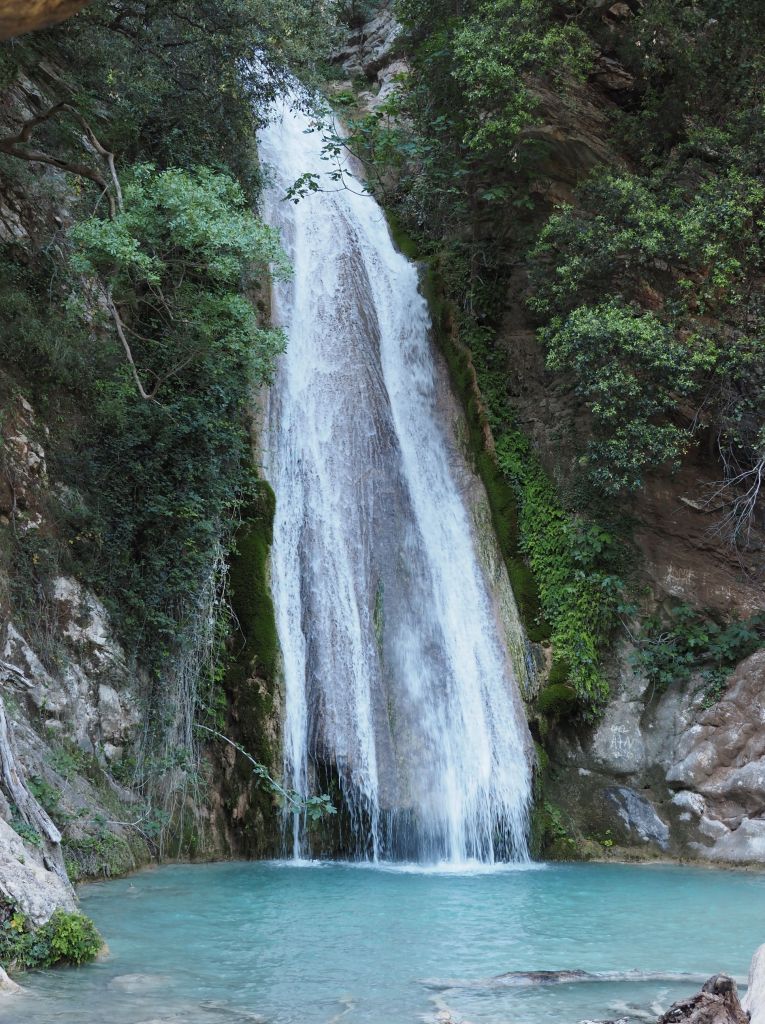
Pretty sure the group that was swimming missed the big falls altogether.


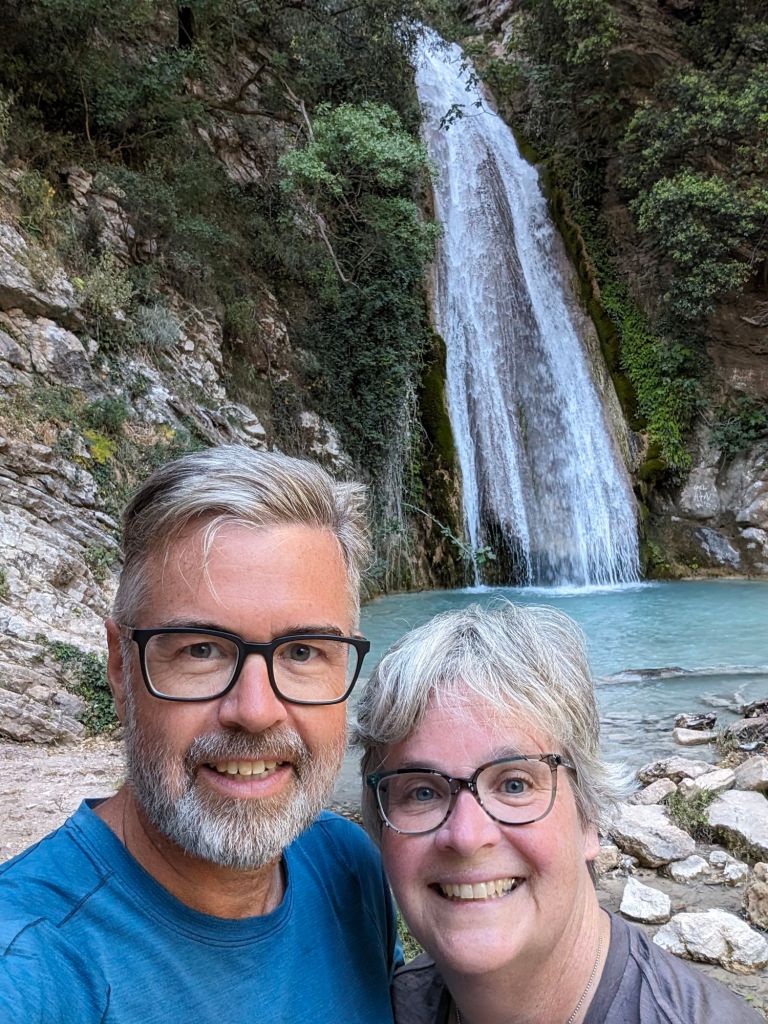
The afternoon light was beautiful on the way back to the car.
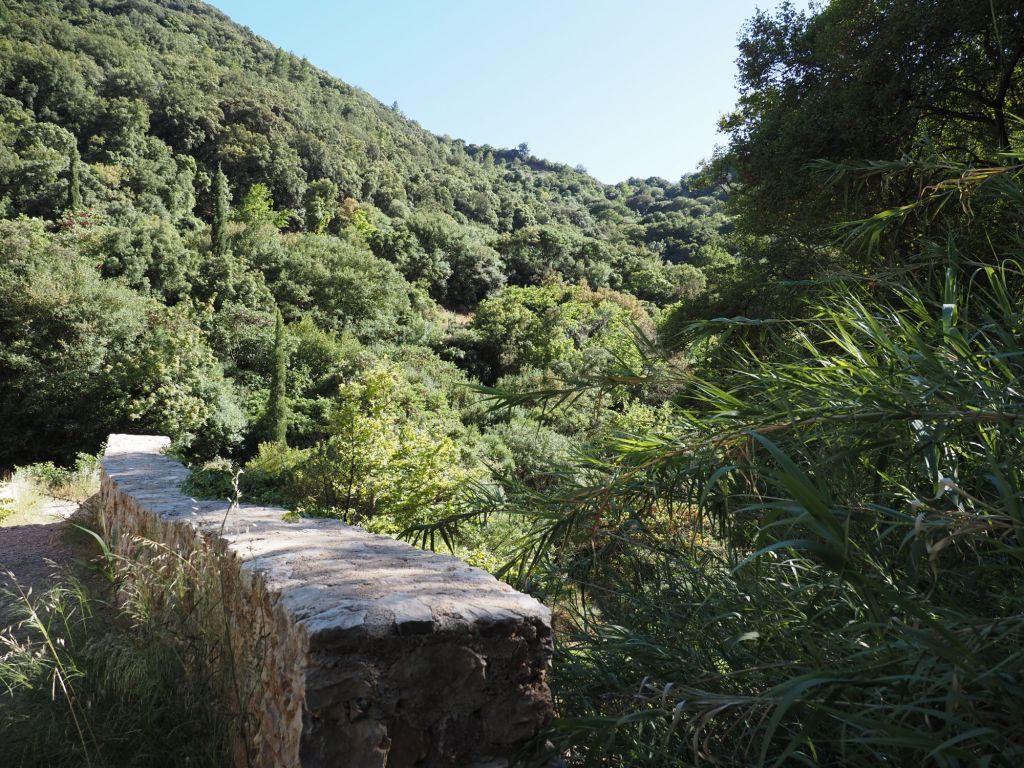
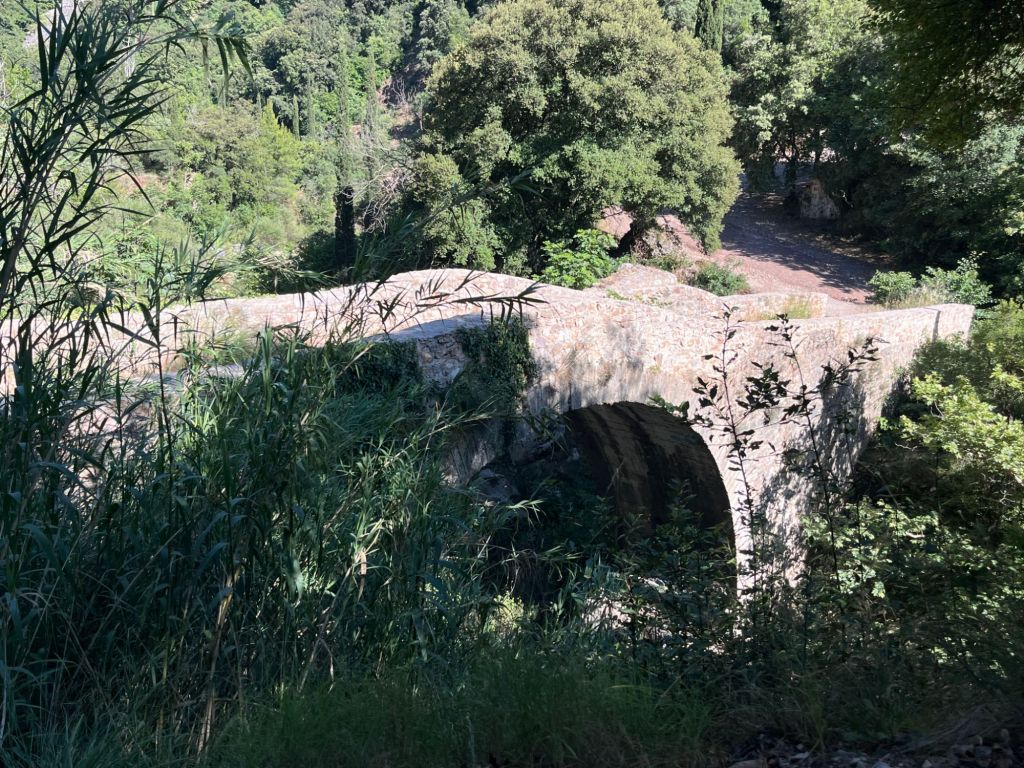
After passing through the town above – probably the narrowest and roughest streets we had seen – we followed Google Maps’ directions to Kakovatos. It took us through another small town, and past a bemused local who I saw shaking his head as we passed. The road quickly turned into a rocky goat track, so we turned around. As we passed the local on the way back, I rolled down the window and we both had a laugh. He spoke no English, but motioned for us to turn left at the intersection ahead. He pointed at the pavement and gave a thumbs-up. What followed was one of the nicest drives of the trip, through rolling hills and steep mountains mostly covered with olive groves. We even came across a herd of goats.
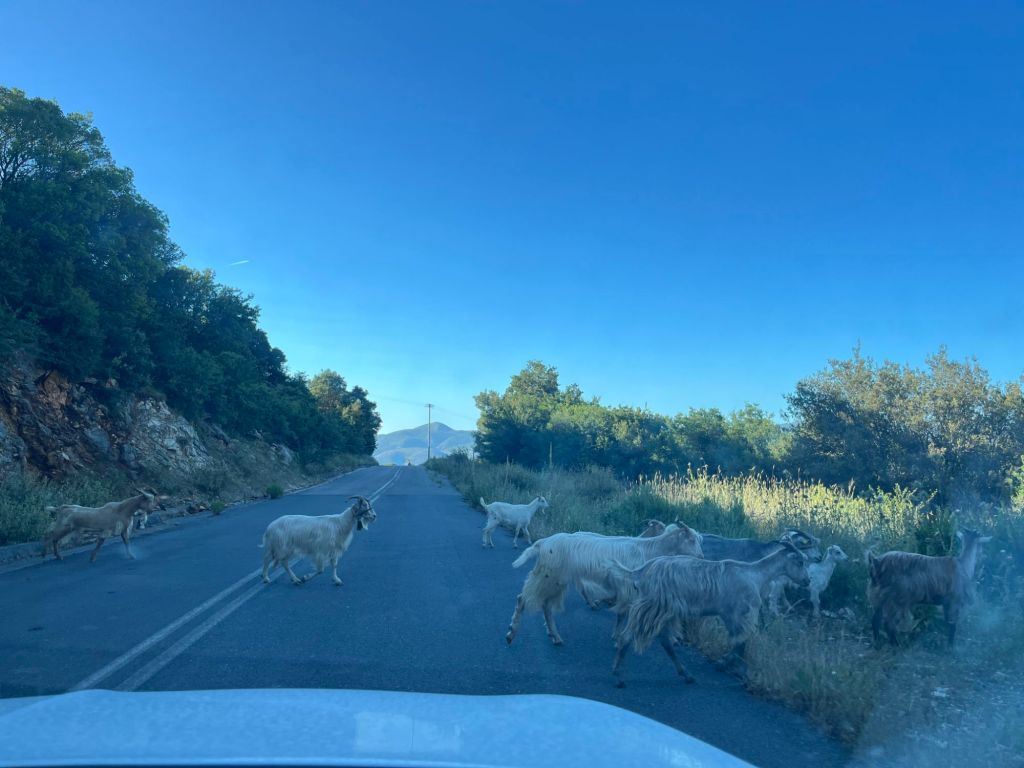
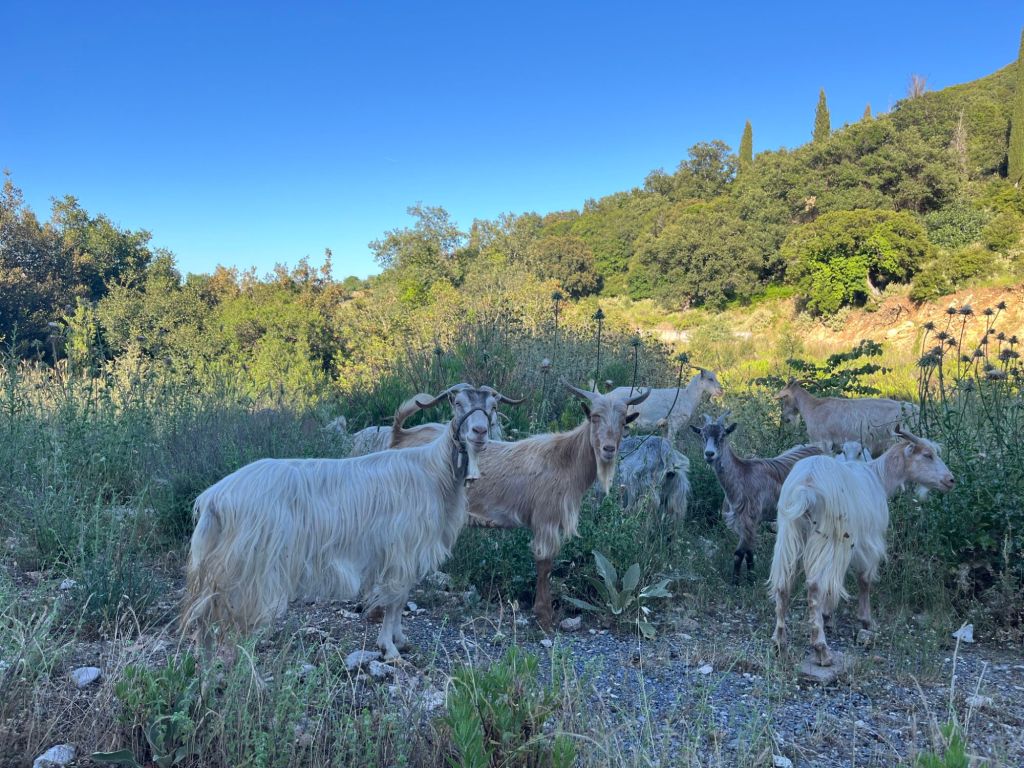
It didn’t take long to get settled in to our Kakovados Airbnb. A quick internet check and we chose a highly rated restaurant for dinner.
It’s a nice little town, with lots of roadside shops and tavernas filled with locals chatting and laughing. We also found this one peculiar feature:
The young guy who served us at Η Φαμελιά/Η Famelia said the swallows had been nesting there for as long as he could remember, which must have been at least 20 years.
His mom was the cook, and the food was excellent, especially the Moussaka.
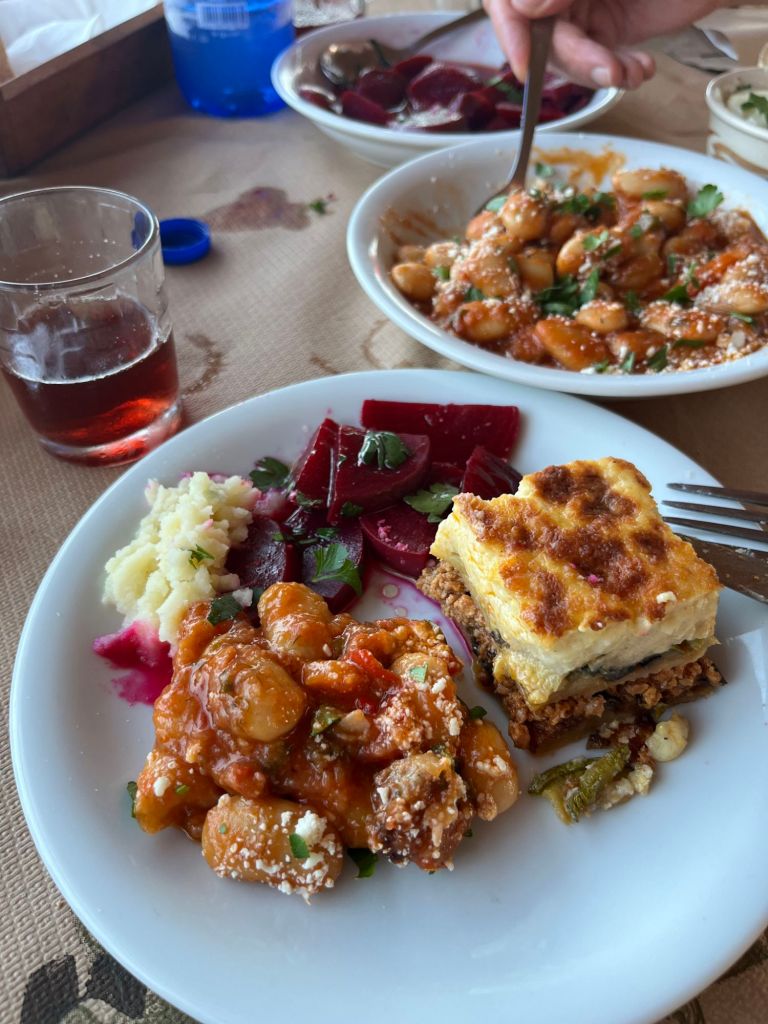
It was a nice way to end the day. The following morning we were headed to Olympia.


 Two Sore Backs
Leave a reply to Pat McGuire Cancel reply